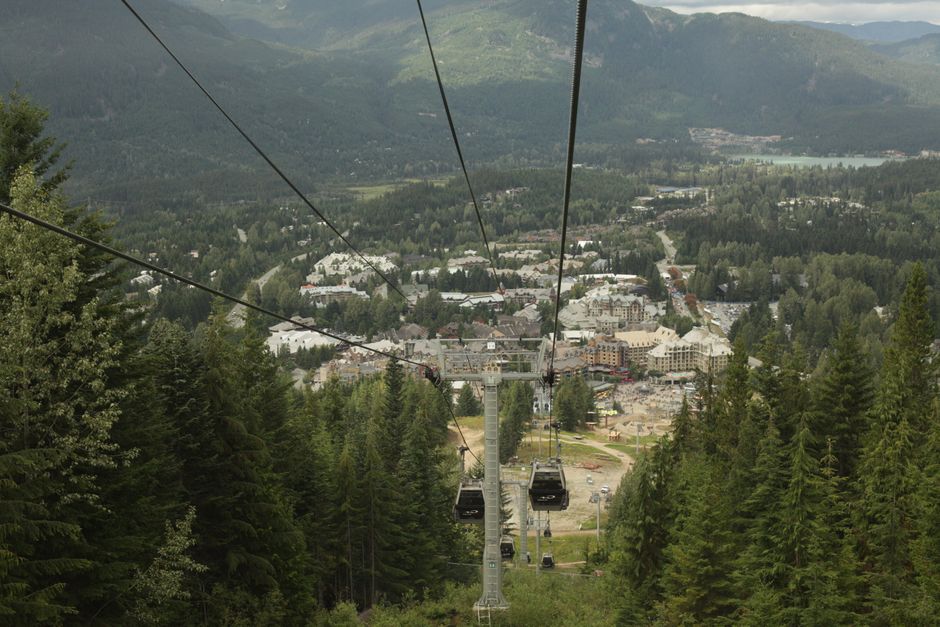
Whistler is Canada’s best-known mountain resort town, set in the Coast Mountains of British Columbia about two hours’ drive north of Vancouver along the Sea-to-Sky Highway. Two big mountains, Whistler and Blackcomb, rise straight from a car-free pedestrian village of hotels, restaurants, shops and plazas built for the 1980s ski boom and polished for the 2010 Winter Olympics. In winter, Whistler Blackcomb is one of the largest ski areas in North America; in summer, the same lifts carry hikers, sightseers and mountain bikers, and the valley’s lakes fill with paddlers and swimmers. Around 14,000 people live here year-round, many more in the busy seasons. The town sits on the shared traditional territories of the Squamish and Lil’wat Nations, whose cultural centre is one of the village’s highlights, and it is the gateway to some of the province’s most popular parks, Garibaldi and Pipi7íyekw/Joffre Lakes, which now need free day-use passes in summer. Come from late November to April for snow, or from late June to September for warm days in the alpine.
Right now in Whistler
- Tue 7–17°C 44–63°F Partly cloudy
- Wed 9–21°C 48–69°F Mostly clear
- Thu 11–18°C 51–64°F 4 mm Partly cloudy
- Mon 12 Oct Thanksgiving
Weather: MET Norway (CC BY 4.0) · Air quality: OpenAQ · Rates: ECB · Holidays: Nager.Date
Top tours in Whistler
See all tours for Whistler →
From local operators, with prices and reviews; you check availability and book on Viator, our partner. We may earn a commission at no extra cost to you. How we earn money
Whistler at a glance
- Best months: mid-December to March for skiing and snowboarding; July to mid-September for hiking, biking, lakes and the alpine. October and November are quiet, wet and often cheaper.
- Time needed: three or four days for a ski trip or a summer visit; a long weekend is enough for the Peak 2 Peak Gondola, the village and a lake or two.
- Getting there: about 125 km (78 miles) from downtown Vancouver on Highway 99, the Sea-to-Sky Highway. Scheduled buses run from Vancouver International Airport (YVR) and downtown; there is no passenger train.
- Costs (as of October 2026): prices are in Canadian dollars; a local bus ride is $2.75 (about US$2) and the Village Shuttle is free; the Squamish Lil’wat Cultural Centre is $25 for adults; a bus from downtown Vancouver starts at about $32 one way. Accommodation carries about 16% in taxes.
- Before you go: entry rules (eTA or visa), money and driving in Canada are in our Canada travel guide. Winter tires or chains are required on the Sea-to-Sky Highway from 1 October.
Whistler’s areas and who each one suits
Whistler Village
The main pedestrian village, built around Village Stroll, Olympic Plaza and Skier’s Plaza, has the Whistler Village Gondola and the Fitzsimmons Express to Whistler Mountain, most of the hotels, restaurants and bars, and the free Village Shuttle. It is the obvious base for first-timers and anyone without a car. Expect lively après-ski and some late-night noise at weekends.
Upper Village
A short walk or free shuttle ride away, the Upper Village sits at the foot of Blackcomb Mountain with the Blackcomb Gondola, large resort hotels and a quieter atmosphere. Good for families and for skiers who prefer Blackcomb’s terrain, while still close to the main village.
Whistler Creekside
The original 1960s base area, about 4 km (2.5 miles) south of the village, has the Creekside Gondola up Whistler Mountain, a few hotels and condos, a grocery store and easier day parking. A good choice for those driving up from Vancouver who want to beat village traffic.
The valley neighbourhoods
Alta Vista, Nordic, Alpine Meadows and the area around Alta Lake have chalets and vacation rentals, often by the Valley Trail and the lakes. You will need a car or the bus. Function Junction, at the south end, has breweries, a bakery and the town’s light-industrial workshops; Cheakamus Crossing, the former Olympic athletes’ village, sits nearby.
Garibaldi and Joffre Lakes: day-use passes (as of October 2026)
The two most famous parks near Whistler are run by BC Parks, which uses free day-use passes to limit crowds at the busiest trailheads. Passes are free but must be booked online at 7 a.m. Pacific Time two days before your visit; they cannot be booked by phone, and there is little or no cell service at the trailheads, so download or print your pass. Overnight campers with a reservation do not need a day pass.
| Park and trailhead | Pass needed in 2026 | Pass covers | Notes |
|---|---|---|---|
| Garibaldi: Rubble Creek (Garibaldi Lake, Black Tusk) | Fri, Sat, Sun, Mon and holidays, 12 June–12 October | One vehicle (up to 12 people) | Any-time pass; space for about 200 vehicles plus roadside parking |
| Garibaldi: Diamond Head (Elfin Lakes, near Squamish) | Fri, Sat, Sun, Mon and holidays, 12 June–12 October | One vehicle (up to 12 people) | Any-time pass; about 55 vehicles |
| Garibaldi: Cheakamus Lake (south of Whistler) | Daily 13 June–7 September; Fri–Mon and holidays 8 September–12 October | One vehicle (up to 12 people) | AM pass (before 1 p.m.) or PM pass (after 1 p.m.); about 50 vehicles |
| Pipi7íyekw/Joffre Lakes | Daily 11 May–25 October | Each person (up to 4 per booking) | Children 12 and under free with an adult; about 500 visitors a day; periodic closures |
Garibaldi Provincial Park covers a vast area of glaciers and volcanic peaks east of the highway between Squamish and Whistler. The classic hike climbs from the Rubble Creek trailhead (south of Whistler) to the turquoise Garibaldi Lake and, for fit hikers, on to Panorama Ridge or the base of the Black Tusk, a long, strenuous day. BC Parks advises against climbing the Black Tusk itself because of loose rock. The Cheakamus Lake trail is the easiest, a mostly flat forest walk to a glacier-fed lake, and bikes are allowed as far as Singing Creek. Wedgemount Lake, north of Whistler, is a steep, demanding climb with no pass requirement. In September 2026 BC Parks warned of increased bear activity throughout the park; carry bear spray.
Pipi7íyekw/Joffre Lakes Park, about 1.5 hours north of Whistler beyond Pemberton on Highway 99 (the Duffey Lake Road), has three glacier-fed lakes of startling turquoise. The trail from the parking lot passes Lower, Middle and Upper Joffre lakes, climbing about 400 m (1,300 feet). The name Pipi7íyekw means a camping place where storage houses were, in the St̓át̓imcets language. The park lies within the unceded territories of the Líl̓wat Nation and N’Quatqua, and it is closed to visitors at times during the season so the Nations can use the land; check the park’s advisories before you drive. Dogs are not allowed, campfires are banned year-round, there is no drinking water, and parking on the highway shoulder is prohibited. After 25 October, access depends on snow, and winter conditions last from November to the end of May.
Top things to see in Whistler
Whistler Blackcomb and the Peak 2 Peak Gondola
The two mountains together have 8,171 acres (about 3,300 hectares) of skiable terrain, 36 lifts and more than 200 marked runs, with a top elevation of 2,444 m (8,019 feet) on Blackcomb and an average of about 10.7 m (422 inches) of snow a year, according to the resort. The Peak 2 Peak Gondola, which the resort calls the world’s highest and longest continuous lift system, links the upper slopes of the two mountains in a ride of roughly 4.4 km (2.7 miles) and about 11 minutes, with a few glass-floored cabins. In winter it is part of the lift ticket; in summer, a sightseeing ticket covers the Whistler Village Gondola, the Peak 2 Peak and the Blackcomb Gondola, with alpine walking trails, a suspension bridge and viewing platforms at the top of Whistler Mountain. Whistler Blackcomb is owned by Vail Resorts and is on the Epic Pass.
Whistler Village and Olympic Plaza
The village is a pleasure to wander: a winding, car-free Village Stroll lined with patios, outdoor-gear shops and galleries, and Olympic Plaza with the Olympic rings and a summer lawn for concerts that becomes an outdoor skating rink in winter. The Audain Art Museum, a striking modern building in the forest by the village, shows British Columbia art from historic Northwest Coast masks to Emily Carr.
Squamish Lil’wat Cultural Centre
This beautiful timber longhouse-style building in the Upper Village is a shared project of the Squamish (Sḵwx̱wú7mesh) and Lil’wat (Líl̓wat7úl) Nations. Cultural Ambassadors lead the signature What We Treasure tour through baskets, carved canoes, house posts, regalia and songs, and from late May to early October a 3 p.m. interpretive forest walk replaces the hourly tour. Allow 60 to 90 minutes. It is open Tuesday to Sunday (closed Mondays), with tours hourly from 10 a.m. (last at 4 p.m.). Admission is $25 for adults, $23 for seniors (65+), $12 for ages 6–18, free for children 5 and under, and $50 for a family (two adults and two children), plus 5% GST; the Thunderbird Café serves bannock and Indigenous-inspired dishes.
Whistler’s Olympic legacy
During the 2010 Winter Games, Whistler hosted the alpine skiing, Nordic and sliding events, and the venues are still in use. Whistler Olympic Park, in the Callaghan Valley about 20 minutes south of the village, has cross-country skiing, snowshoeing and biathlon in winter, and summer hiking, biking, disc golf and an RV campground (its 2026 summer season ended on 4 October). The Whistler Sliding Centre, on Blackcomb’s lower slopes, is the fast bobsleigh, luge and skeleton track; there is no entrance fee to look around and watch sliding, and the public can book summer bobsleigh rides (12 June to 20 September in 2026) and passenger bobsleigh or skeleton runs in winter. Both are run by the non-profit Whistler Sport Legacies.
Lost Lake and the valley lakes
A 30-minute walk or a free summer shuttle from the village, Lost Lake has a beach, a dock, forest trails for walking and biking, and cross-country ski trails in winter. Alta Lake (with Rainbow Park), Alpha Lake and Green Lake are linked by the paved Valley Trail, ideal for a bike ride, a paddle or a cold swim. In summer 2026 the municipality ran free park shuttles to Lost Lake (daily) and Rainbow Park (weekends), from 27 June to Labour Day.
Brandywine Falls and the Train Wreck trail
South of town, Brandywine Falls Provincial Park has a short, easy walk to a viewpoint over a 70 m (230-foot) waterfall. Closer to Function Junction, a short forest trail and suspension bridge lead to the Train Wreck site, where derailed boxcars from the 1950s have been painted by graffiti artists and colonized by mountain bikers.
Nature
- Lost Lake
Viewpoints
- Peak 2 Peak Gondola
Peaks and mountains
- Blackcomb Peak
- Whistler Mountain
Other sights
- Whistler Olympic Park
Protected areas
- Brandywine Falls Provincial Park
- Garibaldi Provincial Park
Activities and best months
Other things to do in Whistler
- Skiing and snowboarding: two mountains, three terrain parks, long groomed cruisers, alpine bowls and glades. Whistler Blackcomb plans to open for the 2026/27 season on 20 November 2026; check the resort for lift tickets, which are cheaper bought in advance.
- Mountain biking: the Whistler Mountain Bike Park, on the lower slopes of Whistler Mountain, is famous for lift-served downhill trails from beginner flow to expert; it usually runs from about mid-May to mid-October. Cross-country riders have the valley’s trail network and the Valley Trail.
- Hiking: sightseeing lifts give quick access to alpine trails on both mountains in summer; Garibaldi and Joffre Lakes need day-use passes in peak season (see above).
- Golf, zip-lining and spas: four golf courses in the valley, zip-line courses between the mountains, and a Nordic-style outdoor spa in the forest at Lost Lake.
- Winter extras: snowshoeing, cross-country skiing at Lost Lake and Whistler Olympic Park, dog sledding, snowmobile tours and bobsleigh rides.
- Food and drink: fine dining and ski-town comfort food, craft breweries and distilleries in Function Junction, and the long-running après-ski bars at the base of the gondolas.
Day trips from Whistler
Squamish and the Sea to Sky Gondola
Squamish, about 60 km (37 miles) south, is a climbing, kiteboarding and hiking town under the granite face of the Stawamus Chief. The Sea to Sky Gondola climbs above Howe Sound to a summit lodge, a suspension bridge and trails. Adult day tickets are $81.95 at the ticket window or from $73.95 online (seniors $76.95/$68.95, youth 13–18 $51.95/$43.95, children 6–12 $37.95/$29.95). Hours shorten through October (9 a.m. to 4 or 5 p.m. from 13 October), and the gondola closes for maintenance from 16 to 26 November 2026. Shannon Falls, a 335 m (1,100-foot) cascade, is beside the highway just south of the gondola.
Pemberton and the Duffey Lake Road
Pemberton, 35 minutes north, is a farming valley under Mount Currie with potato fields, a small village and good cafés. Beyond it, Highway 99 climbs steeply as the Duffey Lake Road past Pipi7íyekw/Joffre Lakes towards Lillooet, a dramatic drive with winter conditions for much of the year.
Vancouver
If you flew into YVR, add a few days in Vancouver for Stanley Park, Granville Island and the city’s food scene before or after the mountains; see our Vancouver guide. On the way, stop at Porteau Cove or the Britannia Mine Museum on Howe Sound.
Nearby destinations
Getting there and getting around
The Sea-to-Sky Highway (Highway 99)
The drive from Vancouver takes about two hours without traffic, first along the cliffs above Howe Sound, then up through Squamish and the forested valley to Whistler. It is spectacular but winding, with frequent speed changes, and busy on Friday evenings and Sunday afternoons. From 1 October to 30 April, B.C. requires winter tires or chains on most highways, including the Sea-to-Sky, marked by roadside signs; a legal winter tire has at least 3.5 mm of tread and the mountain-snowflake or M+S symbol. Drivers without the right tires can be turned back and fined, so ask your rental company for winter tires. Check DriveBC for closures and conditions before you set off.
By bus from Vancouver and YVR
| Service | From | One way | Return | Notes |
|---|---|---|---|---|
| Epic Rides | Downtown Vancouver (Burrard Station) | $33.50 | $44 | Non-stop, about 1 hour 45 minutes; luggage, skis and bikes free |
| YVR Skylynx | Downtown Vancouver | from $32 | from $42 | Stops at Squamish; express trips cost more |
| YVR Skylynx | Vancouver International Airport (YVR) | from $55 | from $75 | Direct from the airport; express from $65 |
Fares are as listed on the operators’ sites in October 2026 and vary by date; book ahead in ski season. Private shuttles and limousines also run from YVR.
Getting around Whistler
Whistler is easy without a car. The village is pedestrian-only, the 40 km (25 miles) of the paved Valley Trail link neighbourhoods and lakes, and BC Transit’s Whistler buses run from about 5:20 a.m. to 3 a.m., with extra service in winter. The Village Shuttles (routes 4 and 5) are free. Buses accept contactless cards and the Umo app.
| BC Transit Whistler fare | Price | Notes |
|---|---|---|
| Single ride | $2.75 | Adults, seniors and youth; children 12 and under free |
| DayPASS | $5.50 | Unlimited local travel that day |
| Multi-Rider DayPASS | $17.50 | |
| Dual DayPASS | $12 | Also covers Pemberton local and commuter routes |
Drivers can use the paid Day Lots next to the village; parking is expensive and fills on powder days.
When to go and how long to stay
Whistler has two high seasons. Winter (late November to April) brings deep snow to the mountains, while the village, at about 670 m (2,200 feet), sees cold, damp days around freezing and plenty of valley snow. Coastal storms can bring rain low down even in mid-winter. Summer (July to mid-September) is warm and dry, with long days, lake swimming and the alpine at its best; wildflowers peak in the high meadows in late July and August. Spring means spring skiing on the upper mountain and melting trails below. Autumn turns very wet from mid-October, and November, before the lifts open, is the quietest month.
| Season | Average high | Average low | What it’s like |
|---|---|---|---|
| Winter (Dec–Feb) | 0–3 °C (32–38 °F) | −5 to −4 °C (22–24 °F) | Snowy and grey in the village; much colder and deeper snow on the mountains |
| Spring (Mar–May) | 7–16 °C (45–62 °F) | −2 to 4 °C (28–39 °F) | Spring skiing up high; muddy, snowy trails below |
| Summer (Jun–Aug) | 20–24 °C (68–75 °F) | 7–9 °C (45–49 °F) | Warm, dry days and cool nights; best hiking and biking |
| Autumn (Sep–Nov) | 20 °C falling to 3 °C (68 to 38 °F) | 6 to −2 °C (42–29 °F) | Golden September; heavy rain in October and November |
Figures are Environment and Climate Change Canada’s 1981–2010 climate normals for the Whistler station in the valley. It records about 1,230 mm (48 in) of precipitation a year, most of it from October to January, and around 4.2 m (14 feet) of snowfall; the alpine gets far more.
Events worth planning around
- Ski season opening (planned for 20 November 2026) and the Christmas and New Year holidays, the busiest and most expensive weeks of the winter.
- Spring festivals in April, with outdoor concerts and events as the ski season winds down.
- Crankworx Whistler (summer): a big mountain-bike festival with slopestyle and downhill competitions.
- Canada Day (1 July) and the BC Day long weekend in early August, when the village is packed.
Dates change every year; check the organizers’ sites before you book.
How long to stay: 2, 4 and 7 days
- Two days: the Peak 2 Peak Gondola and alpine trails (or a ski day), the village and the Squamish Lil’wat Cultural Centre, an evening on a patio.
- Four days: add a second mountain day, Lost Lake or a lake paddle, Brandywine Falls and the Olympic venues, or a Garibaldi hike in summer.
- A week: a full ski week, or add Squamish and the Sea to Sky Gondola, Pemberton and Joffre Lakes, and finish in Vancouver.
Where to stay in Whistler and the taxes on your bill
- Whistler Village: the most convenient, with ski-in, walk-everywhere hotels and condos; the busiest and priciest.
- Upper Village: big resort hotels at the Blackcomb base; quieter evenings.
- Creekside: condos and smaller hotels by the Creekside Gondola, handy if you drive.
- Valley chalets and rentals: more space for groups and families; plan on the bus or a car. Whistler regulates short-term rentals, so check that a listing is licensed.
- Squamish or Pemberton: cheaper motels and inns 35 to 50 minutes away.
Taxes: prices are shown before tax. On short-term accommodation, British Columbia charges 8% PST (higher than the province’s 7% on most goods) plus a 3% Municipal and Regional District Tax (MRDT) in Whistler, which funds tourism marketing and the free village shuttles, plus the federal 5% GST: about 16% in total. Some properties add resort or parking fees on top, so check what the rate includes.
Safety: bears, avalanches, cold and wildfire smoke
- Bears: black bears live throughout the valley and sometimes wander through neighbourhoods and the bike park; grizzlies range in the backcountry. Never feed them, keep food and garbage locked away, and carry bear spray on trails. In 2026 BC Parks reported increased bear activity in Garibaldi Park, and the Callaghan Conservancy was closed in September after a bear incident.
- Avalanches: in winter and spring, avalanche danger is real anywhere outside the patrolled ski runs, including the backcountry gates and many hiking areas in parks such as Joffre Lakes. Check the Avalanche Canada forecast, and only go out of bounds with training, a beacon, probe and shovel, and a partner.
- Mountain weather: alpine conditions change fast; summer snow is possible on the peaks. Carry layers, water and a headlamp, and don’t rely on cell service in the parks.
- Cold water: the glacier-fed lakes are very cold even in August; BC Parks does not recommend swimming at Joffre Lakes, and there are no lifeguards in provincial parks.
- Wildfire smoke: in hot, dry summers, smoke from fires elsewhere in British Columbia can haze the valley; check air-quality reports and BC Wildfire Service updates, and obey campfire bans.
- Emergencies: call 911. Report aggressive wildlife to the Conservation Officer Service at 1-877-952-7277.
Practical tips for Whistler
- Time zone: Pacific Time, the same as Vancouver and Seattle; clocks go back on 1 November 2026.
- Book early for winter: Christmas, New Year, the February holidays and spring break sell out months ahead; lift tickets cost less online in advance.
- Free things: the Village Shuttle, the Valley Trail, Lost Lake, watching the sliding at the Olympic track, and the Audain Art Museum’s outdoor setting.
- Tipping: 15–20% in restaurants and bars, calculated before tax; tip ski instructors and shuttle drivers if you are happy with the service.
- Comparing with US resorts: Whistler is on the same Epic Pass as Vail in Colorado, so pass holders can ski both.
What to pack for Whistler
For winter, bring a waterproof ski jacket and pants, warm base layers, a fleece or puffy mid-layer, a helmet, goggles, waterproof gloves and boots with grip for icy village paths; damp coastal snow soaks cheap gear. For summer, pack hiking shoes, a rain shell, a warm layer for the alpine, sun protection, a swimsuit for the lakes, insect repellent and bear spray (you can buy it locally). Snow tires or chains matter more than anything if you are driving between October and April.
What to pack
- Day packs and anti-theft bagsA 20–30 litre pack carries layers, water, a head torch and snacks on full-day levada walks.
- Fleeces and warm layersSummits like Pico do Areeiro averaged about 11 °C over 2024, so a fleece is needed even in summer.
- HeadlampsLevada routes such as PR1 and PR9 pass through long, dark, wet tunnels.
- Hiking shoes and bootsMadeira's levadas and the Azores' crater rims are wet, rocky and slippery, so grippy shoes matter more than anywhere else in Portugal.
- Rain jacketsMountain and island weather changes fast; a real shell beats an umbrella in the wind.
- Trekking polesLong stone staircases and steep descents on Madeira's peaks and the Azores' crater rims are easier on the knees with poles.
- Water bottles and hydration packsAlgarve and Alentejo trails are hot and exposed with few refill points.
Whistler travel FAQ
When does Whistler Blackcomb open for the 2026/27 ski season?
Vail Resorts plans to open Whistler Blackcomb on 20 November 2026, conditions permitting. The season usually runs into April, with spring skiing on the upper mountain; the resort announces closing dates during the winter.
How do I get from Vancouver airport to Whistler?
YVR Skylynx runs buses directly from the airport from $55 one way (about US$40), taking around 2.5 hours; private shuttles and car rental are the other options. From downtown Vancouver, Epic Rides charges $33.50 one way and takes about 1 hour 45 minutes.
Do I need winter tires to drive to Whistler?
Yes, between 1 October and 30 April B.C. requires winter tires (mountain-snowflake or M+S, with at least 3.5 mm of tread) or chains on signed highways, including the Sea-to-Sky Highway. You can be turned back and fined without them.
How long is the Peak 2 Peak Gondola?
About 4.4 km (2.7 miles), linking Whistler and Blackcomb mountains in roughly 11 minutes. It runs in winter for skiers and in summer for sightseers, as part of a lift ticket or a summer sightseeing ticket.
Do I need a pass for Garibaldi Park or Joffre Lakes?
In summer 2026, free day-use passes were needed at Garibaldi’s Rubble Creek and Diamond Head trailheads (Friday to Monday and holidays, 12 June–12 October) and at Cheakamus Lake (daily to 7 September, then Friday to Monday until 12 October). Pipi7íyekw/Joffre Lakes needs a pass for every hiker from 11 May to 25 October 2026. Book online at 7 a.m. two days ahead.
Why is Joffre Lakes sometimes closed?
The park is within the unceded territories of the Líl̓wat Nation and N’Quatqua, and it closes to visitors for periods during the season so the Nations can use their land. Closure dates are posted on the park’s advisories page.
How much is the bus in Whistler?
$2.75 a ride or $5.50 for a DayPASS on BC Transit, and the Village Shuttles (routes 4 and 5) are free. Children 12 and under ride free.
What taxes are added to hotel bills in Whistler?
8% provincial sales tax on accommodation, a 3% municipal and regional district tax, and 5% GST, about 16% in total, plus any resort or parking fees.
Is Whistler worth visiting in summer?
Yes: the Peak 2 Peak Gondola, alpine hiking, the bike park, warm lakes and patios make July to mid-September as busy as winter, and hotel prices are often lower.
Are there bears in Whistler?
Yes, black bears are common in the valley and on the lower mountains from spring to autumn. Keep your distance, never feed them, secure food and garbage, and carry bear spray on trails.
Sources
- © OpenStreetMap contributors · ODbL · fetched 4 Oct 2026
- Wikidata · CC0 · fetched 4 Oct 2026
Sources and last review
Researched and last reviewed on 4 October 2026. Day-use pass dates and rules for Garibaldi and Pipi7íyekw/Joffre Lakes, park guidance and bear and closure advisories come from BC Parks; winter tire and chain rules from the Government of British Columbia and DriveBC; accommodation PST, MRDT and the Whistler MRDT rate from the B.C. Ministry of Finance; bus fares from BC Transit and the Resort Municipality of Whistler; mountain statistics from Whistler Blackcomb and its 2026/27 opening date from Vail Resorts; cultural centre hours and prices from the Squamish Lil’wat Cultural Centre; Olympic venue seasons from Whistler Sport Legacies; gondola prices and hours from the Sea to Sky Gondola; bus fares from Epic Rides and YVR Skylynx; climate from Environment and Climate Change Canada’s 1981–2010 normals for Whistler; population from Wikidata. The Peak 2 Peak’s length and ride time, the bike park’s usual season, the ski season’s usual end, distances and drive times, waterfall heights and event months are general references and flagged for checking. Prices and schedules change, so check the official sites before you go. For entry rules, money and general safety, see our Canada travel guide.
Plan your trip
Partner links: TravelerCenter may earn a commission if you book, at no extra cost to you.