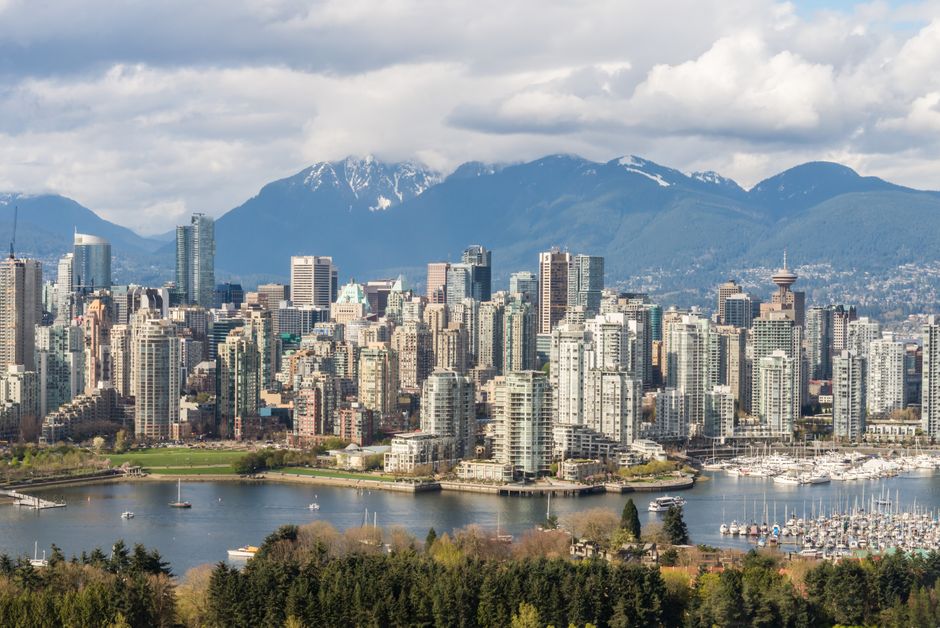
Vancouver is the city where the rainforest meets the sea. Snow-capped North Shore mountains rise straight behind a skyline of glass towers, and a seawall path wraps around the downtown peninsula, past beaches, yacht basins and the giant cedars of Stanley Park. About 660,000 people live in the city itself and roughly 2.6 million in Metro Vancouver, one of the most diverse urban regions in North America, which shows in its food: dim sum and ramen, Indian, Persian and Filipino kitchens, and some of the best sushi outside Japan, alongside wild salmon and spot prawns from the coast. The city stands on the unceded territories of the Musqueam, Squamish and Tsleil-Waututh nations, whose art and history you meet at the Museum of Anthropology and around Stanley Park. Vancouver is also the jumping-off point for the Sea-to-Sky Highway to Whistler, the ferries to Victoria and Vancouver Island, and whale watching in the Salish Sea. Summer is dry and sunny; winter is mild and very wet in the city, with skiing 30 minutes away.
Right now in Vancouver
- Tue 12–16°C 53–61°F Partly cloudy
- Wed 12–18°C 53–64°F Clear
- Thu 12–17°C 54–62°F 3 mm Cloudy
- Mon 12 Oct Thanksgiving
Weather: MET Norway (CC BY 4.0) · Sea temperature: NOAA CoastWatch · Air quality: OpenAQ · Rates: ECB · Holidays: Nager.Date
Top tours in Vancouver
See all tours for Vancouver →
From local operators, with prices and reviews; you check availability and book on Viator, our partner. We may earn a commission at no extra cost to you. How we earn money
Vancouver at a glance
- Best months: June to September for dry, sunny weather, beaches and whale watching; December to March for skiing on the North Shore and at Whistler, if you don’t mind rain in the city.
- Time needed: three days for Stanley Park, Granville Island, Gastown, the Museum of Anthropology and a North Shore mountain or canyon; five or more with Whistler, Victoria or a whale-watching trip.
- Getting there: Vancouver International Airport (YVR) is linked to downtown by the Canada Line SkyTrain; trains run every 6 to 8 minutes for most of the day. VIA Rail and Amtrak trains arrive at Pacific Central Station.
- Costs (as of October 2026): prices are in Canadian dollars; a one-zone transit ride is $3.50 (about US$2.50) and a day pass $12.55; the ride from the airport adds a $6.50 AddFare. Shops add 5% GST plus 7% PST; hotel rooms in the City of Vancouver carry about 19% in taxes.
- Before you go: entry rules (eTA or visa), money and driving in Canada are covered in our Canada travel guide.
Vancouver neighbourhoods and who each one suits
Downtown, Coal Harbour and the West End
The downtown peninsula holds most hotels, the cruise terminal at Canada Place, the Vancouver Convention Centre and the shopping on Robson Street. Coal Harbour, on the north side, has a waterfront path, floatplane docks and views of the mountains. The West End, between Robson Street and English Bay, is a leafy, walkable neighbourhood of apartment towers, cafes and restaurants on Denman and Davie streets, right next to Stanley Park and the beach. This is the easiest base for a first visit without a car.
Gastown and Chinatown
Gastown, the city’s oldest quarter, has cobbled streets, Victorian brick warehouses, the steam clock on Water Street, and many of Vancouver’s best bars and restaurants. Next door, Chinatown is one of the largest in North America, with the Dr. Sun Yat-Sen Classical Chinese Garden, bakeries, herbal shops and a growing number of modern restaurants. The streets between the two, around Main and Hastings, show the city’s visible struggle with homelessness and addiction; they are busy in daytime, but stick to the main streets at night.
Yaletown, False Creek and Granville Island
Yaletown’s former warehouses are now restaurants and patios on the edge of False Creek, an inlet lined with seawall paths and marinas. Small False Creek ferries hop across the water to Granville Island, with its public market and artists’ studios. Good for food lovers and families who want to walk or cycle everywhere.
Kitsilano, Main Street and the North Shore
Kitsilano, across False Creek, is a relaxed beach neighbourhood with a big outdoor saltwater pool, yoga studios and brunch spots on West 4th Avenue. Main Street, south of Chinatown, has independent shops, breweries and cafes. Across Burrard Inlet, North Vancouver’s Lonsdale Quay, reached by the SeaBus, is the gateway to Grouse Mountain, Lynn Canyon and the Capilano Suspension Bridge; staying there suits hikers and skiers.
Top things to see in Vancouver
Stanley Park and the seawall
Stanley Park is Vancouver’s first and largest urban park, a 400-hectare (990-acre) peninsula of West Coast rainforest on the edge of downtown, with beaches, gardens, the Vancouver Aquarium (Canada’s largest), a miniature train and a cluster of First Nations totem poles at Brockton Point, one of the most photographed sights in the city. The park is open from 6 a.m. to 10 p.m. The 9 km (5.6-mile) seawall around it takes 2 to 3 hours to walk or about an hour by bike, with separate lanes for walkers (on the water side) and cyclists and skaters; bike rentals cluster on Denman Street near the park entrance. The seawall is part of a 28 km (17-mile) seaside path that runs from the Convention Centre around Stanley Park, English Bay and False Creek to Spanish Banks, the longest uninterrupted waterfront path in the world. Highlights include Siwash Rock, Third Beach at sunset, Prospect Point and the Lions Gate Bridge. Inland, trails lead to Beaver Lake and big old cedars and Douglas firs.
Granville Island
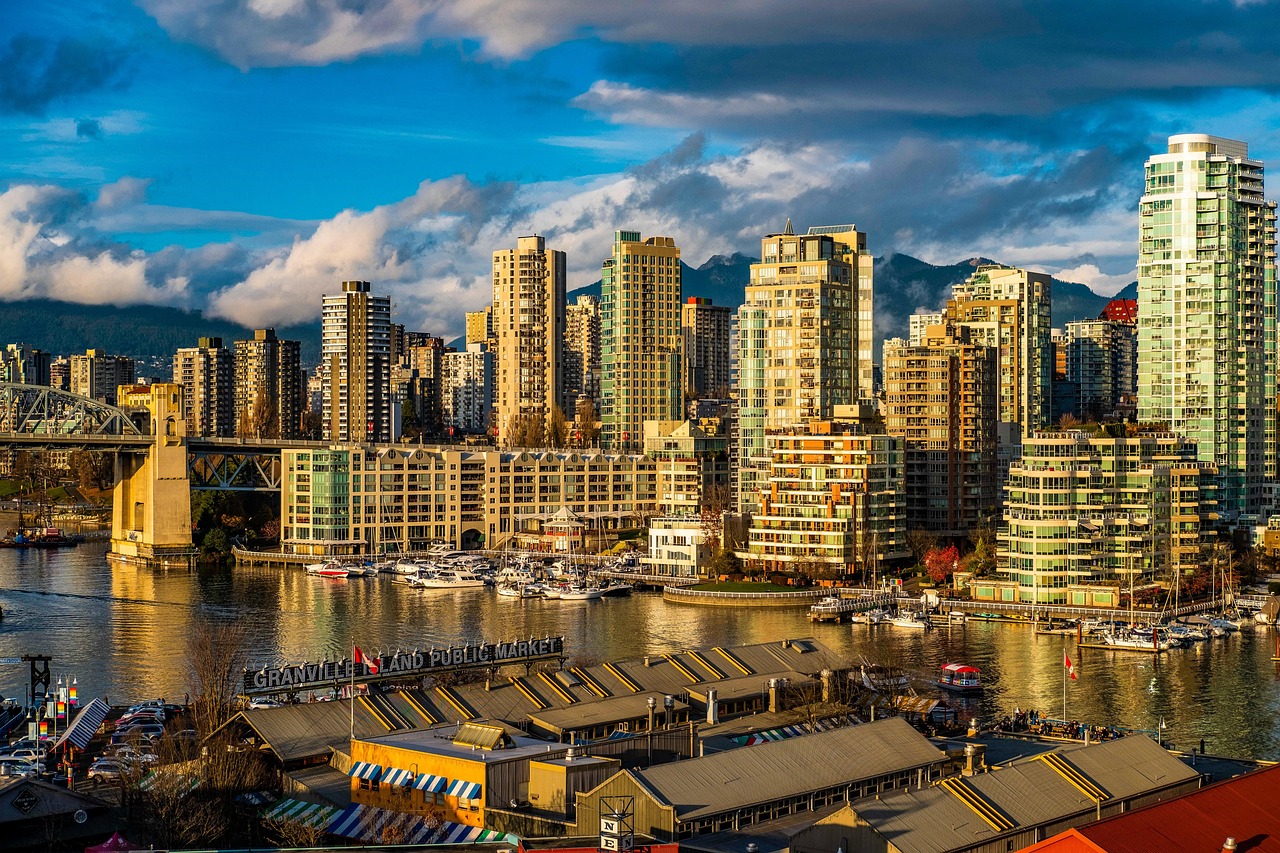
Under the Granville Street Bridge, this former industrial island is now a lively district of studios, theatres, breweries and the Granville Island Public Market (open daily, 9 a.m. to 6 p.m.), packed with fishmongers, bakers, fruit stands and food counters. Arrive by the little False Creek ferries from Yaletown, the West End or Kitsilano; parking on the island is tight on weekends. The Net Loft has craft shops, and there is a separate Kids Market.
Gastown, Chinatown and Canada Place
A morning walk can start at Canada Place, with its white sail-shaped roofs and views of floatplanes and the North Shore, then follow Water Street through Gastown past the steam clock (it whistles on the quarter-hour) and the statue of “Gassy Jack” Deighton, the saloon keeper the neighbourhood is named after. A few blocks east and south, Chinatown’s Millennium Gate leads to the Dr. Sun Yat-Sen Classical Chinese Garden, a Ming-style scholar’s garden, and a free public park beside it. Return by Pender Street to the Harbour Centre tower, whose lookout gives a 360-degree view.
Museum of Anthropology at UBC
On the University of British Columbia campus, on cliffs above the Strait of Georgia, the Museum of Anthropology (MOA) has one of the world’s finest collections of Northwest Coast First Nations art, displayed in a soaring glass-walled Great Hall full of totem poles, house posts and canoes, plus carvings by Haida artist Bill Reid and objects from around the world. From 15 May to 15 October it is open daily from 10 a.m. to 5 p.m.; from 15 October to 15 May it is closed on Mondays. On Thursdays it stays open until 9 p.m., with half-price admission after 5 p.m. Admission: adults $26 (about US$19), seniors (65+) and students $23, youth (6–18) $13, children 5 and under and Indigenous people free. Tickets are sold only at the door. Buses 25, 33, 44, 49, 84, R4 and the 99 B-Line reach UBC Exchange, a 15-minute walk away; parking is $4 an hour.
Capilano Suspension Bridge and Lynn Canyon
The privately run Capilano Suspension Bridge Park in North Vancouver has a long, swaying footbridge high above the Capilano River, plus treetop walkways and the Cliffwalk, a path bolted to the canyon wall. Tickets are timed: you pick an arrival window online (prices are set by date and are subject to GST; children 5 and under are free). Autumn 2026 hours are 10 a.m. to 8 p.m. from 9 October to 1 November (Canyon Frights Halloween event, until 9 p.m. on the last two weekends of October), 10 a.m. to 5 p.m. from 2 to 19 November, and 11 a.m. to 9 p.m. for the Canyon Lights winter festival from 20 November 2026 to 10 January 2027 (closed 25 December). A 25% twilight discount after 5 p.m. runs until 8 October. For a free alternative, the Lynn Canyon Suspension Bridge in the District of North Vancouver’s Lynn Canyon Park hangs about 50 metres (160 feet) above a gorge with pools and waterfalls; it is shorter, but there is no ticket. Pay parking applies from March to October. The pools are cold and dangerous for swimming after rain.
Grouse Mountain
Fifteen minutes’ drive from the Lions Gate Bridge (or by bus from Lonsdale Quay), Grouse Mountain’s Skyride aerial tram lifts you to a viewpoint about 1,100 metres (3,600 feet) above the city, with views over the whole region on a clear day. A Mountain Admission ticket includes the Skyride, a theatre and the summit trails; in October 2026 the mountain is open daily from 7:30 a.m. to 9 p.m. and a new gravity coaster has just opened. The Grouse Grind, a brutal 2.5 km (1.6-mile) trail straight up the face of the mountain, is a local rite of passage; you buy a one-way Skyride ticket down. The trail is managed by Metro Vancouver, which posts its hours and its seasonal closure each autumn. In winter Grouse becomes a small ski area with night skiing, snowshoeing and a skating pond.
Beaches, gardens and viewpoints
English Bay and Sunset Beach in the West End are the city’s sunset beaches; Kitsilano Beach has the outdoor pool, and Spanish Banks and Jericho Beach, farther west, have huge tidal flats at low tide. The water stays cool, around 15–18 °C (59–64 °F) in summer. On the south side of the city, Queen Elizabeth Park sits on the highest point in Vancouver with gardens and views of downtown, next to the Bloedel Conservatory, and VanDusen Botanical Garden is a short bus ride away. Science World, under its silver geodesic dome at the end of False Creek, is the city’s family-friendly science centre.
Other sights
- Canada Place
- Granville Island
Historic centres
- Gastown
Beaches
- English Bay
Parks and gardens
- Stanley Park
Nature
- Capilano Suspension Bridge
Viewpoints
- Grouse Mountain
Activities and best months
- Boat tripsMarAprMayJunJulAugSepOctNovPrince of Whales runs half-day whale-watching tours from Vancouver, March to November, 3-5 hours (from $229 per adult plus taxes and fees). · source
- CyclingThe Seawall is a 28 km seaside greenway from the Convention Centre to Spanish Banks, with separate lanes for walkers and cyclists; the 9 km loop around Stanley Park takes 2-3 hours on foot or about 1 hour by bike. · source
Other things to do in Vancouver
Whale watching in the Salish Sea
Whale-watching boats leave from downtown and from Steveston, in Richmond, for the waters around the Gulf Islands, where orcas, humpback whales, sea lions, seals and bald eagles are regular sightings. Trips last 3 to 5 hours. Prince of Whales, for example, runs half-day tours from downtown from March to November, from $229 per adult plus taxes and fees, with seasonal pricing. The best months are roughly May to October, when the sea is calmer and humpbacks are most numerous. Bring a warm, windproof layer even in August.
Skiing on the North Shore in 2026/27
Vancouver is one of the few big cities where you can ski after work. Three local mountains sit 20 to 40 minutes from downtown: Grouse Mountain, Cypress Mountain (Olympic venue in 2010, with the most terrain and cross-country trails) and Mount Seymour (the most family-friendly). All three have 2026/27 season passes on sale, but they do not set fixed opening days: they open when there is enough snow, usually in December, and the season typically runs into spring. Night skiing on floodlit runs is a big part of the appeal. Whistler Blackcomb, about two hours north, normally opens in late November; check each resort’s site for opening dates and snow reports.
- Food: sushi and izakaya, dim sum in Richmond, wild salmon, spot prawns in May and June, the Japanese-style hot dogs at street carts, and the many night markets in summer.
- Cycling: a network of protected bike lanes and the seawall make Vancouver one of the best cycling cities in North America; the Mobi bike-share has stations downtown.
- Kayaking and paddleboarding: rent from Granville Island, English Bay or Deep Cove in North Vancouver, where the Indian Arm fjord is calm and green.
- Hiking: the Baden-Powell Trail, Quarry Rock above Deep Cove and Lighthouse Park in West Vancouver are easy starts; mountain trails above the city stay snowy until June.
- Hockey and live events: the Vancouver Canucks play at Rogers Arena from October to April, and BC Place hosts football and big concerts.
Day trips from Vancouver
The Sea-to-Sky Highway to Squamish and Whistler
Highway 99, the Sea-to-Sky Highway, follows the fjord of Howe Sound from Horseshoe Bay to Squamish and climbs to Whistler, about 125 km (78 miles) and two hours from downtown. Stop at Porteau Cove, Shannon Falls and the Sea to Sky Gondola above Squamish, the climbing capital of Canada beneath the granite wall of the Stawamus Chief. Whistler, host of the 2010 Winter Olympics, has a car-free village, summer mountain biking and the largest ski area in North America in winter. Between 1 October and 30 April drivers must have winter tires on signed highways outside the Lower Mainland, including this one; most rental cars in Vancouver come with all-season tires, so ask when you book. Coach companies run year-round services if you prefer not to drive.
Victoria and Vancouver Island by ferry
BC Ferries sails from Tsawwassen, south of the city, to Swartz Bay near Victoria, a crossing of about an hour and a half through the islands, and from Horseshoe Bay, northwest of the city, to Nanaimo’s Departure Bay. A day trip to Victoria is possible but long; it is better to stay at least one night (see our Victoria guide). From Nanaimo, Highway 4 runs west to Tofino and the Pacific Rim National Park Reserve, about three hours’ drive (see our Tofino guide). Floatplanes and helicopters from the downtown harbour reach Victoria in well under an hour.
| BC Ferries one-way fare (from 16 June 2026) | At the terminal | Saver fare (prepaid) | Notes |
|---|---|---|---|
| Adult or senior (12+) | $21 | $15 | Same on Tsawwassen–Swartz Bay and Horseshoe Bay–Nanaimo |
| Child (5–11) | $10.50 | $7.50 | Under 5 free |
| Car up to 20 ft (6.1 m), driver not included | $89 | $34–$84 | Plus 5% fuel surcharge on all fares |
| Reservation without prepaying | $20 fee, then pay the terminal fare | Vehicles from Horseshoe Bay to Nanaimo must book ahead | |
On summer weekends and holidays, cars without a booking can wait several sailings; foot passengers rarely need to book. From downtown, the Canada Line and a bus reach Tsawwassen, and buses run to Horseshoe Bay.
Seattle and the Fraser Valley
Seattle is about 230 km (143 miles) south, three to four hours by car or train depending on the border wait; Amtrak Cascades trains leave from Pacific Central Station (see “Getting there”). Inland, the Fraser Valley has farm stands, wineries and Harrison Hot Springs, and Fort Langley is a pretty village with a reconstructed fur-trading post. US citizens and visitors returning to the United States need the right documents for the border; see our United States travel guide.
Nearby destinations
- Victoria95 km
- Whistler96 km
- Olympic National Park180 km
- Seattle193 km
- Tofino203 km
- Okanagan251 km
- Mount Rainier National Park287 km
Getting there and getting around
From Vancouver International Airport (YVR)
YVR, on Sea Island in Richmond, is Canada’s main gateway to Asia and has flights across North America and to Europe. The Canada Line SkyTrain runs from the airport to Waterfront Station downtown in roughly 25 minutes, every 6 minutes at peak times and every 8 to 15 minutes at other times; the first train from Waterfront leaves at 4:48 a.m. and the last at 1:08 a.m. Every journey that starts at YVR–Airport, Sea Island Centre or Templeton stations pays a $6.50 YVR AddFare on top of the normal fare. The airport is in fare zone 2, so on weekdays before 6:30 p.m. an adult pays $5.10 plus the AddFare ($11.60 in total, about US$8.40); in the evenings and at weekends the whole system is one zone ($3.50 plus $6.50, or $10). Tapping a contactless card at the gate does this automatically. Taxis and ride-hailing take 25 to 40 minutes, depending on traffic.
SkyTrain, buses and the SeaBus
TransLink runs the SkyTrain (driverless trains on the Expo, Millennium and Canada lines), buses, the SeaBus and the West Coast Express commuter train. Fares rose by an average of 5% on 1 July 2026. Metro Vancouver is split into three fare zones, but buses are always one zone, and all trips after 6:30 p.m. on weekdays, at weekends and on statutory holidays are one zone too. A fare is valid for 90 minutes of transfers. On SkyTrain and SeaBus, tap in and tap out at the gates; on buses, tap only when you board.
| Fare (from 1 July 2026) | 1 zone | 2 zones | 3 zones |
|---|---|---|---|
| Adult, contactless card/phone or cash ticket | $3.50 | $5.10 | $6.70 |
| Adult, Compass Card stored value | $2.85 | $4.20 | $5.40 |
| Concession (seniors 65+, youth 13–18) | $2.30 | $3.40 | $4.60 |
| DayPass, all zones (adult / concession) | $12.55 / $9.75, valid until 4 a.m. the next day; not on West Coast Express | ||
Children 12 and under ride free on buses, SkyTrain and SeaBus; ask an attendant to open the gate for them. Contactless payment (Visa, Mastercard, American Express, Interac debit, Apple Pay, Google Pay and Samsung Pay) is the simplest option for a short stay, but it only pays single adult fares; buy a Compass Card at a station machine for stored value, a DayPass or concession fares. The SeaBus crosses Burrard Inlet from Waterfront Station to Lonsdale Quay in North Vancouver in 12 minutes, every 15 minutes for most of the day (every 10 minutes at weekday rush hours); at weekday peak times it is a two-zone trip.
Trains, buses and driving
Pacific Central Station, near Main Street–Science World SkyTrain station, is the terminus of VIA Rail’s Canadian, the four-night transcontinental train from Toronto through Jasper and the Rockies, which runs a couple of times a week (see our Canada travel guide). Amtrak Cascades trains and connecting buses run from the same station to Seattle and Portland; Amtrak asks passengers to arrive an hour early to clear border formalities. Long-distance buses also leave from here. In the city, you do not need a car: traffic is heavy at bridge crossings and downtown parking is expensive. Rent one for the Sea-to-Sky Highway, the Okanagan or Vancouver Island.
When to go and how long to stay
Vancouver has the mildest winters of any big Canadian city, but it is famously wet: about 1,190 mm (47 in) of rain falls a year, most of it from October to March, when grey, drizzly days can run for weeks. November is the wettest month. In exchange, snow in the city is rare and short-lived, around 38 cm (15 in) a season, while the North Shore mountains get plenty. Summers are dry, sunny and pleasantly warm rather than hot, though recent summers have brought heat waves and occasional wildfire smoke from the interior. July and August are the busiest and most expensive months; late May, June and September are often the best balance of weather and prices.
| Season | Average high | Average low | What it’s like |
|---|---|---|---|
| Spring (Mar–May) | 10–17 °C (50–62 °F) | 3–9 °C (38–48 °F) | Cherry blossoms in March and April; showers and sunny spells. |
| Summer (Jun–Aug) | 20–22 °C (67–72 °F) | 12–14 °C (53–57 °F) | Dry and sunny; the driest month, July, gets about 36 mm (1.4 in) of rain. |
| Autumn (Sep–Nov) | 19 °C falling to 9 °C (66 to 48 °F) | 11 to 3 °C (51 to 38 °F) | September often fine; rain returns in October and peaks in November. |
| Winter (Dec–Feb) | 6–8 °C (43–47 °F) | 1–2 °C (33–35 °F) | Mild, wet and grey in the city; snow on the mountains for skiing. |
Figures are Environment and Climate Change Canada’s 1981–2010 climate normals for the Vancouver International Airport station. Downtown is similar; the North Shore gets much more rain and snow.
Events worth planning around
- Vancouver Cherry Blossom Festival (March–April): thousands of ornamental cherry trees bloom across the city.
- Canada Day (1 July): celebrations at Canada Place and fireworks.
- Celebration of Light (late July to early August): an international fireworks competition over English Bay.
- Vancouver Pride (early August): one of Canada’s biggest Pride parades through the West End.
- Vancouver International Film Festival (late September to October) and holiday lights at Canyon Lights, VanDusen and Stanley Park in December.
Dates change every year; check the organizers’ websites before you book. Hotels fill up and prices climb during the fireworks, on big cruise days from May to September, and around major conventions.
How long to stay: 3, 4 and 6 days
- Three days: Stanley Park and the seawall by bike; Gastown, Chinatown and Granville Island; the Museum of Anthropology and Kitsilano Beach; the SeaBus to Lonsdale Quay and Lynn Canyon or Grouse Mountain.
- Four days: add a whale-watching trip or a day on the Sea-to-Sky Highway to Squamish.
- Six days: add two nights in Victoria or Whistler, or continue across Vancouver Island to Tofino.
Where to stay in Vancouver and the taxes on your bill
- Downtown and Coal Harbour: the widest choice of hotels, close to Canada Place, the Canada Line and the SeaBus.
- West End: quieter streets, some older and cheaper hotels, and the beach and Stanley Park on the doorstep.
- Yaletown and False Creek: stylish, close to the seawall and the Granville Island ferries.
- North Vancouver and Richmond: often cheaper; North Vancouver suits hikers and skiers, Richmond suits early flights and Asian food.
Taxes: listed prices in British Columbia do not include tax. Most goods and services carry 5% GST plus 7% PST. Short-term accommodation pays 8% PST instead of 7%, plus a 3% Municipal and Regional District Tax (MRDT) in the City of Vancouver and a temporary 2.5% Major Events MRDT that applies in the city until 31 January 2030. Because these provincial taxes add up to more than 12%, the 5% GST is charged on them as well, so a $200 room costs about $238 a night, roughly 19% on top. North Vancouver and Richmond have their own MRDT but not the Major Events tax. Watch for extra “destination” or resort fees, which are taxed too, and parking at $40 or more a night downtown.
Practical tips for Vancouver
- Time zone: Pacific Time, the same as Seattle and Los Angeles; clocks go back one hour on 1 November 2026.
- Restaurants and tipping: tip 15–20% before tax. Most food bought in restaurants carries 5% GST but no PST; alcohol carries PST.
- Safety: Vancouver is generally safe, but car break-ins are common, so leave nothing visible in a parked car. The Downtown Eastside, around Hastings and Main, has visible drug use; it is not a no-go area by day, but be aware.
- Mountains: North Shore trails look close to the city but are steep, wet and get dark early; search-and-rescue teams are called out often. Carry a light, layers and water, and tell someone your plan. Snow lingers on higher trails until June.
- Wildlife: black bears and coyotes live on the North Shore and even in city parks; keep food packed away, keep dogs leashed, and give bears space.
- Earthquakes: the region is seismically active; hotels post safety information. Drop, cover and hold on if the ground shakes.
- Emergencies: call 911.
What to pack for Vancouver
Locals live in waterproof shells, and you should too: a good rain jacket with a hood matters more than an umbrella in October to April. Pack layers (a fleece or light down jacket for evenings on the water, even in summer), comfortable waterproof walking shoes for the seawall and forest trails, and proper hiking shoes if you plan to tackle the Grouse Grind or North Shore trails. In summer bring sunscreen, sunglasses and a swimsuit for the beaches and the Kitsilano pool. Skiers can rent equipment on the mountains.
What to pack
- Dry bags and phone pouchesSpray soaks phones and cameras on open boats to the Algarve caves and on whale-watching trips.
- Fleeces and warm layersIt is cooler at sea than on land, especially on morning whale-watching trips.
- Rain jacketsA windproof, waterproof shell keeps you warm on open boats, where wind and spray cool you quickly.
- Reef-friendly sunscreenSun reflects off the water on cruises and cave tours.
- Water bottles and hydration packsRiding in the Algarve and Alentejo heat needs more water than you expect.
- Water shoesKayak and small-boat trips to the Algarve grottoes land on rock and wet sand.
Vancouver travel FAQ
How do I get from Vancouver airport to downtown?
Take the Canada Line SkyTrain to Waterfront Station, about 25 minutes. An adult fare on weekdays before 6:30 p.m. is $5.10 plus the $6.50 YVR AddFare ($11.60); evenings and weekends it is $10. Tap a contactless card at the gate.
How much is a bus or SkyTrain ticket in Vancouver?
An adult one-zone fare is $3.50 with a contactless card ($2.85 with Compass stored value); buses are always one zone. A DayPass for all zones is $12.55. Children 12 and under ride free.
How long does it take to walk the Stanley Park seawall?
The 9 km loop around Stanley Park takes 2 to 3 hours on foot or about an hour by bike. Walkers and cyclists have separate lanes.
Is the Capilano Suspension Bridge worth it, or should I go to Lynn Canyon?
Capilano has the longer, higher bridge plus treetop walks and the Cliffwalk, with timed tickets bought online. Lynn Canyon’s bridge is smaller but free, in a forest park with waterfalls. On a tight budget, choose Lynn Canyon.
How much is the Museum of Anthropology?
Adults pay $26, seniors and students $23 and youth $13; it is half price on Thursday evenings after 5 p.m. It is closed on Mondays from 15 October to 15 May.
How much is the ferry from Vancouver to Victoria?
BC Ferries from Tsawwassen to Swartz Bay costs $21 for an adult and $89 for a standard car at the terminal (plus a 5% fuel surcharge). Prepaid Saver fares can be cheaper, and a booking without prepaying costs $20.
What taxes are added to hotel bills in Vancouver?
In the City of Vancouver: 8% PST, 3% MRDT and a 2.5% Major Events MRDT, with 5% GST charged on top of the room and those taxes, about 19% in total.
When is the ski season near Vancouver?
Grouse, Cypress and Seymour open when there is enough snow, usually in December, and ski into spring. Whistler Blackcomb usually opens in late November. Check the resorts for 2026/27 opening dates.
How far is Whistler from Vancouver?
About 125 km (78 miles), roughly two hours on the Sea-to-Sky Highway. Winter tires are required on that road from 1 October to 30 April.
When is the best time to visit Vancouver?
June to September for sunshine and outdoor life, with late May, June and September the best value. Come in winter for skiing and lower hotel prices, but expect a lot of rain in the city.
Sources
- © OpenStreetMap contributors · ODbL · fetched 4 Oct 2026
- Wikidata · CC0 · fetched 4 Oct 2026
Sources and last review
Researched and last reviewed on 4 October 2026. Transit fares, zones, the YVR AddFare, Canada Line times and SeaBus frequencies come from TransLink; ferry fares and booking rules from BC Ferries’ fare guide effective 16 June 2026; accommodation taxes from the Government of British Columbia (PST and MRDT) and its MRDT map; Stanley Park and seawall facts from the City of Vancouver; Museum of Anthropology hours and prices from MOA at UBC; Capilano hours from Capilano Suspension Bridge Park; Grouse Mountain hours and the Grind from Grouse Mountain; Granville Island market hours from Granville Island; whale-watching seasons and prices from Prince of Whales; winter tire rules from the BC government; Amtrak station details from Amtrak Cascades; climate from Environment and Climate Change Canada’s 1981–2010 normals for Vancouver International Airport; population from Wikidata. Lynn Canyon details, Canada Line travel time, VIA Rail frequency, distances and drive times, ski opening patterns, water temperatures, events and some historical details are flagged for checking. Prices and timetables change, so check the official sites before you go. For entry rules, money and general safety, see our Canada travel guide.
Plan your trip
Partner links: TravelerCenter may earn a commission if you book, at no extra cost to you.