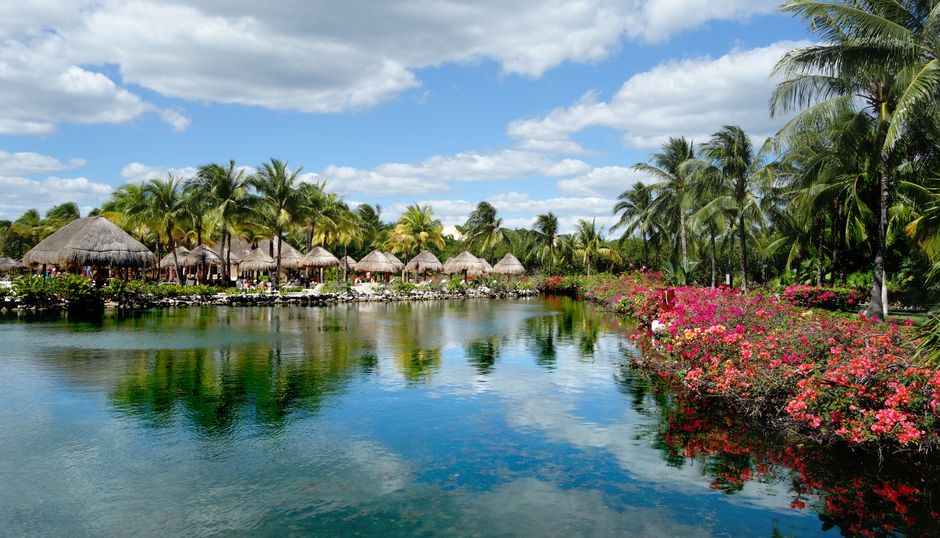
The Riviera Maya is the stretch of Caribbean coast in Quintana Roo that runs south from just below Cancún, past Puerto Morelos, Playa del Carmen, Puerto Aventuras and Akumal, to Tulum, about 130 km (80 miles) of white beaches, mangroves and jungle along Highway 307. Just offshore lies the Mesoamerican Reef, the largest barrier reef in the Americas, and inland, hundreds of cenotes and underground rivers. It is Mexico’s all-inclusive resort heartland, but also a place for snorkeling with turtles, diving in caves, family theme parks such as Xcaret and Xel-Há, and day trips to the Maya ruins of Tulum, Cobá and Chichén Itzá. The best time is December to April; sargassum seaweed can affect the beaches from about spring to early fall, and June to November is hurricane season.
Right now in Riviera Maya (Playa del Carmen)
- Thu24–30°C76–85°F6 mm rain
- Fri25–29°C78–84°F9 mm rain
- Sat26–28°C79–83°F2 mm rain
Top tours in Riviera Maya
See all tours for Riviera Maya →
From local operators, with prices and reviews; you check availability and book on Viator, our partner. We may earn a commission at no extra cost to you. How we earn money
The Riviera Maya at a glance
- Best for: beach resorts and all-inclusives, snorkeling and diving, cenotes, theme parks, family holidays and easy day trips to Maya ruins.
- How long: 5–7 days for one base with a few day trips; 10 days or more to combine two bases, such as Playa del Carmen and Tulum, with the inland Yucatán.
- Best time: December to April, with highs of 29–31 °C (84–87 °F) and calm, sunny days. September and October are the wettest months and the peak of hurricane season.
- Getting there: fly to Cancún (CUN), 15 minutes from Puerto Morelos and about an hour from Playa del Carmen, or to the new Tulum airport (TQO) in the south.
- Getting around: ADO buses and colectivo vans along Highway 307, the Tren Maya, resort shuttles, or a rental car for cenotes and ruins.
- Before you go: every foreign visitor pays the Quintana Roo VISITAX, MXN 293 as of October 2026; entry rules, money and general safety are in our Mexico travel guide.
The Riviera Maya’s towns and who each one suits
The Riviera Maya is not an official town but a tourism name for the coast of the municipalities of Puerto Morelos, Solidaridad (Playa del Carmen), Tulum and part of Cozumel’s mainland. Highway 307 runs a little inland, parallel to the sea, with resorts and villages along short side roads. Cancún, Isla Mujeres and Cozumel, just off the coast, have their own guides.
Puerto Morelos
A small, relaxed fishing town with a leaning lighthouse, about 20 minutes south of Cancún airport, protected by its own national park reef just offshore. Big all-inclusives line the coast on either side, while the town itself has small hotels, seafood restaurants and the start of the Ruta de los Cenotes inland. Good for snorkelers, families and anyone who wants Cancún’s flights without its crowds.
Playa del Carmen and Playacar
The coast’s liveliest town, with the pedestrian Quinta Avenida, beach clubs, nightlife and ferries to Cozumel. Playacar, to the south, is a gated zone of all-inclusives and a golf course. See our Playa del Carmen guide.
Puerto Aventuras, Akumal and Xpu-Há
Between Playa del Carmen and Tulum, Puerto Aventuras is a marina town with condos and boat trips; Akumal, whose name means “place of the turtles” in Maya, has a bay where green sea turtles feed; and Xpu-Há has a long, quiet beach. These are calmer, family-friendly bases with resorts, villas and a few small hotels.
Tulum
At the southern end, the cliff-top Maya ruins, the Jaguar National Park, boutique hotels on the beach road and the cenotes and Sian Ka’an reserve beyond. See our Tulum guide.
Top things to see in the Riviera Maya
Prices and hours below were checked on the official sites in October 2026, unless we say otherwise; check again before you go.
Puerto Morelos Reef National Park
Just a few hundred meters off the beach in Puerto Morelos, this protected stretch of the Mesoamerican Reef is one of the easiest places on the coast to snorkel over coral, with rays, turtles and schools of tropical fish. Local cooperatives and licensed operators run short boat trips from the town pier. The national protected areas commission (CONANP) charges a conservation fee of MXN 125 (about US$7) per person per day, usually included by operators, and lists the park as open from 6 a.m. to 9 p.m. Snorkel with a vest, only with authorized guides, and never stand on or touch the coral.
The cenotes
The Riviera Maya sits above some of the longest flooded cave systems in the world, and hundreds of cenotes open into them. The Ruta de los Cenotes, a road running inland from Puerto Morelos, links a string of family-run cenotes with platforms, zip lines and jumps; around Tulum and Akumal, Dos Ojos and the cenotes of the Sac Actun system draw cave divers, and Gran Cenote is popular with snorkelers. Each sets its own entry fee, often payable only in cash. Shower before swimming, use no sunscreen or repellent in the water, and wear a life jacket if you are not a confident swimmer.
Akumal’s turtles
Green sea turtles graze on the seagrass in Akumal Bay all year. To protect them, snorkeling is limited to marked zones, life jackets are required, and local guides take small groups out; never touch, feed or chase the turtles, and keep your fins off the bottom. Arrive early, before the tour buses, and pay only at the official access points.
Xcaret, Xel-Há and the theme parks
The Xcaret group runs several big nature and adventure parks along the coast: Xcaret, south of Playa del Carmen, with underground rivers, a coral reef aquarium, Mexican folk shows and a large evening spectacle; Xel-Há, an all-inclusive park built around a natural inlet for snorkeling and floating; and Xplor, with zip lines and amphibious vehicles. Tickets are sold by date and package on the parks’ official websites, with discounts for booking online in advance; they are expensive by Mexican standards, so compare what each package includes. Only biodegradable sunscreen without certain chemicals is allowed in the parks.
The Tulum ruins and Cobá
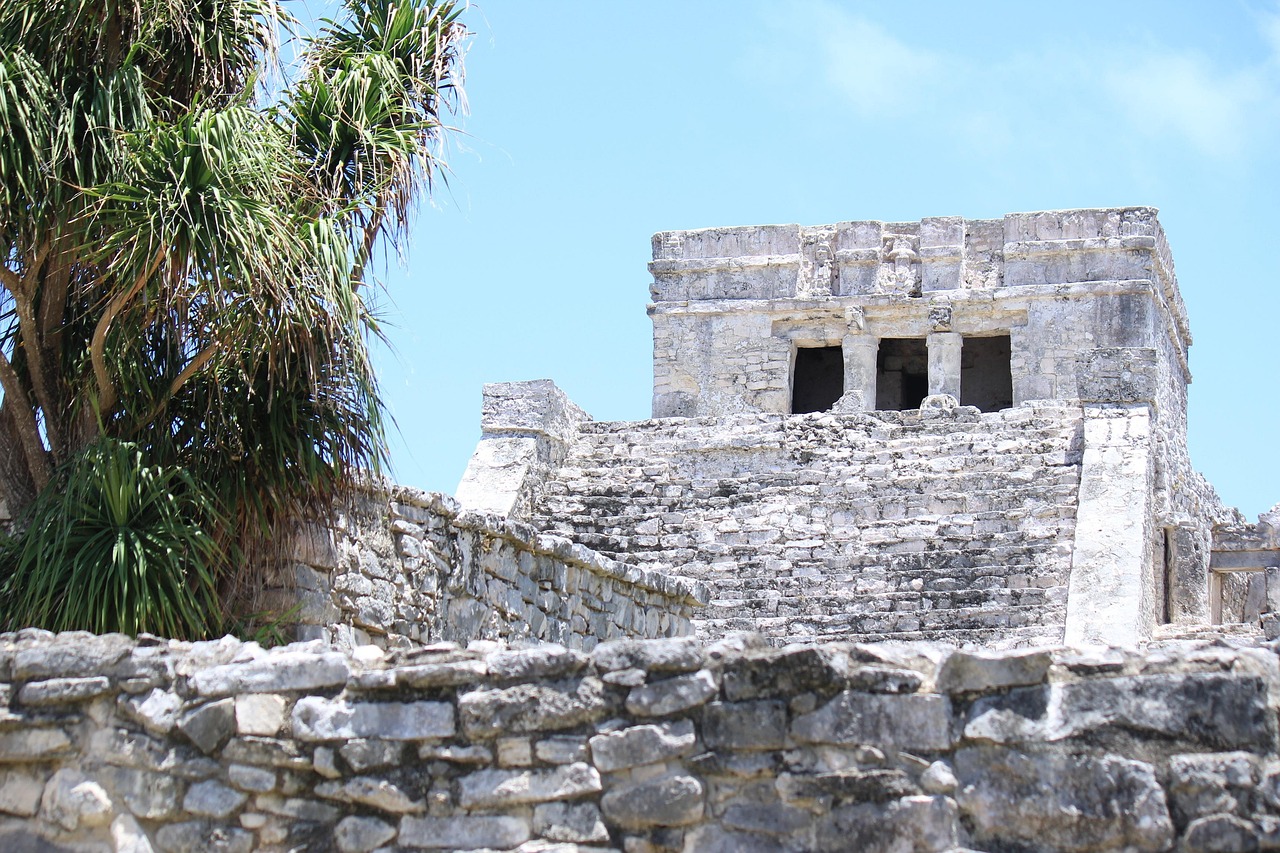
Tulum’s walled Maya port on a cliff above the sea is the coast’s most famous sight. Since July 20, 2026, foreign visitors pay MXN 265 (about US$15) in all: MXN 100 for the Jaguar National Park and MXN 165 for the archaeological zone and Tulum National Park, according to INAH and the federal decree; it opens 8 a.m. to 5 p.m. Inland, Cobá’s jungle-covered city costs MXN 210 for foreigners. Details are in our Tulum guide.
More to see
- Puerto Morelos lighthouse: the leaning old lighthouse, knocked askew by Hurricane Beulah in 1967, beside the newer one.
- Sian Ka’an Biosphere Reserve: lagoons, mangroves and ancient canals south of Tulum; CONANP charges MXN 225 per person per day.
- Botanical gardens and the crocodile sanctuary near Puerto Morelos: easy half-day outings for families.
Protected areas
- Arrecife de Puerto Morelos National Park
Theme parks
- Xel-Há Park
Caves
- Sistema Dos Ojos
Beaches and sargassum in the Riviera Maya
The coast has long white-sand beaches with clear, warm water, often calmer behind the reef; the best include Xpu-Há, Akumal, the beaches of Playa del Carmen, Puerto Morelos and the Jaguar National Park in Tulum. All Mexican beaches are public by law, though in practice access is often through hotels, clubs or paid entrances. Some stretches have currents and no lifeguards, so check the warning flags.
Sargassum, a floating brown seaweed, can pile up on these beaches in some weeks, usually from about April or May to September; amounts vary enormously from year to year and beach to beach, and 2026 has been a heavy year. Hotels and towns rake it away each morning, and some use barriers offshore. The Mexican Navy (SEMAR) publishes a daily sargassum bulletin with satellite detections, a 24- to 48-hour forecast for beaches including Puerto Morelos, Playa del Carmen, Akumal and Tulum, and a traffic-light level; Quintana Roo’s state monitoring network also maps conditions beach by beach. In July 2026 the federal government announced a plan with the Navy to collect more sargassum at sea. When the beaches are affected, the cenotes, the parks and the west coast of Cozumel are good alternatives.
Activities and best months
- Boat tripsSian Ka'an Biosphere Reserve, south of Tulum, charges MXN 225 per person per day (CONANP).
- SnorkelingCONANP's Arrecife de Puerto Morelos National Park, the reef off Puerto Morelos at the north of the Riviera Maya, charges MXN 125 per person per day and opens 6:00-21:00.
Other things to do in the Riviera Maya
Diving
Divers can combine reef dives off Puerto Morelos and Playa del Carmen, the famous walls and drift dives of Cozumel a ferry ride away, bull sharks off Playa del Carmen in winter, and guided cavern dives in the cenotes, a unique experience in clear fresh water. Cave dives beyond the daylight zone need special certification.
Food and drink
Leave the resort for at least a few meals: fish tacos and ceviche at beach shacks, cochinita pibil and other Yucatecan dishes in town, and seafood in Puerto Morelos. All-inclusive packages are convenient, but local restaurants are far cheaper and often better.
Day trips and onward travel
Cozumel is a 35- to 45-minute ferry ride from Playa del Carmen, with Ultramar and Winjet both charging about MXN 320 (about US$18) one way for adults as of October 2026; see our Cozumel guide. Isla Mujeres is reached by ferry from Cancún, about an hour north. Inland, Chichén Itzá and the colonial town of Valladolid make a long day trip of about 2 to 2.5 hours each way from Playa del Carmen; foreign visitors pay MXN 697 at Chichén Itzá (INAH and Yucatán state fees together). Bacalar‘s lagoon of seven colors is about 2.5 hours south of Tulum. See our Cancún, Isla Mujeres, Mérida and Tulum guides.
Nearby destinations
- Playa del Carmen0 km
- Cozumel Island29 km
- Tulum62 km
- Cancun64 km
- Isla Mujeres77 km
- Holbox104 km
- Bacalar257 km
- Mérida267 km
Getting there and getting around
Airports
Cancún International (CUN), run by ASUR, is the main gateway, with four terminals and flights from across North America and Europe. ADO buses leave from Terminals 2, 3 and 4 for Playa del Carmen (about MXN 270, 1 hour 15 minutes to 1 hour 50 minutes) and Tulum (about MXN 475, 2 hours 45 minutes to 3 hours), according to ADO; resorts usually arrange shuttles. Tulum International (TQO), opened in December 2023, is closer for the southern Riviera Maya, with fewer flights.
The Tren Maya
The Tren Maya has stations at Cancún Aeropuerto, Puerto Morelos, Playa del Carmen, Tulum and Tulum Aeropuerto. According to the operator, the Cancún–Playa del Carmen service, via Puerto Morelos, resumed on August 15, 2026 with four trips a day (two each way) of about 49 minutes, and trains between Cancún airport and Chetumal stop at Tulum. Foreign visitors pay the international fare, which varies with the date; book on the official site (reservas.ventaboletostrenmaya.com.mx), the Tren Maya app or at stations. The stations are outside the town centers, so plan your last mile.
Highway 307, buses, colectivos and cars
Highway 307 is a four-lane road from Cancún to Tulum, with speed bumps and pedestrian bridges near towns; drive carefully, especially at night, and use the U-turn lanes (retornos) rather than crossing. ADO buses connect the towns, and white colectivo vans run up and down the highway all day, stopping on request for a few dozen pesos, the cheapest way to reach Akumal, Xpu-Há and the cenotes. Taxis are plentiful but agree the fare first. A rental car is best for cenote-hopping and the ruins; check that the price includes Mexican third-party insurance.
When to go and how long to stay
The Riviera Maya is warm all year. The table uses the National Meteorological Service’s (SMN-Conagua) 1991–2020 climate normals for the Tulum weather station, at the southern end of the coast; Puerto Morelos and Playa del Carmen are similar, with slightly more rain toward Cancún.
| Season | Average high / low | Rainy days per month | What it’s like | Good for |
|---|---|---|---|---|
| Winter (Dec–Feb) | 29–30 °C (84–85 °F) / 18–19 °C (65–66 °F) | 4–7 | Warm and sunny; occasional windy northerly fronts | Beaches, ruins, parks; peak prices around the holidays |
| Spring (Mar–May) | 30–31 °C (87–89 °F) / 21–22 °C (69–71 °F) | 4–6 | Dry and sunny; spring break and Easter crowds | Snorkeling and diving with calm seas |
| Summer (Jun–Aug) | 31–32 °C (88–89 °F) / 22–23 °C (72–73 °F) | 8–9 | Hot and humid, short storms, turtle nesting | Cenotes, turtles, whale sharks from Isla Mujeres |
| Fall (Sep–Nov) | 31 °C falling to 30 °C (88 to 86 °F) / 22 °C falling to 20 °C (72 to 67 °F) | 11 in September, 8 in November | Wettest months, peak hurricane season, then calmer | Deals and quiet beaches; watch the forecast |
The Tulum station records about 1,120 mm (44 in) of rain a year, with October the wettest month.
Hurricane season: according to NOAA’s National Hurricane Center, the Atlantic hurricane season runs from June 1 to November 30, peaking from mid-August to mid-October. Resorts on this coast have hurricane plans and shelters; if a storm threatens, follow Quintana Roo’s civil protection authorities and your hotel, and keep an eye on Mexico’s National Meteorological Service (SMN) and the National Hurricane Center. Consider travel insurance that covers weather.
5 days in the Riviera Maya
Base yourself in Playa del Carmen or Puerto Morelos. Day one, snorkel the Puerto Morelos reef. Day two, the Tulum ruins at opening, then Akumal’s turtles. Day three, Xcaret or Xel-Há. Day four, cenotes on the Ruta de los Cenotes or around Tulum. Day five, a ferry to Cozumel or a beach day.
10 days in the Riviera Maya and Yucatán
Split your time between Playa del Carmen and Tulum, add Cobá and Sian Ka’an, then head inland to Valladolid, Chichén Itzá and Mérida by car, bus or Tren Maya, and fly home from Mérida or back from Cancún.
Where to stay in the Riviera Maya and the hotel taxes
- Puerto Morelos: small hotels in town and all-inclusives nearby; closest to Cancún airport.
- Playa del Carmen and Playacar: every type of hotel, from hostels to all-inclusives, with the most restaurants and nightlife.
- Puerto Aventuras, Akumal and Xpu-Há: family resorts, condos and villas on quieter beaches.
- Tulum: boutique beach hotels and budget stays in town.
Rooms carry 16% IVA plus Quintana Roo’s lodging tax of 5% (6% when booked through a platform such as Airbnb), according to the state’s lodging tax law. Municipalities add an environmental sanitation fee per room per night, collected by the hotel: in Playa del Carmen (Solidaridad) and Tulum it is MXN 35.19 for one guest, MXN 58.66 for two, MXN 76.25 for three and MXN 87.98 for four or more, not counting children under 12, as of 2026. All foreign visitors must also pay VISITAX, MXN 293 per person, online before leaving the state. All-inclusive prices are usually quoted per person, sometimes before tax; compare totals.
Practical tips for the Riviera Maya
- Pay in pesos: prices in dollars at resorts and parks are usually worse value; carry pesos for colectivos, cenotes and local food.
- Book parks and tours direct: buy from official websites or licensed operators, not from street touts or timeshare salespeople offering “free” tours.
- Protect the reef and cenotes: no sunscreen in cenotes, biodegradable sunscreen only at sea, and never touch coral or turtles.
- Tipping: 10–15% in restaurants; at all-inclusives, small tips for staff are customary but optional.
- Safety: the resort areas are busy and patrolled, and the cartel-related violence seen in some other states is concentrated away from the tourist zones. Use official taxis or hotel transport, don’t buy drugs, keep valuables in the safe, and swim only where it is calm, as some beaches have currents and no lifeguards.
- Emergencies: call 911.
What to pack for the Riviera Maya
Pack swimwear, a rash guard, a wide-brimmed hat, sunglasses and biodegradable, mineral sunscreen that the parks and reef tours accept, plus water shoes for rocky entries and cenote ladders. Bring insect repellent for dusk and the jungle, a light long-sleeved layer, a small dry bag for boat trips, and a light rain jacket from June to November. Comfortable sandals and walking shoes for ruins, and a light layer for air-conditioned buses, complete the list. Plugs are the US type.
What to pack
- Dry bags and phone pouchesSpray soaks phones and cameras on open boats to the Algarve caves and on whale-watching trips.
- Fleeces and warm layersIt is cooler at sea than on land, especially on morning whale-watching trips.
- Rain jacketsA windproof, waterproof shell keeps you warm on open boats, where wind and spray cool you quickly.
- Reef-friendly sunscreenSun reflects off the water on cruises and cave tours.
- Snorkel masks and finsYour own mask fits better than a rental and makes clear-water coves and lava pools more fun.
- Water shoesKayak and small-boat trips to the Algarve grottoes land on rock and wet sand.
- WetsuitsEven in summer, 30+ minutes in 19–23 °C water gets cold; a 2–3 mm suit extends sessions.
Riviera Maya travel FAQ
Where is the Riviera Maya?
On Mexico’s Caribbean coast in Quintana Roo, from just south of Cancún through Puerto Morelos and Playa del Carmen to Tulum, about 130 km (80 miles) along Highway 307.
Which airport is best for the Riviera Maya?
Cancún (CUN) has by far the most flights and suits Puerto Morelos and Playa del Carmen; Tulum’s airport (TQO), opened in December 2023, is closer for Tulum and the south.
What is VISITAX and do I need to pay it?
It is Quintana Roo’s fee for foreign visitors, MXN 293 per person of any age as of October 2026. Pay it only on visitax.gob.mx before you leave the state and keep the QR receipt.
When is sargassum season in the Riviera Maya?
Usually from about April or May to September, but it varies a lot by year and beach. Check the Navy’s (SEMAR) daily bulletin before you go.
Where can I snorkel with turtles?
In Akumal Bay, in the marked zones with a life jacket and preferably a local guide. Never touch or chase the turtles.
How much is the Puerto Morelos reef fee?
CONANP’s conservation fee is MXN 125 per person per day as of October 2026, usually included by snorkel operators.
Can I use the Tren Maya in the Riviera Maya?
Yes. There are stations at Cancún airport, Puerto Morelos, Playa del Carmen and Tulum, but only a few trains a day, so check the timetable. Buses and colectivos are more frequent.
What taxes are added to hotel bills in the Riviera Maya?
16% IVA, Quintana Roo’s 5% lodging tax (6% via platforms) and a municipal sanitation fee per room per night, MXN 35.19–87.98 in Playa del Carmen and Tulum. VISITAX is paid separately.
When is the best time to visit the Riviera Maya?
December to April, for sunny, drier weather and calm seas. September and October are the wettest months and the peak of hurricane season.
Plan your trip
Partner links: TravelerCenter may earn a commission if you book, at no extra cost to you.
🇪🇸 Useful Spanish phrases for Riviera Maya
All 38 Spanish phrases: restaurant, hotel, emergencies, romance (printable) →
Sources · last reviewed 4 October 2026
Researched and last reviewed on 4 October 2026. Reef, Sian Ka’an and protected-area fees: the National Commission of Natural Protected Areas (CONANP); Tulum, Cobá and Chichén Itzá fees: INAH and the federal decree of July 17, 2026; Tren Maya: the operator’s timetable and press releases; ADO fares: ADO; ferries: Ultramar and Winjet; Cancún airport: ASUR; lodging tax, sanitation fees and VISITAX: Quintana Roo’s state and municipal laws and visitax.gob.mx; sargassum: the Mexican Navy (SEMAR) and the federal government; hurricane season: NOAA’s National Hurricane Center; climate: SMN-Conagua 1991–2020 normals for Tulum. Akumal’s snorkeling rules, theme park details (the parks’ websites could not be read), cenote fees, distances and the typical sargassum season come from secondary sources or general knowledge and are flagged for checking. Prices and timetables change, so check the official sites before you go. For entry rules, money and general safety, see our Mexico travel guide.
Also: descubreanp.conanp.gob.mx
Data: Weather: MET Norway (CC BY 4.0) · Sea temperature: NOAA CoastWatch · Rates: ECB · Costs: World Bank ICP and price levels · Wikidata (CC0)