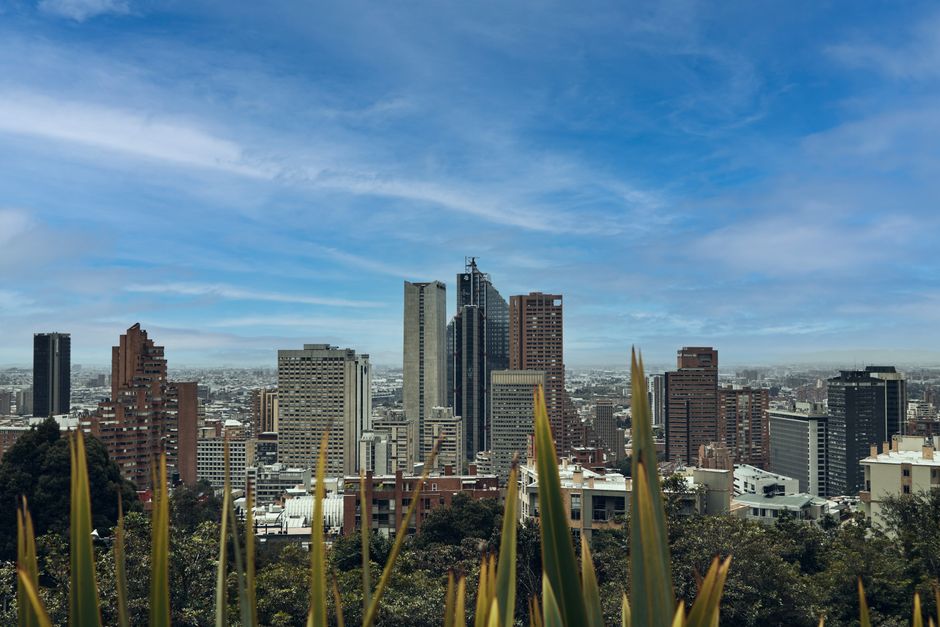
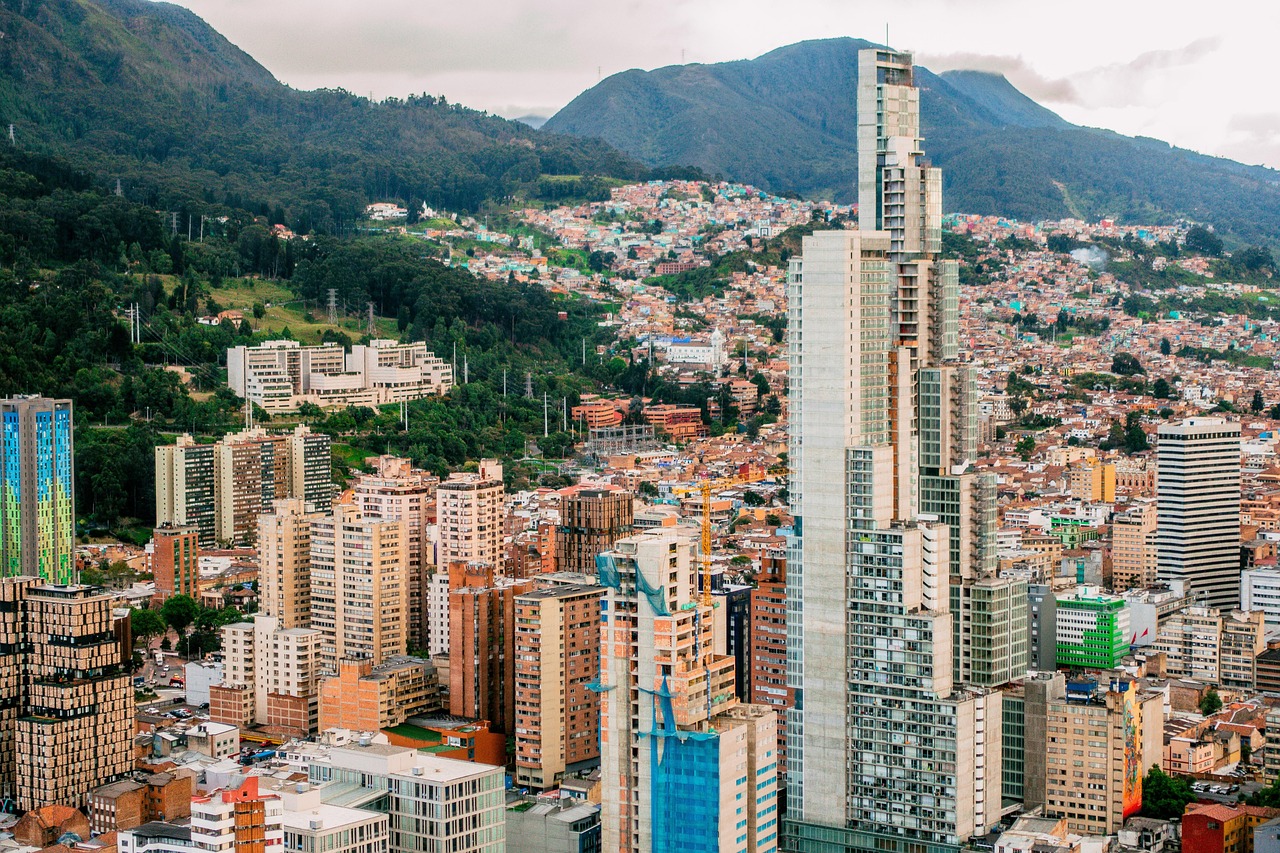
Bogotá, Colombia’s capital, spreads across a high Andean plateau at about 2,600 m (8,500 ft), backed by the green eastern hills where the white sanctuary of Monserrate looks down on the city. It is a city of contrasts: the cobbled colonial streets of La Candelaria, with their street art and student cafés; grand museums such as the Gold Museum, with the world’s largest collection of pre-Hispanic goldwork; leafy northern neighborhoods full of restaurants; and, on Sundays, more than a hundred kilometers of roads closed to cars for cyclists and runners. The climate is cool and changeable, with a mild average of about 19 °C (66 °F) by day, according to ProColombia, the country’s official tourism promoter, and chilly nights. Most international travelers to Colombia arrive here, and it rewards two or three days before you head to the coast or the coffee region.
Right now in Bogotá
- Tue 11–21°C 52–70°F 12 mm Heavy showers
- Wed 11–19°C 52–67°F 4 mm Rain
- Thu 12–20°C 53–69°F 4 mm Partly cloudy
- Mon 12 Oct Columbus Day (Día de la Raza)
Weather: MET Norway (CC BY 4.0) · Holidays: Nager.Date
Top tours in Bogotá
See all tours for Bogotá →
From local operators, with prices and reviews; you check availability and book on Viator, our partner. We may earn a commission at no extra cost to you. How we earn money
Bogotá at a glance
- Best for: museums, colonial architecture, street art, food and coffee, markets and nightlife.
- How long: two days for La Candelaria, the Gold Museum and Monserrate; three or four with a day trip to Zipaquirá or Villa de Leyva.
- Best time: December to March and July to August are the drier months, according to ProColombia; it can rain any afternoon.
- Altitude: about 2,600 m (8,500 ft); take your first day slowly.
- Before you go: entry rules, the Check-Mig form and money are in our Colombia travel guide.
Bogotá’s layout: where things are
Bogotá is long and narrow, running north–south along the foot of the eastern hills (the Cerros Orientales), so the mountains are always east. Carreras run north–south and calles east–west, and numbers rise toward the north. The historic center, La Candelaria, is in the south-center around Plaza de Bolívar, with the Gold Museum and the start of the Monserrate cable car close by. North of it is the business district of Centro Internacional, then Chapinero and the upscale, leafy areas of Zona G, Zona T and Parque 93, where many hotels and restaurants are. Further north is the old village of Usaquén. El Dorado airport is to the west.
Top things to see in Bogotá
Most of Bogotá’s classic sights are in or near La Candelaria and can be combined in a day, but museums close on some days, so check opening times before you go.
La Candelaria and Plaza de Bolívar
The vast Plaza de Bolívar is the heart of the country, surrounded by the Primatial Cathedral, the Capitol, the Palace of Justice and the mayor’s office, with the presidential palace, Casa de Nariño, just behind. Uphill, La Candelaria is a grid of colonial houses, churches and murals; ProColombia highlights the small Chorro de Quevedo square, said to be where the city was founded in 1538. A street-art walking tour is a good introduction.
The Gold Museum
The Museo del Oro, run by Colombia’s central bank, holds about 34,000 gold pieces, the largest collection of pre-Hispanic goldwork in the world, according to ProColombia, including the Quimbaya poporo and the Muisca Raft, which depicts the ritual behind the legend of El Dorado. ProColombia lists opening hours of Tuesday to Saturday, 9 a.m. to 6 p.m., and Sunday, 10 a.m. to 4 p.m.; labels are in English and Spanish, and audio guides are available. Allow two to four hours.
The Botero Museum
A few blocks from Plaza de Bolívar, the Botero Museum shows works by Fernando Botero, including his famous rounded figures, together with the collection of European art he donated to the nation. It is part of the central bank’s cultural complex, which includes the Miguel Urrutia Art Museum.
Monserrate
The white church of Monserrate stands on the hill above La Candelaria at more than 3,100 m (10,000 ft), with the best view over the city. Go up by cable car or funicular; the steep footpath is popular with locals, but at this altitude it is hard work, so walk it only once you are acclimatized, in daylight and with others. Go early, before clouds settle on the hills.
Other things to do in Bogotá
- The Ciclovía: on Sundays and public holidays, main roads close to cars in the morning for cyclists, runners and skaters; rent a bike or join a tour. See our cycling guide.
- Museums: the National Museum, the Museum of Modern Art (MAMBO) and the Maloka science museum, according to ProColombia.
- Usaquén: a former village with a Sunday flea market, colonial church and restaurants.
- Paloquemao market: a huge food and flower market for exotic fruit; go early with a guide.
- Food and coffee: try ajiaco, tamales, almojábanas and specialty coffee; Bogotá’s restaurant scene is one of the best in Latin America, according to ProColombia.
- Parks: Parque Simón Bolívar, Parque de la 93 and the botanical garden.
- Walking tours: history and street-art tours of La Candelaria; see our city sightseeing guide.
Food, coffee and nightlife in Bogotá
ProColombia calls Bogotá’s food scene one of the best in Latin America, and the capital gathers dishes from every region of the country. Try these:
- Ajiaco santafereño: Bogotá’s signature soup of chicken, three kinds of potato and the herb guascas, served with corn on the cob, capers, cream and avocado; traditional restaurants in La Candelaria serve it at lunch.
- Tamal tolimense and cocido boyacense: hearty Andean dishes for a cold day, the tamal often eaten for breakfast with hot chocolate.
- Chocolate santafereño: hot chocolate served with a slice of fresh cheese to drop into the cup, plus almojábanas and pandebono (cheese breads).
- Fruit: the markets sell fruits rarely seen abroad, such as lulo, granadilla, uchuva (golden berry), feijoa and pitahaya.
- Specialty coffee: a growing scene of cafés roasting beans from Colombia’s growing regions, especially in Chapinero, Quinta Camacho and Usaquén.
- Fine dining: Zona G (the “gourmet zone”) and Chapinero Alto are the places for chef-led restaurants using Colombian ingredients.
- Nightlife: Zona T and Parque 93 for bars and clubs, Chapinero for an alternative scene, and La Candelaria for student bars and chicha, a traditional fermented corn drink.
Many traditional restaurants serve a filling set lunch (almuerzo corriente) of soup, a main course with rice and a drink at noon; it is the best-value meal of the day.
Day trips from Bogotá
Zipaquirá Salt Cathedral
About an hour north of the city, the Salt Cathedral is an underground church carved into a salt mine, with a large cross and chapels lit in changing colors. Go by tour, by bus or taxi; the town of Zipaquirá itself has a pleasant colonial square.
Guatavita
The sacred lake of the Muisca people, where the El Dorado ceremony shown in the Gold Museum’s raft took place, according to ProColombia. It is about two hours away, and visits follow a guided trail around the crater rim.
Villa de Leyva
A whitewashed colonial town with one of the largest cobbled plazas in the Americas, about three to four hours away; it is best as an overnight trip.
Suesca and the savanna
About an hour and a half north, the sandstone cliffs of Suesca are Colombia’s best-known rock-climbing area, with climbing schools for beginners, mountain biking and rafting nearby. On the way, the green Bogotá savanna is dotted with dairy farms, colonial villages and restaurants serving Sunday lunches of roast meats and corn, a favorite weekend outing for bogotanos.
Getting there and getting around
From El Dorado airport
El Dorado International Airport (BOG), Colombia’s main hub, is about 15 km (9 miles) west of the center, 30 to 60 minutes by road depending on traffic. Only authorized yellow taxis with white license plates and the plate number on the doors and roof may pick up passengers at the terminals, according to the UK government; use the official taxi line or an app-based service. There are nonstop flights from Miami, Fort Lauderdale, Orlando, Houston, Atlanta and New York.
Onward travel
Domestic flights connect Bogotá with every major city: Cartagena and Santa Marta in about an hour and a half, Medellín in under an hour, and Pereira or Armenia, for Salento, in about 50 minutes. See our Cartagena, Medellín and Salento travel guides.
Getting around Bogotá
Traffic is heavy at rush hours. TransMilenio, a network of articulated buses on dedicated lanes, is fast but very crowded and a target for pickpockets; you need a rechargeable card. For most visitors, app-based taxis or taxis called by the hotel are easiest and safest; don’t hail taxis in the street. La Candelaria is walkable by day.
Neighborhoods at a glance
- La Candelaria: the colonial heart, museums, street art and student life; busy by day, quiet and less safe late at night.
- Centro Internacional and Macarena: museums, the bullring turned cultural venue, and bohemian restaurants on the slopes of La Macarena.
- Chapinero: a large, varied district with cafés, bookshops, nightlife and Bogotá’s LGBTQ+ scene.
- Zona G, Zona T and Parque 93: upscale restaurants, shopping malls and international hotels in the north.
- Usaquén: a former colonial village with a church square, Sunday market and relaxed restaurants.
Getting around in detail
- Taxis and apps: app-based taxis and ride-hailing services are the easiest way to move around, especially at night and in the rain, when it is hard to find a car.
- TransMilenio: buses on dedicated lanes along the main avenues, paid with a rechargeable card; avoid it at rush hour and keep your phone and wallet secure.
- Walking: La Candelaria and the center are walkable by day; the north (Zona G to Parque 93) is pleasant on foot.
- Cycling: Bogotá has an extensive network of bike lanes (ciclorrutas), and the Sunday and holiday Ciclovía closes main roads to cars in the morning.
- Monserrate: the cable car and funicular leave from a station at the foot of the hill above La Candelaria; take a taxi to the station.
When to go and how long to stay
Bogotá’s weather is cool all year: often 10–17 °C (50–63 °F), with foggy mornings, clearer middays and afternoon showers, according to ProColombia. The drier months are December to March and July to August; April to May and October to November are the wettest. The sun is strong at this altitude even on cool days.
| Season | What it’s like | Good for |
|---|---|---|
| December–March | Drier, sunny mornings, cold nights | Monserrate views, Christmas lights, day trips |
| April–May | Wettest spring months | Museums, food and coffee |
| June–August | Fairly dry, breezy | The Ciclovía, parks and festivals |
| September–November | Second rainy season | Indoor sights, fewer visitors |
Bogotá month by month
- January: one of the driest months, with sunny mornings and cold nights; the city is quiet in early January while bogotanos travel.
- February: dry and sunny; good for Monserrate and day trips.
- March: mostly dry, with showers increasing later; Holy Week (March 21–28, 2027) empties the city.
- April: one of the wettest months; afternoon downpours are frequent.
- May: rainy, especially in the afternoons; museums and cafés are good refuges.
- June: drier and windy; school vacations begin.
- July: dry, breezy and cool; a good month for the Ciclovía and parks.
- August: dry and windy; kite-flying season in the city’s parks; the Bogotá anniversary falls on August 6.
- September: mostly dry early, then rain returns.
- October: one of the wettest months, with frequent afternoon storms and occasional hail.
- November: wet; the city is calmer before Christmas.
- December: drying out; Christmas lights and novenas; many residents leave for the holidays.
2 days in Bogotá
Day one, Plaza de Bolívar, La Candelaria, the Botero Museum and the Gold Museum. Day two, Monserrate early in the morning, the Paloquemao market or a street-art tour, then dinner in Zona G or Usaquén.
4 days in Bogotá
Add the Ciclovía on Sunday and the Usaquén market, a day trip to the Zipaquirá Salt Cathedral, and either Guatavita or an overnight in Villa de Leyva.
Where to stay in Bogotá and the hotel taxes
- La Candelaria: hostels and colonial guesthouses close to the sights; quiet and less safe after dark.
- Chapinero and Zona G: boutique hotels, cafés and restaurants, midway between the center and the north.
- Zona T and Parque 93: international hotels, shopping and nightlife; safe and walkable at night.
- Usaquén: a village atmosphere in the north, far from the historic center.
Prices include Colombia’s 19% value-added tax, though foreign tourists are generally exempt from it on hotel rooms when they show their passport entry stamp or migration record; ask the hotel.
Costs in Bogotá
Bogotá is cheaper than Cartagena but pricier than smaller Colombian cities. These per-person estimates are a planning guide as of October 2026, at about COP 3,273 to US$1:
| Item | Typical price |
|---|---|
| Hostel dorm bed in La Candelaria | about COP 45,000–90,000 (US$14–28) |
| Mid-range hotel double room in Chapinero or the north | about COP 250,000–500,000 (US$75–150) |
| Luxury hotel in Zona G or Parque 93 | about COP 900,000+ (US$275+) |
| Set lunch (almuerzo corriente) | about COP 18,000–30,000 (US$5.50–9) |
| Dinner for two in a Zona G restaurant | about COP 200,000–400,000 (US$60–120) |
| Specialty coffee | about COP 7,000–12,000 (US$2–3.50) |
| Taxi from El Dorado airport to the north | about COP 40,000–60,000 (US$12–18) |
| Day tour to the Zipaquirá Salt Cathedral | about COP 200,000–350,000 (US$60–107) |
The figures are our estimates, not official statistics. Museum entrance fees are usually modest, and some museums have free days.
Practical tips for Bogotá
- Altitude: at about 2,600 m (8,500 ft), altitude sickness is a risk, according to the UK government. Rest on your first day, drink water, limit alcohol and caffeine, and climb Monserrate on foot only after a few days.
- Weather: carry a light rain jacket and a warm layer every day; the weather changes quickly.
- Safety: pickpocketing, mugging and armed robbery happen, including in La Candelaria, according to the UK government. Keep your phone out of sight, avoid quiet streets after dark, use ATMs inside banks or malls, and never accept drinks from strangers. Criminals posing as police have targeted visitors; if approached, ask to go to the nearest police station (CAI). Emergencies: 123.
- Water: Bogotá’s tap water is safe to drink, according to the UK government.
- Money: cards are widely accepted; carry small peso notes for markets and taxis.
What to pack for Bogotá
Pack layers: a warm sweater or fleece, a light waterproof jacket, long pants and closed shoes for the cool, wet afternoons, plus sunscreen, sunglasses and a hat for the strong high-altitude sun. A small umbrella, a daypack that closes securely, and comfortable walking shoes for La Candelaria’s slopes complete the list. Plugs are the US type.
Bogotá travel FAQ
How high is Bogotá?
About 2,600 m (8,500 ft), according to ProColombia. Some visitors feel short of breath or get headaches at first; rest and drink water on your first day.
How do I get from El Dorado airport to the city?
By authorized yellow taxi from the official line, or by app-based car, in 30 to 60 minutes depending on traffic.
Is Bogotá cold?
It is cool rather than cold: days are often 14–19 °C (57–66 °F), and nights can drop to about 7 °C (45 °F). Bring a jacket.
When is the Gold Museum open?
Tuesday to Saturday from 9 a.m. to 6 p.m. and Sunday from 10 a.m. to 4 p.m., according to ProColombia. It is closed on Mondays.
How do I get up Monserrate?
By cable car or funicular from the station above La Candelaria, or on the steep footpath once you are acclimatized. Go early for clear views.
Can I drink the tap water in Bogotá?
Yes, Bogotá is the only Colombian city where the UK government says tap water is safe to drink.
Is Bogotá safe for tourists?
Most visits pass without trouble, but street crime is common. Stay in the north or Chapinero, keep valuables hidden, avoid empty streets at night and use app-based or called taxis.
How many days do I need in Bogotá?
Two days for the main sights; three or four to add the Zipaquirá Salt Cathedral or Villa de Leyva.
Where should I stay in Bogotá?
Chapinero, Zona G, Zona T or Parque 93 for safety, restaurants and nightlife; La Candelaria for walking to the sights, with care after dark.
How much does Bogotá cost per day?
Roughly COP 180,000–250,000 (US$55–75) on a budget and COP 500,000–800,000 (US$150–245) for a mid-range trip, by our estimates.
Sources and last review
Researched and last reviewed on 4 October 2026. Bogotá’s altitude, average temperature and weather pattern, the Gold Museum’s collection, highlights and hours, La Candelaria, Chorro de Quevedo, the museums, the food scene and the Guatavita legend: ProColombia; altitude sickness, street crime, fake police, authorized airport taxis and safe tap water: the UK government. The founding date, the Botero Museum, Monserrate’s height, the Ciclovía, TransMilenio, airport distance, flight times, day-trip times and the hotel tax exemption come from secondary sources or general knowledge and are flagged for checking. The food, neighborhood, getting-around, month-by-month and cost sections draw on secondary sources, general knowledge and our own estimates, except where an official source is named, and are flagged for checking. Prices and rules change, so check before you go. For entry rules and money, see our Colombia travel guide.
Plan your trip
Partner links: TravelerCenter may earn a commission if you book, at no extra cost to you.
🇪🇸 Useful Spanish phrases for Bogotá
All 38 Spanish phrases: restaurant, hotel, emergencies, romance (printable) →