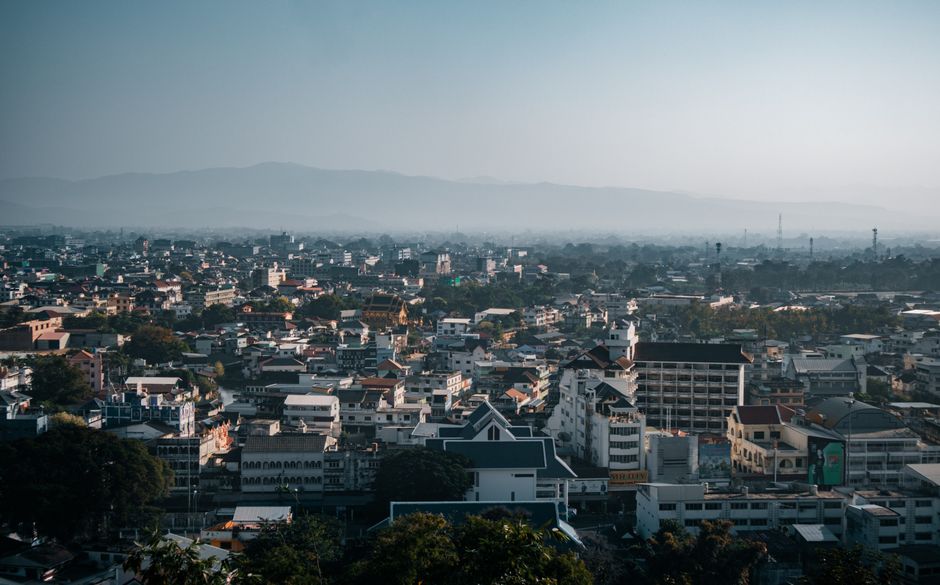
Chiang Rai is Thailand’s northernmost province capital, a small, easygoing city on the Kok River about 180 km (112 miles) northeast of Chiang Mai and some 60 km (37 miles) from the Golden Triangle, where Thailand, Laos and Myanmar meet on the Mekong. Founded in 1262 by King Mengrai, the first ruler of the Lanna kingdom, it is now best known for its extraordinary modern temples: the dazzling White Temple of Wat Rong Khun, the sapphire Blue Temple and the dark, strange Black House. Come for those, for the gold-domed Clock Tower and the night markets, and for the mountains around the city: tea plantations and Chinese villages at Mae Salong, the royal gardens of Doi Tung, misty sunrises at Phu Chi Fa, hill-tribe villages and the river towns of the Mekong. Chiang Rai is quieter and greener than Chiang Mai, and a pleasant base for a few days. The best months are November to February, with warm days and cool nights; March and April are hot and often smoky, and the rainy season runs from May to October.
Right now in Chiang Rai
- Wed22–29°C71–84°F1 mm rain
- Thu20–29°C69–85°FClear
- Fri21–30°C70–85°FClear
Top tours in Chiang Rai
See all tours for Chiang Rai →
From local operators, with prices and reviews; you check availability and book on Viator, our partner. We may earn a commission at no extra cost to you. How we earn money
Chiang Rai at a glance
- Best for: modern temple art, mountain scenery, tea and coffee country, the Golden Triangle and Mekong towns, hill-tribe culture and a slower pace.
- How long: 2–3 days for the temples and the Golden Triangle; 4–5 days to add Mae Salong, Doi Tung and Phu Chi Fa.
- Best time: November to February, with highs of about 28–31 °C (82–88 °F) and lows of 14–18 °C (57–64 °F).
- Getting there: about 1 hour 20 minutes by air from Bangkok to Mae Fah Luang–Chiang Rai International Airport (CEI), or about 3 hours by bus from Chiang Mai.
- Getting around: on foot in the center; Grab and Bolt, tuk-tuks, local buses and songthaews; a car, scooter or tour for the mountains.
- Fees to know: the White Temple charges foreign visitors an entry fee; the Blue Temple is free.
- Before you go: entry rules, the Thailand Digital Arrival Card, money and general safety are in our Thailand travel guide.
Chiang Rai’s areas and where to stay
Chiang Rai’s compact center lies just south of the Kok River; most sights are a short drive outside it, and the mountains begin within half an hour.
The city center
The streets around the Clock Tower, the Night Bazaar and the old bus station hold most guesthouses, mid-range hotels, cafés and restaurants. Everything is walkable, and it is the best base without a car.
The Kok River
North of the center, resorts and boutique hotels stand in gardens along the riverbanks, a few minutes by car from town, with long-tail boat trips upstream to hill-tribe villages and hot springs.
Outside the city
Resorts among rice fields and tea gardens on the way to the White Temple and Singha Park, and lodges in the mountains at Mae Salong, Doi Tung and Phu Chi Fa, suit visitors with a car or a driver.
The Golden Triangle and Chiang Saen
On the Mekong about an hour north, a few luxury resorts overlook the river where three countries meet, near the ruins of the ancient walled town of Chiang Saen.
Top things to see in Chiang Rai
Wat Rong Khun (the White Temple)
A gleaming white temple covered in mirror glass, created by the Chiang Rai artist Chalermchai Kositpipat, who began rebuilding the old temple in 1997 and continues to work on it. Visitors cross a bridge over a sea of reaching hands that represent desire, to reach the main hall, whose murals mix Buddhist themes with images from modern pop culture. A golden building houses the toilets, and the gallery shows the artist’s paintings. It is about 13 km (8 miles) south of the city; go at opening time to beat the tour buses, and dress modestly.
Wat Rong Suea Ten (the Blue Temple)
A temple of intense blue and gold, completed in 2016 by a student of Chalermchai, with a large white Buddha inside a brilliant blue hall. It is free, small and close to the center, on the north bank of the Kok River; it looks best in the soft light of late afternoon.
Baan Dam (the Black House)
A dark counterpoint to the White Temple: a garden of about 40 black teak buildings, filled with animal bones, skins, horns and carvings, created by the national artist Thawan Duchanee, who died in 2014. It is unsettling, fascinating and one of the most unusual art spaces in Thailand, about 13 km (8 miles) north of the city.
The Clock Tower and the Night Bazaar
The ornate golden Clock Tower in the center of town, also designed by Chalermchai, puts on a short sound-and-light show every evening. Nearby, the Night Bazaar has crafts, clothing and a food court with live music. On Saturday evenings, Thanalai Road becomes a walking street market, with local food and handicrafts.
Wat Phra Kaew Chiang Rai
The temple where the Emerald Buddha, now in Bangkok’s Grand Palace, was discovered in 1434, when lightning cracked a chedi. A jade copy made in 1990 sits in its hall, and a small museum displays Lanna art.
More classic sights
- Wat Huay Pla Kang: a hilltop temple with a 69 m (226 ft) white statue of Guanyin, the goddess of mercy, with a lift to a viewing point in her head, and a nine-tiered pagoda.
- Singha Park: a huge farm park with tea fields, flower gardens, a lake, a zip-line and cycling paths, run by the beer company.
- Mae Fah Luang Art and Culture Park: a garden and museum of Lanna art and carved teak, on the edge of town.
- Hill Tribe Museum: a small museum explaining the culture of the north’s ethnic minorities, with crafts on sale.
- Khun Korn waterfall: the province’s highest waterfall, a 20-minute forest walk from the road, best in the rainy season.
Monuments
- Chiang Rai Clock Tower
Churches and cathedrals
- Wat Rong Khun
- Wat Rong Suea Ten
Museums
- Baan Dam Museum
Other things to do in Chiang Rai
Food and drink
Chiang Rai shares northern Thailand’s food: khao soi curry noodles, khanom jeen nam ngiao (rice noodles in a tomato and pork curry), sai oua sausage, chili dips with sticky rice, and grilled river fish. The province grows much of Thailand’s coffee and tea, so the city is full of good cafés, and you can taste oolong tea at the plantations of Mae Salong. The Night Bazaar food court and the Saturday walking street are the cheapest places to eat.
Hill tribes, trekking and cycling
The hills around Chiang Rai are home to Akha, Lahu, Lisu, Yao, Karen and other ethnic groups. Day hikes and homestays can be arranged through community-run projects and reputable guides; avoid tours that treat villages as human zoos, and ask before photographing people. Cycling routes through rice fields and tea gardens, and boat trips on the Kok River, are other ways to explore. See our guides to hiking and cycling.
Festivals
Songkran in mid-April is celebrated with water fights around the Clock Tower; Loy Krathong (November 24 in 2026) brings krathongs on the Kok River; and in the cool season a flower festival fills the city with blooms, and the wild Himalayan cherry trees turn the mountains pink in January.
Day trips from Chiang Rai
- The Golden Triangle: the viewpoint at Sop Ruak where the Ruak River meets the Mekong between Thailand, Laos and Myanmar, the Hall of Opium museum, and boat trips on the Mekong, about an hour north. Combine it with the ruined temples of Chiang Saen.
- Doi Tung: the Royal Villa and Mae Fah Luang Garden of the late Princess Mother, the coffee and macadamia plantations of the Doi Tung development project, and the hilltop temple of Wat Phra That Doi Tung, about 1.5 hours north.
- Mae Salong (Santikhiri): a hilltop village founded by Chinese soldiers who fled after the civil war, with tea plantations, Yunnanese food and views, about 1.5 hours northwest.
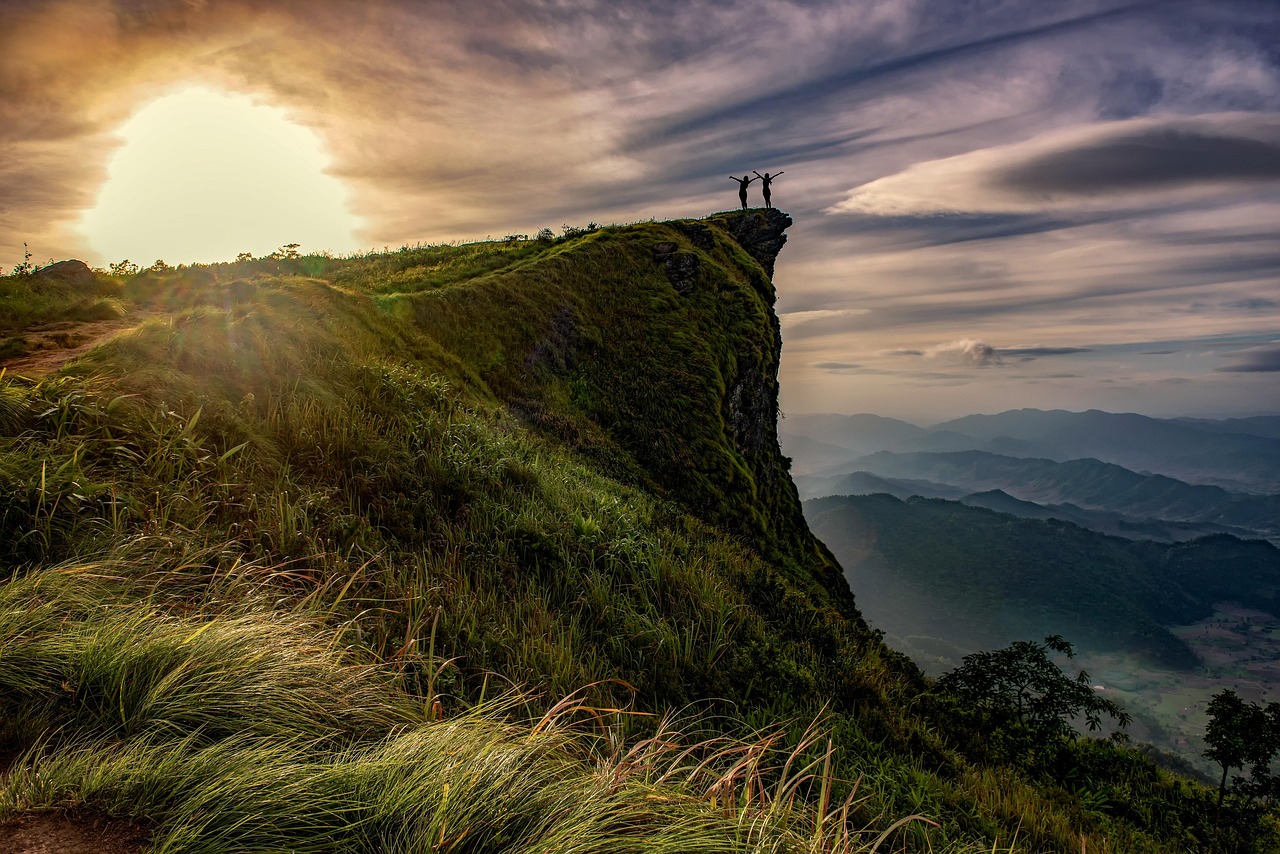
- Phu Chi Fa: a cliff on the Laos border famous for its sunrise over a “sea of mist” in the cool season, about 2.5 hours east; best with an overnight stay nearby.
- Chiang Mai: about 3 hours by road, for a different side of the north. See our Chiang Mai guide.
Nearby destinations
- Chiang Mai153 km
- Pai158 km
- Luang Prabang241 km
- Xishuangbanna253 km
- Vang Vieng296 km
Getting there and getting around
By air and bus
Mae Fah Luang–Chiang Rai International Airport (CEI), run by Airports of Thailand, is about 8 km (5 miles) north of the city, 15–20 minutes by taxi or Grab. Thai Airways, Thai AirAsia, Thai Lion Air and Thai Vietjet fly from Bangkok’s Suvarnabhumi and Don Mueang airports in about 1 hour 20 minutes, and there are a few international flights. There is no railway to Chiang Rai. Buses from Chiang Mai’s Arcade bus station take about 3 hours to Chiang Rai’s bus terminals, and overnight buses run from Bangkok’s Mo Chit terminal in about 11 to 12 hours. Many travelers combine the two cities, flying into one and out of the other.
Around Chiang Rai
The center is walkable. Grab and Bolt work in the city, tuk-tuks charge set fares for short hops, and local buses and songthaews from the old bus station run to the White Temple, Mae Sai and Chiang Saen. For the mountains, a car with a driver, a tour or a rental car is easiest; roads to Mae Salong, Doi Tung and Phu Chi Fa are steep and winding. Scooters need a motorcycle license, an International Driving Permit and a helmet.
When to go and how long to stay
Chiang Rai has three seasons: cool and dry from November to February, hot from March to May, and rainy from about May to October, with more rain than Chiang Mai. The table uses the 1991–2020 normals of the Thai Meteorological Department (TMD) for its Chiang Rai station, as submitted to the World Meteorological Organization (WMO): average daily highs and lows, total rain, and days with at least 1 mm of rain.
| Month | Average high / low | Rain (days with 1 mm or more) | What to expect |
|---|---|---|---|
| January | 29 °C (83 °F) / 14 °C (57 °F) | 16 mm (0.6 in), 2 days | Cool and clear; cold mornings in the mountains; cherry blossoms |
| February | 31 °C (88 °F) / 14 °C (58 °F) | 13 mm (0.5 in), 1 day | Dry and sunny; haze can begin late in the month |
| March | 34 °C (93 °F) / 18 °C (64 °F) | 34 mm (1.4 in), 3 days | Hot and often smoky from crop and forest fires |
| April | 35 °C (94 °F) / 21 °C (70 °F) | 93 mm (3.6 in), 8 days | The hottest month; haze; Songkran |
| May | 34 °C (92 °F) / 23 °C (73 °F) | 226 mm (8.9 in), 14 days | Rains begin and clear the air |
| June | 32 °C (90 °F) / 24 °C (75 °F) | 186 mm (7.3 in), 15 days | Green and showery; low season |
| July | 31 °C (88 °F) / 24 °C (75 °F) | 318 mm (12.5 in), 20 days | Very wet; waterfalls at their best |
| August | 31 °C (88 °F) / 24 °C (75 °F) | 373 mm (14.7 in), 20 days | The wettest month; flash floods possible |
| September | 31 °C (89 °F) / 23 °C (74 °F) | 275 mm (10.8 in), 15 days | Wet; rice fields turn gold late in the month |
| October | 31 °C (88 °F) / 22 °C (71 °F) | 124 mm (4.9 in), 8 days | Rains ease; rice harvest begins |
| November | 30 °C (85 °F) / 18 °C (64 °F) | 45 mm (1.8 in), 4 days | Cool season begins; Loy Krathong; sea-of-mist sunrises |
| December | 28 °C (82 °F) / 15 °C (58 °F) | 21 mm (0.8 in), 2 days | Cool and dry; cold nights in the hills; busy at New Year |
Chiang Rai gets about 1,720 mm (68 in) of rain a year, half again as much as Chiang Mai, most of it from May to October. From about February to April, smoke from fires often fills the valleys and fine-dust (PM2.5) levels can be unhealthy. In December and January, mountain viewpoints such as Phu Chi Fa can be close to freezing at dawn.
Weather month by month
2 days in Chiang Rai
Day one, the White Temple at opening time, Singha Park or Wat Huay Pla Kang, the Blue Temple in the late afternoon, and the Clock Tower show and Night Bazaar in the evening. Day two, the Black House, then the Golden Triangle and Chiang Saen.
4–5 days
Add Doi Tung and Mae Salong, a night near Phu Chi Fa for the sunrise, and a day of cycling or trekking.
Where to stay in Chiang Rai
- City center: guesthouses and mid-range hotels near the Clock Tower and Night Bazaar.
- The riverside: resorts and boutique hotels along the Kok River.
- The countryside: resorts among rice fields and tea plantations, for travelers with a car.
- Mae Salong and Phu Chi Fa: simple lodges and homestays for mountain views and sunrises.
- The Golden Triangle: luxury riverside resorts overlooking the Mekong.
Accommodation is good value. Mountain lodges fill up at weekends and holidays in the cool season, especially from December to January.
What a trip to Chiang Rai costs
Prices are approximate, for October 2026, converted at about 33 baht to the US dollar.
| Item | Typical cost |
|---|---|
| White Temple entry, foreign visitors | about 100–200 baht (about US$3–6) |
| Bowl of khao soi | 50–90 baht (about US$1.50–2.70) |
| Coffee in a local café | 50–100 baht (about US$1.50–3) |
| Bus from Chiang Mai | about 150–300 baht (about US$4.50–9) |
| Car with driver for the day | 2,000–3,500 baht (about US$60–105) |
| Guesthouse double | 500–1,000 baht (about US$15–30) |
| Mid-range hotel double | 1,000–2,500 baht (about US$30–75) |
| Riverside or Golden Triangle resort | 3,000–12,000 baht (about US$90–360) |
Practical tips for Chiang Rai
- Start early: the White Temple is quietest at opening time, before the tour buses from Chiang Mai arrive.
- Temple etiquette: cover shoulders and knees, take off your shoes, and don’t point your feet at Buddha images.
- Warm layers: nights and mornings from November to February are cool, and the mountains can be cold.
- Border areas: the Golden Triangle and Mae Sai sit on international borders; carry your passport, follow local rules and signs, and check locally before planning any crossing, as arrangements change.
- Cannabis and vaping: cannabis flower needs a Thai prescription, and e-cigarettes are illegal in Thailand.
- Help: the Tourist Police (1155) speak English, and the TAT Contact Center (1672) answers tourist questions.
Safety
Chiang Rai is a calm, friendly city with little crime affecting visitors.
- Air quality: from about February to April, smoke from fires can push fine-dust (PM2.5) pollution to unhealthy levels; check the air quality index and limit outdoor activity on bad days.
- Road safety: the mountain roads are steep, winding and sometimes foggy; drive slowly, avoid driving at night, and wear a helmet on a scooter.
- Rain and floods: heavy rain from July to September can cause flash floods and landslides in the hills and along the rivers; check conditions before mountain trips.
- Heat: March to May is very hot; drink plenty of water.
- Cold: at dawn in the mountains, temperatures can approach freezing in December and January; bring warm clothes for sunrise trips.
- Emergencies: call 1155 for the Tourist Police (English spoken), 191 for the police and 1669 for an ambulance.
What to pack for Chiang Rai
Light clothes for the day, a fleece or warm jacket from November to February, long trousers or a long skirt and covered shoulders for temples, walking shoes, sunscreen, a rain jacket from May to October, and masks for smoky days from February to April. Thailand uses 220 V; sockets take both flat two-pin and round two-pin plugs.
Chiang Rai travel FAQ
Is Chiang Rai worth visiting?
Yes, for the White Temple, the Blue Temple and the Black House, the Golden Triangle and the mountains, in a calmer setting than Chiang Mai.
How many days do I need in Chiang Rai?
Two days for the temples and the Golden Triangle; four or five to add Mae Salong, Doi Tung and Phu Chi Fa.
Can I visit Chiang Rai as a day trip from Chiang Mai?
Yes, many tours do, but it is a long day of about 6 hours on the road; an overnight stay is much better.
What time does the White Temple open?
It usually opens from early morning until early evening; check current hours and fees before you go, and arrive early for fewer crowds.
How do I get from Chiang Mai to Chiang Rai?
By bus, about 3 hours from the Arcade bus station, or by private car or tour.
What is the Golden Triangle?
The point on the Mekong where Thailand, Laos and Myanmar meet, once known for opium production; today it has viewpoints, the Hall of Opium museum and river trips.
What is the best time to visit Chiang Rai?
November to February, when it is dry and cool; avoid the smoky months of March and April if you can.
Is there a train to Chiang Rai?
No. Fly to Chiang Rai’s airport or take a bus from Chiang Mai or Bangkok.
Is Chiang Rai cold in winter?
Days are warm, but mornings and nights from December to January can be cool in the city and close to freezing on the mountains.
Can I use Grab in Chiang Rai?
Yes, Grab and Bolt both work in the city, alongside tuk-tuks and local songthaews.
Plan your trip
Partner links: TravelerCenter may earn a commission if you book, at no extra cost to you.
🇹🇭 Useful Thai phrases for Chiang Rai
All 38 Thai phrases: restaurant, hotel, emergencies, romance (printable) →
Sources · last reviewed 4 October 2026
Researched and last reviewed on 4 October 2026. Airports, cannabis and e-cigarette rules, the Tourist Police and the winter cherry blossoms: the Tourism Authority of Thailand (TAT); climate normals: the Thai Meteorological Department via the World Meteorological Organization’s 1991–2020 normals; Loy Krathong date: the 12th-month full moon from the US Naval Observatory; exchange rate: the US Federal Reserve. The White Temple’s fee and hours, temple histories, distances, journey times, fares and typical prices are general references or estimates, flagged for checking. Prices and hours change, so check the official sites before you go. For entry rules, money and general safety, see our Thailand travel guide.
Also: TMD normals 1991–2020, Chiang Rai (climate)
Data: Weather: MET Norway (CC BY 4.0) · Air quality: OpenAQ · Rates: ECB · Costs: World Bank ICP and price levels · Wikidata (CC0)