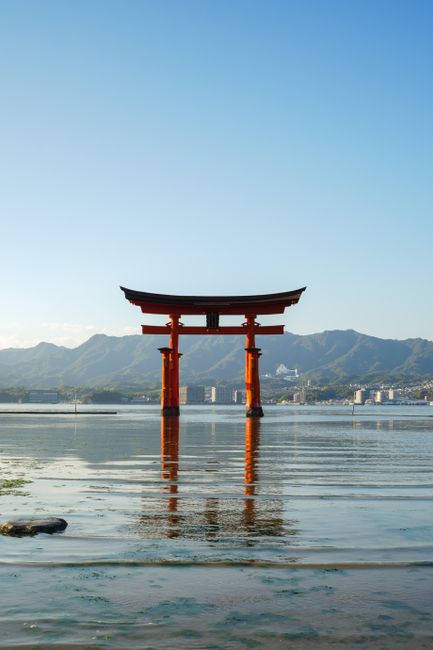
Miyajima, officially Itsukushima, is a small mountainous island in the Seto Inland Sea, about 20 km (12 miles) south-west of central Hiroshima, and one of the most famous views in Japan: a vermilion torii gate standing in the sea in front of a shrine built over the water. The island has been considered sacred for centuries, and Itsukushima Shrine and the virgin forest of Mount Misen behind it are a UNESCO World Heritage site. Come for the “floating” gate at high tide and the walk out to it at low tide, the ropeway and trails to the summit of Misen, the temple of Daisho-in, grilled oysters on the shopping street and the quiet of the shrine after the day-trippers leave. The best months are April to May and October to November; the rainy season usually runs from early June to mid-July, and typhoons are possible from August to October.
Right now in Itsukushima (Miyajima) (Miyajima)
- Wed16–22°C61–72°F2 mm rain
- Thu16–23°C60–74°FClear
- Fri18–26°C64–78°FClear
- Mon 12 Oct Sports Day (スポーツの日)
Top tours in Itsukushima (Miyajima)
See all tours for Itsukushima (Miyajima) →
From local operators, with prices and reviews; you check availability and book on Viator, our partner. We may earn a commission at no extra cost to you. How we earn money
Miyajima at a glance
- Best for: Itsukushima Shrine and the Great Torii, the views from Mount Misen, temples, easy hiking, oysters and a night on a sacred island.
- How long: half a day for the shrine and the shopping street; a full day to add Mount Misen; one night to see the shrine lit up and the island at its calmest.
- Best time: April to May and October to November, with highs of about 20–24 °C (68–75 °F); late November for the maples of Momijidani.
- Getting there: a JR train or streetcar from Hiroshima to Miyajimaguchi, then a ferry of about 10 minutes; direct boats also run from Hiroshima’s Peace Memorial Park.
- Getting around: on foot; a ropeway climbs Mount Misen.
- Fees to know: every visitor pays the ¥100 Miyajima visitor tax, collected with the ferry fare; Itsukushima Shrine costs ¥300 and the round-trip ropeway ¥2,000 as of October 2026.
- Before you go: entry rules, rail passes, money and general safety are in our Japan travel guide; most visitors combine the island with our Hiroshima guide.
Miyajima’s areas: where things are
The island is about 30 km² (12 sq miles), almost all of it steep, forested hills rising to Mount Misen, 535 m (1,755 ft). Nearly everything visitors see is packed into the small town on the north-east coast, facing the mainland.
The ferry terminal and Omotesando
Ferries from Miyajimaguchi land at the terminal on the north side of town. From there, a seafront path lined with stone lanterns and a covered shopping street, Omotesando, lead about 10 minutes south to the shrine. Omotesando is the island’s busiest street, lined with oyster grills, bakeries and souvenir shops.
The shrine and Machiya-dori
Itsukushima Shrine sits on the shallow bay in the middle of town, with the five-story pagoda and the great hall of Senjokaku on the hill above it. Behind Omotesando, the quieter street of Machiya-dori keeps old wooden merchant houses, cafés and galleries.
Momijidani and the foot of Mount Misen
Uphill from the shrine, the stream valley of Momijidani (“maple valley”) is a park of maples and small bridges, the start of the ropeway and of hiking trails. Daisho-in temple stands at the foot of a second trail, south-west of the shrine.
The rest of the island
West of town are the Miyajima Public Aquarium and the beach of Tsutsumigaura, with a campsite. The rest of the coast and the interior are forest, reached only by trails or boat; the deer and monkeys keep to the hills.
Top things to see on Miyajima
Itsukushima Shrine and the Great Torii
According to the shrine, Itsukushima was founded in 593, and the present buildings were laid out in 1168 by the warlord Taira no Kiyomori: red-lacquered halls and corridors on stilts over the bay, which seem to float when the tide comes in. A walk through takes 30 to 45 minutes, past the main sanctuary, an open-air Noh stage and an arched bridge. As of October 2026, entry to the shrine costs ¥300 (about US$1.9) for adults, or ¥500 (about US$3.2) with the Treasure Hall; payment is in cash only. The shrine opens at 6:30 a.m. and closes at 6 p.m. from March to mid-October and at 5–5:30 p.m. the rest of the year. The corridors have small gaps between the boards to let the sea through, so leave high heels at home.
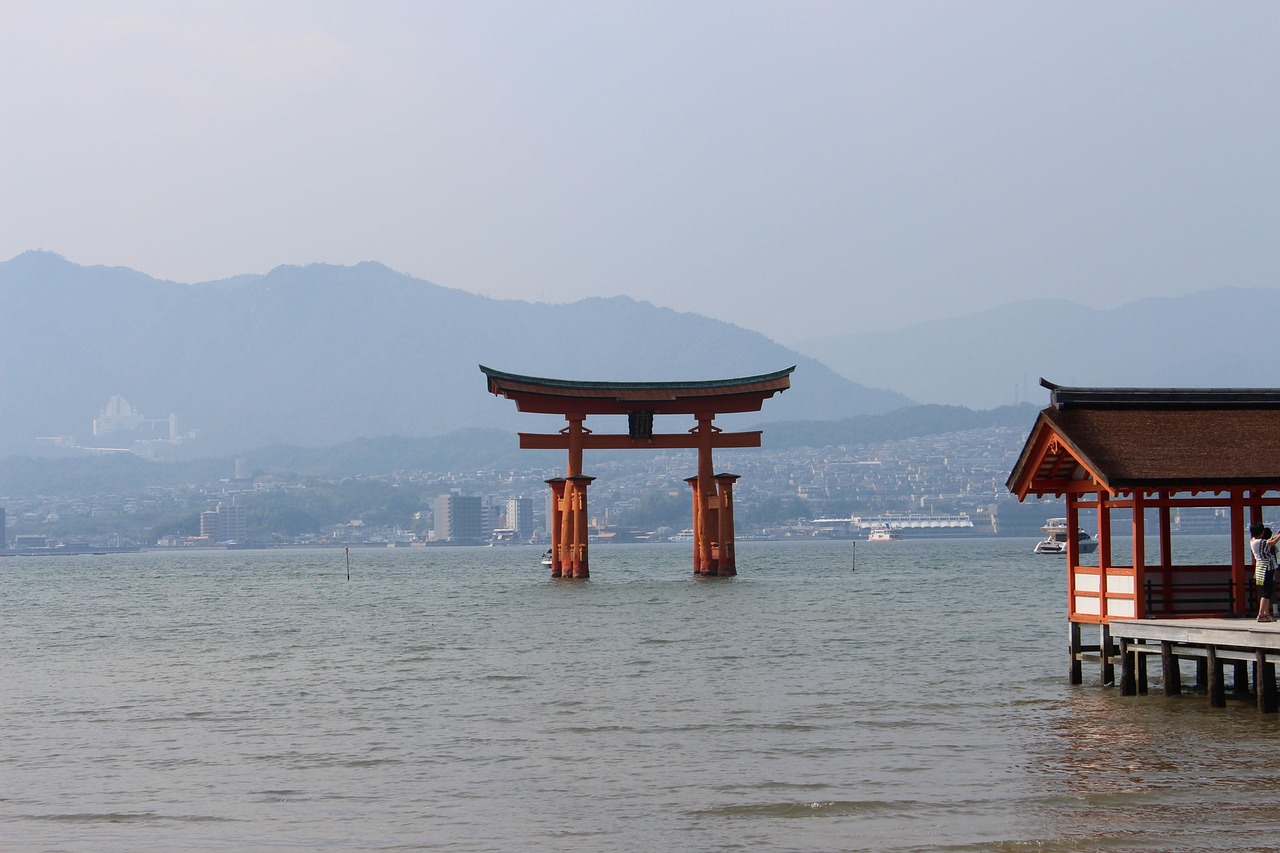
The Great Torii, about 200 m (650 ft) offshore, is about 16 m (52 ft) tall and stands under its own weight on the seabed; it was repaired and repainted from 2019 to December 2022. At high tide it appears to float; at low tide you can walk out across the sand to touch it. Check the tide tables published by the island’s tourist association and plan to see both.
Mount Misen
The island’s sacred mountain rises 535 m (1,755 ft) above the shrine, with granite boulders at the top, a primeval forest and views over the islands of the Inland Sea to Hiroshima. The Miyajima Ropeway climbs from Momijidani in two stages, gondolas and then a larger cable car, to Shishiiwa station, about 30 minutes’ walk below the summit. As of October 2026, the ropeway costs ¥2,000 (about US$13) round trip or ¥1,100 (about US$7) one way for adults, half for children, and runs from 9 a.m. with the last return at 4:30 p.m.; it stops in strong winds and thunderstorms and for maintenance twice a year, around February and July. A free shuttle bus runs from near the shrine to the lower station. Near the top, the Reikado hall keeps a flame said to have burned for more than 1,200 years since the monk Kobo Daishi lit it.
Daisho-in
The island’s most important temple, at the foot of Misen, with prayer wheels on the stair rails, hundreds of small stone statues in knitted caps, a cave of lanterns and colorful halls. Entry to the grounds is free, and it is one of the most peaceful places on the island.
Senjokaku and the five-story pagoda
On the hill north of the shrine, Senjokaku (“hall of a thousand mats”) is a huge, unfinished wooden hall commissioned by Toyotomi Hideyoshi in 1587, with a breezy view of the town and the pagoda; it costs ¥100 to enter, according to the shrine. The red five-story pagoda next to it dates from 1407.
Momijidani Park
A green valley in summer and a blaze of red and gold in the second half of November, with paths beside the stream and the ropeway station at the top.
More classic sights
- Treasure Hall: swords, armor and the famous illuminated sutras dedicated by the Taira clan.
- Miyajima Public Aquarium: a modern aquarium focused on the Inland Sea, with finless porpoises and oyster rafts.
- Machiya-dori: wooden merchant houses, small galleries and coffee shops away from the crowds.
- Tahoto pagoda and the seafront path: a quiet hill with views of the torii, south of the shrine.
Peaks and mountains
- Mount Misen
Churches and cathedrals
- Daishō-in Temple
- Senjōkaku
Other sights
- Miyajima Ropeway
Zoos and aquariums
- Miyajima Public Aquarium
Museums
- Itsukushima Shrine Treasure Hall
Protected areas
- Itsukushima Shrine
Parks and gardens
- Momijidani Park
Other things to do on Miyajima
Walking out to the torii, and the island at night
Tides in the bay change by up to about 3 to 4 m (10 to 13 ft). Around low tide you can walk across the sand to the base of the Great Torii; pick a time listed as a low of under about 100 cm on the tourist association’s tide table. In the evening, when the last ferries have carried most visitors home, the shrine and torii are lit up after dark, and small sightseeing boats run out to the torii. A night on the island lets you see both tides in a day and walk the empty seafront in the morning.
Hiking
Three trails climb Mount Misen from town: the Momijidani course, the shortest and steepest at about 1.5 hours to the top; the Daisho-in course, with long stone stairways and views; and the gentler Omoto course. All are well marked but involve hundreds of steps, so allow 2 to 3 hours for the round trip, carry water and finish well before dark. Many people take the ropeway up and walk down. For more ideas, see our guide to hiking.
Food and drink
Hiroshima Bay is Japan’s biggest oyster-growing area, and grilled oysters in the shell, sold from stalls along Omotesando, are the island’s signature snack; they are best from about November to March. The local specialty is anagomeshi, grilled conger eel on rice, served in Miyajimaguchi and on the island. Try momiji manju, maple-leaf-shaped cakes filled with red bean paste or custard, sometimes deep-fried; oyster curry bread; local sake; and craft beer from the island’s small brewery. Most restaurants close by early evening.
Beaches and the sea
Tsutsumigaura, west of town, is a sandy beach with calm water and a summer swimming season, popular with families; the bay near the shrine is not for swimming. See our guide to beaches.
Festivals
The Kangensai, on a summer evening set by the lunar calendar, sends a decorated boat with court musicians across the bay, and the Miyajima Oyster Festival is held in early February.
Activities and best months
- CultureItsukushima Shrine opens from 6:30 (closing 17:00-18:00 by season); adults pay ¥300 for the shrine, ¥500 with the Treasure Hall; the Miyajima visitor tax of ¥100 is collected with the ferry fare.
Day trips from Miyajima
- Hiroshima: the Peace Memorial Park and Museum, the A-Bomb Dome, Shukkeien garden and okonomiyaki, 25–30 minutes by JR from Miyajimaguchi. See our Hiroshima guide.
- Iwakuni: the five wooden arches of the Kintai Bridge and a castle on the hill, about 20 minutes west of Miyajimaguchi by JR, then a bus.
- Kure: a naval port with the Yamato Museum, about an hour by JR from Hiroshima.
- Onomichi and the Shimanami Kaido: a hillside temple town and the island-hopping cycling route to Shikoku, about 1.5 hours east by train.
Nearby destinations
Getting there and getting around
From Hiroshima
Take a JR Sanyo Line train from Hiroshima Station to Miyajimaguchi (about 25–30 minutes), or the Hiroden streetcar line 2 (about 70 minutes, slower but cheap and scenic). From Miyajimaguchi, two companies run ferries to the island, about 10 minutes across, every 10 to 15 minutes from early morning to late evening. The JR West Miyajima Ferry costs ¥200 (about US$1.3) each way for adults and ¥100 for children as of October 2026, and between about 9 a.m. and 4 p.m. some of its boats pass close to the Great Torii; the other company, Matsudai Kisen, runs a similar service. Direct high-speed boats also run from Hiroshima’s Peace Memorial Park to the island in about 45 minutes, a good way to link the two in one day.
Cars can go on the ferries, but parking on the island is very limited; leave the car in Miyajimaguchi.
Rail passes
The JR West Miyajima Ferry is covered by the nationwide Japan Rail Pass (¥50,000 (about US$315) for 7 days on the official site as of October 2026) and by JR West’s regional passes, including the Kansai-Hiroshima Area Pass, ¥17,000 (about US$110) for 5 days, and the Hiroshima-Yamaguchi Area Pass, ¥15,000 (about US$95) for 5 days. The JR trains to Miyajimaguchi are covered too. The visitor tax is still charged when you board.
The Miyajima visitor tax
Since October 1, 2023, Hatsukaichi City has charged a Miyajima visitor tax of ¥100 (about US$0.63) per person per visit, collected by the ferry companies with your fare, or ¥500 for a year if paid in advance. Preschool children and students on school trips are exempt, and island residents and commuters are outside the tax. It applies even if your ferry ride is covered by a rail pass.
On the island
Everything in town is within a 15-minute walk of the ferry terminal. A free shuttle bus runs from near the shrine to the lower ropeway station. Large suitcases are awkward on the crowded streets; leave them in lockers at Hiroshima Station or Miyajimaguchi, or ask your ryokan about luggage delivery from the pier.
When to go and how long to stay
The JMA has no weather station on Miyajima, so the table uses its 1991–2020 normals for Hiroshima, about 17 km (11 miles) north-east across the bay; the island’s town has a very similar climate, and the summit of Misen is a few degrees cooler and windier.
| Month | Average high / low | Rain (days with 1 mm or more) | What to expect |
|---|---|---|---|
| January | 10 °C (50 °F) / 2 °C (36 °F) | 46 mm (1.8 in), 6 days | Cold and quiet; the oyster season is at its best |
| February | 11 °C (52 °F) / 2 °C (36 °F) | 64 mm (2.5 in), 7 days | Cool; Miyajima Oyster Festival early in the month |
| March | 15 °C (58 °F) / 5 °C (41 °F) | 118 mm (4.7 in), 9 days | Mild; cherry blossoms usually open around Mar 25 (JMA normal for Hiroshima) |
| April | 20 °C (68 °F) / 10 °C (50 °F) | 141 mm (5.6 in), 9 days | Full bloom around early April; busy weekends |
| May | 24 °C (76 °F) / 15 °C (59 °F) | 170 mm (6.7 in), 9 days | Pleasant and green; Golden Week crowds early in the month |
| June | 27 °C (81 °F) / 20 °C (68 °F) | 227 mm (8.9 in), 11 days | Rainy season usually from about June 6 (JMA normal for Chugoku); hydrangeas |
| July | 31 °C (88 °F) / 24 °C (75 °F) | 280 mm (11.0 in), 11 days | Hot and humid; rainy season usually ends around July 19; Kangensai in some years |
| August | 33 °C (91 °F) / 25 °C (77 °F) | 131 mm (5.2 in), 8 days | The hottest month; summer holiday crowds; typhoons possible |
| September | 29 °C (84 °F) / 21 °C (70 °F) | 163 mm (6.4 in), 9 days | Hot early in the month; typhoons possible |
| October | 24 °C (75 °F) / 15 °C (59 °F) | 109 mm (4.3 in), 6 days | Comfortable and dry; one of the best months |
| November | 18 °C (64 °F) / 9 °C (48 °F) | 69 mm (2.7 in), 6 days | Maples at Momijidani peak in the second half of the month; busy |
| December | 12 °C (54 °F) / 4 °C (39 °F) | 54 mm (2.1 in), 6 days | Cool and clear; quieter; New Year crowds at the shrine at the end of the month |
Hiroshima gets about 1,570 mm (62 in) of rain a year, with the most in June and July. The JMA’s normal rainy season for the Chugoku region runs from about June 6 to July 19; in 2026 it ran from about June 2 to July 9. Summer highs of about 31–33 °C (88–91 °F), with high humidity, make the climb up Misen hard work, so start early.
Weather month by month
Cherry blossoms and fall colors: the JMA’s normal date for the first cherry blossoms in Hiroshima is March 25, with full bloom around April 3; in 2026 they opened on March 19. Miyajima has cherry trees around the pagoda and along the seafront. The maples at the JMA’s Hiroshima station normally turn around November 22, and Momijidani is usually at its best from mid- to late November.
Crowds: the island is busiest from late morning to mid-afternoon, on weekends, in Golden Week, at New Year and in the maple season. Take an early ferry, or stay overnight and see the shrine in the evening and early morning.
A day on Miyajima
Take an early ferry, see the shrine and the torii at high tide, then walk up through Momijidani and take the ropeway to Shishiiwa and the summit of Misen. Walk down past Daisho-in, have grilled oysters and anagomeshi for a late lunch, and return to the torii at low tide before an evening ferry.
An overnight stay
Stay in a ryokan on the island: watch the torii lit up after dark, take a night boat to the gate, and walk the seafront and Machiya-dori at dawn, before the first ferries arrive.
Where to stay on Miyajima and taxes
- Near the shrine: traditional ryokan with views of the torii, dinner and breakfast, and a calm evening on the island.
- Near the ferry terminal: smaller inns and guesthouses, convenient for arriving and leaving.
- Miyajimaguchi: a few hotels on the mainland side, handy if you arrive late or have a car.
- Hiroshima: the widest choice of hotels, for a day trip to the island.
Rooms on the island are few, so book ahead for weekends, November and the cherry blossom season; ryokan prices are usually per person and include dinner and breakfast. As of October 2026, Hatsukaichi City does not charge an accommodation tax, so the ¥100 visitor tax is the only local tourist charge; hot spring hotels add a small bathing tax.
What a trip to Miyajima costs
Prices are approximate, for October 2026, converted at about ¥158 to the US dollar.
| Item | Typical cost |
|---|---|
| JR train Hiroshima–Miyajimaguchi, each way | about ¥420 (about US$2.7) |
| JR ferry, each way | ¥200 (about US$1.3) |
| Miyajima visitor tax, per visit | ¥100 (about US$0.63) |
| Itsukushima Shrine and Treasure Hall | ¥500 (about US$3.2) |
| Miyajima Ropeway, round trip | ¥2,000 (about US$13) |
| Grilled oysters, two or three | ¥500–1,000 (about US$3.2–6.3) |
| Anagomeshi lunch | ¥2,500–4,500 (about US$16–28) |
| Ryokan with dinner and breakfast, per person | ¥25,000–60,000 (about US$160–380) |
Practical tips for Miyajima
- Tides: check the tide table before you go, and plan to see the torii at high tide and walk to it at low tide.
- Cash: the shrine accepts cash only, and some food stalls do too.
- Ropeway queues: in the maple season and on weekends, go up early; the last return is at 4:30 p.m.
- Deer: the island’s deer are wild; feeding them is not allowed here, and they will snatch paper maps and snacks.
- Visitor hotline: the JNTO’s Japan Visitor Hotline, 050-3816-2787, answers in English 24 hours a day.
Safety
Miyajima is very safe. Its hazards are natural: heat and humidity on the mountain trails from July to September, so carry water and start early; heavy rain in the rainy season and typhoons from August to October, which can close the trails and the ropeway and stop the ferries; and the tide, which comes in fast across the flats around the torii, so head back to shore as soon as the water starts to rise. The deer can kick or butt if they are teased or think you have food; keep your distance, especially in the fall rutting season. On the trails, stay on the path, tell your hotel where you are going and come down before dark. Japan is earthquake country: take cover in strong shaking, follow staff instructions, and keep the JNTO’s Safety Tips app on your phone. In an emergency, call 110 for the police or 119 for an ambulance or fire.
What to pack for Miyajima
Comfortable walking shoes for the stone steps of Misen and the shrine’s gapped floors, sandals or shoes you don’t mind getting wet for the walk to the torii, a hat and water in summer, a light rain jacket, and a small overnight bag if you leave your suitcase in Hiroshima. Japan uses 100 V and two-pin type A plugs like the US.
Miyajima travel FAQ
How much is the Miyajima visitor tax?
¥100 per person per visit, collected with your ferry fare by both ferry companies, even if a rail pass covers the ride. Preschool children and school groups are exempt.
How much does Itsukushima Shrine cost?
As of October 2026, adults pay ¥300, or ¥500 with the Treasure Hall, in cash only. The shrine opens at 6:30 a.m. every day.
When is the best time to see the floating torii?
At high tide, when the water reaches the gate and the shrine’s corridors. Check the tide tables; at low tide you can walk out to the torii instead.
Can you walk to the Great Torii?
Yes, at low tide you can cross the sand to the base of the gate. Watch the time and head back when the tide starts rising.
How do I get to Miyajima from Hiroshima?
Take the JR train to Miyajimaguchi, about 25–30 minutes, then a 10-minute ferry; or a direct boat from the Peace Memorial Park, about 45 minutes.
Does the JR Pass cover the Miyajima ferry?
Yes, the JR West Miyajima Ferry is covered by the Japan Rail Pass and JR West passes, but you still pay the ¥100 visitor tax.
Is it worth staying overnight on Miyajima?
Yes, if you can. In the evening and early morning the island is quiet, the shrine and torii are lit up, and you can see both tides.
How long does it take to climb Mount Misen?
About 1.5 to 2 hours up on foot, depending on the trail. The ropeway and a 30-minute walk from the top station is the easiest way.
How much is the Miyajima Ropeway?
As of October 2026, ¥2,000 round trip or ¥1,100 one way for adults; the last return car leaves at 4:30 p.m.
Can I feed the deer on Miyajima?
No. Unlike in Nara, feeding the deer on Miyajima is not allowed, to keep them wild and healthy.
Plan your trip
Partner links: TravelerCenter may earn a commission if you book, at no extra cost to you.
🇯🇵 Useful Japanese phrases for Itsukushima (Miyajima)
All 38 Japanese phrases: restaurant, hotel, emergencies, romance (printable) →
Sources · last reviewed 4 October 2026
Researched and last reviewed on 4 October 2026. Itsukushima Shrine hours and fees: Itsukushima Shrine; ropeway fares and hours: Miyajima Ropeway; ferry fares: JR West Miyajima Ferry; visitor tax: Hatsukaichi City; rail passes: the official Japan Rail Pass website and JR West; climate normals, rainy season and cherry blossom and maple dates: the Japan Meteorological Agency (JMA); visitor hotline: JNTO; exchange rate: the US Federal Reserve. Sight descriptions, dates in the shrine’s history, journey times, tides, festival timing, the absence of an accommodation tax and typical prices are general references or estimates, flagged for checking. Prices and hours change, so check the official sites before you go. For entry rules, money and general safety, see our Japan travel guide.
Also: itsukushimajinja.jp · JMA normals 1991–2020, Hiroshima (climate)
Data: Weather: MET Norway (CC BY 4.0) · Sea temperature: NOAA CoastWatch · Rates: ECB · Holidays: Nager.Date · Costs: World Bank ICP and price levels · © OpenStreetMap contributors (ODBL) · Wikidata (CC0)