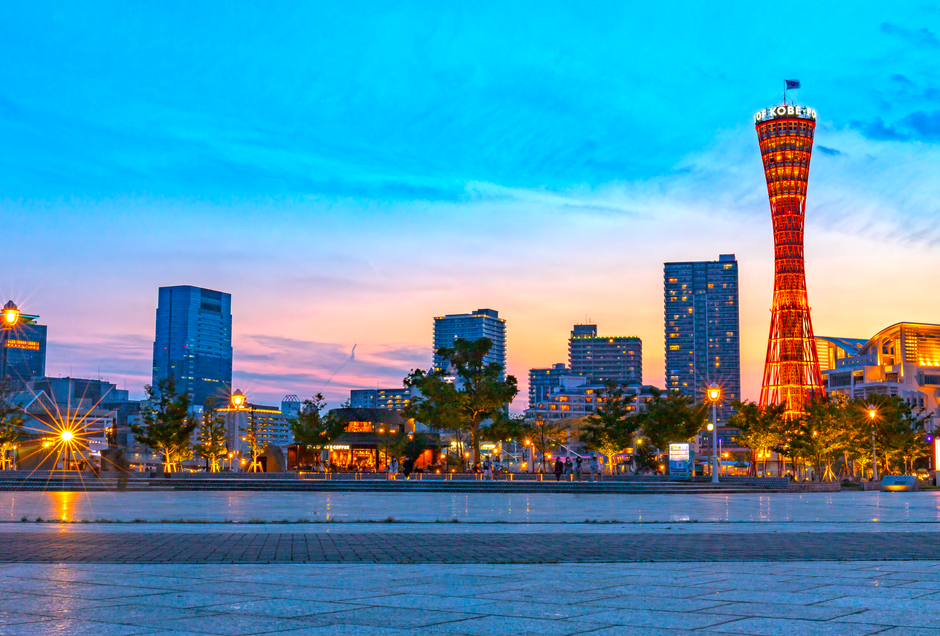
Kobe is a stylish port city of about 1.5 million people, squeezed between the Rokko mountains and Osaka Bay, about 30 km (19 miles) west of Osaka. Opened to foreign trade in 1868, it grew up international, and you can still see it in the merchants’ mansions of Kitano, the Chinatown of Nankinmachi, the bakeries and coffee shops, and the relaxed waterfront. The city was devastated by the Great Hanshin Earthquake of January 17, 1995, which killed more than 6,000 people, and its recovery is told movingly at the harbor and in its museums. Come for Kobe beef and sake from the Nada breweries, the night view from Mount Rokko, the hot springs of Arima on the other side of the mountains, and an easy day trip to Himeji Castle. The best months are March to May and October to November; the rainy season usually runs from early June to mid-July, and summers are hot and humid.
Right now in Kobe
- Wed 17–22°C 62–72°F Clear
- Thu 16–24°C 60–76°F Clear
- Fri 19–26°C 66–78°F Clear
- Mon 12 Oct Sports Day (スポーツの日)
Weather: MET Norway (CC BY 4.0) · Sea temperature: NOAA CoastWatch · Air quality: OpenAQ · Rates: ECB · Holidays: Nager.Date
Top tours in Kobe
See all tours for Kobe →
From local operators, with prices and reviews; you check availability and book on Viator, our partner. We may earn a commission at no extra cost to you. How we earn money
Kobe at a glance
- Best for: Kobe beef and sake, harbor walks, night views, Western mansions, hot springs at Arima, and Himeji Castle.
- How long: a full day from Osaka or Kyoto covers the center and Kitano; 2–3 days to add Mount Rokko, Arima and Himeji.
- Best time: late March to May and October to November, with highs of about 19–24 °C (66–75 °F); winter is mild and dry.
- Getting there: about 13 minutes from Shin-Osaka to Shin-Kobe by shinkansen, 20–30 minutes from Osaka by JR or private railway, and about 65 minutes from Kansai Airport by limousine bus.
- Getting around: walking, the subway, JR, Hankyu and Hanshin trains, the Port Liner and the City Loop bus; pay with an IC card.
- Fees to know: neither Kobe nor Hyogo Prefecture charges an accommodation tax as of October 2026; hot spring stays in Arima add a ¥150 bathing tax. Himeji Castle now costs ¥2,500 for adult visitors.
- Before you go: entry rules, rail passes, money and general safety are in our Japan travel guide; see also our Osaka and Kyoto guides.
Kobe’s areas and where to stay
Kobe is long and thin: the city stretches for some 30 km (19 miles) along the bay, but the center is compact, only about 2 km (1.2 miles) from the mountains to the sea.
Sannomiya and Motomachi
The heart of the city, with the main stations, department stores, shopping arcades, Ikuta Shrine and most of the restaurants and nightlife. Motomachi, to the west, has an old shopping arcade and leads into Chinatown. The most convenient base.
Kitano
The hillside district north of Sannomiya where foreign traders built their homes from the late 19th century. Several of these Ijinkan (“foreigners’ houses”) are open to visitors, alongside cafés, bakeries and boutiques on steep, quiet streets.
Harborland and Meriken Park
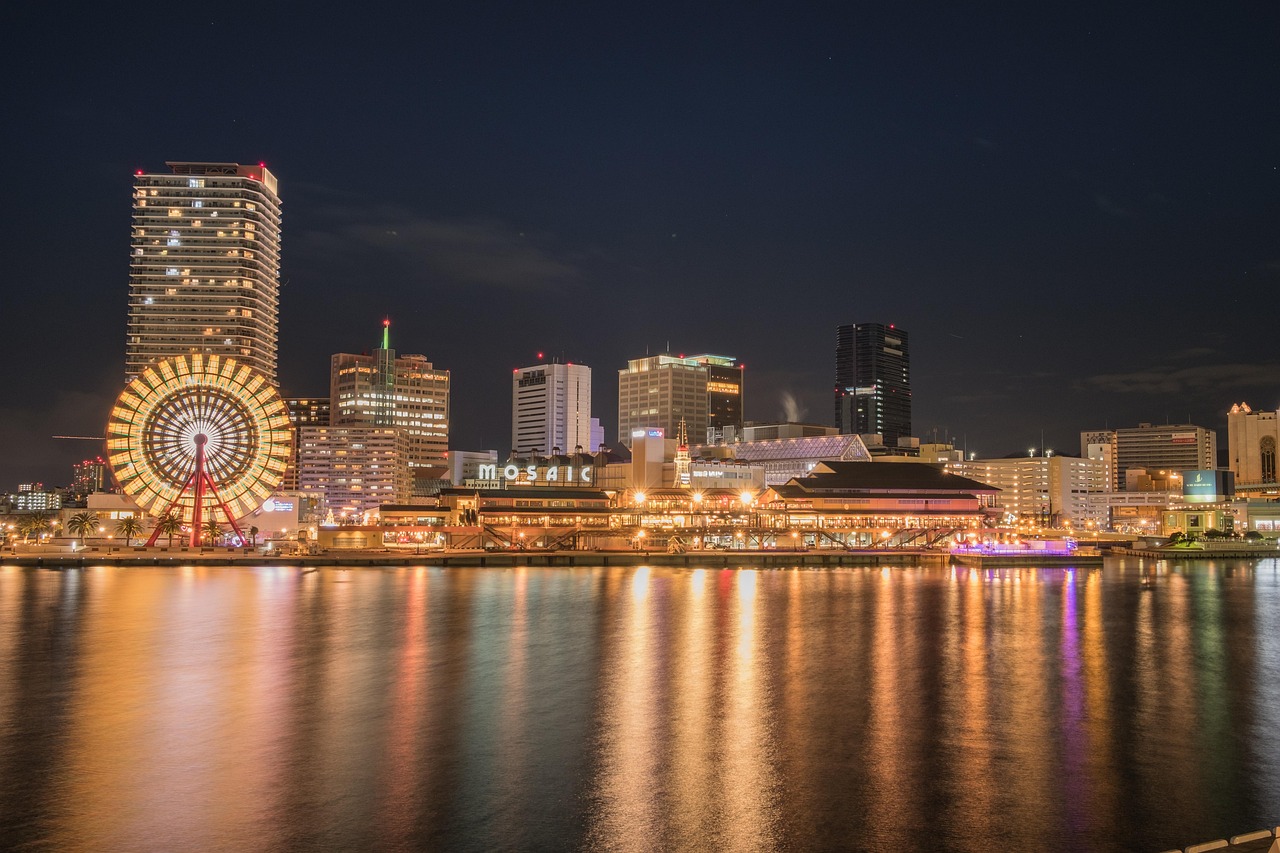
The waterfront south of Motomachi: Meriken Park with the red Port Tower and the earthquake memorial, and Harborland’s shopping malls, Ferris wheel and harbor cruises. Hotels here have bay views and are lovely at night.
Shin-Kobe
The shinkansen station at the foot of the mountains, with large hotels, the Nunobiki Herb Gardens ropeway and the trail to Nunobiki Falls. Practical for travelers moving on by train.
Arima Onsen
One of Japan’s oldest hot spring towns, on the north side of Mount Rokko but within Kobe city, about 30–40 minutes from Sannomiya. Ryokan here make a fine overnight escape.
Top things to see in Kobe
Kitano Ijinkan
About a dozen of the Western-style houses built by merchants and diplomats are open, among them the brick Weathercock House, the green-painted Moegi House and the English House. Each has its own small fee, and combination tickets are sold; even without going inside, the walk up the slopes from Sannomiya, about 15 minutes, is pleasant.
Meriken Park and the waterfront
The red lattice tower of Kobe Port Tower, reopened after renovation, the sail-shaped Maritime Museum and the Kobe Port Earthquake Memorial Park, where a section of the broken quay has been left as it was in 1995. Walk on to Harborland’s promenade at dusk, when the lights come on across the bay, or take a harbor cruise.
Mount Rokko and Mount Maya
The Rokko mountains rise to 931 m (3,054 ft) just behind the city. A cable car climbs Mount Rokko to Rokko Garden Terrace and its viewpoints, a botanical garden and walking trails, and the ropeway up Mount Maya reaches Kikuseidai, famous for one of Japan’s best night views over Kobe and Osaka. From the top of Rokko, a ropeway descends to Arima Onsen. For trail ideas, see our guide to hiking.
Arima Onsen
A small hot spring town in a valley, mentioned in Japan’s oldest chronicles. Its two types of water are the iron-rich, rust-colored kinsen (“gold spring”) and the clear ginsen (“silver spring”); try them at the public baths Kin no Yu and Gin no Yu, or stay the night in a ryokan. Bathing etiquette is the same as elsewhere in Japan: wash first, no swimsuits, and keep your towel out of the water. Many baths refuse guests with tattoos, so ask ahead or book a private bath.
The Nada sake breweries
Nada, along the coast east of the center, is one of Japan’s largest sake-producing areas, thanks to Rokko’s mineral-rich spring water and the rice of Hyogo. Several breweries, such as Hakutsuru and Kiku-Masamune, have museums and tasting rooms, most free, a short walk from Hanshin railway stations.
Nunobiki Falls and the Herb Gardens
A 15-minute walk uphill from Shin-Kobe Station leads to Nunobiki Falls, a series of waterfalls in the forest; nearby, a ropeway rises to the Nunobiki Herb Gardens, with greenhouses, terraces and views of the port.
More classic sights
- Nankinmachi: Kobe’s compact Chinatown, with street food stalls and a colorful plaza.
- Ikuta Shrine: a vermilion shrine in the middle of Sannomiya, said to be more than 1,800 years old, with a small forest behind it.
- Disaster Reduction and Human Renovation Institution: a museum on the 1995 earthquake and disaster preparedness, with powerful films and survivor testimonies.
- Hyogo Prefectural Museum of Art: a concrete building by Tadao Ando on the waterfront.
- Sorakuen: a traditional Japanese garden near the city hall.
- Akashi Kaikyo Bridge: one of the world’s longest suspension bridges, with a walkway inside the structure, 20 minutes west by JR.
Other sights
- Akashi Kaikyō Bridge
- Nankin-machi
Parks and gardens
- Meriken Park
- Nunobiki Herb Garden
Viewpoints
- Kobe Port Tower
Nature
- Nunobiki Falls
Peaks and mountains
- Mount Maya
- Mount Rokkō
Other things to do in Kobe
Kobe beef and other food
Kobe beef is the most famous wagyu in the world: meat from Tajima cattle raised in Hyogo that meets strict grading rules, certified with a chrysanthemum stamp. Try it cooked on a teppanyaki griddle in front of you; lunch sets cost far less than dinner, and other Hyogo wagyu is often just as good for less. Kobe is also known for sobameshi, fried noodles and rice mixed on a griddle, born in the Nagata district; akashiyaki, soft octopus dumplings dipped in broth, from nearby Akashi; and a long tradition of bakeries, Western-style cakes and coffee introduced by foreign residents. Nankinmachi is good for pork buns and dumplings, and the izakaya under the tracks between Sannomiya and Motomachi are lively in the evening.
Sake tasting
Combine two or three Nada breweries in an afternoon, then dinner in Sannomiya. Kobe’s sake is typically dry and crisp, the classic “otokozake” (men’s sake); brewery shops sell bottles you can’t find abroad.
Shopping
Sannomiya and Motomachi have covered arcades, fashion boutiques and department stores; Kitano has crafts and sweets. Many shops offer tax-free shopping for visitors on purchases of ¥5,000 or more; from November 1, 2026 you pay the full price and get the tax back after a customs check at the airport (see our Japan travel guide).
Festivals and events
The Kobe Luminarie, light sculptures created in memory of the 1995 earthquake, usually takes place in winter. The Kobe Festival fills the streets with a parade in May, Nankinmachi celebrates Lunar New Year, and summer brings fireworks over the harbor.
Day trips from Kobe
- Himeji Castle: Japan’s finest original castle, a UNESCO World Heritage site, about 40 minutes west by JR Special Rapid. Since March 1, 2026, adult visitors (18 and over) pay ¥2,500 (about US$16), residents of Himeji ¥1,000, and under-18s enter free, according to the City of Himeji.
- Osaka: street food, Osaka Castle and Dotonbori, 20–30 minutes east by train. See our Osaka guide.
- Kyoto: temples and gardens, about 50 minutes by JR Special Rapid or 30 minutes by shinkansen. See our Kyoto guide.
- Nara: the Great Buddha and deer park, about 1.5 hours. See our Nara guide.
- Awaji Island: across the Akashi Kaikyo Bridge, with flower parks, beaches and onion farms, best by car or bus.
- Hiroshima and Miyajima: about 70 minutes from Shin-Kobe by Nozomi, for a long day; see our Hiroshima guide and our Miyajima guide.
Nearby destinations
Getting there and getting around
From the airports
Most international flights land at Kansai International Airport (KIX). Limousine buses run to Sannomiya in about 65 minutes, and the Kobe-Kansai Bay Shuttle ferry crosses to Kobe Airport in about 30 minutes, connecting with the Port Liner to Sannomiya. Kobe Airport (UKB), on an island in the bay, has domestic flights and a growing number of international routes; Osaka’s Itami Airport has domestic flights and buses to Sannomiya in about 40 minutes.
By train
Shin-Kobe is on the Sanyo Shinkansen: about 13 minutes from Shin-Osaka, 2 hours 40 minutes from Tokyo and about 70 minutes from Hiroshima by Nozomi. From Osaka, JR Special Rapid trains reach Sannomiya in about 20–25 minutes, and the Hankyu and Hanshin railways run from Umeda for a little less money.
Rail passes
The nationwide Japan Rail Pass (¥50,000 (about US$315) for 7 days on the official site, as of October 2026) covers JR lines and the Hikari and Kodama shinkansen; Nozomi trains need an extra ticket, for example ¥4,960 (about US$31) between Tokyo and Shin-Osaka. JR West’s Kansai Mini Pass, ¥3,000 (about US$19) for 3 days, covers JR rapid and local trains between Kobe, Osaka, Kyoto and Nara, and the Kansai WIDE Area Pass, ¥12,000 (about US$76) for 5 days, adds the shinkansen from Shin-Osaka to Okayama, including Shin-Kobe and Himeji. The Kansai Area Pass stopped selling on September 30, 2026.
Around the city
The center is walkable. The Seishin-Yamate subway line links Shin-Kobe and Sannomiya, the Port Liner runs to Port Island and Kobe Airport, and the retro-style City Loop bus circles Kitano, Sannomiya, Chinatown and Harborland. Pay with any IC card: ICOCA, Suica and PASMO all work. To reach Arima, take the Kobe Electric Railway (about 30–40 minutes from Sannomiya with one change), a direct bus, or the Rokko cable car and ropeway over the mountain.
When to go and how long to stay
Kobe has a mild, fairly dry climate, sheltered by the mountains and a little milder than Osaka in summer. The table uses the Japan Meteorological Agency’s (JMA) 1991–2020 normals for its Kobe station: average daily highs and lows, total rain and days with at least 1 mm of rain. Mount Rokko and Arima are several degrees cooler.
| Month | Average high / low | Rain (days with 1 mm or more) | What to expect |
|---|---|---|---|
| January | 9 °C (49 °F) / 3 °C (38 °F) | 38 mm (1.5 in), 5 days | Cold and dry; quiet; Luminarie in some years |
| February | 10 °C (50 °F) / 3 °C (38 °F) | 56 mm (2.2 in), 6 days | Cool; plum blossoms; Lunar New Year in Nankinmachi |
| March | 14 °C (56 °F) / 6 °C (43 °F) | 94 mm (3.7 in), 9 days | Mild; cherry blossoms usually open around Mar 27 (JMA normal) |
| April | 19 °C (66 °F) / 11 °C (53 °F) | 101 mm (4.0 in), 9 days | Full bloom around April 5; pleasant and busy |
| May | 24 °C (74 °F) / 17 °C (62 °F) | 135 mm (5.3 in), 9 days | Warm and sunny; Golden Week crowds; Kobe Festival |
| June | 27 °C (80 °F) / 21 °C (69 °F) | 177 mm (7.0 in), 11 days | Rainy season usually from about June 6 (JMA normal for Kinki) |
| July | 30 °C (87 °F) / 25 °C (76 °F) | 188 mm (7.4 in), 10 days | Hot and humid; rainy season usually ends around July 19 |
| August | 32 °C (90 °F) / 26 °C (79 °F) | 103 mm (4.1 in), 7 days | The hottest month; humid nights; head up to Rokko to cool off |
| September | 29 °C (84 °F) / 23 °C (73 °F) | 157 mm (6.2 in), 9 days | Hot early in the month; typhoons possible |
| October | 23 °C (74 °F) / 17 °C (62 °F) | 118 mm (4.6 in), 8 days | Comfortable and dry; one of the best months |
| November | 18 °C (64 °F) / 11 °C (52 °F) | 62 mm (2.5 in), 6 days | Clear and cool; maples on Rokko and in Arima |
| December | 12 °C (54 °F) / 6 °C (42 °F) | 49 mm (1.9 in), 6 days | Cool and dry; maples linger early in the month; illuminations |
Kobe gets about 1,280 mm (50 in) of rain a year, less than Tokyo, with the most from June to September. The JMA’s normal rainy season for the Kinki region runs from about June 6 to July 19; in 2026 it ran from about June 2 to July 9. Typhoons are most likely from August to October.
Weather month by month
Averages from JMA normals 1991–2020, Kobe · Last reviewed 5 Oct 2026
Cherry blossoms and fall colors: the JMA’s normal date for the first cherry blossoms in Kobe is March 27, with full bloom around April 5; in 2026 the blossoms opened on March 27 and reached full bloom on April 5, right on schedule. Popular spots are Oji Park, the Shukugawa river in nearby Nishinomiya and Mount Rokko, which blooms later. In the city, maples normally turn around December 1 (JMA normal); on Rokko and in Arima’s Zuihoji Park they peak in mid-November.
Crowds: Kobe is less crowded than Kyoto or Osaka. Weekends at Kitano, Harborland and Arima are busiest, and night-view spots fill up on clear evenings.
One day in Kobe
Walk up to Kitano in the morning, lunch on Kobe beef in Sannomiya, then visit Nankinmachi and Meriken Park. Ride the Mount Maya or Rokko lines for sunset and the night view, and finish at an izakaya under the tracks.
Three days in Kobe
Add a day trip to Himeji Castle and a night in Arima Onsen, reached over Mount Rokko by cable car and ropeway, with the Nada breweries on the way back.
Where to stay in Kobe and taxes
- Sannomiya and Motomachi: the most choice, from business hotels to international chains, near restaurants and stations.
- Harborland and Meriken Park: waterfront hotels with bay and night views.
- Shin-Kobe: large hotels at the shinkansen station, convenient for moving on.
- Arima Onsen: traditional ryokan with hot spring baths, usually with dinner and breakfast.
- Port Island: quieter hotels near the airport.
As of October 2026, neither the City of Kobe nor Hyogo Prefecture charges an accommodation tax. Hot spring stays, including Arima’s ryokan, add Kobe’s bathing tax of ¥150 (about US$0.95) per person per night, according to the City of Kobe; day bathers pay ¥75 at some baths. Japan’s 10% consumption tax is usually included in room rates.
What a trip to Kobe costs
Prices are approximate, for October 2026, converted at about ¥158 to the US dollar.
| Item | Typical cost |
|---|---|
| Train Osaka–Kobe, each way | about ¥320–420 (about US$2–2.7) |
| One Kitano Ijinkan house | about ¥500–1,000 (about US$3.2–6.3) |
| Kin no Yu bath in Arima | about ¥800 (about US$5) |
| Himeji Castle (adults 18+) | ¥2,500 (about US$16) |
| Kobe beef teppanyaki lunch | ¥6,000–15,000 (about US$38–95) |
| Kobe beef teppanyaki dinner | ¥15,000–40,000 (about US$95–250) |
| Sobameshi or noodles | ¥800–1,200 (about US$5.1–7.6) |
| Business hotel double, per night | ¥9,000–18,000 (about US$57–115) |
| Arima ryokan with dinner and breakfast, per person | ¥20,000–50,000 (about US$125–315) |
Practical tips for Kobe
- Kobe beef: genuine restaurants display the Kobe beef certificate and the cow’s ID number; “wagyu” alone does not mean Kobe beef.
- Station names: JR’s Sannomiya, Hankyu’s Kobe-Sannomiya and the subway’s Sannomiya are all next to each other, but Shin-Kobe is a separate station 1.5 km (1 mile) north.
- Night views: check the weather; haze or low cloud can hide the view from Rokko and Maya.
- Cash: most places take cards, but small shops and some baths prefer cash.
- Departure tax: since July 2026, Japan’s International Tourist Tax is ¥3,000 per departure, usually included in your air fare (tickets issued by June 30, 2026 keep the old ¥1,000).
- Visitor hotline: the JNTO’s Japan Visitor Hotline, 050-3816-2787, answers in English 24 hours a day.
Safety
Kobe is very safe. Its main hazards are natural: heat in July and August, typhoons from August to October, and heavy rain, which can cause landslides on the steep slopes behind the city and close mountain roads and trails. The 1995 earthquake showed how vulnerable the region is; Kobe has since rebuilt to strict standards, and evacuation signs are everywhere. If you feel strong shaking, take cover, follow staff instructions, and move away from the waterfront if a tsunami warning is issued; keep the JNTO’s Safety Tips app on your phone. On Rokko’s trails, carry water and come down before dark. In an emergency, call 110 for the police or 119 for an ambulance or fire.
What to pack for Kobe
Comfortable shoes for Kitano’s slopes, a light jacket for the cooler mountain air on Rokko, a folding umbrella, and light clothes and a hat for summer. Japan uses 100 V and two-pin type A plugs like the US.
Kobe travel FAQ
How many days do I need in Kobe?
One full day covers Kitano, Chinatown and the harbor; two or three days add Mount Rokko, Arima Onsen and Himeji Castle.
Is Kobe worth a day trip from Osaka or Kyoto?
Yes. It is 20–30 minutes from Osaka and about 50 minutes from Kyoto, and offers Kobe beef, a relaxed waterfront and Western mansions.
Where can I eat real Kobe beef?
At restaurants that show the official Kobe beef certificate; teppanyaki lunch sets in Sannomiya are the best value.
How do I get to Himeji Castle from Kobe?
Take the JR Special Rapid from Sannomiya, about 40 minutes, or the Sanyo Shinkansen from Shin-Kobe, about 15 minutes. Adults pay ¥2,500 since March 2026.
Is there an accommodation tax in Kobe?
No. As of October 2026 there is none, but hot spring stays, such as in Arima, add a bathing tax of ¥150 per person per night.
How do I get to Arima Onsen?
By Kobe Electric Railway from Sannomiya, about 30–40 minutes with a change, by direct bus, or over Mount Rokko by cable car and ropeway.
Where is the best night view in Kobe?
Kikuseidai on Mount Maya and the viewpoints on Mount Rokko, along with the harbor at Meriken Park and Harborland.
Does the Kansai Mini Pass cover Kobe?
Yes. It covers JR rapid and local trains between Kobe, Osaka, Kyoto and Nara for 3 days, for ¥3,000 as of October 2026.
When are the cherry blossoms in Kobe?
The JMA’s normal date for the first blossoms is March 27, with full bloom around April 5.
How do I get from Kansai Airport to Kobe?
By limousine bus to Sannomiya in about 65 minutes, or by the Bay Shuttle ferry to Kobe Airport in about 30 minutes, then the Port Liner.
Sources
- © OpenStreetMap contributors · ODbL · fetched 5 Oct 2026
- Wikidata · CC0 · fetched 5 Oct 2026
Sources and last review
Researched and last reviewed on 4 October 2026. Bathing tax: the City of Kobe; Himeji Castle fees: the City of Himeji; climate normals, rainy season and cherry blossom and maple dates: the Japan Meteorological Agency (JMA); JR Pass and Nozomi ticket: the official Japan Rail Pass website; Kansai passes: JR West; tax-free shopping: the Japan Tourism Agency; visitor hotline: JNTO; exchange rate: the US Federal Reserve. The absence of an accommodation tax, population and earthquake figures, history, sight descriptions, journey times, festival dates, other admission prices and typical prices are general references or estimates, flagged for checking. Prices and hours change, so check the official sites before you go. For entry rules, money and general safety, see our Japan travel guide.
Plan your trip
Partner links: TravelerCenter may earn a commission if you book, at no extra cost to you.
🇯🇵 Useful Japanese phrases for Kobe
All 38 Japanese phrases: restaurant, hotel, emergencies, romance (printable) →