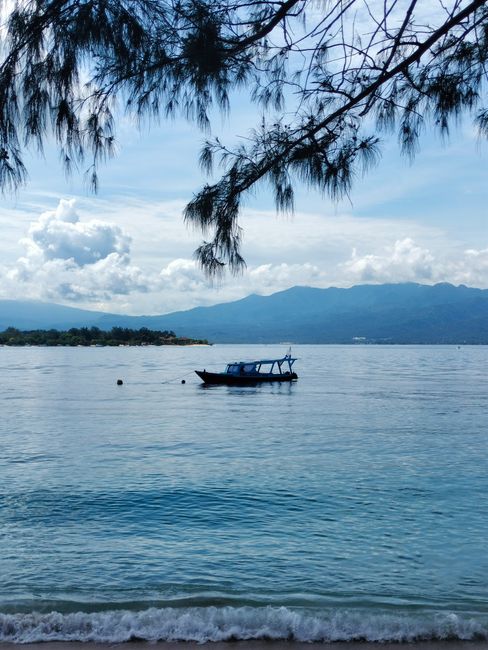
The Gili Islands are three small, flat coral islands off the northwest coast of Lombok: Gili Trawangan, the largest and liveliest, Gili Meno, the smallest and quietest, and Gili Air, closest to Lombok and somewhere in between. (“Gili” simply means small island in the Sasak language.) There are no cars or motorbikes: people get around on foot, by bicycle and in horse-drawn carts called cidomo, and each island can be walked around in an hour or two. Surrounded by white sand and coral reefs where green and hawksbill turtles graze, with sunsets behind Bali’s Mount Agung and a famous sunrise over Mount Rinjani, the Gilis are one of Indonesia’s most popular escapes for snorkeling, diving and doing very little. The dry season, from about May to October, brings the calmest water and sunniest days, but crossings from Bali can be rough when the southern swell is big.
Right now in Gili Islands (Gili Trawangan)
- Wed25–29°C78–85°FClear
- Thu25–27°C78–81°FPartly cloudy
- Fri25–27°C76–81°FMostly clear
Top tours in Gili Islands
See all tours for Gili Islands →
From local operators, with prices and reviews; you check availability and book on Viator, our partner. We may earn a commission at no extra cost to you. How we earn money
Gili Islands at a glance
- Best for: snorkeling with turtles, diving courses, beaches, sunsets, cycling, a car-free pace and, on Gili Trawangan, nightlife.
- How long: 2–3 nights on one island; 4–6 nights to island-hop between all three.
- Best time: May to October, the dry season, with calm, clear water from about April to June and September to October.
- Getting there: fast boats from Bali (Padang Bai, Serangan, Sanur or Amed) in about 1.5–3 hours, or a short boat from Bangsal or Teluk Nara on Lombok.
- Getting around: walking, bicycles and cidomo on the islands; public and island-hopping boats between them.
- Good to know: medical care on the islands is basic, and ATMs can run out of cash; bring rupiah with you.
- Before you go: visas, the arrival card, money and general safety are in our Indonesia travel guide; see also our Lombok and Bali guides.
The Gili Islands: which one to choose
The islands were long home to small fishing and coconut-farming communities, many descended from Bugis and Sasak settlers, before backpackers began arriving in the 1980s. The three islands lie in a row about 1–3 km (0.5–2 miles) off Lombok’s northwest tip, separated by narrow channels with strong currents. Together with their reefs they form a marine conservation area, the Gili Matra marine tourism park, managed by Indonesia’s marine affairs ministry. Each island has its own character, and they’re close enough to visit all three.
Gili Trawangan
About 3 km (2 miles) long, “Gili T” is the most developed island, with dozens of dive schools, restaurants, bars and the main street along the east coast, a night market, and parties on certain nights of the week. The west and north coasts are quieter, with sunset bars and villas, and the hill in the south has views to Bali and Lombok. Accommodation runs from hostels to boutique resorts.
Gili Meno
The smallest and least developed, with a salt lake in the middle, long empty beaches, a turtle hatchery, good snorkeling and peaceful bungalows. Off the west coast, the underwater statue garden, Nest, is a popular snorkeling spot. Honeymooners and families like it; nightlife is minimal.
Gili Air
Closest to Lombok, with a local village, a relaxed traveler scene, cafés and yoga studios on the east and north coasts, and good snorkeling just off the beach. It balances quiet and convenience, and is the easiest base for trips to Lombok.
Top things to see on the Gili Islands
Snorkeling with turtles
Green and hawksbill turtles feed on the seagrass and reefs around all three islands, often in shallow water just off the beach. Popular spots are Turtle Point off Gili Meno, the north-east of Gili Trawangan and the east side of Gili Air. Snorkeling trips by glass-bottom boat visit several sites around the islands. Never touch or chase turtles, and wear a rash guard rather than lots of sunscreen.
Diving
The Gilis are one of Indonesia’s busiest places to learn to dive, with many schools offering courses and fun dives at sites such as Shark Point, where reef sharks and turtles are common, Deep Turbo, Halik and the Bounty wreck. Currents can be strong, so dive with a licensed operator. See our diving guide.
Sunsets and sunrises
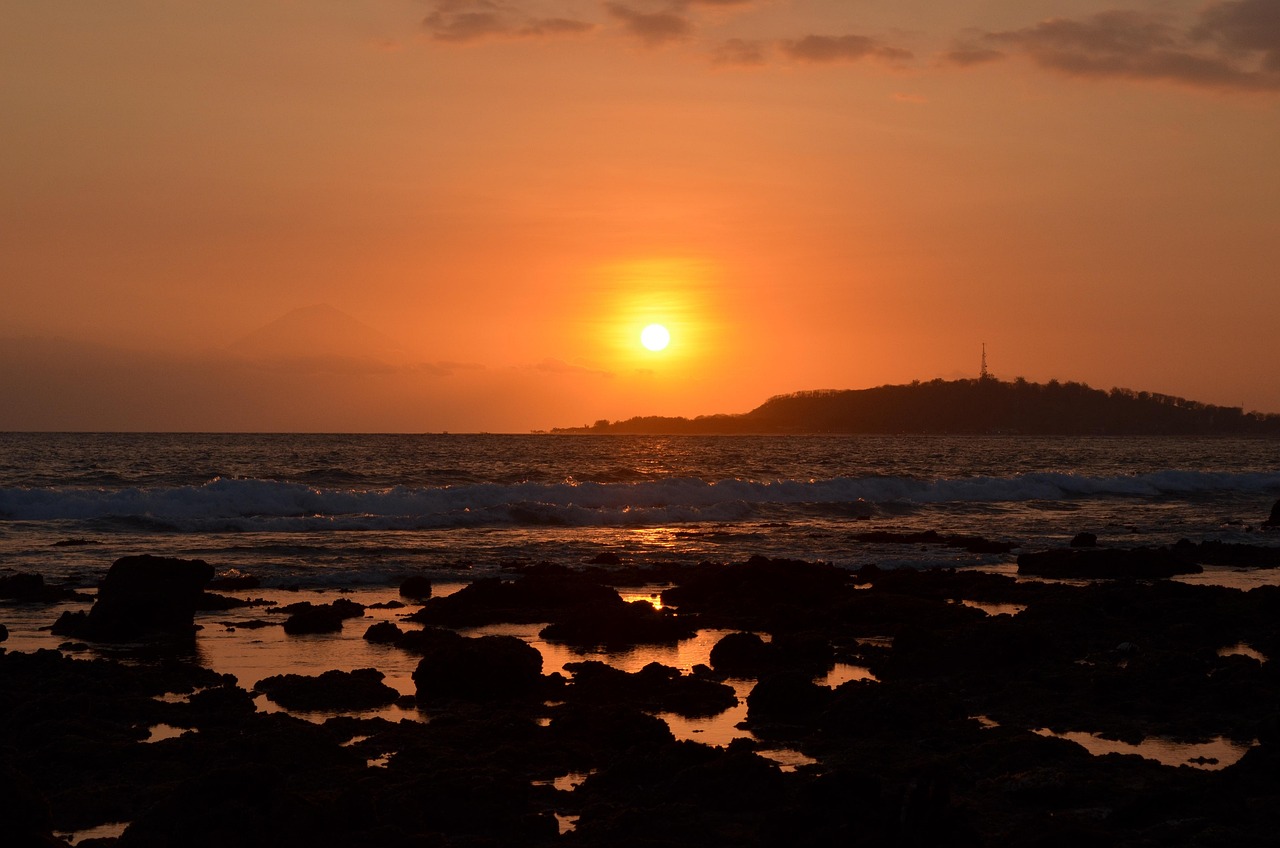
From the west coasts of Trawangan and Meno, the sun sets behind Bali’s Mount Agung, often with swings and beanbags on the sand; from the east coasts, the sun rises over Lombok’s Mount Rinjani. On Gili Air, walk or cycle to the island’s northwest corner for sunset; on Gili Meno, the west-coast beaches are almost empty at dusk. In the dry season, the air is often clear enough to see Agung’s cone silhouetted across the strait, and the reflected colors on the calm water are spectacular.
Cycling around the islands
Rent a bicycle and ride around Gili Trawangan in about an hour, or around Gili Air in less; some inland and northern tracks are sandy, so you may need to push.
More classic sights
- Nest: a circle of life-size human figures cast in concrete, now covered in coral, off Gili Meno.
- Gili Meno’s salt lake: a quiet inland lagoon with birdlife.
- Gili Trawangan’s hill: old Japanese wartime bunkers and views at sunset.
- Turtle hatcheries: small conservation projects on Meno and Trawangan.
- Night market, Gili Trawangan: grilled fish, satay and local dishes by the harbor.
Beaches, snorkeling and diving
Sandy beaches ring all three islands, though some stretches have coral rubble and shallow reef at low tide; reef shoes help. The east coasts face Lombok across calm channels; the west coasts have sunset views. Currents in the channels between the islands can be very strong, so snorkel close to shore or with a boat, and never try to swim between islands. See our guides to snorkeling, beaches and boat trips.
Other things to do on the Gili Islands
Food and drink
Fresh grilled fish at the Gili Trawangan night market, Indonesian warungs serving nasi campur and mie goreng, and international cafés with smoothie bowls and wood-fired pizza. Beach bars serve Bintang and cocktails; drink only sealed, labeled bottles and avoid cheap spirits of unknown origin, as methanol-laced drinks have caused poisonings in the region. “Magic mushroom” drinks are illegal and dangerous.
Yoga, freediving and stand-up paddle
Yoga studios on Gili Air and Gili Trawangan, freediving schools teaching courses to depth, and stand-up paddleboards at sunrise are all popular.
Reef conservation
Coral reefs around the Gilis were damaged in the past by fish bombing and warming seas, and local groups have worked for years to restore them, including Biorock structures that use low-voltage current to help coral grow, mooring buoys to stop boats anchoring on the reef, and regular beach and reef cleanups that visitors can join. Choose dive and snorkel operators that brief guests on reef etiquette, avoid touching or standing on coral, and carry your rubbish back to the main islands’ waste stations.
Local life and etiquette
The islands’ residents are mainly Muslim Sasak people, and each island has mosques. Swimwear belongs on the beach; cover up in the villages and restaurants, and especially when walking near mosques. During Ramadan, evenings are quieter and some warungs close in daylight. The cidomo horses work hard in the heat; some visitors choose to walk or cycle instead.
Day trips from the Gili Islands
- Island-hopping: visit the other two Gilis by public boat or the hopping boats that leave each morning and afternoon.
- Lombok’s north: the Sendang Gile and Tiu Kelep waterfalls at Senaru, about 1.5 hours from Bangsal. See our Lombok guide.
- Senggigi and Mataram: coastal road, markets and temples.
- Rinjani: multi-day treks start at Senaru and Sembalun when the park is open.
- The secret Gilis: remote islands off southwest Lombok, best as a separate trip.
Getting there and getting around
Fast boats from Bali
Several companies run fast boats from Bali to the Gilis: from Padang Bai in about 1.5–2 hours, from Serangan and Sanur in about 2–3 hours, and from Amed in about 1–1.5 hours, usually with a stop at Gili Trawangan first, then Gili Air and sometimes Gili Meno or Teluk Kode on Lombok. Most include hotel pickup in south Bali or Ubud. The Lombok Strait is exposed to the Indian Ocean swell, and from about June to September crossings can be rough or canceled; on bad days take the slower car ferry to Lombok instead. Choose established operators with enough life jackets, look for a valid license and enough seats inside, and avoid boats that seem overloaded. Boats arrive on the beach, so expect to wade.
From Lombok
From Bangsal harbor, public boats leave for each island when full, roughly hourly in the morning, taking about 15–30 minutes; buy tickets at the official harbor office. Private speedboats run from Bangsal and Teluk Nara, and fast boats from Senggigi. From Lombok International Airport, Bangsal is about 1.5–2 hours by car.
On and between the islands
There are no motorized vehicles; walk, cycle or take a cidomo. Public boats connect the islands in the morning and afternoon, and private charters are available any time. Bring a small bag or backpack rather than a heavy suitcase, as you may have to carry it along sandy paths.
When to go and how long to stay
The Gilis lie in the rain shadow of Lombok’s northwest coast and are usually a little drier and sunnier than Lombok’s interior, but they share the island’s seasons: dry from about May to October and wetter from November to April. BMKG has no published normals for the islands, so the table uses the nearest official data for Lombok: average daily highs and lows are 1991–2020 averages of BMKG’s observations at Lombok International Airport, from NOAA’s global daily records, and rainfall and rain days are BMKG’s long-term normals for Lombok (1961–1990), as published by the World Meteorological Organization.
| Month | Average high / low (Lombok) | Rain (rain days), Lombok | What to expect on the Gilis |
|---|---|---|---|
| January | 31 °C (88 °F) / 24 °C (75 °F) | 280 mm (11.0 in), 21 days | Wettest month; storms; murkier water |
| February | 32 °C (89 °F) / 24 °C (75 °F) | 223 mm (8.8 in), 18 days | Wet; quiet; low prices |
| March | 32 °C (89 °F) / 24 °C (74 °F) | 162 mm (6.4 in), 14 days | Rain easing; visibility improving |
| April | 32 °C (90 °F) / 23 °C (74 °F) | 108 mm (4.3 in), 16 days | Calm seas; good snorkeling |
| May | 32 °C (89 °F) / 22 °C (72 °F) | 94 mm (3.7 in), 9 days | Dry season begins; excellent month |
| June | 31 °C (88 °F) / 22 °C (71 °F) | 44 mm (1.7 in), 7 days | Dry; crossings can get rough |
| July | 30 °C (87 °F) / 21 °C (69 °F) | 29 mm (1.1 in), 5 days | Peak season; book ahead |
| August | 31 °C (87 °F) / 21 °C (69 °F) | 19 mm (0.7 in), 2 days | Driest; busiest; strong swells in the strait |
| September | 32 °C (89 °F) / 22 °C (71 °F) | 33 mm (1.3 in), 4 days | Dry; calmer; great diving |
| October | 32 °C (90 °F) / 23 °C (74 °F) | 110 mm (4.3 in), 11 days | Hot; occasional storms; good visibility |
| November | 32 °C (90 °F) / 24 °C (75 °F) | 165 mm (6.5 in), 13 days | Rainy season begins; quieter |
| December | 32 °C (89 °F) / 24 °C (75 °F) | 247 mm (9.7 in), 20 days | Wet; busy at New Year |
Sea temperatures stay around 27–29 °C (81–84 °F), and visibility for diving is usually best in the dry season. In its 2026–27 outlook, BMKG expected the rainy season across West Nusa Tenggara to start later than normal because of a very strong El Niño, mostly in November or December 2026.
3 nights on the Gilis
Night one, arrive on Gili Trawangan, rent bicycles and watch the sunset from the west coast. Day two, a snorkeling boat trip to Turtle Point and Nest, then dinner at the night market. Day three, move to Gili Air or Gili Meno for a quieter night and a sunrise over Rinjani.
A week on the islands
Take a diving course or freediving course on Trawangan or Air, spend two nights on each island, and finish with a day trip to Lombok’s waterfalls.
Where to stay on the Gili Islands
- Gili Trawangan, east coast: lively, near the harbor, bars and dive schools.
- Gili Trawangan, west and north: sunset villas and quieter resorts.
- Gili Meno: peaceful bungalows and eco-resorts; few restaurants.
- Gili Air: a mix of bungalows, boutique hotels and homestays with a relaxed social scene.
Fresh water is limited, and some cheaper places have brackish showers; ask before booking. Book early for July, August and New Year.
What a trip to the Gili Islands costs
Prices are approximate, for October 2026, converted at about 17,900 rupiah to the US dollar.
| Item | Typical cost |
|---|---|
| Fast boat, Bali to the Gilis, one way | 400,000–800,000 rupiah (about US$22–45) |
| Public boat, Bangsal to Gili Trawangan | about 20,000–30,000 rupiah (about US$1.10–1.70) |
| Bicycle rental, per day | 50,000–80,000 rupiah (about US$2.80–4.50) |
| Snorkeling boat trip, half day, shared | 100,000–200,000 rupiah (about US$5.60–11) |
| Snorkel gear rental, per day | 30,000–50,000 rupiah (about US$1.70–2.80) |
| Fun dive | 500,000–700,000 rupiah (about US$28–39) |
| Open Water diving course | 5,500,000–7,000,000 rupiah (about US$307–391) |
| Grilled fish at the night market | 40,000–100,000 rupiah (about US$2.20–5.60) |
| Bungalow double, per night | 400,000–900,000 rupiah (about US$22–50) |
| Boutique resort, per night | 1,500,000 rupiah and up (about US$84 and up) |
Practical tips for the Gili Islands
- Cash: bring enough rupiah; ATMs on the islands can be empty, and card fees are common.
- Luggage: pack light; you may wade ashore and walk on sand.
- Reef shoes: useful for rocky or rubble beaches at low tide.
- Respect: cover up away from the beach; no nudity or topless sunbathing.
- Turtles: look, don’t touch; don’t stand on coral.
- Water: refill bottles at refill stations to cut plastic waste.
Safety
The Gilis are relaxed, but take care in the water. Currents in the channels between the islands are strong and can sweep snorkelers and swimmers away; stay close to shore, snorkel with a buddy or on guided boat trips, and never attempt to swim between islands. Fast boats across the Lombok Strait can be dangerous in rough seas: check the forecast, choose established operators, wear a life jacket if conditions are bad and don’t board overloaded boats. Drink only sealed, labeled drinks, as illicit spirits have contained methanol, and avoid “magic mushroom” shakes, which are illegal. Medical facilities on the islands are basic, with serious cases taken by boat to Lombok, so travel insurance with evacuation cover is important. Watch out for jellyfish in some seasons, and for bicycles on the narrow paths. In an emergency, call 112.
What to pack for the Gili Islands
Swimwear, a rash guard, reef-safe sunscreen, your own mask and snorkel if you have them, reef shoes, a hat, a cover-up for walking through the villages, a flashlight for unlit paths at night, insect repellent and a dry bag for boat transfers. Indonesia uses 230 V and round two-pin plugs.
Gili Islands travel FAQ
Which Gili Island is best?
Gili Trawangan for restaurants, diving and nightlife, Gili Meno for peace and quiet, and Gili Air for a relaxed mix of both.
How do I get from Bali to the Gili Islands?
By fast boat from Padang Bai, Serangan, Sanur or Amed, in about 1–3 hours depending on the harbor, or by flying or taking the ferry to Lombok and the short boat from Bangsal.
Are the fast boats to the Gilis safe?
Established operators run daily, but the Lombok Strait can be rough, especially from June to September. Check the weather, choose licensed operators with enough life jackets and avoid overloaded boats.
Are there cars on the Gili Islands?
No. There are no cars or motorbikes; people walk, cycle or ride in cidomo horse carts.
Can you see turtles on the Gili Islands?
Yes, green and hawksbill turtles are common on the reefs around all three islands, often close to shore. Look but don’t touch.
When is the best time to visit the Gili Islands?
May to October, the dry season; April to June and September to October often have the calmest water.
When is the rainy season on the Gilis?
Usually from November to April, with the most rain from December to February. BMKG expected the 2026–27 rains to start late because of El Niño.
Is there an ATM on the Gili Islands?
Yes, on all three islands, but they can run out of cash; bring enough rupiah with you.
How many days do I need on the Gili Islands?
Two or three nights on one island, or four to six nights to visit all three.
Can I do a diving course on the Gilis?
Yes. The Gilis are one of Indonesia’s most popular places to learn, with many dive schools on Gili Trawangan and Gili Air.
Plan your trip
Partner links: TravelerCenter may earn a commission if you book, at no extra cost to you.
🇮🇩 Useful Indonesian phrases for Gili Islands
All 38 Indonesian phrases: restaurant, hotel, emergencies, romance (printable) →
Sources · last reviewed 4 October 2026
Researched and last reviewed on 4 October 2026. The 2026–27 rainy season outlook: BMKG; temperatures: BMKG observations at Lombok International Airport via NOAA GHCN-Daily (1991–2020 averages); rainfall normals: BMKG for Lombok via the WMO World Weather Information Service (1961–1990); visas and the arrival card: the Directorate General of Immigration; exchange rate: Bank Indonesia. The marine-park status and management, fast-boat routes and times, public-boat fares, dive sites, the car-free rule and typical prices are general references or estimates, flagged for checking, because no official operator or harbor schedule could be read here. Prices and schedules change, so check before you go. For entry rules, money and general safety, see our Indonesia travel guide.
Data: Weather: MET Norway (CC BY 4.0) · Sea temperature: NOAA CoastWatch · Rates: ECB · Costs: World Bank ICP and price levels · Wikidata (CC0)