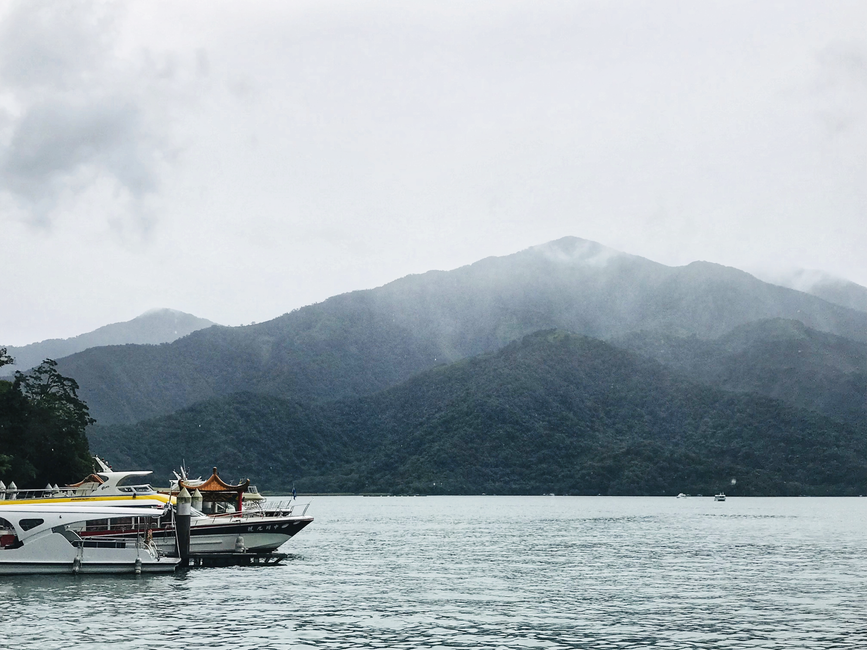
Sun Moon Lake, in the forested hills of Nantou County at the geographic heart of Taiwan, is the island’s largest lake and one of its most loved scenic areas. Lying at about 750 m (2,450 ft) above sea level, it is named for its shape: a round eastern part said to resemble the sun and a crescent-shaped western arm like the moon, with the tiny island of Lalu, sacred to the Thao people, where the two meet. Mist often rises off the water in the morning, and the shoreline is ringed with temples, pagodas, walking trails and one of Taiwan’s most beautiful cycle paths. Boats cross between the main piers, a ropeway soars over the hills to an Indigenous culture park, and the hills around the lake grow Taiwan’s famous black teas. The area is managed by the Sun Moon Lake National Scenic Area, which sets the rules for its boats and shuttle buses. It is busy on weekends and holidays, so come midweek if you can, and stay the night to see the lake at dawn.
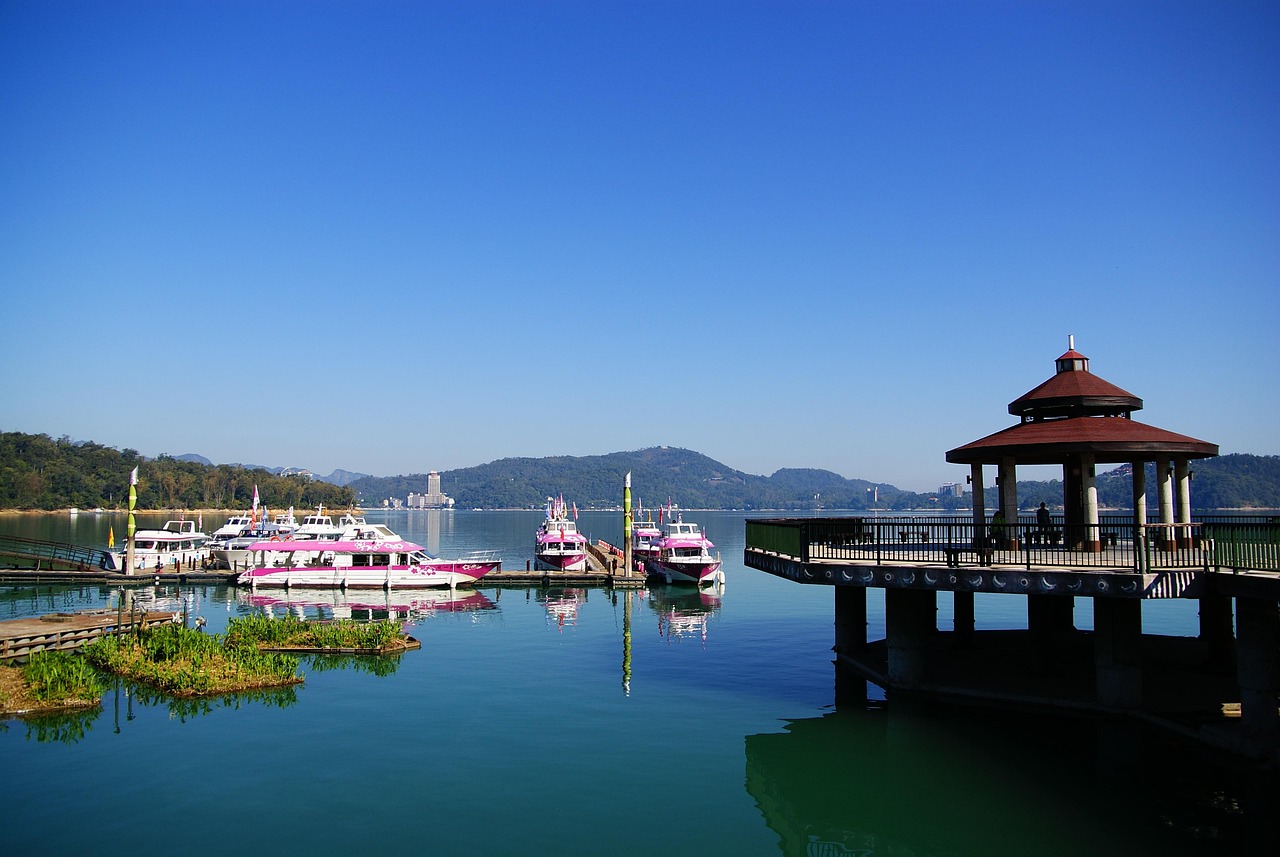
Right now in Sun Moon Lake (Shuishe)
- Wed 19–27°C 66–80°F 6 mm Showers
- Thu 19–27°C 66–81°F 5 mm Showers
- Fri 20–27°C 68–81°F Mostly clear
Weather: MET Norway (CC BY 4.0) · Air quality: OpenAQ
Top tours in Sun Moon Lake
See all tours for Sun Moon Lake →
From local operators, with prices and reviews; you check availability and book on Viator, our partner. We may earn a commission at no extra cost to you. How we earn money
Sun Moon Lake at a glance
- Best for: lake views, cycling, boat trips, temples, Thao culture and tea.
- How long: one night is ideal; two with cycling, hiking and the ropeway.
- Best time: October to April for clearer, drier weather; spring for cherry blossoms and fireflies.
- Getting there: the high-speed rail to Taichung, then a direct bus to the lake in about 1.5–2 hours.
- Getting around: the lake ferries, the round-the-lake shuttle bus, rental bikes and scooters.
- Good to know: the Sun Moon Lake Ropeway usually closes for maintenance on the first Wednesday of each month.
- Before you go: visa-free entry, the online arrival card, money and general safety are in our Taiwan travel guide.
Sun Moon Lake’s areas and where to stay
The lake is about 7.9 km² (3 sq miles), and a road of about 30 km (19 miles) runs right around it. Most visitors stay in one of two villages.
Shuishe
The main village, on the northwest shore, with the bus terminal, the visitor center, the main pier, hotels, restaurants and bike rental shops. Convenient for arrivals and departures, with lake-view hotels along the front.
Ita Thau
On the east shore, the village of the Thao people, with the ropeway station, a pier, a lively street of food stalls and shops, and more guesthouses. It is livelier in the evening and closer to the Formosan Aboriginal Culture Village.
The east and south shores
The quieter side of the lake, with the Ci’en Pagoda, Xuanzang Temple and the Xiangshan visitor center, plus a few resort hotels in the woods with private lake views.
Top things to see at Sun Moon Lake
The lake by boat
According to the Sun Moon Lake National Scenic Area, ferries link the three main piers, Shuishe, Xuanguang Temple and Ita Thau, running counterclockwise in a loop from about 9 a.m. to 5 p.m. and leaving every 15–20 minutes. A one-day ferry ticket allows unlimited rides on the same day, and captains usually give a commentary on the lake’s history. Buy tickets at the official pier booths or as part of a package; the scenic area warns against cut-price tickets from unofficial sellers. Boats pass Lalu Island, which visitors may not land on.
The Sun Moon Lake Ropeway
The ropeway runs 1.877 km (1.17 miles) from Ita Thau over a ridge to the Formosan Aboriginal Culture Village, a seven-minute ride with views over the lake and the Puli basin; some cabins have glass floors. According to the operator, a round trip costs NT$420 for adults from June 1, 2026, sold for one same-day round trip, and admission to the Formosan Aboriginal Culture Village includes the ropeway. It runs from 10:30 a.m. to 4 p.m. on weekdays and 10 a.m. to 4:30 p.m. on weekends and holidays, and it normally closes for maintenance on the first Wednesday of each month (in October 2026, on October 7). Tickets are sold on the day, for cash; the ropeway may stop in thunderstorms.
Wenwu Temple
A large, colorful temple on the north shore, rebuilt in the 1930s when a dam raised the lake’s level, dedicated to Confucius and to Guan Yu and Yue Fei, the gods of war. Climb the steps behind it for one of the best views of the lake.
Ci’en Pagoda and Xuanzang Temple
On the south shore, a nine-story pagoda built by Chiang Kai-shek in memory of his mother stands on top of Shabalan Mountain, about 1 km (0.6 miles) up a forest path; from the top, the whole lake spreads out below. Nearby, Xuanzang Temple and the Xuanguang Temple by the pier honor the Tang dynasty monk Xuanzang. Next to Xuanguang pier, a stall famous for its tea eggs has been selling them for decades.
The Xiangshan Visitor Center
A striking curved concrete building by Japanese architect Norihiko Dan, with a reflecting pool and a walkway to the lakeshore, on the west side of the lake between Shuishe and the cycle path.
More classic sights
- The Formosan Aboriginal Culture Village: a theme park mixing reconstructed Indigenous villages, dance shows and gardens with amusement rides; famous for its cherry blossoms in late winter.
- Ita Thau: Thao culture, crafts and food stalls by the water.
- Maolanshan: a hill trail through tea plantations to the Sun Moon Lake Black Tea Research Center.
- The Shuishe Dam and the Moon Lake viewpoints: quiet corners of the western arm.
- Toushe: a peat-bog basin of farms and slow-food restaurants just south of the lake.
Other things to do at Sun Moon Lake
Cycling and walking
A dedicated bike path follows much of the northern and western shore, including boardwalks over the water between Xiangshan and Yuetan, one of Taiwan’s most celebrated rides; the full road loop around the lake is about 30 km (19 miles), hilly in places. Rent bikes or e-bikes in Shuishe or Ita Thau. Walkers can follow the Hanbi, Maolanshan, Shuishe Dam and Ci’en Pagoda trails. See our guides to cycling and hiking.
Thao culture
The Thao, one of Taiwan’s smallest Indigenous peoples, have lived around the lake for centuries; Lalu Island is their sacred ancestral site. In Ita Thau, look for Thao crafts, music and food, and visit during festivals such as the harvest celebrations, usually in the eighth lunar month.
Tea
The hills around the lake grow Assam and the native “Ruby Red” (Taiwan Tea No. 18) black teas, introduced during the Japanese era. Tea shops and tasting rooms in Yuchi township and the Black Tea Research Center explain the process.
A short history of the lake
Sun Moon Lake was once two smaller lakes in the homeland of the Thao. In the 1930s, during the Japanese era, a hydroelectric project brought water through a tunnel from the Zhuoshui River, raising the level by about 20 m (65 ft), joining the lakes and submerging the original Thao village; Lalu Island is the tip of a hill that was much larger. The project still feeds power stations below the lake. Temples such as Wenwu were moved and rebuilt above the new shoreline, and from the 1950s the lake became a favored retreat of Chiang Kai-shek and a classic honeymoon destination.
Events
The lake hosts the Sun Moon Lake Cherry Blossom Festival in late winter, the Come!BikeDay cycling festival, a music and fireworks festival in the fall, and a famous mass swim across the lake, traditionally in September. Fireflies glow in the surrounding forests in spring.
Day trips and side trips
- Puli: a town 30 minutes north, with the Puli Winery and Shaoxing wine, a paper-making museum and the Chung Tai Chan Monastery’s huge modern temple.
- The Checheng and Jiji railway towns: Checheng, a former logging village with a timber museum, is the terminus of the Jiji branch line; a shuttle bus links it with the lake.
- Cingjing Farm and Hehuanshan: mountain pastures and Taiwan’s highest road pass, a long day by car.
- Xitou and Zhushan: bamboo forests and tea plantations in southern Nantou.
- Alishan: another mountain area, best reached via Chiayi. See our Alishan guide.
Nearby destinations
- Alishan41 km
- Taroko National Park54 km
- Tainan123 km
- Taipei146 km
- Kaohsiung153 km
- Kenting National Park210 km
- Xiamen296 km
Getting there and getting around
From the high-speed rail
The easiest route is the high-speed rail to Taichung, about an hour from Taipei; according to Taiwan High Speed Rail, a standard reserved seat costs NT$700. Direct buses from the high-speed station’s bus terminal reach Shuishe in about 1.5–2 hours. Buses also run from Taichung’s main railway station and from Puli.
By bus from Taipei
Direct buses from Taipei to Sun Moon Lake take about 3.5–4 hours, depending on traffic.
Getting around the lake
The Taiwan Tourist Shuttle lake bus, route 6669, links Shuishe, Ita Thau and Xuanguang Temple, with buses from early morning until early evening; fares are discounted with an EasyCard. The Sun Moon Lake–Checheng shuttle, via Xiangshan, Toushe, Shuili and Checheng, runs about every 80 minutes, and a one-day ticket costs NT$100. Combined passes cover buses, boats, the ropeway and bike rental. Rental bikes, e-bikes and scooters are available in Shuishe and Ita Thau; scooters require a valid license.
When to go and how long to stay
Sun Moon Lake has a mild mountain climate, cooler than the lowlands, with a dry season from October to April and a wet season from May to September, when afternoon thunderstorms are common and typhoons can bring torrential rain. Mornings are often misty. The table shows the Central Weather Administration’s 1991–2020 normals for its Sun Moon Lake station, on the hills above the lake at about 1,000 m (3,300 ft); the shore is a little warmer. Rain days count days with at least 0.1 mm of rain.
| Month | Average high / low | Rain (rain days) | What to expect |
|---|---|---|---|
| January | 19 °C (67 °F) / 11 °C (52 °F) | 57 mm (2.2 in), 8 days | Cool, clear mornings; coldest month |
| February | 20 °C (69 °F) / 12 °C (54 °F) | 72 mm (2.8 in), 8 days | Cherry blossoms; Lunar New Year crowds |
| March | 22 °C (72 °F) / 14 °C (57 °F) | 103 mm (4.1 in), 11 days | Spring flowers; mild |
| April | 24 °C (76 °F) / 16 °C (61 °F) | 175 mm (6.9 in), 13 days | Fireflies begin; busy long weekend |
| May | 26 °C (79 °F) / 18 °C (65 °F) | 355 mm (14.0 in), 18 days | Plum rains; fireflies |
| June | 27 °C (81 °F) / 20 °C (67 °F) | 442 mm (17.4 in), 20 days | Wettest month; afternoon storms |
| July | 28 °C (83 °F) / 20 °C (68 °F) | 394 mm (15.5 in), 18 days | Warm and humid; typhoons possible |
| August | 28 °C (82 °F) / 20 °C (68 °F) | 423 mm (16.6 in), 19 days | Afternoon storms; typhoon risk |
| September | 27 °C (81 °F) / 20 °C (67 °F) | 192 mm (7.6 in), 12 days | Lake swim; rain easing |
| October | 26 °C (78 °F) / 18 °C (64 °F) | 50 mm (2.0 in), 6 days | Dry and clear; fireworks festival season |
| November | 24 °C (74 °F) / 16 °C (60 °F) | 38 mm (1.5 in), 5 days | Excellent cycling weather |
| December | 20 °C (69 °F) / 13 °C (55 °F) | 42 mm (1.7 in), 6 days | Cool and dry |
The figures add up to about 2,340 mm (92 in) of rain a year, three-quarters of it from May to September.
One night at Sun Moon Lake
Arrive by noon, take the boat loop from Shuishe to Xuanguang Temple and Ita Thau, ride the ropeway, and have dinner on the Ita Thau food street. Next morning, watch the mist lift from the shore, then cycle the boardwalks to Xiangshan before heading on.
Two days
Add the climb to Ci’en Pagoda, Wenwu Temple’s viewpoint, a tea tasting on Maolanshan, and the shuttle bus to Checheng or a side trip to Puli.
Where to stay
- Shuishe: the widest choice, from simple inns to lake-view hotels, close to buses and the main pier.
- Ita Thau: guesthouses and mid-range hotels near the ropeway and food street.
- The east and south shores: secluded resort hotels with lake views.
- Puli or Yuchi: cheaper options a short ride away.
Rooms are scarce and expensive on Saturdays and holidays; book well ahead or visit midweek.
Food and drink
Lakeside restaurants serve freshwater fish such as president fish and shrimp from the lake, Thao dishes with millet and wild greens, and black-tea desserts and drinks. The Ita Thau food street has grilled sausages, mochi and millet wine, and Xuanguang Temple’s tea eggs are a tradition.
What a trip to Sun Moon Lake costs
Prices are approximate, for October 2026, converted at about NT$31.8 to the US dollar.
| Item | Typical cost |
|---|---|
| High-speed rail, Taipei to Taichung, standard reserved seat | NT$700 (about US$22) |
| Bus, Taichung high-speed station to Sun Moon Lake, one way | about NT$200–270 (about US$6.30–8.50) |
| Sun Moon Lake Ropeway, round trip | NT$420 (about US$13) |
| Formosan Aboriginal Culture Village, adult (ropeway included) | NT$1,100 (about US$35) |
| Sun Moon Lake–Checheng shuttle, one-day ticket | NT$100 (about US$3.10) |
| Lake ferry, one-day ticket | about NT$300 (about US$9.40) |
| Bike rental, per day | NT$300–800 (about US$9.40–25) |
| Lakeside dinner with fish | NT$400–900 (about US$13–28) |
| Guesthouse double, per night | NT$2,500–4,500 (about US$79–140) |
| Lake-view hotel double, per night | NT$5,000–12,000 (about US$155–380) |
Practical tips for Sun Moon Lake
- Ropeway closures: check the ropeway’s maintenance calendar before you go; it usually closes on the first Wednesday of each month.
- Cash: the ropeway and Culture Village accept only cash or Taiwan’s domestic travel card, so carry enough.
- Weekdays: boats, roads and hotels are much quieter from Monday to Thursday.
- Early start: the lake is most beautiful at dawn, before the tour buses arrive.
- Combined passes: bus, boat and ropeway packages can save money if you plan to use all three.
Safety
Weather: afternoon thunderstorms are common from May to September; get off the water and avoid exposed paths and the ropeway in lightning. Typhoons: follow the Central Weather Administration’s warnings; boats, buses and the ropeway stop, and mountain roads can be blocked by landslides. Swimming: the lake is not for swimming except during the organized mass swim. Cycling and roads: the lake road is narrow and winding, shared with tour buses; ride on the bike paths where possible, wear a helmet and use lights. Boats: board only official ferries and wear a life jacket when asked. Earthquakes: central Taiwan is seismically active; if you feel a strong tremor, move away from slopes and the water’s edge and follow alerts. The scenic area runs a 24-hour emergency line, and for emergencies call 110 for the police or 119 for fire and ambulance.
What to pack for Sun Moon Lake
Layers, including a fleece for cool mornings and evenings, a rain jacket from May to September, sunscreen and a hat for cycling, comfortable shoes for trails, insect repellent, and cash for the ropeway and stalls. Taiwan uses 110 V and flat two-pin plugs.
Sun Moon Lake travel FAQ
How do I get from Taipei to Sun Moon Lake?
Take the high-speed rail to Taichung (about an hour) and a direct bus to the lake (about 1.5–2 hours), or a direct bus from Taipei in about 3.5–4 hours.
How much is the Sun Moon Lake Ropeway?
A same-day round trip costs NT$420 for adults from June 1, 2026, according to the operator, and it is free with a Formosan Aboriginal Culture Village ticket.
When is the Sun Moon Lake Ropeway closed?
Usually on the first Wednesday of each month for maintenance, plus closures for storms or annual servicing; check the operator’s calendar.
What time do the Sun Moon Lake boats run?
According to the scenic area, ferries run from about 9 a.m. to 5 p.m., every 15–20 minutes, in a counterclockwise loop between Shuishe, Xuanguang Temple and Ita Thau.
How many days do I need at Sun Moon Lake?
One night is enough for the boats, ropeway and a bike ride; two nights let you add trails, tea and side trips.
Can I cycle around Sun Moon Lake?
Yes. The full loop is about 30 km (19 miles) with some hills; the bike path on the northern and western shore is the most scenic section, and e-bikes are available to rent.
When is the best time to visit Sun Moon Lake?
October to April for drier weather; late winter for cherry blossoms and spring for fireflies. Avoid weekends and holidays if you can.
Where should I stay at Sun Moon Lake?
Shuishe for convenience and choice, Ita Thau for the ropeway and food street, or a resort on the quieter east shore.
Can I swim in Sun Moon Lake?
No, except during the annual organized swim across the lake, usually held in September.
Is Sun Moon Lake worth visiting?
Yes, for its scenery, cycling and temples, especially if you stay overnight and see the lake early in the morning before the crowds.
Sources and last review
Researched and last reviewed on 4 October 2026. Ferry routes, times and frequency, the lake bus and the Checheng shuttle: the Sun Moon Lake National Scenic Area; ropeway fares, hours, maintenance days and Culture Village admission: the Sun Moon Lake Ropeway (Formosan Aboriginal Culture Village); climate normals (1991–2020): the Central Weather Administration; high-speed rail fares: Taiwan High Speed Rail; visa-free entry and the arrival card: the Bureau of Consular Affairs and the National Immigration Agency; exchange rate: the Central Bank. The scenic area’s own page still lists an older ropeway fare of NT$380; the operator’s NT$420 is used here. Lake area and altitude, distances, bus times and fares from Taichung and Taipei, ferry ticket prices, festival dates and typical prices are general references or estimates, flagged for checking. Rules change, so check the official sites before you go. For entry rules, money and general safety, see our Taiwan travel guide.
Plan your trip
Partner links: TravelerCenter may earn a commission if you book, at no extra cost to you.
🇨🇳 Useful Mandarin Chinese phrases for Sun Moon Lake
All 38 Mandarin Chinese phrases: restaurant, hotel, emergencies, romance (printable) →