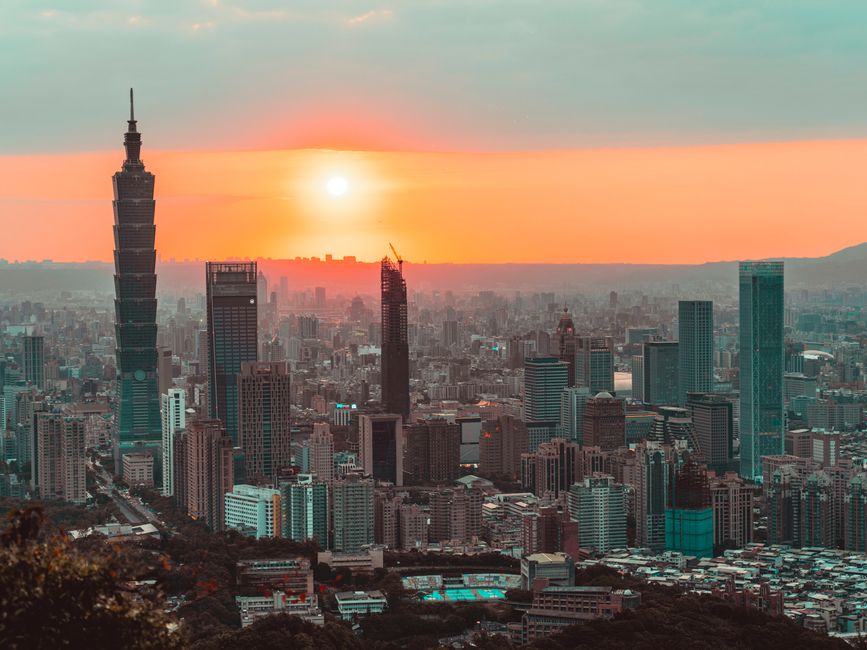
Taipei, in a basin ringed by green mountains at the northern tip of Taiwan, is one of Asia’s most livable and easygoing big cities. It has the National Palace Museum’s world-class collection of Chinese art, the bamboo-shaped Taipei 101 tower, ornate folk temples filled with incense, Japanese-era streets and teahouses, hot springs in Beitou, hiking trails a metro ride from downtown, and, above all, food: night markets, beef noodle shops, dumpling houses and breakfast stalls on every block. The city is safe, clean and very easy to get around, with a spotless metro and English signs everywhere, and day trips reach the gold-mining hill town of Jiufen, the sky lanterns of Pingxi, the volcanic hills of Yangmingshan and the north coast. Spring and fall are the most comfortable seasons; summers are hot and humid, with typhoons possible from July to October, and winters are mild but often gray and drizzly.
Right now in Taipei
- Wed 22–25°C 71–77°F Cloudy
- Thu 22–27°C 71–81°F 1 mm Partly cloudy
- Fri 22–28°C 72–82°F 2 mm Cloudy
Weather: MET Norway (CC BY 4.0) · Air quality: OpenAQ
Top tours in Taipei
See all tours for Taipei →
From local operators, with prices and reviews; you check availability and book on Viator, our partner. We may earn a commission at no extra cost to you. How we earn money
Taipei at a glance
- Best for: food and night markets, temples and museums, hot springs, easy hiking and day trips.
- How long: 3 days for the main sights; 5 days with Jiufen, Pingxi, Yangmingshan or Beitou.
- Best time: October to December and March to May; summer is hot and stormy.
- Getting there: Taoyuan International Airport (TPE), linked by the Airport MRT, or downtown Songshan Airport (TSA) for some flights from Japan, Korea and Shanghai.
- Getting around: the Taipei Metro (MRT), buses and YouBike shared bikes, all paid with an EasyCard.
- Good to know: eating and drinking are not allowed inside metro stations and trains, and you will be fined if caught.
- Before you go: visa-free entry, the online arrival card, money and general safety are in our Taiwan travel guide.
Taipei’s areas and where to stay
Taipei City has about 2.5 million people, and the wider metropolitan area, including New Taipei and Keelung, about 7 million. The Tamsui River marks the western edge of the old city; the modern business district of Xinyi lies to the east, below the mountains.
Zhongzheng and Taipei Main Station
The city’s transportation hub, with the Airport MRT, high-speed rail, railway and two metro lines meeting at Taipei Main Station, and the Chiang Kai-shek Memorial Hall, the Presidential Office Building and the 228 Peace Park nearby. Practical and central, with business hotels at every price.
Ximending and Wanhua
Ximending is a pedestrian zone of youth fashion, sneaker shops, street food and cinemas, busy until late; next door, Wanhua is the oldest part of the city, around Longshan Temple and Bopiliao Historic Block. Good value and lively, if a little gritty.
Da’an and East District
Leafy residential streets, cafés, bookshops and Daan Forest Park, with Yongkang Street, famous for dumplings and shaved ice, and the department stores of Zhongxiao East Road. A pleasant, central base for food lovers.
Xinyi
The skyscraper district around Taipei 101, with malls, rooftop bars, international hotels and the Four Four South Village, plus the trailhead for Elephant Mountain.
Zhongshan and Dadaocheng
Zhongshan has boutique hotels, shopping and quiet lanes; Dadaocheng, by the river, is an old trading quarter of red-brick shophouses on Dihua Street, tea merchants and the Xiahai City God Temple, with the Ningxia Night Market nearby.
Shilin and Beitou
In the north: Shilin has the National Palace Museum and the city’s biggest night market, and Beitou, at the end of the red line, has hot-spring hotels and public baths at the foot of Yangmingshan.
Top things to see in Taipei
Taipei 101 and Xinyi
At 508 m (1,667 ft), Taipei 101 was the world’s tallest building when it opened in 2004, and its shape echoes a stalk of bamboo. High-speed elevators run to the observatory on the 89th floor, with views over the basin and its mountains and a look at the giant tuned mass damper that steadies the tower in typhoons and earthquakes; the outdoor 91st floor and a “Skyline 460” walk higher up open on some days. Buy tickets online or at the fifth-floor counter. On New Year’s Eve, fireworks shoot from the tower.
The National Palace Museum
In Shilin, the National Palace Museum holds one of the world’s greatest collections of Chinese art, with nearly 700,000 objects spanning thousands of years, from bronzes and jade to calligraphy, paintings and porcelain. Only a small part is on show at any time; the most famous pieces include the Jadeite Cabbage and the Meat-shaped Stone. According to the museum, it is open from Tuesday to Sunday, 9 a.m. to 5 p.m., with some special Monday openings, and closed on most Mondays. Allow at least half a day, arrive early or late in the day to avoid tour groups, and take bus routes from Shilin metro station.
Longshan Temple
Founded in 1738 and rebuilt several times, Mengjia Longshan Temple in Wanhua is Taipei’s most famous folk temple, dedicated mainly to Guanyin, the goddess of mercy, alongside Mazu and dozens of other gods. Its carved dragons and stone columns are beautiful, but the real attraction is the daily life of worship: incense, offerings of fruit and flowers, and people throwing moon blocks to ask questions of the gods. Visit in the morning or evening, dress respectfully and don’t block worshippers.
Chiang Kai-shek Memorial Hall and Liberty Square
A vast white memorial with a blue-tiled roof, set in landscaped gardens between the National Theater and the National Concert Hall. The changing of the guard takes place every hour during opening hours. The square is a venue for concerts and festivals.
Dadaocheng and Dihua Street
Taipei’s 19th-century trading district is the place to see restored shophouses, Chinese medicine shops, dried-goods stores, fabric markets and teahouses, as well as the small but busy Xiahai City God Temple, where couples pray to the Old Man Under the Moon for love. The riverside wharf is a favorite at sunset.
Elephant Mountain
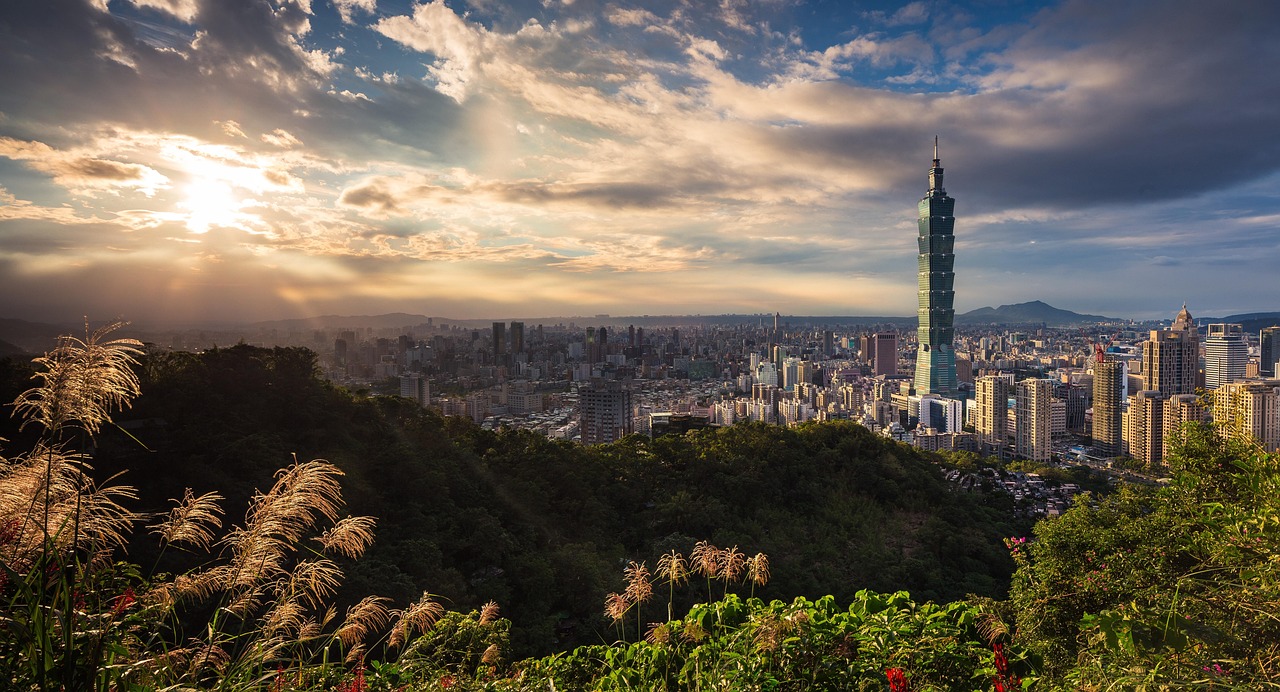
A steep 20-minute climb up stone steps from Xiangshan metro station leads to rocky viewpoints with Taipei 101 framed against the city, best at sunset. The trail continues along the Four Beasts Mountains.
More classic sights
- Beitou: the Thermal Valley’s steaming green pool, the wooden Beitou Public Library and the Hot Spring Museum, a Japanese-era bathhouse.
- Huashan 1914 and Songshan Cultural and Creative Parks: former winery and tobacco-factory buildings with exhibitions, design shops and cafés.
- Bao’an Temple and the Confucius Temple: two beautiful temples side by side in Datong.
- Taipei Fine Arts Museum and the Lin Liu-Hsin Puppet Theatre Museum: modern art and traditional glove puppetry.
- Maokong Gondola: a cable car from the Taipei Zoo over the hills to tea plantations and teahouses.
- Martyrs’ Shrine: a hilltop shrine with its own hourly changing of the guard.
Other things to do in Taipei
Food and drink
Taipei’s food is reason enough to visit. Start the day at a breakfast shop with warm soy milk, dan bing (egg crepes) and fan tuan (rice rolls); lunch on beef noodle soup or lu rou fan (braised pork rice); and try xiaolongbao soup dumplings, made famous by Din Tai Fung, whose original branch is near Yongkang Street. At night, head for the night markets: Raohe, with its pepper buns baked in clay ovens; Shilin, the biggest; Ningxia, compact and food-focused; and Tonghua (Linjiang Street) near Xinyi. Taiwan’s oolong teas are excellent, bubble tea shops are on every corner, and Taipei has a lively craft beer and cocktail scene. Taiwanese whisky, from Kavalan and Nantou distilleries, has won international awards.
Shopping
Department stores in Xinyi and Zhongxiao East Road, youth fashion in Ximending, electronics in Guanghua Digital Plaza, teas and dried goods on Dihua Street, and design shops in the cultural parks. Tourists can claim back value-added tax on purchases above a minimum amount at stores that display the “TRS” sign.
Nightlife and culture
Bars cluster in Xinyi, East District, Zhongshan and Da’an. Catch a show at the National Theater and Concert Hall or the Taipei Performing Arts Center, Chinese opera at the TaipeiEYE, or live music at The Wall and other small venues. The free Taipei Times and the city’s official English websites list events.
Festivals
The Lantern Festival lights up the city after Lunar New Year, with sky lanterns in nearby Pingxi. In summer, the Dragon Boat races are held on the Keelung River, and the Taipei Film Festival runs in June and July. New Year’s Eve fireworks at Taipei 101 draw huge crowds.
Day trips from Taipei
- Jiufen and Jinguashi: a former gold-mining town of steep lanes, teahouses and lanterns above the northeast coast, with the Gold Museum nearby; go early or on a weekday to avoid crowds. About an hour by bus from Zhongxiao Fuxing.
- Pingxi and Shifen: the Pingxi branch railway runs through a green valley to villages where you can launch sky lanterns, plus the Shifen waterfall.
- Yangmingshan National Park: volcanic vents at Xiaoyoukeng, the grassland of Qingtiangang, spring flowers and the easy climb of Qixing Mountain, Taipei’s highest peak.
- Tamsui: a riverside town at the end of the red line, with Fort San Domingo, old streets and sunset over the river mouth.
- Wulai: an Atayal village in the mountains south of the city, with hot springs, a small train and a waterfall.
- Keelung and the north coast: the port’s night market and the eroded rock formations of Yehliu Geopark.
- Further afield: by train, Yilan’s hot springs in Jiaoxi take about an hour, and Hualien, for Taroko, about 2–2.5 hours. See our Taroko National Park guide.
Nearby destinations
- Taroko National Park100 km
- Sun Moon Lake146 km
- Alishan186 km
- Tainan267 km
- Ishigaki Island275 km
- Kaohsiung299 km
Getting there and getting around
By air
Taiwan Taoyuan International Airport (TPE), about 40 km (25 miles) west of the city, handles most international flights. The Taoyuan Airport MRT runs from both terminals to Taipei Main Station in about 35–40 minutes on express trains and accepts EasyCards; buses run to hotels and districts across the city, and a taxi takes 40–60 minutes. Taipei Songshan Airport (TSA), in the city on the brown metro line, has flights to Tokyo Haneda, Seoul Gimpo and Shanghai and domestic flights to Hualien, Taitung, Kinmen and Penghu. If you are combining trips, see our Tokyo, Seoul and Hong Kong guides.
By train
Taipei Main Station is the hub for the high-speed rail, which reaches Taichung in about an hour, Tainan in about 1 hour 45 minutes and Zuoying in Kaohsiung in about 1 hour 35 minutes on the fastest trains; according to Taiwan High Speed Rail, a standard reserved seat from Taipei costs NT$700 to Taichung, NT$1,350 to Tainan and NT$1,490 to Zuoying. Conventional Taiwan Railway trains run from Taipei Main and Songshan stations around the island, including express trains to Yilan and Hualien. See our Kaohsiung and Tainan guides.
The Taipei Metro and the EasyCard
The Taipei Metro (MRT) has six main color-coded lines, plus the circular line, covering almost everything visitors need, from Tamsui and Beitou in the north to the zoo and Maokong in the south. Trains run from about 6 a.m. to midnight, and announcements are in Mandarin, Taiwanese, Hakka and English. Pay with an EasyCard, sold in stations and convenience stores, which also works on buses, YouBike shared bicycles, the Airport MRT and many shops; the iPASS card works on the metro too. Eating, drinking and chewing gum inside the paid area are prohibited.
Buses, taxis and bikes
City buses fill the gaps and accept EasyCards; tap on and off as instructed. Yellow taxis are plentiful and metered, and Uber operates. YouBike docking stations are everywhere, and riverside bike paths run along the Tamsui and Keelung rivers.
When to go and how long to stay
Taipei has a humid subtropical climate. Summers are hot and sticky, with afternoon thunderstorms and the risk of typhoons from July to October; spring and fall are warm and pleasant; winters are mild, but the northeast monsoon brings gray skies and drizzle for days at a time. The table shows the Central Weather Administration’s 1991–2020 normals for its Taipei station; rain days count days with at least 0.1 mm of rain.
| Month | Average high / low | Rain (rain days) | What to expect |
|---|---|---|---|
| January | 19 °C (67 °F) / 14 °C (58 °F) | 90 mm (3.6 in), 14 days | Cool and damp; hot springs season |
| February | 20 °C (69 °F) / 14 °C (58 °F) | 143 mm (5.6 in), 13 days | Lunar New Year and Lantern Festival, depending on the calendar |
| March | 23 °C (73 °F) / 16 °C (61 °F) | 157 mm (6.2 in), 14 days | Spring flowers on Yangmingshan |
| April | 26 °C (80 °F) / 19 °C (67 °F) | 152 mm (6.0 in), 14 days | Warm; Tomb Sweeping Day long weekend |
| May | 30 °C (85 °F) / 23 °C (73 °F) | 240 mm (9.4 in), 15 days | Plum rains begin |
| June | 33 °C (91 °F) / 25 °C (77 °F) | 345 mm (13.6 in), 16 days | Hot, heavy showers; Dragon Boat Festival |
| July | 35 °C (95 °F) / 27 °C (80 °F) | 226 mm (8.9 in), 12 days | Hottest month; typhoons possible |
| August | 34 °C (94 °F) / 26 °C (80 °F) | 338 mm (13.3 in), 15 days | Hot; afternoon storms and typhoons |
| September | 32 °C (89 °F) / 25 °C (77 °F) | 315 mm (12.4 in), 13 days | Still hot; typhoon risk |
| October | 28 °C (82 °F) / 22 °C (72 °F) | 150 mm (5.9 in), 13 days | Pleasant; National Day on October 10 |
| November | 25 °C (77 °F) / 20 °C (67 °F) | 83 mm (3.3 in), 12 days | One of the best months |
| December | 21 °C (70 °F) / 16 °C (61 °F) | 89 mm (3.5 in), 13 days | Cool; New Year’s Eve fireworks |
The figures add up to about 2,330 mm (92 in) of rain a year, spread across every month. Carry an umbrella year-round, and in summer plan museums and malls for the hottest afternoons.
3 days in Taipei
Day one, Chiang Kai-shek Memorial Hall, Longshan Temple and Bopiliao in the morning, Dadaocheng and Dihua Street in the afternoon, and Ningxia Night Market. Day two, the National Palace Museum, then Beitou’s hot springs, ending at Shilin Night Market. Day three, Yongkang Street for lunch, Taipei 101 and the Xinyi cultural spaces, sunset from Elephant Mountain and Raohe Night Market.
5 days with day trips
Add a day in Jiufen and the northeast coast, with the Pingxi line, and a day on Yangmingshan or the Maokong Gondola and tea plantations; or take an early train to Hualien for a long day at Taroko.
Where to stay in Taipei
- Zhongzheng (Taipei Main Station): best for transportation, with the airport train on the doorstep.
- Ximending: lively and good value, with hostels and design hotels.
- Zhongshan and Dadaocheng: boutique hotels, cafés and shopping, close to the red and green lines.
- Da’an and East District: central and residential, near the best restaurants.
- Xinyi: international chain hotels and luxury towers.
- Beitou: hot-spring resorts with private baths, 30 minutes from downtown.
Hotels fill up over Lunar New Year, the Lantern Festival and New Year’s Eve; book early for these dates.
What a trip to Taipei costs
Prices are approximate, for October 2026, converted at about NT$31.8 to the US dollar.
| Item | Typical cost |
|---|---|
| Taipei Metro ride | NT$20–65 (about US$0.60–2) |
| Airport MRT, Taoyuan Airport to Taipei Main Station | about NT$150–160 (about US$4.70–5) |
| High-speed rail, Taipei to Zuoying (Kaohsiung), standard reserved seat | NT$1,490 (about US$47) |
| Taipei 101 observatory, adult | about NT$600 (about US$19) |
| National Palace Museum, adult | about NT$350 (about US$11) |
| Beef noodle soup | NT$150–300 (about US$4.70–9.40) |
| Night market snack | NT$50–120 (about US$1.60–3.80) |
| Basket of xiaolongbao at a well-known restaurant | NT$250–400 (about US$7.90–13) |
| Hostel dorm bed, per night | NT$600–1,000 (about US$19–31) |
| Mid-range hotel double, per night | NT$3,000–5,500 (about US$94–175) |
Practical tips for Taipei
- Metro manners: no eating or drinking past the ticket gates, stand on the right on escalators, and keep the dark-blue priority seats free.
- Cash: carry small notes for night markets and old restaurants; convenience-store ATMs accept foreign cards.
- Trash: public bins are rare; carry your rubbish to a convenience store or your hotel, and sort recyclables.
- Weekends: Jiufen, Shifen and Tamsui are packed on weekends and holidays; go on a weekday.
- Museum days: the National Palace Museum and many other museums close on Mondays.
- Tax refund: keep your passport with you when shopping to claim the VAT refund at TRS stores.
Safety
Taipei is very safe, day and night, and violent crime against visitors is rare. Typhoons: from about July to October, follow the Central Weather Administration’s warnings; on a “typhoon day,” offices and many attractions close, and trains and flights may stop. Earthquakes: small tremors are common, and buildings are built to withstand them; during strong shaking, drop, cover and hold on, and follow alerts on your phone. Traffic: scooters and turning cars don’t always yield at crossings, so look both ways even when the light is green. Hiking: trails on Yangmingshan and around the city are steep, humid and slippery after rain; carry water and avoid hiking during typhoons or thunderstorms. Hot springs: don’t touch the water at the Thermal Valley and other natural vents, which is near boiling. In an emergency, call 110 for the police or 119 for fire and ambulance.
What to pack for Taipei
Light, breathable clothes for summer, a sweater and waterproof jacket for winter, a compact umbrella in any season, comfortable walking shoes for steps and trails, swimwear for hot-spring pools, and a reusable water bottle. Taiwan uses 110 V and flat two-pin plugs, like the United States.
Taipei travel FAQ
How many days do I need in Taipei?
Three days covers the main sights and night markets; allow five to add day trips to Jiufen, Pingxi, Yangmingshan or Beitou.
How do I get from Taoyuan Airport to central Taipei?
Take the Taoyuan Airport MRT express train to Taipei Main Station in about 35–40 minutes, a bus to your district, or a taxi in 40–60 minutes.
Is the Taipei Metro easy to use?
Yes. Signs and announcements are in English, lines are color-coded, and an EasyCard works for every ride. Remember that eating and drinking are not allowed inside the paid area.
What is the best night market in Taipei?
Raohe and Ningxia are the favorites for food; Shilin is the biggest and best known. Each district has its own, so try the one nearest your hotel.
When is the best time to visit Taipei?
October to December and March to May, when it is warm but not too hot or wet. Summer brings heat and typhoon risk; winter is mild but often gray and drizzly.
Is the National Palace Museum worth visiting?
Yes, for its outstanding collection of Chinese art. It is open from Tuesday to Sunday, 9 a.m. to 5 p.m., with some special Monday openings; allow half a day.
Can I visit Jiufen as a day trip from Taipei?
Yes. Buses from Zhongxiao Fuxing take about an hour, or take the train to Ruifang and a short bus or taxi. Go early or on a weekday to avoid crowds.
Is Taipei safe at night?
Yes. Taipei is one of the safest big cities in Asia; take normal care with belongings in crowded night markets and when crossing roads.
How do I get from Taipei to Taroko Gorge?
Take a Taiwan Railway express train to Hualien in about 2–2.5 hours, then a bus, taxi or tour into the park. Many Taroko trails were still closed in 2026 after the 2024 earthquake.
Do I need cash in Taipei?
Yes, for night markets, small restaurants and temples. Cards work in hotels, malls and chain restaurants, and convenience-store ATMs accept foreign cards.
Sources and last review
Researched and last reviewed on 4 October 2026. Climate normals (1991–2020): the Central Weather Administration; high-speed rail fares: Taiwan High Speed Rail; National Palace Museum opening hours: the museum; the EasyCard: EasyCard Corporation; visa-free entry and the arrival card: the Bureau of Consular Affairs and the National Immigration Agency; exchange rate: the Central Bank. Taipei 101’s height and observatory details, metro hours and fares, Airport MRT times and fares, museum and observatory ticket prices, temple dates, population and typical prices are general references or estimates, flagged for checking. Prices and schedules change, so check the official sites before you go. For entry rules, money and general safety, see our Taiwan travel guide.
Plan your trip
Partner links: TravelerCenter may earn a commission if you book, at no extra cost to you.
🇨🇳 Useful Mandarin Chinese phrases for Taipei
All 38 Mandarin Chinese phrases: restaurant, hotel, emergencies, romance (printable) →