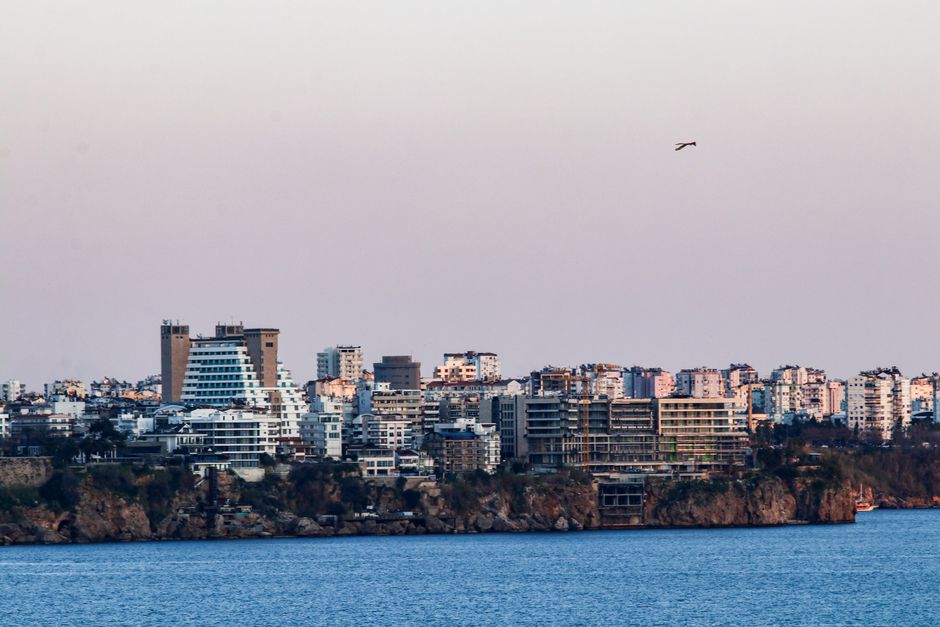
Antalya is the big, sunny capital of the Turkish Riviera, a city of more than a million people on cliffs above a bay ringed by the Taurus mountains. At its heart is Kaleiçi, the walled old town of Ottoman houses, Roman gates and a little harbour full of boats; on either side run two long beaches, pebbly Konyaaltı to the west and sandy Lara to the east, where rivers fall into the sea as waterfalls. Within an hour or so are some of the finest Greco-Roman ruins in the Mediterranean, including the theatre of Aspendos and the city of Perge. It is the gateway to the whole coast, from Kemer and Olympos to Side and Alanya. The best months are April to June and September to early November. Give it at least three days, ideally five.
Right now in Antalya
- Wed 16–26°C 61–79°F Clear
- Thu 18–25°C 65–78°F 1 mm Light showers
- Fri 18–26°C 64–80°F Clear
Weather: MET Norway (CC BY 4.0) · Sea temperature: NOAA CoastWatch · Rates: ECB
Top tours in Antalya
See all tours for Antalya →
From local operators, with prices and reviews; you check availability and book on Viator, our partner. We may earn a commission at no extra cost to you. How we earn money
Antalya at a glance
- Best months: April–June and September–October. Average highs run from about 21 °C in April to 34 °C in July and August, and it almost never rains from June to September (MGM, Antalya station, 1930–2025). The sea stays above 24 °C into October.
- Days needed: 2 for Kaleiçi, the waterfalls and a beach; 4–5 to add Aspendos, Perge, Side and Termessos.
- Getting there: Antalya airport (AYT), 13 km east of the centre, is one of Türkiye’s busiest, with flights from all over Europe and from Istanbul. The tram and the Havaş bus link it with the city.
- Getting around: trams and buses with the Antalyakart cover the city; dolmuş minibuses and coaches go along the coast. A car is best for the ancient sites.
- Budget level: good value by Mediterranean standards outside the luxury resorts. See our Türkiye guide for money, visas and costs.
Antalya’s areas and who each one suits
- Kaleiçi (old town): boutique hotels in restored Ottoman mansions, cafés, bars and the harbour, all within the walls. For first-timers, couples and culture lovers; the beach is a tram ride away.
- Konyaaltı: the long pebble beach west of the centre, with a seafront promenade, parks, the aquarium and mid-range hotels and flats. For families and anyone who wants city and beach together.
- Lara: the sandy beach east of town, near the airport, lined with big all-inclusive resorts and themed hotels. For a classic resort holiday.
- Belek: 35 km east, a resort area of golf courses and five-star hotels on a long sandy beach. For golfers and luxury stays.
- Kemer and the west coast: 40 km south-west, under pine-covered mountains, with Phaselis, Olympos and Çıralı nearby. For nature, quieter coves and a greener setting.
Top things to see in Antalya
Türkiye’s state museums and ancient sites charge foreign visitors in euros, payable by card; Turkish citizens pay in lira or use the MüzeKart. Prices below are the 2026 rates from the Ministry of Culture and Tourism’s tariff, as of October 2026. Summer hours (April to October) are usually 08:00–19:00, with the last ticket at 18:30; winter hours are shorter. The ministry has already announced higher prices for 2027 (for example Aspendos €16 and Perge €12), so check muze.gov.tr before you go.
Kaleiçi, the old town
Kaleiçi (“inside the castle”) is the historic heart of Antalya: a maze of narrow lanes with wooden-balconied Ottoman houses, courtyard restaurants and small mosques, sloping down to the Roman harbour. Enter through Hadrian’s Gate, a triple marble arch built for the emperor’s visit in AD 130; walk to the fluted Yivli Minaret, the 13th-century Seljuk symbol of the city; and finish at the round Hıdırlık Tower, a Roman tower on the cliff edge that is the best sunset spot in town. All of these are free to see. From the old harbour (Kaleiçi Yat Limanı), boats leave for trips along the cliffs to the Lower Düden waterfall. A glass lift and steps link the harbour with Republic Square above.
The Düden and Kurşunlu waterfalls
The Düden river reaches the sea in two waterfalls. The Upper Düden Falls, in a shady park in the northern suburbs, pour into a gorge you can walk behind through a small cave; it is a nature park with a modest entry fee (MüzeKart not valid). The Lower Düden Falls drop about 40 m off the cliffs straight into the sea at Lara; the park above is free, but the best view is from a boat from the old harbour. About 20 km north-east of the city, the Kurşunlu Waterfall Nature Park has a green pool and a walking trail among the trees, also with a small fee.
Aspendos, the best-preserved Roman theatre
Aspendos, 45 km east of Antalya, has the best-preserved theatre of the ancient world, built in the 2nd century AD for about 7,000 spectators, with its stage building still standing to full height. Climb to the top row for the view and the acoustics, then walk up to the acropolis and along the remains of a Roman aqueduct across the plain. The ticket is €15 for foreign visitors in 2026; the site is open daily 08:00–19:00 in summer, with the last entry at 18:30. The theatre is still used for concerts and the summer opera and ballet festival. Come early or late to avoid the heat and the tour groups.
Perge and Side
Perge, 18 km east of the city, is a large Greco-Roman city where St Paul preached: a long colonnaded street with a water channel down the middle, Hellenistic gate towers, baths, an agora and a stadium for 12,000 (€11 in 2026; daily 08:00–19:00). Its theatre is closed for restoration as of October 2026. Side, 75 km east, is a resort town built among Roman ruins, with a big theatre (open 08:00–19:00, plus a night opening 19:00–22:00 in summer) and the Temple of Apollo on the shore at sunset. Side’s archaeological site is €7, the museum €5 and a combined ticket €10; check that the museum is open before you go, as reports differ.
Termessos, Phaselis and Olympos
High in the mountains 35 km north-west, Termessos is a city Alexander the Great never managed to take, with a theatre perched on a cliff at about 1,000 m and tombs scattered through the forest (about €3); wear walking shoes and bring water, as it is a steep climb. On the coast south of Kemer, Phaselis has Roman ruins among pines on three small harbours where you can swim (€10), and Olympos has ruins along a river valley leading to a beach (€10), next to the eternal flames of the Chimaera at Çıralı.
The Antalya Museum: closed for rebuilding
The Antalya Archaeological Museum, one of Türkiye’s best, with statues from Perge and the Gallery of the Gods, closed to visitors in July 2025 and is being rebuilt with about three times the exhibition space. As of October 2026 the official museum site still lists it as closed, and no reopening date has been confirmed. Check muze.gov.tr before planning a visit.
Museum passes
If you plan to see several sites, the Museum Pass The Mediterranean costs €90 and covers more than 40 state museums and sites in Antalya, Mersin, Adana and Denizli for 7 days from the first use, one entry per site. The Museum Pass Türkiye costs €165 and covers more than 350 sites for 15 days. Neither covers night openings. With Aspendos, Perge, Side, Phaselis and Olympos on your list, the regional pass more or less pays for itself.
Monuments
- Hadrian's Gate
Museums
- Antalya Museum
Other sights
- Düden Waterfalls
Protected areas
- Perge
Caves
- Karain Cave
Archaeological sites
- Termessos
Nature reserves
- Aspendos
Beaches in Antalya
Antalya province had 232 Blue Flag beaches in 2026, the most of any province in Türkiye, which had 580 in all and ranked third in the world. Public beaches are free; you pay for sunbeds and umbrellas at the clubs. For more ideas, see our beach guide.
| Beach | Area | Type | Good for |
|---|---|---|---|
| Konyaaltı | West of the centre | Long pebble beach, clear water, mountain views | Families, a swim in the city, the promenade |
| Lara | East, near the airport | Fine sand, shallow water | Families with small children, resorts |
| Mermerli | Kaleiçi harbour | Tiny paid beach club under the walls | A swim in the old town |
| Phaselis bays | South of Kemer | Small sandy coves among ruins and pines | History and a swim together |
| Çıralı and Olympos | 70 km south-west | Long pebble beach, no high-rises | Nature lovers; turtle nesting area |
Konyaaltı runs for several kilometres below the cliffs, with clean, deep water, a promenade for walking and cycling and the Taurus mountains behind. The pebbles are large, so bring water shoes. Lara is sandier and shallower, with public sections near the Lower Düden Falls and resorts further east. At Çıralı, loggerhead turtles nest in summer, so leave the beach at night and keep away from marked nests.
Wildfire season rules (as of October 2026)
The pine-covered mountains around Antalya are among the most fire-prone landscapes in Europe. In 2021 the Manavgat fire, east of the city, burned about 160,000 hectares, and every summer brings new fires somewhere on the coast. The Antalya Governorate sets the rules each year; for 2026 they are:
- Forest entry ban: entering forests in Antalya province is banned from 1 May to 31 October 2026, except at listed forest parks and day-use areas. Hikes on trails such as the Lycian Way may be affected; check locally.
- No fires: no barbecues, campfires or stoves in the countryside, and no fire at all in the listed picnic areas between 21:00 and 08:30 until 31 October.
- No fireworks or sky lanterns within about 4 km of forests.
- Penalties: breaking the rules brings administrative fines and criminal charges; starting a fire can mean prison.
- If you see smoke or fire: call 112, Türkiye’s single emergency number.
Activities and best months
- Beaches and swimmingKonyaaltı, a 7.5 km Blue Flag beach 8 km west of the centre, is inside the city; Lara Beach, known for its fine sand, is 18 km south-east, near Perge. · source
- Boat tripsCruise boats leave the historic marina below Kaleiçi on daily trips along the cliffs to the Lower Düden waterfall, which drops into the sea. · source
- City sightseeingEnter Kaleiçi, the walled old town, through Hadrian's Gate and walk its narrow streets of Ottoman houses; Perge, with its walls and colonnaded streets, and the Aspendos theatre, one of the best-preserved ancient theatres, are near the city. MuseumPass The Mediterranean covers the region's state sites. · source
Other things to do in Antalya
Boat trips, rafting and diving
From the old harbour, short boat trips run along the cliffs to the Lower Düden Falls and longer ones to the coves of Kemer and the islands south of it. In the Köprülü Canyon national park, about 1½ hours north-east, rafting companies run easy trips on the green Köprüçay river from spring to autumn. Kemer and Kaş have the best diving in the province. See our boat trips guide and diving guide.
Mountains and walking
The Olympos cable car near Tekirova climbs to the 2,365 m summit of Tahtalı mountain, with views across the whole coast. The last stages of the Lycian Way end in the hills behind Antalya at Geyikbayırı, a climbing area with limestone cliffs. In spring and autumn, walks around Termessos, Olympos and the Göynük canyon are excellent; in summer, check the fire rules first. See our hiking guide.
Food and markets
Try piyaz (white bean salad with tahini, an Antalya speciality) with grilled meatballs, tandır (slow-roasted lamb), fresh fish by the harbour and şakşuka (fried aubergine in tomato). Antalya’s orange groves supply juice stands all over the city. Weekly neighbourhood markets sell fruit, cheese and olives, and the old bazaar streets around Kaleiçi sell spices, textiles and souvenirs.
Day trips from Antalya
- Aspendos and Side: the classic day out east, often combined with the Manavgat waterfall.
- Phaselis, Olympos and the Chimaera: ruins, beaches and flames from the rock, south-west along the coast.
- Kekova and Myra: a long day west to the sunken city and the Church of St Nicholas; better as a stay in Kaş.
- Pamukkale: the white travertine terraces are about 3½ hours inland; worth a night. See our Pamukkale guide.
- Alanya: the castle peninsula is about 2 hours east. See our Alanya guide.
Nearby destinations
Getting there and getting around
Antalya airport (AYT) to the city
- Tram: the AntRay tram line runs from the airport, with separate Arrivals and Departures stops since July 2025, to the city centre and on to Fatih. Pay with an Antalyakart (42 TL a ride in 2026; the card itself costs 100 TL), a single-use ticket (46 TL) or a contactless bank card (50 TL, with no free transfers). It is the cheapest way into town, though slow with luggage.
- Havaş bus: from the domestic terminal to Konyaaltı, via the bus station and Akdeniz University, for 230 TL in about 45 minutes, timed to domestic arrivals; international passengers walk across to the domestic terminal. Back to the airport, buses leave hourly from 05:00 to 21:00 (220 TL). Havaş does not run from Antalya airport to Kemer, Side or Alanya.
- Taxis and transfers: yellow taxis wait outside both terminals and use the meter; for resorts further away, most hotels and agencies offer shared or private transfers.
Around the city and the coast
- Trams and buses: the modern tram links the bus station, the centre and the airport; city buses reach Konyaaltı and Lara. The old heritage tram along the seafront was temporarily closed in 2026. Use the Antalyakart or a contactless card.
- Coaches and dolmuş: from the main bus station (otogar), coaches go to Kemer, Side, Alanya, Kaş, Fethiye, Pamukkale and Cappadocia (overnight).
- Hire car: the easiest way to see Aspendos, Perge, Termessos and the west coast in a day. City traffic is heavy at rush hour.
- Walking: Kaleiçi is best on foot; its lanes are steep and cobbled. See our city sightseeing guide.
When to go and how long to stay
Antalya has a hot, dry summer and a mild, wet winter. From June to September there is almost no rain, and July and August are very hot, often over 35 °C in the city; that is fine on the beach but hard at the ruins. April, May, late September and October are ideal for sightseeing and still good for swimming. Winter is mild and sunny between rain spells, with snow on the mountains behind the city.
| Season | Average high / low | Rainy days a month | Sea temperature | What it’s like |
|---|---|---|---|---|
| Spring (Mar–May) | 18–26 °C / 8–15 °C | 5–9 | 17–21 °C | Green and fresh; perfect for ruins; the sea is cool until late May. |
| Summer (Jun–Aug) | 31–34 °C / 20–23 °C | 0–3 | 24–28 °C | Hot, dry and sunny; beach season; sightsee early. |
| Autumn (Sep–Nov) | 21–31 °C / 11–20 °C | 2–7 | 21–27 °C | Warm sea and comfortable days in September and October; rain returns in November. |
| Winter (Dec–Feb) | 15–17 °C / 6–8 °C | 10–12 | 16–18 °C | Mild, with heavy rain on some days; quiet resorts; snow on the peaks. |
Air figures are long-term averages for the Antalya station from Türkiye’s State Meteorological Service (MGM), measured from 1930 to 2025; the city gets about 1,000 mm of rain a year, almost all of it from November to March. Sea temperatures are MGM’s long-term (1970–2025) monthly averages for the Turkish Mediterranean; 2025 ran warmer, with about 29 °C in August and 25 °C in October.
3 days in Antalya
Day one: Kaleiçi, Hadrian’s Gate, the Yivli Minaret, the old harbour and sunset at Hıdırlık Tower. Day two: Perge and Aspendos in the morning, the Lower Düden Falls by boat or on foot later. Day three: Konyaaltı beach, with the Upper Düden Falls on the way.
5–7 days in Antalya
Add Side and the Manavgat river, Termessos in the mountains, and two days on the west coast at Phaselis, Olympos and Çıralı, with the Tahtalı cable car. With more time, continue west to Kaş and Fethiye, or fly to Istanbul or Cappadocia.
Where to stay in Antalya
- Culture and evenings out: a boutique hotel in an Ottoman house in Kaleiçi.
- City and beach: a hotel or flat near Konyaaltı beach, with the tram to the old town.
- All-inclusive resort: Lara or Belek, close to the airport.
- Nature and quiet: a pension in Çıralı or Olympos, or a hotel near Kemer.
- Without a car: Kaleiçi or Konyaaltı, with trams, buses and tours to the sites.
Türkiye adds an accommodation tax (cut from 2% to 1% from 1 May to 31 December 2026) to room prices, normally already included in the rate shown.
Practical tips for Antalya
- Money: the currency is the Turkish lira, about 55 TL to the euro and 49 TL to the US dollar in early October 2026. Museums for foreigners price in euros; daily life is in lira. Pay by card in lira, refuse charges in your home currency, and keep some cash for dolmuş and markets.
- Ruins in the heat: visit Aspendos, Perge and Termessos at opening time; there is little shade.
- Kaleiçi cobbles: the lanes are steep and slippery; wear shoes with grip.
- Mosques: cover shoulders and knees, women cover hair, take off shoes and avoid prayer times.
- Fire risk: respect forest closures and never light a fire outdoors in summer.
- Emergencies: call 112.
Weather month by month
Averages from MGM normals 1991–2020, Antalya Airport · Last reviewed 4 Oct 2026
What to pack for Antalya
Pack light, breathable clothes, a wide-brimmed sun hat, sunglasses, high-factor reef-safe sunscreen and a refillable water bottle for the exposed ancient sites. Bring comfortable walking shoes with grip for Kaleiçi’s cobbles and the marble of Perge and Termessos, and water shoes for Konyaaltı’s pebbles. A scarf covers shoulders and hair in mosques. From November to March, add a rain jacket and a warm layer for the evenings and the mountains.
What to pack
- City walking shoesLisbon and Porto are steep, with polished limestone cobbles that get slippery, so grippy soles matter.
- Day packs and anti-theft bagsCarries water, towel and sunscreen down the long stairways to Algarve coves.
- Dry bags and phone pouchesProtects phones and cameras from sand and spray on beaches reached by ferry or steep paths.
- Fleeces and warm layersIt is cooler at sea than on land, especially on morning whale-watching trips.
- Quick-dry beach towelsA sand-shedding quick-dry towel packs small for beach days and lido visits.
- Rain jacketsA windproof, waterproof shell keeps you warm on open boats, where wind and spray cool you quickly.
- Reef-friendly sunscreenSummer UV is strong on Portuguese beaches and there is little shade below the cliffs.
- Travel adapters and convertersPortugal uses Type C and F sockets at 230 V, so most visitors from outside Europe need an adapter.
- Water shoesRocky coves, lava pools and weever fish in shallow sand make water shoes useful.
- WetsuitsOn the west and north coasts the sea stays around 16–18 °C even in summer, so a thin suit helps for long swims.
Antalya travel FAQ
How many days do you need in Antalya?
Three days covers Kaleiçi, the waterfalls, Aspendos, Perge and a beach. Five to seven days lets you add Side, Termessos and the west coast around Olympos.
How much does Aspendos cost?
€15 for foreign visitors in 2026 (rising to €16 in 2027). It is open daily 08:00–19:00 in summer, with the last ticket at 18:30. It is included in the Museum Pass The Mediterranean.
How much is the ticket for Perge?
€11 in 2026 (€12 in 2027), open daily 08:00–19:00 in summer. Its theatre is closed for restoration as of October 2026.
Is the Antalya Museum open?
No. It closed in July 2025 for a full rebuild, and as of October 2026 the official museum site still lists it as closed, with no confirmed reopening date.
Is the Museum Pass worth it in Antalya?
Yes, if you visit four or five paid sites. The Museum Pass The Mediterranean costs €90 for 7 days; Aspendos, Perge, Side, Phaselis and Olympos alone add up to about €55–60, plus sites further west such as Myra and Patara.
How do I get from Antalya airport to the city?
Take the AntRay tram (42 TL with an Antalyakart, 50 TL by contactless card), the Havaş bus to Konyaaltı (230 TL, about 45 minutes) or a metered taxi.
Which is better, Lara or Konyaaltı beach?
Konyaaltı is pebbly, with clear water, a promenade and mountain views, and is close to the city. Lara is sandy and shallow, better for small children, and lined with big resorts.
Can you walk in the forests near Antalya in summer?
Not freely. In 2026 entry to forests in Antalya province is banned from 1 May to 31 October, except at listed forest parks and day-use areas, and any fire outdoors is forbidden.
How warm is the sea in Antalya?
About 21 °C in May, 27–28 °C in August and September and about 25 °C in October, by MGM’s long-term averages for the Turkish Mediterranean. The coolest month is February, at about 16 °C.
Do I need a visa for Antalya?
Citizens of the EU, the UK, the US, Canada and Australia can visit Türkiye visa-free for up to 90 days in any 180-day period, according to the Turkish Ministry of Foreign Affairs. Others may need an e-Visa; check before you travel.
When is the best time to visit Antalya?
April to June and September to October, for warm weather, swimmable sea and comfortable sightseeing. July and August are very hot but ideal for the beach.
Sources
- © OpenStreetMap contributors · ODbL · fetched 4 Oct 2026
- Wikidata · CC0 · fetched 4 Oct 2026
Sources and last review
Researched and last reviewed on 4 October 2026. Opening hours and museum status come from Türkiye’s official museum site (muze.gov.tr), and Museum Pass prices from its official shop; 2026 and 2027 ticket prices from the Ministry of Culture and Tourism’s tariff as published by Turkish sources; Blue Flag figures from TÜRÇEV; forest-fire rules from the Antalya Governorate’s 2026 circular; airport bus fares and times from Havaş; tram fares from Antalyakart; climate from Türkiye’s State Meteorological Service (MGM); exchange rates from the Central Bank of the Republic of Türkiye; and visa rules from the Turkish Ministry of Foreign Affairs. Prices and timetables change, so check the official sites before you travel.
Plan your trip
Partner links: TravelerCenter may earn a commission if you book, at no extra cost to you.
🇹🇷 Useful Turkish phrases for Antalya
All 38 Turkish phrases: restaurant, hotel, emergencies, romance (printable) →