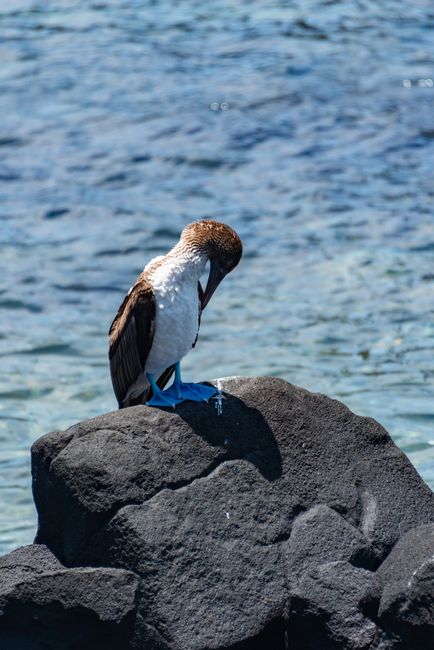
The Galápagos Islands are one of the world’s great natural wonders: a volcanic archipelago in the Pacific, about 1,000 km (620 miles) off the coast of Ecuador, where animals evolved in isolation and show little fear of people. Sea lions sleep on park benches, marine iguanas sun themselves on black lava, giant tortoises graze in the misty highlands, and blue-footed boobies dance a few feet from the trail. Charles Darwin’s observations here in 1835 helped inspire his theory of evolution, and the islands were the first natural site declared a World Heritage Site by UNESCO, in 1978, according to Ecuador’s Ministry of Tourism. About 97% of the land is national park, and the surrounding marine reserve covers more than 193,000 km² (74,500 sq miles), with hammerhead sharks, rays, turtles and penguins. Visiting is tightly regulated: you pay a park fee, buy a transit control card, pass biosecurity checks and visit most sites with licensed naturalist guides, which helps keep the islands as remarkable as they are.
Right now in Galápagos Islands (Puerto Ayora)
- Tue 23–28°C 74–83°F 2 mm Light showers
- Wed 23–28°C 74–83°F 4 mm Light rain
- Thu 24–27°C 74–80°F 5 mm Rain
- Fri 9 Oct Independence of Guayaquil (Independencia de Guayaquil)
Weather: MET Norway (CC BY 4.0) · Sea temperature: NOAA CoastWatch · Holidays: Nager.Date
Top tours in Galápagos Islands
See all tours for Galápagos Islands →
From local operators, with prices and reviews; you check availability and book on Viator, our partner. We may earn a commission at no extra cost to you. How we earn money
The Galápagos at a glance
- Best for: wildlife watching, snorkeling and diving, small-ship cruises, hiking on volcanoes and photography.
- How long: at least four nights; a week to see two or three islands or take a cruise.
- Best time: all year. December to May is warm, with calmer seas; June to November is cooler and misty, with richer marine life.
- Getting there: flights from Quito or Guayaquil to Baltra (for Santa Cruz) or San Cristóbal, about 1 hour 50 minutes from Guayaquil, according to the Ministry of Tourism.
- Fees: US$200 park fee for foreign visitors over 12 and a US$20 transit control card.
- Before you go: entry rules and money are in our Ecuador travel guide.
The islands: where things are
The archipelago has 13 main islands, 6 smaller ones and more than 100 islets, according to the Ministry of Tourism, and about 330 islands, islets and rocks in all, according to the Galápagos National Park Directorate. Only five have people living on them, and land-based visitors stay on the first three.
Santa Cruz
The central island and the main hub, with the largest town, Puerto Ayora, the Charles Darwin Research Station, giant tortoise ranches in the highlands, lava tunnels, and day trips to nearby islands, according to the Ministry of Tourism. Its airport is on the small island of Baltra, just to the north.
San Cristóbal
The capital of the province, with the town of Puerto Baquerizo Moreno and its own airport, about 10 minutes from town, according to the park directorate. Sea lions crowd the waterfront, and nearby are snorkeling spots such as Cerro Tijeretas, La Lobería and Kicker Rock (León Dormido).
Isabela
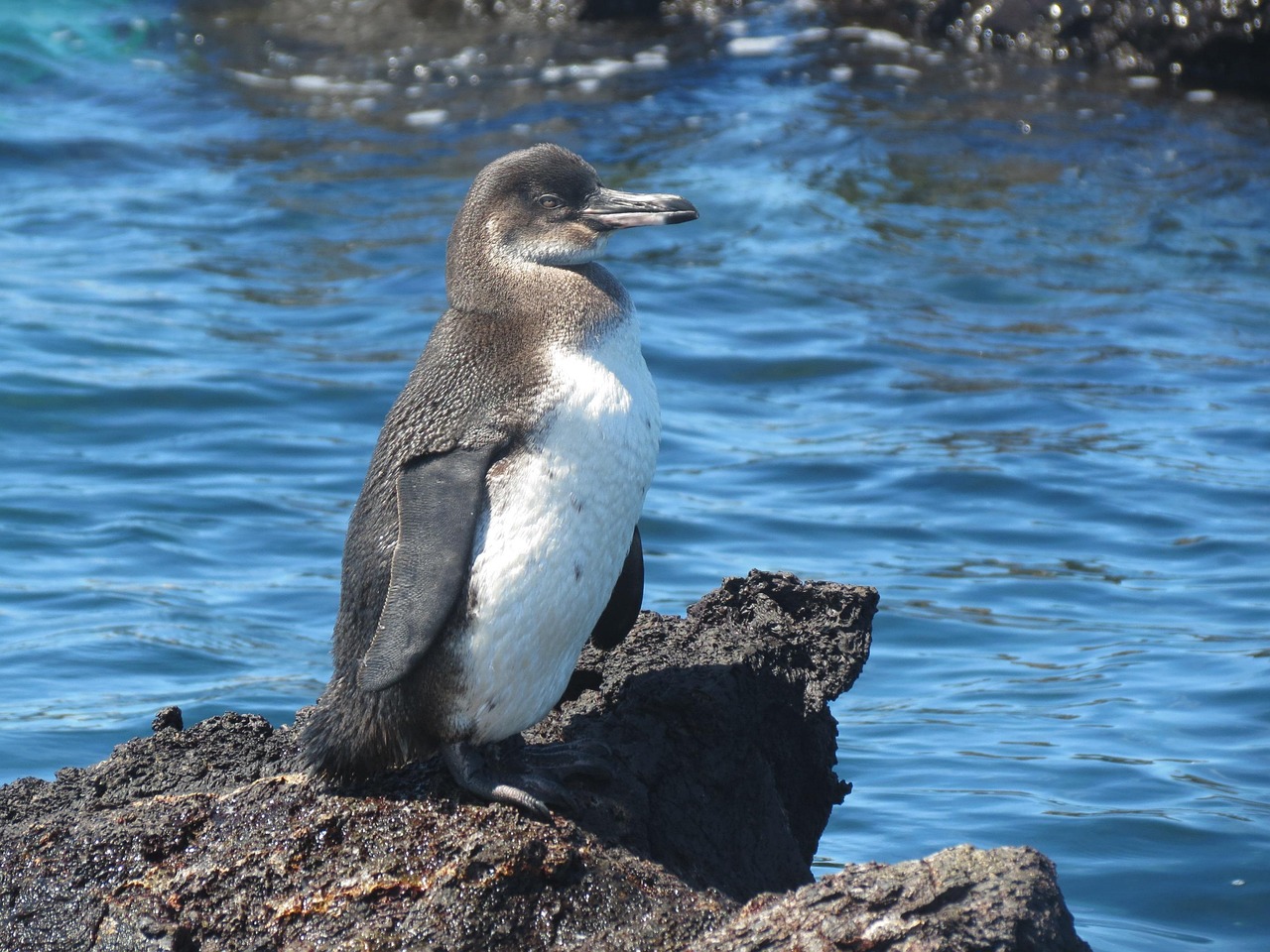
The largest island, made up of a chain of active volcanoes, and the most diverse, according to the park directorate. The small town of Puerto Villamil has a long beach, flamingo lagoons and access to the Sierra Negra volcano and the Tintoreras islets. It is home to the Galápagos penguin, the only penguin species living in the tropics.
Floreana and the uninhabited islands
Floreana, the first island to be settled, has fewer than 120 residents, according to the park directorate, and is usually visited on tours. Uninhabited islands such as Española, Fernandina, Genovesa, Bartolomé, North Seymour and South Plaza are reached by cruise ships or licensed day boats with a naturalist guide.
Top things to see in the Galápagos
Giant tortoises
The tortoises that gave the islands their name live in the highlands of Santa Cruz, San Cristóbal and Isabela. See them in the wild on highland farms and reserves, and at breeding centers, such as the Charles Darwin Research Station in Puerto Ayora, home of the conservation work that continues after the death of Lonesome George, the last tortoise from Pinta Island, in 2012.
Snorkeling and diving
The marine reserve is one of the planet’s top diving destinations, with hammerhead sharks, giant manta rays, turtles and sea lions; Darwin and Wolf islands are among the world’s top ten dive sites, according to the Ministry of Tourism. For snorkeling, the Ministry highlights Cerro Tijeretas, León Dormido, La Lobería, Bahía Rosa Blanca, Las Grietas and Tortuga Bay. See our snorkeling and diving guides.
Seabirds and marine iguanas
The islands have more than 180 bird species, according to the Ministry of Tourism, including the blue-footed booby, the waved albatross (on Española, from about April to December), the flightless cormorant and Darwin’s finches. Marine iguanas, the only lizards in the world that feed at sea, rest on the shores of every main island.
Volcanoes and beaches
Hike to the rim of Sierra Negra’s huge caldera on Isabela, or climb Bartolomé for the classic view of Pinnacle Rock. On Santa Cruz, a paved path leads to the white sand of Tortuga Bay, one of the islands’ most beautiful beaches. See our hiking and beaches guides.
Other things to do in the Galápagos
- Kayaking: paddle through mangroves with rays and reef sharks at Puerto Baquerizo Moreno, Tortuga Bay, El Garrapatero, the Canal del Amor and Isabela’s bay, according to the Ministry of Tourism.
- Cycling: ride from Puerto Ayora toward El Garrapatero through the island’s microclimates, or along Isabela’s wetlands trails.
- Surfing: San Cristóbal’s reef breaks are best from December to April. See our surfing guide.
- Local life: eat fresh fish at Puerto Ayora’s Charles Binford street kiosks, and choose local products, as the visitor code of conduct encourages.
Food in the Galápagos
Island food is simple and centered on the sea. Lobster (spiny lobster) is served during the fishing season, usually from September to December; outside it, avoid it, as it may have been caught illegally. Fresh tuna, wahoo and grouper are grilled or turned into ceviche, and encebollado, a fish and onion soup, is a popular breakfast. Highland farms on Santa Cruz and San Cristóbal grow coffee, fruit and vegetables, and the visitor code of conduct encourages travelers to choose locally produced food and goods to support island livelihoods and reduce imports. In Puerto Ayora, the street of kiosks (Charles Binford) fills with outdoor tables of fresh fish at night. Prices are higher than on the mainland because most supplies arrive by ship.
Day trips and cruises
Day trips from Santa Cruz, San Cristóbal and Isabela
Licensed day boats run tours of about six to seven hours to places such as South Plaza, North Seymour, León Dormido and Tintoreras, with snorkeling and guided walks, according to the Ministry of Tourism. Book through licensed operators in town or your hotel.
Cruises
Small cruise ships with certified naturalist guides sail itineraries from 3 to 14 nights, according to the Ministry of Tourism. Cruises are the best way to reach remote islands such as Genovesa and Fernandina, because the ship moves at night and you land at a new site each morning. They are also the most expensive option. See our boat trips guide.
Getting there and getting around
Before you fly: the transit control card and biosecurity
At Quito or Guayaquil airport, before you check in for your Galápagos flight, you must:
- Buy the Transit Control Card (TCT) for US$20 at the counter of the Galápagos Governing Council (CGREG). You can pre-register online to speed things up. You need your passport and a return ticket to the mainland, and you keep the card until you leave the islands; tourists may stay up to 60 days a year, according to the Council.
- Have your luggage inspected by the Galápagos biosecurity agency (ABG), which checks for fruit, seeds, plants, soil and other organic products that could introduce invasive species, according to the park directorate.
- Carry proof of a hotel booking or an invitation letter, and travel health insurance, which is mandatory for foreign tourists, according to the UK government.
Flights and the park fee
Flights leave Quito and Guayaquil for Seymour Airport (GPS) on Baltra and San Cristóbal Airport (SCY); the trip takes about 1 hour 50 minutes from Guayaquil, and up to 2 hours 30 minutes from Quito, usually with a stop in Guayaquil, according to the Ministry of Tourism. The cabin is sprayed with an insecticide approved by the World Health Organization before landing. On arrival, you pay the national park entrance fee in cash:
| Visitor | Over 12 | Under 12 |
|---|---|---|
| Foreign tourists | US$200 | US$100 |
| Nationals of Andean Community or Mercosur countries | US$100 | US$50 |
| Ecuadorians and foreign residents of Ecuador | US$30 | US$15 |
| Children under 2 | Free | Free |
The fee table is from the Galápagos National Park Directorate (April 2026); Andean Community countries are Bolivia, Colombia, Ecuador and Peru, and Mercosur members are Argentina, Brazil, Paraguay and Uruguay. Fifty percent of the fee goes to managing and conserving the protected areas, according to the directorate.
From Baltra to Puerto Ayora
The park directorate describes the route: a free bus from Baltra airport to the Itabaca Channel (about 10 minutes), a ferry barge across the channel for about US$1 (10 minutes), then a bus to Puerto Ayora for about US$2 (45 minutes), or a white pickup taxi for about US$25 for up to four passengers. Cruise passengers are met at the airport by their naturalist guide. On San Cristóbal, the airport is about 10 minutes from town by bus or taxi.
Inter-island boats and flights
Public speedboats (lanchas) link Santa Cruz with San Cristóbal and with Isabela, usually once in the early morning and once in the afternoon; each crossing takes about two hours over open sea, which can be rough. Your luggage is inspected again by the biosecurity agency at the dock before you board, according to the park directorate. There have been serious accidents involving inter-island boats, some of which did not respect passenger limits or carry enough life jackets, according to the UK government: use reputable operators, check that life jackets are provided, and sit where you can reach one. Small planes also fly between the islands, saving time and seasickness at a higher price. Floreana is mostly visited on day tours from Santa Cruz.
Getting around the islands
The towns are small and walkable, and taxis are white pickup trucks. In Puerto Ayora, taxi rides within town cost about US$1.50, according to the park directorate. Water taxis shuttle between the docks and boats in the harbors. Bicycles can be rented on Santa Cruz and Isabela.
When to go and how long to stay
The Galápagos have two seasons. From about December to May, the warm season brings sunshine with short tropical showers, calmer seas and warmer water, about 24–26 °C (75–79 °F), ideal for snorkeling and for travelers prone to seasickness. From about June to November, the cool “garúa” season brings mist, cloudier skies, rougher seas and water around 20–22 °C (68–72 °F), but the nutrient-rich currents bring more marine life and seabird activity. Ecuador’s authorities have issued a red alert for the forecast 2026–2027 El Niño, which is expected to bring unusually heavy rain and higher temperatures that may disrupt travel, according to the UK government; El Niño also warms the sea around the islands. Peak periods are mid-June to early September and Christmas to New Year, when cruises sell out months ahead.
| Season | What it’s like | Good for |
|---|---|---|
| December–May | Warm, sunny with showers; calm seas; warm water | Snorkeling, beaches, sea turtle nesting, land iguana breeding |
| June–November | Cool, misty (garúa); rougher seas; colder water | Diving, whale sharks, seabird courtship, waved albatross on Española |
| Mid-June to early September, late December | Peak demand | Book cruises and flights early |
The Galápagos month by month
- January: warm season begins in earnest; land birds nest and green sea turtles lay eggs on the beaches.
- February: warm, calm seas; flamingos breed on Floreana; good snorkeling.
- March: the warmest water and some of the calmest seas; tropical showers.
- April: waved albatrosses return to Española; green landscapes after the rains.
- May: blue-footed boobies start courtship on North Seymour; the transition to the cool season begins.
- June: cooler, misty garúa season begins; humpback whales and whale sharks may appear in the north.
- July: cool water, rich marine life and seabird activity; peak demand.
- August: the coolest water and roughest seas of the year; sea lion pups appear; still busy.
- September: cool and misty; fewer visitors after the summer holidays; lobster season usually opens.
- October: cool water, active fur sea lions; good diving.
- November: seas start to calm; sea lion pups play in the water; lower demand.
- December: warming water; giant tortoise eggs hatch; busy over Christmas and New Year.
5 days in the Galápagos
Fly to Baltra and spend three nights on Santa Cruz, with the highland tortoises, the Darwin Station, Tortuga Bay and a day trip to North Seymour or South Plaza. Then take the morning boat to San Cristóbal for two nights of snorkeling at Kicker Rock and Cerro Tijeretas, and fly out from there.
A week or more in the Galápagos
Add two nights on Isabela for Sierra Negra, the Tintoreras islets and the penguins, or take a four- to eight-day cruise to reach remote islands such as Genovesa, Española and Fernandina.
Where to stay in the Galápagos and the taxes
- Puerto Ayora, Santa Cruz: the widest choice of hotels and restaurants, and the most day tours.
- Puerto Baquerizo Moreno, San Cristóbal: a smaller town with sea lions on the waterfront and good snorkeling from shore.
- Puerto Villamil, Isabela: a beachfront village, quiet and relaxed.
- Cruise ships: from basic to luxury yachts; all meals and guiding included.
The park directorate and the Galápagos visitor code of conduct ask visitors to use only authorized accommodation, tour operators and accredited guides, and not to stay in unregistered rentals advertised on residential booking platforms such as Airbnb, which operate without permits. Prices include Ecuador’s 15% value-added tax, and many hotels add a 10% service charge.
Costs in the Galápagos
The Galápagos are the most expensive part of Ecuador. These per-person estimates are a planning guide as of October 2026; Ecuador uses the US dollar:
| Item | Typical price |
|---|---|
| National park entrance fee (foreigner over 12) | US$200 (official) |
| Transit Control Card (TCT) | US$20 (official) |
| Round-trip flight from Quito or Guayaquil | about US$250–550 |
| Barge across the Itabaca Channel | about US$1 (official, park directorate) |
| Inter-island speedboat, one way | about US$30–40 |
| Mid-range hotel double room in Puerto Ayora | about US$120–250 |
| Day boat tour to a nearby island with snorkeling | about US$150–250 |
| Two-tank dive day | about US$200–250 |
| Small-ship cruise, per person per night | about US$400–1,000+ |
Only the park fee, the TCT and the barge fare are official; the rest are our estimates, not official statistics.
Practical tips for the Galápagos
- Park rules: stay at least 2 m (6 ft) from wildlife, never touch or feed animals, don’t collect rocks, shells, sand or wood, and stay on marked trails, according to the Galápagos visitor code of conduct. Most visitor sites can only be visited with a licensed naturalist guide.
- Biosecurity: clean your shoes, clothes and gear before traveling to and between the islands, and don’t carry fruit, seeds or soil.
- Cash: bring US dollars in small bills for the park fee, taxis and small shops; ATMs exist in Puerto Ayora and Puerto Baquerizo Moreno but can run out, and Isabela has very few.
- Health: medical facilities are limited: San Cristóbal has a relatively well-equipped public hospital, Santa Cruz a basic hospital and Isabela only a very small health center, according to the UK government, so make sure your insurance covers air evacuation. Bring seasickness tablets for boats.
- Tsunamis: the islands are at high risk; learn the evacuation routes and follow the sirens, according to the UK government. Emergencies: 911.
- Guayaquil: many Galápagos itineraries connect through Guayaquil’s airport, and many travelers connect without leaving it; the UK government notes high levels of gang-related violence in Guayas province. Ask your airline how your connection works.
What to pack for the Galápagos
Pack light, quick-drying clothes, swimwear, a rash guard or shorty wetsuit (especially from June to November), a wide-brimmed hat, polarized sunglasses, reef-safe sunscreen, sturdy sandals for wet landings and trail shoes for lava, a light rain jacket and a warm layer for the highlands and boat decks, a dry bag, binoculars, seasickness tablets and plenty of small US bills. Don’t pack fruit, seeds or plant material.
Galápagos Islands travel FAQ
How much does it cost to enter the Galápagos?
Foreign visitors over 12 pay a US$200 national park fee in cash on arrival (US$100 under 12), plus a US$20 transit control card bought at Quito or Guayaquil airport.
What is the Galápagos transit control card?
The TCT, from the Galápagos Governing Council, registers your stay. Buy it for US$20 at the Council’s counter at Quito or Guayaquil airport before you check in, and keep it until you leave.
How do I get between the Galápagos islands?
By public speedboat, about two hours between Santa Cruz and San Cristóbal or Isabela, by small plane, or on a cruise. Luggage is inspected at the dock before boarding.
Is it better to take a cruise or stay on the islands?
A cruise reaches remote islands and saves travel time, but costs more. Island hopping from hotels on Santa Cruz, San Cristóbal and Isabela is cheaper and more flexible, with day boats to nearby sites.
When is the best time to visit the Galápagos?
Any time. December to May is warm with calmer seas; June to November is cooler and misty, with more marine life. Mid-June to early September and the Christmas holidays are busiest.
How long can tourists stay in the Galápagos?
Up to 60 days a year, according to the Galápagos Governing Council.
Can I visit the Galápagos without a guide?
You can explore the towns, some beaches and trails on your own, but most national park visitor sites require a licensed naturalist guide.
Do I need travel insurance for the Galápagos?
Yes. Travel health insurance is mandatory for foreign tourists, according to the UK government, and it should cover air evacuation because local medical facilities are limited.
How much does a trip to the Galápagos cost?
Beyond flights, the US$200 park fee and US$20 card, a land-based trip costs roughly US$200–400 a person a day with tours, by our estimates; cruises cost more.
What wildlife can I see in each season?
From December to May, sea turtles nest and the sea is warmer and calmer; from June to November, the water is cooler and richer in marine life, with seabird courtship and whale sharks in the north. Wildlife is abundant all year.
Sources and last review
Researched and last reviewed on 4 October 2026. The park fee table (April 2026), the use of fee revenue, arrival steps, the biosecurity inspections at airports and docks, the route from Baltra to Puerto Ayora with fares, taxis, the number of islands and inhabited islands, the size of the national park and Floreana’s population: the Galápagos National Park Directorate; the transit control card, its price, counters, pre-registration and 60-day limit: the Galápagos Governing Council and Ecuador’s procedures portal; the visitor code of conduct (2 m from wildlife, no collecting, authorized accommodation, no unregistered rentals): the Galápagos National Park Directorate (September 2026); the UNESCO listing, marine reserve size, flight times, cash payment of the park fee, islands, activities, snorkeling sites, day tours and cruise lengths: Ecuador’s Ministry of Tourism; mandatory health insurance, hotel booking proof, boat accidents, medical facilities, tsunamis, Guayaquil and El Niño: the UK government. Inter-island boat times, Darwin’s visit, Lonesome George, seasons and water temperatures, wildlife timing, ATMs, the 15% IVA and the 10% service charge come from secondary sources or general knowledge and are flagged for checking. The food, neighborhood, getting-around, month-by-month and cost sections draw on secondary sources, general knowledge and our own estimates, except where an official source is named, and are flagged for checking. Prices and rules change, so check before you go. For entry rules and money, see our Ecuador travel guide.
Plan your trip
Partner links: TravelerCenter may earn a commission if you book, at no extra cost to you.
🇪🇸 Useful Spanish phrases for Galápagos Islands
All 38 Spanish phrases: restaurant, hotel, emergencies, romance (printable) →