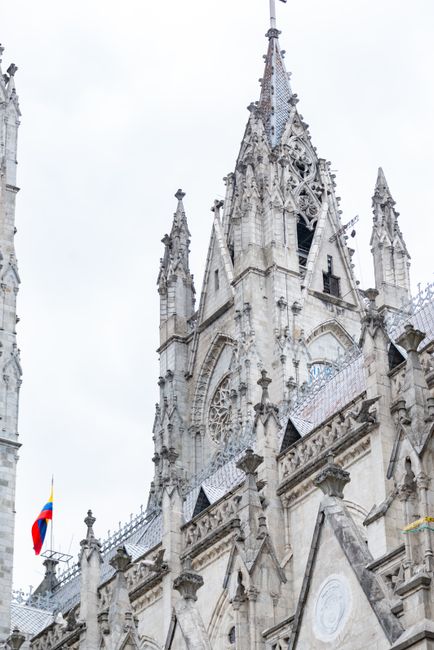
Ecuador packs more variety into a small country than almost anywhere on Earth. Its Ministry of Tourism calls it the land of “four worlds”: the Andes, with snow-capped volcanoes, colonial cities and Indigenous markets; the Amazon rainforest to the east; the Pacific coast; and, nearly 1,000 km (620 miles) out to sea, the Galápagos Islands, where tame sea lions, giant tortoises and marine iguanas inspired Charles Darwin’s theory of evolution. Quito, the capital, has one of the best-preserved colonial centers in the Americas, and the southern city of Cuenca is famous for its rivers, blue domes and Panama hats. Distances on the mainland are short, so in a few hours you can travel from cloud forest to glaciers, and the equator, which gives the country its name, runs just north of Quito. Ecuador uses the US dollar, which makes budgeting simple for American visitors.
Right now in Ecuador
- Tue 10–21°C 49–70°F 2 mm Light showers
- Wed 10–20°C 50–68°F 6 mm Showers
- Thu 11–19°C 51–66°F 24 mm Light showers
- Fri 9 Oct Independence of Guayaquil (Independencia de Guayaquil)
Weather: MET Norway (CC BY 4.0) · Holidays: Nager.Date
Multi-day tours of Ecuador
Multi-day tours from local operators. You check dates and book on Viator, our partner; we may earn a commission at no extra cost to you. How we earn money
Ecuador at a glance: the Andes, the Amazon, the coast and the Galápagos
Ecuador is a republic of about 18 million people on the Pacific coast of South America, bordered by Colombia to the north and Peru to the south and east. Two parallel chains of the Andes run through the middle of the country, lined with more than 70 volcanoes and mountains along the “Avenue of the Volcanoes”, according to the Ministry of Tourism; Chimborazo, the highest, at 6,263 m (20,548 ft), is the point on Earth’s surface farthest from its center. Spanish is the official language, and Kichwa and other Indigenous languages are widely spoken. Mainland Ecuador uses UTC−5 all year (the same as US Eastern Standard Time in winter), and the Galápagos are one hour behind, at UTC−6.
Ecuador’s regions
- The Andes (Sierra): Quito, Otavalo’s market, Cotopaxi and Chimborazo volcanoes, the Quilotoa crater lake, Baños, and Cuenca in the south.
- The Amazon (Oriente): rainforest lodges reached via Tena, Coca and Lago Agrio, with river trips and Indigenous communities.
- The coast (Costa): Guayaquil, Ecuador’s largest city and port, beaches such as Montañita and Puerto López, and humpback whale watching from June to September.
- The Galápagos: the volcanic archipelago about 1,000 km (620 miles) offshore, a national park and marine reserve.
Regions
Where to go: the Galápagos, Quito and Cuenca
Most trips combine a few days in the Andes with the Galápagos. All flights to the islands leave from Quito or Guayaquil, so many travelers start in Quito, fly to the Galápagos, and return through Guayaquil’s airport.
The Galápagos Islands
The archipelago was the first natural site declared a World Heritage Site by UNESCO, in 1978, and its marine reserve covers more than 193,000 km² (74,500 sq miles), according to Ecuador’s Ministry of Tourism. Visitors explore on small cruise ships or from hotels on the inhabited islands of Santa Cruz, San Cristóbal and Isabela. See our Galápagos Islands travel guide.
Quito
Ecuador’s capital, at about 2,850 m (9,350 ft) in a narrow Andean valley below Pichincha volcano, has a vast colonial center of churches, monasteries and plazas, declared a World Heritage Site for being among the best preserved in the region, according to the Ministry of Tourism. See our Quito travel guide.
Cuenca
Ecuador’s third city, in a spring-like valley crossed by four rivers, is a World Heritage city of colonial and republican architecture and one of the best places to buy toquilla straw hats, according to the Ministry of Tourism. See our Cuenca travel guide.
More places worth the trip
- Otavalo: famous for its Indigenous market at the Plaza de los Ponchos, with lakes, waterfalls and volcanoes nearby, about two hours north of Quito.
- Cotopaxi National Park: one of the world’s highest active volcanoes, with hiking, cycling and horseback riding on the páramo, about 1.5 hours south of Quito.
- Quilotoa: a turquoise crater lake, with a multi-day village-to-village hiking loop.
- Baños: a spa town with hot springs, waterfalls such as the Pailón del Diablo, rafting and the “swing at the end of the world”, according to the Ministry of Tourism.
- Mindo: cloud forest near Quito, famous for birdwatching, orchids, butterflies and chocolate.
- The Amazon: jungle lodges on the Napo River and its tributaries.
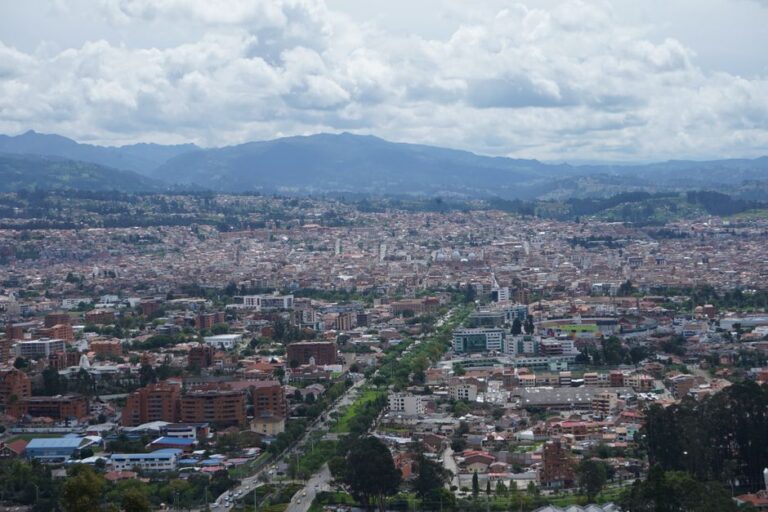
Cuenca Travel Guide
Plan a trip to Cuenca, Ecuador: the UNESCO-listed historic center, Parque Calderón and the blue-domed New Cathedral, the Tomebamba River and its riverside houses,…
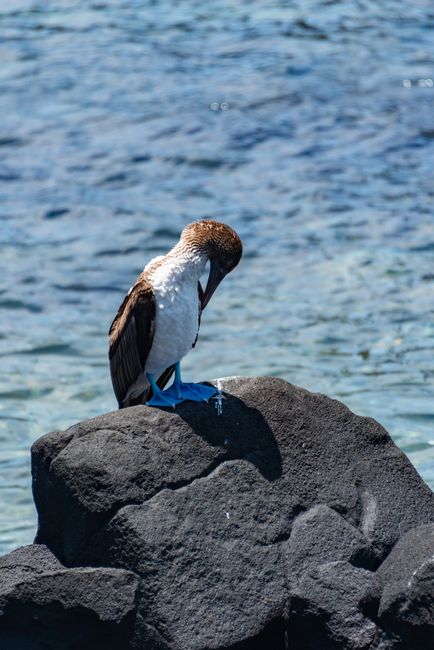
Galápagos Islands Travel Guide
Plan a trip to the Galápagos Islands: the US$200 national park fee and who pays what, the US$20 transit control card (TCT) and biosecurity…
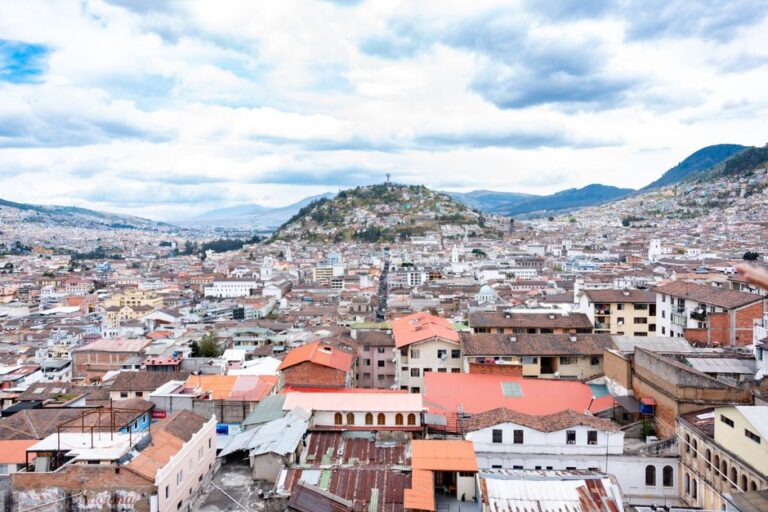
Quito Travel Guide
Plan a trip to Quito: the UNESCO-listed historic center, Plaza Grande, La Compañía church, the Basílica del Voto Nacional, La Ronda and El Panecillo,…
Best time to visit Ecuador: dry and rainy seasons
Ecuador lies on the equator, so day length and temperatures stay similar all year; altitude and region decide the weather. In the Andes, the drier months are roughly June to September, and the rainier ones October to May, though afternoon showers can come at any time. On the coast, the warm, rainy season runs from about December to May, and June to November is cooler and cloudier. The Amazon is wet all year. In the Galápagos, December to May is the warm season, with calmer seas, sunshine and showers; June to November is the cooler “garúa” season, with mist, rougher seas, colder water and abundant marine life. The UK government notes that Ecuador’s rainy season usually runs from October to May but can last until June.
| Region | Drier months | Wetter months | Temperatures |
|---|---|---|---|
| Quito and the northern Andes | June to September | October to May | Days about 18–22 °C (64–72 °F); nights near 8–10 °C (46–50 °F) |
| Cuenca | June to September | October to April | Mild, about 15–21 °C (59–70 °F) |
| Coast (Guayaquil) | June to November (cloudy) | December to May (hot and rainy) | About 24–31 °C (75–88 °F) |
| Galápagos | June to November (cool, misty) | December to May (warm, showers) | Water about 20–26 °C (68–79 °F) |
El Niño in 2026–27: Ecuador’s authorities have issued a red alert ahead of the forecast 2026–2027 El Niño, which is expected to bring unusually heavy rain, flooding, landslides and higher temperatures that may disrupt travel, according to the UK government. Follow the Ecuadorian government’s El Niño updates and local news, and allow extra time for road travel, especially on the coast.
Crowds, prices and events through the year
- Late December and early January: Christmas and New Year, when Ecuadorians travel; on New Year’s Eve, effigies called “años viejos” are burned in the streets.
- Carnival: February 8–9, 2027, with water fights across the country.
- Holy Week: March 21–28, 2027, with processions in Quito.
- June to September: the Andean dry season and the busiest time for the Galápagos and the highlands; Inti Raymi solstice festivals around Otavalo in late June.
- November 2: Day of the Dead, with colada morada (a spiced purple-corn drink) and bread figures called guaguas de pan.
- Early December: the Fiestas de Quito, celebrating the city’s founding.
Public holidays
Ecuador moves some holidays to the nearest Monday or Friday by decree, so check dates before you book. The next ones, from October 2026, as set by law:
| Holiday | Date | Good to know |
|---|---|---|
| Independence of Guayaquil | October 9, 2026 | May be moved by decree |
| Day of the Dead | November 2, 2026 | Nationwide; often joined with the next day |
| Independence of Cuenca | November 3, 2026 | Big celebrations in Cuenca |
| Christmas Day | December 25, 2026 | Nationwide |
| New Year’s Day | January 1, 2027 | Nationwide |
| Carnival | February 8–9, 2027 | Peak domestic travel |
| Good Friday | March 26, 2027 | Nationwide |
| Labor Day | May 1, 2027 | Nationwide |
| Battle of Pichincha | May 24, 2027 | Nationwide |
| First Cry of Independence | August 10, 2027 | Nationwide |
How long to stay: sample itineraries
Ecuador is compact, and Quito is a good base for day trips. Allow at least four nights for the Galápagos, plus a night on the mainland before your island flight in case of delays.
7 days: Quito and the Galápagos
Two nights in Quito, then fly to the Galápagos for five nights based on Santa Cruz and San Cristóbal, with day boat trips, or on a short cruise.
10 days: the Andes and the Galápagos
Add Otavalo’s market and a day at Cotopaxi before the islands, or a night in the Mindo cloud forest.
2 weeks: from the volcanoes to Cuenca
Quito, Otavalo, Cotopaxi and Quilotoa, then south through Baños and Riobamba to Cuenca, before flying to the Galápagos or adding an Amazon lodge.
Entry, money and costs
Entry requirements (last reviewed October 2026)
Citizens of the United States, Canada, the UK and the European Union need no visa for a tourist stay of up to 90 days in any 12-month period, according to the UK and Canadian governments; you can apply for one extension of 90 days before your first period ends. What you need:
- A passport valid for at least six months from your arrival, according to the UK government.
- Proof of a return or onward journey and your reason for travel, which you may be asked for at the border.
- An entry stamp: all travelers must register their entry and exit; if you arrive by land, make sure you pass through an official checkpoint and get stamped.
- At land and river borders only: since January 2024, travelers entering from Colombia or Peru by land or river must present a criminal record certificate from their country of residence for the past five years, apostilled and translated into Spanish, or ask immigration to check Ecuador’s migration system (SIMIEC) instead, according to the UK government and Ecuador’s Ministry of Tourism. Minors are exempt. There are no such requirements when you fly in.
- Cash: declare US$10,000 or more when entering or leaving, according to the Ministry of Tourism; amounts over US$1,350 taken out of Ecuador are subject to tax, according to the UK government.
Galápagos entry: the park fee and the transit control card
Visiting the Galápagos involves extra steps, all at the airports:
- Transit Control Card (TCT): buy it for US$20 at the Galápagos Governing Council (CGREG) counter at Quito or Guayaquil airport before you check in for your flight, after pre-registering online, according to the Council. Keep it until you leave the islands; you must show it on arrival and departure.
- Biosecurity inspection: have your luggage checked by the Galápagos biosecurity agency (ABG) before check-in. Fruit, plants, seeds and other organic products are restricted.
- National park entrance fee: US$200 for foreign visitors over 12 and US$100 under 12, paid in cash on arrival at the island airport, according to the Galápagos National Park Directorate and the Ministry of Tourism. Nationals of Andean Community and Mercosur countries pay US$100 (US$50 under 12); children under two are exempt.
- Length of stay: tourists can stay up to 60 days a year in the Galápagos, according to the Governing Council.
- Other requirements: a return ticket to the mainland, proof of a hotel booking or an invitation letter, and travel health insurance, which is mandatory for foreign tourists, according to the UK government.
See our Galápagos Islands travel guide for inter-island boats, flights and park rules.
Money: the US dollar
Ecuador’s currency is the US dollar; Ecuador also mints its own 5, 10, 25 and 50 centavo coins, which are legal tender alongside US coins, according to the UK government. Bring small bills: US$50 and US$100 notes are hard to use, and many shops refuse them. Credit cards are generally accepted in cities but not elsewhere, so carry cash in rural areas, markets and the Galápagos. Use ATMs inside banks or shopping centers during the day.
Taxes and tipping
Prices in shops include Ecuador’s 15% value-added tax (IVA). Restaurants and hotels often add a 10% service charge on top of the tax, so check the bill before tipping extra. Tip guides and drivers for good service, especially naturalist guides and crews in the Galápagos.
Typical travel costs
These per-person, per-day estimates on the mainland are a planning guide as of October 2026; the Galápagos cost much more:
| Style | Estimated cost per day | What that looks like |
|---|---|---|
| Budget | about US$40–60 | Hostel bed, set lunches (almuerzos), local buses |
| Mid-range | about US$120–200 | Boutique hotel room shared by two, restaurant meals, taxis, a guided day trip |
| High-end | about US$350+ | Historic luxury hotels, private drivers and guides, Amazon or Andean lodges |
The figures are our estimates, not official statistics. In the Galápagos, add the US$200 park fee, US$20 transit card and island flights, and expect hotel and food prices well above the mainland.
Getting there and getting around
Arrival airports
- Mariscal Sucre International (UIO), Quito: in Tababela, about 45 minutes to an hour and a quarter from the city, with nonstop flights from US cities such as Miami, Fort Lauderdale, Houston, Atlanta and New York.
- José Joaquín de Olmedo International (GYE), Guayaquil: the coastal hub, with flights from the US and onward flights to the Galápagos.
- Galápagos airports: Seymour (GPS) on Baltra, for Santa Cruz, and San Cristóbal (SCY); flights take about 1 hour 50 minutes from Guayaquil and up to 2 hours 30 minutes from Quito, usually with a stop in Guayaquil, according to the Ministry of Tourism.
Copa Airlines connects Quito and Guayaquil with its hub in Panama City; see our Panama City travel guide. If you are connecting in the US, see our United States travel guide.
Domestic flights and buses
Domestic flights link Quito, Guayaquil, Cuenca and the Galápagos. Long-distance buses connect all the mainland cities cheaply; Quito to Cuenca takes about nine to ten hours by road. Bus robberies and pickpocketing happen, including on tourist routes, according to the UK government: keep valuables on you rather than in overhead racks, and avoid road travel after dark. In Quito’s bus stations, criminals may pose as inspectors and insist that you put your bag overhead; you don’t have to.
Taxis
Book taxis through your hotel or a radio-dispatched company, and use the authorized taxi booths at Quito and Guayaquil airports. In Quito and Guayaquil, registered yellow taxis have a municipal registration sticker, orange plates (or white plates with an orange strip) and cameras inside; in Quito the driver should reset the meter, while in other cities you agree the fare before you get in, according to the UK government. Avoid hailing taxis in the street.
Driving
Visitors can drive on a foreign license for up to six months; carry your passport, license and the car’s papers. Ecuador has one of the highest road accident rates in Latin America, with erratic driving, speeding and frequent landslides in the rainy season, according to the UK government. Quito restricts driving by license-plate number at peak hours.
Culture, food and everyday etiquette
Ecuador blends Indigenous, mestizo, Afro-Ecuadorian and Spanish cultures. In the highlands, Kichwa communities keep their dress and markets; on the coast, Afro-Ecuadorian marimba music is a UNESCO-recognized tradition. Food to try: locro de papa (potato and cheese soup), hornado (roast pork), llapingachos (potato patties), ceviche with popcorn and plantain chips on the coast, encebollado (fish and onion soup), and cuy (guinea pig) as a highland specialty. Ecuador grows some of the world’s finest cacao, and its chocolate makers welcome visitors.
Etiquette: greet people with “buenos días” and a handshake; say hello when entering small shops. Ask before photographing people, especially at markets, and expect some to ask for a small tip. Carry a printed copy of your passport photo page and entry stamp at all times, as required by law, according to the UK government. Drug penalties are harsh.
Safety, health, accessibility and connectivity
Safety
Most visits to Quito’s tourist areas, Cuenca, the Andes and the Galápagos pass without trouble, but crime has risen in Ecuador. Since 2023, gang-related violence has been high in the coastal provinces, including Guayas (Guayaquil), Esmeraldas, Manabí, Santa Elena, El Oro, Los Ríos and Santo Domingo de los Tsáchilas, according to the UK government; tourists are not usually targeted, and most Galápagos travelers pass through Guayaquil’s airport only to connect. On September 15, 2026, the government declared a 60-day state of emergency in eight provinces, Guayas, Manabí, Santa Elena, Los Ríos, El Oro, Pichincha (which includes Quito), Esmeraldas and Santo Domingo de los Tsáchilas, and in three other cantons, with more police and military on the streets and extra security checks; a midnight-to-5 a.m. curfew applied in El Oro, Guayas, Los Ríos and Manabí from September 17 to 30, 2026. Follow instructions from the authorities and local news.
Pickpocketing and mugging are common in Quito’s old town and at bus stations, and thieves use distraction tricks, such as spilling liquid on you, according to the UK government. Carry only what you need, use ATMs inside banks or malls by day, and don’t resist if robbed. Express kidnappings have involved taxis hailed in the street. Never accept drinks, food or leaflets from strangers: criminals use drugs such as scopolamine. Demonstrations and strikes can block roads at short notice.
Altitude: Quito is at about 2,850 m (9,350 ft) and Cuenca at about 2,550 m (8,370 ft), and altitude sickness is a risk in the Andes, according to the UK government. Take it easy for the first day or two, drink water and limit alcohol. The TelefériQo cable car above Quito climbs to 4,050 m (13,290 ft), and climbing glaciated mountains without an accredited guide is illegal.
Volcanoes and earthquakes: several of Ecuador’s volcanoes are active, and ash can close airports at short notice; there is a high risk of earthquakes, and of tsunamis on the coast and in the Galápagos, according to the UK government. Check the Geophysical Institute’s volcano alerts before hiking. In an emergency, call 911; Quito, Guayaquil, Cuenca and the Galápagos have tourism police units.
Health and insurance
Public healthcare is free for everyone but under strain, and private treatment is expensive, with a credit card guarantee needed for admission, according to the UK government; medical facilities in the Galápagos are limited, so buy insurance that covers air evacuation. Yellow fever vaccination is recommended for the Amazon provinces, according to the Ministry of Tourism, and dengue, Oropouche and malaria occur in the lowlands; see a travel clinic. Drink boiled, filtered or bottled water and avoid ice. UV radiation is intense at altitude and on the equator: use strong sunscreen.
Accessibility
Quito’s old town is hilly, with steep, narrow sidewalks, and many Galápagos landings are “wet” (stepping from a dinghy into the surf) or on uneven lava rock. Some modern hotels in Quito, Guayaquil and Cuenca have adapted rooms, and a few Galápagos cruise ships and hotels cater for limited mobility; ask in advance.
Connectivity and power
Mobile coverage is good in cities and along main roads, patchy in the mountains and the Amazon, and limited and slow in the Galápagos. Prepaid SIM cards from Claro and Movistar are sold in shops; bring your passport. Ecuador uses 120 V and US-style plugs, so visitors from the US and Canada need no adapter.
Things to do: wildlife, volcanoes, markets and cities
- Snorkeling and diving: the Galápagos, with sea lions, turtles, rays and hammerhead sharks.
- Hiking: Cotopaxi, the Quilotoa loop, Cajas National Park near Cuenca, and the cloud forests of Mindo.
- City sightseeing: Quito’s and Cuenca’s colonial centers, churches and museums.
- Boat trips: Galápagos cruises and day tours, Amazon canoe trips and whale watching off Puerto López.
- Cycling: downhill rides on Cotopaxi and the waterfall route from Baños.
- Beaches: Galápagos beaches such as Tortuga Bay, and the Pacific coast.
- Surfing: Montañita on the coast and San Cristóbal in the Galápagos.
What to pack
Pack layers for the Andes, where days are mild and nights cold: a warm fleece, a light down jacket, a waterproof shell and a hat and gloves for volcano trips. For the Galápagos and the coast, bring swimwear, a rash guard or shorty wetsuit for the cooler season, reef-safe sunscreen, a hat and sunglasses, and sturdy sandals for wet landings. Add insect repellent for the lowlands, small US dollar bills, a dry bag, a copy of your passport and sturdy walking shoes. Plugs are the same as in the US.
Ecuador travel FAQ
When is the best time to visit Ecuador?
June to September is the driest time in the Andes. For the Galápagos, December to May brings warmer water and calmer seas, and June to November brings cooler water and more marine life.
Do I need a visa for Ecuador?
Not if you are from the US, Canada, the UK or the EU. You can stay up to 90 days in a 12-month period. Your passport should be valid for six months from arrival.
How much is the Galápagos entrance fee?
US$200 for foreign visitors over 12 and US$100 under 12, paid in cash at the island airport, according to the Galápagos National Park Directorate. You also need a US$20 transit control card.
What is the Galápagos transit control card?
A US$20 card (TCT) from the Galápagos Governing Council, bought at its counter at Quito or Guayaquil airport before check-in. It registers your stay, which can last up to 60 days a year.
What currency does Ecuador use?
The US dollar. Bring small bills, as US$50 and US$100 notes are often refused.
Is altitude a problem in Quito?
It can be. Quito is at about 2,850 m (9,350 ft). Rest on the first day, drink water and limit alcohol.
Do I need anything special to cross into Ecuador by land?
Yes. At land and river borders with Colombia and Peru, you need an apostilled criminal record certificate, or ask immigration to check Ecuador’s migration system. Use only official crossings and get stamped.
Can I drink the tap water in Ecuador?
No. Drink boiled, filtered or bottled water and avoid ice, according to the UK government.
Is Ecuador safe for tourists?
Most visits to Quito’s tourist areas, Cuenca, the Andes and the Galápagos pass without trouble. Violent crime is concentrated in the coastal provinces. Use booked taxis, watch your belongings and follow local news.
How do I get to the Galápagos?
By air from Quito or Guayaquil to Baltra or San Cristóbal. Buy the transit control card and have your bags inspected before check-in, and bring cash for the park fee.
Sources and last review
Researched and last reviewed on 4 October 2026. The Galápagos park fee and its categories: the Galápagos National Park Directorate (fee table dated April 14, 2026); the transit control card, its price, airport counters, pre-registration and the 60-day limit: the Galápagos Governing Council and Ecuador’s official procedures portal; the “four worlds”, the Avenue of the Volcanoes, Quito, Cuenca, Otavalo, Baños, the Galápagos’ UNESCO listing and marine reserve, flight times, payment of the park fee in cash, cash declarations and the yellow fever vaccination recommendation: Ecuador’s Ministry of Tourism; visa-free stays, land-border certificates, the September 2026 state of emergency, crime, taxis, driving, altitude, the 2026–27 El Niño alert, volcanoes, health care and the emergency number: the UK and Canadian governments. Population, Chimborazo’s height, holiday dates, the 15% IVA and 10% service charge, weather tables, US flight routes, bus times and costs come from secondary sources or general knowledge and are flagged for checking. Prices and rules change, so check before you go.
Plugs and power in Ecuador
Ecuador uses 120 V, 60 Hz and these plugs (left) and wall sockets (right):
All plug types and voltages by country → · Check what you need to pack →
Plan your trip
Partner links: TravelerCenter may earn a commission if you book, at no extra cost to you.
🇪🇸 Useful Spanish phrases for Ecuador
All 38 Spanish phrases: restaurant, hotel, emergencies, romance (printable) →