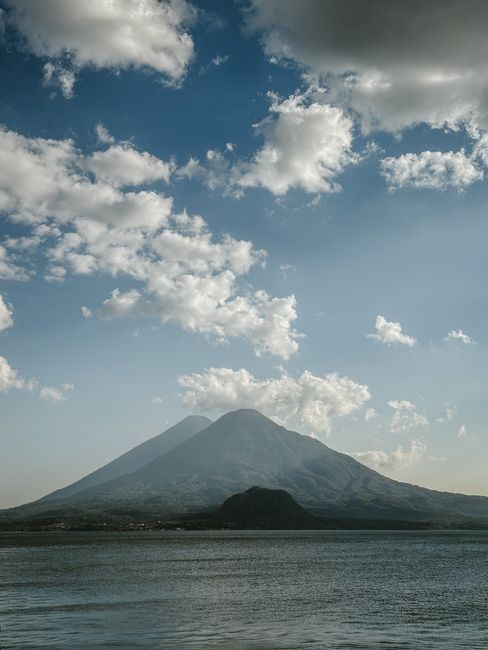
Lake Atitlán, in the western highlands of Guatemala, is a deep blue lake ringed by three volcanoes and a dozen Maya villages, and one of the most striking landscapes in Central America. It fills a caldera that collapsed about 84,000 years ago and is more than 300 m (980 ft) deep in places, according to the Guatemalan Tourism Institute (INGUAT), with the cones of San Pedro, Tolimán and Atitlán rising from its southern shore. There are no roads around much of the lake, so life moves by boat: public lanchas carry villagers, market goods and travelers between Panajachel, the busy gateway town, and villages such as San Juan La Laguna with its weaving cooperatives, laid-back San Pedro, yoga-centered San Marcos and Santiago Atitlán, the largest Tz’utujil Maya town. Visitors come to hike, kayak, swim, learn Spanish, shop for textiles, or simply watch the light change on the volcanoes.
Right now in Lake Atitlán (Panajachel)
- Tue 17–23°C 63–74°F 5 mm Rain
- Wed 17–23°C 63–73°F 9 mm Heavy rain
- Thu 17–23°C 63–74°F 9 mm Heavy rain
Weather: MET Norway (CC BY 4.0)
Top tours in Lake Atitlán
See all tours for Lake Atitlán →
From local operators, with prices and reviews; you check availability and book on Viator, our partner. We may earn a commission at no extra cost to you. How we earn money
Lake Atitlán at a glance
- Best for: volcano views, Maya villages and textiles, boat trips, hiking, kayaking, yoga and slow travel.
- How long: two to four days, according to INGUAT; a week if you want to stay in two villages or take Spanish lessons.
- Best time: November to April, the dry season, for the clearest views; mornings are calmest on the water all year.
- Getting there: about three hours by shuttle from Antigua, and 2.5 to 4 hours by road from Guatemala City, according to INGUAT.
- Before you go: entry rules, the CA-4 agreement and money are in our Guatemala travel guide.
The lake’s villages: where things are
The lake is about 18 km (11 miles) long, in the department of Sololá, at about 1,560 m (5,120 ft). Panajachel sits on the north shore below the town of Sololá; the other villages are spread around it, most reached easiest by boat.
Panajachel
The main gateway, with the most hotels, restaurants, banks, shuttles and boat docks, and Calle Santander, a long street of handicraft stalls. INGUAT notes its wide range of lodging and services. It is busy rather than charming, but convenient for a first night.
Santa Cruz La Laguna and Jaibalito
Small villages on the steep north shore, reached by boat, with lakeside lodges, a dive center and great views of the volcanoes across the water.
San Marcos La Laguna
A quiet village on the north-west shore known for yoga retreats, meditation, vegetarian cafés and the Cerro Tzankujil nature reserve, where you can jump into the lake from a platform.
San Pedro La Laguna and San Juan La Laguna
San Pedro, at the foot of San Pedro volcano, is lively and popular with backpackers, with Spanish schools, bars and kayak rentals. Next door, San Juan La Laguna is known for its murals and its cooperatives of weavers who dye cotton with natural plants, as well as coffee, honey and painting collectives.
Santiago Atitlán
The largest town on the lake, on a bay between Tolimán and Atitlán volcanoes, with a 16th-century church, a busy market and the shrine of Maximón, a folk saint venerated with offerings of rum and cigars, who moves to a different house each year.
Santa Catarina Palopó and San Antonio Palopó
East of Panajachel, villages known for houses painted in blue-and-white textile patterns and for pottery.
Top things to do at Lake Atitlán
Boat trips between villages
Public and private boats connect Panajachel with the villages, with frequent connections between the most visited ones, according to INGUAT. A boat ride is one of the best ways to see the size of the landscape. Mornings are calm; in the afternoon a wind called the “Xocomil” often raises waves, so ask about conditions and travel early with luggage. Fares are posted at the main docks; agree on the price before you board.
Weaving and craft cooperatives
Visit the women’s weaving cooperatives in San Juan La Laguna to see natural dyeing and backstrap-loom weaving, and buy directly from the makers. Santa Catarina Palopó, Santiago Atitlán and Sololá’s market (Tuesdays and Fridays) are also good for textiles.
Hiking
- San Pedro volcano (3,020 m / 9,908 ft): a steep day hike from San Pedro La Laguna through coffee and forest to the summit, with a local guide.
- Indian Nose (Rostro Maya): a short, steep pre-dawn climb above San Juan for sunrise over the lake and volcanoes.
- The north-shore trail: paths link Santa Cruz, Jaibalito, Tzununá and San Marcos along the cliffs; go with others or a guide.
See our hiking guide.
Kayaking, swimming and diving
Rent a kayak or paddleboard in the calm early morning, swim from the platforms at San Marcos, or try high-altitude diving in the volcanic lake from Santa Cruz. See our boat trips guide.
Other things to do around the lake
- Spanish school: San Pedro and San Juan have schools offering one-to-one lessons and homestays.
- Coffee tours: visit cooperatives that grow coffee on the volcano slopes.
- Atitlán Nature Reserve: a private reserve above Panajachel with hanging bridges, waterfalls and zip lines.
- Sololá market: a big, traditional market above Panajachel on Tuesdays and Fridays.
- Chichicastenango: the famous Thursday and Sunday market is about 1.5 hours away by shuttle.
Day trips and next stops
- Iximché: the ruins of the capital of the Kaqchikel Maya kingdom, with plazas and ball courts on a wooded ridge near Tecpán, on the road between Antigua and the lake; still used for Maya ceremonies, and an easy stop on a private transfer.
- Quetzaltenango (Xela): Guatemala’s second city, about two hours west, a cool highland base for Spanish schools, hot springs and hikes to Santa María volcano and the crater lake of Chicabal.
- Antigua Guatemala: about three hours by shuttle; see our Antigua Guatemala travel guide.
- Tikal: the great Maya city in Petén is a long way north; most travelers return to Guatemala City and fly to Flores. See our Tikal National Park guide.
Village fiestas
Every village celebrates its patron saint with a week of processions, fireworks, fairground rides, marimba music and traditional dances in masks and costumes, a good reason to time a visit. Among the best known are San Pedro La Laguna around June 29, Santiago Atitlán around July 25, Sololá in mid-August and Panajachel around October 4; dates and programs shift slightly each year, so check locally. Holy Week processions are especially moving in Santiago Atitlán, where Maximón is carried through the streets.
Nearby destinations
- Antigua Guatemala53 km
- Copán Ruinas220 km
- San Salvador244 km
Getting there and getting around
By shuttle from Antigua or Guatemala City
Tourist shuttles with hotel pick-up run daily from Antigua (about three hours), Guatemala City and its airport, Chichicastenango and Quetzaltenango, to Panajachel, and some continue to San Pedro La Laguna. Private transfers are more flexible. The usual road is the Inter-American Highway to Sololá and down to Panajachel. Guatemala’s tourist assistance service, PROATUR, suggests avoiding the Godínez bypass through Patzún and the road between Cocales and San Lucas Tolimán because of crime and poor road conditions, according to the UK government; it points out that lake boats can be a safer way to move between towns.
Boats
Lanchas leave from several docks in Panajachel: one for the villages of the north and west shore (Santa Cruz, Jaibalito, Tzununá, San Marcos, San Juan and San Pedro) and another for Santiago Atitlán. Public boats leave when full from early morning until late afternoon; private boats can be hired for trips and groups. Keep valuables close and luggage covered, as spray is common.
Tuk-tuks and pickups
Tuk-tuks run within and between neighboring villages, such as San Pedro and San Juan, and pickup trucks carry passengers on the roads around the south shore.
A simple plan for a first visit: arrive in Panajachel by shuttle, cross by morning boat to the village where you will stay, and use public boats for day trips to the others, returning before the afternoon wind. If you have several bags or arrive late in the day, a private boat is safer and drier. Roads between villages are steep and winding, so traveling by boat is usually quicker than going by land, except between neighbors such as San Pedro and San Juan, which you can also reach on foot in about 20 minutes. Boats stop running in the evening, so plan where you’ll be at dusk.
When to go and how long to stay
The lake has a mild highland climate, with temperatures of about 18–26 °C (64–79 °F) during the day, according to INGUAT, and cool nights. The dry season from November to April gives the clearest volcano views; the green season from May to October brings greener landscapes and lower prices, with rain mostly in the afternoons. The Xocomil wind usually picks up around midday and can make crossings bumpy, so plan boat trips in the morning.
| Season | What it’s like | Good for |
|---|---|---|
| November–February | Dry, clear and cool; cold nights | Volcano hikes, sunrise views, photography |
| March–April | Dry and warmer; busy at Holy Week | Swimming, kayaking, festivals |
| May–August | Green season; sunny mornings, afternoon rain | Lower prices, quiet villages |
| September–October | Wettest months; some trails muddy | Spanish school, crafts, relaxing |
Hurricane season: the eastern Pacific season runs from May 15 to November 30 and the Atlantic season from June 1 to November 30, according to NOAA’s National Hurricane Center. Tropical storms can bring days of heavy rain and landslides on the steep roads around the lake, as Agatha did in 2010; check forecasts before traveling.
Lake Atitlán month by month
| Month | Weather | Crowds and prices | Why go |
|---|---|---|---|
| January | Dry, clear and cool; cold nights | Busy early in the month | Volcano hikes, sunrise views |
| February | Dry and clear | Moderate | Photography, San Pedro volcano |
| March | Dry and warmer | Busy around Holy Week (March 21–28, 2027) | Kayaking, processions |
| April | Dry and warmest; hazier skies | Moderate | Swimming, kayaking |
| May | Green season begins; afternoon rain | Quieter; lower prices | Quiet villages |
| June | Sunny mornings, afternoon rain | Quiet | San Pedro’s fiesta |
| July | Afternoon rain; a drier spell some years | Moderate | Santiago Atitlán’s fiesta |
| August | Afternoon rain | Moderate | Sololá’s fiesta, crafts |
| September | Wet; some trails muddy | Quiet; Independence Day on September 15 | Spanish school |
| October | Among the wettest months | Quiet | Panajachel’s fiesta, relaxing |
| November | Dry season begins; clear skies | Moderate | Hikes, views, All Saints’ Day traditions |
| December | Dry, clear and cool | Busy at Christmas and New Year | Sunrise hikes, holidays |
3 days at Lake Atitlán
Day one, arrive in Panajachel and take an afternoon boat to San Juan La Laguna for the weaving cooperatives. Day two, sunrise from Indian Nose, then San Pedro and kayaking. Day three, a morning boat to Santiago Atitlán for the market and church, and back to Panajachel.
A week at Lake Atitlán
Split your stay between two villages, such as a lodge in Santa Cruz and a few nights in San Marcos or San Juan, and add the San Pedro volcano hike, a Spanish course, Sololá’s market and Chichicastenango.
Eating and drinking at Lake Atitlán
Panajachel and San Pedro have the widest choice of restaurants, from comedores serving the menú del día of soup, rice, beans, tortillas and grilled meat, to international cafés, vegetarian places and bakeries. Try pepián and other Guatemalan stews, fresh fish such as black bass, tamales, and coffee grown on the slopes of the lake’s volcanoes; San Juan La Laguna and San Pedro have cooperatives that roast their own. Street stalls sell chuchitos (small tamales), fried plantains with beans and fresh tortillas. San Marcos is the place for healthy, vegetarian and vegan food, often linked to its yoga retreats. In the smaller villages, restaurants close early, so plan dinner before dark.
Each village has its own food character. Panajachel’s Calle Santander has the most variety, including Mexican, Italian and Asian restaurants and cafés with lake views; San Pedro’s waterfront is the cheapest place for a beer, a burger or falafel, with live music in the evenings; and Santiago Atitlán’s market sells fruit, roasted corn and atol (warm corn drink) to local shoppers. Coffee is the lake’s pride: cooperatives in San Juan and San Pedro offer tours that end with a tasting, and their beans are some of the best value in Guatemala. Bring cash for small comedores, and ask for bottled or filtered water.
Where to stay at Lake Atitlán and the hotel taxes
- Panajachel: the most choice and services; convenient for shuttles.
- Santa Cruz and Jaibalito: quiet lodges with the best volcano views, reached by boat.
- San Marcos: yoga retreats and eco-lodges.
- San Pedro and San Juan: budget hostels, Spanish-school homestays and small hotels.
- Santiago Atitlán and Santa Catarina: fewer, more traditional or upscale lakeside options.
Hotel bills in Guatemala carry the 12% value-added tax and a 10% tourism tax, about 22% in total; check whether quoted rates include them.
What a day at Lake Atitlán costs
Lake Atitlán is good value, especially in San Pedro and San Juan. Lodges and tours sometimes quote in US dollars, but boats, tuk-tuks, comedores and markets charge in quetzales. These are our estimates for 2026, not official prices, converted at about Q7.6 to US$1, close to the Bank of Guatemala’s reference rate in early October 2026. Boat fares for visitors are often higher than for locals; check the posted prices.
| Item | Quetzales (Q) | About (US$) |
|---|---|---|
| Public boat between villages | Q15–35 | US$2–4.60 |
| Tuk-tuk within a village | Q5–15 | US$0.70–2 |
| Menú del día at a comedor | Q30–50 | US$4–7 |
| Coffee at a café | Q15–30 | US$2–4 |
| Weaving cooperative demonstration | Q30–60 | US$4–8 |
| Guided Indian Nose sunrise hike | Q100–200 | US$13–26 |
| Hostel dorm bed | Q70–130 | US$9–17 |
| Mid-range lakeside double room | Q450–900 | US$60–120 |
| Shuttle from Antigua to Panajachel | Q110–190 | US$15–25 |
Budget travelers can manage on about US$30 to US$45 (Q230–340) a day with a dorm bed, comedores and public boats; a mid-range day with a lakeside lodge, a guided hike and restaurant meals runs to about US$100 to US$160 (Q760–1,220).
Practical tips for Lake Atitlán
- Money: Panajachel and San Pedro have ATMs; smaller villages may have none, so carry enough quetzales in small notes for boats, tuk-tuks and markets.
- ID: carry your original passport or a certified copy in San Pedro La Laguna, where local authorities may not accept a photocopy, according to the UK government.
- Water: don’t drink lake or tap water; the lake has had pollution and algae problems.
- Respect: dress modestly in villages and ask before photographing people.
- Hiking safety: hike with a local guide or group, as robberies have occurred on isolated trails, and start early.
- Emergencies: PROATUR on 1500; police 110; fire and ambulance 122 or 123.
What to pack for Lake Atitlán
Bring layers for warm days and cool nights, a warm jacket for sunrise hikes, sturdy shoes, a rain jacket from May to October, swimwear, sunscreen and a hat for the strong highland sun, a dry bag for boat trips, a headlamp, insect repellent and small quetzal notes. Plugs are the US type.
Lake Atitlán travel FAQ
How do I get from Antigua to Lake Atitlán?
By tourist shuttle to Panajachel in about three hours, with hotel pick-up, or by private transfer. Boats continue from Panajachel to the other villages.
Which village should I stay in at Lake Atitlán?
Panajachel for convenience, Santa Cruz or Jaibalito for views, San Marcos for yoga and quiet, San Pedro for a social scene and Spanish schools, San Juan for culture.
How do boats work on Lake Atitlán?
Public lanchas leave Panajachel’s docks when full, from early morning to late afternoon, to the villages; private boats can be hired. Travel in the morning, before the afternoon wind.
Can you swim in Lake Atitlán?
Yes, from docks and platforms such as those at San Marcos. The water is cool and clean in most visitor areas, but don’t drink it.
Can you climb a volcano at Lake Atitlán?
Yes. San Pedro volcano is a popular guided day hike; the Atitlán volcanoes are not currently erupting.
How many days do I need at Lake Atitlán?
Two to four days, according to INGUAT; longer if you want to stay in more than one village or study Spanish.
When is the best time to visit Lake Atitlán?
November to April for clear volcano views; mornings are the best time of day all year.
How much does a day at Lake Atitlán cost?
By our estimates, about US$30 to US$45 (Q230–340) on a budget and US$100 to US$160 mid-range. Carry small quetzal notes for boats, tuk-tuks and markets; smaller villages may have no ATM.
What is the Xocomil wind?
A strong wind that often blows across the lake from about midday, raising waves that make boat crossings bumpy and wet. Travel by boat in the morning, especially with luggage.
What are the best day trips from Lake Atitlán?
Chichicastenango’s market on Thursdays and Sundays, Sololá’s market on Tuesdays and Fridays, the Iximché ruins on the road to Antigua, and Quetzaltenango for hot springs and volcano hikes.
Sources and last review
Researched and last reviewed on 4 October 2026. The lake’s formation, depth, volcanoes, main villages, boat connections, travel times from Guatemala City, best season, length of stay and temperatures: the Guatemalan Tourism Institute (INGUAT); PROATUR’s road advice and the ID rule in San Pedro La Laguna: the UK government; hurricane seasons: NOAA’s National Hurricane Center. The lake’s size and altitude, village details, Maximón, the Xocomil wind, the Sololá market days, hike heights and times, Tropical Storm Agatha and hotel taxes come from secondary sources or general knowledge and are flagged for checking. Prices and rules change, so check before you go. For entry rules and money, see our Guatemala travel guide; for Antigua, see our Antigua Guatemala travel guide. The extra food notes, Iximché, Quetzaltenango, the village fiesta dates, the month-by-month table and the daily costs come from general knowledge or our own estimates and are flagged for checking; quetzal amounts are converted at about Q7.6 to US$1, close to the Bank of Guatemala’s reference rate in early October 2026.
Plan your trip
Partner links: TravelerCenter may earn a commission if you book, at no extra cost to you.
🇪🇸 Useful Spanish phrases for Lake Atitlán
All 38 Spanish phrases: restaurant, hotel, emergencies, romance (printable) →