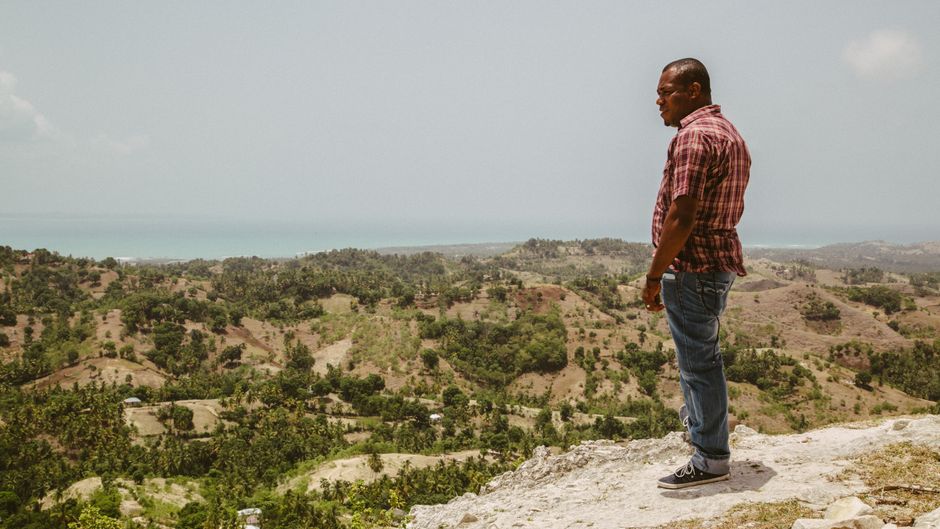
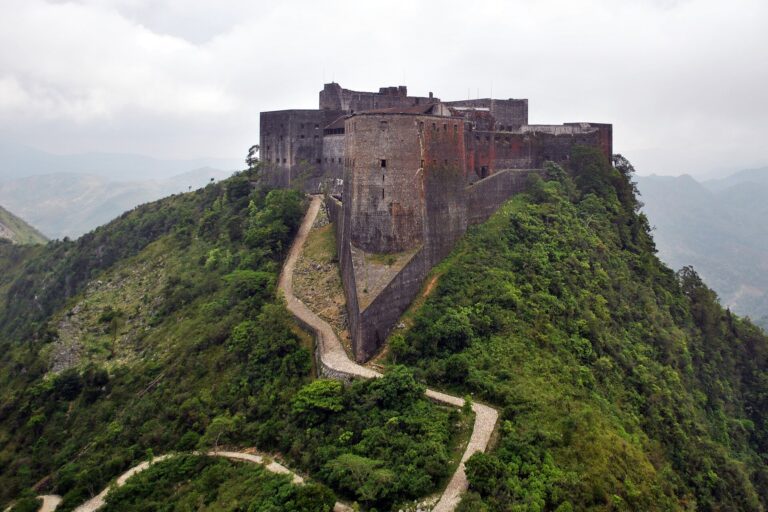
Haiti fills the western third of the Caribbean island of Hispaniola, a mountainous land whose name comes from the Taíno word Ayiti, “land of high mountains.” It has one of the most remarkable stories in the Americas: on 1 January 1804, it became the first independent Black republic in the world and the second independent nation in the Western Hemisphere, after the United States. That history is carved in stone in the north, where the colossal mountaintop fortress of the Citadelle Laferrière and the ruined Sans-Souci Palace form a UNESCO World Heritage site above the town of Milot. The nearby port of Cap-Haïtien, once the richest city of the French colony of Saint-Domingue, is the natural base, with a grid of colonial streets, a waterfront boulevard and beaches such as Cormier and Labadee to the west. Elsewhere, Haiti offers the painted-papier-mâché carnival town of Jacmel, cloud forests in the southern mountains, white-sand islands such as Île-à-Vache, and one of the richest art, music and food cultures in the Caribbean, from naïve painting and metal sculpture to kompa music and soup joumou, both on UNESCO’s intangible heritage lists. Haitian Creole and French are the official languages. British and Canadian citizens can visit without a visa for up to 90 days, according to their governments’ summaries of Haiti’s rules; other travelers should check with Haiti’s Ministry of Foreign Affairs. The driest, most comfortable months are December to March.
Right now in Haiti
- Sat26–32°C78–90°FMostly clear
- Sun26–32°C78–89°F1 mm rain
- Mon26–32°C78–89°FMostly clear
Weather, sun and air quality here are for one point near the centre of Haiti, not the whole country; conditions elsewhere can differ. Readings refresh through the day.
Haiti: quick answers
- Best time to visit Haiti
- Haiti has a warm tropical climate all year, with temperatures shaped more by altitude than by season: the coast is hot, while mountain towns such as Kenscoff are pleasantly cool and can be chilly at night. More
- Things to do in Haiti
- Forts, art, beaches and carnival. More
- Entry rules for Haiti
- Entry rules can change at short notice, so confirm them with Haiti’s Ministry of Foreign Affairs or embassy, and with your airline, shortly before you travel. More
Haiti at a glance
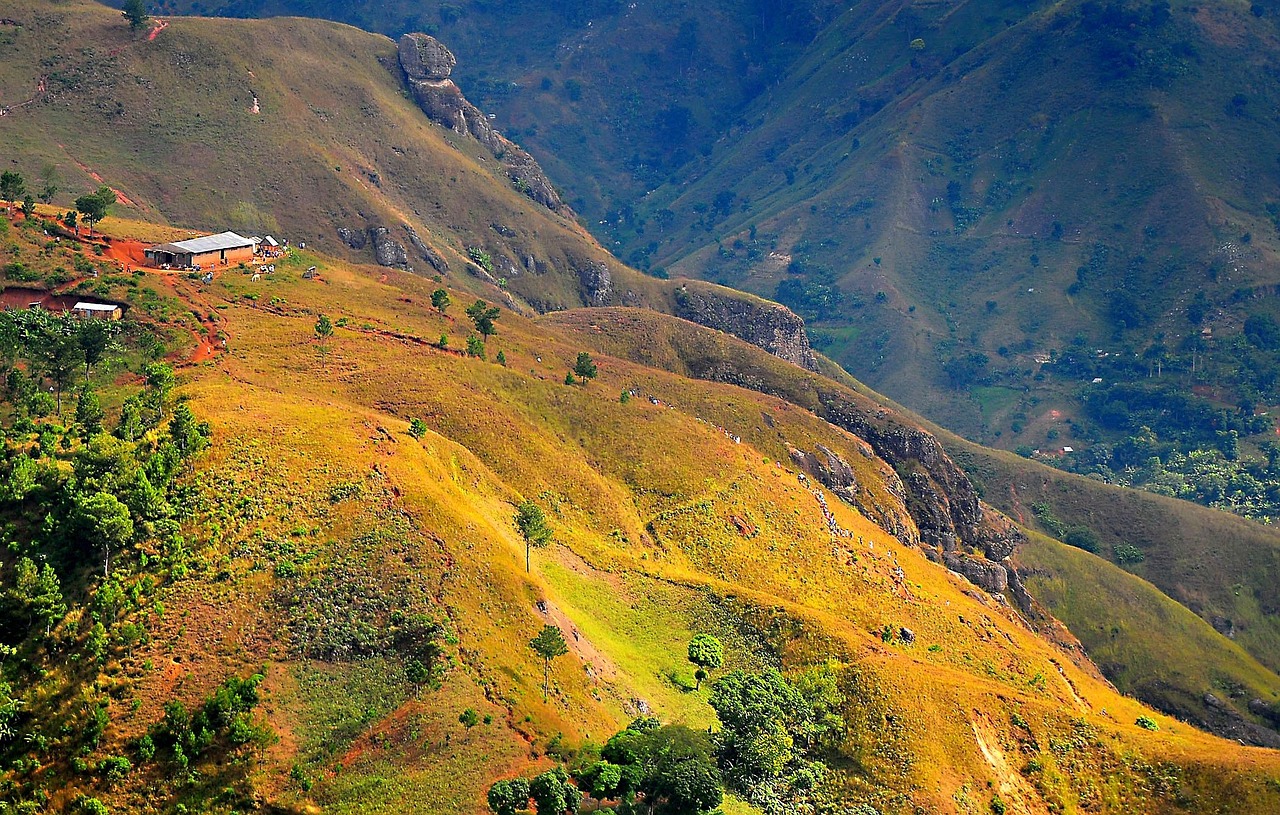
Haiti covers about 27,750 km² (10,700 sq miles), a little smaller than Maryland, and shares Hispaniola with the Dominican Republic to the east. Two long peninsulas reach west toward Cuba and Jamaica, wrapping around the Gulf of Gonâve, and most of the country is mountains: ranges such as the Massif de la Selle and the Massif de la Hotte rise to well over 2,000 m (6,600 ft), with Pic la Selle, the highest point, at about 2,680 m (8,790 ft). Between them lie fertile valleys and plains, such as the Artibonite, the country’s rice bowl, and the Plaine du Nord around Cap-Haïtien. Offshore islands include Île de la Tortue (Tortuga), the old buccaneer haven off the north coast, Île de la Gonâve in the gulf, and little Île-à-Vache off the south coast.
Haitian Creole (Kreyòl ayisyen), spoken by virtually everyone, and French are the official languages; English is spoken in some hotels and by many guides, and Spanish is understood near the Dominican border. Haiti uses Eastern Time: UTC−5 in winter and UTC−4 in summer, changing clocks on the same dates as the United States and Canada. Sockets are the North American type A and B, at about 110 V, so most US and Canadian devices work without an adapter. The currency is the Haitian gourde (HTG).
Haiti’s regions
Haiti is divided into ten departments. For travelers, they group into four broad areas:
- The north (Nord, Nord-Est and Nord-Ouest): Cap-Haïtien, the Citadelle, Sans-Souci and the Ramiers fortifications at Milot, the beaches of Cormier, Labadee and Paradis, the old colonial forts of Fort-Liberté, and Tortuga island offshore.
- Central Haiti (Artibonite and Centre): the Artibonite valley’s rice fields, the old port of Saint-Marc, the Saut-d’Eau waterfall pilgrimage site, and the high plateau toward the Dominican border.
- The west (Ouest): the capital, Port-au-Prince, with Pétion-Ville in the hills above it and the cool mountain village of Kenscoff beyond; the Côte des Arcadins beaches to the north; and Île de la Gonâve in the gulf.
- The south (Sud-Est, Sud, Nippes and Grand’Anse): Jacmel and its carnival, the Bassin Bleu pools, the beaches of Port-Salut, Île-à-Vache off Les Cayes, the cloud forests of Pic Macaya, and the remote green coast of Grand’Anse around Jérémie.
Videos of Haiti
Hand-picked travel videos from YouTube creators to help you picture the trip. They play from YouTube; the facts in this guide come from our own research.
Where to go: the north, the capital and the south coast
Most leisure visitors head first for the north, where Haiti’s greatest monuments and some of its best beaches lie close together. See our guide:
- Cap-Haïtien: Haiti’s second city and the gateway to the Citadelle Laferrière and Sans-Souci Palace, with a colonial cathedral, the Vertières battle monument, the waterfront Boulevard, the forts of Picolet and Magny, and the beaches and coves of Cormier, Labadee and Paradis along the coast to the west.
Other highlights include Jacmel, a 19th-century port of iron-balconied merchant houses, crafts workshops and a famous carnival; the turquoise pools of Bassin Bleu in the hills above it; the capital, Port-au-Prince, with its national museums, art galleries and the Iron Market; the cool pine forests around Kenscoff and the Parc national La Visite; the beaches of Port-Salut and Île-à-Vache in the south; and the wild Pic Macaya national park at the western tip.
Cap-Haïtien Travel Guide
Plan a trip to Cap-Haïtien: the UNESCO-listed Citadelle Laferrière, Sans-Souci Palace and the Ramiers at Milot, the colonial old town, cathedral and Boulevard, the…
Beyond Cap-Haïtien
Haiti’s World Heritage site
UNESCO inscribed the National History Park – Citadel, Sans Souci, Ramiers on the World Heritage List in 1982. Built in the early 19th century, just after independence, under Henri Christophe, the king of northern Haiti, the monuments are described by UNESCO as universal symbols of liberty, the first built by formerly enslaved people who had won their freedom. The Citadelle Laferrière crowns the summit of Bonnet à l’Évêque mountain at about 900 m (2,950 ft), its prow-shaped walls rising like a stone ship above the clouds, with a huge collection of old cannons and cannonballs still stacked inside. Below it, in the village of Milot, stand the ruins of the Sans-Souci Palace, Christophe’s royal residence, with grand staircases and arches, and the domed royal chapel beside it. The Ramiers are a set of smaller fortifications on a neighboring summit. Our Cap-Haïtien guide explains how to visit.
Jacmel and Bassin Bleu
On the south coast, Jacmel grew rich in the 19th century on coffee exports, and its merchants built tall warehouses and townhouses with cast-iron columns and wrought-iron balconies, some of them shipped from France. It is Haiti’s arts and crafts capital, known for brightly painted papier-mâché masks, animals and figures made in family workshops, and for its carnival, held in the weeks before Lent, when masked characters and giant papier-mâché creations parade through the streets. About 12 km (7 miles) into the hills, Bassin Bleu is a chain of three deep turquoise pools linked by waterfalls in a limestone gorge, reached by a short hike and a scramble with a rope. Long beaches, such as Raymond-les-Bains and Cyvadier, lie along the coast east and west of town.
Port-au-Prince and the mountains above it
The capital spreads around a wide bay at the head of the Gulf of Gonâve, climbing into the hills toward Pétion-Ville. Its cultural institutions include the Musée du Panthéon National Haïtien (MUPANAH), which tells the story of the Taíno, the colonial era and the revolution and holds what is said to be the anchor of Columbus’s Santa María; the Iron Market (Marché en Fer), a red-and-green cast-iron market hall with minaret-like towers; the art galleries of Pétion-Ville; and the Grand Rue artists’ collective, known for sculptures made from found objects. Above the city, the road climbs to Kenscoff at about 1,500 m (4,900 ft), with flower and vegetable farms, cooler air and walks toward the pine forests of Parc national La Visite and Fort Jacques, an independence-era fortress with views over the bay. North of the capital, the Côte des Arcadins is a strip of beach resorts facing the Gulf of Gonâve.
The southern peninsula
The long southern peninsula has some of Haiti’s prettiest coast. Port-Salut has a long, palm-lined beach of golden sand; Île-à-Vache, a small island off the port of Les Cayes, has quiet coves, mangroves and a few small resorts reached by boat. Further west, Pic Macaya National Park protects the last large cloud forest of the Massif de la Hotte, rich in endemic frogs, orchids and birds, and the coast of Grand’Anse, around the town of Jérémie, known as the “city of poets,” is green, rugged and little visited.
Saut-d’Eau and the center
Inland, the waterfall of Saut-d’Eau is one of Haiti’s most important pilgrimage sites, where Catholic and Vodou traditions meet; every July, around the feast of Our Lady of Mount Carmel, thousands of pilgrims come to bathe under its falls. The coastal town of Saint-Marc and the rice fields of the Artibonite valley lie on the road between the capital and the north.
Best time to visit Haiti
Haiti has a warm tropical climate all year, with temperatures shaped more by altitude than by season: the coast is hot, while mountain towns such as Kenscoff are pleasantly cool and can be chilly at night. The dry season, from about December to March, is the most comfortable time to visit, with sunny days, lower humidity and calm seas, and it includes the carnival season. Rain comes in two main peaks in much of the country, in spring (around April to June) and autumn (around August to October), usually as heavy afternoon showers and thunderstorms rather than all-day rain; the north coast around Cap-Haïtien tends to get more of its rain later in the year, from about October to January. The Atlantic hurricane season runs from 1 June to 30 November, according to the US National Hurricane Center, with its peak in mid-September; follow forecasts if you travel then, and take travel insurance.
We could not find official long-term temperature and rainfall averages for Haitian weather stations, so the table below describes typical conditions rather than giving figures. The live weather widget on this page shows current conditions.
Haiti month by month
| Month | Weather | Highlights |
|---|---|---|
| January | Dry and sunny in most of the country; showers possible on the north coast | Independence Day and Ancestors’ Day (1–2 January); soup joumou on New Year’s Day |
| February | Dry, warm days and cool mountain nights | Carnival season, often peaking in February |
| March | Dry and warming | Carnival or Lent, depending on the year; rara bands in the countryside before Easter |
| April | Hot; first spring showers | Easter and rara processions |
| May | Hot and humid; afternoon thunderstorms | Flag Day (18 May) |
| June | Hot, humid and showery; hurricane season begins | Green mountains; quiet beaches |
| July | Hot; a short drier spell in many areas | Saut-d’Eau pilgrimage, around 16 July |
| August | Hot and humid; storms more frequent | Summer festivals and family holidays |
| September | Hot and wet; peak of hurricane season | Fewest visitors |
| October | Wet in much of the country, rainy on the north coast | Lush landscapes |
| November | Rain easing in the south; wetter in the north | All Saints and Fèt Gede (1–2 November); Vertières Day (18 November) |
| December | Dry season returns in most areas | Christmas and New Year; family gatherings |
Festivals worth planning around
- Carnival (Kanaval): in the days before Lent, with music trucks, costumed bands and masked characters; Jacmel’s carnival, with its papier-mâché masks and giant figures, is the most famous for visitors and is usually held on a weekend before the main carnival days.
- Rara: during Lent and Easter week, bands of musicians with bamboo trumpets (vaksen), drums and metal horns process through the countryside, a tradition rooted in African and Taíno heritage.
- Independence Day: 1 January, when families eat soup joumou, the pumpkin soup that UNESCO added to its Representative List of the Intangible Cultural Heritage of Humanity in 2021; 2 January is Ancestors’ Day.
- Saut-d’Eau pilgrimage: mid-July, at the waterfall in the Centre department.
- Fèt Gede: 1–2 November, the Vodou festival of the spirits of the dead, held alongside All Saints’ and All Souls’ Days, with ceremonies in cemeteries.
- Vertières Day: 18 November, marking the Battle of Vertières of 1803, the last major battle of the Haitian Revolution, fought on the edge of Cap-Haïtien.
Carnival dates move with Easter, and town carnivals are announced each year, so check local programs before you plan a trip around them.
How long to stay: sample itineraries
Haiti’s main regions are far apart by road, and mountain roads are slow, so most visitors focus on one area per trip.
- 3–4 days, the north: Cap-Haïtien (3 nights), with a full day for the Citadelle and Sans-Souci, a half day in the old town and at the Vertières monument, and a beach day at Cormier or Labadee.
- One week, the north in depth: add Fort-Liberté and its bay of colonial forts, a boat trip to Île-à-Rat or along the coast to Paradis beach, the Bois Caïman site, and a slower day at a beach hotel west of town.
- One week, the south: Jacmel (3 nights) with Bassin Bleu and the craft workshops, then Port-Salut and Île-à-Vache (3 nights).
- Ten days or more: combine the north and the south, linking them by domestic flight rather than by road where possible, and add the mountains above the capital or a trek in Pic Macaya.
Entry, money and costs
Entry and visas (last reviewed November 2026)
- British citizens: according to the UK government’s summary of Haiti’s entry rules, you do not need a visa to visit for up to 90 days. Your passport must be valid for at least six months after the date you arrive.
- Canadian citizens: according to the Government of Canada, no tourist visa is needed for stays of up to 90 days, and your passport must be valid for the length of your stay. Canadians of non-Haitian origin who want to stay longer must apply to Haiti’s immigration service before the 90 days run out.
- Fees: the UK government says tourists pay an entry fee of US$10 in cash on arrival, and a departure tax of US$55, which is included in the price of most international air tickets; check with your airline.
- Onward ticket: officials may ask to see a return or onward ticket and proof that you have enough money for your stay.
- Yellow fever: you need a vaccination certificate if you arrive from a country with a risk of yellow fever transmission.
- US citizens and other nationalities: check the current rules with Haiti’s Ministry of Foreign Affairs (mae.gouv.ht) or the nearest Haitian embassy or consulate before you book.
Entry rules can change at short notice, so confirm them with Haiti’s Ministry of Foreign Affairs or embassy, and with your airline, shortly before you travel.
Money and cards
The currency is the Haitian gourde (HTG). On 10 November 2026, the reference rate published by the Banque de la République d’Haïti, the central bank, was about 132 gourdes to the US dollar. Prices can be confusing: as the Government of Canada notes, they are often quoted in “Haitian dollars,” an informal unit worth 5 gourdes, or in US dollars, rather than in gourdes, so always ask which is meant. US dollars in small, clean notes are useful for hotels, guides and tips; Canadian dollars are not accepted. Larger hotels accept major credit cards, but cash is the norm almost everywhere else, and ATMs can have low withdrawal limits, so plan your cash before you arrive in smaller towns.
Tipping
Many hotels and restaurants add a 10% service charge; if they don’t, leave about 10%. Tip guides at the Citadelle and other sites, drivers and porters, and round up taxi fares agreed in advance.
What a trip costs
Haiti is not a budget destination for visitors: tourist infrastructure is limited, so hotels and private transport cost more than local prices might suggest, while street food and local markets are very cheap. These are our rough estimates for November 2026, in US dollars, not official figures; entry fees at monuments are set locally and change, so check them on arrival.
| Item | Typical cost |
|---|---|
| Entry fee on arrival (per the UK government) | US$10 |
| Street-food plate of griot or fried plantains | US$2–5 |
| Lunch in a local restaurant | US$8–15 |
| Dinner for two in a hotel restaurant | US$40–80 |
| Guided visit to the Citadelle, per person | US$10–30, plus a horse if you ride |
| Full-day car with driver | US$100–180 |
| Mid-range hotel double, per night | US$80–150 |
| Beach resort double, per night | US$120–250 |
A comfortable trip with a mid-range hotel, a driver or guide for excursions and restaurant meals costs roughly US$150–250 per person per day for two people sharing.
Getting there and getting around
Airports and flights
Haiti has two international airports: Toussaint Louverture International Airport (PAP) in Port-au-Prince and Cap-Haïtien International Airport (CAP), on the edge of Cap-Haïtien in the north, the closer one for the Citadelle and the northern beaches. Smaller airports, such as Jacmel and Les Cayes, handle domestic flights. Airlines and routes to Haiti change often, so check current international and domestic flights directly with the airlines before you plan your trip. Many visitors also see Haiti’s north coast from a cruise ship calling at Labadee, a private beach resort west of Cap-Haïtien used by Royal Caribbean.
Getting around
Haiti has no passenger railway, and road travel is slow: the main highways are paved, but many secondary and mountain roads are rough, and journeys take longer than distances suggest.
- Car with driver: the most practical way for visitors to get around and to reach sites such as the Citadelle and Bassin Bleu; hotels and tour operators can arrange a driver and guide.
- Tap-taps: brightly painted shared pickup trucks and buses, decorated with portraits, slogans and religious scenes, that run fixed routes for a few gourdes; they are a classic sight and a cheap way to cover short distances.
- Moto-taxis: motorcycle taxis are everywhere in towns; agree the fare first and ask for a helmet.
- Boats: small boats and water taxis link the mainland with islands such as Île-à-Vache and with beaches along the north coast; choose operators with life jackets.
- Self-drive: possible but demanding. Driving is on the right. According to the Government of Canada, a Canadian licence is valid for up to three months, and you should also carry an International Driving Permit.
The neighboring Dominican Republic shares the island; check current flight and border options with official sources if you want to combine the two countries.
Mountains, beaches and the natural world
Haiti’s landscapes are dramatic: steep green mountains drop straight to the sea, and much of the coast is a chain of coves, mangroves and coral reefs. The best beaches are on the north coast west of Cap-Haïtien (Cormier, Labadee, Paradis), in the south at Port-Salut, Île-à-Vache and around Jacmel, and on the Côte des Arcadins north of the capital, where some resorts run snorkeling and diving trips to reefs in the Gulf of Gonâve. Hikers can walk in the pine forests of Parc national La Visite above Port-au-Prince, climb to the Citadelle, or, with a local guide and some planning, trek into the cloud forests of Pic Macaya, among Haiti’s richest areas for wildlife. Birdwatchers look for endemic species such as the Hispaniolan trogon, Haiti’s national bird. See our beaches, snorkeling, diving, hiking and boat trips guides.
Culture, food and everyday etiquette
A short history
The Taíno people lived on the island they called Ayiti when Christopher Columbus arrived in 1492; his flagship, the Santa María, ran aground off the north coast near today’s Cap-Haïtien on Christmas Eve that year. Spain later ceded the western part of the island to France, and as the colony of Saint-Domingue it became, in the 18th century, the richest colony in the Caribbean, producing sugar and coffee on plantations worked by enslaved Africans. In 1791, a revolt began in the northern plain, traditionally linked to the Vodou ceremony at Bois Caïman, and leaders such as Toussaint Louverture, Jean-Jacques Dessalines and Henri Christophe led the long struggle that ended with victory at Vertières in November 1803 and the declaration of independence at Gonaïves on 1 January 1804. The new nation took back the Taíno name, Haiti. Christophe later ruled the north as king, building the Citadelle and Sans-Souci, while the south was a republic under Alexandre Pétion; the country was reunited in 1820.
Art and music
Haiti has one of the most vibrant art scenes in the Caribbean. Its colorful naïve painting, celebrated internationally since the 1940s, fills galleries and roadside stalls; the village of Croix-des-Bouquets, near the capital, is famous for metal art cut and hammered from recycled oil drums; and Vodou sequined flags (drapo) are prized by collectors. Music is everywhere. Kompa (compas), the smooth, danceable rhythm created in the 1950s and added by UNESCO to its Representative List of the Intangible Cultural Heritage of Humanity in 2025, plays in every bar and taxi; twoubadou bands play gentle guitar ballads; mizik rasin (“roots music”) blends Vodou drumming with rock; and rara bands take to the streets in the Easter season.
Food
Haitian food is hearty, spicy and full of flavor, drawing on African, French, Taíno and Spanish roots. Look for griot, chunks of pork marinated in citrus and fried until crisp, served with bannann peze (twice-fried plantains) and pikliz, a fiery pickled cabbage relish; diri ak djon djon, rice cooked black with local mushrooms; diri ak pwa, rice and beans; lambi, conch in Creole sauce; grilled fish and lobster on the coast; and akra, malanga fritters. On 1 January every family makes soup joumou, a rich pumpkin and beef soup that was once reserved for colonists and is now eaten to celebrate independence; UNESCO lists it as intangible cultural heritage. Cassava bread (kasav), shared with neighboring Caribbean countries, is also on UNESCO’s list. To drink, try fresh juices, Haitian coffee from the mountains, local beer, and rum: Haiti produces fine aged rums and clairin, a raw cane spirit made in small village distilleries. Drink bottled or purified water.
Etiquette
Haitians are courteous and greetings matter: say bonjou (good morning) or bonswa (good afternoon and evening, from about midday) when you enter a shop or meet someone, and shake hands. Mèsi is thank you, souple is please and Sak pase? is a friendly “What’s up?”, answered with N’ap boule (“We’re doing fine”). Dress modestly in churches and away from the beach. Always ask before photographing people; many prefer not to be photographed, especially at markets and religious ceremonies. Vodou is a living religion practiced alongside Christianity; if you are invited to a ceremony, go with a guide, follow your hosts’ lead and ask before taking pictures. Bargaining is normal at markets and craft stalls, but keep it friendly.
Health, safety and connectivity
Practical points for a smooth trip:
- Plan ahead: arrange airport transfers, drivers and guides through your hotel or a reputable tour operator, and confirm flights and entry rules shortly before you travel.
- Health: see a travel health clinic at least six to eight weeks before your trip about vaccinations and protection against mosquito-borne diseases; use insect repellent and cover up at dawn and dusk.
- Insurance: take travel insurance that covers medical treatment and evacuation, as hospitals usually expect payment up front, and bring enough of any medicines you need.
- Water and food: drink bottled or purified water and eat freshly cooked food.
- Sun and heat: the climb to the Citadelle is steep and hot; start early and carry water.
- Weather: from June to November, follow hurricane forecasts and your hotel’s advice.
- Emergencies: call 114 for the police, 116 for an ambulance and 115 for the fire service. Private ambulance services operate in the larger cities; ask your hotel for their numbers.
Haiti’s two main mobile networks, Digicel and Natcom, sell prepaid SIM cards in their shops with your passport; coverage is good in towns and patchy in the mountains. Many hotels have Wi-Fi, but connections can be slow, and many buildings rely on generators or solar power, so a power bank is useful.
Things to do: forts, art, beaches and carnival
Climb to the Citadelle Laferrière at sunrise and look out over the northern mountains; wander through the ruined arches of Sans-Souci; walk Cap-Haïtien’s colonial grid and its waterfront; swim and snorkel off Cormier and Labadee; take a boat to a quiet cove; dance to kompa on a Saturday night; watch the masks and giant figures of Jacmel’s carnival; swim in the blue pools of Bassin Bleu; visit the metalworkers of Croix-des-Bouquets and buy a painting from a Haitian artist; taste soup joumou on New Year’s Day; and sip an aged Haitian rum as the sun goes down. See our city sightseeing, hiking and beaches guides, and our hiking shoes, water shoes and rain jackets guides.
Haiti travel FAQ
Do I need a visa for Haiti?
British and Canadian citizens can visit without a visa for up to 90 days, according to their governments’ summaries of Haiti’s rules. US citizens and other nationalities should check with Haiti’s Ministry of Foreign Affairs (mae.gouv.ht) or a Haitian embassy before booking.
Is there an entry fee for Haiti?
Yes. The UK government says tourists pay US$10 in cash on arrival, and a departure tax of US$55, which is usually included in international air fares.
What currency is used in Haiti?
The Haitian gourde (HTG), about 132 to the US dollar in November 2026 at the central bank’s reference rate. Prices are often quoted in US dollars or in informal “Haitian dollars” of 5 gourdes, so check which is meant.
What is the best time to visit Haiti?
December to March, the dry season, which also includes carnival. The Atlantic hurricane season runs from June to November, peaking in September.
What is Haiti’s most famous landmark?
The Citadelle Laferrière, a vast early-19th-century mountaintop fortress near Cap-Haïtien, part of the UNESCO World Heritage site that also includes the Sans-Souci Palace and the Ramiers. See our Cap-Haïtien guide.
What languages are spoken in Haiti?
Haitian Creole and French are the official languages; almost everyone speaks Creole. English is spoken in some hotels and by many guides.
What food is Haiti known for?
Griot (fried pork) with pikliz and fried plantains, diri ak djon djon (black mushroom rice), lambi (conch), and soup joumou, the New Year’s Day pumpkin soup listed by UNESCO as intangible cultural heritage.
When is carnival in Haiti?
In the days before Lent, usually in February or early March. Jacmel’s carnival, famous for its papier-mâché masks, is usually held on a weekend before the main carnival days.
What are the emergency numbers in Haiti?
114 for the police, 116 for an ambulance and 115 for the fire service.
What plugs are used in Haiti?
North American type A and B sockets, at about 110 V and 60 Hz. Visitors from Europe, the UK and Australia need an adapter; see our travel adapters guide.
What is the time difference in Haiti?
Haiti is on UTC−5 in winter and UTC−4 in summer, the same as New York and Toronto all year.
Plugs and power in Haiti
Haiti uses 110 V, 60 Hz and these plugs (left) and wall sockets (right):
North American-style sockets; most US and Canadian devices need no adapter.
All plug types and voltages by country → · Check what you need to pack →
Plan your trip
Partner links: TravelerCenter may earn a commission if you book, at no extra cost to you.
🇫🇷 Useful French phrases for Haiti
All 38 French phrases: restaurant, hotel, emergencies, romance (printable) →
Before you go: guidebooks and travel gear
Affiliate links: we may earn a commission at no extra cost to you. As an Amazon Associate we earn from qualifying purchases. We pick items for the place, not for the commission. How we earn money
Sources · last reviewed 10 November 2026
Researched and last reviewed on 10 November 2026. Entry rules, the 90-day visa-free stay, passport validity, the US$10 entry fee and US$55 departure tax, the yellow fever rule and the ambulance (116) and fire (115) numbers: the UK government’s foreign travel information (gov.uk); entry rules for Canadians, onward tickets, driving licences, price quoting and the police number (114): the Government of Canada (travel.gc.ca); exchange rate: Banque de la République d’Haïti (brh.ht); World Heritage site: UNESCO World Heritage Centre; soup joumou, kompa and cassava bread: UNESCO’s intangible cultural heritage lists; hurricane season: the US National Hurricane Center; time zone: the IANA time zone database; area and coordinates: Wikidata and OpenStreetMap. Geography, history, festivals, seasons, sight descriptions, transport, mobile networks, plugs, prices and daily budgets are general references or our estimates and are flagged for checking. Rules, flights and fees change, so check the official sources before you go.
Data: Weather: MET Norway (CC BY 4.0) · Rates: ECB · Wikidata (CC0)