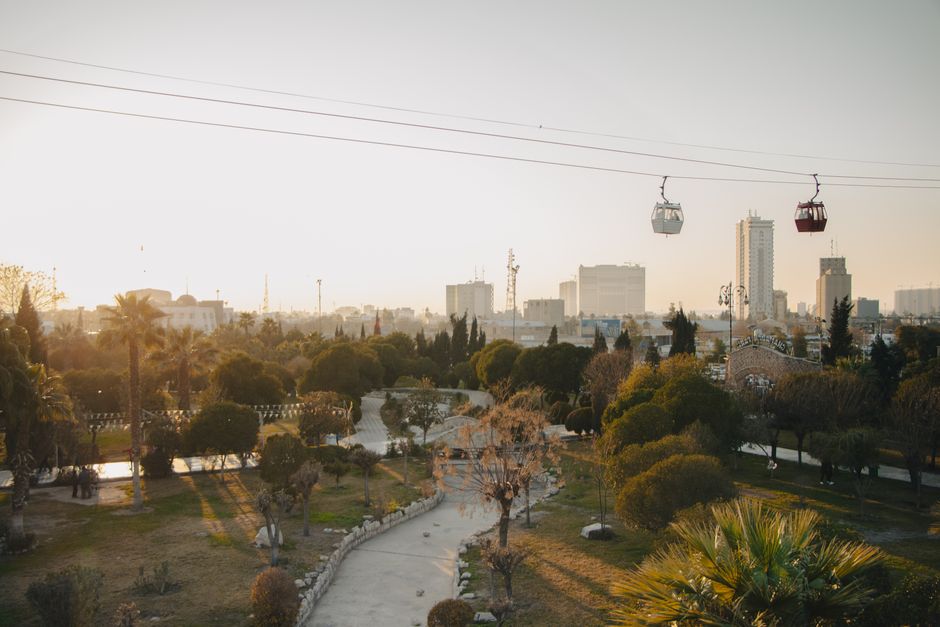
Iraq is the land between the rivers, ancient Mesopotamia, where the Tigris and the Euphrates gave rise to some of the world’s first cities, to writing, law codes and the wheel. A trip here is a journey through the deep roots of history: the ziggurat of Ur, the ruins of Babylon, the Abbasid monuments of Baghdad and Samarra, and the great shrine cities of Karbala and Najaf, visited by millions of pilgrims each year. In the far south, the reed villages of the Mesopotamian marshes float on wide lagoons; in the north, the Kurdistan Region rises into green valleys, waterfalls and snow-capped mountains. Most leisure visitors begin in Erbil, the capital of the Kurdistan Region, whose hilltop Citadel, a UNESCO World Heritage site, has been inhabited for thousands of years. Iraq has six World Heritage sites in all. Arabic and Kurdish are the official languages, and visitors are met with famously generous hospitality. Iraq’s Ministry of Interior runs an official e-visa portal, which is the place to check entry rules for your nationality before you travel. The best months are March to April and October to November. Give it ten days to two weeks to see both north and south.
Right now in Iraq
- Sat16–27°C61–81°FPartly cloudy
- Sun17–28°C63–82°FPartly cloudy
- Mon17–27°C63–80°FClear
Weather, sun and air quality here are for one point near the centre of Iraq, not the whole country; conditions elsewhere can differ. Readings refresh through the day.
Iraq: quick answers
- Best time to visit Iraq
- Iraq has a hot desert climate in the center and south, with long, scorching summers and mild winters, and a cooler, wetter climate in the northern mountains. More
- Things to do in Iraq
- Ancient cities, shrines, bazaars and mountains. More
- Entry rules for Iraq
- Iraq’s Ministry of Interior, through its Directorate of Residency Affairs, runs the official e-visa portal, evisa.iq. According to the portal, the electronic visa lets you enter Iraq without visiting an embassy or consulate; it is valid for 30 days and can be used for a single or multiple entries. More
Iraq at a glance
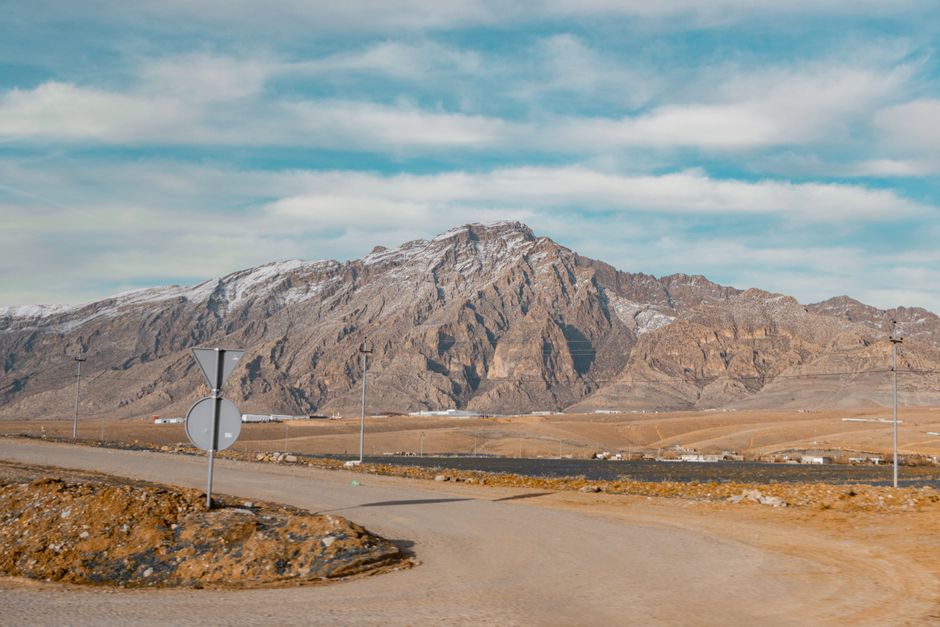
Iraq covers about 437,000 km² (169,000 sq miles), a little larger than California. Most of the country is a broad, low plain watered by the Tigris and the Euphrates, which flow down from Turkey in the northwest, run close together near Baghdad and meet in the south to form the Shatt al-Arab, which flows past Basra to the Persian Gulf. West of the Euphrates, the land rises into a stony desert that stretches toward Jordan, Syria and Saudi Arabia. In the southeast, where the rivers spread out, lie the Mesopotamian marshes (the Ahwar), a vast wetland of reeds and water buffalo. In the north and northeast, the plains climb into the foothills and peaks of the Zagros and Taurus mountains, the heartland of the Kurdistan Region, with summits above 3,000 m (9,800 ft) along the borders.
Arabic and Kurdish are the official languages; Arabic is spoken across most of the country and Kurdish is the main language of the Kurdistan Region, with Turkmen, Syriac (Neo-Aramaic) and Armenian spoken by smaller communities. English is understood in hotels, by younger people and by guides. A few words of Arabic help everywhere: marhaba or salam alaykum (hello) and shukran (thank you); in Kurdish, spas means thank you. The weekend is Friday and Saturday. Iraq keeps Arabia Standard Time (UTC+3) all year, with no daylight saving time. Sockets are a mix of European two-pin (type C), older round three-pin (type D) and British three-pin (type G), at 230 V, so bring a universal adapter.
Iraq’s regions
- The Kurdistan Region: the mountainous north and northeast, with its own regional government and the cities of Erbil, Sulaymaniyah and Duhok, the hill towns of Shaqlawa, Amedi and Akre, and the canyons and waterfalls around Rawanduz.
- Baghdad: the capital on the Tigris, in the center of the country, with the Iraq Museum, the Abbasid-era Mustansiriya school and the riverside cafés and booksellers of the old city.
- The north and the Tigris valley: Mosul and its historic old city, the ancient Assyrian capitals of Nimrud, Nineveh and Ashur, the desert city of Hatra and the Abbasid capital of Samarra with its spiral minaret.
- The Middle Euphrates: the ruins of Babylon near Hillah and the shrine cities of Karbala, Najaf and Kufa.
- The south: the ziggurat of Ur and the ancient cities of Uruk and Eridu, the marshes around Chibayish, and Basra on the Shatt al-Arab, with its date palm groves.
Videos of Iraq
Hand-picked travel videos from YouTube creators to help you picture the trip. They play from YouTube; the facts in this guide come from our own research.
Where to go: Erbil and the Kurdistan Region
Erbil, with its international airport, large choice of hotels and easy reach of the mountains, is where most leisure travelers to Iraq start, and many base a whole trip there. See our guide:
- Erbil: the ancient Citadel on its mound above the city, a UNESCO World Heritage site; the Qaysari Bazaar below it; the 12th-century Mudhafaria Minaret; the parks and fountains of the city center; the Christian district of Ankawa; and day trips to Shaqlawa, the Rawanduz canyon and the Gali Ali Beg waterfall.
Other highlights include Baghdad, with the Iraq Museum and the Friday book market on Al-Mutanabbi Street; the ruins of Babylon; the shrine cities of Karbala and Najaf; the ziggurat of Ur; boat trips in the marshes of the south; the spiral minaret of Samarra; and, in the Kurdistan Region, Sulaymaniyah, Duhok and the cliff-top town of Amedi.
Erbil Travel Guide
Plan a trip to Erbil: the UNESCO-listed Citadel and its Kurdish Textile Museum, the Qaysari Bazaar, the Mudhafaria Minaret, Sami Abdulrahman Park, the Christian…
Multi-day tours of Iraq
Multi-day tours from local operators. You check dates and book on Viator, our partner; we may earn a commission at no extra cost to you. How we earn money
Beyond Erbil
Iraq’s World Heritage sites
UNESCO lists six World Heritage sites in Iraq: Hatra (inscribed in 1985), a walled desert city of the Parthian era with great temples; Ashur (Qal’at Sherqat, 2003), the first capital of the Assyrians on the Tigris; Samarra Archaeological City (2007), the 9th-century Abbasid capital with its famous spiral minaret; the Erbil Citadel (2014); the Ahwar of Southern Iraq (2016), which combines the marshes with the ancient cities of Ur, Uruk and Eridu; and Babylon (2019).
Baghdad
Founded in the 8th century as the round city of the Abbasid caliphs, Baghdad was for centuries one of the great centers of learning in the world, the city of the Thousand and One Nights. Today it is a sprawling capital on both banks of the Tigris. The Iraq Museum holds one of the world’s finest collections of Mesopotamian art, from Sumerian statues to Assyrian reliefs and winged bulls. The Mustansiriya Madrasa, a 13th-century university by the river, and the Abbasid Palace are among the oldest buildings in the city. On Fridays, Al-Mutanabbi Street fills with booksellers, poets and readers, ending at the riverside Shabandar Café, a historic coffeehouse. In the evening, families stroll along the Tigris on Abu Nuwas Street, where restaurants grill masgouf, Iraq’s national dish of river carp. North of the center, the golden domes of the Kadhimiya shrine draw pilgrims day and night.
Babylon
About 85 km (53 miles) south of Baghdad, near Hillah, lie the ruins of Babylon, capital of Hammurabi and later of Nebuchadnezzar II, whose city was famed for its walls, its ziggurat and the legendary Hanging Gardens. Visitors walk along the brick-paved Processional Way, see the reliefs of dragons and bulls on the lower walls of the Ishtar Gate (the glazed upper gate is in a museum in Berlin, and a replica stands at the entrance), the basalt Lion of Babylon and the remains of palaces and temples, some of them partly reconstructed in the 20th century. Babylon has been a UNESCO World Heritage site since 2019.
Karbala and Najaf
The cities of Karbala and Najaf, southwest of Baghdad, are among the holiest places of Shia Islam and receive millions of pilgrims every year. In Karbala, the shrines of Imam Hussein and his half-brother Abbas, with golden domes and mirrored interiors, face each other across a wide plaza. In Najaf, the golden-domed Shrine of Imam Ali rises beside one of the largest cemeteries in the world, Wadi al-Salam. Non-Muslim visitors can usually see the courtyards, and sometimes more, with a guide; dress conservatively, and women wear an abaya (a long cloak), which can often be borrowed at the entrance. The cities are at their busiest during the major pilgrimage periods, such as Arbaeen, when hotels fill months ahead.
Ur and the marshes of the south
Near Nasiriyah, the great Ziggurat of Ur, a stepped temple platform of mud brick built about 4,000 years ago for the moon god Nanna, rises from the flat desert beside the excavated remains of the Sumerian city, including the royal tombs and a house traditionally linked with the prophet Abraham. East of Nasiriyah, around Chibayish, the Mesopotamian marshes are a world of reed beds, water buffalo, birds and arched reed guesthouses (mudhif); local boatmen take visitors out in narrow canoes (mashoof) in the cool early morning. Further south, Basra, on the Shatt al-Arab, is Iraq’s port city, set among some of the largest date palm groves in the world.
Samarra and the north
On the Tigris north of Baghdad, Samarra was the capital of the Abbasid caliphate in the 9th century, and its Malwiya, a spiral minaret 52 m (170 ft) high with a ramp winding around the outside, is one of the most striking buildings in the Islamic world. Further north, near the Tigris, are the ancient Assyrian capitals of Ashur, Nimrud and Nineveh, beside Mosul, and the desert city of Hatra, with its columned temples. Visits to these sites are usually arranged through a local tour operator.
Sulaymaniyah, Duhok and the mountains
Beyond Erbil, the Kurdistan Region has much more to explore. Sulaymaniyah, about three hours to the southeast, is a lively, cultured city of bazaars, cafés and museums, set in a valley ringed by mountains, with the Slemani Museum for regional archaeology. In the northwest, Duhok is the gateway to the cliff-top town of Amedi, perched on a plateau above deep valleys, and to the mountain resorts and rivers along the northern border. Northeast of Erbil, the road climbs through the Rawanduz canyon past the Gali Ali Beg and Bekhal waterfalls toward the high peaks; the Korek Mountain resort has a long cable car with views over the valleys.
Best time to visit Iraq
Iraq has a hot desert climate in the center and south, with long, scorching summers and mild winters, and a cooler, wetter climate in the northern mountains. Spring, from March to April, is the best time across the country: warm days, green hills and wildflowers in the Kurdistan Region, and pleasant sightseeing in Baghdad, Babylon and the south. Autumn, from October to November, is the other ideal season. Summer, from May to September, is extremely hot in Baghdad and the south, with average highs above 40 °C (104 °F) from June to September, so visit the ruins only at dawn; the mountain resorts of the Kurdistan Region are cooler, and summer is their busy season. Winter, from December to February, is mild and sunny in the south and a good time for the marshes, while the north is cold and rainy, with snow in the mountains.
The table shows long-term average temperatures and rainfall for Baghdad, published by Iraq’s meteorological service on the World Meteorological Organization’s (WMO) World Weather Information Service. Baghdad receives only about 120 mm (5 in) of rain a year, almost all of it between November and April; the north is much wetter, and the mountains receive snow.
Iraq month by month
| Month | Baghdad high / low | Rain in Baghdad | Weather and highlights |
|---|---|---|---|
| January | 16 °C / 4 °C (60 °F / 39 °F) | 27 mm (1.1 in) | Mild in the south; cold and snowy in the mountains |
| February | 18 °C / 6 °C (65 °F / 42 °F) | 19 mm (0.8 in) | Pleasant in the south; good for the marshes |
| March | 24 °C / 10 °C (74 °F / 49 °F) | 22 mm (0.9 in) | Spring; Newroz on March 21 in the Kurdistan Region |
| April | 30 °C / 15 °C (86 °F / 59 °F) | 16 mm (0.6 in) | Warm; green hills and waterfalls in the north |
| May | 36 °C / 20 °C (98 °F / 68 °F) | 3 mm (0.1 in) | Hot in the center and south; ideal in the mountains |
| June | 41 °C / 23 °C (106 °F / 74 °F) | under 1 mm | Very hot; head for the Kurdistan highlands |
| July | 44 °C / 26 °C (111 °F / 78 °F) | under 1 mm | Hottest month |
| August | 44 °C / 24 °C (110 °F / 76 °F) | under 1 mm | Extremely hot; mountain resorts busy |
| September | 40 °C / 21 °C (104 °F / 69 °F) | under 1 mm | Hot, easing late in the month |
| October | 33 °C / 16 °C (92 °F / 61 °F) | 3 mm (0.1 in) | Warm and dry; good sightseeing |
| November | 24 °C / 9 °C (75 °F / 49 °F) | 12 mm (0.5 in) | Ideal; first rains in the north |
| December | 17 °C / 5 °C (63 °F / 41 °F) | 20 mm (0.8 in) | Mild days, cool nights; Christmas in Ankawa |
Festivals worth planning around
- Newroz: the Kurdish New Year on March 21 is the biggest celebration in the Kurdistan Region, with bonfires on the hills, music, dancing in traditional dress and picnics in the countryside; the torch-lit celebration in the town of Akre is especially famous.
- Ramadan and Eid: during the month of fasting, which moves about 11 days earlier each year, restaurants open after sunset for iftar and the streets come alive at night; Eid al-Fitr and Eid al-Adha are public holidays, when many Iraqis travel to the mountains.
- Pilgrimage seasons: Ashura and Arbaeen, in the Islamic months of Muharram and Safar, bring millions of pilgrims to Karbala; hotels and transport in the Middle Euphrates are full, and some roads close to traffic.
- Christmas and Easter: celebrated by Iraq’s Christian communities, with decorated streets and church services in Ankawa in Erbil and in the towns of the Nineveh Plains.
Islamic holidays follow the lunar calendar and move each year against the Western calendar; check the dates when you plan.
How long to stay: sample itineraries
- 4–5 days: Erbil (4 nights), with the Citadel and bazaar, a day trip to Shaqlawa and the Rawanduz canyon, and a day in Sulaymaniyah.
- One week in the Kurdistan Region: Erbil (3 nights), Rawanduz or the mountain resorts (1), Duhok with Amedi (2) and back to Erbil (1).
- Ten days, north and south: Erbil (3 nights), fly to Baghdad (2), then Babylon and Karbala or Najaf (2) and Nasiriyah for Ur and the marshes (2), flying home from Basra or Baghdad.
- Two weeks or more: add Samarra and the Assyrian sites of the north with a local tour operator, Sulaymaniyah, and more time in the mountains.
Entry, money and costs
Visas
Iraq’s Ministry of Interior, through its Directorate of Residency Affairs, runs the official e-visa portal, evisa.iq. According to the portal, the electronic visa lets you enter Iraq without visiting an embassy or consulate; it is valid for 30 days and can be used for a single or multiple entries. You apply online with a valid passport and a digital photo on a white background, pay the fee online and receive the visa by email, to print and show at the border. Erbil International Airport also advises visitors to the Kurdistan Region to obtain their visa before the trip. Which nationalities are eligible, and the rules for each, are set out on the portal and change from time to time, so check the official e-visa portal before you travel: https://evisa.iq/. The UK government notes that your passport should be valid for at least six months from the date you arrive, with at least one blank page.
Money
The currency is the Iraqi dinar (IQD). Iraq is largely a cash economy, and US dollars are widely exchanged at money changers in the cities. According to the UK government, local currency over 200,000 dinars, and foreign currency or items worth more than US$10,000, must be declared when you enter or leave the country. Check with your bank before you travel whether your cards can be used in Iraq, and carry clean, undamaged notes.
Tipping
Tipping is customary but modest. In restaurants, leave about 10% if no service charge is added; round up taxi fares; and tip guides and drivers at the end of a tour. Hospitality is a point of honor in Iraq, and your hosts may refuse payment for tea or a small favor; a sincere thank-you is the right response.
What a trip costs
Prices are rough estimates in US dollars for November 2026. The Erbil airport taxi fare is the one published by Erbil International Airport. Entry fees to museums and archaeological sites are set by the authorities; check them on arrival.
| Item | Typical cost |
|---|---|
| Airport taxi from central Erbil to Erbil International Airport | US$25 (cash) |
| Tea in a traditional café | under US$1 |
| Kebab or falafel meal in a local restaurant | US$3–8 |
| Masgouf (grilled river fish) dinner for two | US$20–40 |
| Shared taxi between cities in the Kurdistan Region | US$5–15 |
| Full-day car and driver | US$80–150 |
| Mid-range hotel double in Erbil or Baghdad, per night | US$60–120 |
| International-brand hotel double, per night | US$150 and up |
A comfortable trip with mid-range hotels, restaurant meals and a car and driver for sightseeing costs roughly US$100–200 per person per day for two people sharing; group tours and local guides for the southern sites add to that.
Getting there and getting around
Airports and flights
Iraq has several international airports. Erbil International Airport (EBL), about 7 km (4 miles) from Erbil Citadel, is the main gateway to the Kurdistan Region, with flights to Turkey, the Gulf, Jordan, Europe and the region; the airport publishes a standard taxi fare of US$25 from central Erbil and asks passengers to arrive at least 2.5 hours before departure. Baghdad International Airport (BGW), west of the capital, is the largest; Sulaymaniyah, Basra and Najaf also have international flights. Domestic flights link Baghdad with Erbil, Sulaymaniyah and Basra.
Getting around
- Car with driver or local tour operator: the most popular way to travel between sites, especially in the south and to the archaeological sites of the north, and easily arranged through hotels.
- Taxis and ride-hailing: plentiful in the cities; ride-hailing apps operate in Baghdad, Erbil and other large cities, and with a street taxi you should agree the fare first.
- Shared taxis and minibuses: leave from city garages when full and connect the main towns cheaply, for example Erbil with Sulaymaniyah and Duhok.
- Domestic flights: the quickest way to cover the long distances between the north and the south.
- Self-drive: possible in the Kurdistan Region, where roads are good, but mountain roads are steep and winding and snow can close high passes in winter.
Keep your passport and visa with you when traveling between cities, as documents are checked on the main roads. As a rough guide to driving times: Erbil to Shaqlawa takes about an hour, Erbil to Sulaymaniyah about three hours, Erbil to Duhok about two and a half hours, Baghdad to Babylon about 1.5 hours, Baghdad to Karbala about two hours and Baghdad to Nasiriyah about four and a half hours.
Mountains, waterfalls and the marshes
Iraq’s outdoors is one of its great surprises. In the Kurdistan Region, spring brings meadows of wildflowers and full waterfalls, and the hills around Shaqlawa, Rawanduz, Amedi and the high valleys near the northern borders are good for walking and picnics, a favorite Kurdish pastime. Mountain resorts with cable cars, such as Korek, are popular in summer, and the higher peaks receive snow in winter. In the south, a dawn boat trip through the reed channels of the marshes near Chibayish, with a stop for tea and buffalo-milk cream in a reed house, is one of the most memorable experiences in the Middle East. See our hiking and boat trips guides.
Culture, food and everyday etiquette
Food
Iraqi food is generous and hearty, built around rice, bread, lamb and the produce of the two rivers. The national dish is masgouf, carp split open and slow-grilled upright beside an open wood fire, served with bread, pickles and salad. Other favorites include dolma, vegetables and vine leaves stuffed with rice and meat; kubba, dumplings of rice or bulgur stuffed with spiced meat, including the large flat kubba of Mosul; tashreeb, bread soaked in a rich stew; quzi, slow-roasted lamb on rice for feasts; and breakfast of geymar, thick buffalo cream with date syrup or honey on fresh bread. Bakeries turn out flat samoon loaves, and the Kurdistan Region adds its own kebabs and herb-filled dishes. Tea is drunk strong and sweet from small glasses, and Iraq’s dates are among the best in the world.
Hospitality and etiquette
Hospitality is central to life in Iraq, and visitors are often invited for tea or a meal. Dress modestly in public: men usually wear long trousers, and women loose clothing covering the arms and legs. Women cover their hair in mosques and shrines, and in Karbala and Najaf wear an abaya, often lent at the entrance; dress is more relaxed in Erbil and Sulaymaniyah. Remove your shoes where asked, use your right hand to eat and to pass things, and during Ramadan avoid eating, drinking or smoking in public during the day. Ask before photographing people, especially women, and do not photograph military sites, checkpoints or soldiers.
Shopping and crafts
Look for dates and date syrup, Kurdish kilims and woven textiles, handmade copperware from Baghdad’s Souq al-Safafeer, prayer beads, silver jewelry, honey and herbs from the mountains, and books from Al-Mutanabbi Street. Bargaining is normal in the bazaars.
Health, safety and connectivity
Practical points for a smooth trip:
- Heat: summer temperatures in Baghdad and the south regularly pass 40 °C (104 °F); drink plenty of water, wear a hat and visit outdoor sites at dawn.
- Traffic: driving is fast and assertive; cross roads with care and wear a seat belt.
- Dust: dust storms can blow up in spring and summer; a scarf or mask is useful.
- Water: drink bottled water, which is sold everywhere.
- Health: Erbil and Baghdad have private hospitals and clinics; have travel insurance that covers medical treatment.
- Emergencies: call 911, Iraq’s unified emergency number; 122 for an ambulance and 115 for the fire service.
Prepaid SIM cards are sold in mobile phone shops and at airports with your passport; the main networks include Asiacell, Zain Iraq and, in the Kurdistan Region, Korek. Hotels and cafés usually have Wi-Fi.
Things to do: ancient cities, shrines, bazaars and mountains
Walk the walls of Erbil Citadel at sunset and drink tea in the Qaysari Bazaar below; drive the Rawanduz canyon to the Gali Ali Beg waterfall; celebrate Newroz on a Kurdish hillside; browse the Friday book market on Al-Mutanabbi Street and eat masgouf by the Tigris; stand before the winged bulls in the Iraq Museum; walk the Processional Way at Babylon; climb the steps of the Ziggurat of Ur; glide through the marshes at dawn; and see the spiral minaret of Samarra. See our city sightseeing and hiking guides, and our hiking shoes and travel adapters guides.
Iraq travel FAQ
Do I need a visa for Iraq?
Most visitors do. Iraq’s Ministry of Interior issues electronic visas, valid for 30 days for single or multiple entries, through its official portal. Eligibility depends on your nationality, so check the official e-visa portal before you travel: https://evisa.iq/.
What currency is used in Iraq?
The Iraqi dinar (IQD). Iraq is largely a cash economy, and US dollars are widely exchanged at money changers. Amounts over 200,000 dinars, or over US$10,000 in foreign currency, must be declared.
What is the best time to visit Iraq?
March to April and October to November, for warm, comfortable days across the country. Summer is extremely hot in Baghdad and the south but pleasant in the Kurdistan mountains.
How many days do I need in Iraq?
Four or five days for Erbil and the nearby mountains; a week for the Kurdistan Region; ten days to two weeks to add Baghdad, Babylon, the shrine cities, Ur and the marshes.
How do I get from Erbil airport to the city?
By airport taxi; the airport publishes a standard fare of US$25 between central Erbil and the airport, paid in cash. See our Erbil guide.
What languages are spoken in Iraq?
Arabic and Kurdish are the official languages. Kurdish is the main language of the Kurdistan Region, and English is understood in hotels and by many younger people.
How many UNESCO World Heritage sites does Iraq have?
Six: Hatra, Ashur, Samarra, the Erbil Citadel, the Ahwar of Southern Iraq (the marshes with Ur, Uruk and Eridu) and Babylon.
What are the emergency numbers in Iraq?
911 is Iraq’s unified emergency number; 122 is the ambulance service and 115 the fire service.
What plugs are used in Iraq?
A mix of European two-pin (type C), round three-pin (type D) and British three-pin (type G) sockets, at 230 V. A universal adapter is the safest choice.
Can I combine Iraq with nearby countries?
Yes, by air: Erbil and Baghdad have flights to Istanbul, Amman, Dubai and other cities in the region. See our Turkey, Jordan, Kuwait and United Arab Emirates travel guides.
What is the time difference in Iraq?
Iraq is on UTC+3 all year, with no daylight saving time.
Plugs and power in Iraq
Iraq uses 230 V, 50 Hz and these plugs (left) and wall sockets (right):
Mixed sockets; a universal adapter is the safe bet.
All plug types and voltages by country → · Check what you need to pack →
Plan your trip
Partner links: TravelerCenter may earn a commission if you book, at no extra cost to you.
🇪🇬 Useful Arabic phrases for Iraq
All 38 Arabic phrases: restaurant, hotel, emergencies, romance (printable) →
Before you go: guidebooks and travel gear
Affiliate links: we may earn a commission at no extra cost to you. As an Amazon Associate we earn from qualifying purchases. We pick items for the place, not for the commission. How we earn money
Sources · last reviewed 10 November 2026
Researched and last reviewed on 10 November 2026. Electronic visa (30 days, single or multiple entry, online application and payment, emailed visa): the Iraqi Ministry of Interior’s e-visa portal (evisa.iq); airport taxi fare, distance to the Citadel, check-in time and the advice to obtain a visa before visiting the Kurdistan Region: Erbil International Airport (eia.krd); passport validity and currency declaration limits: the UK government’s travel information (gov.uk); World Heritage sites: UNESCO World Heritage Centre; temperatures and rainfall for Baghdad: Iraq’s meteorological service, via the World Meteorological Organization’s World Weather Information Service; unified emergency number 911: the Iraqi Ministry of Interior, as reported by the Iraqi News Agency; ambulance and fire numbers: the UK government; time zone: the IANA time zone database; area and coordinates: Wikidata. Geography, history, sight descriptions, festivals, food, transport, plugs, mobile networks, travel times, tipping, prices and daily budgets are general references or estimates, flagged for checking. Rules, fares and fees change, so check the official sites before you go.
Data: Weather: MET Norway (CC BY 4.0) · Rates: ECB · Wikidata (CC0)