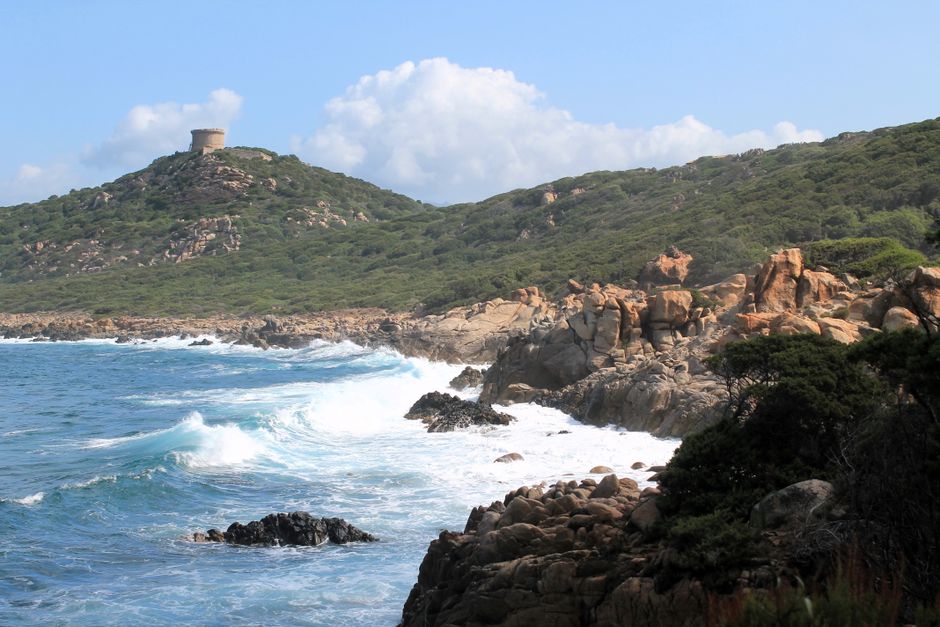
Sardinia is Italy’s island of beaches: nearly 2,000 km of coast with white sand, granite boulders and water in every shade of turquoise, from the yachts of the Costa Smeralda to hidden coves you reach on foot down a mountain path. Inland it is wild and old, a land of shepherds, cork oaks, stone towers built 3,500 years ago and villages with their own dialects, festivals and food. You come to swim, to sail around the La Maddalena islands, to hike to Cala Goloritzè, to wander the old quarters of Cagliari and Alghero, and to eat pecorino, culurgiones and roast suckling pig with a glass of Cannonau. Distances are long and roads winding, so pick one or two areas. Give it a week, ideally ten days to two weeks.
Right now in Sardinia (Cagliari)
- Wed 19–26°C 67–78°F Partly cloudy
- Thu 20–28°C 67–82°F 3 mm Showers
- Fri 19–24°C 66–74°F Clear
Weather: MET Norway (CC BY 4.0) · Sea temperature: NOAA CoastWatch · Rates: ECB
Top tours in Sardinia
See all tours for Sardinia →
From local operators, with prices and reviews; you check availability and book on Viator, our partner. We may earn a commission at no extra cost to you. How we earn money
Sardinia at a glance
- Best for: beaches and clear water, boat trips, coastal hiking, ancient nuraghi, rural food and a slower pace.
- How long: 7 days for one region (the north-east, the south or the Gulf of Orosei); 10–14 days to combine two or three.
- Best time: June and September for the sea without the August crowds; May and October for hiking and quiet beaches.
- Getting there: fly into Cagliari (CAG), Olbia (OLB) or Alghero (AHO), or take an overnight ferry from Genoa, Livorno, Civitavecchia or Naples.
- Book ahead: La Pelosa beach (€3.50, May to mid-October) and Cala Goloritzè (April to October) both have daily caps.
- Before you go: entry rules, money and safety are in our Italy travel guide.
Sardinia’s areas and who each one suits
- The north-east: Olbia, the Costa Smeralda and La Maddalena. Granite coves, luxury resorts around Porto Cervo, family-friendly San Teodoro and boat days in the La Maddalena archipelago. For beach lovers and sailors; the most expensive area in August.
- The north-west: Alghero, Stintino and Castelsardo. Alghero’s Catalan old town and sea walls, the cliffs of Capo Caccia and Neptune’s Grotto, and La Pelosa’s shallow lagoon-blue water. For couples, families and travellers without a car (Alghero is walkable).
- The east: the Gulf of Orosei and the Ogliastra. Limestone cliffs, coves reachable only by boat or on foot, the Gorropu gorge and the Supramonte mountains, with bases at Cala Gonone and Santa Maria Navarrese. For hikers and boat days.
- The south: Cagliari, Villasimius and Chia. The capital’s hilltop Castello quarter and Poetto beach, flamingos in the lagoons, and white beaches at Villasimius, Chia and Tuerredda. For a mix of city and sea, and the best flight links.
- The west and the interior. The Sinis peninsula and the Roman city of Tharros near Oristano, the old mining coast of the south-west, the nuraghe of Barumini, and the mountain villages of Barbagia around Nuoro, with Orgosolo’s murals. For culture, food and quiet roads.
Top things to see in Sardinia
Prices, booking rules and hours below were checked on the official websites of the sites and municipalities in October 2026, unless we say otherwise. They change, so check before you go.
The La Maddalena archipelago
Off the north-east tip, the seven main islands of La Maddalena and dozens of islets form a national park of pink granite, juniper and lagoon-coloured water. Ferries run in about 20 minutes from Palau to the town of La Maddalena, from where a causeway leads to Caprera, Garibaldi’s island, with beaches and walking trails. The classic outing is a full-day boat trip from Palau, Cannigione or La Maddalena around Budelli, Razzoli, Santa Maria and Spargi, with swimming stops; use operators authorised by the park. If you go by private or rented boat, buy the park’s access permit before entering its waters to navigate, anchor or stop within 300 metres of the coast.
Rules to know. The famous Spiaggia Rosa (Pink Beach) on Budelli is under full protection: you may not walk on it, swim, anchor or moor in front of it, and can only see it from a walkway built by the park. The Spiaggia del Cavaliere on Budelli is only partly open because of erosion. Cala Coticcio and Cala Brigantina on Caprera are in high-protection zones that you may only visit with an authorised environmental hiking guide. See our boat trips guide.
Cala Goloritzè and the Gulf of Orosei
Between Cala Gonone and Santa Maria Navarrese, the Gulf of Orosei is a 40 km wall of limestone cliffs broken by white-pebble coves: Cala Luna, Cala Sisine, Cala Biriola, Cala Mariolu and, most famous of all, Cala Goloritzè, with its 140-metre limestone spire and natural arch. Goloritzè is a natural monument reached only on foot, by a trail of about 1 hour 30 minutes down from the Golgo plateau above Baunei (longer on the climb back); boats must stay outside the buoys about 300 metres offshore.
Booking. From April to October access to Cala Goloritzè is by booking only, with a maximum of 250 people at a time. According to the Costa di Baunei tourism site, the ticket costs €7 per person (free for children under 6), includes the guarded car park at the trailhead and can be booked from 72 hours before your visit; the slots sell out fast in summer. Since summer 2025, landing on the Baunei coves by private or rented boat also needs a booking. Wear proper shoes and carry at least 2 litres of water each. The other coves are reached by boat tours or rented dinghies from Cala Gonone, Santa Maria Navarrese and Arbatax, from about Easter to mid-October. See our hiking guide.
La Pelosa, Stintino
At the north-western tip, La Pelosa is a shallow bay of fine white sand and pale turquoise water facing a Spanish watchtower and, across a narrow strait, a wild island that is now a national park. To protect it, the municipality of Stintino limits numbers. For the 2026 season, booking was compulsory from 15 May to 15 October, with 1,500 places a day at €3.50 per person on the official site, spiaggialapelosa.it (500 bookable at any time, 1,000 released two days before at 9:00). Children under 12 do not need to book, and QR codes are checked from 8:00 to 18:00. Use a beach mat rather than a towel (towels spread sand off the beach) and bring shade.
Su Nuraxi di Barumini
Sardinia is dotted with some 7,000 nuraghi, stone towers built by the Nuragic civilisation in the Bronze Age. The finest is Su Nuraxi at Barumini, a UNESCO World Heritage Site: a central tower and four corner towers surrounded by a village of round huts. It can only be visited on a guided tour, which leaves every 30 minutes and lasts about an hour. As of October 2026, the single ticket, which also covers the Casa Zapata museum and the Centro Giovanni Lilliu, costs €16 (€14 for ages 13–17, €12 for ages 7–12, free up to 6). In October the first tour is at 9:00 and the last at 17:30; from November to February the last tour is at 16:00. On rainy days the towers may be closed for safety and only a reduced visit is possible.
Cagliari
The capital climbs from its port to the walled Castello quarter, with the cathedral, the Bastione di Saint Remy terrace for sunset, the Elephant and San Pancrazio towers, and the National Archaeological Museum with its Nuragic bronzes and the giant statues of Mont’e Prama. Below, the Marina and Stampace quarters are full of trattorias. Poetto, an 8 km city beach, is a short bus ride away, and flamingos feed in the Molentargius lagoon behind it. See our city sightseeing guide.
Alghero and Neptune’s Grotto
Alghero was Catalan for four centuries, and its old town still has Catalan street names, sea walls and golden ramparts made for evening walks. West of town, the cliffs of Capo Caccia hide Neptune’s Grotto, a sea cave of stalactites and lakes reached by boat from Alghero’s harbour in calm seas or by the 654 steps of the Escala del Cabirol down the cliff. Check the opening times before you go, as sea conditions close the boat service.
Beaches and the sea
Sardinia’s beaches are its fame. In the north-east, try Cala Brandinchi and La Cinta near San Teodoro, Capriccioli and the Spiaggia del Principe on the Costa Smeralda, and Rena Bianca in Santa Teresa Gallura. In the south, Tuerredda, Chia and Su Giudeu, Porto Giunco at Villasimius and Cala Domestica in the south-west. On the west coast, Is Arutas on the Sinis is made of tiny quartz grains, and the dunes of Piscinas are among the highest in Europe. The water is clear enough for snorkeling almost everywhere, and the marine reserves of Tavolara, Capo Carbonara and Capo Caccia are excellent for diving. The north coast and the Gulf of Orosei can be windy when the mistral blows; on those days the south and east are usually calmer. See our beaches guide.
Do not take the sand
Taking sand, pebbles or shells from Sardinia’s beaches is illegal under a regional law, with fines that can run into the thousands of euros, and bags are checked at airports and ports. Leave everything where you found it, including at Budelli and Is Arutas.
Other things to do in Sardinia
Hike the Supramonte
Inland from the Gulf of Orosei, the limestone Supramonte holds the Gorropu gorge, one of the deepest canyons in Europe, and the hidden Nuragic village of Tiscali inside a collapsed cave. The Selvaggio Blu, a multi-day trek along the cliffs, is one of Italy’s toughest. Paths are poorly marked and water is scarce, so go with a local guide for the longer routes and avoid the midday heat in summer.
Eat and drink Sardinian
Sardinian cooking comes from the hills more than the sea: porceddu (spit-roasted suckling pig), culurgiones (potato and mint ravioli sealed like ears of wheat), malloreddus (small gnocchi), crisp pane carasau flatbread, fregola with clams, and seadas, fried cheese pastries with honey. Pecorino Sardo and fiore sardo are the island’s cheeses. Drink Cannonau reds, Vermentino di Gallura whites and a glass of myrtle liqueur (mirto) to finish. Many wineries welcome visitors; see our wine tasting guide.
Over to Corsica
From Santa Teresa Gallura, ferries cross the Strait of Bonifacio to the French island in about an hour, which makes a day in Bonifacio’s cliff-top old town easy. See our Corsica travel guide.
Nearby destinations
- Costa Smeralda129 km
- Corsica239 km
- Corsica239 km
Getting there and getting around
Flights
Sardinia has three main airports: Cagliari Elmas (CAG) in the south, with a train link to the city, Olbia Costa Smeralda (OLB) in the north-east, and Alghero Fertilia (AHO) in the north-west. All have flights from mainland Italy all year and many seasonal routes from the rest of Europe. Choose the airport closest to where you will stay: Cagliari to Olbia is about three and a half hours by road.
Ferries from the mainland
Car and passenger ferries, many overnight with cabins, link Genoa, Livorno, Piombino, Civitavecchia and Naples with Olbia, Golfo Aranci, Porto Torres, Arbatax and Cagliari. The main operators are Tirrenia, Moby, GNV, Grimaldi Lines and Corsica Sardinia Ferries. Civitavecchia–Olbia and Livorno–Olbia are the busiest routes, at roughly 6–10 hours depending on the ship. Book early for July and August, especially with a car, and compare day and night crossings.
Car or public transport?
Rent a car. The best beaches, the interior and the trailheads are hard to reach otherwise, and the roads, though winding, are quiet outside August. The main SS131 dual carriageway runs from Cagliari to Sassari and Porto Torres, with a branch to Olbia. Many beaches have paid car parks in summer, and some old town centres, such as Alghero’s and Cagliari’s Castello, have limited-traffic zones (ZTL) watched by cameras. Without a car, ARST, the regional bus company, links most towns, and trains run between Cagliari, Oristano, Sassari, Olbia and Golfo Aranci, but services are thin on Sundays and outside summer. Boat tours and seasonal beach shuttles fill some gaps. See our cycling guide if you would rather tour by bike in spring or autumn.
When to go and how long to stay
Sardinia has a Mediterranean climate: hot, dry, very sunny summers and mild, rainy winters, with wind as the wild card. The table uses the WMO 1991–2020 climate normals of the Italian Air Force station at Cagliari Elmas, in the south; Olbia, in the north-east, has very similar summers (highs about 32 °C in July and August) and slightly cooler nights in winter and spring. The interior mountains are much colder in winter and can see snow. These are long-term averages, not a forecast. The sea is warm enough for most swimmers from June to early October.
| Season | Average high / low | Rainy days per month | What it’s like | Good for |
|---|---|---|---|---|
| Winter (Dec–Feb) | 15–16 °C / 5–7 °C | 6–8 | Mild on the coast, cold and sometimes snowy inland; many resorts closed | Cagliari, food, quiet hikes |
| Spring (Mar–May) | 18–24 °C / 7–13 °C | 4–6 | Green, flowery and windy at times; sea still cool | Hiking, nuraghi, festivals |
| Summer (Jun–Aug) | 29–32 °C / 17–21 °C | 1–2 | Hot, dry and sunny; August very busy and pricey | Beaches, boat trips, snorkeling |
| Autumn (Sep–Nov) | 28 °C falling to 19 °C / 18 °C falling to 10 °C | 4 in September, 8 in November | Warm sea in September and early October, then rain | Swimming without crowds, grape harvest |
Events worth planning around
In Cagliari, the procession of Sant’Efisio starts on 1 May, with hundreds of people in traditional dress walking behind the saint’s ox-drawn cart to Nora and back over four days. The Cavalcata Sarda in Sassari (in May) and the Ardia horse race in Sedilo (6–7 July) are spectacular, and the carnival of the Barbagia, with the masked mamuthones of Mamoiada, takes place in winter. Ferragosto (15 August) is the peak of the beach season. Check each event’s dates locally, as some move each year.
7 days in Sardinia (north-east)
Fly into Olbia. Three nights around Palau or Cannigione with a boat day in the La Maddalena archipelago, a day on Caprera and a day for the Costa Smeralda beaches; then four nights at Cala Gonone or Santa Maria Navarrese for a boat trip along the Gulf of Orosei, the hike to Cala Goloritzè (booked) and the Gorropu gorge.
7 days in Sardinia (south)
Fly into Cagliari. Three nights in the city with a beach day at Poetto and a half day at Barumini; then four nights at Chia or Villasimius for the southern beaches, with a day trip to the Sinis peninsula and Tharros on the way back if you have time.
10–14 days: north to south
Olbia and La Maddalena (3 nights), the Gulf of Orosei (3 nights), Barumini and Cagliari (3 nights), then Alghero and La Pelosa (3 nights), flying into Olbia and out of Alghero or Cagliari.
Where to stay in Sardinia and the tourist tax
- Beaches and boats: Palau, Cannigione or San Teodoro in the north-east; Villasimius or Chia in the south.
- Luxury: the Costa Smeralda around Porto Cervo and Cala di Volpe.
- Hiking: Cala Gonone, Baunei or Santa Maria Navarrese on the Gulf of Orosei.
- Without a car: Cagliari or Alghero, both walkable with beaches and airport links.
- Food and countryside: an agriturismo in the hills of the Barbagia or the Gallura.
Book July and August months ahead; many coastal hotels open only from about Easter to October. Many Sardinian towns, including Cagliari, Alghero, Olbia and La Maddalena, charge a tourist tax (imposta di soggiorno) per person per night, set by each municipality and often only in the summer season; it is paid at the property.
Practical tips for Sardinia
- Book the capped beaches: La Pelosa and Cala Goloritzè fill up in summer; book as soon as slots open.
- Watch the wind: the mistral can make one coast rough and the other calm; switch beaches accordingly, and do not swim when red flags fly.
- Respect the park rules: no landing at the Spiaggia Rosa, and buy the La Maddalena park permit if you take your own boat.
- Leave the sand: taking sand, pebbles or shells is illegal and fined.
- Allow time: roads are slow and winding; plan for 50 km an hour on minor roads.
- Fire risk: in summer, never light fires or throw cigarettes; wildfire is a real danger. Emergencies: call 112.
What to pack for Sardinia
Pack swimwear, a sand-free beach mat, a beach umbrella or sun shelter (many beaches have no shade), high-factor reef-safe sunscreen, a sun hat and sunglasses, water shoes for rocky coves and a snorkel mask. For the hikes to the coves and the Supramonte, bring trail shoes with grip, a 2-litre water bottle per person and a light day pack. A windproof layer helps on boat days and windy evenings, and a light rain jacket from October to April.
Sardinia travel FAQ
How many days do you need in Sardinia?
A week for one area, such as the north-east or the south, and ten days to two weeks to combine two or three areas without spending every day driving.
Which is the best part of Sardinia for beaches?
The north-east (La Maddalena, the Costa Smeralda, San Teodoro) and the south (Chia, Tuerredda, Villasimius) have the most famous ones; the Gulf of Orosei has the most dramatic coves, reached by boat or on foot.
Do you need to book La Pelosa beach?
Yes, in season. In 2026 booking was compulsory from 15 May to 15 October on spiaggialapelosa.it, with 1,500 places a day at €3.50 per person; children under 12 do not need to book.
How do you get to Cala Goloritzè?
On foot, by a trail of about 1 hour 30 minutes from the Golgo plateau above Baunei, booked in advance from April to October (€7 per person, including parking, according to the local tourism site). Boats cannot land; you can only swim in from the buoys.
Can you visit the Pink Beach in Sardinia?
Only from a distance. The Spiaggia Rosa on Budelli is fully protected: walking on it and swimming or anchoring in front of it are forbidden, and the park has built a walkway to view it.
Do I need a car in Sardinia?
For most trips, yes. Cagliari and Alghero work without one, but the best beaches, the interior and the trailheads are hard to reach by bus.
How do you get to Sardinia by ferry?
From Genoa, Livorno, Piombino, Civitavecchia or Naples to Olbia, Golfo Aranci, Porto Torres, Arbatax or Cagliari, with Tirrenia, Moby, GNV, Grimaldi Lines or Corsica Sardinia Ferries. Many crossings are overnight.
How much does Su Nuraxi di Barumini cost?
As of October 2026, €16 for adults, including two other sites in Barumini, with reductions for ages 7–17 and free entry up to age 6. Visits are guided only and leave every 30 minutes.
Can I take sand home from Sardinia?
No. Taking sand, pebbles or shells from the beaches is illegal under regional law and is fined; luggage is checked at airports and ports.
When is the best time to visit Sardinia?
June and September for beaches with warm water and fewer crowds; May and October for hiking. August is hot, crowded and the most expensive month.
Is Sardinia or Sicily better?
Sardinia for beaches, clear water and nature; Sicily for cities, Greek temples, baroque towns and Etna. See our Sicily travel guide to compare.
Sources
- © OpenStreetMap contributors · ODbL · fetched 4 Oct 2026
- Wikidata · CC0 · fetched 4 Oct 2026
Sources and last review
Researched and last reviewed on 4 October 2026. La Pelosa booking, places and fee: the official booking site linked by the Comune di Stintino (official); La Maddalena rules on the Spiaggia Rosa, Cala Coticcio and boat permits: the La Maddalena Archipelago National Park (official); Su Nuraxi prices and hours: the Fondazione Barumini’s 2026 price list and timetable (official); climate: Italian Air Force 1991–2020 normals for Cagliari Elmas and Olbia from the WMO climate normals collection (official). The Cala Goloritzè fee and booking window come from the Costa di Baunei tourism site and are flagged as secondary; ferry crossing times, the sand law fines and event dates are general and should be checked. Prices, timetables and rules change, so check the official links before you go. For entry rules, money and general safety, see our Italy travel guide.
Plan your trip
Partner links: TravelerCenter may earn a commission if you book, at no extra cost to you.
🇮🇹 Useful Italian phrases for Sardinia
All 38 Italian phrases: restaurant, hotel, emergencies, romance (printable) →