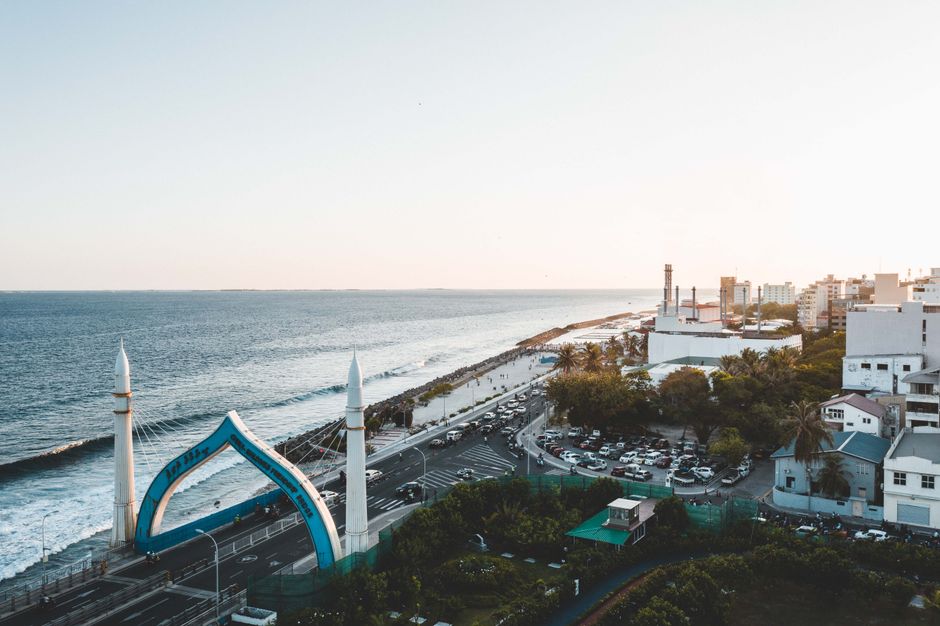
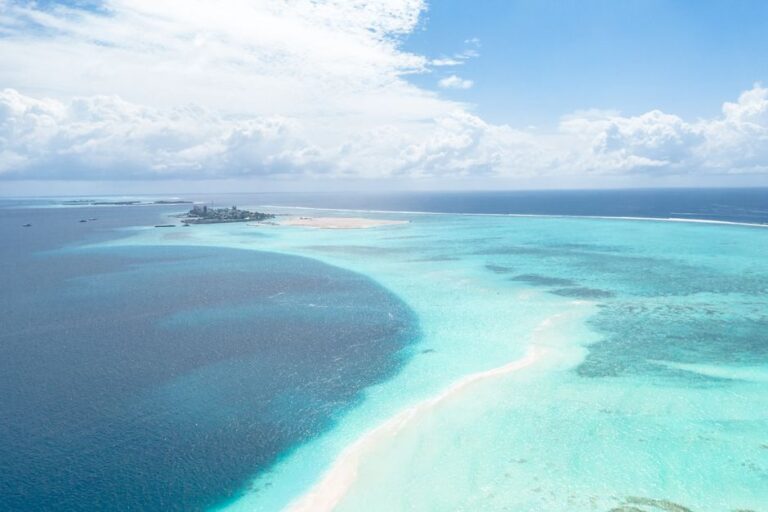
The Maldives is a chain of 26 coral atolls strung across the equator in the Indian Ocean, southwest of India and Sri Lanka: about 1,190 low islands of white sand and palm trees, ringed by reefs and turquoise lagoons, spread over some 90,000 km² (35,000 sq miles) of sea, with only about 300 km² (115 sq miles) of dry land. Its fame rests on the “one island, one resort” model, in which a single resort, often with villas on stilts over the lagoon, occupies an otherwise uninhabited island, reached by speedboat, seaplane or domestic flight. Since 2009, guesthouses on inhabited “local islands” have opened the country to travelers on smaller budgets, alongside liveaboard dive boats. Underwater, the Maldives is one of the world’s great destinations for snorkeling and diving, with manta rays, whale sharks, reef sharks, turtles and coral gardens. It is also a conservative Muslim nation, where alcohol is served only on resort islands. Most visitors get a free 30-day visa on arrival after completing an online Traveller Declaration, IMUGA; stays are taxed with a daily green tax and 17% tourism GST. The driest, sunniest months are December to April; from May to November, the southwest monsoon brings more rain, wind and swell.
Right now in Maldives
- Wed 28–30°C 82–86°F 4 mm Mostly clear
- Thu 27–29°C 80–84°F 11 mm Showers
- Fri 27–28°C 81–83°F 8 mm Showers
Weather: MET Norway (CC BY 4.0) · Air quality: OpenAQ
Multi-day tours of Maldives
Multi-day tours from local operators. You check dates and book on Viator, our partner; we may earn a commission at no extra cost to you. How we earn money
The Maldives at a glance
The Maldives is a presidential republic and the smallest country in Asia by land area. Its islands form a double chain of atolls about 870 km (540 miles) from north to south, from Haa Alif near the Indian Lakshadweep islands to Addu Atoll south of the equator, and almost all of them rise less than 2 m (6.5 ft) above sea level, making the country one of the most vulnerable in the world to sea-level rise. About 200 islands are inhabited, according to Visit Maldives, the national tourism promotion agency, and a little over half a million people live in the country, about a third of them in the crowded capital, Malé, on an island of less than 2 km² (0.8 sq miles). Some 180 islands are resorts.
The national language is Dhivehi, written in the Thaana script from right to left; English is widely spoken, especially in tourism. Islam is the state religion, and all citizens are Muslim. Maldives Time is UTC+5, with no daylight saving time, half an hour behind India. The weekend is Friday and Saturday. Electricity is 230 V, and most sockets take British-style three-pin plugs (type G), with some round two-pin sockets.
The Maldives’ atolls and regions
- Kaafu (North and South Malé atolls): the capital, Malé, the airport island of Hulhulé, the new city of Hulhumalé, dozens of resorts close to the airport and popular guesthouse islands such as Maafushi, Thulusdhoo and Dhiffushi.
- Ari Atoll (Alif Alif and Alif Dhaal): west of Malé, one of the largest atolls, with whale sharks in South Ari, manta cleaning stations, many resorts and guesthouse islands such as Rasdhoo, Ukulhas, Thoddoo and Dhigurah.
- Baa Atoll: a UNESCO Biosphere Reserve in the north, famous for the manta rays of Hanifaru Bay.
- The northern atolls: Lhaviyani, Raa, Noonu and Haa Alif and Haa Dhaal, with resorts, quieter local islands and the domestic airport of Hanimaadhoo.
- The central atolls: Vaavu, Meemu, Faafu, Dhaalu and Thaa, with channel dives, sandbanks and fewer visitors.
- The southern atolls: Laamu, Gaafu Alif and Gaafu Dhaal (Huvadhoo, one of the world’s largest atolls), Fuvahmulah, known for tiger sharks, and Addu City, with its own international airport at Gan.
Where to go: resorts, local islands and the best reefs
Your choice of atoll matters less than your choice of island and type of stay: resort, guesthouse or liveaboard. Atolls near Malé save time and transfer costs; remote atolls give more seclusion. See our guides:
- Kaafu Atoll: Malé and Hulhumalé, the resorts of North and South Malé atolls, surf breaks, and guesthouse islands within a speedboat ride of the airport.
- Ari Atoll: whale sharks year-round in the South Ari Marine Protected Area, manta rays and some of the best diving in the country.
- Baa Atoll: a UNESCO Biosphere Reserve, with hundreds of manta rays at Hanifaru Bay in the southwest monsoon season.
Other favorites include Lhaviyani and Raa in the north, for resorts and diving; Vaavu, for channel dives with sharks; Fuvahmulah, a single-island atoll with tiger sharks and thresher sharks; and Addu City, the southernmost atoll, with its own culture, cycling roads and wartime history.
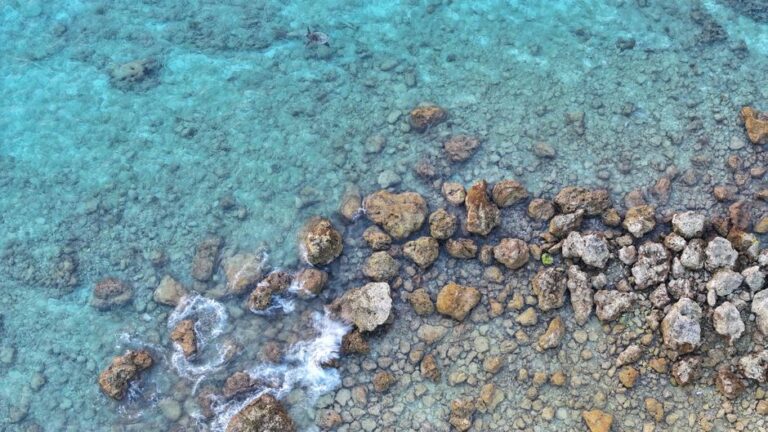
Ari Atoll Travel Guide
Plan a trip to Ari Atoll: North and South Ari, resorts and the guesthouse islands of Ukulhas, Rasdhoo, Thoddoo and Dhigurah, whale sharks in…
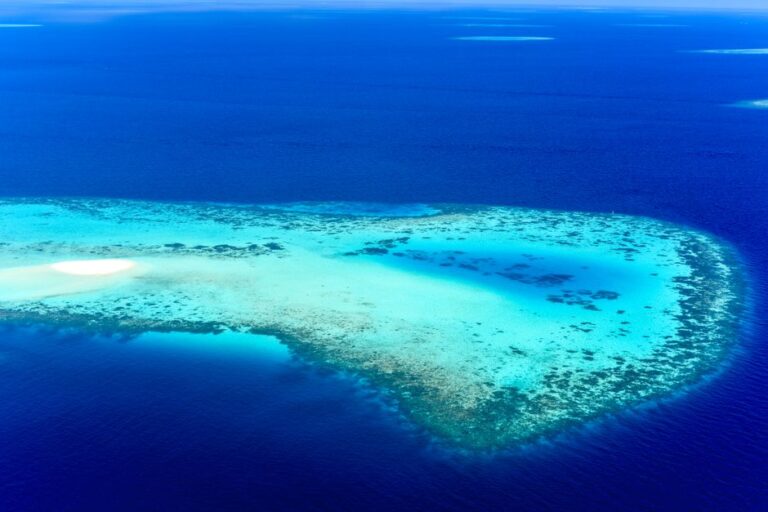
Baa Atoll Travel Guide
Plan a trip to Baa Atoll: the UNESCO Biosphere Reserve, manta rays and whale sharks at Hanifaru Bay, the snorkel-only rules and token, Dharavandhoo…
Kaafu Atoll Travel Guide
Plan a trip to Kaafu Atoll: Malé, Hulhumalé, the guesthouse islands of Maafushi and Thulusdhoo and the resorts of North and South Malé atolls,…
Resort, guesthouse or liveaboard?
Resort islands
The classic Maldives holiday is a stay on a private resort island, where everything, from meals and drinks to excursions and the spa, is provided on site. Resorts range from simple three-star islands with beach bungalows to ultra-luxury properties with overwater villas, private pools and butlers. Most offer bed and breakfast, half board, full board or all-inclusive plans; because there is nowhere else to eat, the meal plan matters as much as the room. Look at the house reef (whether you can snorkel from the beach), the transfer type and cost, and the island’s size and atmosphere: some are lively and family-friendly, others adults-only and secluded.
Guesthouses on local islands
Since the government allowed tourist accommodation on inhabited islands in 2009, hundreds of guesthouses and small hotels have opened, especially in Kaafu, Ari, Vaavu and Baa. They cost a fraction of a resort, give you a glimpse of Maldivian village life, and organize the same snorkeling, diving and sandbank trips. The trade-offs: no alcohol, modest dress in the village, swimwear only on the bikini beach, and simpler food and rooms. Many travelers combine a few nights on a local island with a few nights at a resort.
Liveaboards
Dive and surf liveaboards, boats with cabins that cruise the atolls for a week or more, are the best way to dive the Maldives’ remote channels and thilas. Most follow routes through the central atolls, such as Ari, Vaavu and Kaafu, with some trips to the far south; they serve alcohol under license.
Malé and Hulhumalé
The capital, Malé, is worth half a day for the coral-stone Old Friday Mosque (Hukuru Miskiy), built in 1658, the fish market, the local market, Sultan Park and the National Museum. Next to the airport, the planned city of Hulhumalé has hotels, a public beach and restaurants, convenient for a night before or after a flight. See our Kaafu Atoll guide.
Best time to visit the Maldives
The Maldives is hot and humid all year, with highs of 30–32 °C (86–89 °F) and nights around 25–27 °C (77–80 °F); the sea stays at about 27–30 °C (81–86 °F). The seasons are set by the monsoon winds. The northeast monsoon (iruvai), from about December to April, is the dry season, with sunshine, light winds, calm seas and the best visibility for diving on the eastern side of the atolls; it is also the peak season for prices. The southwest monsoon (hulhangu), from about May to November, brings more rain, often in short heavy showers and occasional days of storms, stronger winds and bigger swell, but also the best surf, the manta and whale shark season on the western side of the atolls, and lower prices. The south of the country, near the equator, is wetter and less seasonal than the north.
The table shows rounded averages from the 1991–2020 climate normals of the Maldives Meteorological Service, as submitted to the World Meteorological Organization (WMO), for stations from north to south.
| Area (station) | January high / low | July high / low | Rain a year | Wettest months |
|---|---|---|---|---|
| North: Hanimaadhoo (Haa Dhaal) | 31 °C (87 °F) / 24 °C (76 °F) | 31 °C (87 °F) / 25 °C (78 °F) | about 1,770 mm (70 in) | May to August |
| Central: Hulhulé, Malé airport (Kaafu) | 31 °C (87 °F) / 26 °C (79 °F) | 31 °C (87 °F) / 26 °C (79 °F) | about 1,980 mm (78 in) | May and October to November |
| Central south: Kadhdhoo (Laamu) | 31 °C (87 °F) / 25 °C (77 °F) | 32 °C (89 °F) / 25 °C (78 °F) | about 2,240 mm (88 in) | May and October to December |
| South: Gan (Addu City) | 31 °C (87 °F) / 25 °C (77 °F) | 31 °C (87 °F) / 25 °C (77 °F) | about 2,280 mm (90 in) | May and September to December |
The Maldives month by month
| Month | Weather | Highlights | Crowds and prices |
|---|---|---|---|
| January | Dry, sunny, light northeast winds | Calm seas; excellent visibility on the eastern reefs | Very high, especially around New Year |
| February | The driest month | Best beach weather; whale sharks in South Ari | Very high |
| March | Dry and hot; calm | Good diving and snorkeling; surf season begins | High |
| April | Hot; humidity rising late in the month | Calm seas; end of the dry season | High around Easter |
| May | Monsoon changes; often the wettest month in the center | Start of the manta season in Baa; surf | Lower; good deals |
| June | Showers and wind; rougher seas | Surf at its best; Hanifaru mantas | Low |
| July | Mixed sun and showers | Mantas and whale sharks on the western reefs; Independence Day (July 26) | Moderate in European school holidays |
| August | Mixed; occasional storms | Hanifaru Bay manta peak in some years | Moderate |
| September | Showers; swell | Surf; fewer visitors | Low |
| October | Wetter in the center and south | Manta season continues | Low |
| November | Transition to the dry season; showers | Diving improves late in the month | Rising |
| December | Drying out; sunny spells | Christmas and New Year peak | Very high from mid-December |
Ramadan, holidays and weekends
During Ramadan, which in 2027 is expected to begin in early February, Muslims fast from dawn to dusk; on local islands, cafés close during the day and visitors should not eat, drink or smoke in public in daytime outside resorts, while resort life continues as normal. The main public holidays are Eid al-Fitr and Eid al-Adha, Independence Day (July 26) and Republic Day (November 11). Government offices and many shops close on Fridays, especially around midday prayers.
How long to stay: sample itineraries
- 4–5 nights: a single resort in Kaafu or Ari Atoll, with a day of snorkeling or diving trips; or a guesthouse on Maafushi or Thulusdhoo with a sandbank picnic and a day trip to Malé.
- 7 nights: a resort for the whole week, or two islands: three nights in a guesthouse in Ari Atoll for whale sharks and four in a resort.
- 10–14 nights: combine a local island, a resort and a liveaboard dive cruise of the central atolls; or add Baa Atoll for Hanifaru Bay in the manta season.
- Stopover: a night or two in Hulhumalé or Malé, combined with Sri Lanka, Dubai or India.
Entry, money and costs
Visas and the IMUGA Traveller Declaration (last reviewed October 2026)
The Maldives grants a tourist visa on arrival to visitors of all nationalities who meet the entry requirements, without prior approval and free of charge; according to the UK government’s entry page, the visa is for 30 days. According to Maldives Immigration, you need a passport with a machine-readable zone valid for at least one month, a confirmed return or onward ticket, a prepaid confirmed booking at a registered tourist facility (or a sponsorship approved by Immigration) and sufficient funds for your stay, and you must meet the entry requirements of your next destination. Every traveler, including children, must submit the free online Traveller Declaration on the IMUGA portal (imuga.immigration.gov.mv) within 96 hours before arrival and show it on arrival. A yellow fever vaccination certificate is required if you arrive from or have recently passed through a country with a risk of yellow fever. Since April 15, 2025, entry has not been granted on Israeli passports. Tourist visa extensions are applied for on the IMUGA portal; since April 23, 2026, Immigration has simplified the process and aims to complete applications within 48 hours.
Taxes and fees
Room rates in the Maldives are usually quoted before tax, and the extras add up:
- Green tax: according to the Maldives Inland Revenue Authority (MIRA), from January 1, 2025, tourist resorts, hotels, tourist vessels and guesthouses charge US$12 per person per night, and hotels and guesthouses on inhabited islands with 50 or fewer rooms charge US$6.
- Tourism Goods and Services Tax (T-GST): charged at 17% on tourism goods and services since July 1, 2025, up from 16%, according to MIRA.
- Service charge: most resorts and many guesthouses add a 10% service charge, on which T-GST is also levied.
- Airport departure fee: charged on international departures and normally included in your airline ticket.
Local island rules
Guesthouses on inhabited islands are a cheaper way to see the Maldives and to meet Maldivians, but they follow local rules. Alcohol is not available: according to the UK government, alcoholic drinks are available only on resort islands, and you may not take alcohol out of your resort; it is also illegal to bring alcohol into the country, and it is confiscated at the airport. On local islands, dress modestly: cover shoulders and knees in the village, and swim in a T-shirt and shorts, except on the designated tourist “bikini beaches” that many islands with guesthouses have set aside. Nudity and topless sunbathing are not allowed anywhere. Public displays of affection are frowned upon, and during Friday prayers and Ramadan, life on local islands slows down.
Customs
According to the UK government, it is prohibited to bring into the Maldives items deemed contrary to Islam, including idols for worship, bibles for distribution, pork and pork products, and alcohol. Pornography, drugs and dangerous dogs are also prohibited. Do not take coral, shells or turtle products out of the country.
Money and cards
The currency is the rufiyaa (MVR), managed by the Maldives Monetary Authority at about 15.4 rufiyaa to the US dollar. Resorts, liveaboards and most guesthouses price in US dollars and accept credit cards, and US dollars in cash are widely accepted for tips and excursions. On local islands and in Malé, small shops and cafés use rufiyaa; ATMs are found in Malé, Hulhumalé, the airport and larger islands.
Tipping
Most bills include a 10% service charge, but tipping is customary at resorts and on liveaboards, often US$5–10 per day for your room attendant and server, more for dive guides and butlers, and a tip at the end for guesthouse staff.
What a trip costs
Prices are approximate, for October 2026, in US dollars with rufiyaa at about 15.4 to the dollar; taxes are those of MIRA.
| Item | Typical cost |
|---|---|
| Green tax, resort, per person per night | US$12 (about MVR 185) |
| Green tax, guesthouse with 50 or fewer rooms | US$6 (about MVR 92) |
| Guesthouse double on a local island, per night, before taxes | US$60–150 (about MVR 925–2,310) |
| Mid-range resort double, half board, per night, before taxes | US$350–700 (about MVR 5,400–10,800) |
| Luxury overwater villa, per night | US$1,200 and up |
| Shared speedboat from the airport to a local island in Kaafu | US$25–60 (about MVR 385–925) |
| Seaplane return transfer to a resort | US$600–1,000 (about MVR 9,240–15,400) |
| Snorkeling excursion from a guesthouse | US$30–80 (about MVR 460–1,230) |
| Two-tank boat dive | US$110–200 (about MVR 1,700–3,080) |
| Meal in a local café (rice and fish curry, hedhikaa) | MVR 60–200 (about US$4–13) |
On a guesthouse holiday, a couple can spend roughly US$150–300 a day including lodging, meals, taxes and excursions; at a mid-range resort, US$600–1,200 a day for two including meals, taxes and transfers, and much more at the top end.
Getting there and getting around
Airports
Almost all international flights land at Velana International Airport (MLE) on Hulhulé island, next to Malé, with direct flights from the Gulf (Dubai, Doha, Abu Dhabi), Istanbul, Europe, India, Sri Lanka, Singapore, Kuala Lumpur, Bangkok and China. Gan International Airport (GAN) in Addu City has a few international flights. Resort representatives meet guests in the arrivals hall.
Transfers: speedboats, seaplanes and domestic flights
How you reach your island depends on its distance from the airport and is usually arranged by your resort or guesthouse:
- Speedboats: for islands in Kaafu and parts of neighboring atolls, from about 15 minutes to 2 hours; they run day and night but can be rough in the southwest monsoon.
- Seaplanes: float planes fly from the water aerodrome on the far side of the airport island to resorts across the central atolls, in about 20 to 60 minutes, with spectacular views. They fly only in daylight, so late arrivals may need a night near the airport.
- Domestic flights: to airports such as Dharavandhoo (Baa), Maamigili (Ari), Hanimaadhoo (north), Kadhdhoo (Laamu), Kooddoo, Fuvahmulah and Gan, followed by a speedboat transfer.
- Public ferries: slow, cheap ferries run by the state transport company link Malé with many local islands on set days; shared speedboats are faster.
Liveaboards and multi-island trips
Liveaboard boats depart from Malé and Hulhumalé for cruises of a week or more, usually to Ari, Vaavu, Kaafu and, on longer routes, the southern atolls. Island-hopping between local islands is possible by public ferry and shared speedboat, but schedules are limited and rarely run on Fridays, so plan two or three islands at most and allow a spare night near the airport before your flight home.
Addu City and the south
Gan International Airport in Addu City, the southernmost atoll, has domestic flights from Malé of about 1 hour 15 minutes and a few international links. Addu’s islands are joined by a causeway road that you can cycle, and the atoll has resorts, guesthouses, wetlands at Eedhigali Kilhi and remains of the British Royal Air Force base that operated at Gan until 1976.
Malé, Hulhumalé and the bridge
The Sinamalé Bridge links Malé with the airport island and Hulhumalé, a reclaimed island city with hotels, a beach and restaurants, convenient for a first or last night. Taxis and buses run across it; ferries also link Malé and the airport.
Reefs, marine life and protected areas
The Maldives’ reefs are home to more than 1,000 species of fish and some of the largest populations of reef manta rays and whale sharks in the world. Highlights include Hanifaru Bay in Baa Atoll, a core zone of the Baa Atoll UNESCO Biosphere Reserve, where mantas gather to feed on plankton in the southwest monsoon; the South Ari Marine Protected Area, where whale sharks are seen year-round; the channel dives (kandu) of Vaavu and Ari, with gray reef sharks; and the tiger sharks of Fuvahmulah. Coral reefs were hit by mass bleaching in 1998, 2016 and 2024, and recovery varies from reef to reef. Snorkel and dive with operators who follow the rules for marine life: do not touch coral, turtles, rays or sharks, and keep your distance. See our snorkeling, diving and boat trips guides.
Diving seasons
The monsoons shape diving. From December to April, during the northeast monsoon, currents generally flow from east to west, bringing clear water to the eastern side of the atolls and plankton, mantas and whale sharks to the western side; visibility is often 25–40 m (80–130 ft). From May to November, the pattern reverses: plankton-rich water reduces visibility on the eastern side, where mantas gather to feed, and seas are rougher for crossings. Experienced local dive guides plan each day around the tides and currents.
Surfing
The Maldives’ outer reefs catch swells from the southern Indian Ocean, and according to Visit Maldives, the surf season runs from about mid-February to November, with the best conditions from March to May and from September to the end of November. North Malé Atoll has the most accessible breaks, such as Cokes, Lohis, Jailbreaks, Honky’s and Sultans, and Huvadhoo Atoll in the south has quieter, often more powerful waves. Most breaks are over shallow reef, suited to intermediate and experienced surfers; surf camps, resorts and surf charter boats run trips to the breaks. See our surfing guide.
Local island life
A stay on an inhabited island shows a side of the Maldives most resort guests never see: children cycling to school, men repairing nets and boats at the harbor, families sitting on joali (rope chairs) in the evening breeze, and football matches on the island ground at dusk. Islands are small, often walkable end to end in 20 minutes, with a mosque, a school, a few shops and tea shops serving short eats. Guesthouse owners arrange fishing trips with local fishermen, cooking lessons and visits to neighboring islands. Visit Maldives encourages visitors to respect local customs and traditions on these islands.
Responsible travel
The Maldives’ islands are among the lowest-lying in the world, and their reefs are both their defense against the sea and the basis of the tourism economy. Do not touch or stand on coral, use reef-safe sunscreen, avoid single-use plastic (many resorts and guesthouses provide refillable bottles), and never buy turtle shell, black coral or shark products. Choose excursions that respect the codes of conduct for mantas, whale sharks and dolphins. Many resorts run coral restoration and turtle programs that visitors can join.
Culture, food and everyday etiquette
Food
Maldivian cooking is based on tuna, coconut, chili, rice and breadfruit. Breakfast is often mas huni, shredded smoked tuna with grated coconut, onion, chili and lime, eaten with roshi (flatbread) and sweet tea; lunch is garudhiya, a clear fish broth, with rice, lime and chili, or a fish curry (mas riha). Tea shops sell hedhikaa, savory and sweet snacks such as bajiya (samosa-like pastries), gulha (fried tuna balls) and masroshi (stuffed bread). Resorts serve international food, often with buffets, theme nights and private sandbank dinners. Tap water is desalinated; most resorts provide filtered drinking water.
Etiquette
Maldivians are welcoming and reserved. On local islands, dress modestly, ask before photographing people, and remove your shoes before entering a home or mosque; non-Muslims may visit some mosques with permission, outside prayer times. It is illegal to publicly practice a religion other than Islam. Public displays of affection and drunkenness are offensive away from resorts. During Ramadan, avoid eating, drinking or smoking in public in daytime on inhabited islands.
Safety, health and connectivity
The Maldives is generally safe, and crime against tourists on resort islands is rare. These are the main things to know:
- Sea conditions: according to the UK government, the sea can have strong tidal currents that drag swimmers away from the shore, resulting in drownings; swim only in well-supervised areas and follow warning flags, and be especially careful near reef edges and channels and in the southwest monsoon, when swell and wind increase.
- Snorkeling and diving: use registered operators, check boats carry life jackets, and dive within your limits; many resort islands are more than an hour from the nearest hyperbaric chamber.
- Boats and transfers: speedboat transfers can be rough in bad weather; seaplanes do not fly after dark or in storms.
- Weather: flash flooding can affect low-lying islands during heavy rain; storms are most likely from May to November.
- Sun and heat: the equatorial sun is intense; use reef-safe sunscreen and drink plenty of water.
- Crime: outside the resorts, there have been incidents of gang-related violence, mainly in Malé and Hulhumalé; petty theft occurs on all islands.
- Laws: drug offenses carry very severe penalties; alcohol is restricted to resorts.
- Health: dengue fever occurs; good hospitals are in Malé and Hulhumalé, but medical care on remote islands is basic, so have insurance that covers evacuation and diving.
- Emergencies: call 119 for police, 102 for an ambulance, 118 for fire and 191 for the coast guard.
Mobile coverage from Dhiraagu and Ooredoo is good across inhabited islands and most resorts, with tourist SIM cards and eSIMs sold at the airport; resorts provide Wi-Fi.
Things to do: snorkeling, diving, sandbanks and island life
Snorkel the house reef from your villa; dive with manta rays and reef sharks; swim with whale sharks in South Ari; watch dolphins on a sunset cruise; picnic on a sandbank; surf the breaks of North Malé Atoll; take a fishing trip; explore Malé’s coral-stone Old Friday Mosque and fish market; or spend a few days on a local island, cycling its sandy streets and eating at tea shops. See our beaches, snorkeling, diving, surfing and boat trips guides, and our water shoes and travel adapters guides.
Maldives travel FAQ
Do I need a visa for the Maldives?
No advance visa is needed. Visitors of all nationalities who meet the entry requirements get a free tourist visa on arrival, for 30 days, according to the UK government’s entry page.
What is the IMUGA Traveller Declaration?
A free online form that every traveler, including children, must submit on the IMUGA portal within 96 hours before arriving in the Maldives, according to Maldives Immigration.
How much is the green tax in the Maldives?
US$12 per person per night at resorts, hotels and tourist vessels, and US$6 at hotels and guesthouses with 50 or fewer rooms on inhabited islands, since January 1, 2025, according to MIRA.
What is the T-GST rate in the Maldives?
17% on tourism goods and services since July 1, 2025, according to MIRA, usually added on top of a 10% service charge.
Can I drink alcohol in the Maldives?
Only on resort islands (and licensed liveaboard boats). Alcohol is not sold on local islands, and you cannot bring it into the country.
Can I wear a bikini on local islands?
Only on designated tourist “bikini beaches.” Elsewhere on inhabited islands, cover shoulders and knees and swim in a T-shirt and shorts.
How do I get from the airport to my resort?
By speedboat for islands near Malé, by seaplane for many resorts in the central atolls (daylight only), or by domestic flight and speedboat for distant atolls; your resort arranges the transfer.
What is the best time to visit the Maldives?
December to April, for dry, sunny weather and calm seas. May to November brings more rain and wind, but lower prices, the best surf and the manta season in Baa Atoll.
Is the Maldives expensive?
Resorts are expensive, often with costly seaplane transfers, but guesthouses on local islands start from about US$60–150 a night, and public ferries and shared speedboats are cheap.
Which atoll is best for whale sharks?
Ari Atoll, in the South Ari Marine Protected Area, where whale sharks are seen year-round.
Is it safe to swim in the Maldives?
In calm lagoons, yes, but strong currents can occur near reef edges and channels; swim in supervised areas, follow warning flags and snorkel with a buddy or guide.
Can I visit the Maldives on a budget?
Yes. Stay in a guesthouse on a local island in Kaafu or Ari Atoll, use public ferries or shared speedboats, and join group excursions.
What currency should I bring to the Maldives?
US dollars and a credit card. Resorts and guesthouses charge in dollars; the local rufiyaa is useful in Malé and local cafés.
Sources and last review
Researched and last reviewed on 4 October 2026. Visa on arrival requirements, the IMUGA Traveller Declaration and its 96-hour window, the Israeli passport ban, yellow fever certificates and the 2026 visa extension process: Maldives Immigration; the 30-day visa length, prohibited imports, alcohol on resort islands, local-island dress, drug laws, Ramadan, sea currents, hyperbaric chambers, boats, flash floods and crime: the UK government’s travel pages (factual content only); the green tax rates from January 1, 2025, and the 17% T-GST from July 1, 2025: the Maldives Inland Revenue Authority (MIRA), whose site could not be read directly for this review (rates confirmed from MIRA’s published circular titles and Public Service Media); islands, atolls and inhabited islands, whale sharks in South Ari and the Baa manta season: Visit Maldives; climate normals: the Maldives Meteorological Service, via the World Meteorological Organization (1991–2020 normals archived by NOAA’s National Centers for Environmental Information). The exchange rate, population, resort numbers, service charges, the departure fee, bikini beaches, holidays and Ramadan dates, emergency numbers, transfer times and all typical prices are general references or estimates, flagged for checking. Taxes and rules change, so check the official sites before you go.
Plan your trip
Partner links: TravelerCenter may earn a commission if you book, at no extra cost to you.