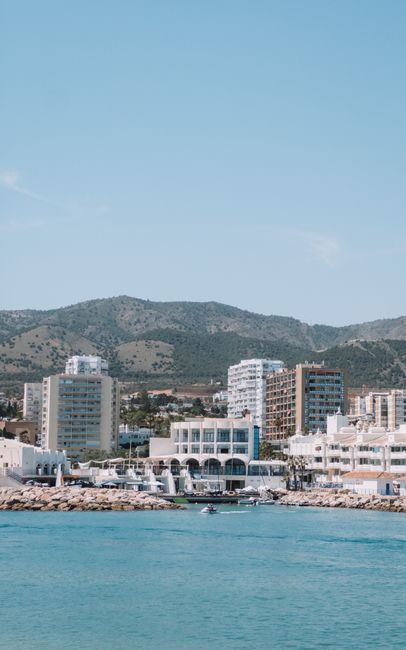
Marbella is the most glamorous town on the Costa del Sol, about 60 km west of Málaga. Behind the image of superyachts and beach clubs is a real Andalusian town: an old quarter of whitewashed lanes and flower-filled squares, a long seafront promenade, and the grey limestone peak of La Concha rising straight behind it. Puerto Banús, the famous marina, lies 6 km to the west, and the quieter district of San Pedro Alcántara beyond it. Come for the beaches, the food, the walks in the Sierra Blanca and a little people-watching; stay in the old town for character or on the Golden Mile for luxury. The best months are April to June and September to October.
Right now in Marbella
- Wed 17–24°C 62–75°F 1 mm Partly cloudy
- Thu 18–23°C 64–74°F Clear
- Fri 18–22°C 65–71°F 23 mm Showers
- Mon 12 Oct National Day of Spain (Fiesta Nacional de España)
Weather: MET Norway (CC BY 4.0) · Sea temperature: NOAA CoastWatch · Rates: ECB · Holidays: Nager.Date
Top tours in Marbella
See all tours for Marbella →
From local operators, with prices and reviews; you check availability and book on Viator, our partner. We may earn a commission at no extra cost to you. How we earn money
Marbella at a glance
- Best for: beaches and beach clubs, a pretty old town, good restaurants and nightlife, golf, mountain walks and an easy base for the western Costa del Sol.
- How long: a day trip from Málaga covers the old town and Puerto Banús; 3–5 nights let you add the beaches, La Concha and a trip to Ronda.
- Best time: April–June and September–October. July and August are hot, busy and expensive; winters are mild and quiet.
- Getting there: fly to Málaga (AGP), about 45 km away, then take Avanza’s direct coach or a taxi. There is no train to Marbella.
- Getting around: on foot along the promenade and in the old town; local buses to Puerto Banús and San Pedro; a car for the mountains and white villages.
- Before you go: entry rules, money, trains and general safety are on our Spain travel guide.
Marbella’s districts and who each one suits
The municipality stretches for some 27 km along the coast, from the dunes of Cabopino in the east to San Pedro in the west. Where you stay changes the feel of your trip.
The old town (Casco Antiguo)
The historic centre is a tangle of white lanes, potted geraniums and little squares around the Plaza de los Naranjos, with boutique hotels, tapas bars and restaurants on every corner. The beach is a 10-minute walk away through the Alameda park. The best base for first-timers, couples and anyone without a car.
The seafront and the Golden Mile
West of the centre, the Milla de Oro (Golden Mile) runs towards Puerto Banús, lined with five-star hotels, private villas and beach clubs. It is the place for luxury and service, but you will need taxis or a car to get around. The seafront east of the centre has more mid-range apartment hotels within walking distance of the old town.
Puerto Banús and Nueva Andalucía
Puerto Banús is the marina built in 1970 that made Marbella famous, with superyachts, supercars, designer shops and late-night bars. Nueva Andalucía, the hillside behind it, is full of golf courses and villas. Lively, expensive and great for nightlife; less so for a quiet stay.
San Pedro Alcántara
Marbella’s western district feels like a separate small town, with a pleasant pedestrian centre, a modern seafront boulevard and Roman and early Christian ruins nearby. Prices are lower and the atmosphere is local. Good for families and longer stays.
East Marbella and Cabopino
Towards Fuengirola, the coast is quieter, with villa developments, golf and the protected dunes of Artola beside the small marina of Cabopino. Best with a car, for travellers who want peace and space.
Top things to see in Marbella
Prices and hours below were checked on the official sites in October 2026, unless we say otherwise; check again before you go. Marbella’s best sights are mostly outdoors and free.
The Plaza de los Naranjos and the old town
The heart of the old town is the Plaza de los Naranjos, laid out in the 15th century after the Christian conquest and planted with orange trees. Around it stand the 16th-century town hall, the Casa del Corregidor with its stone façade and the little Ermita de Santiago, the town’s oldest church. From here wander to the Church of the Incarnation, with its big Baroque doorway, the remains of the Moorish castle walls, and the lanes of the Barrio Alto. Early morning and evening are the most atmospheric times.
The Alameda, Avenida del Mar and the promenade
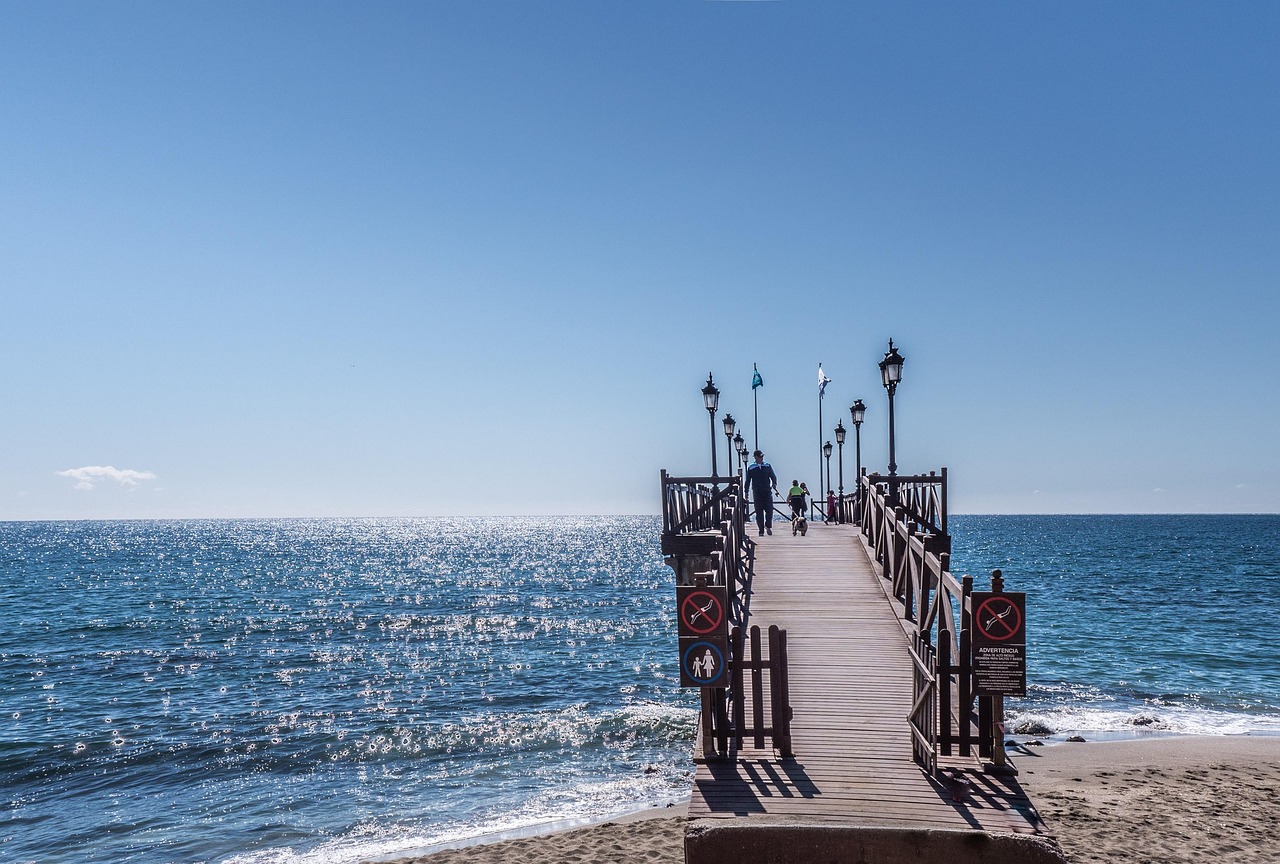
Below the old town, the shady Alameda park has benches covered in colourful tiles. It leads to the Avenida del Mar, a marble walkway to the beach lined with bronze sculptures by Salvador Dalí. The seafront promenade runs for kilometres in both directions, and you can walk or cycle it all the way to Puerto Banús, about an hour on foot.
Puerto Banús
Walk the quays of the marina to see the superyachts, then the streets of designer shops behind them. Drinks on the front row are pricey; the streets behind and the beach either side are better value. Boat trips and dolphin-watching cruises leave from the marina in season.
Roman and early Christian San Pedro
Marbella has surprising ancient remains. The Roman villa of Río Verde, between Marbella and Puerto Banús, has fine black-and-white mosaics showing kitchen utensils and food. As of October 2026 the town hall’s culture department lists it open on Fridays, Saturdays, Sundays and holidays, 10:30–13:30; entry has been free. In San Pedro, the Basilica of Vega del Mar, an early Christian church with a baptismal font, and the Las Bóvedas Roman baths can be seen on guided visits; ask at the tourist office for days.
La Concha and the Sierra Blanca
La Concha, the shell-shaped peak above town at about 1,215 m, is the classic local hike. The usual route starts from the Refugio de Juanar, up the road from Ojén, and follows a narrow ridge to the summit, with views over the whole coast to Gibraltar and Africa on clear days: allow 4–5 hours return. A harder route climbs from the Istán road. It is steep and exposed in places, so go in cool weather with good shoes and plenty of water, and avoid it in strong wind or summer heat.
More to see
- Museo del Grabado Español Contemporáneo: a print museum in a 16th-century hospital in the old town, with works by Picasso, Miró and Dalí.
- Ralli Museum: a private collection of Latin American and European art near Puerto Banús.
- Artola dunes and Cabopino: a protected natural monument of sand dunes and pines beside an old watchtower.
- Ojén and Istán: two white villages in the hills, 10–20 minutes’ drive inland, with springs, olive oil and views.
Other things to do in Marbella
Beaches and beach clubs
Marbella has more than 20 beaches of grey-gold sand, most with lifeguards in season, sunbeds and beach restaurants. La Venus and El Faro are the town beaches by the old centre; Nagüeles and Casablanca on the Golden Mile are home to the smart beach clubs; Puerto Banús beach is busy and social; and the Cabopino and Artola beaches in the east are wilder, backed by dunes. The water is calm in summer. See our beaches guide.
Boat trips, paddleboarding and diving
From Puerto Banús and the town marina, boats run coastal cruises and dolphin-watching trips, and private yachts can be chartered by the hour. Paddleboards and kayaks are for hire on many beaches, and dive centres explore the rocky reefs off the coast. See our boat trips and diving guides.
Walking, cycling and golf
Beyond La Concha, the pine woods around the Refugio de Juanar have easy loops, and the promenade is perfect for a morning run or bike ride. The hills of Nueva Andalucía and Benahavís are known as the “Golf Valley”, with many courses within a short drive. See our hiking and cycling guides.
Food and nightlife
Eat grilled sardine skewers (espetos) and fried fish at a beach chiringuito, tapas in the old town and fine dining on the Golden Mile and in Puerto Banús. Nightlife centres on the marina and the beach clubs in summer, where dinner rarely starts before 21:30.
Shopping and markets
The old town’s lanes are full of small boutiques selling linen, ceramics, leather sandals and local olive oil, while Puerto Banús and the big shopping centre beside it have the designer names. Weekly street markets move around the municipality, with fruit, clothes and household goods; the Saturday market near Puerto Banús is one of the biggest. Ask at the tourist office in the Plaza de los Naranjos for the current days and places, and go early before the heat.
Day trips and onward travel
Ronda and the white villages
Ronda, the town split by a deep gorge and joined by the 18th-century Puente Nuevo, is about an hour and a quarter inland by a winding mountain road. Combine it with white villages such as Benahavís, Casares or Gaucín.
Málaga, Granada, Gibraltar and Seville
Málaga, with its Alcazaba and Picasso museum, is under an hour by coach. The Alhambra in Granada is a long but rewarding day, about 2 hours each way by car. Gibraltar is about an hour west by road; bring your passport. Seville is best as an overnight trip. Along the coast, Estepona’s flower-filled old town and Mijas Pueblo are easy half-day outings.
Nearby destinations
Getting there and getting around
From Málaga airport
Málaga–Costa del Sol airport (AGP) is the gateway, about 45 km east. According to Aena, Avanza runs direct coaches from the arrivals floor to Marbella bus station, which sits on the ring road above town; the journey takes roughly 45 minutes to an hour. Check timetables and fares on Avanza’s site, and book ahead in summer. Taxis wait outside arrivals; agree a price or check the meter. Gibraltar airport is about an hour away for the western districts.
No train, but plenty of buses
Marbella has no railway station; the C1 coastal train from Málaga stops at Fuengirola. Avanza coaches link Marbella with Málaga, Fuengirola, San Pedro, Estepona and Algeciras, and with Seville and Granada. Local buses run along the coast between the centre, Puerto Banús and San Pedro.
Driving and the low-emission zone
A car is useful for La Concha, Ronda and the villages, less so in town, where parking is tight in summer. The A-7 coast road runs through the municipality, and the AP-7 toll motorway bypasses it. Marbella has set up a provisional low-emission zone (ZBE) in the town centre and in San Pedro that keeps out cars with no environmental label; as of the latest local reports it carries no fines until a final bylaw is passed. Spanish hire cars normally carry a label, so this rarely affects visitors, but check with your rental company and use the public car parks around the old town.
When to go and how long to stay
Marbella is sheltered by the Sierra Blanca and has a mild, sunny climate. There is no official long-term weather station in the town, so the table uses AEMET’s 1991–2020 climate normals for Málaga airport, about 45 km east along the same coast: average daily highs and lows, and days with at least 1 mm of rain. Marbella is often a degree or so milder in winter.
| Season | Average high / low | Rainy days per month | What it’s like | Good for |
|---|---|---|---|---|
| Winter (Dec–Feb) | 17–18 °C / 8–9 °C | 5–6 | Mild, sunny spells, some rainy days; many beach clubs closed | Golf, walking, the old town without crowds |
| Spring (Mar–May) | 20–25 °C / 10–15 °C | 3–5 | Warm and green; beach clubs reopen around Easter | Hiking La Concha, first swims in May |
| Summer (Jun–Aug) | 29–31 °C / 19–22 °C | 0–1 | Hot, dry and at its busiest and most expensive | Beaches, boat trips, nightlife |
| Autumn (Sep–Nov) | 28 °C falling to 20 °C / 19 °C falling to 12 °C | 2 in September, 5 in November | Warm sea in September and October; quieter from mid-October | Swimming, walking, golf |
The sea is warmest from July to September. Avoid hiking La Concha in summer heat; from October to May it is ideal.
Events worth planning around
- Easter week: processions through the old town lanes.
- June: the Feria y Fiestas de San Bernabé, Marbella’s patron saint’s fair, around 11 June.
- Summer: outdoor concerts and festivals, including the Starlite festival in a quarry above town.
- October: San Pedro Alcántara’s own fair, around its patron’s day on 19 October.
How long to stay: 1, 3 and 5 days
1 day: morning in the old town and the Plaza de los Naranjos, lunch at a beach chiringuito, then walk the promenade to Puerto Banús for the evening.
3 days: add a beach day, the Río Verde villa and San Pedro, and a boat trip or the hike up La Concha. 5 days: add Ronda and the white villages, and a day in Málaga or Gibraltar.
Where to stay in Marbella and the tourist tax
- Old town: boutique hotels with character, walkable to everything; little parking.
- Golden Mile: the big luxury resorts and beach clubs; you will need taxis.
- Puerto Banús: nightlife and shopping on the doorstep; noisy in summer.
- San Pedro: better value, local feel, family apartments.
- East Marbella: quiet resorts and villas near the dunes; best with a car.
Marbella is one of the most expensive places to stay in Andalusia in July and August, so book months ahead and compare with Estepona or Fuengirola. There is no tourist tax in Marbella or anywhere else in Andalusia as of October 2026; check again if you are booking for 2027.
Practical tips for Marbella
- Book beach clubs: the best sunbeds and restaurant tables at the famous clubs need a booking in summer.
- Walk the promenade: it is the quickest way between the centre and Puerto Banús on a nice day.
- Cover up in town: wear a shirt and a cover-up away from the beach.
- Watch your valuables: keep phones and watches out of reach in busy nightlife areas.
- Hike early: start La Concha in the morning and turn back if the wind picks up on the ridge.
- Emergencies: call 112.
What to pack for Marbella
Pack swimwear, a sun hat, sunglasses and high-factor sunscreen, plus a stylish cover-up and sandals for beach clubs and the old town. Evenings in Puerto Banús and the Golden Mile call for smart-casual clothes. For La Concha and the Juanar trails, bring proper hiking shoes with good grip, a daypack, at least 2 litres of water per person and a windproof layer for the ridge. Water shoes help on the shingle at some beaches, and a light jumper is welcome on spring and autumn evenings.
Marbella travel FAQ
How do I get from Málaga airport to Marbella?
Take Avanza’s direct coach from the arrivals floor to Marbella bus station, roughly 45 minutes to an hour, or a taxi. There is no train to Marbella.
Is Marbella worth visiting?
Yes, especially for its charming old town, long promenade and good beaches. If you want only glitz, Puerto Banús delivers; if you want a real Andalusian town, stay in the Casco Antiguo.
How far is Puerto Banús from Marbella old town?
About 6 km west: around an hour’s walk along the seafront promenade, or 15 minutes by bus or taxi.
Does Marbella have a tourist tax?
No. As of October 2026 there is no tourist tax in Andalusia, so nothing is added to your hotel bill in Marbella.
What are the best beaches in Marbella?
La Venus and El Faro by the old town for convenience, Nagüeles and the Golden Mile for beach clubs, Puerto Banús for a lively scene, and Cabopino and the Artola dunes for a wilder feel.
How hard is the La Concha hike?
From the Refugio de Juanar it is a moderate to hard walk of about 4–5 hours return, with a narrow, exposed ridge near the top. It needs a good head for heights, hiking shoes and plenty of water; avoid it in summer heat or strong wind.
Can I drive into Marbella’s centre?
Yes, if your car has a Spanish environmental label, as hire cars normally do. Marbella’s provisional low-emission zone affects cars without one. Parking is easier in the public car parks around the old town than in its lanes.
When is the best time to visit Marbella?
May, June, September and early October for warm beach days without the peak crowds and prices. Winter is mild and good for golf and walking.
Is Marbella good for families?
Yes. The beaches are long and calm in summer, the promenade is great for bikes and buggies, and San Pedro and the eastern districts have good-value family apartments.
Sources and last review
Researched and last reviewed on 4 October 2026. Río Verde Roman villa hours: Marbella town hall’s culture department; airport coach operator: Aena; climate: AEMET’s 1991–2020 normals for Málaga airport, published through the WMO. The coach journey time, the low-emission zone, free entry to the Roman villa, the absence of a tourist tax in Andalusia and event dates come from local press and other secondary sources and are flagged for checking. Prices, hours and timetables change, so check the official sites before you go. For entry rules, money and general safety, see our Spain travel guide, and for the wider coast our Málaga guide.
Plan your trip
Partner links: TravelerCenter may earn a commission if you book, at no extra cost to you.
🇪🇸 Useful Spanish phrases for Marbella
All 38 Spanish phrases: restaurant, hotel, emergencies, romance (printable) →