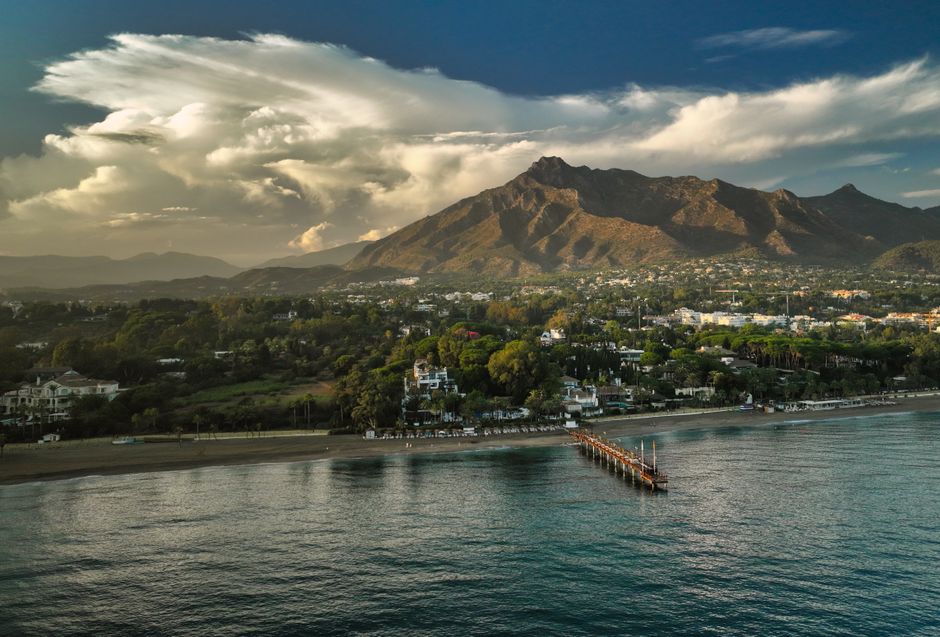
The Costa del Sol is the sunny Mediterranean coast of Málaga province, about 150 km of beaches, fishing villages turned resorts and white hill towns between Nerja in the east and Manilva, next to Sotogrande, in the west. Its gateway is Málaga, with Spain’s third-busiest airport and a local train that runs along the shore to Torremolinos, Benalmádena and Fuengirola. Further west come Marbella, with its orange-tree old town and the yachts of Puerto Banús, and Estepona, with flower-pot lanes and long beaches; to the east, Nerja’s cliffs, coves and huge cave. Behind the coast the mountains rise fast, so a short drive takes you to villages like Mijas and Frigiliana. Winters are mild and sunny, summers hot and busy, and the best months are April to June and September to October.
Right now in Costa del Sol (Fuengirola)
- Wed 16–26°C 61–78°F Partly cloudy
- Thu 16–26°C 60–79°F Clear
- Fri 17–22°C 62–72°F 17 mm Light showers
- Mon 12 Oct National Day of Spain (Fiesta Nacional de España)
Weather: MET Norway (CC BY 4.0) · Sea temperature: NOAA CoastWatch · Rates: ECB · Holidays: Nager.Date
Top tours in Costa del Sol
See all tours for Costa del Sol →
From local operators, with prices and reviews; you check availability and book on Viator, our partner. We may earn a commission at no extra cost to you. How we earn money
Costa del Sol at a glance
- Best for: easy beach holidays, winter sun, family resorts, golf, seafood on the beach, white villages and day trips to Granada, Ronda and the Caminito del Rey.
- How long: a long weekend in one resort; a week to add two or three day trips; ten days to split your stay between the east (Nerja) and the west (Marbella or Estepona).
- Best time: April–June and September–October. July and August are hot (average highs of about 31 °C at Málaga airport) and crowded; November to March is mild and the quietest time.
- Getting there: fly to Málaga–Costa del Sol (AGP). The C1 local train runs from the airport to Torremolinos, Benalmádena and Fuengirola; buses serve Marbella, Estepona and Nerja.
- Getting around: the C1 train and coastal buses for the central resorts; a hire car for the white villages, Nerja’s hinterland and the inland gorges.
- Before you go: entry rules, money, trains and general safety are on our Spain travel guide.
The Costa del Sol’s towns and who each one suits
The coast is almost continuously built up from Málaga to Marbella, but each town has its own character. Pick your base by the kind of holiday you want: lively and cheap, chic and pricey, or quiet and Spanish.
Málaga city
The provincial capital is a real city with museums, a Moorish fortress, tapas bars and city beaches, 8 km from the airport. It is the best base if you want culture as well as sea and plan to explore by train and bus. Our Málaga guide covers it in detail.
Torremolinos and Benalmádena
Torremolinos was one of the first package-holiday resorts in Spain and still has a lively, unpretentious feel, with the shopping street of Calle San Miguel, wide beaches and the old fishing quarter of La Carihuela, famous for fried fish. It is also one of Europe’s best-known LGBTQ+ destinations. Next door, Benalmádena splits into a beach area, the hill village of Benalmádena Pueblo and Puerto Marina, a marina of restaurants and boat trips. Both are close to the airport and on the C1 train, and good value for families and groups.
Fuengirola and Mijas
Fuengirola is the end of the C1 line: a busy, practical town with about 8 km of beaches, a long promenade, the hilltop Sohail castle and many long-stay residents from northern Europe. Above it, Mijas Pueblo is a white village of flower-filled lanes and viewpoints, linked by bus. Mijas Costa, along the shore, has quieter beaches and golf courses. A good choice for families and longer stays on a budget.
Marbella and San Pedro
Marbella is the glamorous heart of the western coast, with a pretty old town around the Plaza de los Naranjos, a 7 km seafront promenade, beach clubs and the luxury marina of Puerto Banús. San Pedro Alcántara, its western district, is calmer and more local. Marbella suits couples, golfers and anyone who likes good restaurants and nightlife, and it is the priciest base on the coast.
Estepona and the western end
Estepona has kept the feel of a Spanish town, with an old quarter of white lanes hung with flower pots, large murals, a long beach and a fishing port with a Sunday market. Beyond it, Casares perches on a hill and Manilva has vineyards and a marina at La Duquesa, just before the border with Cádiz province and Sotogrande. Relaxed, good for families and walkers, and close to Gibraltar.
Nerja and the eastern coast
East of Málaga, the Axarquía coast is less built up. Nerja sits on low cliffs above sandy coves, with the Balcón de Europa viewpoint, the beach of Burriana and the vast Nerja Cave. Just inland, Frigiliana is one of the most photographed white villages in Andalusia. Torre del Mar and Rincón de la Victoria are Spanish family resorts. Nerja suits couples and anyone who wants a smaller town with character; it is about an hour by bus from the airport.
Top things to see on the Costa del Sol
Prices and hours below were checked on the official sites in October 2026, unless we say otherwise; check again before you go. Many of the best things on this coast, from promenades to old towns and viewpoints, are free.
The Nerja Cave
Discovered in 1959 by five local boys, the Cueva de Nerja is a series of huge chambers filled with stalactites and stalagmites, including a column more than 30 m high, and with prehistoric paintings in areas closed to the public. A walkway leads through the show caves in about 45 minutes. As of October 2026 the cave’s official site gives online adult tickets of €16 off-season and €18 in summer and on holidays, with opening hours of 9:15–16:30 for most of the year (last entry 15:30) and longer hours in Easter week and summer. It closes on 1 and 6 January, 15 May and 25 December. The cave lies in Maro, 4 km east of Nerja, with a car park and buses from town; book online in July and August.
Nerja’s Balcón de Europa and Frigiliana
The Balcón de Europa is a palm-lined terrace jutting out over the sea in the centre of Nerja, with views of the coves on both sides and, on clear days, the mountains of the Sierra de Almijara behind. Steps lead down to the small beaches of Calahonda and El Salón. Frigiliana, 6 km uphill, is a maze of whitewashed lanes, pebble-mosaic steps and ceramic plaques telling the town’s Moorish history. Go early or late in the day, when the tour coaches have gone.
Marbella old town and Puerto Banús
Marbella’s Casco Antiguo is a compact grid of white lanes and little squares around the Plaza de los Naranjos, with its 16th-century town hall and orange trees. The Alameda park and the Avenida del Mar, lined with bronze sculptures by Salvador Dalí, lead down to the promenade. Six kilometres west, Puerto Banús is a marina of superyachts, designer shops and terrace bars: better for people-watching over a drink than for a cheap meal.
Mijas Pueblo
Perched at about 430 m on the mountainside above Fuengirola, Mijas Pueblo is the most visited white village on the coast. Walk the lanes from the Plaza Virgen de la Peña, with its little chapel carved into the rock, to the gardens by the old walls, which look down over the whole coast. Free to wander; buses run up from Fuengirola.
Estepona’s old town and murals
Estepona has turned its centre into an open-air gallery, with dozens of large murals on apartment blocks and hundreds of matching flower pots on the old-town lanes. Add the Plaza de las Flores, the ruins of the castle, the botanical orchid house and the beach of La Rada in front of town.
More to see
- Benalmádena Pueblo and Puerto Marina: a quiet white village above the resort and a marina with island-like apartment blocks and boat trips.
- Sohail Castle, Fuengirola: a restored Moorish and Christian fortress on a hill at the mouth of the Fuengirola river, used for summer concerts.
- La Carihuela, Torremolinos: the old fishermen’s quarter, with seafront restaurants serving fried fish and sardine skewers.
- Casares: a white hill village west of Estepona, with a castle ruin and wide views to Gibraltar and Africa on clear days.
- The Maro cliffs: a protected stretch of coast east of Nerja with small coves reached by steep paths, best seen by kayak.
Other things to do on the Costa del Sol
Beaches
Most beaches here are of grey-gold sand or fine shingle, with sunbeds, lifeguards in season and chiringuitos, beach restaurants grilling sardines on skewers over wood fires. The longest, flattest stretches are at Torremolinos, Fuengirola, Marbella and Estepona; the prettiest small coves are around Nerja and Maro. The sea is calmer and warmer than on the Atlantic coast, reaching about 23–24 °C in August. Many towns have bylaws against walking around away from the beach in swimwear, so cover up in town. See our beaches guide.
Boat trips, kayaking and snorkelling
Boats leave Benalmádena’s Puerto Marina, Fuengirola, Puerto Banús and Estepona for coastal cruises and, in calm weather, dolphin-watching trips. In Nerja, guided kayak tours paddle along the Maro cliffs to waterfalls and coves, with stops to snorkel. See our boat trips and snorkelling guides.
Walking and golf
The mountains behind the coast have fine walks: La Concha above Marbella, the Sierra de Mijas, and the river walk up the Río Chíllar gorge from Nerja, where you wade in the water for much of the way (summer only, check access rules locally). The Caminito del Rey, the famous walkway through a gorge inland, is about an hour from the coast and must be booked ahead. The western coast is also known for its many golf courses. See our hiking guide.
Food and evenings
Try espetos (sardines grilled on a cane skewer), pescaíto frito (mixed fried fish), ajoblanco (cold almond and garlic soup) and the sweet Málaga wines. Evenings start late: dinner rarely before 21:00, and in summer the promenades stay busy past midnight.
Day trips and onward travel
Málaga, Ronda and the Caminito del Rey
From the central resorts the C1 train takes you into Málaga for the Alcazaba, the Picasso museum and the cathedral. Ronda, on its dramatic gorge, is about an hour and a half by road from Marbella; the Caminito del Rey is easiest from Málaga by car or organised tour.
Granada, Seville and Gibraltar
The Alhambra in Granada is about 1 hour 30 minutes by road from Málaga or Nerja; book the palace tickets weeks ahead. Seville is about 2 hours by train from Málaga, better as an overnight trip. From Estepona, Gibraltar is under an hour’s drive; take your passport.
Nearby destinations
Getting there and getting around
Flying in
Málaga–Costa del Sol airport (AGP), 8 km south-west of Málaga, is the coast’s gateway, with flights from all over Europe. Gibraltar and Seville airports are alternatives for the far west and for combined trips.
The C1 coastal train
Renfe’s Cercanías C1 line is the easiest way to move along the central coast. It runs from Málaga Centro-Alameda via María Zambrano station and the airport to Torremolinos, Benalmádena-Arroyo de la Miel and Fuengirola. According to Aena, the airport station is 12 minutes from Málaga Centro-Alameda and 34 minutes from Fuengirola. Trains run about every 20 minutes from early morning to around midnight. The line does not continue to Marbella or Estepona.
Buses
According to Aena, Avanza runs direct coaches from the arrivals floor of the airport to Marbella bus station and to Estepona, and Alsa connects the airport with Nerja. Avanza’s coastal buses also link Málaga, Fuengirola, Marbella, San Pedro and Estepona, and Alsa serves Nerja from Málaga bus station. Book ahead in summer; check timetables and fares on the operators’ sites.
Driving and low-emission zones
A car is useful for the white villages and the inland gorges. The A-7 coast road is free but slow and busy; the AP-7 toll motorway runs in parallel between Málaga and Estepona. Several towns have low-emission zones (ZBE). As of October 2026, Málaga’s mobility department says cars without an environmental label that are not registered for tax in the city may not enter its zone, and that from 30 November 2026 this extends to cars with a B label; the rules have been challenged in court, so check before you drive in. Marbella has a provisional zone in its centre and San Pedro, and other towns are bringing in their own. Spanish hire cars normally carry a label; ask your rental company and use car parks on the edge of old towns.
When to go and how long to stay
The Costa del Sol has one of the mildest climates in mainland Europe: long, hot, dry summers and soft, sunny winters, with rain mainly from October to April. The table uses AEMET’s 1991–2020 climate normals for the Málaga airport weather station, in the middle of the coast: average daily highs and lows, and days with at least 1 mm of rain. Nerja and Marbella are very similar; recent summers have often been hotter.
| Season | Average high / low | Rainy days per month | What it’s like | Good for |
|---|---|---|---|---|
| Winter (Dec–Feb) | 17–18 °C / 8–9 °C | 5–6 | Mild and often sunny, cool evenings; sea too cold for most | Walking, golf, towns and villages, low prices |
| Spring (Mar–May) | 20–25 °C / 10–15 °C | 3–5 | Warm and green; Easter week processions | Day trips, hiking, first beach days in May |
| Summer (Jun–Aug) | 29–31 °C / 19–22 °C | 0–1 | Hot, dry and very busy; the terral wind can push Málaga above 38 °C | Beach, boat trips, nightlife |
| Autumn (Sep–Nov) | 28 °C falling to 20 °C / 19 °C falling to 12 °C | 2 in September, 5 in November | Warm sea in September and October; first storms | Swimming, walking, fewer crowds |
The station records about 2,840 hours of sunshine a year. The sea is warmest from July to September, and many beach bars and boat trips run from Easter to October.
Events worth planning around
- Easter week (Semana Santa): processions in every town, biggest in Málaga.
- 23 June: the Noche de San Juan, with bonfires and midnight swims on the beaches.
- 16 July: the Virgen del Carmen, patron of fishermen, carried out to sea in boat processions in many coastal towns.
- August: the Málaga Fair, a week of music and dancing in the city.
How long to stay: 3, 5 and 7 days
3 days: base yourself in one town, spend a day on the beach, a day in Málaga by train, and a morning in Mijas Pueblo or Marbella’s old town.
5 days: add Nerja, its cave and Frigiliana, and a boat or kayak trip. 7 days: add the Alhambra in Granada and Ronda or the Caminito del Rey, or split the week between Nerja and Estepona.
Where to stay on the Costa del Sol and the tourist tax
- Málaga: culture and city life with beaches; the best hub for trains and buses.
- Torremolinos and Benalmádena: lively, good value, close to the airport and on the train line.
- Fuengirola: family-friendly and practical, at the end of the C1 line.
- Marbella: upmarket hotels, beach clubs and the best restaurants; no train.
- Estepona: calmer and more Spanish, with a lovely old town.
- Nerja: small-town charm, coves and the mountains close by.
Book well ahead for July, August and Easter week, when prices rise steeply. There is no tourist tax anywhere in Andalusia as of October 2026: the regional government has not created one, although Málaga’s city council has asked for it. Check again if you are booking for 2027.
Practical tips for the Costa del Sol
- Use the train: for Torremolinos, Benalmádena and Fuengirola, the C1 is quicker and cheaper than a taxi or hire car.
- Cover up in town: Málaga and other towns fine people for walking the streets in swimwear or shirtless away from the beach.
- Beat the heat: in summer, plan sightseeing for the morning and evening; many shops close in the afternoon.
- Book popular tickets: the Nerja Cave in summer, the Caminito del Rey and the Alhambra weeks ahead.
- Watch the flags: lifeguards fly green, yellow and red flags; jellyfish appear some summers.
- Emergencies: call 112.
What to pack for the Costa del Sol
For summer, pack light cotton clothes, a swimsuit, a sun hat, sunglasses, high-factor sunscreen and a refillable water bottle; the sun is strong even in spring. Bring water shoes for the shingle beaches and Nerja’s coves, a snorkel mask, and a cover-up for walking through town. Comfortable walking shoes are essential for the steep lanes of Mijas and Frigiliana, and proper hiking shoes for the Caminito del Rey or mountain trails. From November to March add a warm jumper and a light waterproof jacket for cool evenings and the occasional rainy day.
Costa del Sol travel FAQ
Where exactly is the Costa del Sol?
It is the Mediterranean coast of Málaga province in Andalusia, from Nerja and the Axarquía in the east to Manilva in the west, next to Sotogrande in Cádiz province. Málaga city sits in the middle.
Which is the best town to stay in on the Costa del Sol?
Málaga for culture and transport, Torremolinos or Fuengirola for value and the train, Marbella for luxury and dining, Estepona for a calmer Spanish feel, and Nerja for coves and small-town charm.
How do I get from Málaga airport to the resorts?
Take the C1 train to Torremolinos, Benalmádena or Fuengirola (34 minutes to Fuengirola). For Marbella and Estepona, take Avanza’s direct coaches; for Nerja, Alsa’s buses. Taxis wait outside arrivals.
Is there a tourist tax on the Costa del Sol?
No. As of October 2026 there is no tourist tax anywhere in Andalusia, although Málaga’s city council has asked the regional government for one.
Can I swim in winter on the Costa del Sol?
Some hardy visitors do, but the sea drops to about 15–16 °C in winter. The air is mild, with average highs of 17–18 °C, so winter is better for walks, golf and sightseeing than swimming.
Do I need a car on the Costa del Sol?
Not for a beach holiday between Málaga and Fuengirola, which the C1 train covers, or for Marbella and Nerja by bus. A car helps for the white villages, Ronda and the Caminito del Rey. Check low-emission zone rules before driving into Málaga.
How much is the Nerja Cave?
As of October 2026 the official online price for adults is €16 off-season and €18 in summer and on holidays. It opens 9:15–16:30 for most of the year, longer in Easter week and summer.
What is the best month to visit the Costa del Sol?
May, June, September and October give warm beach weather without the peak crowds and prices of July and August. Winter is mild and sunny for touring.
Is the Costa del Sol good for families?
Very. The beaches are long and gently shelving, the sea is calm in summer, and Fuengirola, Benalmádena and Torremolinos have plenty of family hotels, parks and attractions close to the train line.
Sources and last review
Researched and last reviewed on 4 October 2026. Airport train times and bus operators: Aena; Nerja Cave prices and hours: the Nerja Cave Foundation’s official site; Málaga’s low-emission zone: the city’s mobility department; climate: AEMET’s 1991–2020 normals for Málaga airport, published through the WMO. The absence of a tourist tax in Andalusia, Marbella’s provisional low-emission zone, train frequency, sea temperatures and the court challenge to Málaga’s zone come from regional press and other secondary sources and are flagged for checking. Prices, hours and timetables change, so check the official sites before you go. For entry rules, money and general safety, see our Spain travel guide.
Plan your trip
Partner links: TravelerCenter may earn a commission if you book, at no extra cost to you.
🇪🇸 Useful Spanish phrases for Costa del Sol
All 38 Spanish phrases: restaurant, hotel, emergencies, romance (printable) →