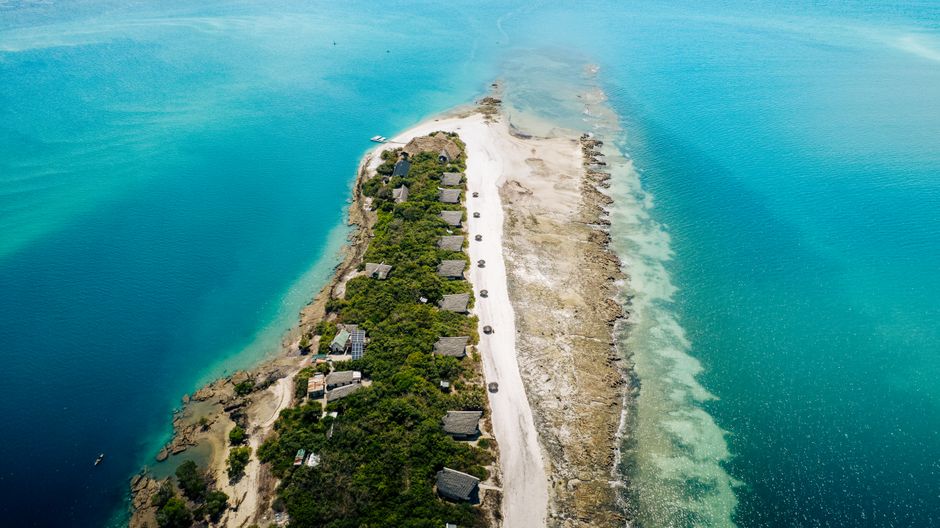
The Bazaruto Archipelago is a chain of five sandy islands in the Indian Ocean, about 15 km (9 miles) off the coast of southern Mozambique, and one of the most beautiful seascapes in Africa. Towering white dunes drop into turquoise channels, sandbanks appear and vanish with the tide, and coral reefs, seagrass meadows and mangroves teem with life. Declared a protected area in 1971, Bazaruto Archipelago National Park is Mozambique’s oldest marine park, and it shelters the last known viable population of dugongs in the western Indian Ocean, along with whale sharks, manta rays, dolphins, humpback whales and five species of nesting sea turtles. Since 2017, Mozambique’s National Administration of Conservation Areas (ANAC) has managed the park in partnership with the conservation organization African Parks. You can visit on a day trip by boat or traditional dhow from the mainland town of Vilankulo or Inhassoro, or stay at one of a handful of island lodges, from a castaway campsite to some of the most exclusive resorts in Africa. Days here are spent snorkeling over reefs, climbing dunes for the view, sailing between sandbanks and eating grilled seafood on the beach. Plan around the weather, as wind, tides and the summer cyclone season shape every trip.

Right now in Bazaruto Archipelago
- Wed 25–26°C 76–78°F 1 mm Mostly clear
- Thu 23–25°C 74–77°F 1 mm Clear
- Fri 24–25°C 75–77°F Clear
Weather: MET Norway (CC BY 4.0) · Sea temperature: NOAA CoastWatch
Top tours in Bazaruto Archipelago
See all tours for Bazaruto Archipelago →
From local operators, with prices and reviews; you check availability and book on Viator, our partner. We may earn a commission at no extra cost to you. How we earn money
Bazaruto Archipelago at a glance
- Best for: snorkeling and diving, dhow trips, giant dunes, dugongs and turtles, and quiet island luxury.
- How long: one or two day trips from Vilankulo, or 3–5 nights on an island.
- Best time: May to October for dry, sunny weather; the park says October to March is hot, humid and the cyclone season.
- Getting there: fly to Vilankulo, which has daily flights from Maputo and Johannesburg according to the park, then go by boat, dhow, light aircraft or helicopter.
- Park fees: a daily conservation fee is charged per visitor; lodges and boat operators usually collect it and include it in their prices.
- Good to know: boat trips depend on wind and tide; book with licensed operators and keep a buffer day before flights.
- Before you go: the eTA, money and general safety are in our Mozambique travel guide.
The national park, fees and rules
A marine sanctuary
African Parks says the park spans about 1,430 km² (550 square miles) of sea and islands, while Mozambique’s National Tourism Institute (INATUR) gives a figure of 1,583 km² (611 square miles) and says the park was created to protect the dugong and sea turtles. Its habitats include coastal dunes, rocky and sandy shores, coral reefs, mangroves and seagrass meadows, which the park’s visitor site says support more than 180 bird species, 45 reptile species, hundreds of fish species and more than 60 kinds of sharks and rays. It’s the only known place in the western Indian Ocean where all five of the region’s turtle species, leatherback, loggerhead, green, olive ridley and hawksbill, both occur and nest. About 7,000 people live on three of the islands, and African Parks says almost 30,000 people visited the park in 2023, with part of the income going directly to island communities.
Park fees
Every visitor to the park pays a daily conservation fee, which funds rangers, monitoring and community projects. In practice, island lodges, mainland hotels with boats and licensed activity operators collect it and include it in their prices, and the park’s official visitor site directs bookings through these partners rather than publishing a separate fee table. The amount in meticais is set by Mozambique’s conservation authorities and can change, so ask your lodge or operator whether park fees are included in the quote, and keep the receipt or wristband you’re given. Divers and anglers may pay additional activity fees. If you sail in on your own yacht, the park allows anchoring at only two places: near the northern tip of Bazaruto Island and east of Paradise Island.
Park rules
The park asks anglers to follow its codes of conduct and practice catch and release. Don’t touch, chase or feed marine animals, including dugongs, turtles and dolphins; keep boats at a slow speed and a respectful distance; don’t stand on or collect coral, shells or starfish; take all rubbish back to the mainland; and stay off the nesting beaches at night unless you’re with a guide. Some activities on the islands, such as horseback rides and community visits, are normally available only to guests staying at the island lodges.
The islands and where to stay
Bazaruto Island
Bazaruto is the largest island, about 30 km (19 miles) from the mainland, with huge white dunes, freshwater lakes, forests and long empty beaches. INATUR says visitors are greeted by “interminable” whitish dunes, with diving, snorkeling, horse and jeep rides, birdwatching and picnics on the dunes and sandbanks. The island has a luxury resort with villas along the shore and a simpler eco-lodge with a campsite and beach bungalows, and the park’s rangers have a training center here.
Benguerra Island
Benguerra, the second-largest island, lies just south of Bazaruto, with dunes, lakes, coastal forest and calm western beaches facing the mainland. It’s home to several of Africa’s most celebrated beach lodges, with private villas and cabanas, plus a beach club for day visitors. INATUR mentions flamingos gathering on the islands’ saltwater lagoons.
Magaruque, Santa Carolina and Bangué
The smaller islands are mostly visited on day trips. Magaruque, closest to Vilankulo, has a reef off its southwestern beach that’s good for snorkeling. Santa Carolina, known as Paradise Island, has coral gardens and the ruins of an old hotel. Bangué, the smallest, is little more than a strip of sand. Two of the five islands are uninhabited.
Vilankulo and Inhassoro: mainland bases
Most visitors on a budget stay on the mainland. Vilankulo has a long beach facing the islands, with guesthouses, backpacker lodges, mid-range hotels, dive centers, seafood restaurants and a kitesurfing scene; INATUR says its people are friendly and used to visitors. Inhassoro, about 70 km (45 miles) north, is a quieter fishing town that’s closer to the northern end of Bazaruto Island. The park says most mainland lodges have their own boats and run daily excursions into the park, or can book them with local operators.
Where to stay
- Luxury island lodges: private villas on Bazaruto and Benguerra, with all meals, activities and transfers; book months ahead.
- Island eco-lodge: a castaway campsite and beach bungalows on Bazaruto for a simpler island stay.
- Mid-range: beach hotels and lodges in Vilankulo and Inhassoro, with day trips to the islands.
- Budget: backpacker lodges and guesthouses in Vilankulo; dhow trips are the cheapest way to the islands.
Top things to see and do in the Bazaruto Archipelago
Snorkeling and diving
The park’s visitor site says Bazaruto has some of East Africa’s best diving and snorkeling, with some of the region’s most diverse and pristine corals. Its best-known sites are Two Mile Reef, off the southern tip of Bazaruto Island, Paradise Island and Magaruque, where you can swim with turtles, reef sharks and huge schools of fish. Some reefs can be reached by snorkelers at low tide. Visibility is usually best in the drier months. See our snorkeling and diving guides.
Dugongs and marine megafauna
Bazaruto is one of the last places on Earth where you might see a dugong, a gentle, critically endangered sea mammal that grazes on seagrass. African Parks runs a satellite-tagging project to study the population and says entanglements in fishing nets have greatly decreased thanks to ranger patrols. Sightings are rare and never guaranteed, but you have a better chance on scenic flights over the seagrass beds or boat trips with experienced guides. Whale sharks, manta rays, dolphins and, from about July to October, humpback whales also pass through the park’s waters.
Dhow safaris and sandbanks
A day on a traditional, sail-powered dhow is the classic Bazaruto experience. Trips leave Vilankulo in the morning, sail to Magaruque or Bazaruto for snorkeling, stop on a dazzling sandbank for a grilled seafood lunch and return in the late afternoon. Multi-day dhow safaris camp on the islands. Choose operators with life jackets, a backup engine and a radio. See our boat trips guide.
The dunes of Bazaruto
The great dunes on Bazaruto and Benguerra are among the most photographed sights in Mozambique. Climbing one, barefoot in the soft sand, rewards you with views over a palette of blues, greens and whites stretching to the mainland. Go early or late in the day, as the sand gets very hot.
Scenic flights
The park says the best way to see Bazaruto’s blues is from the air. Helicopter and light-aircraft flights from Vilankulo and the island lodges trace the sandbanks and channels, and pilots sometimes spot dugongs, turtles and rays below.
Other things to do
Fishing
Bazaruto’s waters are famous for sport fishing, with marlin, sailfish and other game fish. The park allows sport fishing throughout the park but asks anglers to follow its codes of conduct, including catch and release.
Horse rides and community visits
Guests at the island lodges can ride horses into the islands’ interiors to see freshwater lakes, towering dunes and shaded coastal forest, and visit one of the community centers on Bazaruto or Benguerra to meet the islands’ Xihoca communities. The park says both activities are normally available only to guests staying on the islands.
Kitesurfing in Vilankulo
The shallow lagoon and steady winds off Vilankulo make it one of Mozambique’s best places to learn kitesurfing, with schools and rental centers on the beach. See our surfing guide.
Food and drink
Seafood is the star: grilled prawns with garlic and piri-piri, crab, calamari, lobster and fresh line fish, often served on the beach or a sandbank. Try matapa, cassava leaves cooked with peanuts and coconut milk, and xima, a maize porridge. Vilankulo’s market sells cashews, coconuts and tropical fruit, and bakeries sell Portuguese-style bread rolls. Mozambican beers such as 2M and Laurentina are served everywhere.
Day trips and nearby
- Vilankulo town: the market, the old harbor and beach bars.
- Inhassoro: about an hour north; a quiet fishing town and a base for the north of Bazaruto Island.
- Tofo and Inhambane: about 4–5 hours south by road; whale sharks, manta rays and an old colonial town. See our beaches guide.
- Zinave National Park: inland from Vilankulo; a wildlife park restocked with elephants and other animals, best visited overnight.
- Kruger National Park: a short flight to Nelspruit in South Africa. See our Kruger National Park guide.
Getting there and getting around
By air
The park says there are daily flights from Maputo and Johannesburg to Vilankulo, and INATUR adds direct flights from Nelspruit, near Kruger. From Vilankulo Airport, charter flights and helicopters serve the island lodges, and taxis take you into town in a few minutes. Light aircraft usually limit baggage to about 15–20 kg (33–44 lb) in soft bags. See our Johannesburg guide for connections.
By road
By road, follow the EN1 north from Maputo through Xai-Xai and Maxixe, and turn off at Pambara for Vilankulo or at Vulanjane for Inhassoro, as the park and INATUR describe. It’s about 700 km (435 miles) from Maputo, a long day’s drive; most people break the journey at Tofo or Inhambane. Long-distance buses run from Maputo to Vilankulo.
To the islands
INATUR says that from Vilankulo or Inhassoro you cross to the park by boat. Island lodges arrange speedboat, light-aircraft or helicopter transfers for their guests, while day visitors go on motorboats or dhows run by mainland lodges and licensed operators. Crossings to Magaruque take about 30–45 minutes by speedboat; the trip to Bazaruto Island takes longer, and dhows can take a couple of hours, depending on the wind. Departure times depend on the tides, because the channels near Vilankulo are shallow at low tide.
When to go and how long to stay
The archipelago is warm all year. The park describes winter, from May to August, as warm, with cooler mornings and evenings, and summer, from October to March, as hot, humid and the cyclone season. The driest, sunniest months, roughly May to October, are best for boat trips and diving, although winds can make the sea choppy in July and August. INATUR says the hottest months, November to April, bring temperatures of 22–35 °C (72–95 °F). The table uses averages for 1961–1990 for Vilankulo, the nearest station of Mozambique’s National Meteorological Institute (INAM), as published by the World Meteorological Organization (WMO): average daily highs and lows, rainfall and days with rain.
| Month | Average high / low | Rain (rainy days) | What to expect |
|---|---|---|---|
| January | 31 °C (88 °F) / 24 °C (75 °F) | 152 mm (6.0 in), 9 days | Hot and humid; cyclone risk; turtle hatchlings |
| February | 31 °C (88 °F) / 23 °C (73 °F) | 160 mm (6.3 in), 10 days | Wettest month; cyclone risk |
| March | 31 °C (88 °F) / 22 °C (72 °F) | 80 mm (3.1 in), 9 days | Hot; rains easing |
| April | 29 °C (84 °F) / 20 °C (68 °F) | 41 mm (1.6 in), 6 days | Pleasant; calmer seas |
| May | 27 °C (81 °F) / 17 °C (63 °F) | 36 mm (1.4 in), 6 days | Dry season begins; good diving |
| June | 26 °C (79 °F) / 15 °C (59 °F) | 24 mm (0.9 in), 6 days | Sunny; cool evenings |
| July | 25 °C (77 °F) / 14 °C (57 °F) | 18 mm (0.7 in), 6 days | Coolest month; windy days; whales arrive |
| August | 26 °C (79 °F) / 16 °C (61 °F) | 23 mm (0.9 in), 4 days | Dry; humpback whales; kitesurfing |
| September | 27 °C (81 °F) / 18 °C (64 °F) | 9 mm (0.4 in), 3 days | Driest month; great visibility |
| October | 28 °C (82 °F) / 20 °C (68 °F) | 40 mm (1.6 in), 5 days | Warm; last whales; turtles start nesting |
| November | 29 °C (84 °F) / 22 °C (72 °F) | 58 mm (2.3 in), 6 days | Hot; turtle nesting |
| December | 30 °C (86 °F) / 23 °C (73 °F) | 138 mm (5.4 in), 9 days | Rains return; busy holidays |
How long to stay
- 2–3 nights in Vilankulo: one dhow day trip and one snorkeling or diving trip.
- 3–5 nights on an island: diving, dunes, horse rides and complete relaxation.
- A week: combine Vilankulo and an island, or add Tofo for whale sharks.
Typical costs
Prices are approximate, for October 2026, converted at about MZN 63.9 to the US dollar (Banco de Moçambique). Many operators quote in US dollars or South African rand.
| Item | Typical cost |
|---|---|
| Dhow day trip with snorkeling and lunch, per person | about MZN 4,500–8,000 (about US$70–125) |
| Speedboat snorkeling trip to Two Mile Reef, per person | about MZN 6,400–9,600 (about US$100–150) |
| Two-tank dive | about US$120–180 (about MZN 7,700–11,500) |
| Scenic helicopter flight, per person | about US$200–400 |
| Seafood dinner in Vilankulo | MZN 1,000–2,500 (about US$16–39) |
| Guesthouse or backpacker double in Vilankulo | MZN 2,500–6,000 (about US$40–95) |
| Mid-range beach hotel double in Vilankulo | about US$100–220 |
| Luxury island lodge, per person per night, full board | about US$700–2,000 |
Safety in the Bazaruto Archipelago
Sea conditions: the channels between the islands have strong tidal currents and can turn rough when the wind picks up; travel only with licensed operators whose boats carry life jackets, a radio and a backup engine, and don’t swim far from the boat. Snorkel with a buddy and a guide, and wear a rash vest against the strong sun. Marine life: wear water shoes on rocky shores to avoid sea urchins and stonefish, watch for jellyfish in some months, and keep your distance from wildlife. Cyclones: from about October to March, tropical storms can bring heavy rain, wind and cancelled boats or flights; follow INAM forecasts and your lodge’s advice. Malaria: the US CDC says malaria occurs in all areas of Mozambique and recommends antimalarial medicine; use repellent and nets. Sun and heat: drink plenty of water and avoid the midday sun on the dunes. Remoteness: the islands are far from hospitals, and serious cases are evacuated by air, so make sure your insurance covers evacuation. Mozambique requires a yellow fever certificate if you arrive from a country with yellow fever risk.
Practical tips for the Bazaruto Archipelago
- Check what’s included: ask whether park fees, lunch and snorkeling gear are in the price of a day trip.
- Watch the tides: boat times change daily, and low tide can mean a walk across the shallows.
- Keep a buffer day: wind can cancel crossings, so don’t plan an island trip on the day of an international flight.
- Bring cash: meticais, rand or US dollars for tips and small purchases; card machines aren’t always working.
- Pack soft bags: for light aircraft and small boats.
What to pack for the Bazaruto Archipelago
Swimwear, a rash vest or shorty wetsuit for snorkeling in the cooler months, your own mask and snorkel if you prefer, water shoes, reef-safe sunscreen, a wide-brimmed hat and polarized sunglasses, a light long-sleeved shirt, a sweater for windy boat rides and winter evenings, a dry bag for your phone and camera, insect repellent, any antimalarials and medicines, a light rain jacket in summer, soft luggage for light aircraft, and an adapter for type C and F or South African-style plugs. See our water shoes, wetsuits and travel adapters guides.
Bazaruto Archipelago travel FAQ
How do I get to the Bazaruto Archipelago?
Fly to Vilankulo, which has daily flights from Maputo and Johannesburg, then cross by boat, dhow, light aircraft or helicopter; the islands are about 15 km offshore.
Can I visit Bazaruto on a day trip?
Yes. The park is open to day visitors, and most mainland lodges in Vilankulo and Inhassoro run daily boat or dhow excursions.
Do I have to pay a park fee for Bazaruto?
Yes. Visitors pay a daily conservation fee, usually collected by your lodge or boat operator; ask whether it’s included in your price.
Can I see dugongs at Bazaruto?
Possibly. The park protects the last known viable dugong population in the western Indian Ocean, but sightings are rare; scenic flights and guided boat trips give the best chance.
Where is the best snorkeling in Bazaruto?
Two Mile Reef, Paradise Island (Santa Carolina) and Magaruque, according to the park; some reefs are reachable at low tide.
How many islands are in the Bazaruto Archipelago?
Five: Bazaruto, Benguerra, Magaruque, Santa Carolina (Paradise Island) and Bangué; three are inhabited.
What is the best time to visit Bazaruto?
May to October, when it’s dry and sunny; October to March is hot, humid and the cyclone season, according to the park.
Can I go fishing in the Bazaruto Archipelago?
Yes. Sport fishing is allowed throughout the park, following its codes of conduct, including catch and release.
Who manages Bazaruto Archipelago National Park?
Mozambique’s National Administration of Conservation Areas (ANAC), in a partnership with African Parks that began in 2017.
Is there malaria on the Bazaruto islands?
Malaria occurs in all areas of Mozambique, according to the US CDC, so take antimalarials and use repellent.
Sources and last review
Researched and last reviewed on 5 October 2026. The park’s islands, wildlife, habitats, species counts, turtles, dive sites, fishing rules, dhow trips, anchoring points, scenic flights, horse rides, community visits, day-visitor access, distance from the coast, flights to Vilankulo, road access and seasons: the park’s official visitor site, run by African Parks; area, 1971 declaration, inhabitants, the 2017 management partnership, visitor numbers, community income and dugong research: African Parks; the 1971 creation, districts, islands, area, purpose, activities, flamingos, Vilankulo’s airport and flights, road route and hot-season temperatures: Mozambique’s National Tourism Institute (INATUR); malaria and yellow fever: the US CDC; climate averages: the National Meteorological Institute (INAM) via the World Meteorological Organization (Vilankulo station); the exchange rate: the Banco de Moçambique. The park fee amount, crossing times, Magaruque’s reef location, the ruined hotel, Inhassoro distance, the road distance from Maputo, baggage limits, whale and turtle months, marine hazards and typical prices are general references or estimates, flagged for checking. Fees and rules change, so check with your lodge or operator before you go. For the eTA, money and general safety, see our Mozambique travel guide.
Plan your trip
Partner links: TravelerCenter may earn a commission if you book, at no extra cost to you.
🇵🇹 Useful Portuguese phrases for Bazaruto Archipelago
All 38 Portuguese phrases: restaurant, hotel, emergencies, romance (printable) →