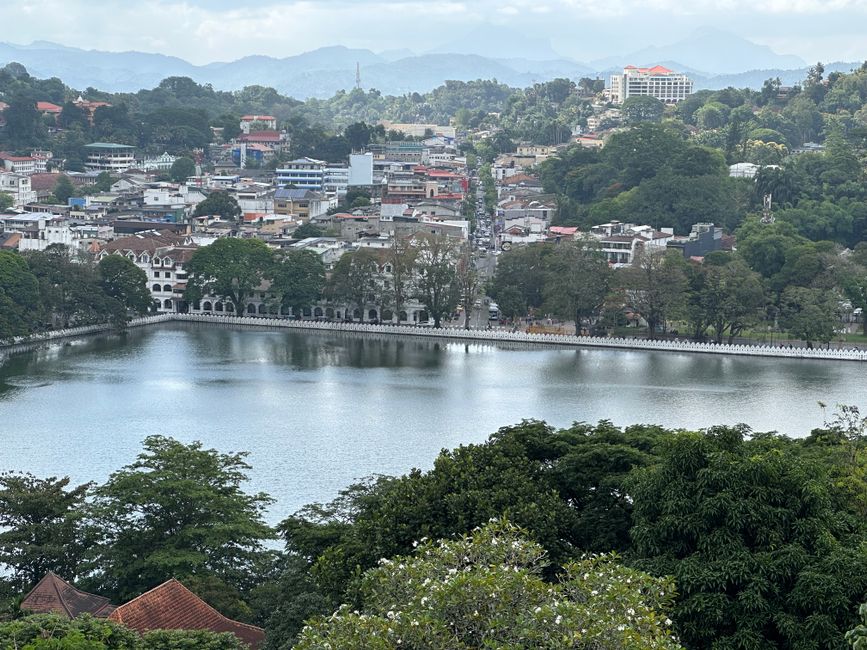
Kandy was the capital of the last Sinhalese kingdom, which held out against the Portuguese and the Dutch until the British took it in 1815, and it remains the cultural and spiritual heart of Sri Lanka. The city sits at about 500 m (1,640 ft) in a bowl of forested hills around a lake built by its last king, and on the lakeshore stands the Temple of the Sacred Tooth Relic (Sri Dalada Maligawa), which enshrines a tooth of the Buddha and is the most sacred Buddhist site in the country. UNESCO inscribed the Sacred City of Kandy as a World Heritage Site in 1988. Kandy is also the gateway to the hill country, with the great Royal Botanic Gardens at Peradeniya just outside the city, tea estates and village temples in the hills around it, and, every July or August, the Esala Perahera, a ten-night procession of drummers, dancers and caparisoned elephants. It is a busy, traffic-filled town, but early mornings by the lake and evening ceremonies at the temple are unforgettable. Note that after Cyclone Ditwah in November 2025 the railway into Kandy was still being repaired in October 2026.
Right now in Kandy
- Wed 21–30°C 69–86°F 12 mm Heavy rain
- Thu 21–29°C 69–85°F 15 mm Heavy rain
- Fri 21–29°C 69–84°F 43 mm Heavy rain
Weather: MET Norway (CC BY 4.0)
Top tours in Kandy
See all tours for Kandy →
From local operators, with prices and reviews; you check availability and book on Viator, our partner. We may earn a commission at no extra cost to you. How we earn money
Kandy at a glance
- Best for: the Temple of the Tooth, Buddhist culture, the botanic gardens, Kandyan dance, the Esala Perahera and day trips into the hills.
- How long: 2 days for the city and Peradeniya; 3 with temples in the hills or the Knuckles range.
- Best time: January to April, when it is mostly dry; the Esala Perahera is in July or August (August 18–28 in 2026); October and November are the wettest months.
- Getting there: about 3–4 hours by road from Colombo or the airport; in October 2026 trains from Colombo ran only to Peradeniya, about 6 km (4 miles) away, while the last section was restored.
- Getting around: on foot around the lake and center, and by tuk-tuk, PickMe or Uber.
- Fees to know: 3,000 rupees for foreign adults at the Temple of the Sacred Tooth Relic, including its museums.
- Before you go: the ETA, the free-visa list, money and general safety are in our Sri Lanka travel guide.
Kandy’s areas and where to stay
Kandy is compact at its core, between the lake and the market, but its hotels spread up the surrounding hillsides, often with views and steep roads.
The city center and the lake
The grid of streets between the clock tower, the Kandy Market and the lake holds banks, shops, cafés and bakeries, with the Temple of the Tooth on the lake’s northern shore. Staying here puts the temple and dance shows within walking distance, but the center is noisy and congested by day.
Around the lake and the hills above it
Guesthouses and hotels line the roads climbing above the lake, especially along Saranankara Road and the slopes toward Rajapihilla, with views over the water and the temple; they are quieter, a 10- to 20-minute walk or a short tuk-tuk ride from the center.
Peradeniya and the outskirts
Southwest of the city, around the University of Peradeniya and the botanic gardens, and in the hills toward Hantana and along the Mahaweli River, larger resorts and boutique hotels offer space, pools and greenery, best with a car or tuk-tuks.
Where to stay in Kandy
- City center: budget hotels near the temple and market.
- Above the lake: guesthouses and mid-range hotels with views, the most popular choice.
- Hantana and the hills: boutique hotels and tea-estate bungalows, cool and quiet.
- Along the Mahaweli River: resorts outside town, best for longer stays.
Prices soar and rooms sell out months ahead during the Esala Perahera; book early if you plan to be there.
Top things to see in Kandy
The Temple of the Sacred Tooth Relic (Sri Dalada Maligawa)
The temple complex on the lakeshore, with its octagonal pavilion (the Pattirippuwa), moat and golden-roofed shrine, enshrines the tooth relic, which has been the symbol of royal authority in Sri Lanka for centuries. The relic itself is kept in a gold casket inside a series of nested caskets and is not shown to visitors, but you can approach the shrine room during the three daily thevawa (services), when drummers play and devotees bring flowers: according to the temple, these are held from 5:30 to 7 a.m., 9:30 to 11 a.m. and 6:30 to 8 p.m., and the temple is open daily from 5:30 a.m. to 8 p.m. The ticket for foreign visitors includes the Dalada Museum, the World Buddhist Museum, the Tusker Museum, with the stuffed body of the famous elephant Raja, and the Royal Elephant Stable. The old Royal Palace and the Audience Hall stand beside the temple.
Temple tickets and rules
According to the temple, foreign visitors pay 3,000 rupees (about US$9); citizens of South Asian (SAARC) countries, Thailand and Myanmar pay 2,500 rupees. Tickets are issued only by machines inside the temple, and tickets sold by anyone else are not valid. Everyone is screened at the entrance; leave shoes and bulky bags at the reception booths, and do not bring plastic bags. Shorts, sleeveless tops and revealing clothes are not allowed, though suitable clothing is available at the entrance; white clothes are traditional. Be quiet and respectful, and never pose with your back to a Buddha image.
Kandy Lake
The ornamental lake, created in 1807 by Sri Wickrama Rajasinghe, the last king of Kandy, is ringed by a walking path of about 3.5 km (2 miles) shaded by trees and edged by a low, cloud-patterned wall. Walk it early in the morning, when it is cool and quiet, and look for monitor lizards, cormorants and fruit bats.
The Royal Botanic Gardens, Peradeniya
About 6 km (4 miles) southwest of the center, on a loop of the Mahaweli River, Sri Lanka’s largest botanic gardens cover about 60 hectares (150 acres), with an avenue of royal palms, a great Javan fig tree, an orchid house, a spice garden and a giant bamboo grove. Allow half a day.
Kandyan dance
Shows of Kandyan dance, the island’s classical dance tradition, with drummers, acrobatic dancers in silver costumes and, at the end, fire-walking, are held every evening at several cultural centers near the lake, usually around 5 or 5:30 p.m. They are touristy but colorful and a good prelude to the evening service at the temple.
More classic sights
- Bahirawakanda Vihara Buddha: a giant white Buddha on a hill above the city, with wide views.
- Udawattakele Forest Reserve: a forest sanctuary behind the temple, once the royal pleasure garden, with walking trails and birds.
- Ceylon Tea Museum: in a former tea factory at Hantana, about 4 km (2.5 miles) south, with old machinery and a tea room.
- Kandy Market: a lively covered market of spices, fruit and textiles near the clock tower.
- Arthur’s Seat viewpoint: above the lake, for the classic view over the temple and the town.
- St. Paul’s Church and the British Garrison Cemetery: colonial-era landmarks near the temple.
Other things to do in Kandy
Food and drink
Eat rice and curry at local lunch spots in the center, short eats (snacks such as patties, rolls and vadai) from the bakeries, and Kandyan sweets such as kalu dodol, a dark, sticky coconut and jaggery confection. Hotels on the hills serve buffets of Sri Lankan curries in the evening, and the center has a few cafés, bars and international restaurants, though nightlife is quiet. As everywhere in Sri Lanka, alcohol is not sold on poya (full-moon) days.
The Esala Perahera
Kandy’s great festival honors the tooth relic and the island’s guardian deities. According to the temple, in 2026 the Kumbal Perahera ran on the nights of August 18 to 22 and the grander Randoli Perahera from August 23 to 27, ending with the water-cutting ceremony (Diya Kepeema) and a day procession on August 28. Dates follow the lunar calendar and change each year, usually falling in July or August. Seats in grandstands along the route are sold by hotels and agencies; the streets are packed, and accommodation is booked out far in advance.
Temples in the hills
West of Kandy, three 14th-century temples make a classic half-day loop by tuk-tuk or car: Embekke Devale, famous for its carved wooden pillars; Lankatilaka Vihara, on a rocky outcrop with fine views; and Gadaladeniya Vihara, with South Indian-style stonework.
Hiking
The Knuckles Mountain Range, part of the UNESCO-listed Central Highlands, rises northeast of Kandy, with cloud forest, waterfalls and village trails best walked with a local guide. Closer to town, Udawattakele and the Hantana hills offer shorter walks. See our hiking guide.
Day trips from Kandy
- Dambulla and Sigiriya: the cave temple at Dambulla, about 2 hours north, and Sigiriya Rock, about 2.5–3 hours; better with a night. See our Sigiriya guide.
- Nuwara Eliya and the tea country: about 2.5–3 hours by a winding road past waterfalls and tea factories. See our Nuwara Eliya guide.
- Pinnawala and the Kegalle area: the government elephant orphanage, about 1.5 hours west; check how the animals are kept before visiting.
- Knuckles Range: day hikes from the villages on its slopes, about 2 hours by road.
- Matale: the spice gardens and the colorful Hindu Sri Muthumariamman temple, about 45 minutes north.
Nearby destinations
- Nuwara Eliya39 km
- Ella64 km
- Sigiriya75 km
- Colombo95 km
- Yala National Park126 km
- Galle148 km
- Mirissa151 km
Getting there and getting around
By road
Kandy is about 115 km (70 miles) from Colombo and about 100 km (62 miles) from the airport at Katunayake. By car, the drive takes 3–4 hours, depending on traffic; the Central Expressway shortens the first part of the journey. Air-conditioned and ordinary buses run frequently from Colombo, and most visitors traveling around the island hire a car with a driver. Kandy’s main bus stands are near the clock tower and the railway station.
By train
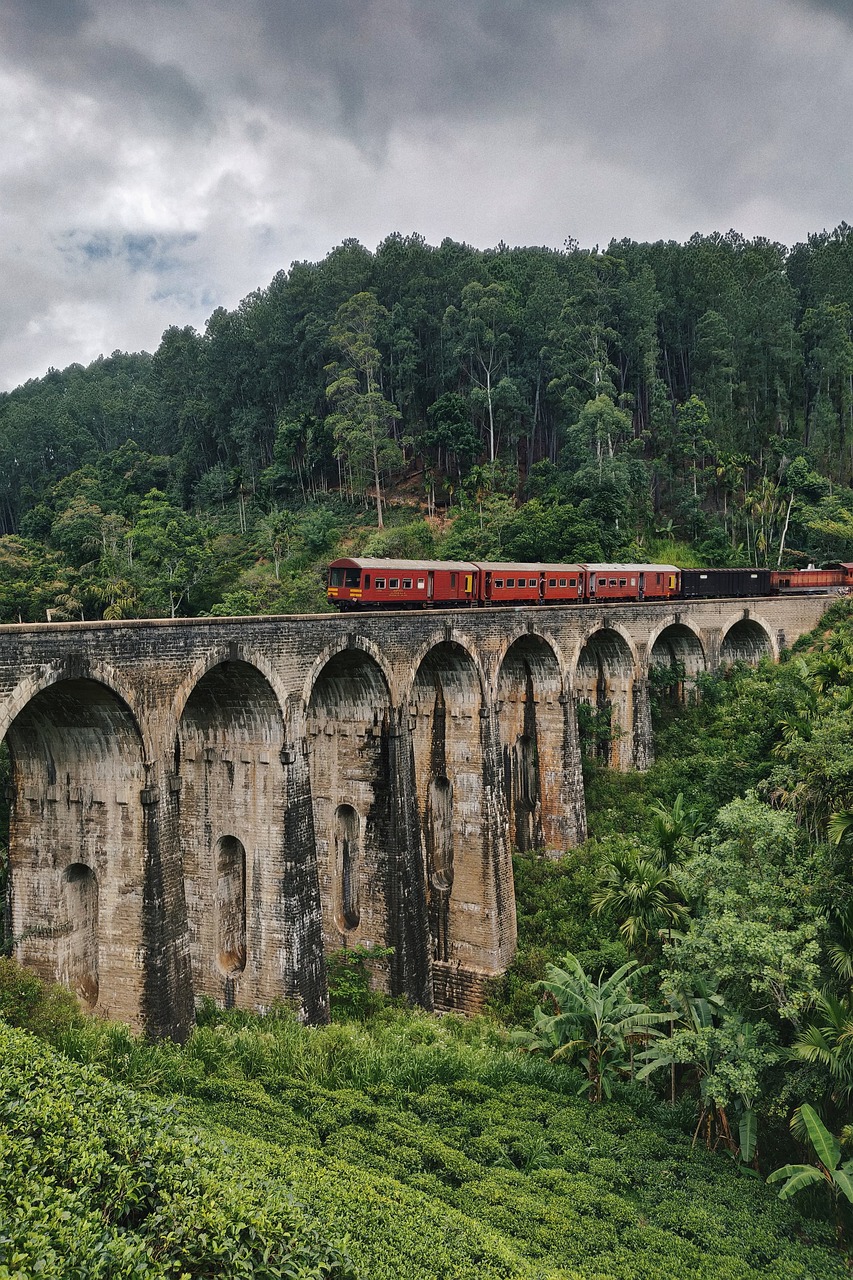
Kandy is on the Main Line from Colombo, and before Cyclone Ditwah it was also the start of the famous hill-country ride to Nanu Oya and Ella. The cyclone damaged the line in November 2025. In early October 2026, local media reported, citing Sri Lanka Railways, that trains from Colombo had resumed to Peradeniya (about 6 km from the center) and Gampola, but that the Peradeniya–Kandy section was still closed while a bridge was repaired, and the line from Gampola through Hatton to Nanu Oya was also still being restored. Trains between Nanu Oya and Badulla, via Ella, have run since June 20, 2026, according to Sri Lanka Railways. Until the whole line reopens, the usual way to Ella is by road to Nanu Oya or Nuwara Eliya, about 2.5–3 hours, then by train, or by car all the way in about 5–6 hours. Check the current timetable before you go.
Around the city
The center and the lake are walkable. Tuk-tuks go everywhere; agree on a fare or use PickMe or Uber. Local buses run to Peradeniya and the outskirts. Traffic in the center can be very slow at rush hours.
When to go and how long to stay
At about 500 m (1,640 ft), Kandy is a little cooler than the coast, with warm days and mild nights. January to April is mostly dry, with the warmest days in March and April. The southwest monsoon brings showers from May to September, and the heaviest rain comes with the inter-monsoon storms of October and November. The table uses the 1991–2020 climate normals for the Department of Meteorology’s station at Katugastota, on the northern edge of Kandy, as submitted to the World Meteorological Organization (WMO): average daily highs and lows, total rain, and days with at least 1 mm of rain.
| Month | Average high / low | Rain (days with 1 mm or more) | What to expect |
|---|---|---|---|
| January | 29 °C (83 °F) / 19 °C (66 °F) | 103 mm (4.1 in), 8 days | Mostly dry; cool mornings; Duruthu full moon |
| February | 30 °C (86 °F) / 19 °C (66 °F) | 78 mm (3.1 in), 6 days | Dry and pleasant |
| March | 32 °C (90 °F) / 20 °C (68 °F) | 98 mm (3.8 in), 7 days | Warm and dry; the warmest month |
| April | 31 °C (89 °F) / 21 °C (71 °F) | 189 mm (7.4 in), 13 days | Afternoon storms; New Year holidays |
| May | 30 °C (86 °F) / 22 °C (71 °F) | 141 mm (5.6 in), 10 days | Showers begin; Vesak |
| June | 29 °C (83 °F) / 22 °C (71 °F) | 124 mm (4.9 in), 14 days | Showery and breezy |
| July | 28 °C (83 °F) / 22 °C (71 °F) | 108 mm (4.3 in), 12 days | Showers; Perahera some years |
| August | 28 °C (83 °F) / 21 °C (70 °F) | 95 mm (3.8 in), 11 days | Showers; Esala Perahera (in 2026) |
| September | 29 °C (84 °F) / 21 °C (69 °F) | 124 mm (4.9 in), 12 days | Mixed sun and showers |
| October | 29 °C (84 °F) / 21 °C (69 °F) | 303 mm (11.9 in), 18 days | The wettest month; landslide risk in the hills |
| November | 29 °C (84 °F) / 20 °C (69 °F) | 269 mm (10.6 in), 16 days | Very wet; cyclone risk |
| December | 28 °C (82 °F) / 20 °C (68 °F) | 204 mm (8.0 in), 13 days | Drying later in the month |
Katugastota gets about 1,840 mm (72 in) of rain a year.
Two days in Kandy
Day one, a morning walk around the lake, the Temple of the Tooth and its museums, lunch in the center, the market, a Kandyan dance show and the evening service at the temple. Day two, the Royal Botanic Gardens at Peradeniya in the morning, the Ceylon Tea Museum or the Embekke, Lankatilaka and Gadaladeniya temples in the afternoon, and sunset at Arthur’s Seat or the Bahirawakanda Buddha.
Three days
Add a guided hike in the Knuckles Range, or a day trip to Dambulla and Sigiriya on your way north.
What a trip to Kandy costs
Prices are approximate, for October 2026, converted at about 330 rupees to the US dollar.
| Item | Typical cost |
|---|---|
| Temple of the Sacred Tooth Relic, foreign adult | 3,000 LKR (about US$9) |
| Royal Botanic Gardens, Peradeniya, foreign adult | about 3,000 LKR (about US$9) |
| Kandyan dance show | 1,500–2,500 LKR (about US$4.50–7.50) |
| Rice and curry lunch | 600–1,200 LKR (about US$1.80–3.60) |
| Dinner at a hillside hotel | 3,000–7,000 LKR (about US$9–21) per person |
| Tuk-tuk across town | 300–800 LKR (about US$0.90–2.40) |
| Car with driver to Nuwara Eliya | 12,000–18,000 LKR (about US$36–55) |
| Mid-range hotel double, per night | 12,000–30,000 LKR (about US$36–90) |
Practical tips for Kandy
- Go to the evening service: the 6:30 p.m. thevawa at the Temple of the Tooth, with drums and flowers, is the most atmospheric time to visit.
- Dress in white or modest clothes: cover shoulders and knees, and take socks for hot stone floors.
- Buy tickets only from the machines: the temple says tickets sold elsewhere are not valid.
- Avoid rush hour: the center jams in the morning and late afternoon; walk where you can.
- Plan around the railway: check whether the Kandy line has reopened before booking any train.
- Book early for the Perahera: hotels and grandstand seats sell out months ahead.
Safety
Kandy is safe and friendly, and crime against visitors is low. The main hazards are traffic and the weather: streets are narrow and congested, with few sidewalks in places, and tuk-tuks drive fast on the hill roads. From October to December, and during the southwest monsoon, heavy rain can trigger landslides in the hills around the city; Cyclone Ditwah caused deadly landslides in the Central Province in November 2025. Follow Department of Meteorology forecasts and Disaster Management Center warnings, and avoid hill roads during heavy rain. Touts may offer guided tours or gem-shop visits; politely decline. During the Esala Perahera, crowds are dense; keep valuables close. In an emergency, call 119 for police and 1990 for the Suwa Seriya ambulance.
What to pack for Kandy
Light clothes and a light sweater for cool evenings, white or modest clothing that covers shoulders and knees for the temple, socks for hot temple floors, an umbrella or rain jacket, comfortable walking shoes for hills and the botanic gardens, and insect repellent. Sri Lanka uses 230 V, with British three-pin (type G) and round-pin (type D) sockets. See our rain jackets, hiking shoes and travel adapters guides.
Kandy travel FAQ
How much is the ticket to the Temple of the Tooth?
3,000 rupees for foreign visitors, according to the temple; 2,500 rupees for citizens of SAARC countries, Thailand and Myanmar. It includes the temple’s museums.
What time is the Temple of the Tooth open?
Daily from 5:30 a.m. to 8 p.m. The main services are from 5:30 to 7 a.m., 9:30 to 11 a.m. and 6:30 to 8 p.m.
What should I wear to the Temple of the Tooth?
Clothes covering shoulders and knees; shorts and sleeveless tops are not allowed. Shoes are left at the entrance, and white is traditional.
When is the Kandy Esala Perahera?
In July or August, following the lunar calendar. In 2026, it ran from August 18 to 28, with the main Randoli processions from August 23 to 27.
Can I take the train from Kandy to Ella?
Not directly in October 2026. The line was still being repaired after Cyclone Ditwah; trains run from Nanu Oya to Ella, so most visitors drive from Kandy to Nanu Oya and take the train from there.
How do I get from Colombo to Kandy?
By road in about 3–4 hours. Trains from Colombo were running to Peradeniya, near Kandy, in October 2026 while the last section was repaired.
How many days do I need in Kandy?
Two days for the temple, the lake, Peradeniya and a dance show; three with temples in the hills or a hike.
What is the best time to visit Kandy?
January to April, when it is mostly dry. October and November are the wettest months.
Is Kandy worth visiting?
Yes. The Temple of the Tooth is Sri Lanka’s most sacred site, and the botanic gardens, lake and hills make it a pleasant stop between the Cultural Triangle and the tea country.
How far is Peradeniya from Kandy?
About 6 km (4 miles), 15–20 minutes by tuk-tuk or bus.
Sources and last review
Researched and last reviewed on 4 October 2026. Temple fees, opening hours, service times, ticket and dress rules and the 2026 Esala Perahera dates: the Temple of the Sacred Tooth Relic (sridaladamaligawa.lk); the Nanu Oya–Badulla train resumption: Sri Lanka Railways, with the October 2026 Peradeniya and Gampola resumptions and the Kandy line status from local media citing the railway; climate normals: Sri Lanka’s Department of Meteorology via the World Meteorological Organization’s 1991–2020 normals; exchange rate: the Central Bank of Sri Lanka. The UNESCO inscription year, history and dates, distances, the botanic gardens’ area and price, dance-show times and other typical prices are general references or estimates, flagged for checking. Prices and hours change, so check the official sites before you go. For entry rules, money and general safety, see our Sri Lanka travel guide.
Plan your trip
Partner links: TravelerCenter may earn a commission if you book, at no extra cost to you.
🇱🇰 Useful Sinhala phrases for Kandy
All 38 Sinhala phrases: restaurant, hotel, emergencies, romance (printable) →