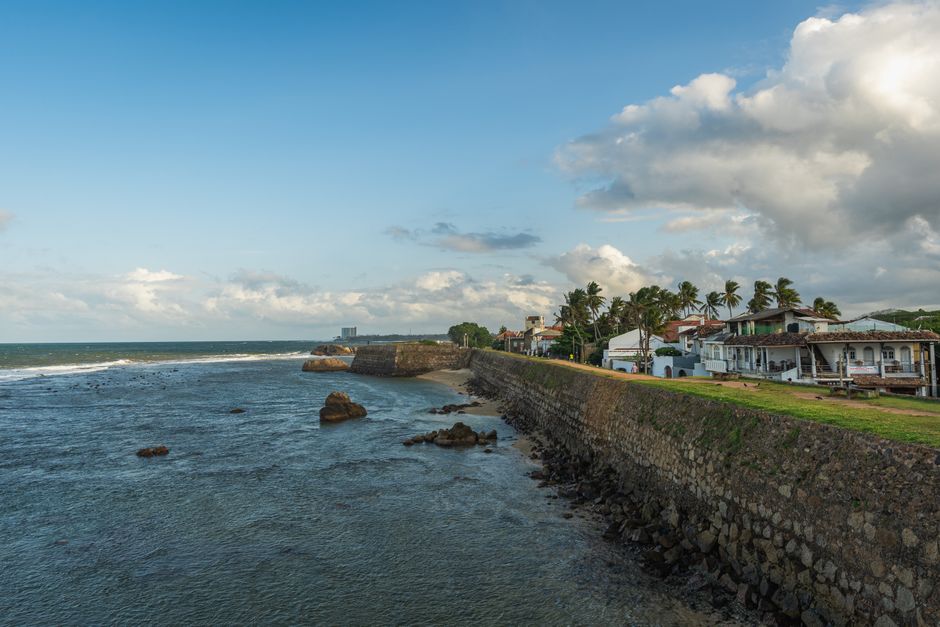
Galle is the principal city of Sri Lanka’s south coast and home to its most atmospheric old town: Galle Fort, a walled peninsula of narrow streets, colonial churches, merchants’ houses and ramparts jutting into the Indian Ocean. The Portuguese first fortified the headland in the late 16th century, the Dutch rebuilt it on a grand scale after taking it in 1640, and the British kept it as a port and administrative center; UNESCO inscribed the Old Town of Galle and its Fortifications as a World Heritage Site in 1988. Today the fort is a living town of about a thousand homes as well as boutique hotels, cafés, galleries and craft shops, and a walk around its walls at sunset, when families stroll, boys dive from the rocks and cricket games break out on the grass, is one of the classic Sri Lankan experiences. Galle is also the gateway to the beaches of the south coast, from Unawatuna and Koggala to the surf breaks of Ahangama and Weligama. The best weather is from December to April; from May to September the southwest monsoon brings showers and rough seas.
Right now in Galle
- Wed 24–30°C 75–86°F 5 mm Showers
- Thu 23–30°C 74–85°F 13 mm Heavy rain
- Fri 23–30°C 73–85°F 9 mm Heavy showers
Weather: MET Norway (CC BY 4.0) · Sea temperature: NOAA CoastWatch
Top tours in Galle
See all tours for Galle →
From local operators, with prices and reviews; you check availability and book on Viator, our partner. We may earn a commission at no extra cost to you. How we earn money
Galle at a glance
- Best for: colonial architecture, walks on the ramparts, boutique hotels, cafés and shopping, and nearby beaches.
- How long: 1–2 days for the fort; longer as a base for the south coast’s beaches.
- Best time: December to April, when the sea is calm and the weather mostly dry; May to September brings the southwest monsoon, with showers and rough seas.
- Getting there: about 1.5–2 hours from Colombo by the Southern Expressway, or 2.5–3 hours on the coastal railway from Colombo Fort; about 2.5 hours from the airport.
- Getting around: on foot in the fort; by tuk-tuk, PickMe or bus to the beaches.
- Good to know: the fort is a residential town and a World Heritage Site; dress modestly in its streets, away from the beach.
- Before you go: the ETA, the free-visa list, money and general safety are in our Sri Lanka travel guide.
Galle’s areas and where to stay
Galle has two faces: the historic fort on its headland and the busy modern town around the bus and railway stations just inland, with the beaches strung along the coast to the east and west.
Galle Fort
Inside the walls, a grid of streets laid out by the Dutch, such as Church Street, Pedlar Street, Leyn Baan Street and Lighthouse Street, holds boutique hotels and guesthouses in restored villas, cafés, restaurants and shops. It is the most atmospheric place to stay, walkable and safe, but rooms are small and prices high.
Galle town
Across the cricket stadium from the fort’s Main Gate, the modern town has the bus and railway stations, the market, banks and cheaper hotels. It is practical but noisy.
Unawatuna and the coast to the east
About 5 km (3 miles) east, Unawatuna has a sheltered, swimmable bay with guesthouses, restaurants and dive shops, and the coast continues through Thalpe, Dalawella and Koggala, with villas and small resorts, to Ahangama, the surfers’ favorite.
Where to stay in Galle
- Inside the fort: boutique hotels and guesthouses in historic buildings.
- Unawatuna: budget and mid-range guesthouses near a safe swimming bay.
- Thalpe, Dalawella and Koggala: villas and luxury resorts on quieter beaches.
- Ahangama and Weligama: surf camps and casual guesthouses.
The fort fills up from December to March and during the Galle Literary Festival; book ahead.
Top things to see in Galle
The fort’s story
Galle was a trading port long before Europeans arrived, visited by Arab, Persian, Indian and Chinese ships for spices, gems and ivory. The Portuguese, blown into the harbor in the early 16th century, built a small fort on the headland, and in 1640 the Dutch East India Company captured it after a siege and spent the next century and a half building the walls, bastions, streets, warehouses and drainage you see today; Galle was the main port of Dutch Ceylon until the British took it in 1796 and later developed Colombo instead. Because the British invested little in the old town, its Dutch plan survived almost intact, and today the fort is one of the best-preserved European fortified towns in South and Southeast Asia, still home to Sinhalese, Muslim, Burgher and Tamil families who have lived inside the walls for generations.
The ramparts
The fort’s walls run for about 3 km (2 miles) around the headland, linking 14 bastions with names such as Sun, Moon and Star, Aeolus, Clippenberg and Triton. Walk them in the late afternoon, starting at the Clock Tower and the Main Gate, past the Flag Rock bastion, where local boys leap into the sea for tips, to the lighthouse and the Point Utrecht bastion, ending at sunset on the western walls. The ramparts have uneven edges and drops of several meters without railings, so take care, especially with children.
The lighthouse and the Meeran Mosque
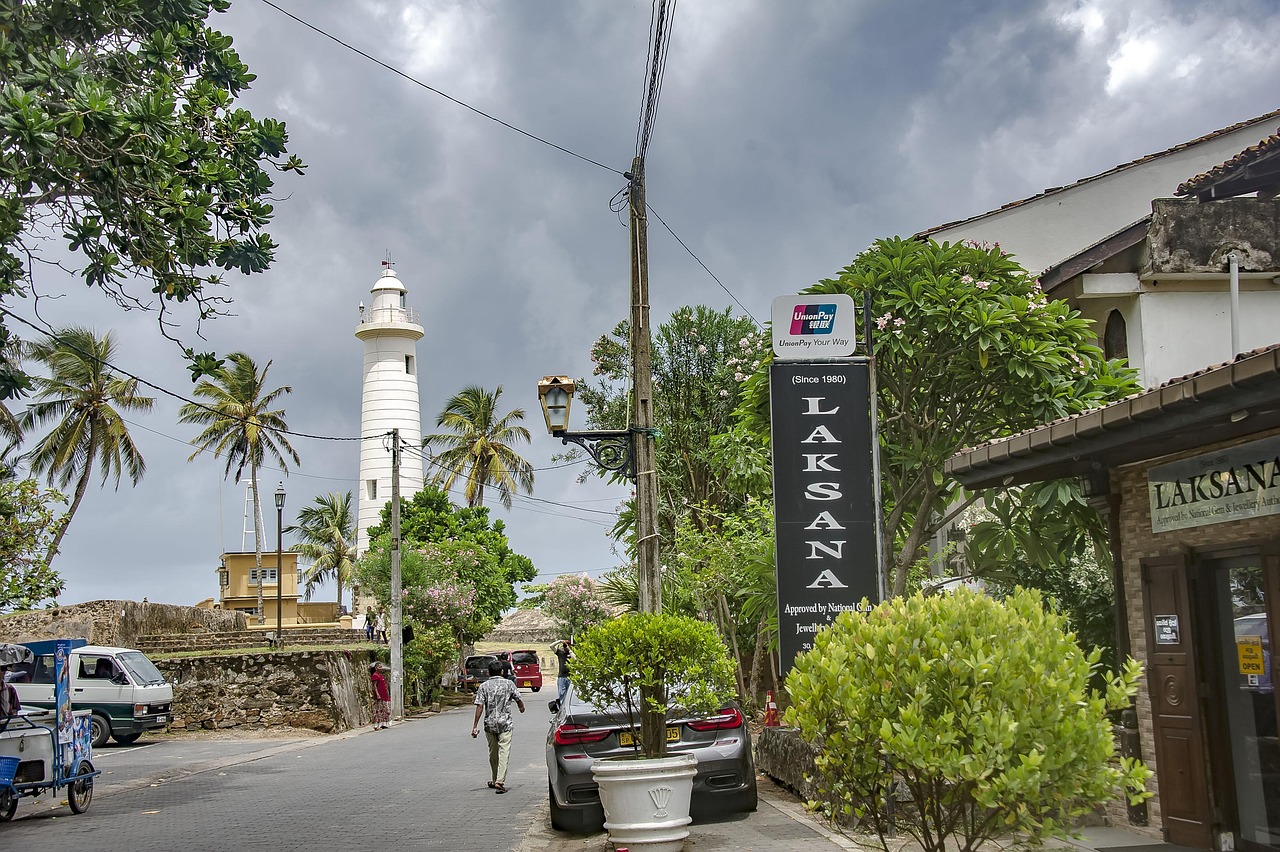
The white Galle Lighthouse, rebuilt in 1939 after a fire destroyed the original, stands at the southeastern corner of the fort and is the town’s most photographed landmark. Beside it, the white Meeran Jumma Mosque, built in 1904, looks more like a baroque church; it serves the fort’s long-established Muslim community, and visitors may look in outside prayer times if dressed modestly.
The Dutch Reformed Church and colonial buildings
The Dutch Reformed Church (Groote Kerk), completed in 1755, has a floor paved with the gravestones of Dutch colonists. Nearby are the Anglican All Saints’ Church, the old Dutch Governor’s House, the restored Dutch Hospital, now shops and restaurants, and the former warehouses by the Old Gate, which carries the British coat of arms on its outer face and the Dutch East India Company’s VOC emblem inside.
Museums
The Galle National Museum, in a Dutch-era building near the church, displays masks, lacework, ebony carvings and colonial artifacts; the Central Cultural Fund’s 2026 price list sets entry for foreign adults at US$6 (2,004 rupees). The National Maritime Archaeology Museum, in the old warehouse by the Old Gate, displays finds from the shipwrecks around the harbor, and private museums inside the fort show period furniture and crafts.
More classic sights
- Galle International Cricket Stadium: one of the most scenic Test cricket grounds in the world, between the fort and the town.
- Japanese Peace Pagoda: a white stupa on Rumassala hill above Unawatuna, with views of the fort and the sea.
- Jungle Beach: a small cove below Rumassala, reached by a short path or boat.
- Galle market and the old town: the busy market and spice shops near the bus station.
- Stilt fishermen: fishermen perched on poles in the shallows at Koggala and Ahangama; many now pose for photographs for a fee.
Other things to do in Galle
Food and drink
The fort’s cafés and restaurants range from simple rice-and-curry places to elegant colonial dining rooms, and the coast serves superb seafood: try fish ambul thiyal, a sour, black-peppered tuna curry typical of the south; grilled catch of the day; and crab and prawn curries. Don’t miss curd and treacle, buffalo-milk yogurt with kithul palm syrup, sold at roadside stalls along the coast. Bars are few inside the fort; Unawatuna and Ahangama are livelier at night. Alcohol is not sold on poya (full-moon) days.
Diving, snorkeling and surfing
The waters around Galle hold many historic wrecks, and the Central Cultural Fund runs shipwreck diving tours in Galle Harbor and around the fort, priced from US$48 to US$89 for foreign visitors in 2026. Unawatuna has dive shops and easy snorkeling in calm months, and the beaches from Ahangama to Weligama are some of the island’s best for learning to surf from November to April. See our diving, snorkeling and surfing guides.
Shopping and festivals
Look for handmade lace, batik, jewelry, tea and designer homeware in the fort’s shops; buy gems only from licensed dealers. The Galle Literary Festival, usually held in January, brings international authors to the fort. See our city sightseeing guide.
Day trips from Galle
- Mirissa: a beach and whale-watching harbor about 45 minutes east; blue whales are best seen from November to April. See our Mirissa guide.
- Hikkaduwa: coral reefs, sea turtles and a lively beach strip about 30 minutes north. See our beaches guide.
- Koggala Lake and tea estates: boat trips through the mangroves and islands of the lake, and tea estates in the hills behind the coast.
- Sinharaja Forest Reserve: the UNESCO rainforest, about 2–3 hours inland by car, best with an early start and a guide.
- Yala National Park: about 3.5–4 hours east; better with a night or two. See our Yala guide.
Nearby destinations
- Mirissa29 km
- Colombo107 km
- Nuwara Eliya120 km
- Ella131 km
- Kandy148 km
- Yala National Park153 km
- Sigiriya222 km
Getting there and getting around
By road
The Southern Expressway links Colombo and the airport with Galle; the drive takes about 1.5–2 hours from Colombo and about 2.5 hours from the airport, depending on traffic. Air-conditioned expressway buses run from Colombo’s Makumbura and central bus stations, and slower buses follow the coastal Galle Road through every town.
By train
Galle is on Sri Lanka Railways’ coastal line from Colombo Fort to Matara, one of the island’s most scenic, running right along the shore through Bentota and Hikkaduwa. Express trains take about 2.5–3 hours. Reserved seats are sold on the department’s seat-reservation website and at stations; otherwise buy a second- or third-class ticket on the day. Galle station is a short walk from the fort.
Around Galle
The fort is best explored on foot. Tuk-tuks wait outside the Main Gate and the station for trips to Unawatuna and the beaches; agree on the fare or use PickMe. Buses run along the coast road, and many guesthouses rent scooters, though the coast road is busy and fast.
When to go and how long to stay
Galle is hot and humid all year, with highs around 29–32 °C (84–89 °F). December to April is the main season, with mostly dry weather and calm seas, ideal for swimming and surfing. The southwest monsoon, from about May to September, brings frequent showers, wind and rough seas, when many beaches are unsafe for swimming, though there are still plenty of sunny spells. October and November are the wettest months. The table uses the 1991–2020 climate normals for the Department of Meteorology’s Galle station, as submitted to the World Meteorological Organization (WMO): average daily highs and lows, total rain, and days with at least 1 mm of rain.
| Month | Average high / low | Rain (days with 1 mm or more) | What to expect |
|---|---|---|---|
| January | 30 °C (86 °F) / 23 °C (74 °F) | 87 mm (3.4 in), 7 days | Dry and sunny; peak season; literary festival |
| February | 31 °C (87 °F) / 24 °C (75 °F) | 71 mm (2.8 in), 6 days | The driest month; calm seas |
| March | 32 °C (89 °F) / 25 °C (76 °F) | 90 mm (3.5 in), 7 days | Hot and mostly dry |
| April | 31 °C (89 °F) / 25 °C (78 °F) | 202 mm (7.9 in), 12 days | Afternoon storms; New Year holidays |
| May | 30 °C (87 °F) / 26 °C (79 °F) | 316 mm (12.4 in), 17 days | Monsoon arrives; rough seas |
| June | 29 °C (85 °F) / 26 °C (78 °F) | 184 mm (7.2 in), 17 days | Showery and windy |
| July | 29 °C (84 °F) / 25 °C (78 °F) | 173 mm (6.8 in), 15 days | Showers with sunny spells |
| August | 29 °C (84 °F) / 25 °C (78 °F) | 162 mm (6.4 in), 14 days | Similar to July |
| September | 29 °C (85 °F) / 25 °C (77 °F) | 261 mm (10.3 in), 17 days | Wetter again |
| October | 29 °C (85 °F) / 25 °C (77 °F) | 344 mm (13.6 in), 18 days | The wettest month |
| November | 30 °C (86 °F) / 24 °C (76 °F) | 283 mm (11.1 in), 15 days | Wet early, drying later; season starts |
| December | 30 °C (86 °F) / 24 °C (75 °F) | 176 mm (6.9 in), 11 days | Mostly dry; busy at Christmas |
Galle gets about 2,350 mm (92 in) of rain a year, most of it from April to November.
One day in Galle
Morning in the fort’s streets, churches and museums; lunch in a café; a swim at Unawatuna or Jungle Beach in the afternoon; and the ramparts from the Clock Tower to the lighthouse at sunset.
Two to four days
Add the Japanese Peace Pagoda, Koggala Lake and a tea estate, a shipwreck dive or surf lesson, and a day trip to Mirissa or Hikkaduwa.
What a trip to Galle costs
Prices are approximate, for October 2026, converted at about 330 rupees to the US dollar.
| Item | Typical cost |
|---|---|
| Galle National Museum, foreign adult | 2,004 LKR (US$6) |
| Shipwreck diving tour, Galle Harbor (Central Cultural Fund) | 16,032–29,726 LKR (US$48–89) |
| Rice and curry in a local café | 800–1,500 LKR (about US$2.40–4.50) |
| Dinner in a fort restaurant | 4,000–9,000 LKR (about US$12–27) per person |
| Tuk-tuk from the fort to Unawatuna | 600–1,000 LKR (about US$1.80–3) |
| Reserved train seat from Colombo | 1,000–2,500 LKR (about US$3–7.50) |
| Surf lesson with board | 6,000–10,000 LKR (about US$18–30) |
| Guesthouse double in the fort | 12,000–25,000 LKR (about US$36–76) |
| Boutique hotel double in the fort | 40,000–100,000 LKR (about US$120–300) |
Practical tips for Galle
- Walk the walls at sunset: the western ramparts give the best views.
- Watch your step: many ramparts have unfenced drops.
- Dress modestly in town: keep swimwear for the beach.
- Swim where it is calm: Unawatuna and Dalawella are sheltered in the dry season; ask locally about currents.
- Book the fort early: rooms in the walls sell out from December to March.
- Carry cash: small cafés, tuk-tuks and craft shops often take cash only.
Safety
Galle is a relaxed, safe town. The main hazards are the sea and the roads. Strong currents and rip tides are common on the south coast, especially during the southwest monsoon from May to September; swim only at sheltered, busy beaches and follow local warnings. The coast road is narrow and fast, with buses that rarely give way; take care walking along it and on scooters. On the ramparts, keep back from the edges. Heavy monsoon rain can cause local flooding. The south coast was hit hard by the Indian Ocean tsunami of December 26, 2004; if you feel a strong earthquake or see the sea suddenly withdraw, move inland or to high ground immediately. Dengue fever is present, so use insect repellent. In an emergency, call 119 for police and 1990 for the Suwa Seriya ambulance.
What to pack for Galle
Light clothes, swimwear and a cover-up for the town, a hat and reef-safe sunscreen, sandals and water shoes for rocky beaches, an umbrella or rain jacket from April to November, and insect repellent. Sri Lanka uses 230 V, with British three-pin (type G) and round-pin (type D) sockets. See our water shoes, rain jackets and travel adapters guides.
Galle travel FAQ
Is Galle Fort worth visiting?
Yes. It is a beautifully preserved colonial town and a UNESCO World Heritage Site, with ramparts, churches, museums, cafés and boutique hotels.
How long does it take to walk around Galle Fort?
About an hour to walk the ramparts at an easy pace; allow half a day to explore the streets, churches and museums too.
How do I get from Colombo to Galle?
By car or expressway bus in about 1.5–2 hours, or by the coastal train from Colombo Fort in about 2.5–3 hours.
Can you swim in Galle?
Not off the fort itself. Unawatuna, about 5 km (3 miles) east, and Jungle Beach have sheltered water in the dry season.
What is the best time to visit Galle?
December to April, when the weather is mostly dry and the sea calm.
Should I stay inside Galle Fort?
For atmosphere and walkability, yes; for beaches and lower prices, stay in Unawatuna or along the coast and visit the fort by tuk-tuk.
How much does the Galle National Museum cost?
US$6 (2,004 rupees) for foreign adults, according to the Central Cultural Fund’s 2026 price list.
How far is Mirissa from Galle?
About 35 km (22 miles), 45 minutes to an hour by car or bus along the coast.
Was Galle hit by the 2004 tsunami?
Yes. The tsunami of December 26, 2004, caused heavy loss of life in Galle’s modern town and along the coast; the fort’s walls largely protected the old town.
Is Galle good for families?
Yes, with care on the ramparts and in the sea: the fort’s walls, the lighthouse, the beaches and stilt fishermen appeal to children.
Sources and last review
Researched and last reviewed on 4 October 2026. Museum and shipwreck-diving prices: the Central Cultural Fund’s 2026 price list; the coastal railway and seat reservations: Sri Lanka Railways; climate normals: Sri Lanka’s Department of Meteorology via the World Meteorological Organization’s 1991–2020 normals; exchange rate: the Central Bank of Sri Lanka. History, building dates, the UNESCO inscription year, the number of bastions and length of the walls, travel times, the literary festival, tsunami details and typical prices are general references or estimates, flagged for checking. Prices and hours change, so check the official sites before you go. For entry rules, money and general safety, see our Sri Lanka travel guide.
Plan your trip
Partner links: TravelerCenter may earn a commission if you book, at no extra cost to you.
🇱🇰 Useful Sinhala phrases for Galle
All 38 Sinhala phrases: restaurant, hotel, emergencies, romance (printable) →