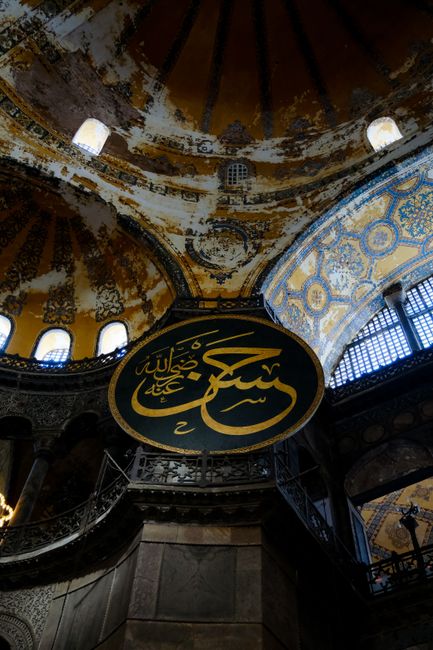
Hagia Sophia (Ayasofya) is the great domed building on Sultanahmet Square in Istanbul’s old city, completed under the Eastern Roman emperor Justinian I in 537. It served as the city’s cathedral for more than nine centuries, as a mosque from 1453, as a museum from 1934, and since 2020 it has again been a working mosque. Since January 2024 foreign visitors use a separate visitors’ entrance and follow a one-way route through the upper galleries, looking down into the prayer hall and past Byzantine mosaics, while worshippers use the main floor. The Ministry of Culture and Tourism set the visitor fee at €25 when the new entrance opened; tickets are sold at the booth facing the Fountain of Ahmed III. Allow about an hour, and plan around prayer times.
Right now in Hagia Sophia
- Thu13–20°C55–67°FPartly cloudy
- Fri15–22°C60–72°FClear
- Sat16–25°C61–77°FClear
Tickets and tours for Hagia Sophia
See all tours for Hagia Sophia →
From local operators, with prices and reviews; you check availability and book on Viator, our partner. We may earn a commission at no extra cost to you. How we earn money
Why Hagia Sophia matters
Today’s building is the third Hagia Sophia on this hilltop. The first, a basilica with a wooden roof, opened in 360 and burned in a riot in 404; the second, opened in 415, was destroyed in the Nika Revolt of 532. Justinian rebuilt at once on a far grander scale, and the new church was finished in just five years, from 532 to 537. Its vast central dome, which seems to float above a ring of windows, made it the great church of the Eastern Roman capital, where emperors were crowned, and a model for architects for centuries after. The building suffered heavily over the following centuries: it was looted during the Fourth Crusade in 1204 and served as a Latin cathedral until 1261, and part of the dome collapsed in 1346.
After Sultan Mehmed II took the city in 1453, Hagia Sophia became a mosque and was endowed with income for its upkeep. The Ottomans added minarets, a mihrab, a minber, fountains, a school and the tombs of several sultans, and the architect Sinan strengthened the structure under Selim II in the 16th century; the building has not collapsed again since. It was turned into a museum by a cabinet decree of November 24, 1934, and reopened for worship in July 2020. Hagia Sophia is part of the “Historic Areas of Istanbul” UNESCO World Heritage site, inscribed in 1985.
What you’ll see
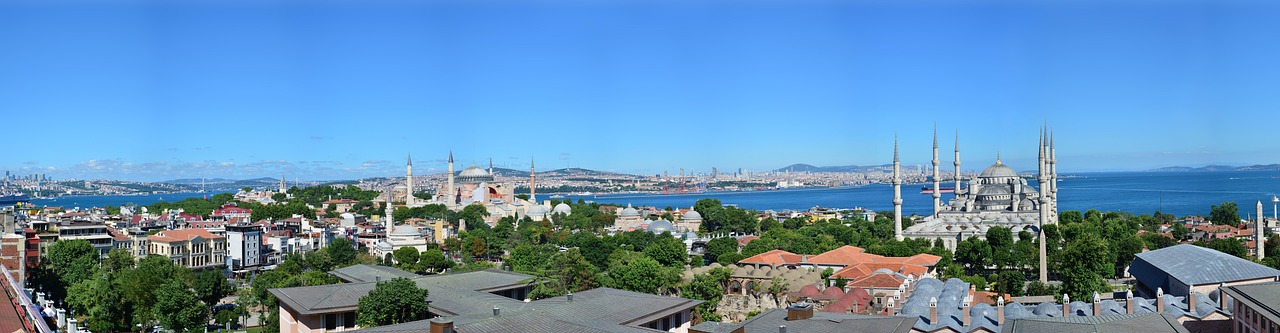
- The exterior and grounds: the massive buttressed walls, the four minarets and the domes stepping up to the main dome, best seen from Sultanahmet Square and the gardens between Hagia Sophia and the Blue Mosque.
- The visitors’ entrance: a tunnel and ramp beneath the minaret of Bayezid II on the south side take you up to the gallery floor without crossing the prayer hall.
- The upper galleries: views down into the great prayer hall and up into the dome, with the Ottoman additions below, including the huge calligraphy roundels, the mihrab and the minber.
- Byzantine mosaics: the route passes through the marble doorway known as the Gate of Heaven and Hell into the gallery with the Byzantine mosaics, among them the Deësis panel and portraits of emperors and empresses.
- The exit: a ramp on the north-east side brings you back down outside.
A QR-code audio guide in 23 languages plays on your own phone; bring earphones, or use the disposable ones provided, so that you do not disturb people praying below.
Tickets and how to visit
- Ticket price: the Ministry of Culture and Tourism set the fee for foreign visitors at €25 when the visitors’ entrance opened on January 15, 2024; check the current price at the ticket booth. Prices for state-run sights in Türkiye are reviewed regularly, so check at the booth. The fee is for foreign visitors coming as tourists; people coming to pray use the separate worshippers’ entrance.
- Where to buy: at the ticket booth on the south side of Hagia Sophia, facing the Fountain of Ahmed III by the gate of Topkapı Palace. Hagia Sophia is not on the MuseumPass Istanbul list of museums.
- Prayer times: Hagia Sophia is a working mosque, so visits are arranged around the five daily prayers, and the gallery route can close for a short time around each one, and for longer at the Friday midday prayers. Prayer times change through the year; check the day’s times before you go and avoid Friday late morning and early afternoon.
- Opening hours: no current official timetable for the visitor route is published online, so check locally or with your hotel the day before.
- The Hagia Sophia History and Experience Museum: a separate state museum a short walk away, in the former Defter-i Hakani building on the Hippodrome side of Sultanahmet Square. Its 13 halls tell the building’s 1,700-year story with displays, projections and part of the Hagia Sophia collection, in 23 languages. As of October 2026 it is open 9:00–20:00 (last tickets 19:00) and costs €25; the Müzekart is not valid.
What to wear
Dress as for any mosque in Türkiye: shoulders and knees covered for everyone, and a headscarf for women. Hagia Sophia does not always lend scarves or wraps, so bring your own. Keep your voice low, and don’t photograph people at prayer.
How long to allow and when to go
The gallery route itself takes around an hour at an unhurried pace, longer if you listen to the whole audio guide. The ministry’s one-way route was designed to stop the long queues that once formed outside, but lines still build up in the middle of the day in high season; early in the day or late afternoon is usually calmer, as long as you avoid prayer times. Add an hour or so for the History and Experience Museum if you want the full story before or after your visit.
Getting there
Hagia Sophia stands at the tip of the Historic Peninsula, at Sultan Ahmet, Ayasofya Meydanı No. 1 in the Fatih district. The T1 tram, which runs from Kabataş via Karaköy, Eminönü and Sirkeci, stops at Sultanahmet, a few minutes’ walk away; pay with an Istanbulkart. From Istanbul Airport, the Havaist HVL-11 bus runs to Sultanahmet, or take the M11 metro and change to the M2 and then the T1 tram. Most hotels in Sultanahmet are within walking distance.
Combine it with
The great sights of the old city are all close: the Basilica Cistern is about 170 meters away, the Blue Mosque about 400 meters across the square, and the gates of Topkapı Palace about 600 meters to the north, with the Grand Bazaar about 1 km to the west. In the afternoon, take a ferry or a cruise on the Bosphorus; see our boat trips guide. For prices, transport and where to stay, see our Istanbul travel guide; for more of Türkiye’s Ottoman heritage, see Bursa and Edirne, and for entry rules our Türkiye travel guide.
Hagia Sophia FAQ
How much does it cost to visit Hagia Sophia?
Foreign visitors pay €25 for the upper-gallery route, the fee set by the Ministry of Culture and Tourism in January 2024; check the current price at the booth before you go. Check the price at the booth facing the Fountain of Ahmed III.
Can tourists go inside Hagia Sophia?
Yes, through the separate visitors’ entrance. Visitors follow a one-way route through the upper galleries, with views of the prayer hall below and the Byzantine mosaics; the ground floor is kept for worship.
Is Hagia Sophia included in the MuseumPass Istanbul?
No. Hagia Sophia is not on the pass list, and the separate Hagia Sophia History and Experience Museum does not accept the Müzekart either.
When is Hagia Sophia closed to visitors?
Around prayer times, briefly for each of the five daily prayers and for longer at the Friday midday prayers. Check the day’s prayer times before you go.
What should I wear to Hagia Sophia?
Clothes covering shoulders and knees, and a headscarf for women. Bring your own scarf or wrap, as one may not be available to borrow.
How far is Hagia Sophia from the Blue Mosque?
About 400 meters. The two face each other across Sultanahmet Square, and the Basilica Cistern is just across the street from Hagia Sophia.