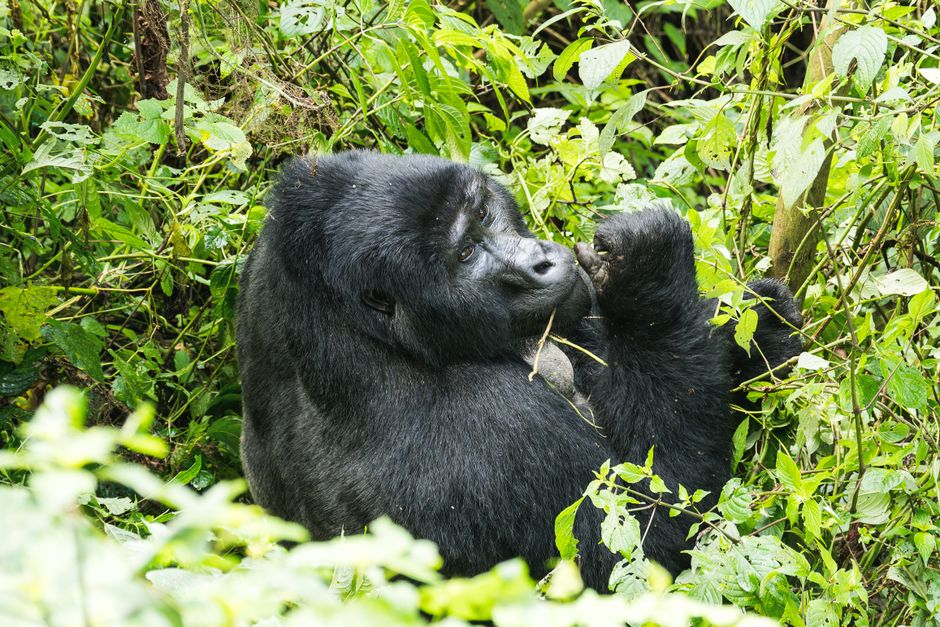
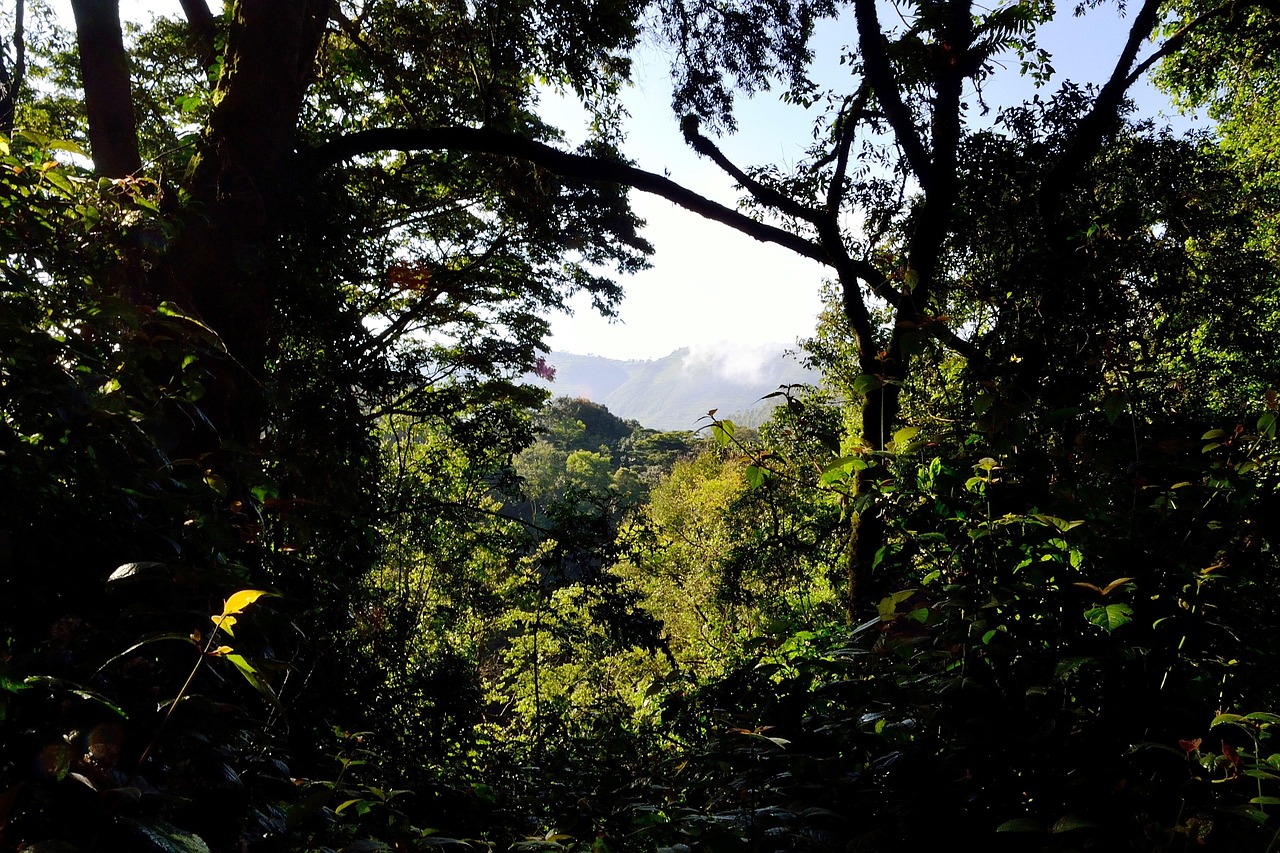
Bwindi Impenetrable National Park, in the hills of southwestern Uganda, is home to almost half of the world’s mountain gorillas, and it’s the most popular place in Africa to see them. The Uganda Wildlife Authority (UWA), which manages the park, describes it as one of Africa’s most ancient and biologically diverse rainforests, dating back more than 25,000 years, a mist-covered jungle of steep ridges and deep valleys on the edge of the Albertine Rift. UWA says the park protects about 459 mountain gorillas, along with chimpanzees, forest elephants, more than 120 mammal species and more than 350 bird species, including 23 Albertine Rift endemics. Gorilla tourism began here in April 1993, when the first family was habituated, and visitors now trek from four sectors around the park, each with its own lodges and gorilla families. A Uganda permit costs US$800, about half the price of Rwanda’s, and in April, May and November it drops to US$600. The trade-off is distance: Bwindi is a long drive from Kampala, though scheduled flights from Entebbe to nearby airstrips take just over an hour. Treks can be steep, muddy and long, so come prepared, and choose your lodge to match the sector where your permit is booked.
Right now in Bwindi Impenetrable National Park (Bwindi)
- Wed13–20°C55–68°F7 mm rain
- Thu13–22°C55–71°F3 mm rain
- Fri13–20°C56–67°F4 mm rain
- Fri 9 Oct Independence Day
Top tours in Bwindi Impenetrable National Park
See all tours for Bwindi Impenetrable National Park →
From local operators, with prices and reviews; you check availability and book on Viator, our partner. We may earn a commission at no extra cost to you. How we earn money
Bwindi at a glance
- Best for: mountain gorilla trekking, the gorilla habituation experience, forest birding and Batwa and Bakiga community visits.
- How long: 2–3 nights for one trek; 4 nights to add a second trek, a forest walk or the Batwa trail.
- Best time: December to February and June to August are driest; April, May and November have cheaper permits.
- Getting there: flights from Entebbe to Kihihi (north) or Kisoro (south) in about 1 hour 10 minutes, or a long road trip from Kampala with a 4×4.
- Gorilla permit: US$800 for foreign non-residents (US$600 in April, May and November), including the day’s park entrance; minimum age 15.
- Good to know: permits are tied to a sector, and permits are paid in full when booked through a licensed operator.
- Before you go: the visa, money and general safety are in our Uganda travel guide.
Permits, fees and rules
Gorilla permits and park fees
UWA sets its fees in a conservation tariff, published for July 2024 to June 2026 and updated by a notice in February 2026. For foreign non-residents, a gorilla tracking permit costs US$800 (about UGX 3.1 million); foreign residents pay US$700, visitors from the rest of Africa US$500, and East African citizens UGX 300,000. UWA says the permit includes the guide fee, the park entrance for the day and a community development contribution. Since February 2026, UWA has offered low-season permits at US$600 for foreign non-residents in April, May and November; these can’t be rescheduled. The gorilla habituation experience costs US$1,500, rising to US$1,800 on January 1, 2027. Gorilla permits for foreign non-residents are sold through licensed tour operators, and since March 1, 2026, UWA no longer holds unpaid reservations, so permits are secured only with full payment. Each gorilla permit holder also gets a free day’s entrance to Mount Elgon National Park or the Toro-Semliki Wildlife Reserve within a month of tracking.
| Activity (UWA, foreign non-resident) | Fee |
|---|---|
| Gorilla tracking (includes the day’s entrance) | US$800 (about UGX 3.1 million) |
| Gorilla tracking in April, May and November | US$600 (about UGX 2.3 million) |
| Gorilla habituation experience | US$1,500 (US$1,800 from January 1, 2027) |
| Park entrance, per 24 hours | US$40 (about UGX 154,400) |
| Birding and day nature walks | US$40, plus entrance |
| Batwa trail experience | US$40, plus entrance |
| Long walk, Buhoma to Nkuringo | US$60 (US$100 from January 1, 2027) |
| Long walk, Rushaga to Nyabaremura | US$60 (US$80 from January 1, 2027) |
| Ruhija bamboo walk or Rushura Hill loop | US$40 |
UWA’s tariff says a day’s entrance ticket is valid for 24 hours, children aged 5 to 15 pay a child rate for entrance, and children under 5 enter free. Fines in the tariff include 25% of the permit fee for a late reschedule and 50% for tracking in a different location from the one booked, so check your sector carefully.
Gorilla tracking rules
UWA’s rules protect the gorillas from human diseases and keep visits calm. Before you set out, carry your permit and payment receipts, and don’t visit if you have a cold or other infectious illness. The minimum age is 15, and a maximum of eight visitors may visit each gorilla group. With the gorillas, keep a distance of 10 m (about 33 feet), don’t smoke, eat or drink, cover your face and turn away if you need to cough or sneeze, don’t use flash photography, and don’t leave litter. Visits are limited to one hour per group per day. If you need the toilet in the forest, bury human waste 30 cm (12 inches) deep.
Bwindi’s four sectors and where to stay
UWA says Bwindi now has 25 habituated gorilla groups spread around the park, with permits sold for specific sectors. Because the drive between sectors can take several hours on winding dirt roads, book your lodge in the same sector as your permit.
Buhoma (north)
Buhoma, in Kanungu District, is the park headquarters and the original trekking sector, where the Mubare group was habituated in 1993. It has the widest choice of lodges, from luxury to budget bandas, plus craft shops, restaurants and community walks. It’s reached from the Kihihi airstrip or from Queen Elizabeth National Park’s Ishasha sector, which UWA puts about 64 km (40 miles) away.
Ruhija (east)
Ruhija, on a high ridge in the east, is quieter and cooler, with fewer lodges. It’s the best base for birding, including the walk to the Mubwindi swamp, and for the bamboo walk. UWA says it’s about 95 km (59 miles) and four hours from Kabale to Buhoma via Ruhija.
Rushaga (south)
Rushaga, in the south near Kisoro and Lake Bunyonyi, has the most gorilla families and is where the gorilla habituation experience usually takes place. Lodges here range from community camps to upmarket lodges, and the long walk to Nyabaremura starts here.
Nkuringo (southwest)
Nkuringo, on a steep ridge above the forest, has some of Uganda’s best views, across Bwindi to the Virunga volcanoes. Treks here are often among the most demanding. UWA says most visitors overnight in Kisoro, about 35 km (22 miles) away, or in lodges on the ridge; the scenic long walk from Buhoma ends here.
Where to stay
- Luxury lodges: private cottages with forest views in Buhoma, Rushaga and Nkuringo.
- Mid-range lodges: comfortable rooms or tents with meals, in all four sectors.
- Budget: UWA and community bandas, guesthouses and campsites; UWA says Buhoma and Nkuringo have options from luxury to budget.
- Nearby towns: Kisoro and Kabale have cheaper hotels but mean an early start.
Top things to see in Bwindi
Gorilla trekking
Treks start in the morning with a briefing at your sector’s starting point. Rangers assign visitors to a family, and then you hike with a guide, park rangers and porters while trackers locate the gorillas. Depending on where the family is feeding, the walk can take from under an hour to most of the day, along steep, slippery slopes and through dense undergrowth, at altitudes between 1,160 m and 2,607 m (3,800–8,550 ft). Once you reach the group, you spend one hour watching the silverback, females and youngsters feed, groom and play, often at close quarters in the green light of the forest.
The gorilla habituation experience
For a deeper look, the habituation experience lets a small group spend several hours with researchers and trackers as they accustom a wild gorilla family to people. It’s longer and more physical than a standard trek, and it costs US$1,500 (US$1,800 from 2027). Book well in advance, as places are very limited.
Birding and forest walks
UWA says Bwindi has more than 350 bird species, including 23 Albertine Rift endemics such as the African green broadbill and Shelley’s crimsonwing, and more than 200 butterfly species. Guided birding and day nature walks cost US$40, and the longer guided walks through the forest, between Buhoma and Nkuringo or between Rushaga and Nyabaremura, cross the park on old trails with chances of monkeys, duikers and waterfalls. The Ruhija bamboo walk and the Rushura Hill loop are shorter options. See our hiking guide.
Batwa and Bakiga culture
UWA describes the Batwa as the forest’s original inhabitants. On the Batwa trail (US$40, plus entrance), Batwa guides share their hunter-gatherer heritage through stories, songs, plant knowledge and demonstrations. Around Buhoma and Nkuringo, community walks visit Bakiga farms, a traditional healer, banana beer brewers and craft groups, and UWA says the towns have craft markets where you can buy baskets and carvings.
Other things to do around Bwindi
Tea and coffee
Tea estates cover the hills near Buhoma and Kayonza, and some lodges arrange visits to see how leaves are picked and processed. Local cooperatives also grow coffee, and a cup of fresh Ugandan coffee on a misty morning before a trek is part of the experience.
Food and drink
Lodges serve full board, with hearty breakfasts, packed lunches for treks and three-course dinners that mix international dishes with Ugandan food such as matoke (steamed green bananas), groundnut sauce, beans, posho and grilled tilapia. In the villages, look for rolex, a chapati rolled around an omelet, and fresh pineapples and passion fruit. Local beers include Nile Special and Club.
Day trips and nearby
- Lake Bunyonyi: about 1½–2 hours from Rushaga or Nkuringo; islands, terraced hills and canoe trips. See our boat trips guide.
- Mgahinga Gorilla National Park: near Kisoro, with golden monkey tracking (US$60), volcano climbs (US$100) and a Batwa trail.
- Queen Elizabeth National Park: Ishasha’s tree-climbing lions, about 64 km (40 miles) from Buhoma, and the Kazinga Channel boat trip near Mweya, about 160 km (100 miles) away, according to UWA.
- Rwanda’s Volcanoes National Park: across the Cyanika border near Kisoro, for golden monkeys or a Rwandan gorilla trek. See our Volcanoes National Park guide.
Nearby destinations
- Volcanoes National Park53 km
- Kigali110 km
Getting there and getting around
By air
UWA says a daily scheduled flight links Entebbe with the Kisoro airstrip, for the southern sectors of Rushaga and Nkuringo, and daily flights serve the Kihihi airstrip, for Buhoma in the north. Scheduled and charter flights take about 1 hour 10 minutes, and from either airstrip you’ll need a 4×4 transfer on a winding dirt road to your lodge. Baggage on light aircraft is usually limited to about 15 kg (33 lb) in soft bags.
By road
UWA describes several road routes from Kampala. The quickest to Buhoma goes via Ntungamo, Rukungiri and Kihihi: about 390 km (240 miles) on paved roads to Rukungiri, then 82 km (51 miles) on dirt roads. Another follows the paved road to Kabale, about 414 km (257 miles) and six hours, then 120 km (75 miles) of dirt road through Kanungu, about five hours more. For the south, most visitors overnight in Kisoro, about 80 km (50 miles) from Kabale, then drive about 35 km (22 miles), one to 1½ hours, to Nkuringo or Rushaga. UWA highly recommends a 4×4 for all routes. In practice, allow 8–10 hours from Kampala, and break the journey at Lake Mburo, Mbarara or Lake Bunyonyi.
From Rwanda
The southern sectors are closer to Kigali than to Kampala: about four to five hours by road via the Katuna or Cyanika border. Many operators combine a Bwindi trek with Rwanda, using the East Africa Tourist Visa. Remember that Rwanda asks for a yellow fever certificate when you arrive from Uganda. See our Kigali guide.
When to go and how long to stay
Gorillas can be tracked all year. The driest months are December to February and June to August, when trails are firmer and permits sell out first. The rainy seasons, roughly March to May and September to November, bring heavy showers and slippery slopes, but the forest is lush, and UWA’s low-season permits apply in April, May and November. Bwindi lies at 1,160–2,607 m, so days are mild and nights are cool. The table uses Uganda National Meteorological Authority (UNMA) averages for 1961–1990 for Kabale, the nearest highland station, about 30–60 km (20–40 miles) from the southern and eastern sectors, as published by the World Meteorological Organization (WMO): average daily highs and lows, rainfall and rainy days. Expect more rain inside the forest.
| Month | Average high / low | Rain (rainy days) | What to expect |
|---|---|---|---|
| January | 24 °C (75 °F) / 11 °C (52 °F) | 65 mm (2.6 in), 8 days | Dry season; firm trails |
| February | 24 °C (75 °F) / 11 °C (52 °F) | 81 mm (3.2 in), 10 days | Mostly dry; good trekking |
| March | 24 °C (75 °F) / 11 °C (52 °F) | 113 mm (4.4 in), 13 days | Rains begin |
| April | 24 °C (75 °F) / 12 °C (54 °F) | 140 mm (5.5 in), 16 days | Wettest month; low-season permits |
| May | 23 °C (73 °F) / 12 °C (54 °F) | 98 mm (3.8 in), 10 days | Rainy; low-season permits |
| June | 24 °C (75 °F) / 10 °C (50 °F) | 28 mm (1.1 in), 3 days | Dry season begins; busy |
| July | 24 °C (75 °F) / 9 °C (48 °F) | 20 mm (0.8 in), 2 days | Driest and coolest nights; peak season |
| August | 24 °C (75 °F) / 10 °C (50 °F) | 54 mm (2.1 in), 6 days | Dry; book permits early |
| September | 25 °C (77 °F) / 11 °C (52 °F) | 99 mm (3.9 in), 10 days | Showers return |
| October | 24 °C (75 °F) / 11 °C (52 °F) | 111 mm (4.4 in), 12 days | Rainy; quieter |
| November | 23 °C (73 °F) / 12 °C (54 °F) | 117 mm (4.6 in), 16 days | Rainy; low-season permits |
| December | 24 °C (75 °F) / 11 °C (52 °F) | 89 mm (3.5 in), 10 days | Drying out; holiday demand |
How long to stay: 2, 3 and 4 nights
- 2 nights: arrive, trek the next morning, and leave the day after.
- 3 nights: one trek plus a community walk, the Batwa trail or a forest walk.
- 4 nights: two treks in different sectors, or a trek plus the habituation experience.
Typical costs
Prices are approximate, for October 2026, converted at about UGX 3,860 to the US dollar (Uganda Revenue Authority). Permit and park fees are UWA’s foreign non-resident rates.
| Item | Typical cost |
|---|---|
| Gorilla permit (high season) | US$800 (about UGX 3.1 million) |
| Gorilla permit (April, May, November) | US$600 (about UGX 2.3 million) |
| Gorilla habituation experience | US$1,500 (about UGX 5.8 million) |
| Batwa trail | US$40 (about UGX 154,400), plus entrance |
| Porter for a trek | about US$15–20 (about UGX 58,000–77,000), plus a tip |
| Flight Entebbe–Kihihi or Kisoro, one way | about US$300–400 |
| Budget banda or guesthouse, per night | about UGX 100,000–250,000 (about US$26–65) |
| Mid-range lodge, per person per night, full board | about US$150–350 |
| Luxury lodge, per person per night, all-inclusive | about US$700–2,000 |
Safety in Bwindi
Gorilla health rules: UWA says you shouldn’t visit the gorillas with a cold or other infectious illness, and asks visitors to keep 10 m away, not to eat, drink or smoke near them, and to cover their faces and turn away to cough or sneeze. Terrain: trails are steep, slippery and overgrown; wear boots with good grip and gaiters, use a walking stick, and hire a porter. The altitude, up to about 2,600 m (8,500 ft), is moderate, but the climbs are tiring, so take it slowly. Wildlife: follow your guide and the rangers who accompany every group; forest elephants and buffalo also live in the park. Malaria: the US CDC says malaria occurs throughout Uganda and recommends antimalarial medicine. Roads: the dirt roads to Bwindi are winding and slippery after rain; travel in daylight with an experienced driver and a 4×4. Border: Bwindi lies along the border with the DR Congo; stay on guided routes and in the official sectors, and check road status with UWA and your operator before you travel. Medical care: there’s a community hospital at Buhoma, but serious cases need evacuation, so make sure your insurance covers it. In an emergency, call 999 or 112.
Practical tips for Bwindi
- Match lodge and sector: your permit is for one sector; sleep nearby to avoid a pre-dawn drive.
- Book and pay early: June to September and December to February sell out; UWA now requires full payment to secure a permit.
- Consider the low season: US$600 permits in April, May and November, but they can’t be rescheduled.
- Carry your documents: permit, passport and payment receipts are checked at the briefing.
- Bring small notes: US dollars or shillings for porters, trackers and community projects; there are no ATMs near the park.
What to pack for Bwindi
Waterproof hiking boots with good grip, gaiters, long trousers and a long-sleeved shirt in neutral colors, gardening gloves for grabbing branches and nettles, a waterproof jacket and a rain cover for your daypack, a warm layer for cool mornings and evenings, a hat, insect repellent, sunscreen, water and snacks for the walk (eaten away from the gorillas), a camera with spare batteries and no flash, binoculars for birds, a headlamp, any antimalarials and medicines, soft luggage for light aircraft, and an adapter for British-style type G sockets. See our hiking shoes, rain jackets and travel adapters guides.
Bwindi Impenetrable National Park travel FAQ
How much is a gorilla permit in Bwindi?
US$800 for foreign non-residents, including the day’s park entrance, or US$600 in April, May and November, according to the Uganda Wildlife Authority.
How much is the gorilla habituation experience?
US$1,500 for foreign non-residents until December 31, 2026, and US$1,800 from January 1, 2027.
How many gorillas live in Bwindi?
UWA says about 459, almost half of the world’s remaining mountain gorillas.
Which Bwindi sector is best?
Buhoma has the most lodges and is easiest to reach from Kihihi; Rushaga has the most gorilla families; Ruhija is best for birding; Nkuringo has the best views but steep treks.
What is the minimum age for gorilla trekking in Bwindi?
15 years, according to UWA’s gorilla tracking rules.
How close can I get to the gorillas in Uganda?
UWA asks visitors to keep a distance of 10 m (about 33 feet) and limits visits to one hour.
How do I get to Bwindi from Entebbe?
Fly to Kihihi or Kisoro in about 1 hour 10 minutes, then transfer by 4×4, or drive 8–10 hours from Kampala.
Can I visit Bwindi from Rwanda?
Yes. The southern sectors are about four to five hours from Kigali by road via Katuna or Cyanika; you’ll need a Uganda visa or the East Africa Tourist Visa.
When is the best time to visit Bwindi?
December to February and June to August are driest; April, May and November are wetter but bring US$600 permits.
Can I see other wildlife in Bwindi?
Yes. UWA lists more than 120 mammal species, including chimpanzees, baboons, elephants and forest antelopes, more than 350 bird species and 200 butterfly species.
Plan your trip
Partner links: TravelerCenter may earn a commission if you book, at no extra cost to you.
🇹🇿 Useful Swahili phrases for Bwindi Impenetrable National Park
All 38 Swahili phrases: restaurant, hotel, emergencies, romance (printable) →
Sources · last reviewed 5 October 2026
Researched and last reviewed on 5 October 2026. Gorilla, habituation, entrance, walk and Batwa trail fees, permit inclusions and benefits, child ages, 24-hour tickets, fines, booking through licensed operators and gorilla tracking rules: the Uganda Wildlife Authority’s conservation tariff; low-season rates, the 2027 fee changes and the end of the seven-day reservation window: UWA’s February 2026 notice; gorilla numbers, the forest’s age, habituated groups, wildlife, birds, butterflies, altitude, culture, accommodation, road routes, distances and flights: the Uganda Wildlife Authority’s Bwindi page; malaria: the US CDC; climate averages: the Uganda National Meteorological Authority via the World Meteorological Organization (Kabale station); the exchange rate: the Uganda Revenue Authority. Sector descriptions, the habituation experience’s location and length, tea estates, food, travel times from Kampala and Kigali, baggage limits, the community hospital, emergency numbers and typical prices are general references or estimates, flagged for checking. Fees and rules change, so check with UWA or your operator before you go. For the visa, money and general safety, see our Uganda travel guide.
Data: Weather: MET Norway (CC BY 4.0) · Rates: ECB · Holidays: Nager.Date · Costs: World Bank ICP and price levels · Wikidata (CC0)