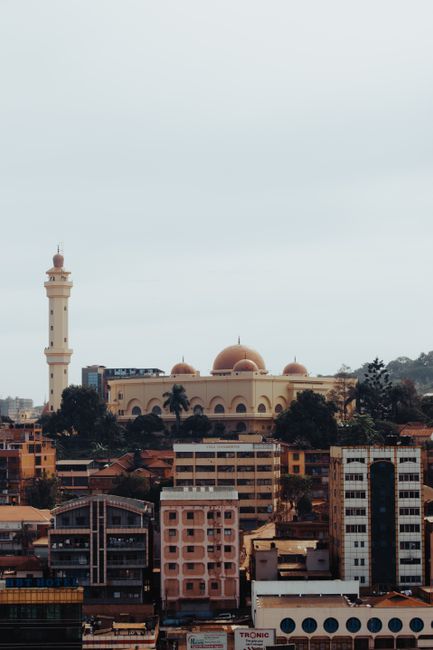
Uganda, which Winston Churchill called the “Pearl of Africa”, packs an astonishing range of landscapes and wildlife into a country about the size of Oregon. It’s best known for mountain gorillas: almost half of the world’s population lives in the misty Bwindi Impenetrable National Park in the southwest, and the Uganda Wildlife Authority (UWA) sells gorilla permits for about half the price of neighboring Rwanda’s. But Uganda is much more than gorillas. You can track chimpanzees in Kibale Forest, watch the Nile force its way through a narrow gorge at Murchison Falls, look for tree-climbing lions in Queen Elizabeth National Park, raft white water near the source of the Nile at Jinja, hike the glaciers of the Rwenzori Mountains, paddle a dugout canoe on terraced Lake Bunyonyi and spot more than 1,000 bird species, including the prehistoric-looking shoebill. Most visitors fly into Entebbe, on the shores of Lake Victoria, and travel by road with a driver-guide, combining a few parks over a week or two. Plan ahead for long drives on rough roads, the online e-visa, gorilla permits that sell out in the busy months, and malaria protection everywhere.
Right now in Uganda
- Wed 19–26°C 66–79°F 4 mm Showers
- Thu 19–27°C 66–81°F 2 mm Partly cloudy
- Fri 20–26°C 69–79°F 10 mm Light rain
- Fri 9 Oct Independence Day
Weather: MET Norway (CC BY 4.0) · Air quality: OpenAQ · Holidays: Nager.Date
Multi-day tours of Uganda
Multi-day tours from local operators. You check dates and book on Viator, our partner; we may earn a commission at no extra cost to you. How we earn money
Uganda at a glance
Uganda covers about 241,000 km² (93,000 square miles), including large areas of lakes, and straddles the equator in East Africa. It’s landlocked, bordered by Kenya, South Sudan, the DR Congo, Rwanda and Tanzania, and shares Lake Victoria, Africa’s largest lake, with Kenya and Tanzania. Most of the country is a high plateau at 1,000–1,500 m (3,300–4,900 ft), which keeps temperatures pleasant, with the Rwenzori Mountains rising to 5,109 m (16,762 ft) on the Congo border and the volcanoes of the Virunga range in the far southwest. Uganda’s population is more than 45 million, one of the youngest in the world. Kampala, the capital, spreads over hills about 35 km (22 miles) from Entebbe and its international airport.
English and Kiswahili are the official languages, and English is widely spoken in tourism; Luganda is the most common local language around Kampala, and dozens of others are spoken across the country. Most Ugandans are Christian, with a sizable Muslim minority. Uganda is on East Africa Time (UTC+3) all year, an hour ahead of Rwanda. Electricity is 240 V, with three-pin British-style type G sockets.
A short history
Before colonial rule, the region was home to several powerful kingdoms, including Buganda around Lake Victoria, Bunyoro and Toro, whose traditional kings still have cultural roles today; you can visit the royal tombs of the Buganda kings at Kasubi in Kampala, a UNESCO World Heritage Site. British explorers searched here for the source of the Nile in the 1860s, and Britain declared a protectorate in the 1890s. Uganda became independent on October 9, 1962. Since then, it has built one of East Africa’s most important tourism industries around its national parks and primates, while agriculture, especially coffee, remains the backbone of the economy.
Uganda’s regions for travelers
- Kampala and Entebbe: the capital and the airport town on Lake Victoria, with the botanical gardens, the Uganda Wildlife Conservation Education Centre and boat trips to the islands.
- The east: Jinja and the source of the Nile, with rafting and kayaking, and Mount Elgon and Sipi Falls.
- The southwest: Bwindi and Mgahinga for gorillas, Lake Bunyonyi, Lake Mburo National Park, and the Kisoro and Kabale highlands.
- The west and the Albertine Rift: Queen Elizabeth National Park, Kibale Forest’s chimpanzees, the crater lakes around Fort Portal, the Rwenzori Mountains and Semuliki.
- The northwest: Murchison Falls National Park and the Ziwa Rhino Sanctuary on the way from Kampala.
- The northeast: remote Kidepo Valley National Park, usually reached by air.
Where to go: gorillas, chimps, the Nile and the savanna
The classic first trip is a southwestern loop: Kibale for chimpanzees, Queen Elizabeth for a savanna safari and a boat trip on the Kazinga Channel, then Bwindi for gorillas and Lake Bunyonyi to relax, finishing with a flight back to Entebbe or a crossing into Rwanda. A northern route adds Murchison Falls and rhino tracking at Ziwa. See our guide to Uganda’s top gorilla park:
- Bwindi Impenetrable National Park: mountain gorilla trekking in four sectors, the gorilla habituation experience, birding and Batwa community visits.
Queen Elizabeth and Kibale
Queen Elizabeth National Park stretches between Lakes George and Edward below the Rwenzori Mountains. Boat trips on the Kazinga Channel pass crowds of hippos, buffalo, elephants and waterbirds, and the southern Ishasha sector is famous for lions that rest in fig trees. To the north, Kibale National Park is East Africa’s best place to track chimpanzees, with many other primates, and the crater lakes and tea estates around Fort Portal make a lovely base. The chimpanzees of the Kyambura Gorge, a sunken forest inside Queen Elizabeth, can also be tracked.
Murchison Falls
In Murchison Falls National Park, the Uganda Wildlife Authority’s largest-category park, the Nile squeezes through a gap only about 7 m (23 ft) wide and plunges into a churning pool. Launch trips upriver to the foot of the falls pass hippos, crocodiles and elephants, and the northern bank has giraffes, lions and antelope on grassy plains. The UWA tariff lists a fee for viewing the top of the falls and a hike along the top-of-falls trail. On the way from Kampala, the Ziwa Rhino Sanctuary lets you track white rhinos on foot.
Jinja, Lake Bunyonyi and the mountains
Jinja, about two hours east of Kampala, sits where the White Nile leaves Lake Victoria, and it’s East Africa’s adventure capital for white-water rafting, kayaking, tubing and bungee jumping. In the southwest, Lake Bunyonyi, near Kabale, is a deep, island-dotted lake among terraced hills, perfect for canoeing and a few quiet days after gorilla trekking. Hikers head to the glaciers and alpine valleys of the Rwenzori Mountains, the “Mountains of the Moon”, or to Mount Elgon and the Sipi Falls in the east.
Mgahinga and the Virunga volcanoes
In the far southwest corner, near Kisoro, Mgahinga Gorilla National Park covers the Ugandan slopes of three Virunga volcanoes, Muhabura, Gahinga and Sabyinyo, on the borders with Rwanda and the DR Congo. It’s Uganda’s smallest gorilla park, with gorilla trekking at the same price as Bwindi, plus golden monkey tracking (US$60), volcano climbs (US$100) and the Batwa trail, which UWA prices at US$80 including entrance. It combines easily with southern Bwindi and with Rwanda’s Volcanoes National Park across the Cyanika border.
Kampala and Entebbe
Most trips begin or end in Entebbe, a green, relaxed town on a peninsula in Lake Victoria, with botanical gardens, lakeside hotels, the Uganda Wildlife Conservation Education Centre and boat trips to the Mabamba swamp to look for shoebills. Kampala, about an hour away, is a busy, energetic city spread over hills, with the Kasubi Tombs, the Uganda Museum, colorful markets such as Owino and Nakasero, craft shops, a lively nightlife and good restaurants. Traffic is heavy, so many visitors stay in Entebbe on their first and last nights.
Uganda’s wildlife
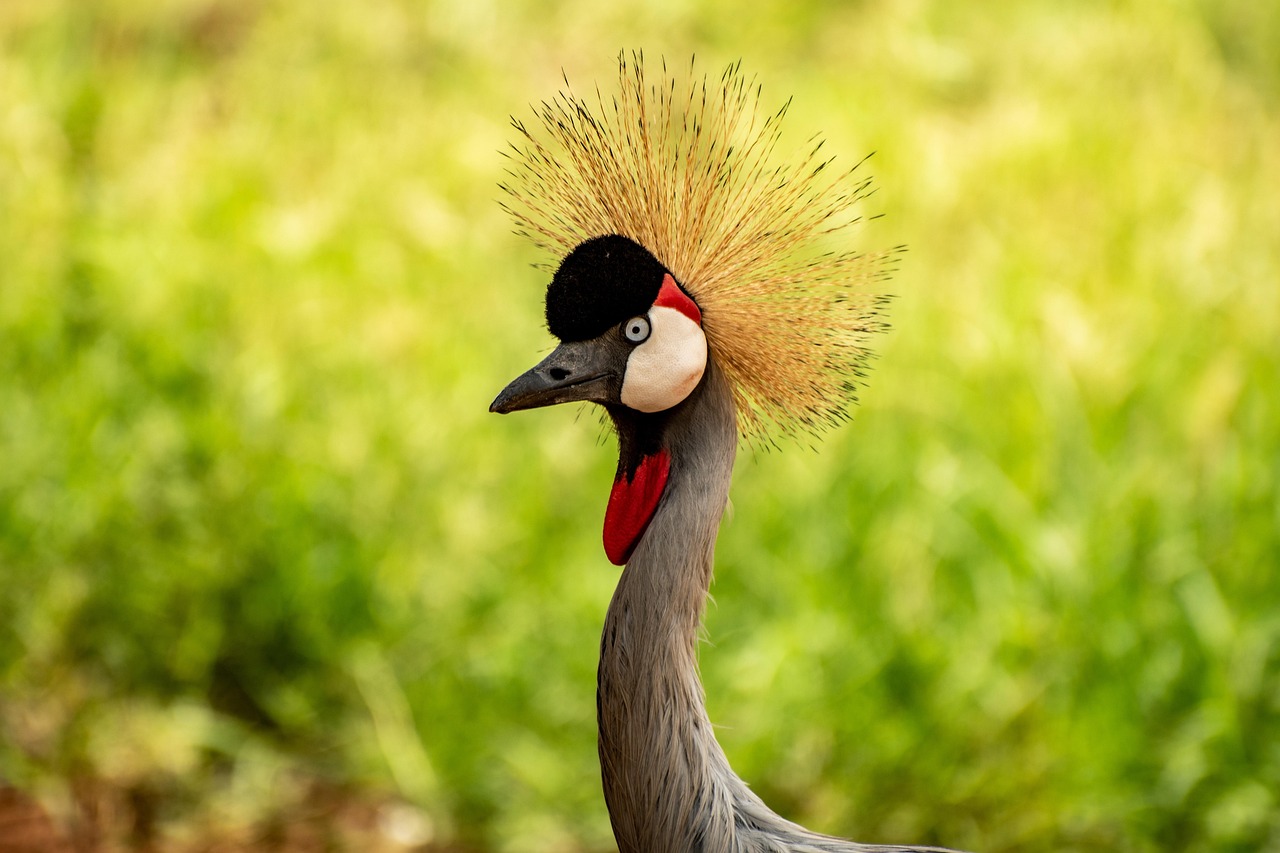
UWA says Bwindi alone protects about 459 mountain gorillas, almost half the world’s population, and Mgahinga, on the Virunga volcanoes, has a habituated gorilla family and golden monkeys. Uganda has around 5,000 wild chimpanzees, most easily seen in Kibale. The savanna parks have elephants, buffalo, lions, leopards, giraffes, Uganda kob and hippos; white rhinos are found only at Ziwa, where they were reintroduced. Birders come for the shoebill in the Mabamba swamp near Entebbe and the Murchison delta, and for more than 20 Albertine Rift endemics in Bwindi and the Rwenzoris.
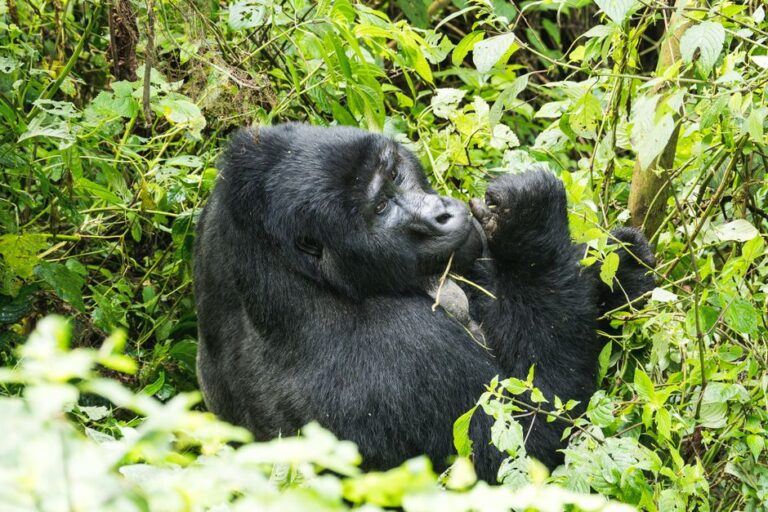
Bwindi Impenetrable National Park Travel Guide
Plan a visit to Bwindi Impenetrable National Park: UWA gorilla permit prices, the April, May and November low-season rate, the habituation experience and its…
Best time to visit Uganda
Uganda is a year-round destination, and because of its altitude it’s rarely extremely hot. Most of the south has two dry seasons, from about December to February and June to August, which are the most popular for gorilla trekking and safaris, and two rainy seasons, from about March to May and September to November, with heavy afternoon storms and muddy roads. The north has a single long rainy season from about April to October. Rain can fall in any month in the forests of Bwindi and Kibale. UWA introduced cheaper gorilla and chimpanzee permits for April, May and November in 2026. The table shows rounded average daily highs and lows in January and July and yearly rainfall for six stations of the Uganda National Meteorological Authority (UNMA), as published by the World Meteorological Organization (WMO); most are 1961–1990 averages.
| Region (UNMA station) | January high / low | July high / low | Rain a year |
|---|---|---|---|
| Lake Victoria and the airport (Entebbe) | 26 °C (79 °F) / 18 °C (64 °F) | 25 °C (77 °F) / 17 °C (63 °F) | about 1,640 mm (65 in) |
| The capital (Kampala) | 29 °C (84 °F) / 18 °C (64 °F) | 27 °C (81 °F) / 17 °C (63 °F) | about 1,260 mm (50 in) |
| Gorilla highlands and Lake Bunyonyi (Kabale) | 24 °C (75 °F) / 11 °C (52 °F) | 24 °C (75 °F) / 9 °C (48 °F) | about 1,020 mm (40 in) |
| Queen Elizabeth and the Rwenzoris (Kasese) | 31 °C (88 °F) / 16 °C (61 °F) | 29 °C (84 °F) / 16 °C (61 °F) | about 900 mm (35 in) |
| Murchison Falls area (Masindi) | 30 °C (86 °F) / 17 °C (63 °F) | 26 °C (79 °F) / 16 °C (61 °F) | about 1,350 mm (53 in) |
| The northwest (Arua) | 31 °C (88 °F) / 17 °C (63 °F) | 26 °C (79 °F) / 16 °C (61 °F) | about 1,450 mm (57 in) |
Uganda month by month
| Month | Weather | Highlights | Crowds and prices |
|---|---|---|---|
| January | Dry and warm | Gorilla trekking and safaris; good birding | Busy early in the month |
| February | Dry and hot in the lowlands | Excellent game viewing at Murchison and Queen Elizabeth | Moderate |
| March | Rains begin | Green landscapes; migrant birds | Quieter |
| April | Wettest month in the south | Low-season gorilla permits (US$600) | Low season |
| May | Rainy | Low-season gorilla and chimp permits | Low season |
| June | Dry season begins | Martyrs’ Day pilgrimage to Namugongo (June 3) | Rising; book permits early |
| July | Dry and cooler | Prime gorilla and chimp tracking | High season |
| August | Mostly dry | Safaris and Nile rafting | Peak season |
| September | Showers return | Good primate tracking; fewer visitors late in the month | Moderate |
| October | Rainy | Independence Day (October 9) | Quieter |
| November | Rainy | Low-season gorilla and chimp permits | Low season |
| December | Drying out | Holiday safaris; birding with migrants | Busy over Christmas |
Public holidays
Uganda’s public holidays include New Year’s Day, January 26, Archbishop Janani Luwum Day (February 16), International Women’s Day (March 8), Good Friday and Easter Monday, Labour Day (May 1), Martyrs’ Day (June 3), when huge numbers of pilgrims gather at Namugongo near Kampala, Heroes’ Day (June 9), Independence Day (October 9), Christmas and Boxing Day, plus Eid al-Fitr and Eid al-Adha. Roads around Kampala are very busy around Martyrs’ Day.
How long to stay: sample itineraries
- 4 days: fly from Entebbe to Kisoro or Kihihi, trek gorillas in Bwindi (2 nights) and fly back.
- 7 days: Entebbe, Kibale for chimps (2 nights), Queen Elizabeth (1–2 nights), Bwindi (2 nights).
- 10 days: add Lake Bunyonyi (2 nights) and Lake Mburo on the way back to Kampala.
- 14 days: start with Murchison Falls and Ziwa in the north, then follow the southwestern loop; or add Jinja for rafting.
- Uganda and Rwanda: trek gorillas in Bwindi and cross at Cyanika or Katuna to Rwanda, using the East Africa Tourist Visa. See our Rwanda travel guide.
Entry, money and costs
The e-visa (last reviewed October 2026)
Most visitors need a visa, applied for online before travel through Uganda’s official immigration portal, visas.immigration.go.ug, run by the Directorate of Citizenship and Immigration Control. A single-entry tourist visa costs US$50 and can be granted for up to three months. You’ll upload a copy of your passport’s photo page, valid for at least six months, a recent passport photo, your travel itinerary and your hotel booking; fees are non-refundable and subject to a bank charge. Once approved, you’ll receive an approval letter by email; print it and present it, with your passport and payment receipt, at the airport or border, where your fingerprints and photo are taken. The immigration service notes that an approval is valid for 90 days from the date of approval, so don’t apply too early. A tourist visa can be extended in the country for up to another 60 days. A transit visa, for up to seven days, also costs US$50.
The East Africa Tourist Visa
Uganda’s immigration service says the East Africa Tourist Visa is a joint tourist visa that allows travel to Uganda, Kenya and Rwanda only, with multiple entries for tourism, for 90 days, at a cost of US$100. It must be issued by the country you enter first, it can’t be extended, and it ends when you leave the three-country area. Tanzania isn’t included. It’s worth it if you’re visiting at least two of the three countries; apply through the same online portal if you’re entering Uganda first.
Yellow fever and other health requirements
On October 2, 2026, Uganda’s immigration service announced that a yellow fever vaccination certificate is no longer a mandatory requirement for entry into Uganda. However, the US CDC still recommends the vaccine for all travelers to Uganda aged nine months and older, and neighbors including Rwanda and Tanzania require a certificate from travelers arriving from Uganda, which is a yellow fever risk country. Some older official pages still list the certificate as a visa attachment, so carry it if you have one. Malaria occurs throughout Uganda, and the CDC recommends antimalarial medicine.
Money and cards
The currency is the Uganda shilling (UGX). On October 5, 2026, the rates published by the Uganda Revenue Authority were about UGX 3,880 to the US dollar for imports and UGX 3,845 for exports, or roughly UGX 3,860. ATMs are common in Kampala, Entebbe and larger towns but rare near the parks, so carry enough shillings for tips, markets and small purchases. Cards are accepted at bigger hotels and lodges, often with a surcharge. US dollars are widely used for permits, lodges and safaris; bring clean notes printed in or after 2009, as older or damaged notes may be refused or exchanged at a lower rate. Mobile money (MTN MoMo and Airtel Money) is everywhere, and UWA accepts it at its offices and park gates along with card terminals and bank transfers.
Gorilla permits and park fees
UWA sets all park fees in its conservation tariff, which was published for July 2024 to June 2026 and updated in February 2026. For foreign non-residents, the official rates in October 2026 were:
| Permit or fee | Foreign non-resident |
|---|---|
| Gorilla trekking permit (Bwindi and Mgahinga) | US$800 (about UGX 3.1 million) |
| Gorilla trekking in April, May and November (low season) | US$600 (about UGX 2.3 million) |
| Gorilla habituation experience (Bwindi) | US$1,500 (US$1,800 from January 1, 2027) |
| Chimpanzee tracking, Kibale | US$250 (US$300 from January 1, 2027; US$200 in the low season) |
| Park entrance, Murchison Falls (per 24 hours) | US$45 |
| Park entrance, Queen Elizabeth, Bwindi, Kibale, Kidepo, Lake Mburo, Mgahinga (per 24 hours) | US$40 |
| Golden monkey tracking, Mgahinga | US$60 |
UWA says a day’s entrance ticket is valid for 24 hours from entry, children aged 5 to 15 pay less, and children under 5 enter free. Gorilla permits include the guide fee, the park entrance for the day and a community contribution, and each gorilla permit holder is entitled to a free day’s entrance to Mount Elgon National Park or the Toro-Semliki Wildlife Reserve within a month of tracking. Gorilla and chimpanzee permits for foreign non-residents are sold through licensed tour operators, and since March 1, 2026, permits must be paid in full at the time of booking. Low-season permits can’t be rescheduled. Book three to six months ahead for June to September and December to February.
Tipping and drones
Tipping is customary: give your driver-guide a daily tip at the end of the trip, and tip ranger guides, trackers and porters after a gorilla or chimp trek; ask your operator for current amounts. Porters at Bwindi charge a set fee, paid at the trailhead. If you plan to fly a drone, you’ll need permission in advance; UWA’s tariff charges filming fees in the parks, with drone filming at 50% of the activity fee, and prior booking is required.
What a trip costs
Prices are approximate, for October 2026, converted at about UGX 3,860 to the US dollar.
| Item | Typical cost |
|---|---|
| Tourist e-visa, single entry | US$50 (about UGX 193,000) |
| Gorilla permit (high / low season) | US$800 / US$600 (about UGX 3.1 million / 2.3 million) |
| Rolex (chapati egg roll) from a street stall | UGX 2,000–5,000 (about US$0.50–1.30) |
| Local lunch (matoke, beans, meat stew) | UGX 10,000–25,000 (about US$2.60–6.50) |
| Mid-range restaurant dinner in Kampala | UGX 40,000–90,000 (about US$10–23) |
| Boda-boda (motorbike taxi), short ride | UGX 3,000–10,000 (about US$0.80–2.60) |
| Domestic flight Entebbe–Kisoro or Kihihi, one way | about US$300–400 |
| Car with driver-guide, per day, plus fuel | about US$120–200 |
| Mid-range lodge near a park, per person per night, full board | about US$150–350 |
A mid-range Uganda safari with a private vehicle, driver-guide, lodges and meals typically costs US$250–450 per person per day, plus permits; budget camping trips and shared tours cost less, and luxury lodges can exceed US$1,000 per night.
Getting there and getting around
By air
Entebbe International Airport (EBB), on Lake Victoria, is Uganda’s only major international airport, about 35–40 km (22–25 miles) from Kampala; allow an hour or more by road, longer at rush hour, although the Kampala–Entebbe Expressway helps. Uganda Airlines, Kenya Airways, Ethiopian Airlines, RwandAir, Emirates, Qatar Airways, Turkish Airlines and KLM connect Entebbe with Nairobi, Kigali, Addis Ababa, Dubai, Doha, Istanbul and Amsterdam. UWA says daily scheduled flights link Entebbe with the Kisoro and Kihihi airstrips near Bwindi in about an hour and ten minutes, and light aircraft serve Murchison Falls, Queen Elizabeth and Kidepo.
Roads, boda-bodas and driving
Uganda drives on the left. Main highways are paved, but the final stretches to the parks are often unpaved, and UWA recommends a 4×4 for most routes to Bwindi, which is about 8–10 hours from Kampala by road. Most visitors travel with a driver-guide from a tour operator. Public buses link the towns, and boda-bodas (motorbike taxis) are everywhere; they’re quick but involved in many accidents, so use app-based services with helmets in Kampala, or avoid them. In the parks, UWA’s speed limit is 40 km/h (25 mph), and driving off the tracks is fined.
Crossing borders
The busiest crossings with Kenya are Busia and Malaba, on the road to Nairobi. Travelers to Rwanda usually cross at Katuna (Gatuna), south of Kabale, or Cyanika, south of Kisoro, which is convenient after trekking in southern Bwindi or Mgahinga; Rwanda requires a yellow fever certificate from travelers arriving from Uganda. Mutukula leads to Tanzania. The borders with South Sudan and the DR Congo are not part of standard tourist routes.
Culture, food and everyday etiquette
Food and drink
Uganda’s national dish is matoke, green bananas steamed in banana leaves and mashed, served with groundnut (peanut) sauce, beans or meat stew. Luwombo is chicken, beef or mushrooms slow-cooked in banana leaves, a Buganda specialty for special occasions. Everyone’s favorite snack is the rolex, a chapati rolled around an omelet with tomatoes and cabbage, sold at roadside stalls. You’ll also eat posho (maize porridge), cassava, sweet potatoes, grilled tilapia from the lakes and roasted goat. Uganda is one of Africa’s biggest coffee producers, and fruit such as pineapples, mangoes and small sweet bananas is excellent. Local beers include Nile Special and Club, and Uganda Waragi is a local gin.
Lodges and camps
Around the parks, you’ll find UWA bandas and campsites, community-run guesthouses, comfortable mid-range lodges and a few luxury lodges. In Bwindi, UWA says the towns of Buhoma and Nkuringo have accommodation from luxury lodges to budget bandas and campsites, as well as restaurants and craft markets. Book lodges near your gorilla sector, as the drive between sectors can take hours.
Etiquette
- Greetings: greetings are important; ask how someone is before getting to business. “Oli otya?” means “how are you?” in Luganda, and “webale” means thank you.
- Dress: Ugandans dress smartly; in towns and villages, cover shoulders and knees, especially at religious sites.
- Photos: ask before photographing people, and don’t photograph government buildings, police or security installations.
- In the parks: UWA’s rules ban littering, picking plants, sounding horns, pets and driving off the tracks, and park gates open from 7 a.m. to 7 p.m.
Safety, health and connectivity
Most visits to Uganda’s parks are trouble-free, and tourism is well organized around licensed operators and UWA rangers. The main issues are practical: health, roads and remote areas.
- Malaria: the US CDC says malaria transmission occurs in all areas of Uganda and recommends antimalarial medicine; use repellent and sleep under a net where provided.
- Yellow fever: the certificate is no longer mandatory for entry since October 2, 2026, but the CDC recommends the vaccine and neighboring countries require proof if you travel on.
- Gorilla trekking health rules: UWA says you mustn’t visit gorillas if you have a cold or other infectious illness; keep 10 m (33 ft) away, don’t eat, drink or smoke during the visit, cover your face and turn away to cough or sneeze, and bury human waste 30 cm (12 in) deep.
- Roads: road accidents are the biggest risk; avoid night driving, insist on a careful driver, wear seatbelts, and be very cautious with boda-bodas.
- Lakes and rivers: the CDC warns that schistosomiasis (bilharzia) can be caught by swimming or wading in freshwater, including Lake Victoria; rafting operators on the Nile at Jinja give safety briefings, and you should never swim near hippos or crocodiles.
- Remote and border areas: the parks and towns in this guide are on Uganda’s main tourist routes. Parts of the far northeast and areas along the borders with South Sudan and the DR Congo are off the usual tourist routes; Kidepo visitors usually fly, and you should check road and border status with UWA and your operator before you travel.
- City precautions: in Kampala, keep phones and bags secure in crowds and traffic, use registered taxis or ride-hailing at night, and don’t carry large amounts of cash.
- Emergencies: call 999 or 112.
Connectivity: buy a prepaid SIM from MTN or Airtel at Entebbe airport with your passport; coverage is good in towns and along main roads but patchy in forests and remote parks, and many lodges offer Wi-Fi.
Things to do: primates, safaris, rafting and hiking
- Primate tracking: gorillas in Bwindi and Mgahinga, chimpanzees in Kibale and the Kyambura Gorge, golden monkeys in Mgahinga.
- Safaris: game drives in Queen Elizabeth, Murchison Falls, Lake Mburo and Kidepo; rhino tracking at Ziwa.
- Boat trips: the Kazinga Channel, the Nile below Murchison Falls, and canoeing on Lake Bunyonyi. See our boat trips guide.
- Hiking: the Rwenzori Mountains, Mount Elgon and Sipi Falls, the Mgahinga volcanoes and Bwindi’s forest trails. See our hiking guide.
- Rafting and kayaking: on the White Nile near Jinja.
- Birding: shoebills at Mabamba and Murchison, Albertine Rift endemics in Bwindi.
- Culture: the Kasubi Tombs and markets in Kampala, the Batwa trail at Mgahinga and Bwindi, and the Namugongo shrine. See our city sightseeing guide.
What to pack for Uganda
Waterproof hiking boots and gaiters for gorilla and chimp treks, long trousers and long-sleeved shirts in neutral colors, gardening gloves for grabbing vines, a waterproof jacket, a warm fleece for the highlands, a hat, sunglasses and sunscreen, insect repellent with DEET or picaridin, binoculars, a camera with a zoom lens (no flash for primates), a headlamp, a refillable water bottle, any antimalarials and medicines, your yellow fever certificate if you have one, small US dollar notes and shillings, and a power adapter for British-style type G sockets. See our hiking shoes, rain jackets and travel adapters guides.
Uganda travel FAQ
Do I need a visa for Uganda?
Most visitors do. Apply online at visas.immigration.go.ug; a single-entry tourist visa costs US$50, and the approval is valid for 90 days.
How much is a gorilla permit in Uganda?
US$800 for foreign non-residents, or US$600 in April, May and November, according to the Uganda Wildlife Authority. The gorilla habituation experience costs US$1,500, rising to US$1,800 on January 1, 2027.
Is Uganda cheaper than Rwanda for gorillas?
Yes. Uganda’s permit is US$800 (US$600 in the low season), compared with US$1,500 in Rwanda, though getting to Bwindi takes longer.
Do I need a yellow fever certificate for Uganda?
Not for entry since October 2, 2026, according to Uganda’s immigration service. The CDC still recommends the vaccine, and Rwanda and Tanzania ask for a certificate if you arrive from Uganda.
What does the East Africa Tourist Visa cover?
Uganda, Kenya and Rwanda only, for 90 days with multiple entries, at US$100. It doesn’t include Tanzania.
When is the best time to visit Uganda?
December to February and June to August are the driest months for trekking and safaris; April, May and November are wetter but bring cheaper gorilla permits.
How do I book a gorilla permit in Uganda?
Through a licensed tour operator, who books with UWA; since March 1, 2026, permits must be paid in full when they’re booked.
Where can I see chimpanzees in Uganda?
Kibale National Park is the best place, with permits at US$250; the Kyambura Gorge in Queen Elizabeth National Park is another option.
Is there malaria in Uganda?
Yes, in all areas, according to the US CDC, which recommends antimalarial medicine for travelers.
How do I get from Entebbe to Bwindi?
Fly to Kihihi or Kisoro in about 1 hour 10 minutes, then drive to your lodge, or travel 8–10 hours by road with an overnight stop.
Should I bring US dollars to Uganda?
Yes, clean notes from 2009 or later for permits, lodges and tips, plus Uganda shillings for local purchases; ATMs are scarce near the parks.
Can I combine Uganda and Rwanda?
Yes. Cross by road at Cyanika or Katuna after trekking in Bwindi or Mgahinga, or fly between Entebbe and Kigali; the East Africa Tourist Visa covers both countries, and Rwanda asks for a yellow fever certificate if you arrive from Uganda.
How many days do I need in Uganda?
Four days for a fly-in gorilla trip; 10–14 days to combine gorillas, chimps, Queen Elizabeth and Murchison Falls.
Sources and last review
Researched and last reviewed on 5 October 2026. Tourist and transit visa fees, requirements, approval validity, extensions, biometric capture, the East Africa Tourist Visa and the end of the yellow fever certificate requirement: Uganda’s National Citizenship and Immigration Control; gorilla, habituation, chimpanzee, golden monkey and entrance fees, 24-hour tickets, child ages, booking through licensed operators, payment methods, permit benefits, low-season rates, the 2027 changes, the end of the seven-day reservation window and gorilla tracking rules: the Uganda Wildlife Authority’s conservation tariff and its February 2026 notice; Bwindi’s gorilla numbers, accommodation, road routes, 4×4 advice and flights: the Uganda Wildlife Authority; malaria, yellow fever recommendations and schistosomiasis: the US CDC; climate averages: the Uganda National Meteorological Authority via the World Meteorological Organization; the exchange rate: the Uganda Revenue Authority’s published rates. Area and population, history, languages, plugs, chimpanzee numbers, seasons, holidays, airlines, border crossings, food, US dollar notes, mobile networks, emergency numbers and typical prices are general references or estimates, flagged for checking. Rules and prices change, so check the official sites before you go.
Plan your trip
Partner links: TravelerCenter may earn a commission if you book, at no extra cost to you.
🇹🇿 Useful Swahili phrases for Uganda
All 38 Swahili phrases: restaurant, hotel, emergencies, romance (printable) →