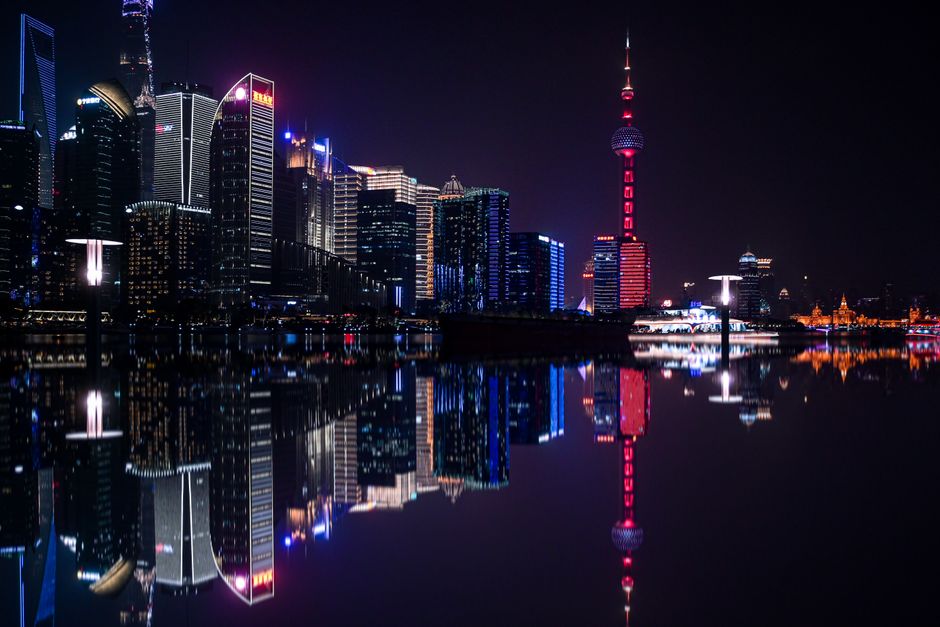
Shanghai is China’s largest and most cosmopolitan city, a port on the Huangpu River near the mouth of the Yangtze that grew from a walled county town into the “Paris of the East” in the 1920s and 1930s and then, from the 1990s, into a forest of skyscrapers. Stand on the Bund, the riverside promenade of colonial-era banks and hotels, and look across the river to Lujiazui in Pudong, where the Oriental Pearl Tower, the Jin Mao Tower and the twisting Shanghai Tower, one of the tallest buildings in the world, light up at night. Between the two eras lie the classical Yu Garden in the old town, the plane-tree-lined streets of the former French Concession, the shikumen lane houses of Xintiandi and Tianzifang, the great collections of the Shanghai Museum, and some of China’s best restaurants, from soup dumplings to fine dining. The world’s first commercial maglev train links Pudong Airport with the city, high-speed trains reach Suzhou in under half an hour and Hangzhou in about an hour, and canal towns like Zhujiajiao are a short trip away. The best months are April, May, October and November; summers are hot, humid and wet.
Right now in Shanghai
- Wed13–25°C56–77°FClear
- Thu14–25°C56–77°FMostly clear
- Fri18–25°C64–76°FCloudy
Top tours in Shanghai
See all tours for Shanghai →
From local operators, with prices and reviews; you check availability and book on Viator, our partner. We may earn a commission at no extra cost to you. How we earn money
Shanghai at a glance
- Best for: skylines, colonial architecture, museums, food, shopping, nightlife and day trips to gardens and water towns.
- How long: 3 days for the city; 5–6 with day trips to Suzhou, Hangzhou or a water town.
- Best time: April to May and October to November; June brings the plum rains and July to August heat, and January and February are cold and damp.
- Getting there: by air to Pudong (PVG) or Hongqiao (SHA), or by high-speed train from Beijing (about 4.5–6 hours), Hangzhou, Suzhou and Nanjing.
- Getting around: by metro, which is one of the world’s largest, by taxi or DiDi, and on foot in the central districts.
- Good to know: many museums close on Mondays and need a free booking; the Bund is busiest on holiday evenings.
- Before you go: visa-free entry, the 240-hour transit, the arrival card, payments and general safety are in our China travel guide.
Shanghai’s areas and where to stay
The Huangpu River divides the city into Puxi (“west of the river”), the historic center, and Pudong (“east of the river”), the modern financial district and the airport side. Most sights are within a few metro stops of People’s Square.
The Bund and Nanjing Road
The classic base: grand hotels in the restored banks and trading houses of the Bund and around East Nanjing Road, the pedestrian shopping street that runs west to People’s Square, with river views and the old town a short walk south.
People’s Square and Jing’an
People’s Square is the hub of the metro, with the Shanghai Museum, the Grand Theatre and the Urban Planning Exhibition Center. West along West Nanjing Road, Jing’an is an upscale district of malls, international hotels and the golden Jing’an Temple.
The former French Concession and Xintiandi
Southwest of the center, the former French Concession, in today’s Xuhui and Huangpu districts, is Shanghai’s most pleasant area to stay and stroll: tree-lined streets such as Wukang Road and Anfu Road, art deco apartments, villas, boutique hotels, cafés and bars, with the restored shikumen lanes of Xintiandi and Tianzifang nearby.
Lujiazui and Pudong
Across the river, Lujiazui has luxury hotels in the skyscrapers, many with sweeping views over the Bund, and is one metro stop from East Nanjing Road; it is convenient for the airport and for Shanghai Disney Resort, but quiet at night.
Where to stay in Shanghai
- The Bund and East Nanjing Road: historic and luxury hotels with river views.
- People’s Square and Jing’an: international and mid-range hotels on the metro hub.
- The former French Concession and Xintiandi: boutique hotels, cafés and nightlife.
- Lujiazui: skyscraper hotels with skyline views.
- Hongqiao: airport and transport hotels near the high-speed rail station.
Rooms fill and prices rise during the May Day and National Day holidays, the Formula 1 Chinese Grand Prix in spring and big trade fairs.
Top things to see in Shanghai
The Bund
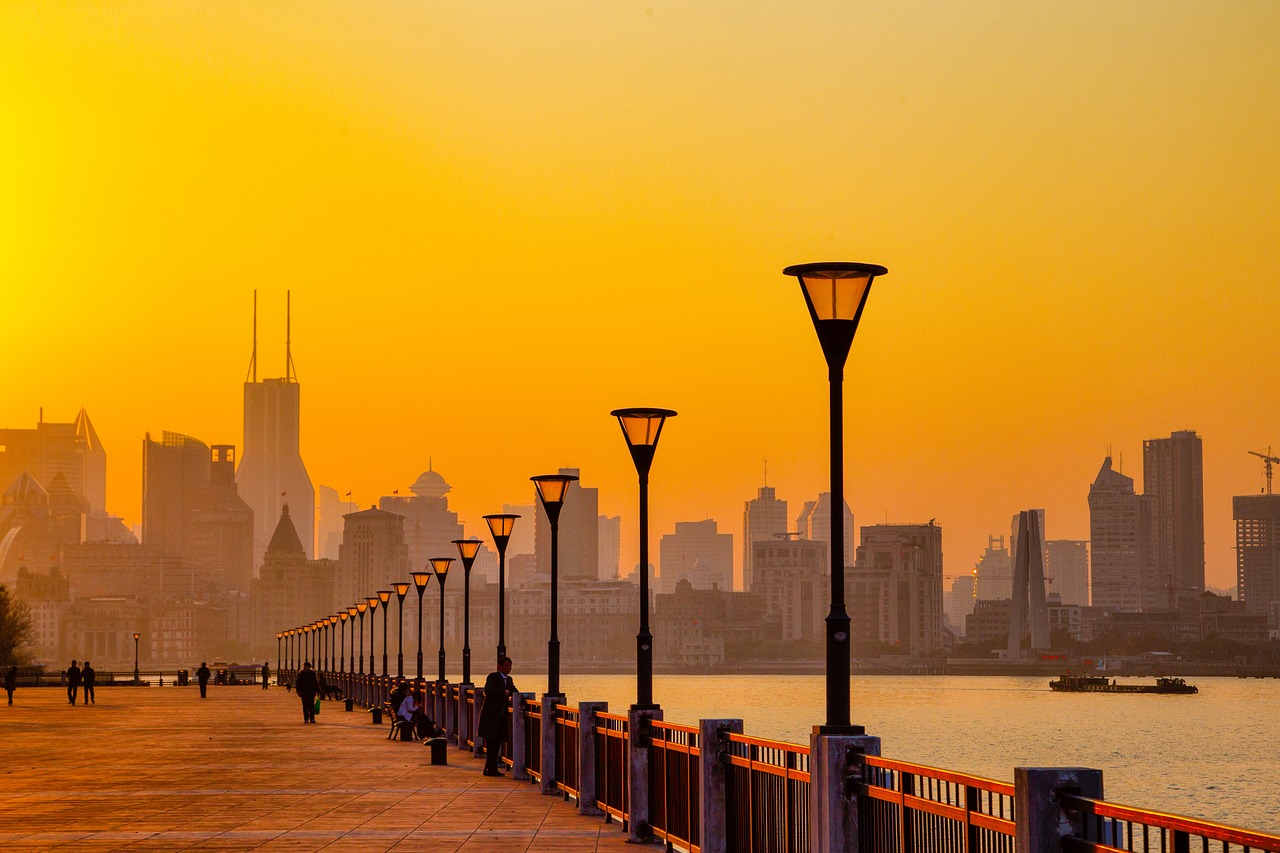
Running for about 1.5 km (1 mile) along the west bank of the Huangpu, the Bund (Waitan) is lined with more than 50 buildings from the late 19th and early 20th centuries, in neoclassical, Gothic, Renaissance and art deco styles, built for the banks, trading houses and hotels of the foreign concessions: look for the domed former HSBC building, the Custom House with its clock tower and the green-roofed Peace Hotel. Walk the raised riverside promenade early in the morning, when people practice tai chi, and again after dark, when both banks are illuminated. The Bund is free and open at all hours, but it is extremely crowded on holiday evenings, when police manage the flow.
Lujiazui and the Shanghai Tower
On the Pudong bank, the Shanghai Tower, completed in 2015 and 632 m (2,073 ft) high, has an observation deck on its 118th floor; the neighboring Shanghai World Financial Center, nicknamed the “bottle opener,” has a glass-floored skywalk; and the pink-balled Oriental Pearl Tower of 1994 is the city’s retro icon. The elevated walkways around the Lujiazui roundabout and the riverside park give the best views back to the Bund. The Bund Sightseeing Tunnel and public ferries cross the river; the ferry is cheap and gives a fine view.
Yu Garden and the old town
In the old walled city, the Yu Garden (Yuyuan), laid out in the 16th century for a Ming official, is a classical garden of rockeries, ponds, pavilions and a dragon-topped wall. It is surrounded by the busy Yuyuan Bazaar of tiled-roof shops and the City God Temple, and the zigzag bridge to the Huxinting teahouse. Come at opening time to see the garden before the crowds; the Lantern Festival brings spectacular light displays.
The Shanghai Museum
The Shanghai Museum has one of the finest collections of Chinese art in the world: ancient bronzes, ceramics, jade, calligraphy, paintings and furniture. It now has two sites: the original museum on People’s Square and the much larger Shanghai Museum East in Pudong, opened in 2024. Entry to the permanent galleries is free with an advance booking, and both sites are usually closed on Mondays.
The former French Concession
Explore on foot or by bike: the tree-lined avenues of Wukang Road and Hengshan Road, the Wukang Mansion (Normandie Apartments), Sinan Mansions, the former residences of Sun Yat-sen and Zhou Enlai, Fuxing Park and the lane houses of Tianzifang, now a maze of craft shops and cafés. Xintiandi, a restored shikumen district of restaurants and bars, includes the site of the First National Congress of the Communist Party of China.
Jing’an Temple and the Jade Buddha Temple
The Jing’an Temple, with gilded roofs among the skyscrapers of West Nanjing Road, and the Jade Buddha Temple, with two white jade Buddhas brought from Myanmar in the 19th century, are Shanghai’s best-known Buddhist temples.
More classic sights
- Nanjing Road: the neon-lit pedestrian shopping street, at its brightest at night.
- The West Bund: a riverside promenade of art museums in former industrial buildings, including the Long Museum and the Yuz Museum.
- Shanghai Disney Resort: in Pudong, about 45 minutes by metro from the center.
- Duolun Road and the North Bund: 1930s architecture and the memorial to the writer Lu Xun in Hongkou.
- Shanghai Jewish Refugees Museum: the story of about 20,000 Jews who found refuge in Shanghai during the Second World War, in the former Ohel Moishe synagogue.
Other things to do in Shanghai
Food and drink
Shanghai is famous for xiaolongbao, delicate soup dumplings, best eaten carefully with vinegar and ginger; shengjianbao, pan-fried pork buns with crispy bottoms; hongshao rou, red-braised pork belly; hairy crab in autumn; and the sweet, soy-rich cooking of the Yangtze delta. Breakfast stalls sell cifan sticky rice rolls and scallion pancakes. The city also has a huge range of regional Chinese restaurants, international fine dining, coffee shops on almost every corner, and cocktail bars on rooftops overlooking the Bund.
River cruises and night views
Huangpu River cruises leave from the Shiliupu wharf near the Bund and from Pudong in the evening, for about 45–60 minutes of lit-up skylines. For views from above, combine the Shanghai Tower’s deck with a drink in one of the Bund’s rooftop bars.
Shows and nightlife
Watch the acrobats of the Shanghai Circus World or ERA show, go to a jazz bar at the Peace Hotel, or catch opera and concerts at the Grand Theatre. Nightlife centers on the Bund, the French Concession, Xintiandi and Jing’an.
Shopping
Malls line Nanjing Road and Lujiazui; tailors in the South Bund Fabric Market make suits and qipao dresses in a few days; and the French Concession has design boutiques. See our city sightseeing and boat trips guides.
Day trips from Shanghai
- Suzhou: the UNESCO-listed classical gardens, canals and silk, about 25–30 minutes by high-speed train.
- Hangzhou: West Lake and the Longjing tea villages, about 1 hour by high-speed train; best overnight.
- Zhujiajiao: a canal town of stone bridges in Shanghai’s Qingpu district, about 1 hour by metro Line 17.
- Wuzhen and Xitang: larger, carefully restored water towns in Zhejiang, about 1.5–2 hours by road.
- Tongli and Zhouzhuang: classic water towns near Suzhou.
- Nanjing: the former capital, with the Ming city wall and Sun Yat-sen’s mausoleum, about 1–1.5 hours by high-speed train.
Getting there and getting around
By air
Shanghai Pudong International Airport (PVG), about 30 km (19 miles) east of the center, handles most international flights and is a designated port for the 240-hour visa-free transit, as are Hongqiao airport and the Shanghai cruise port. According to the city government, metro Line 2 takes about an hour to People’s Square for about 7 yuan, and a taxi takes about 50 minutes and costs around 180 yuan. Shanghai Hongqiao International Airport (SHA), 13 km (8 miles) west of the center, mostly serves domestic and regional flights and is next to Hongqiao railway station; the Airport Link Line connects the two airports in about 40 minutes.
The maglev
The Shanghai Maglev, the world’s first commercial magnetic-levitation line, opened in 2004, runs about 30 km (19 miles) between Pudong Airport and Longyang Road station in Pudong in about 8 minutes, at up to 300 km/h (186 mph). According to the operator, a single ticket costs 50 yuan in standard class and 100 yuan in VIP class, with 20% off on the day of your flight if you show your air ticket. At Longyang Road, change to metro Line 2 for the center. Trains run from early morning to the evening, every 15–20 minutes.
By train
Shanghai Hongqiao is the main high-speed station, for Beijing (about 4.5–6 hours), Hangzhou, Suzhou, Nanjing and the south; Shanghai Station and Shanghai South also have high-speed and regional trains. Check which station your train uses. Book on the 12306 website or app with your passport.
Around town
The metro has 20 lines, English signs and fares from 3 yuan; pay with Alipay or WeChat Pay QR codes or a transport card. Taxis and DiDi are plentiful, though slow at rush hour. Walking is the best way to see the Bund, the old town and the French Concession, and shared bikes are useful for short hops.
When to go and how long to stay
Shanghai has a humid subtropical climate. Spring (April–May) is mild and pleasant, with blossoms in the parks. June and early July bring the plum rains (meiyu), weeks of gray, humid, showery weather. Summer (July–August) is hot and sticky, with highs around 32 °C (90 °F), thunderstorms and, some years, typhoons. Autumn (October–November) is the best season, sunny and mild, with hairy-crab season. Winter (December–February) is cold and damp rather than freezing, with lows around 2–4 °C (36–40 °F), occasional snow, and indoor heating that is not always effective. The table uses the 1991–2020 climate normals for the Baoshan station of the China Meteorological Administration (CMA), Shanghai’s reference station north of the center, as submitted to the World Meteorological Organization (WMO): average daily highs and lows, total precipitation, and days with at least 1 mm of rain or snow.
| Month | Average high / low | Rain (days with 1 mm or more) | What to expect |
|---|---|---|---|
| January | 8 °C (47 °F) / 2 °C (36 °F) | 70 mm (2.7 in), 8 days | Cold and damp; quiet |
| February | 10 °C (50 °F) / 4 °C (38 °F) | 64 mm (2.5 in), 7 days | Cold; Chinese New Year crowds |
| March | 14 °C (58 °F) / 7 °C (44 °F) | 86 mm (3.4 in), 10 days | Cool; spring blossom begins |
| April | 20 °C (68 °F) / 12 °C (54 °F) | 77 mm (3.0 in), 8 days | Mild and pleasant; very good |
| May | 25 °C (77 °F) / 18 °C (64 °F) | 90 mm (3.6 in), 8 days | Warm and sunny; excellent |
| June | 28 °C (82 °F) / 22 °C (71 °F) | 197 mm (7.7 in), 10 days | Plum rains; humid |
| July | 32 °C (90 °F) / 26 °C (79 °F) | 147 mm (5.8 in), 8 days | Hot and humid; storms |
| August | 32 °C (89 °F) / 26 °C (79 °F) | 210 mm (8.3 in), 10 days | Hot; the wettest month; typhoon risk |
| September | 28 °C (82 °F) / 22 °C (72 °F) | 116 mm (4.6 in), 7 days | Warm; humid early in the month |
| October | 23 °C (73 °F) / 17 °C (62 °F) | 71 mm (2.8 in), 5 days | Mild and sunny; ideal; Golden Week crowds |
| November | 18 °C (64 °F) / 11 °C (51 °F) | 58 mm (2.3 in), 7 days | Cool and clear; autumn leaves |
| December | 11 °C (52 °F) / 4 °C (40 °F) | 49 mm (1.9 in), 6 days | Cold; Christmas lights |
Shanghai receives about 1,240 mm (49 in) of rain a year, with peaks in June and August.
Three days in Shanghai
Day one, the Bund in the morning, East Nanjing Road and People’s Square with the Shanghai Museum, and the river and skyline at night from a cruise. Day two, Yu Garden at opening time, the old town, then the French Concession, Tianzifang and dinner in Xintiandi. Day three, Lujiazui and the Shanghai Tower, the West Bund museums, and the Bund again after dark.
Five days or more
Add day trips to Suzhou and Zhujiajiao, or an overnight in Hangzhou, a day at Shanghai Disney Resort, or continue to Beijing by high-speed train.
What a trip to Shanghai costs
Prices are approximate, for October 2026, converted at about 6.74 yuan to the US dollar.
| Item | Typical cost |
|---|---|
| Maglev single, standard class | 50 CNY, or 40 CNY with a same-day air ticket (about US$7.40 / US$5.90) |
| Metro ride | 3–10 CNY (about US$0.45–1.50) |
| Shanghai Tower observation deck | about 180–200 CNY (about US$27–30) |
| Yu Garden ticket | about 30–40 CNY (about US$4.50–5.90) |
| Basket of xiaolongbao | 25–60 CNY (about US$3.70–8.90) |
| Dinner in a mid-range restaurant | 100–250 CNY (about US$15–37) per person |
| Huangpu River evening cruise | about 120–200 CNY (about US$18–30) |
| Mid-range hotel double, per night | 600–1,200 CNY (about US$89–178) |
Practical tips for Shanghai
- Book museums: the Shanghai Museum and many others are free but need a booking, and close on Mondays.
- Time the Bund: come early for quiet, after dark for the lights, and avoid holiday evenings if you dislike crowds.
- Check the station: Shanghai has several railway stations; Hongqiao is far from the center.
- Ride the maglev one way: it is fastest from Pudong to Longyang Road; at night, check the last train or take Line 2.
- Carry an umbrella: rain is frequent from May to September.
- Set up payments: almost everything is paid by phone; keep a little cash.
Safety
Shanghai is one of the safest big cities in the world, with very little violent crime. The best-known scam targets visitors on East Nanjing Road and the Bund: friendly young people suggest a teahouse, bar or art exhibition, and the bill comes to hundreds of dollars; politely decline. Watch out for fake tour touts and unlicensed taxis at the airport and railway stations, and use the official taxi lines or DiDi. Traffic is heavy, and electric scooters often ride on sidewalks and ignore lights; look carefully when crossing. In summer, heat and humidity are intense, and heavy rain or typhoons can flood roads and disrupt flights and trains; follow local alerts. Air quality is usually moderate, worse on some winter days. Pickpockets work crowded spots such as Nanjing Road and the metro. Carry your passport, as police checks are common. In an emergency, call 110 for police, 120 for an ambulance and 119 for fire.
What to pack for Shanghai
Comfortable walking shoes, light, breathable clothes and an umbrella from May to September, layers in spring and autumn, a warm coat for the damp winter, a power bank for mobile payments and maps, and smart-casual clothes for rooftop bars. China uses 220 V, with flat two-pin, round two-pin and angled three-pin sockets. See our rain jackets and travel adapters guides.
Shanghai travel FAQ
How much is the Shanghai maglev?
A single ticket costs 50 yuan in standard class and 100 yuan in VIP class, with 20% off if you show a same-day air ticket. The ride from Pudong Airport to Longyang Road takes about 8 minutes.
How do I get from Pudong Airport to the city?
By maglev to Longyang Road and then metro Line 2, by metro Line 2 directly in about an hour for about 7 yuan, or by taxi in about 50 minutes for around 180 yuan.
How many days do I need in Shanghai?
Three days for the city; five or six to add day trips to Suzhou, Hangzhou or a water town.
What is the best time to visit Shanghai?
April to May and October to November. June brings the plum rains, July and August are hot and humid, and winters are cold and damp.
Can I use the 240-hour visa-free transit in Shanghai?
Yes. Pudong and Hongqiao airports and the Shanghai cruise port are designated ports, if you are from an eligible country and hold an onward ticket to a third country or region.
Is the Shanghai Museum free?
Yes, entry to the permanent galleries at both sites is free with an advance booking; they are usually closed on Mondays.
How do I get from Shanghai to Suzhou?
By high-speed train from Shanghai, Shanghai Hongqiao or Shanghai West to Suzhou or Suzhou North in about 25–30 minutes.
Where is the best view of the Bund?
From the Pudong riverside promenade or the Lujiazui walkways for the Bund’s facades, and from the Bund itself or a river cruise for the Pudong skyline.
Is Shanghai safe for tourists?
Yes, very. Beware of tea-house and bar scams on Nanjing Road and the Bund, and take care with traffic and scooters.
Where should I stay in Shanghai?
Near the Bund or People’s Square for the sights, in the former French Concession for character and nightlife, or in Lujiazui for skyline views.
Plan your trip
Partner links: TravelerCenter may earn a commission if you book, at no extra cost to you.
🇨🇳 Useful Mandarin Chinese phrases for Shanghai
All 38 Mandarin Chinese phrases: restaurant, hotel, emergencies, romance (printable) →
Sources · last reviewed 4 October 2026
Researched and last reviewed on 4 October 2026. Airport transfers, Line 2 fare and journey time, taxi costs and the Airport Link Line: the Shanghai municipal government’s English portal; maglev fares and the air-ticket discount: the Shanghai Maglev Transportation Development Company; visa-free transit ports: the National Immigration Administration; train booking with a passport: China Railway’s official 12306 site; climate normals: the China Meteorological Administration via the World Meteorological Organization’s 1991–2020 normals (Baoshan station); the exchange rate: the CFETS central parity rate. Maglev speed and journey time, the Shanghai Museum East opening and Monday closures, Shanghai Tower facts, Bund history, train times, opening hours and typical prices are general references or estimates, flagged for checking. Prices and rules change, so check locally before you go. For entry rules, money and general safety, see our China travel guide.
Data: Weather: MET Norway (CC BY 4.0) · Sea temperature: NOAA CoastWatch · Rates: ECB · Costs: World Bank ICP and price levels · Wikidata (CC0)