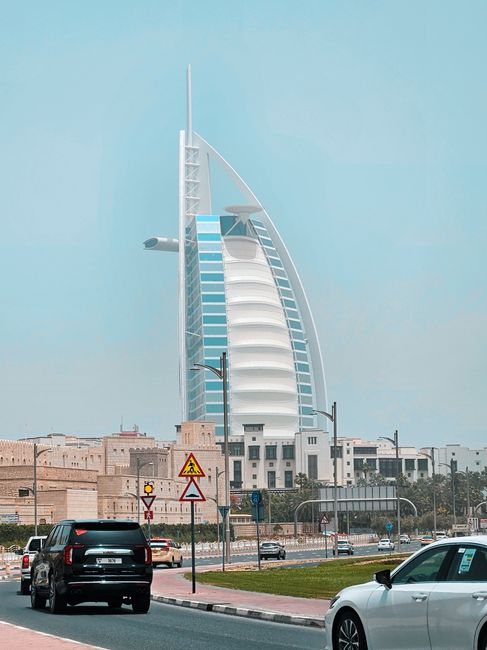
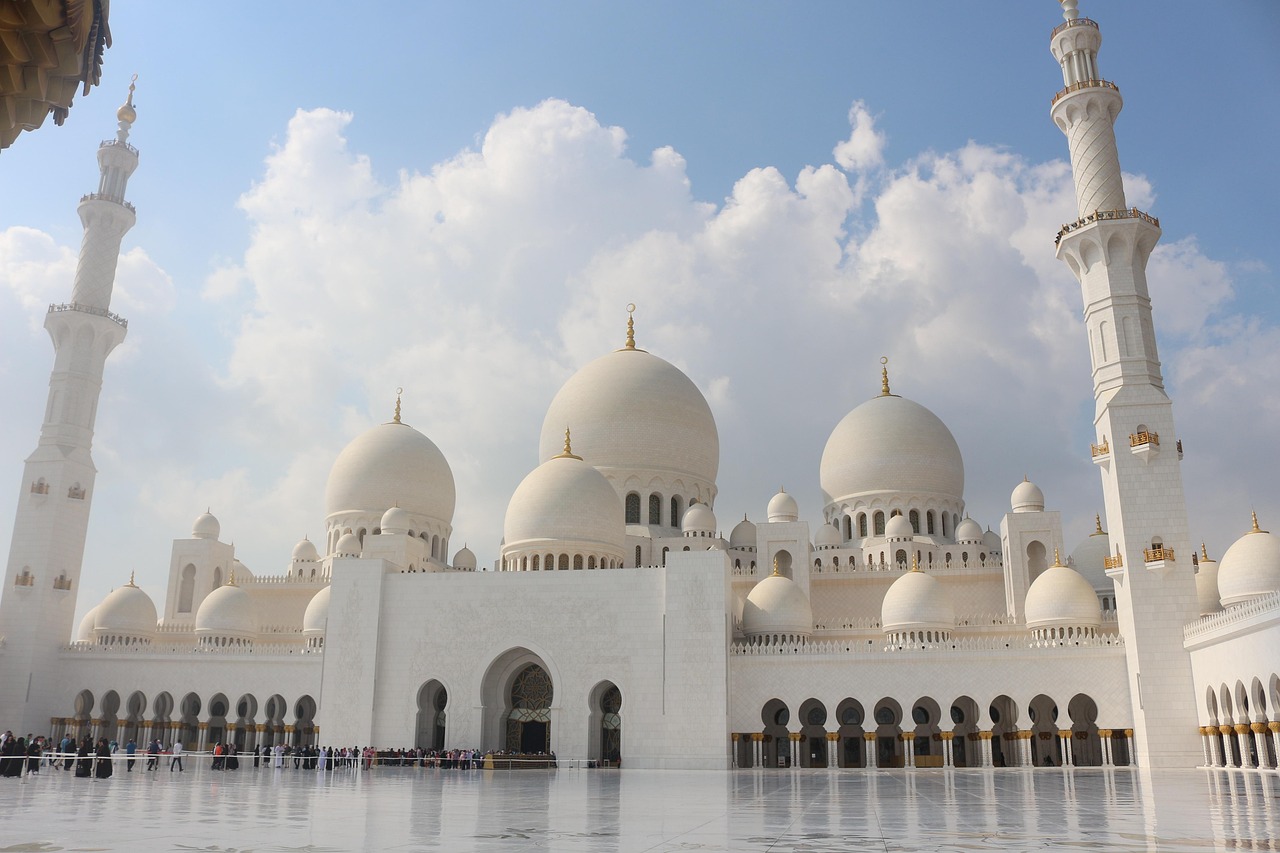
The United Arab Emirates is a federation of seven emirates on the southeastern corner of the Arabian Peninsula, where desert, mountains and two seas meet, and where some of the world’s most ambitious cities have risen in a single lifetime. Visitors come for Dubai’s skyline, beaches and souks, the Sheikh Zayed Grand Mosque and the Saadiyat museums of Abu Dhabi, Sharjah’s cultural heritage, the oases and forts of Al Ain, the mountains of Ras Al Khaimah and the clear waters of Fujairah’s east coast, as well as for winter sunshine, desert evenings among red dunes and stopovers between Europe, Asia, Africa and Australia. Distances are short: Dubai is about 1.5 hours from Abu Dhabi and two hours from the Gulf of Oman coast, and since 2026 a new passenger railway links the capital, Dubai and Fujairah. Many nationalities receive a free visa on arrival. Plan around two things: the climate, which is warm and sunny from November to March but extremely hot from May to September, and the law, which is relaxed for visitors in many ways but strict on alcohol in public, drugs, some medicines, dress and behavior.
Right now in United Arab Emirates
- Wed 31–40°C 87–104°F Mostly clear
- Thu 31–39°C 87–103°F Clear
- Fri 31–35°C 88–94°F Clear
Weather: MET Norway (CC BY 4.0)
Multi-day tours of United Arab Emirates
Multi-day tours from local operators. You check dates and book on Viator, our partner; we may earn a commission at no extra cost to you. How we earn money
The UAE at a glance: seven emirates
The UAE covers about 83,600 km² (32,300 square miles), roughly the size of South Carolina or Austria, with a population of about 10 million, of whom the large majority are foreign residents, from South Asia, the Arab world, the Philippines, Europe and beyond. Emiratis are a minority in their own country, which gives the cities an international character; Arabic is the official language, but English is spoken almost everywhere. The federation was founded on 2 December 1971, after the end of British protection treaties, with Ras Al Khaimah joining in early 1972. Each emirate has its own ruler and keeps control over many local matters, such as alcohol rules, hotel fees and transport, while the federal government in Abu Dhabi handles visas, defense and foreign affairs.
Time and the weekend: the UAE uses Gulf Standard Time (UTC+4) all year, with no daylight saving. Since 2022 the official weekend has been Saturday and Sunday, with a shorter working day on Friday for Friday prayers; Sharjah’s government works a four-day week.
The emirates
- Abu Dhabi: the largest emirate and the capital, with the Grand Mosque, the Louvre Abu Dhabi, Yas Island, the oasis city of Al Ain and the Liwa desert.
- Dubai: the biggest city and travel hub, with the Burj Khalifa, beaches, souks, the Palm and the mountain enclave of Hatta.
- Sharjah: the cultural capital, with major museums, a restored old town, the UNESCO-listed Faya Palaeolandscape and east-coast towns; a dry emirate.
- Ajman: the smallest emirate, with a quiet beach and good-value hotels.
- Umm Al Quwain: a sleepy emirate of lagoons, mangroves and an archaeological site.
- Ras Al Khaimah: the far north, with Jebel Jais, beach resorts and heritage sites.
- Fujairah: the east coast on the Gulf of Oman, with diving, beaches and the oldest mosque in the UAE.
Where to go: cities, desert, mountains and coast
For a first trip of a week, most visitors combine Dubai with Abu Dhabi and a desert evening; with more time, add Sharjah, Al Ain, the mountains of Ras Al Khaimah or the east coast.
Dubai
Dubai has the Burj Khalifa and the Dubai Fountain, the creek and the Gold and Spice Souks, beaches at Jumeirah and JBR, Palm Jumeirah, the Museum of the Future and desert safaris. The Metro links the airport with the city. See our Dubai guide.
Abu Dhabi
The capital has the Sheikh Zayed Grand Mosque, the Louvre Abu Dhabi and the new Saadiyat museums, with the Guggenheim Abu Dhabi due to open on 11 December 2026, plus Qasr Al Hosn, mangroves and the theme parks and circuit of Yas Island. See our Abu Dhabi guide.
Sharjah
Next to Dubai, Sharjah has the Museum of Islamic Civilization, the Heart of Sharjah and the Sharjah Art Foundation, the Stone Age sites of Mleiha, and Khor Fakkan on the east coast. See our Sharjah guide.
Al Ain
The inland garden city has date-palm oases watered by ancient falaj channels, mud-brick forts, Bronze Age tombs and Jebel Hafit, all part of the UAE’s first UNESCO World Heritage Site. See our Al Ain guide.
Ras Al Khaimah
The northern emirate has Jebel Jais, with the UAE’s highest road and a record-breaking zipline, beach resorts at Al Marjan Island and Al Hamra, Dhayah Fort and the abandoned pearling town of Al Jazirah Al Hamra. See our Ras Al Khaimah guide.
Fujairah and the east coast
On the Gulf of Oman, Fujairah has the country’s best snorkeling and diving at Snoopy Island and Dibba, the Al Bidya Mosque, Fujairah Fort and Wadi Wurayah, inscribed by UNESCO in 2026. See our Fujairah guide.
Ajman
The smallest emirate is a relaxed beach base close to Sharjah and Dubai, with a fort museum, a dhow yard and the mangroves of Al Zorah. See our Ajman guide.
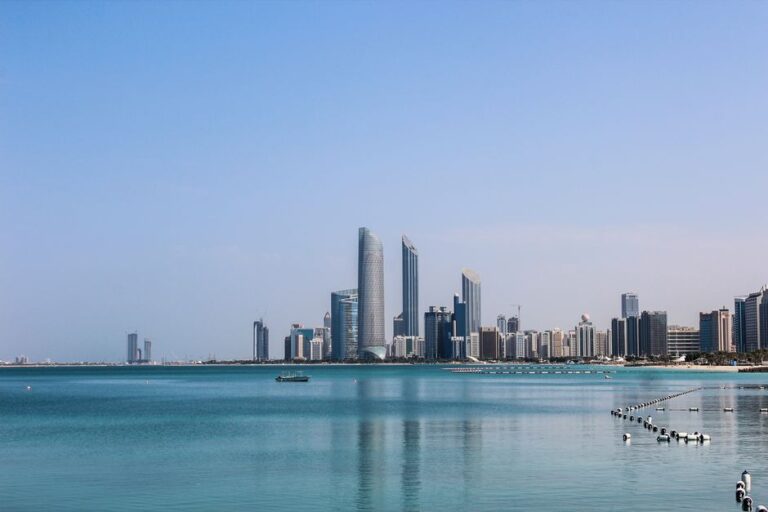
Abu Dhabi Travel Guide
Plan a trip to Abu Dhabi: Sheikh Zayed Grand Mosque booking, hours and dress code, the Louvre Abu Dhabi and the new Saadiyat museums,…
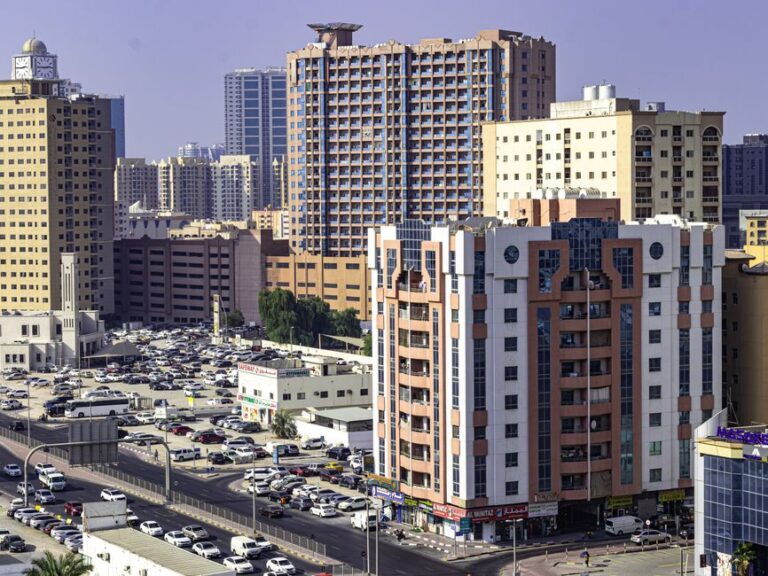
Ajman Travel Guide
Plan a trip to Ajman, the UAE's smallest emirate: the Ajman Museum in the old fort, the corniche beach, Al Zorah mangroves and flamingos,…
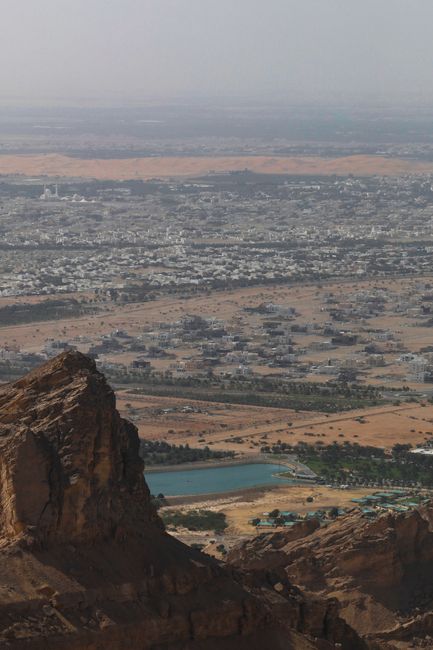
Al Ain Travel Guide
Plan a trip to Al Ain, the UAE's garden city: the UNESCO-listed Al Ain Oasis and falaj, Al Jahili Fort, Qasr Al Muwaiji, the…
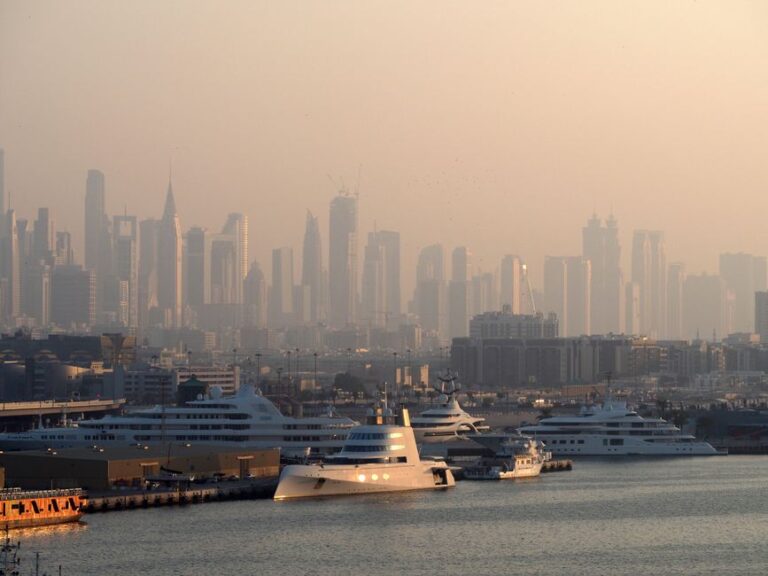
Dubai Travel Guide
Plan a trip to Dubai: the Burj Khalifa and Dubai Fountain, Al Fahidi, the creek and souks, Jumeirah, Marina and Palm beaches, desert evenings,…
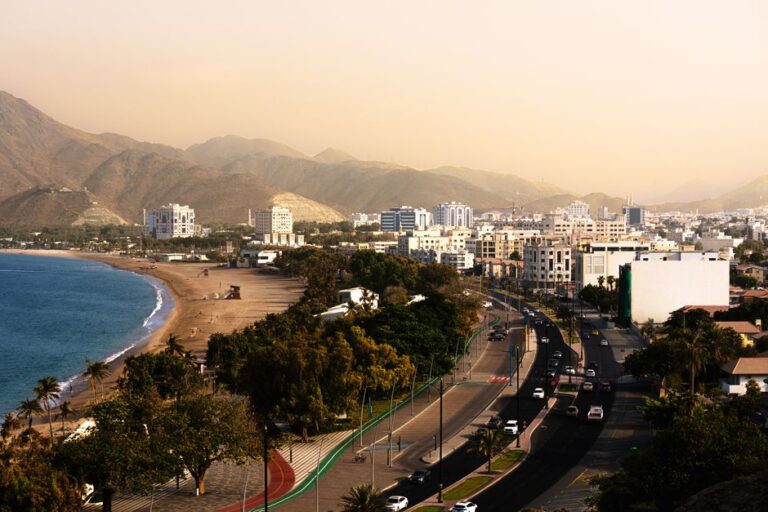
Fujairah Travel Guide
Plan a trip to Fujairah on the UAE's east coast: snorkeling at Snoopy Island and diving at Dibba, the Al Bidya Mosque, Fujairah Fort,…
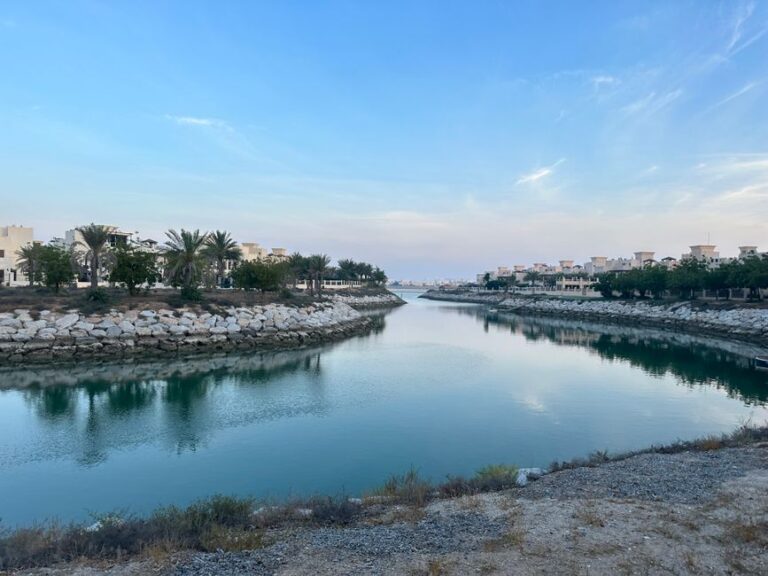
Ras Al Khaimah Travel Guide
Plan a trip to Ras Al Khaimah: Jebel Jais, the zipline and mountain trails, Al Marjan Island and Al Hamra beach resorts, the abandoned…
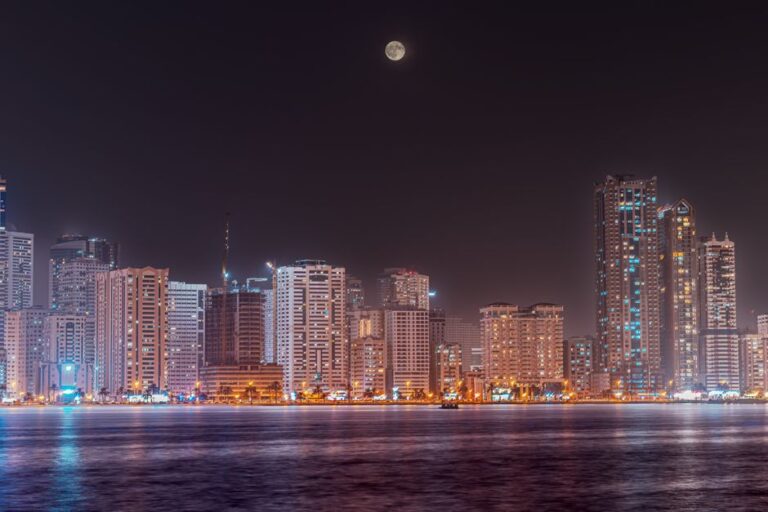
Sharjah Travel Guide
Plan a trip to Sharjah, the UAE's cultural capital: the Museum of Islamic Civilization, the Heart of Sharjah and Souq Al Arsah, the Sharjah…
Best time to visit the UAE
The UAE has a hot desert climate with two seasons. November to March is the high season, with sunny days of about 24–31 °C (75–88 °F), cool evenings, warm seas and occasional short, heavy downpours that can flood roads and wadis. April and October are hot, mostly 34–38 °C (93–100 °F), but quieter and cheaper. May to September is extreme: average highs of 40–45 °C (104–113 °F) on the coast and inland, with humid nights near the sea and recorded extremes close to 50 °C (122 °F). Summer is the cheapest time to stay in resorts, and life moves indoors to malls, museums and air-conditioned attractions. The mountains are cooler, and Jebel Jais can be near freezing on winter nights.
| Average daily high, °C (°F) | Dubai | Abu Dhabi | Sharjah | Al Ain | Ras Al Khaimah | Fujairah |
|---|---|---|---|---|---|---|
| Jan | 24 (76) | 24 (76) | 25 (77) | 25 (76) | 25 (77) | 25 (77) |
| Feb | 26 (79) | 26 (80) | 26 (80) | 28 (82) | 27 (81) | 26 (79) |
| Mar | 29 (84) | 30 (85) | 30 (85) | 31 (88) | 30 (87) | 29 (83) |
| Apr | 34 (93) | 35 (95) | 35 (95) | 37 (98) | 36 (96) | 34 (93) |
| May | 38 (101) | 40 (103) | 40 (103) | 42 (108) | 41 (106) | 39 (101) |
| Jun | 40 (105) | 41 (107) | 42 (107) | 45 (112) | 43 (109) | 39 (103) |
| Jul | 42 (107) | 42 (108) | 43 (109) | 45 (113) | 43 (110) | 38 (100) |
| Aug | 42 (107) | 43 (110) | 43 (109) | 45 (112) | 43 (109) | 36 (98) |
| Sep | 40 (103) | 41 (106) | 41 (105) | 42 (108) | 41 (106) | 36 (97) |
| Oct | 36 (97) | 37 (98) | 37 (98) | 38 (100) | 38 (100) | 34 (94) |
| Nov | 31 (87) | 31 (88) | 31 (89) | 31 (89) | 32 (90) | 30 (86) |
| Dec | 26 (80) | 26 (80) | 27 (80) | 27 (80) | 27 (81) | 27 (80) |
| Rain a year | 79 mm (3.1 in) | 50 mm (2.0 in) | 94 mm (3.7 in) | 62 mm (2.4 in) | 116 mm (4.5 in) | 107 mm (4.2 in) |
The table shows the 1991–2020 climate normals that the UAE submitted to the World Meteorological Organization for the international airports of Dubai, Abu Dhabi, Sharjah, Al Ain, Ras Al Khaimah and Fujairah (Al Ain from 26 years of records). Rain falls mostly between November and March, often in a few heavy storms.
Crowds and prices through the year
- Peak (mid-December to early January, and February to March): the best weather, festivals and school holidays in Europe; book hotels and desert trips early.
- Shoulder (October to November and April): hot afternoons but fewer crowds and lower prices.
- Low (May to September): the hottest and cheapest months, with big hotel discounts; outdoor activities only early or late in the day.
- Major events: the Formula 1 Abu Dhabi Grand Prix (late November or December) and big exhibitions in Dubai push hotel prices up.
Festivals and events
- Dubai Shopping Festival (December to January): sales, fireworks and concerts.
- UAE National Day (2 December): fireworks and parades across the country.
- Formula 1 Abu Dhabi Grand Prix (late November or December): at Yas Marina Circuit.
- Sharjah International Book Fair (November): one of the world’s largest book fairs.
- Guggenheim Abu Dhabi opening (11 December 2026): the last of the big Saadiyat museums.
- Dubai World Cup (late March): horse racing at Meydan.
- Ramadan (in 2027 expected from about 8 February to 9 March): days are quiet, and evenings come alive with iftar meals and late openings.
Public holidays
National holidays include New Year’s Day (1 January), Eid al-Fitr at the end of Ramadan (about 10 March 2027), Arafat Day and Eid al-Adha (about 16–18 May 2027), the Islamic New Year, the Prophet’s Birthday, Commemoration Day (1 December) and National Day (2 and 3 December). Islamic holidays follow the lunar calendar and are confirmed only shortly before, so dates can shift by a day. Government offices close, but malls, attractions and restaurants stay open, and hotels fill up with regional visitors.
How long to stay: sample itineraries
4 days: Dubai stopover plus
Three days in Dubai for Downtown, the old town and a desert evening, then a day trip to Abu Dhabi for the Grand Mosque and the Louvre, by road or Etihad Rail.
7 days: Dubai and Abu Dhabi
Four days in Dubai with a beach day and Sharjah’s museums, then three days in Abu Dhabi with Saadiyat, Yas Island and a day in Al Ain.
10 to 14 days: the full circuit
Dubai and Sharjah, Abu Dhabi and Al Ain, a night in the Liwa desert, then the train or a drive to Fujairah for snorkeling, and north to Ras Al Khaimah for Jebel Jais and a resort finish.
Combining the UAE with other countries
Dubai and Abu Dhabi are major hubs for onward travel to the Indian Ocean and Asia; popular combinations include the Maldives, Sri Lanka, India and Istanbul. Doha and Bahrain are short flights away; see our Qatar and Bahrain guides.
Entry, money and costs
Entry: visa on arrival and visas in advance (last reviewed October 2026)
Your passport should be valid for at least six months from the date you arrive. Citizens of the other Gulf Cooperation Council (GCC) states, Saudi Arabia, Qatar, Bahrain, Kuwait and Oman, don’t need a visa.
- Free 30-day visa on arrival: passport holders of Andorra, Brunei, Hong Kong, Kazakhstan, Macau, Malaysia, Mauritius, Monaco, Mongolia, Ireland, Ukraine, Uzbekistan and Vatican City receive a free 30-day visit visa stamp on arrival.
- Free 90-day multiple-entry visa on arrival: passport holders of about 70 countries, including the United States, Canada, the United Kingdom, Australia, New Zealand, Japan, South Korea, Singapore, China, Brazil, Argentina, Chile, Israel and most European Union countries, receive a multiple-entry visa valid for six months from issue for stays of up to 90 days in total. Mexican citizens receive a 180-day visa.
- Visa on arrival for some residents of other countries: Indian nationals with a US visa or green card, or a residence permit or visa from the UK, the EU, Australia, Canada, Japan, New Zealand, South Korea or Singapore, can get a 14-day entry permit (AED 100, extendable once) or a 60-day permit (AED 250). In June 2026 the UAE extended this scheme to nationals of Indonesia, Vietnam, Thailand, the Philippines, Kenya and South Africa who hold residence permits from those countries.
- Everyone else: arrange a visa before travel through your airline (Emirates, Etihad and flydubai offer visa services), a hotel, a tour company or a sponsor. Emirates lists a 30-day single-entry tourist visa at about US$90 and 48-hour and 96-hour transit visas at about US$10 and US$49.
Overstaying leads to daily fines. The lists change from time to time; check the UAE government portal (u.ae), the Federal Authority for Identity, Citizenship, Customs and Port Security (ICP) or your airline before you fly. A single GCC tourist visa for all six Gulf states, branded the GCC Grand Tours visa, has been agreed in principle by Gulf governments but had not been launched for travelers as of October 2026.
Customs, medicines and what not to bring
Declare anything that may be prohibited or dutiable. Pork products and pornography are illegal, and books, films and devices may be inspected. Medicines: some prescription and over-the-counter medicines, including certain painkillers, sleeping pills, ADHD and anxiety medicines, are controlled in the UAE. You must get approval from the UAE Ministry of Health and Prevention before travel for any medicine on its narcotic, psychotropic, controlled or semi-controlled lists; applications are made online and usually processed within five working days. Visitors can bring up to three months’ supply of ordinary medicines, but only one month’s supply of medicines that need approval; carry prescriptions and keep medicines in their original packaging. If you arrive without approval, the medicine will be confiscated and you may be prosecuted. Passengers who only change planes without passing immigration don’t need approval. CBD oils and some e-cigarette liquids are illegal.
Money and cards
The currency is the UAE dirham (AED, Dh), divided into 100 fils, pegged to the US dollar at about AED 3.67 to US$1. Cards and phone payments are accepted almost everywhere, including taxis, and ATMs are common. Carry some cash for souks, abras and small shops. VAT of 5% is included in most prices; visitors can claim back part of the VAT on eligible shopping through the tax refund system at airports and shops that display the scheme.
Tipping
Many restaurant bills include a service charge. Where they don’t, 10% is generous; rounding up taxi fares and tipping hotel porters and desert-safari drivers a few dirhams is appreciated.
Hotel fees
Each emirate sets its own hotel fees, charged per room and night or as a percentage on top of VAT and service charges: Dubai’s Tourism Dirham is AED 7 to AED 20 per room per night, depending on the hotel’s category, for up to 30 nights, though Dubai approved a temporary exemption in May 2026 as part of an economic support package. Always compare total prices.
Typical travel costs
| Item (as of October 2026) | UAE dirhams | About US dollars |
|---|---|---|
| Dubai Metro ride, 1 zone (nol Silver card) | AED 3 | $0.80 |
| Abu Dhabi or Al Ain bus, boarding fee (Hafilat) | AED 2 | $0.55 |
| Etihad Rail ticket, Comfort / Premium, from | AED 39 / 109 | $10.60 / $29.70 |
| Sheikh Zayed Grand Mosque (online booking) | Free | Free |
| Louvre Abu Dhabi, adult | about AED 70 | about $19 |
| Burj Khalifa At the Top, levels 124–125, from | about AED 189 | about $51 |
| Dubai Tourism Dirham, per room per night | AED 7–20 | $1.90–5.45 |
| Casual restaurant meal | about AED 40–80 | about $11–22 |
| Mid-range hotel room, per night in winter | about AED 400–900 | about $110–245 |
Transport fares, the mosque and the Tourism Dirham are official; attraction prices are the operators’ published or starting prices; meals and hotels are typical ranges.
Getting there and getting around
Arrival airports
Dubai International (DXB), the hub of Emirates and flydubai, is one of the world’s busiest international airports, linked to the city by the Metro. Zayed International (AUH), Abu Dhabi’s airport, is Etihad Airways’ hub. Sharjah (SHJ) is the base of Air Arabia, and Al Maktoum International (DWC), Ras Al Khaimah (RKT) and Fujairah (FJR) handle smaller numbers of flights. Many travelers arrive on a stopover between Europe and Asia or Australia, or from India, where dozens of cities have direct flights; see our India guide.
Flight disruptions
Since early 2026, regional tensions have led to periodic airspace closures across the Gulf, so flights can be delayed, rerouted or canceled at short notice; check your flight with the airline and the airport’s status before you travel.
Etihad Rail: the new passenger railway
The UAE’s national railway opened to passengers in 2026: services between Abu Dhabi and Fujairah began on 30 June, and Dubai joined on 30 September, with a station near Jumeirah Golf Estates linked by footbridge to the Dubai Metro. Abu Dhabi’s station is in Mohamed bin Zayed City, and Al Dhaid station in Sharjah opened on 30 September. More stations are scheduled: Madinat Zayed and Liwa from 30 November 2026, the rest of the Al Dhafra region from 30 December 2026 and Sharjah on 30 March 2027. Fares start at AED 39 in Comfort Class and AED 109 in Premium; book in the Etihad Rail app, on its website or at station machines.
City transport
| City | System | How to pay (October 2026) |
|---|---|---|
| Dubai | Metro (Red and Green lines), tram, buses, abras and water buses | nol card: AED 3 to AED 7.50 per trip by zone; Red ticket for occasional travel |
| Abu Dhabi and Al Ain | Public buses | Hafilat card: AED 2 boarding plus 5 fils per km, maximum AED 5 |
| Sharjah, Ajman, Ras Al Khaimah, Fujairah | Local and intercity buses | Card or cash; most visitors use taxis |
| All cities | Metered taxis and ride-hailing (Careem, Uber) | Card or cash; higher starting fares from airports |
Driving
Traffic drives on the right. Many visitors can drive a rental car on their home license, depending on nationality, and others need an International Driving Permit; check with the rental company. Speed cameras are everywhere, speeding is common and accident rates are high, so drive defensively. There is zero tolerance for drink-driving, using a phone while driving is illegal, and rude gestures or offensive language toward other drivers can lead to fines, jail or deportation. Dubai’s Salik and Abu Dhabi’s road tolls are charged automatically to rental cars. If you have an accident, call the police and don’t leave the scene. For desert driving, use a properly equipped 4×4, travel with another vehicle and carry water and a phone.
Culture, food and everyday etiquette
Islam and local customs
The UAE is a Muslim country, and visitors are expected to respect local customs, especially during Ramadan and at religious sites. Emiratis are hospitable and private; greet with “as-salaam alaykum,” wait for a woman to offer her hand before shaking it, and use your right hand to eat, pass and receive things. Arabic coffee (gahwa) and dates are the traditional welcome. Friday is the holy day, with midday prayers at mosques, and many attractions open later on Fridays.
Food and drink
Emirati cuisine includes machboos (spiced rice with meat or fish), harees (wheat and meat), thareed (bread stew), grilled hammour and luqaimat, sweet dumplings in date syrup. But most of what you’ll eat reflects the country’s residents: Indian, Pakistani, Lebanese, Iranian, Filipino and every global cuisine, from cheap canteens to celebrity-chef restaurants. Alcohol is sold in licensed hotels, bars, clubs and some restaurants to people aged 21 and over, except in Sharjah, where it is banned.
Laws visitors need to know
- Dress: cover shoulders and knees in public places such as malls and souks; avoid transparent or offensive clothing. Swimwear belongs on beaches and at pools.
- Behavior: kissing in public can lead to arrest; swearing and rude gestures, including online, are criminal offenses.
- Alcohol: drinking or being drunk in public is illegal everywhere in the UAE, and alcohol is banned entirely in Sharjah.
- Relationships: same-sex sexual activity is illegal.
- Photography and media: don’t photograph people without permission or government, military and airport sites; drones need registration and permits.
- Debt: unpaid bills, including hotel bills, can lead to arrest and travel bans.
Safety, health, accessibility and connectivity
Safety
The UAE has very low street crime. The risks for visitors come mainly from the climate, the roads, strict laws and the regional situation.
- Summer heat: from May to September, highs of 40–45 °C (104–113 °F) are normal, with extremes near 50 °C (122 °F). Plan outdoor sightseeing for early morning and evening, drink water often, wear a hat and sunscreen, and know the signs of heat exhaustion and heatstroke.
- Dress codes and public decency: follow the dress rules above, and the stricter codes at mosques; the Sheikh Zayed Grand Mosque requires ankle-length, long-sleeved clothing and a headscarf for women.
- Alcohol: only in licensed venues, at 21 or over; Sharjah is dry.
- Ramadan etiquette: during daylight hours, don’t eat, drink, smoke or chew gum in public, including in your car; play music quietly and dress more conservatively. Restaurants serve non-fasting visitors, sometimes behind screens.
- Drugs and medicines: there is zero tolerance for drugs; even residual amounts in the blood or luggage, including for transit passengers, can lead to prison. Some prescription medicines need Ministry of Health approval before travel (see above).
- Photography: photographing people without consent, especially women, and government, military and airport sites can lead to arrest.
- Desert safety: go on dune drives and desert camps only with licensed operators; check seat belts and roll cages, and avoid dune driving if pregnant or with back or heart problems. Don’t drive into the desert alone.
- Sea and wadis: swim only at lifeguarded beaches; rip currents occur. Heavy winter storms can cause flash floods in wadis and on roads.
- Flight disruptions: since early 2026, regional tensions have led to periodic airspace closures across the Gulf, and flights can be delayed, rerouted or canceled at short notice. Check your flight with the airline and the airport’s status before you travel, and follow instructions from the local authorities, including emergency alerts sent to phones.
- Emergencies: police 999, ambulance 998, fire 997.
Health and insurance
Healthcare in the cities is of a high standard but expensive, and you may be asked to pay before treatment; buy travel insurance that covers medical costs and evacuation. Pharmacies are everywhere, but some common foreign medicines are controlled. Tap water is desalinated and treated, but most people drink bottled or filtered water. A yellow fever certificate is required if you arrive from a country with a risk of transmission.
Accessibility
Newer hotels, malls, the Dubai Metro and major attractions are generally accessible, and people of determination (with disabilities) travel free on Dubai’s public transport with the right card. Old souks, heritage villages, beaches and desert camps can be harder to navigate; ask when booking.
Connectivity and power
Mobile coverage is excellent in cities and along highways. Prepaid SIM cards and eSIMs from the UAE’s operators are sold at airports and malls; some internet calling services are restricted. Power is 230 V, 50 Hz, with type G sockets (British three-pin).
Things to do: desert, sea, museums and mountains
The UAE’s highlights mix modern spectacle and old Arabia: the view from the Burj Khalifa and the Grand Mosque at sunset, the Louvre and the new Saadiyat museums, souks and abras on Dubai Creek, a desert camp under the stars, snorkeling with turtles off Fujairah, mangrove kayaking in Abu Dhabi and Ajman, hiking and ziplining on Jebel Jais, the oases and forts of Al Ain, and theme parks, water parks and Formula 1 on Yas Island. In winter, beaches and outdoor dining are the main draw; in summer, life moves indoors.
What to pack
Pack light, breathable clothes that cover shoulders and knees, plus a scarf or shawl (women need a headscarf for mosques), swimwear, a wide-brimmed hat, sunglasses and high-SPF sunscreen. Add a light sweater for air-conditioning and winter desert nights, comfortable walking shoes, sandals, a reusable water bottle and a type G plug adapter. Carry prescription medicines in original packaging with your prescription and, where needed, your Ministry of Health approval.
United Arab Emirates travel FAQ
Do I need a visa for the UAE?
It depends on your passport. GCC citizens don’t. Citizens of the US, Canada, the UK, Australia, New Zealand, most EU countries and about 70 others get a free visa on arrival; others arrange a visa in advance through an airline, hotel or sponsor.
How long can I stay on a UAE visa on arrival?
Either 30 days or up to 90 days within six months, depending on your nationality; Mexican citizens get 180 days. Overstays are fined daily.
Do I need approval to bring medicines into the UAE?
For some medicines, yes. Medicines on the UAE’s controlled lists need approval from the Ministry of Health and Prevention before travel, applied for online; you can bring up to one month’s supply of these, or three months’ supply of ordinary medicines.
Is there a GCC tourist visa for the UAE, Qatar and Bahrain?
Not yet for travelers. Gulf states have agreed in principle on a unified GCC Grand Tours visa, but it had not launched as of October 2026, so you need entry permission for each country.
When is the best time to visit the UAE?
November to March, when days are warm and sunny. May to September is extremely hot, with highs above 40 °C (104 °F), but hotels are cheapest.
Can tourists drink alcohol in the UAE?
Yes, in licensed hotels, bars and restaurants, at 21 or over, except in Sharjah, where alcohol is banned. Drinking or being drunk in public is illegal everywhere.
What is the weekend in the UAE?
Saturday and Sunday, since 2022. Friday is a shorter working day with midday prayers.
Is there a train between Dubai and Abu Dhabi?
Yes. Etihad Rail passenger trains link Abu Dhabi, Dubai and Fujairah since 30 September 2026, with fares from AED 39.
What is the dress code in the UAE?
Cover shoulders and knees in public places, avoid see-through or offensive clothing and keep swimwear for beaches and pools. Mosques require long clothes and a headscarf for women.
What happens during Ramadan in the UAE?
Muslims fast from dawn to sunset. Visitors shouldn’t eat, drink or smoke in public in daylight; restaurants still serve visitors, and evenings are lively. In 2027 Ramadan is expected from about 8 February to 9 March.
Are flights to the UAE ever disrupted?
Sometimes. Since early 2026, regional tensions have led to periodic airspace closures across the Gulf, and flights can be delayed, rerouted or canceled at short notice. Check your flight with the airline and the airport’s status before you travel.
What currency is used in the UAE?
The UAE dirham (AED), pegged at about AED 3.67 to US$1. Cards are accepted almost everywhere.
What plug adapter do I need for the UAE?
Type G, the British three-pin plug, at 230 V and 50 Hz.
Sources and last review
Researched and last reviewed on 5 October 2026. Visa-on-arrival lists, the 180-day Mexican visa, pre-arranged visa and transit visa prices come from Emirates; the 14-day and 60-day entry permits and their June 2026 expansion from the Federal Authority for Identity, Citizenship, Customs and Port Security (ICP) and the UAE Ministry of Foreign Affairs; passport validity and GCC exemption from the UAE government portal (u.ae); medicine approvals, customs, laws on alcohol, dress, behavior, drugs and photography, driving rules, emergency numbers and the factual background on local rules from GOV.UK’s UAE travel information (updated 24 July 2026); airspace disruption from the European Union Aviation Safety Agency; Etihad Rail’s services, stations, dates and fares from Etihad Rail and the Dubai Media Office; Dubai transport fares from the Roads and Transport Authority; Abu Dhabi bus fares from Abu Dhabi Mobility; the Tourism Dirham and its 2026 exemption from Dubai’s Department of Economy and Tourism and the Dubai Media Office; Grand Mosque rules from the Sheikh Zayed Grand Mosque Centre; museum hours and the Guggenheim opening from the Department of Culture and Tourism; World Heritage listings from UNESCO; climate from the 1991–2020 normals the UAE submitted to the World Meteorological Organization; area, population and capital from Wikidata. The GCC visa status, the population share of foreign residents, the tax refund scheme, the weekend change, holiday and Ramadan dates for 2027, driving-license rules, tipping, internet calling restrictions and typical prices are general references and flagged for checking. Entry rules can change at short notice, so check official sources before you travel.
Plugs and power in United Arab Emirates
United Arab Emirates uses 230 V, 50 Hz and these plugs (left) and wall sockets (right):
Type G is standard; older buildings may have Type D.
All plug types and voltages by country → · Check what you need to pack →
Plan your trip
Partner links: TravelerCenter may earn a commission if you book, at no extra cost to you.
🇪🇬 Useful Arabic phrases for United Arab Emirates
All 38 Arabic phrases: restaurant, hotel, emergencies, romance (printable) →