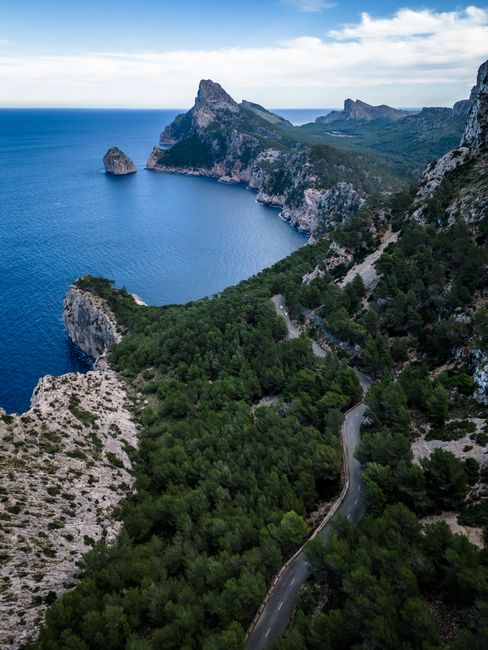
Mallorca, the largest of Spain’s Balearic Islands, is much more than its party resorts. You can wander Palma’s Gothic old town in the morning, ride a 1912 wooden train into the mountains after lunch and swim in a turquoise cove before dinner. The Serra de Tramuntana in the north-west is a UNESCO World Heritage landscape of terraces, stone villages and long-distance trails; the south and east are lined with sandy bays and small rocky calas. Base yourself in Palma plus one village, use the buses or a car, and come in spring or autumn if you can. A week gives you a good taste.
Right now in Mallorca (Palma)
- Wed 19–24°C 66–75°F 22 mm Light showers
- Thu 18–23°C 65–74°F 2 mm Mostly clear
- Fri 18–22°C 64–72°F Cloudy
- Mon 12 Oct National Day of Spain (Fiesta Nacional de España)
Weather: MET Norway (CC BY 4.0) · Sea temperature: NOAA CoastWatch · Rates: ECB · Holidays: Nager.Date
Top tours in Mallorca
See all tours for Mallorca →
From local operators, with prices and reviews; you check availability and book on Viator, our partner. We may earn a commission at no extra cost to you. How we earn money
Mallorca at a glance
- What it is: the largest Balearic island (about 3,620 km²), in the western Mediterranean. The capital, Palma, sits on a wide bay in the south-west.
- Best for: beaches, mountain walking, cycling, boat trips and Palma city breaks.
- Mountains: the Serra de Tramuntana became a UNESCO World Heritage cultural landscape on 29 June 2011; the GR 221 “Dry Stone Route” crosses it.
- Climate: at Palma airport, average highs run from about 16 °C in January to 32 °C in August (AEMET 1991–2020 normals).
- Tourist tax: the Balearic sustainable tourism tax (ITS) adds €1 to €4 per adult per night plus 10% VAT from May to October, a quarter of that in winter; under-16s are exempt (as of October 2026).
- Airport: Palma de Mallorca Airport (PMI), run by Aena, just east of Palma.
- Entry, money, time zone and general safety: the same as mainland Spain; see our Spain travel guide.
Mallorca’s areas and who each one suits
Each coast feels different, so choose your base by what you want to do.
Palma
A real Mediterranean city: the cathedral above the old sea wall, old-town lanes with hidden courtyards, the Santa Catalina food scene, a long seafront path and Bellver Castle on its wooded hill. Best for first-timers, couples, food lovers and travellers without a car; it is also the hub for buses and the Sóller train.
Sóller and Port de Sóller
A valley of orange groves ringed by mountains, linked to Palma by the historic train and to its horseshoe bay by an old tram. Port de Sóller has a sheltered beach and boats along the cliffs to Sa Calobra. Ideal for walkers and anyone who wants mountains and a swim on the same day.
Deià and Valldemossa
Two of the prettiest Tramuntana villages: Valldemossa with its Carthusian monastery, Deià with honey-coloured houses above a pebbly cove. Lovely for slow travellers and hikers, but crowded with day-trippers at midday: stay the night or arrive early.
Pollença, Port de Pollença and Alcúdia
Two wide, shallow bays with long sandy beaches make the north one of the best areas for families. Pollença has the Calvari steps; Port de Pollença is the gateway to Cap de Formentor; Alcúdia has medieval walls and Roman ruins next to the long beaches of Alcúdia and Muro. Good for families, cyclists and walkers.
The east coast: Cala Ratjada, Cala Millor and Cala d’Or
Resorts built around coves and bays. Cala Ratjada is a fishing port near the pine-backed beach of Cala Agulla; Cala Millor has a long sandy beach and family hotels; Cala d’Or is a smarter marina resort among small coves; Porto Cristo, by the Caves of Drach, is a working harbour town. Best for beach holidays; a car opens up the quieter coves in between.
The south: Santanyí and Es Trenc
The flat, sunny south has the least built-up coast. Es Trenc is a long natural beach backed by dunes and salt flats; Santanyí is a golden-stone market town near the Mondragó Natural Park and coves such as Caló des Moro. Colònia de Sant Jordi is the port for boats to the Cabrera archipelago. Good for couples and a quieter, low-rise Mallorca.
Platja de Palma and Magaluf, honestly
Platja de Palma (with S’Arenal) east of the city and Magaluf in Calvià to the west are the island’s biggest mass-tourism resorts: close to the airport, with long beaches, big hotels and loud nightlife in a few streets. Both have been cleaned up, and special alcohol rules apply in their busiest streets (see Practical tips). Families often prefer neighbouring Palmanova, Santa Ponça or Can Pastilla.
Top things to see in Mallorca
- Palma Cathedral (La Seu): a Gothic giant on the sea wall whose rose window throws coloured light across the nave on sunny mornings, with later work by Antoni Gaudí and Miquel Barceló inside. Check hours and tickets on the cathedral’s website.
- Bellver Castle: a rare round Gothic castle on a pine-covered hill, run by Palma City Council, with bay views and the city history museum inside.
- The Sóller train and tram: the wooden train (1912) climbs through orchards and tunnels to Sóller in about an hour; the tram (1913) then runs down to Port de Sóller in about half an hour. As of October 2026 the train costs €23 one way or €30 return, the tram €10 each way, and a Palma–Port de Sóller–Palma train-and-tram ticket €40.
- Cap de Formentor: the island’s dramatic northern tip, with the Mirador Es Colomer, Formentor beach and a clifftop lighthouse. In summer you go by bus (see below).
- Caves of Drach (Coves del Drac): show caves at Porto Cristo, about 1,200 m long, with Lake Martel, one of the largest underground lakes in the world, and a short live classical concert on the water. Book ahead in summer.
- Sa Calobra and the Torrent de Pareis: a corkscrew road (or a boat from Port de Sóller) drops to a tiny harbour, from where a path through rock tunnels reaches the pebbly mouth of the gorge between sheer walls. Spectacular, and very busy at midday.
Peaks and mountains
- Serra de Tramuntana
- Puig de Massanella
- Puig Major
Churches and cathedrals
Castles and forts
- Bellver Castle
- Royal Palace of La Almudaina
Other sights
Cap de Formentor road restrictions (as of October 2026)
To control traffic on the narrow Ma-2210, the Consell de Mallorca restricts private cars every summer. In 2026 the restrictions run from 15 May to 18 October, 10:00 to 22:00: the stretch from Formentor beach to the lighthouse is closed to private cars, and in recent seasons cars could reach the beach only until its car park filled. Buses, bikes and walkers can pass. The easy option is TIB bus 334, Alcúdia – Port de Pollença – Platja de Formentor – Far de Formentor, which runs in the same season. Dates change yearly and fines apply, so check before you go.
Beaches and coves
From long, shallow family beaches to tiny coves between pine-covered rocks. The big bays fill in July and August, the small calas by mid-morning. Bring water and shade to natural beaches, which have few services.
| Beach or cove | Area | What it’s like | Best for |
|---|---|---|---|
| Platja d’Alcúdia and Platja de Muro | North | Kilometres of fine sand and shallow water | Small children |
| Formentor beach | North | Narrow, pine-shaded, very clear water | A swim on the Formentor trip |
| Cala Deià | North-west | Small pebbly cove with fishermen’s huts | Snorkelling and a long lunch |
| Cala Agulla | East | Wide sandy bay backed by pines | Families |
| Cala Mondragó | South-east | Twin sandy coves in a natural park | A calm swim |
| Caló des Moro | South-east | Tiny turquoise inlet reached on foot; famous and crowded | An early look, not a beach day |
| Es Trenc | South | Long natural beach with dunes and pale water | Long walks and couples |
| Platja de Palma | Bay of Palma | Long city beach lined with hotels | Convenience; quieter towards Can Pastilla |
More ideas in our beaches guide. Watch the flags (red means no swimming), and if you rent a boat, anchor on sand, not on the seagrass meadows.
Hiking in the Serra de Tramuntana
The Tramuntana is one of the Mediterranean’s great walking areas: dry-stone mule tracks, terraced olive groves, holm-oak woods and paths that end at the sea. Spring and autumn are ideal; in summer walk at dawn and carry plenty of water.
The GR 221 Ruta de Pedra en Sec (Dry Stone Route)
The Consell de Mallorca’s long-distance trail runs from Port d’Andratx to Port de Pollença on restored old paths. As of October 2026 it has 261.1 km open and signposted: 150.1 km of main route and 111 km of variants (such as Castell d’Alaró). The main stages run Port d’Andratx – Sant Elm – Estellencs – Esporles – Can Boi (Deià) – Muleta (Port de Sóller) – Tossals Verds – Son Amer (Lluc) – Pont Romà (Pollença) – Port de Pollença. The highest point is the Coll de ses Cases de sa Neu, at just over 1,200 m. A few sections, such as Cala Tuent and the Gorg Blau, are still planned and unsignposted, so use the Consell’s official stage pages.
Booking the Consell de Mallorca refuges
The Consell runs simple hikers’ refuges with dormitories and meals: Can Boi, Muleta, Tossals Verds, Son Amer, Pont Romà, Galatzó and Coma d’en Vidal, plus the hostel at Castell d’Alaró. Book online on the Consell’s refuge page (caminsdepedra.conselldemallorca.cat/refugis), which can also search availability for a whole route; the refuge network answers on +34 971 173 700. As an example, Galatzó charged €14 per adult per night in a dormitory (€9 up to 16), breakfast €5.50 and dinner €9.50, as of October 2026. Book weeks ahead in spring and autumn.
Classic day walks
- Barranc de Biniaraix: a stone staircase up a gorge from Sóller; return by bus or taxi.
- Deià to Port de Sóller: a coastal GR 221 stretch through olive terraces, finishing with a swim.
- Castell d’Alaró: a steady climb to a ruined castle on a rocky summit,.
- Torrent de Pareis: the lower gorge from Sa Calobra is easy; the full descent from Escorca is a serious canyon trip with scrambling, only for experienced hikers or with a guide, and dangerous after rain.
Safety: heat is the main risk, so start early with at least two litres of water each; never enter a gorge when storms are forecast; stay on marked paths across private estates; and call 112 in an emergency. If you love island walking, compare the levadas of Madeira and the volcanic trails of the Azores in our hiking guide.
Activities and best months
- Beaches and swimmingMallorca has many beaches and coves, from busy holiday beaches to quiet coves, many of them inside natural parks; they can be enjoyed beyond the summer season. · source
- HikingMore than 1,000 km of trails for all levels, from beginners to experts, including the GR-221 Pedra en Sec (dry stone) route across the Serra de Tramuntana (UNESCO World Heritage) and the GR-222 Artà-Lluc. · source
Other things to do in Mallorca
Boat trips and cycling
Boats run along the Tramuntana cliffs from Port de Sóller to Sa Calobra, around Formentor from Port de Pollença, along the east-coast coves, and from Colònia de Sant Jordi to the Cabrera national park; see our boat trips guide. Road cyclists train here in late winter and spring on climbs such as Sa Calobra.
Markets, wine and food
Every town has a weekly market; Sineu, Santanyí and Sóller are among the liveliest. Wineries around Binissalem and Santa Maria del Camí offer tastings of local grapes such as Manto Negro and Callet (see our wine tasting guide). Try an ensaïmada (a light spiral pastry) for breakfast, pa amb oli (bread with tomato and olive oil), soft sobrassada sausage and tumbet (layered vegetables).
Nearby destinations
- Menorca102 km
- Ibiza151 km
- Formentera167 km
- Sitges206 km
- Barcelona208 km
- Costa Daurada233 km
- Peñíscola234 km
- Girona264 km
Getting there and getting around
Flying in and the airport buses
Palma de Mallorca Airport (PMI), run by Aena, has direct flights from mainland Spain and across Europe. From the terminal (as of October 2026):
- EMT Palma city buses: A1 to central Palma and A2 to S’Arenal along Platja de Palma.
- TIB airport buses: A11 all year to the Calvià resorts (Palmanova, Magaluf, Santa Ponça, Peguera) and A51 to Campos; from 27 March to 31 October, A32 to Can Picafort and A42 to Cala Bona on the east coast; in winter, A33 to Port d’Alcúdia and A43 to Manacor.
- Taxis wait outside arrivals.
Ferries
Car ferries sail to Palma from Barcelona and Valencia, and from Dénia, mainly with Baleària and Trasmed; overnight crossings save a hotel night. Between islands, ferries link Palma with Ibiza and Alcúdia with Ciutadella (Menorca). Timetables and fares change by season, so check the operators’ sites and book early for summer.
TIB buses and EMT Palma
The TIB network of the Consorci de Transports de Mallorca runs from Palma’s Estació Intermodal (Plaça d’Espanya). Useful lines include 203 (Palma – Valldemossa – Deià – Sóller – Port de Sóller), 204 (Palma – Port de Sóller), 301 (Palma – Port de Pollença), 401 (Palma – Cala Millor), 104 (Palma – Magaluf) and, in summer, 334 to Formentor. Fares go by zones (“jumps”), never more than four per trip. Pay with a contactless bank card, tapping in and out (forget to tap out and you pay a €0.30 penalty per person), or a Tarjeta Única; both allow two transfers within 60 minutes. Driver tickets cost more and are cash only. TIB fares don’t apply on Palma’s EMT city buses or the Sóller train.
The Sóller train and tram
The train leaves from its own station by Plaça d’Espanya. In October 2026 there are seven departures from Palma between 10:10 and 19:40 (one to be confirmed at the ticket office), stopping at Bunyola; the trip takes about an hour. Trams leave Sóller station for the port every 30 to 60 minutes from 08:00 to 20:35, with tickets sold on board.
Renting a car
A car is the easiest way to reach coves, trailheads and inland villages. Motorways from Palma are quick; the Ma-10 along the Tramuntana and the road to Sa Calobra are narrow, winding and busy with cyclists and coaches. Parking is the real challenge: use public car parks outside Palma’s old town and reach popular beaches before 10:00.
When to go and how long to stay
The table uses AEMET’s 1991–2020 normals for Palma airport as reported to the World Meteorological Organization (average daily high and low; days with at least 1 mm of rain). The coast is milder at night; the mountains are cooler and wetter.
| Season | Palma airport high / low | Rainy days a month | What it’s like | Good for |
|---|---|---|---|---|
| Winter (Dec–Feb) | 16–17 °C / 5–6 °C | 5.3–6.0 | Mild days, cool nights; many resort hotels close | Palma, hiking, cycling, almond blossom |
| Spring (Mar–May) | 18–24 °C / 6–12 °C | 3.3–4.4 | Green hills, cool sea | The GR 221, cycling, sightseeing |
| Summer (Jun–Aug) | 29–32 °C / 16–20 °C | 0.5–2.0 | Hot, dry and busiest; warmest sea | Beaches and boats; hike only at dawn |
| Autumn (Sep–Nov) | 19–28 °C / 9–17 °C | 5.1–6.7 | Warm sea into October; short heavy storms | Swimming and hiking together |
Over a year Palma airport averages 422 mm of rain and about 2,810 hours of sunshine; July is the driest month (0.5 rainy days), October and November the wettest. For beach plus hiking, aim for May, June, late September or October.
Seasons and festivals
- Almond blossom: late January and February; the Sóller train company points to early February.
- Sant Sebastià: Palma’s patron saint festival around 20 January, with bonfires, grills and concerts.
- Easter: processions in Palma and the villages.
- Sant Joan (23 June): midsummer bonfires and beach parties.
- Village festes: summer patron-saint fiestas with music and fireworks; check each council’s programme.
How long to stay: 3-, 5- and 7-day plans
3 days: Day 1, Palma: cathedral, old town, Santa Catalina and sunset at Bellver. Day 2, the Sóller train and tram, lunch in Port de Sóller and the boat to Sa Calobra if the sea is calm. Day 3, a beach day at Es Trenc or Cala Mondragó with a stop in Santanyí.
5 days: add Valldemossa and Deià, and a north day with Pollença and Formentor.
7 days: split your stay between Palma or Sóller and the north or east, and add the Caves of Drach, a longer hike (Biniaraix or Castell d’Alaró), a winery and a boat to Cabrera. For a walking holiday, give the GR 221 a week on its own.
Weather month by month
Averages from AEMET normals 1991–2020, Palma de Mallorca Aeropuerto (Son Sant Joan) · Last reviewed 4 Oct 2026
Where to stay in Mallorca
- Palma old town and Santa Catalina: boutique hotels in old mansions, restaurants and transport on the doorstep; best without a car.
- Sóller and Port de Sóller: the best base for hikers, with train, tram, boats and buses.
- Deià and Valldemossa: small hotels for a quiet, romantic stay.
- Port de Pollença and Alcúdia: family hotels and apartments on sandy bays.
- East and south coasts: resort hotels at Cala Millor or Cala d’Or; low-rise stays near Santanyí.
- Agroturismos (inland fincas): old farmhouses with pools among olives and almonds; you need a car.
The Balearic tourist tax (ITS), as of October 2026
Every stay in tourist accommodation pays the sustainable tourism tax (impuesto de turismo sostenible), collected by your hotel or rental. High-season rates (1 May to 31 October), per person per night before 10% VAT:
- €4: 5-star, 5-star grand luxury and 4-star superior hotels; 4-key apartments.
- €3: 4-star and 3-star superior hotels; 3-key superior apartments.
- €2: 1- to 3-star hotels and apartments, holiday rentals, rural hotels, agroturismos and cruise ships.
- €1: hostales, guesthouses, campsites, youth hostels and mountain refuges.
In low season (1 November to 30 April) you pay a quarter, €0.25 to €1. Under-16s are exempt, and from the ninth night in the same place the tax is halved. A couple spending a week in a 4-star hotel in July pays 2 × 7 × €3 = €42 plus VAT. In 2025 the Balearic government announced a seasonal version (nothing in January and February, up to €6 a night in June to August); as of October 2026 the official ITS calculator (illessostenibles.travel) and the consolidated tax law in Spain’s Official Gazette still show the rates above, so check the calculator before you budget.
How much a trip costs
July and August are the priciest months and sell out early; May, June, late September and October are better value, and winter is cheapest, though many resort hotels close. Buses are good value with a contactless card. Fixed prices to plan with, as of October 2026: the Sóller train €23 one way and a refuge bed €14 at Galatzó. A set lunch (menú del día) is the cheapest way to eat well.
Practical tips
Alcohol and behaviour rules in the party zones
Balearic rules against “excess tourism” apply in a few small, mapped zones: in Mallorca, the Punta Ballena area of Magaluf (Calvià), the Platja de Palma beachfront in Palma and the S’Arenal streets in Llucmajor (plus the West End of Sant Antoni in Ibiza). They come from Decree-law 1/2020, tightened by Decree-law 2/2024. As of October 2026, inside those zones:
- No drinking in the street (licensed terraces and official fiestas excepted): fines of €500 to €1,500.
- Shops selling alcohol close from 21:30 to 08:00.
- No happy hours, open bars, 2-for-1 deals or pub crawls, and no party boats collecting guests there.
- Balconing gets you expelled: hotels must throw out guests who jump from or climb between balconies.
More tips
- Start early: coves, Sa Calobra, Valldemossa and the train are calm before 10:00.
- Avoid Palma’s old town when several cruise ships are in port, or visit late in the day.
- Book refuges, rental cars and summer ferries early.
- Mind fire and water: no fires or cigarettes in the hills in summer, and keep showers short on this dry island.
What to pack for Mallorca
- Hiking shoes with good grip for rough limestone and polished stone steps.
- Sun hat, sunglasses and high-factor sun cream.
- A 2-litre water bottle for summer walks.
- Water shoes and a snorkel mask for rocky coves.
- A light beach shade for natural beaches.
- A fleece and rain shell from October to April and for the mountains.
- A contactless bank card for buses, plus some cash for markets.
What to pack
- Day packs and anti-theft bagsCarries water, towel and sunscreen down the long stairways to Algarve coves.
- Dry bags and phone pouchesProtects phones and cameras from sand and spray on beaches reached by ferry or steep paths.
- Fleeces and warm layersSummits like Pico do Areeiro averaged about 11 °C over 2024, so a fleece is needed even in summer.
- HeadlampsLevada routes such as PR1 and PR9 pass through long, dark, wet tunnels.
- Hiking shoes and bootsMadeira's levadas and the Azores' crater rims are wet, rocky and slippery, so grippy shoes matter more than anywhere else in Portugal.
- Quick-dry beach towelsA sand-shedding quick-dry towel packs small for beach days and lido visits.
- Rain jacketsMountain and island weather changes fast; a real shell beats an umbrella in the wind.
- Reef-friendly sunscreenSummer UV is strong on Portuguese beaches and there is little shade below the cliffs.
- Trekking polesLong stone staircases and steep descents on Madeira's peaks and the Azores' crater rims are easier on the knees with poles.
- Water bottles and hydration packsAlgarve and Alentejo trails are hot and exposed with few refill points.
- Water shoesRocky coves, lava pools and weever fish in shallow sand make water shoes useful.
- WetsuitsOn the west and north coasts the sea stays around 16–18 °C even in summer, so a thin suit helps for long swims.
Mallorca travel FAQ
How much is the tourist tax in Mallorca?
As of October 2026, €1 to €4 per person per night from May to October, depending on the accommodation, plus 10% VAT, and a quarter of that from November to April. Under-16s are exempt and the tax halves from the ninth night.
Can I drive to Cap de Formentor?
Not in the middle of the day in summer. In 2026 private cars are restricted from 15 May to 18 October, 10:00 to 22:00, and the stretch to the lighthouse is closed to them. Take TIB bus 334, cycle, or drive early or out of season.
Is drinking in the street banned in Mallorca?
In the special zones of Magaluf, Platja de Palma and S’Arenal, yes: fines are €500 to €1,500, and shops there can’t sell alcohol between 21:30 and 08:00. Elsewhere, local bylaws apply.
How do I get from Palma airport to the city?
EMT bus A1 goes to central Palma and A2 to Platja de Palma. TIB airport buses go straight to the main resorts, and taxis wait outside arrivals.
Is the Sóller train worth it?
Yes, for the ride itself: a 1912 wooden train through orchards and tunnels, then a vintage tram to the sea. It costs €23 one way or €40 return with the tram (October 2026); TIB buses 203 and 204 are cheaper if you only need to get there.
Do I need a car in Mallorca?
Not for Palma, Sóller or a resort stay: TIB buses reach most towns. A car makes coves and trailheads easier.
How long is the GR 221, and do I need to book refuges?
The main route is 150.1 km from Port d’Andratx to Port de Pollença, 261.1 km with variants. Book the Consell de Mallorca refuges online in advance, especially in spring and autumn.
What is the best time to visit Mallorca?
May, June, late September and October: warm, swimmable and less crowded. July and August are hottest (highs about 32 °C) and busiest; winter is quiet and good for hiking and Palma.
Which part of Mallorca is best for families?
The shallow sandy bays of Alcúdia and Pollença in the north, and east-coast resorts such as Cala Millor.
Can I visit Ibiza or Menorca from Mallorca?
Yes, by ferry from Palma to Ibiza or from Alcúdia to Ciutadella, or on a short flight. Both are better for a few days than a day trip; see our Ibiza guide.
Is Magaluf only for party tourists?
No. The nightlife is concentrated around Punta Ballena; the beach and nearby Palmanova and Santa Ponça are calmer.
Sources
- © OpenStreetMap contributors · ODbL · fetched 3 Oct 2026
- Wikidata · CC0 · fetched 3 Oct 2026
Sources and last review
Researched and last reviewed on 3 October 2026. Tourist tax: the Balearic tourism agency’s ITS calculator and Law 2/2016 (BOE consolidated text); party-zone rules: Decree-law 1/2020 as amended by Decree-law 2/2024 (BOE consolidated text); GR 221 and refuges: Consell de Mallorca; buses: TIB and Aena; Sóller train and tram: Ferrocarril de Sóller; climate: AEMET 1991–2020 normals for Palma airport as published by the WMO. Formentor dates come from TIB’s line 334 season and regional press. Prices, timetables and rules change often, so check the official links before you travel. For entry rules, money and general safety, see our Spain travel guide.
Plan your trip
Partner links: TravelerCenter may earn a commission if you book, at no extra cost to you.
🇪🇸 Useful Spanish phrases for Mallorca
All 38 Spanish phrases: restaurant, hotel, emergencies, romance (printable) →