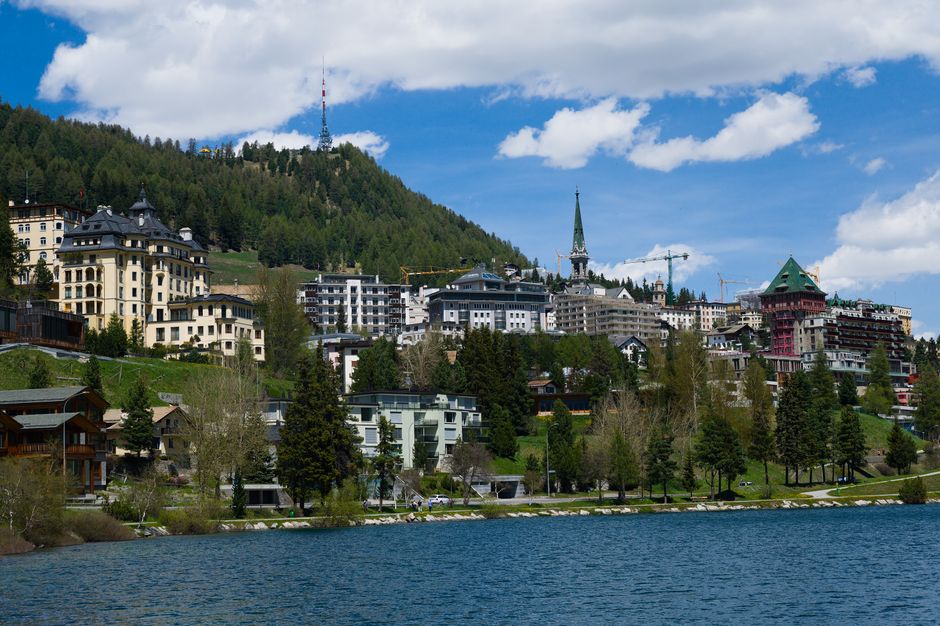
St. Moritz is where winter holidays were invented. High in the Engadin valley in south-eastern Switzerland, at about 1,800 m, the resort sits above a lake that freezes hard enough in winter for horse races, polo and cricket on the ice, under a sky famous for its sunshine. Its name stands for glamour, with palace hotels and designer boutiques, but the real star is the landscape of the Upper Engadine: a wide, high valley of lakes, larch forests and Romansh villages with painted houses, ringed by glaciers and the 4,000 m Piz Bernina. You can ski from late November to April, hike, bike and windsurf in summer, and ride two of the world’s great train journeys, the Bernina Express and the Glacier Express. Give it three days, a week for skiing or hiking.
Right now in St. Moritz
- Wed 1–12°C 34–54°F 2 mm Partly cloudy
- Thu 6–11°C 42–52°F 15 mm Showers
- Fri -1–3°C 29–37°F 1 mm Mostly clear
Weather: MET Norway (CC BY 4.0) · Rates: ECB
Top tours in St. Moritz
See all tours for St. Moritz →
From local operators, with prices and reviews; you check availability and book on Viator, our partner. We may earn a commission at no extra cost to you. How we earn money
St. Moritz at a glance
- Best for: sunny skiing and winter events on the frozen lake, scenic trains, lake and mountain hiking, and luxury hotels.
- How long: 2–3 days for the town, a mountain and the Bernina Express; a week for skiing or hiking the Engadin.
- Best time: mid-December to March for skiing and the ice events; late June to September for hiking and water sports. Many hotels close in spring and late autumn.
- Getting in: about 3 hours by train from Zurich via Chur and the UNESCO-listed Albula line; by car over the Julier Pass or via the Vereina car train.
- Getting around: buses link the valley villages; hotel deals include ski passes in winter and mountain railways in summer.
- Before you go: rail passes, money, entry rules and mountain safety are in our Switzerland travel guide.
St. Moritz and the Upper Engadine, area by area
The Upper Engadine runs from the Maloja Pass north-east along a chain of lakes, the Lej da Segl (Sils), Silvaplana and St. Moritz, to Samedan, Pontresina and beyond. Romansh, Switzerland’s fourth national language, is still spoken here alongside German and Italian, and you’ll see it on signs: lej means lake and piz peak.
St. Moritz Dorf and Bad
St. Moritz Dorf, on the hillside above the lake, has the grand hotels, the leaning tower of an old church, galleries and luxury shops, and the funiculars to Corviglia. St. Moritz Bad, on the flat ground by the lake, grew around mineral springs and has more apartments and the sports centre. Best for: glamour and skiing.
Pontresina
A quieter mountain village on the road to the Bernina Pass, close to the Morteratsch Glacier, Diavolezza and Muottas Muragl, popular with hikers and mountaineers. Best for: walkers and families.
Silvaplana, Sils and Maloja
South-west of St. Moritz, villages on the lakes with the Corvatsch ski area above. A reliable afternoon wind from the Maloja Pass makes the Lake of Silvaplana one of Europe’s best spots for windsurfing and kitesurfing. Sils Maria, where Friedrich Nietzsche spent his summers, is car-free in its centre and a gateway to the Val Fex. Best for: lake views, water sports and peace.
Samedan and the villages
Samedan, Celerina and the villages down the valley, such as Zuoz, have the typical Engadin houses with thick walls, deep-set windows and sgraffito decoration scratched into the plaster. Best for: traditional architecture and better value.
Top things to see and do in St. Moritz
Prices and dates below were checked on the official sites in October 2026. They change, so check before you go.
Muottas Muragl
A funicular built in 1907 climbs from near Samedan to Muottas Muragl (2,456 m), with the classic view down the chain of lakes to Maloja, especially at sunset. Walk the Philosophers’ Path or hike to the Segantini hut. In 2026 the summer season ran from 6 June to 25 October, with an extra autumn week; it runs again in winter, with a long sledge run.
Diavolezza and the Morteratsch Glacier
A cable car from the Bernina Pass road rises to Diavolezza (about 2,970 m), facing Piz Palü and Piz Bernina, at 4,048 m the highest peak in the Eastern Alps, above the Pers and Morteratsch glaciers. In winter, a guided ski descent over the glacier to Morteratsch is the longest glacier run in Switzerland. Down in the valley, a signposted path from Morteratsch station leads to the snout of the Morteratsch Glacier, with posts marking how far it has retreated since the 19th century.
Corviglia, Piz Nair and Corvatsch
St. Moritz’s home mountain, Corviglia, has about 44 km of sunny slopes, with Piz Nair (3,057 m) above. Across the valley, Corvatsch, whose top station at 3,303 m is the highest in Graubünden, has long runs, a glacier view over the lakes and floodlit night skiing on Fridays (Snow Nights from 4 December 2026). Note that the St. Moritz Dorf–Chantarella–Corviglia funiculars were closed for renovation all summer 2026; in summer, the Signal cableway and Marguns give access.
Museums
The Segantini Museum, a domed stone building above the lake, holds the great Alpine triptych “Becoming – Being – Passing” by Giovanni Segantini, who painted the Engadin light. As of October 2026, it cost CHF 15 for adults and opened Tuesday to Sunday from 11:00 to 17:00 (20 May–20 October and 10 December–12 April). In Sils Maria, the Nietzsche-Haus shows the room where the philosopher wrote in summer (CHF 10; open 13 December 2026 to 10 April 2027, Tuesday to Sunday 15:00–18:00).
Museums
- Nietzsche-Haus, Sils-Maria
- Segantini Museum
Peaks and mountains
- Piz Bernina
- Piz Corvatsch
- Piz Languard
Nature
- Morteratsch Glacier
Other sights
- Bernina railway line
Winter in St. Moritz: skiing and events on the ice
Winter tourism here began, the story goes, in 1864, when hotelier Johannes Badrutt bet a group of English summer guests that they would enjoy the Engadin in winter, and promised to pay their costs if they didn’t. They stayed until Easter. St. Moritz hosted the Winter Olympics in 1928 and 1948.
Skiing and the Sleep + Ski deal
The Engadin St. Moritz ski region has 88 slopes and 58 lifts across Corviglia, Corvatsch, Diavolezza and Lagalb, with snow usually from late November to April and runs on Corvatsch open until the end of April. Ski passes use dynamic “Snow-Deal” pricing, cheaper when booked early, and include public transport in the Upper Engadine. The best deal is Sleep + Ski: about 100 hotels sell a ski pass for CHF 55 per person per day for every night of the stay, valid from 17 October 2026 to 2 May 2027 (as of October 2026). There are also cross-country trails on the frozen lakes and valley floor, winter walks and sledge runs.
Events in winter 2026/27
- Snow Polo World Cup: the 42nd edition on the frozen lake, from 22 to 24 January 2027.
- White Turf: horse races on the frozen lake since 1907, including skikjöring, where skiers are pulled behind galloping horses. The 2027 races, the event’s 120th anniversary, are on the Sundays of 7, 14 and 21 February.
- Engadin Skimarathon: thousands of cross-country skiers race 42 km from Maloja to S-chanf; the 2027 Marathon Week runs from 6 to 14 March 2027.
- Olympia Bob Run: the world’s oldest bobsleigh track and the only one made of natural ice, 1,722 m long. Guest rides in a four-person bob with a professional pilot and brakeman reach about 135 km/h in about 75 seconds; as of October 2026, they cost CHF 269, and the 2026/27 season opens on 22 December.
- Cresta Run: the famous head-first toboggan run of the private St. Moritz Tobogganing Club, founded in 1887; the run opens on 17 December 2026, and beginners can book a ride.
Summer in the Engadin
Summer brings hiking among larches and lakes, mountain biking on flowing trails, sailing and kitesurfing on the lakes, and horse-drawn carriages up the car-free Val Roseg from Pontresina. A great deal for summer visitors: with Mountain Railways all-inclusive, guests of participating hotels (from the second night) and holiday flats ride the Upper Engadine’s mountain railways for free, with bikes and dogs; in 2026 the offer ran from 1 May to 31 October. Since 2026 the St. Moritz Gourmet Festival has moved to summer; the 2027 edition runs from 24 to 29 August. Classic walks include the lakeside path from Sils to Maloja, the Lej da Staz in the forest between St. Moritz and Pontresina, and Muottas Muragl to Alp Languard. See our hiking guide and cycling guide.
Activities and best months
- CyclingThe Engadin's tours include gravel routes along the lakes and mountain-bike rides such as the Val Chamuera tour through gorges and larch forest; St. Moritz sells multi-day bike passes for the mountain railways in summer. · source
- HikingEngadin's autumn list includes the four-hour Via Engiadina walk above lakes Sils and Silvaplana, the Val Trupchun circuit in the Swiss National Park (deer rut at the end of September, also chamois, ibex and marmots), the larch-forest walk to Lägh da Cavloc near Maloja and the trail up Val Morteratsch to the glacier. · source
The Bernina Express and the Glacier Express
The Rhaetian Railway’s Albula and Bernina lines, listed together by UNESCO as a World Heritage Site since 2008, are among the most spectacular railways in the world.
The Bernina Express runs from Chur (or Davos) via St. Moritz over the Bernina Pass to Tirano in Italy, crossing 196 bridges and passing through 55 tunnels, including the Landwasser Viaduct and the Brusio spiral viaduct. From St. Moritz to Tirano it takes about 2 hours 15 minutes, past the glaciers at Alp Grüm and the lakes of the Bernina Hospice, the highest point of the line at about 2,250 m, before dropping steeply to the vineyards and palm trees of the Valposchiavo. The panoramic cars need a seat reservation, which costs extra even with the Swiss Travel Pass; ordinary regional trains on the same line need no reservation (an optional seat costs CHF 5) and have windows that open for photos. In season, the Bernina Express bus continues from Tirano to Lugano. From 29 October to 13 November 2026, some trains are diverted via the Vereina tunnel because of works.
The Glacier Express links St. Moritz with Zermatt in about 8 hours over the Oberalp Pass, at 2,033 m its highest point. A seat reservation is compulsory and cost CHF 54 as of October 2026, on top of the ticket or pass; the Excellence Class, with a five-course meal and a guaranteed window seat, cost CHF 540 on top of a first-class ticket. The train takes a seasonal break each autumn: in 2026, there is no service from 11 October to 4 December. The full-route fare from St. Moritz to Zermatt was CHF 159 in second class and CHF 272 in first class, before the reservation fee.
Day trips from St. Moritz
Take the Bernina Express to Tirano for lunch in Italy and return by the regional train. Drive or take the bus over the Maloja Pass to Soglio, a stone village above the chestnut forests of the Val Bregaglia. Visit the Swiss National Park, the country’s only national park, at Zernez, about 45 minutes away. Davos, Klosters and the Romansh villages of the Lower Engadine, such as Guarda, are easy by train. Lake Como is about 2 hours by road over the Maloja Pass.
Nearby destinations
- Lake Como71 km
- Vaduz75 km
- St. Anton am Arlberg76 km
- Lugano86 km
- Bergamo90 km
- Lake Maggiore97 km
- Lake Garda115 km
- Milan125 km
Getting to St. Moritz
By train. From Zurich, about 3 hours with a change in Chur, then the Albula line through spiral tunnels and over the Landwasser Viaduct. From Italy, take the Bernina line from Tirano. The Glacier Express arrives from Zermatt in season.
By car. About 3 hours from Zurich or Milan and 4 hours from Munich. The Julier Pass road is open all year; the Vereina car train from Klosters Selfranga to Sagliains takes 18 minutes and runs every 30 minutes, from CHF 36 for a car in summer and about CHF 40 in winter as of October 2026. A Swiss motorway vignette is required for the motorways on the way.
By air. Zurich Airport is about 3 hours 30 minutes away by train. Engadin Airport at Samedan, the highest airport in Europe, handles private planes only.
When to go and how long to stay
The Upper Engadine has a high, dry and sunny climate. Winters are long and very cold, especially at night, with bright days; summers are fresh, rarely hot, with afternoon showers. The table shows MeteoSwiss 1991–2020 averages for Samedan, near St. Moritz (read via a secondary summary).
| Month | Average daily high | Average nightly low | What it’s like |
|---|---|---|---|
| January | −1.3 °C | −15.8 °C | Very cold, dry and sunny; frozen lake events |
| April | 7.9 °C | −4.3 °C | Spring skiing in sunshine, end of season |
| July | 19.3 °C | 4.7 °C | Fresh and sunny, hiking, sailing and kitesurfing |
| October | 10.5 °C | −2.6 °C | Golden larches, frosty mornings, quiet season |
The Upper Engadine is high, dry and sunny: Samedan, near St. Moritz, gets about 710 mm of precipitation a year. Nights are cold even in summer, and the valley floor is one of the coldest inhabited places in Switzerland in winter.
St. Moritz in 3 days
Day one: the town, the lake and the Segantini Museum, then Muottas Muragl for sunset. Day two: the Bernina Express to Tirano and back, stopping at Alp Grüm. Day three: skiing on Corviglia or Corvatsch in winter; in summer, Diavolezza and the Morteratsch Glacier walk, or the lakes to Sils and Maloja.
Weather month by month
Averages from MeteoSwiss normals 1991–2020, Samedan (Upper Engadine) · Last reviewed 4 Oct 2026
Where to stay in St. Moritz
- St. Moritz Dorf: the palace hotels, nightlife and the funiculars to Corviglia.
- St. Moritz Bad: apartments and mid-range hotels by the lake.
- Pontresina and Celerina: quieter and better value, with good transport.
- Silvaplana and Sils: lakeside calm, close to Corvatsch and the water sports.
Many hotels close from mid-April to June and from mid-October to early December. Book early for Christmas, New Year, February and the event weekends; check whether your hotel takes part in Sleep + Ski or the summer mountain railways offer.
Practical tips for St. Moritz
- Respect the cold: nights can drop below −20 °C in January; dress in warm layers.
- Protect your skin: the sun at 1,800 m and on snow is intense, so wear sunglasses and sun cream.
- Book the Bernina Express early: panoramic seats sell out in summer; the regional train is the flexible alternative.
- Only walk on the frozen lake when it’s officially open: follow the marked paths during events.
- Check seasonal closures: lifts, hotels and restaurants close between seasons.
What to pack for St. Moritz
In winter, a warm down jacket, thermal layers, hat, gloves and boots with grip; in summer, layers for cool mornings and evenings, a waterproof, hiking shoes and swimwear for the lakes (cold) and spas. Sunglasses and sun cream all year. Bring a Type J plug adapter.
What to pack
- Day packs and anti-theft bagsA 20–30 litre pack carries layers, water, a head torch and snacks on full-day levada walks.
- Fleeces and warm layersSummits like Pico do Areeiro averaged about 11 °C over 2024, so a fleece is needed even in summer.
- HeadlampsLevada routes such as PR1 and PR9 pass through long, dark, wet tunnels.
- Hiking shoes and bootsMadeira's levadas and the Azores' crater rims are wet, rocky and slippery, so grippy shoes matter more than anywhere else in Portugal.
- Rain jacketsA packable shell covers showers and wind on coastal routes outside summer.
- Trekking polesLong stone staircases and steep descents on Madeira's peaks and the Azores' crater rims are easier on the knees with poles.
- Water bottles and hydration packsRiding in the Algarve and Alentejo heat needs more water than you expect.
St. Moritz travel FAQ
When is the ski season in St. Moritz?
Usually from late November to April, with Corvatsch open until the end of April. The hotel Sleep + Ski pass is valid from 17 October 2026 to 2 May 2027 in participating hotels, depending on snow.
What is Sleep + Ski?
A hotel package in the Engadin: about 100 hotels sell a ski pass for CHF 55 per person per day (as of October 2026) for each night you stay, valid on all the region’s lifts.
When is White Turf 2027?
On the frozen lake on Sunday 7, Sunday 14 and Sunday 21 February 2027, its 120th anniversary year.
How long is the Bernina Express from St. Moritz?
About 2 hours 15 minutes from St. Moritz to Tirano, and about 4 hours from Chur. The panoramic cars need a paid seat reservation, even with the Swiss Travel Pass.
Does the Glacier Express run in autumn?
Not in late autumn. In 2026 there is no Glacier Express from 11 October to 4 December; the winter timetable starts in December. The seat reservation costs CHF 54 as of October 2026.
Can you ride the bobsleigh run in St. Moritz?
Yes, as a passenger in a four-person bob with a professional pilot. As of October 2026, a guest ride cost CHF 269, and the 2026/27 season opens on 22 December.
Is St. Moritz worth visiting in summer?
Yes. The lakes, larch forests and glaciers are superb for hiking, biking and water sports, and many hotels include free mountain railways from the second night.
What language do they speak in St. Moritz?
German is the main language today, with Romansh, the region’s traditional language, and Italian also spoken. English is widely understood in hotels and shops.
When is the best time to visit St. Moritz?
January to March for snow, sunshine and the frozen-lake events; July to September for hiking and the lakes. Avoid May and November, when much is closed.
Sources
- © OpenStreetMap contributors · ODbL · fetched 4 Oct 2026
- Wikidata · CC0 · fetched 4 Oct 2026
Sources and last review
Researched and last reviewed on 4 October 2026. Sleep + Ski, summer mountain railways offer and events: Engadin Tourism (engadin.ch); lift dates and ski areas: Engadin St. Moritz Mountains (mountains.ch) and Corvatsch; Snow Polo: snowpolo-stmoritz.com; Gourmet Festival; Olympia Bob Run and Cresta Run; Segantini Museum and Nietzsche-Haus; Bernina Express and Vereina: Rhaetian Railway (rhb.ch); Glacier Express prices and season: glacierexpress.ch; arrival: St. Moritz Tourism; climate: MeteoSwiss 1991–2020 averages for Samedan, read via a secondary summary. The Badrutt story, Piz Bernina’s height, the Bernina Hospice altitude and the Engadin Skimarathon race day come partly from secondary sources and are flagged for checking. Prices, timetables and rules change, so check the official links before you go. For rail passes, money and entry rules, see our Switzerland travel guide.
Plan your trip
Partner links: TravelerCenter may earn a commission if you book, at no extra cost to you.
🇩🇪 Useful German phrases for St. Moritz
All 38 German phrases: restaurant, hotel, emergencies, romance (printable) →