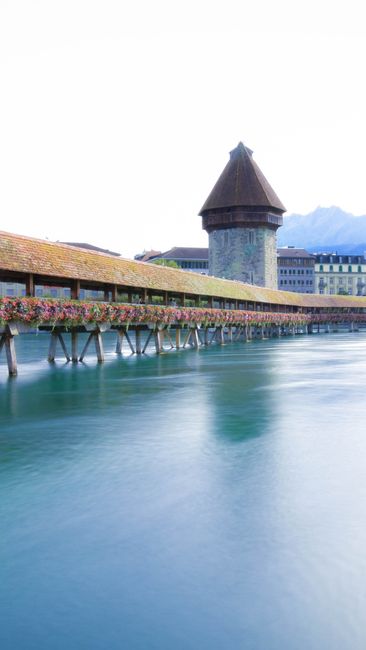
Switzerland packs the Alps, a dozen big lakes, four languages and some of the world’s best trains into a country smaller than Denmark or the US state of West Virginia. In a single day you can breakfast in Zurich, ride a cogwheel railway to a glacier and have dinner in Italian-speaking Lugano under palm trees. The Matterhorn, the Jungfrau and the Eiger, chocolate-box towns like Lucerne and Bern, and the vineyard terraces of Lake Geneva are the classics, but the real joy is how easily it all fits together: trains, boats, buses and mountain lifts run like clockwork on one network. It is expensive, so plan carefully, and you’ll find it worth every franc. Give it a week for a first trip and two weeks to see the main regions without rushing.
Right now in Switzerland
- Wed 5–15°C 41–59°F 1 mm Cloudy
- Thu 2–9°C 35–48°F 33 mm Heavy rain
- Fri -1–7°C 31–44°F 1 mm Partly cloudy
Weather: MET Norway (CC BY 4.0) · Air quality: OpenAQ · Rates: ECB
Key facts
| Currency | Swiss franc (CHF), not the euro; cards are widely accepted, and euros only in some tourist businesses, at poor rates with change in francsSource: geneve.com · Last reviewed 4 Oct 2026 |
|---|---|
| Languages | German, French and Italian (official); Romansh (national language, official with Romansh speakers). Lugano is Italian-speaking, Geneva and Montreux French-speaking, the other destinations German-speakingSource: fedlex.data.admin.ch · Last reviewed 4 Oct 2026 |
| Plugs and voltage | Type J and C · 230 V, 50 HzSource: wikidata.org · Last reviewed 4 Oct 2026 |
| Emergency number | 112 (general); 117 police; 118 fire; 144 ambulance; 1414 Rega air rescue (mountains); 145 poison controlSource: ch.ch · Last reviewed 4 Oct 2026 |
| Driving side | On the right; 50 km/h in towns, 80 outside, 100 on expressways, 120 on motorways; alcohol limit 0.5‰ (0.1‰ for new drivers); motorway vignette CHF 40 (e-vignette or sticker), valid 1 Dec of the previous year to 31 Jan of the nextSource: ch.ch · Last reviewed 4 Oct 2026 |
| Tap water | Safe to drink; most public fountains are drinking water too (unless signed otherwise)Source: svgw.ch · Last reviewed 4 Oct 2026 |
| Tipping | Not required (service is included in prices); round up or leave a few francs for good serviceSource: myswitzerland.com · Last reviewed 4 Oct 2026 |
| Calling code | +41 (dial 00 for international calls)Source: wikidata.org · Last reviewed 4 Oct 2026 |
| Time zones | Central European Time (UTC+1); summer time (UTC+2) from the last Sunday in March to the last Sunday in October (clocks go back 25 October 2026)Source: data.iana.org · Last reviewed 4 Oct 2026 |
| Entry summary | Schengen but not EU: visa-free visitors (USA, UK, Canada, Australia…) may stay 90 days in 180 across Schengen; fingerprints and a photo are taken at the first Schengen entry (EES). ETIAS has not started. Not in the EU customs union: goods over CHF 150 pay Swiss VAT.Source: sem.admin.ch · Last reviewed 4 Oct 2026 |
Multi-day tours of Switzerland
Multi-day tours from local operators. You check dates and book on Viator, our partner; we may earn a commission at no extra cost to you. How we earn money
Switzerland at a glance: four languages, 26 cantons
Switzerland is a federal state of 26 cantons, each with its own government, laws, holidays and character. It covers about 41,300 km², and more than half of it is mountains: the Alps in the south and centre, the Jura along the French border in the north-west, and between them the Swiss Plateau (Mittelland), a band of rolling hills and lakes where most people live and the big cities lie. The population is about 9.1 million. There is no official capital: Bern is the “federal city”, the seat of parliament and government, while Zurich is the largest city and Geneva the most international.
Switzerland has four national languages. According to the Federal Statistical Office, about 62% of people speak mainly German (in its Swiss dialects, though signs and newspapers use standard German), about 23% French, about 8% Italian and about 0.5% Romansh, a language descended from Latin spoken in parts of Graubünden. More than two-thirds of adults regularly use more than one language, and English is widely spoken in tourism.
Time zone: Central European Time (UTC+1), with summer time (UTC+2) from the last Sunday in March to the last Sunday in October, the same as France, Germany and Italy.
The regions and their languages
- Zurich and north-eastern Switzerland (German): Zurich, the Rhine Falls, Lake Constance, St. Gallen and the Appenzell hills, Basel on the Rhine.
- Central Switzerland (German): Lucerne and its lake, Pilatus, Rigi, the Titlis above Engelberg, and the meadow where, by tradition, the Swiss Confederation was founded in 1291.
- Bern and the Bernese Oberland (German): the federal city, then Interlaken between two lakes, Grindelwald, Lauterbrunnen, Wengen, Mürren and the Jungfraujoch.
- Lake Geneva and western Switzerland (French): Geneva, Lausanne, the Lavaux vineyards, Montreux and Chillon, Gruyères and the Jura’s watchmaking towns.
- Valais (French and German): the upper Rhône valley, Switzerland’s sunniest and driest, with Zermatt and the Matterhorn, Saas-Fee, Verbier, the Aletsch Glacier and vineyards.
- Graubünden (German, Romansh and Italian): the largest canton, with St. Moritz and the Engadin, Davos, Klosters, Arosa, the Swiss National Park and the Rhaetian Railway.
- Ticino (Italian): south of the Alps, with Lugano, Locarno and Lake Maggiore, Bellinzona’s castles and wild valleys such as the Verzasca.
Regions
- Canton of Aargau
- Canton of Appenzell Ausserrhoden
- Canton of Appenzell Innerrhoden
- Canton of Basel-Landschaft
- Canton of Basel-Stadt
- Canton of Bern
- Canton of Fribourg
- Canton of Geneva
- Canton of Glarus
- Canton of Jura
- Canton of Lucerne
- Canton of Neuchâtel
- Canton of Nidwalden
- Canton of Obwalden
- Canton of Schaffhausen
- Canton of Schwyz
- Canton of Solothurn
- Canton of St. Gallen
- Canton of the Grisons
- Canton of Thurgau
- Canton of Ticino
- Canton of Uri
- Canton of Valais
- Canton of Vaud
- Canton of Zug
- Canton of Zurich
Where to go: cities, lakes and mountains
Most first trips combine a city or two with one or two mountain bases: typically Zurich or Geneva, Lucerne, Interlaken and Zermatt, perhaps with a scenic train to St. Moritz or Lugano. Distances are short; it is the number of mountain excursions that fills the days.
Zurich and Basel
Zurich, Switzerland’s biggest city and main airport, has an elegant old town on the Limmat, Chagall’s windows in the Fraumünster, the Kunsthaus and summer swimming in the lake and river. Basel, an hour away where Switzerland meets France and Germany, is the country’s art capital, with around 40 museums, Art Basel every June, Rhine swimming and Switzerland’s biggest carnival.
Lucerne and central Switzerland
Lucerne is the picture-postcard town: the covered Chapel Bridge, a medieval wall with towers and a lake with paddle steamers. It is the base for Pilatus, with the world’s steepest cogwheel railway, Rigi (free with the Swiss Travel Pass) and the glacier on the Titlis.
Bern and the Bernese Oberland
Bern‘s UNESCO-listed old town of arcades, fountains and the Zytglogge clock tower sits on a loop of the Aare river, where locals swim in summer. An hour south, Interlaken opens the door to the Jungfrau region: the waterfalls of Lauterbrunnen, the car-free villages of Wengen and Mürren, Grindelwald under the Eiger, the Schilthorn and the Jungfraujoch, at 3,454 m Europe’s highest railway station.
Geneva and Lake Geneva
Geneva combines the Jet d’Eau, an old town around a cathedral you can climb, the United Nations and CERN’s free science centre. Along the lake, Lausanne has the Olympic Museum; the UNESCO-listed Lavaux vineyard terraces drop to the water; and Montreux has the Château de Chillon, a lakeside promenade with palm trees and its famous Jazz Festival.
Zermatt and the Valais
Zermatt is a car-free village at the foot of the Matterhorn, with the Gornergrat railway, the Matterhorn Glacier Paradise at 3,883 m, year-round glacier skiing and a cable car across the border to Italy. Elsewhere in the Valais, the Aletsch Glacier, the longest in the Alps, can be seen from the Eggishorn and Bettmerhorn above the Rhône valley.
St. Moritz and Graubünden
St. Moritz, the birthplace of winter tourism, sits in the high, sunny Engadin valley among lakes and larch forests, with horse races and polo on the frozen lake in winter. It is the terminus of the Glacier Express and the start of the Bernina Express over the Alps to Italy, on the UNESCO-listed Rhaetian Railway.
Lugano and Ticino
Lugano brings Italian style: piazzas, lakeside promenades, funiculars up Monte San Salvatore and Monte Brè, grotto restaurants and a mild climate. Bellinzona’s castles, Locarno on Lake Maggiore and the Verzasca valley are close, and Lake Como is just over the border.
A few more worth your time
The Rhine Falls near Schaffhausen, Europe’s largest waterfall by volume; Stein am Rhein’s painted houses; Appenzell and the Säntis; Gruyères and its castle and cheese; the medieval town of Murten; Saas-Fee and Verbier in the Valais; Davos and Arosa; the Swiss National Park in the Lower Engadine; Kandersteg and the Oeschinensee; and the Aletsch Arena’s car-free villages above the glacier. Lake Constance, shared with Germany and Austria, is covered in our Lake Constance guide.
Basel Travel Guide
Plan a trip to Basel: Art Basel 2027 dates, Rhine swimming rules and the Wickelfisch, the Minster and Rathaus, the Kunstmuseum and Fondation Beyeler…
Bern Travel Guide
Plan a trip to Bern: the UNESCO old town and its arcades and fountains, Zytglogge clock tower tours with 2026 prices, the Minster tower,…
Geneva Travel Guide
Plan a trip to Geneva: the Jet d'Eau and its 2026 schedule, St. Pierre Cathedral towers, free entry to CERN's Science Gateway and how…
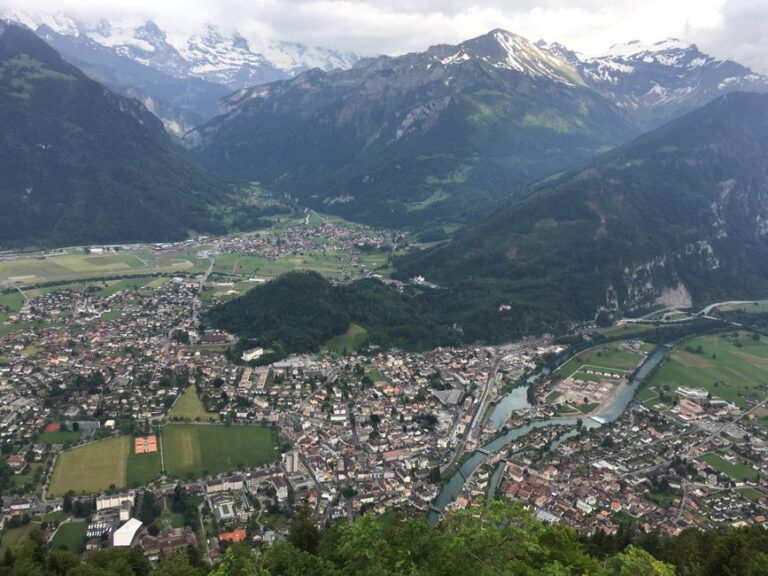
Interlaken Travel Guide
Plan a trip to Interlaken and the Jungfrau region: the Jungfraujoch via the Eiger Express with 2026 prices and reservations, Jungfrau Travel Pass prices,…
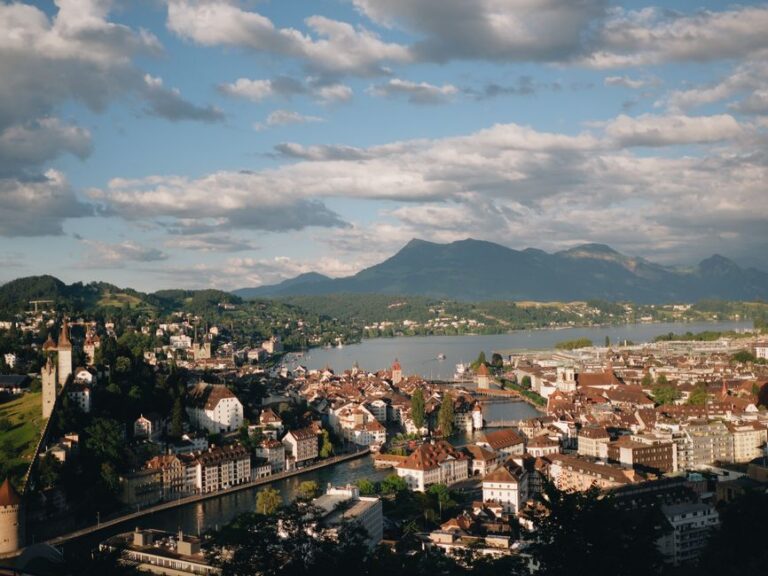
Lucerne Travel Guide
Plan a trip to Lucerne: the Chapel Bridge, Spreuer Bridge, Lion Monument and Musegg Wall, the Swiss Museum of Transport with 2026 prices, Lake…
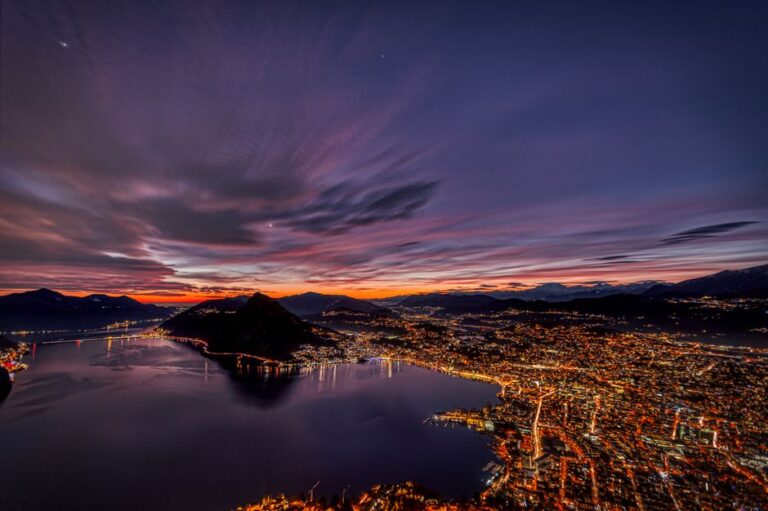
Lugano Travel Guide
Plan a trip to Lugano: Monte San Salvatore and Monte Brè funiculars with 2026 fares and closures, the old town and LAC, the Olive…
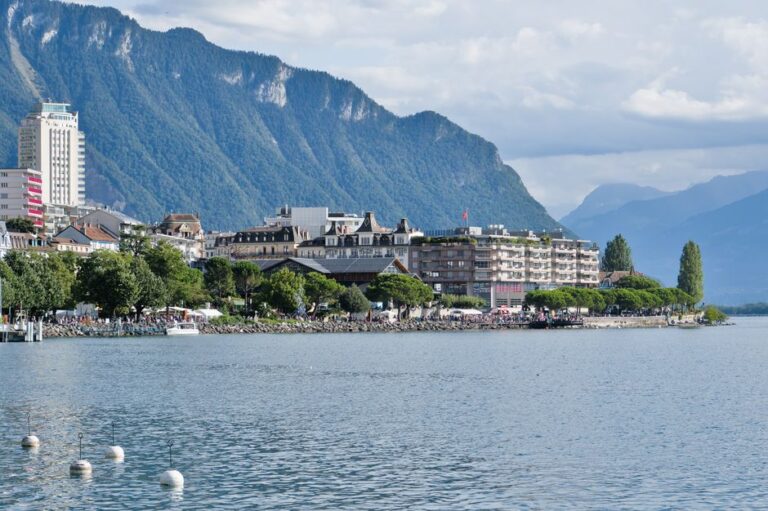
Montreux Travel Guide
Plan a trip to Montreux: Château de Chillon tickets and hours for 2026, the UNESCO Lavaux vineyard terraces and the Lavaux Express, the Montreux…
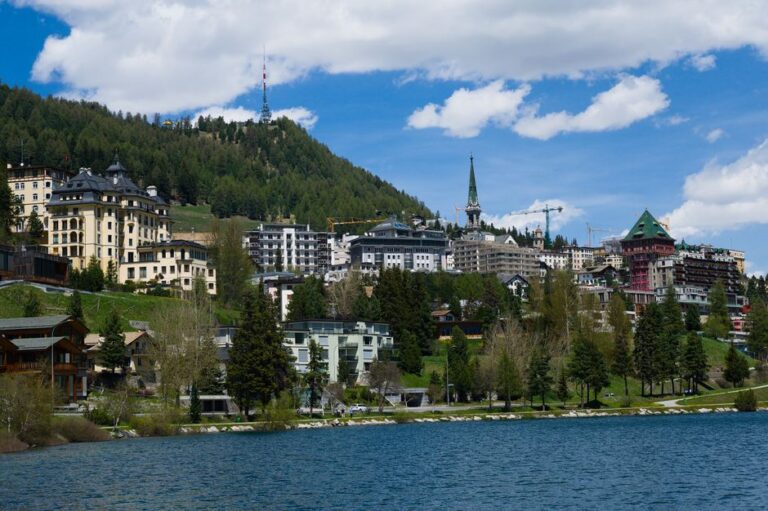
St. Moritz Travel Guide
Plan a trip to St. Moritz and the Upper Engadine: the 2026/27 ski season and Sleep + Ski deal, White Turf, Snow Polo and…
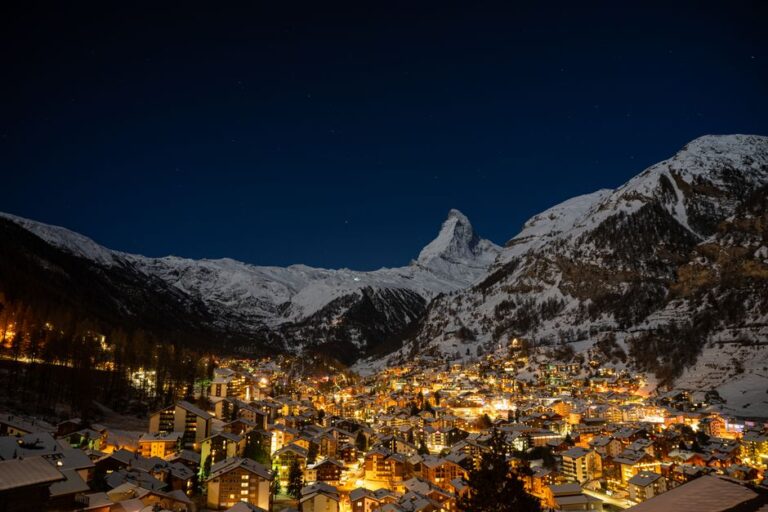
Zermatt Travel Guide
Plan a trip to Zermatt: the car-free rules and parking in Täsch with the shuttle train, Gornergrat and Matterhorn Glacier Paradise fares for 2026/27,…
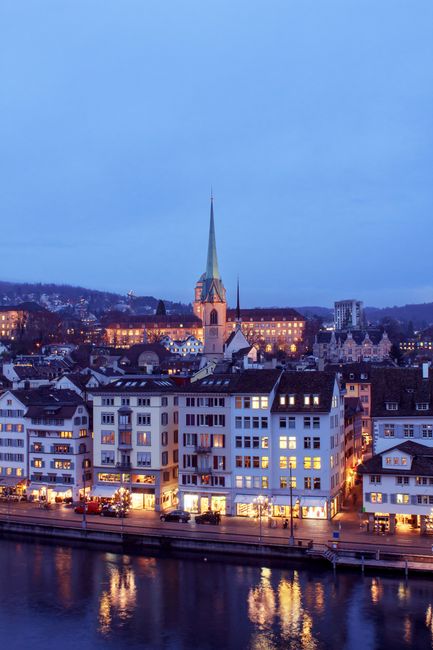
Zurich Travel Guide
Plan a trip to Zurich: the old town and Grossmünster, Chagall's windows in the Fraumünster, the Swiss National Museum and Kunsthaus with 2026 prices,…
Best time to visit Switzerland, region by region
Switzerland has a temperate climate shaped by altitude: as a rule, it gets about 6 °C colder for every 1,000 m you climb. North of the Alps (Zurich, Bern, Basel, Lucerne) summers are warm and winters cold and often foggy; Geneva and the Lake Geneva shore are a little milder; Ticino, south of the Alps, is the warmest and sunniest region but has heavy downpours; and the inner Alpine valleys of the Valais and the Engadin are dry and sunny. The table shows MeteoSwiss climate normals for 1991–2020 (average daily highs, read via a secondary summary; Zermatt figures calculated from MeteoSwiss data).
| Place (altitude) | January | April | July | October | Rain/snow a year |
|---|---|---|---|---|---|
| Zurich (556 m) | 3.5 °C | 14.8 °C | 24.3 °C | 13.8 °C | about 1,110 mm |
| Geneva (412 m) | 5.1 °C | 15.9 °C | 26.7 °C | 15.5 °C | about 950 mm |
| Lugano (273 m) | 7.1 °C | 16.7 °C | 27.3 °C | 16.9 °C | about 1,570 mm |
| Zermatt (1,638 m) | 0.8 °C | 9.8 °C | 20.0 °C | 11.2 °C | about 640 mm |
| Samedan, near St. Moritz (1,709 m) | −1.3 °C | 7.9 °C | 19.3 °C | 10.5 °C | about 710 mm |
| Jungfraujoch (3,571 m) | −9.5 °C | — | 3.4 °C | — | — |
In the mountains, summer is the wettest season, with afternoon thunderstorms; mornings are usually the clearest time to go up. In winter, fog often fills the lowlands for days while the mountains above bask in sunshine. The warm, dry foehn wind can bring sudden warmth and strong gusts to the northern Alpine valleys.
Seasons, crowds and prices
- July and August: peak summer season. All mountain railways, high trails and boats run; it is the best time for hiking, lakes and festivals, but also the busiest and most expensive, especially in Lucerne, Interlaken and Zermatt.
- June and September: the sweet spots. Long days, fewer crowds, and most lifts running; high trails may still have snow in June. September often has the most stable weather.
- Mid-December to March: ski season, with Christmas, New Year and February the busiest weeks. Cities have Christmas markets from late November.
- April to May and late October to November: the “between seasons”. Good value in the cities and Ticino, spring blossom and autumn colour, but many mountain lifts, hotels and the Glacier Express take a break.
Festivals and events through the year
- January to March: the Lauberhorn ski races in Wengen (15–17 January 2027); Snow Polo (22–24 January 2027) and White Turf horse races (7, 14 and 21 February 2027) on the frozen lake at St. Moritz; carnival in Lucerne and Basel, whose Morgestraich starts at 4:00 on 15 February 2027; the Engadin Skimarathon in March.
- April to June: Zurich’s Sechseläuten guild parade; Zermatt Unplugged (6–10 April 2027); Art Basel (17–20 June 2027).
- July and August: the Montreux Jazz Festival (2–17 July 2027); Swiss National Day on 1 August, with bonfires and fireworks everywhere; the Locarno Film Festival (4–14 August 2027); the Lucerne Festival (12 August–12 September 2027); Zurich’s Street Parade (14 August 2027).
- September and October: cows come down from the alpine pastures in decorated processions (Alpabzug, désalpe); wine harvest festivals in Lavaux, the Valais and Ticino; chestnut season in Ticino.
- November and December: Bern’s onion market (23 November 2026); Christmas markets in Basel, Zurich, Montreux and elsewhere; Geneva’s Escalade festival (11–13 December 2026).
Public holidays differ by canton
Swiss National Day, 1 August, is the only nationwide public holiday set by federal law; the cantons decide the rest, so a holiday in Zurich may be a normal working day in Ticino or the Valais. On public holidays, shops close and public transport runs a Sunday timetable. The main dates for the coming months:
| Holiday | Date | Where |
|---|---|---|
| Christmas Day | Friday 25 December 2026 | Everywhere |
| St. Stephen’s Day | Saturday 26 December 2026 | Most cantons |
| New Year’s Day | Friday 1 January 2027 | Everywhere (2 January in many cantons) |
| Good Friday | 26 March 2027 | Most cantons, not Ticino or the Valais |
| Easter Monday | 29 March 2027 | Most cantons |
| Ascension Day | 6 May 2027 | Everywhere |
| Whit Monday | 17 May 2027 | Most cantons |
| Swiss National Day | Sunday 1 August 2027 | Everywhere |
| Federal Day of Thanksgiving, Repentance and Prayer | Sunday 19 September 2027 (Monday 20 September off in Vaud) | Everywhere |
Weather month by month
Averages from MeteoSwiss normals 1991–2020, Zurich Fluntern · Last reviewed 4 Oct 2026
How long to stay: sample itineraries
Switzerland is small, but mountain days take time, and you want a spare day for the weather. Base yourself in two or three places rather than moving every night, and save the highest summits for the clearest mornings.
5 days: Zurich, Lucerne and Interlaken
A day in Zurich, two days in Lucerne with Pilatus or Rigi and a lake cruise, then the Luzern–Interlaken Express to Interlaken for two days with the Jungfraujoch and Lauterbrunnen. Fly home from Zurich (about 2 hours 15 minutes from Interlaken).
7 days: the classic triangle plus Zermatt
Add Zermatt for two nights after Interlaken (about 2 hours via the Lötschberg tunnel), with the Gornergrat and the Matterhorn Glacier Paradise, then continue to Geneva or Montreux by train along the Rhône valley to fly home from Geneva.
10 days: add the Glacier Express and St. Moritz
Zurich, Lucerne, Interlaken and Zermatt as above, then the Glacier Express from Zermatt to St. Moritz (about 8 hours), two nights in the Engadin, and the Bernina Express to Tirano and on by bus to Lugano for a final night in Ticino, returning to Zurich in about 2 hours by train.
14 days: the grand tour
Geneva, Montreux and Lavaux; the GoldenPass Express to Interlaken; Bern; Lucerne; then Zermatt, the Glacier Express, St. Moritz, the Bernina Express and Lugano, ending in Zurich or Milan. Switzerland links easily with its neighbours: Geneva is about 1 hour 15 minutes from Chamonix, TGV Lyria trains run to Paris in about 3 to 4 hours, and Lugano is about an hour from Milan. See our France, Italy and Germany guides for the next leg.
Entry, money and costs
Schengen, but not the EU (last reviewed October 2026)
Switzerland is not a member of the European Union, but it is part of the Schengen area. In practice this means:
- Visas: the Schengen rules apply. EU and EFTA citizens need only a valid ID card or passport. Americans, Canadians, Britons, Australians and many others can visit visa-free for up to 90 days in any 180-day period, and days in Switzerland count towards the same 90 days as the rest of Schengen.
- No routine passport checks when you cross from France, Germany, Italy or Austria, though police can carry out spot checks, so carry your passport or ID.
- Entry/Exit System (EES): the Schengen area’s digital border system has been fully running since 10 April 2026. Non-EU visitors on short stays have their passport details, a facial image and fingerprints recorded at their first entry into Schengen instead of passport stamps, at Swiss airports as at other external borders; children under 12 are not fingerprinted. Registration is free.
- ETIAS: the planned online travel authorisation for visa-free visitors (fee €20) will also apply to Switzerland, according to the Swiss State Secretariat for Migration, but it is not in operation as of October 2026, and no start date has been announced. Until the EU and Switzerland confirm a date, you don’t need one; ignore websites selling “ETIAS applications”.
- Customs: Switzerland is outside the EU customs union, so you go through customs (green and red channels) when you arrive from an EU country. Goods worth up to CHF 150 per person per day can be brought in free of Swiss VAT; above that, VAT is due on the whole amount. Meat, butter, oils, alcohol and tobacco have separate quantity limits (for example about 1 kg of meat per person). You can declare goods with the official QuickZoll app.
Rules change, so check the Swiss State Secretariat for Migration, the Federal Office for Customs and Border Security and your own government’s travel information before you travel.
Currency, cards and tipping
The currency is the Swiss franc (CHF), also written Fr. or SFr. Cards and mobile payments are accepted almost everywhere, including on trains and in mountain huts more and more often, though a little cash helps at rural farm shops, small huts and markets. Many shops, stations and hotels accept euros, but change comes back in francs at an unfavourable rate. Locals also pay with TWINT, a Swiss mobile payment app.
Tipping: service is included in restaurant and hotel prices by law, and staff are paid a proper wage, so tipping is not expected. People usually round up the bill or leave a few francs (up to about 5–10%) for good service. You don’t need to tip taxi drivers beyond rounding up.
VAT and tax-free shopping
Swiss VAT is low by European standards: 8.1% standard rate, 3.8% on accommodation and 2.6% on food, books and medicines, as of October 2026. Visitors who live outside Switzerland can reclaim VAT on goods they take home, through the shop’s tax-free form and export stamp; shops commonly set a minimum spend per receipt (often quoted as about CHF 300), so ask before you buy.
Typical travel costs
Switzerland is one of the most expensive countries in the world to visit. These are rough estimates for 2026, not official prices:
| Item | Typical price |
|---|---|
| Coffee in a café | CHF 4.50–6 |
| Lunch menu (main course and drink) | CHF 22–32 |
| Dinner main course, mid-range restaurant | CHF 30–50 |
| Half-litre of beer in a bar | CHF 7–9 |
| Hostel dorm bed | CHF 40–70 |
| Mid-range double room | CHF 180–320 |
| Return to a major summit (full fare) | CHF 80–250 |
| Daily budget, backpacker | CHF 120–160 |
| Daily budget, mid-range | CHF 280–400 |
Ways to save: buy supermarket picnics (Coop and Migros have good takeaway counters), drink free water from the fountains, use the free local transport cards that hotels give in Geneva, Bern, Basel, Lucerne, Ticino and elsewhere, look for lunch menus, and choose your rail pass carefully (see below).
Getting there and getting around
Arrival airports and trains from abroad
Zurich Airport is the main international gateway, with a station under the terminal and trains to Zurich main station in about 10 to 15 minutes and direct trains across the country. Geneva Airport is about 7 minutes by train from Geneva Cornavin, with up to seven trains an hour. EuroAirport Basel-Mulhouse-Freiburg, in France, has a Swiss sector, and Milan Malpensa is handy for Ticino. International trains run to Paris (TGV Lyria), Milan, Munich, Stuttgart, Frankfurt and Vienna, plus night trains.
Trains: SBB and the Swiss Travel System
Swiss Federal Railways (SBB) and dozens of private railways, bus, boat and mountain companies form one integrated network, the Swiss Travel System, with connections timed to meet each other. Trains on main routes run every 30 or 60 minutes at the same minutes past each hour, and you don’t need a seat reservation except on some scenic trains. Buy tickets on sbb.ch or the SBB Mobile app (which can also track your journey and charge you automatically), at station machines or at counters. Regular fares are high, so look at passes and Saver tickets. The 2027 timetable is expected to start on 13 December 2026, when domestic fares rise by an average of 3.6% (visitor passes are not affected).
The Swiss Travel Pass
For visitors who live outside Switzerland and Liechtenstein, the Swiss Travel Pass gives unlimited travel by train, bus and boat, public transport in more than 90 towns and cities, free entry to more than 500 museums, three mountains free (Rigi, Stanserhorn and Stoos) and up to 50% off most other mountain railways. Scenic train reservations cost extra. The Swiss Family Card, free with the pass, lets children aged 6–15 travel free with a parent. As of October 2026, prices (valid until 31 December 2026; the Switzerland Travel Centre has announced unchanged visitor pass prices for 2027) were:
| Consecutive days | Adult 2nd class | Adult 1st class | Youth (under 25) 2nd class | Flex (days of choice within a month), adult 2nd class |
|---|---|---|---|---|
| 3 days | CHF 254 | CHF 405 | CHF 179 | CHF 289 |
| 4 days | CHF 309 | CHF 492 | CHF 218 | CHF 349 |
| 6 days | CHF 399 | CHF 634 | CHF 282 | CHF 424 |
| 8 days | CHF 439 | CHF 697 | CHF 311 | CHF 459 |
| 15 days | CHF 499 | CHF 787 | CHF 356 | CHF 519 |
The Half Fare Card and Saver Day Passes
The Swiss Half Fare Card costs CHF 150 for one month as of October 2026 and gives up to 50% off trains, buses, boats, scenic trains and most mountain railways. It often beats the Swiss Travel Pass if you stay in one or two bases and spend more on mountain excursions than on long train trips. The Saver Day Pass gives a day of unlimited travel from CHF 52 in second class (CHF 29 with the Half Fare Card), but only if you book at least a day and up to six months ahead; prices rise as they sell. Do the maths for your itinerary on sbb.ch before you buy.
Scenic trains: Glacier Express, Bernina Express and GoldenPass
- Glacier Express: Zermatt to St. Moritz (or Davos) in about 8 hours over the Oberalp Pass, in panoramic cars with meals at your seat. A seat reservation is compulsory: CHF 54 as of October 2026 (CHF 540 extra for Excellence Class, which trade notices say rises to CHF 590 from December 2026). Reservations open 93 days ahead. The train takes a seasonal break: in 2026 there is no service from 11 October to 4 December, and the winter timetable then runs with fewer trains.
- Bernina Express: Chur or St. Moritz to Tirano in Italy over the Bernina Pass, on the UNESCO-listed Albula and Bernina lines, about 4 hours from Chur and 2 hours 15 minutes from St. Moritz. Panoramic cars need a paid reservation (prices vary by route and season; check rhb.ch). Regional trains on the same line need none.
- GoldenPass Express: Montreux to Interlaken via Gstaad in about 3 hours 15 minutes without a change, up to four times a day. Reservations are compulsory in Prestige class and strongly recommended in other classes.
- Gotthard Panorama Express: a boat across Lake Lucerne, then a panoramic train on the historic Gotthard line to Ticino, from spring to autumn. For the 2027 season it requires a reservation and a supplement (announced at CHF 28).
- Luzern–Interlaken Express: hourly over the Brünig Pass in 1 hour 50 minutes; no reservation needed.
The Swiss Travel Pass covers the fare on all of these, but not the reservation fees or supplements. The ordinary regional trains on the same routes are almost as scenic and need no reservation.
Mountain excursions and prices
The big summits are the highlight of most trips, and also the biggest cost. These were the adult fares as of October 2026, from each operator; check before you go, and choose a clear day.
| Excursion | Height | Adult return (as of October 2026) | With Swiss Travel Pass |
|---|---|---|---|
| Jungfraujoch (from Interlaken or Grindelwald) | 3,454 m | From CHF 129.60 from Grindelwald Terminal; much more from Interlaken in summer | Free to Grindelwald/Wengen, discount beyond |
| Gornergrat (from Zermatt) | 3,089 m | CHF 132 (May–Oct 2026), CHF 102 (Nov 2026–Apr 2027) | 50% off |
| Matterhorn Glacier Paradise (from Zermatt) | 3,883 m | CHF 120–132 (summer 2026), CHF 104 (winter 2026/27) | Discount |
| Schilthorn (from Stechelberg) | 2,970 m | CHF 115 | About CHF 46 |
| Pilatus Golden Round Trip (from Lucerne) | about 2,100 m | From CHF 59.90 (discounted fare); May–October | Boat and bus free, mountain discounted |
| Rigi (day pass) | 1,797 m | CHF 84 | Free |
| Titlis (from Engelberg) | about 3,000 m | See titlis.ch | Discount |
Regional passes such as the Jungfrau Travel Pass (from CHF 210 for 3 days in summer 2026) or the Zermatt Peak Pass can work out cheaper if you plan several excursions in one area.
Driving: the motorway vignette and mountain passes
To drive on Swiss motorways and expressways you need a vignette: as of October 2026, it cost CHF 40 for a calendar year (valid from 1 December of the previous year to 31 January of the following year), as an e-vignette linked to your number plate or as a windscreen sticker. Buy the e-vignette only on the official site via.admin.ch, as copycat sites charge extra; stickers are sold at border crossings, petrol stations and post offices. Hire cars registered in Switzerland already have one. Driving on a motorway without it brings a fine.
Other rules: drive on the right, use dipped headlights during the day, carry a warning triangle, and keep to the limits (50 km/h in towns, 80 km/h on open roads, 120 km/h on motorways); speed cameras are everywhere and fines are steep. Many high Alpine passes, such as the Furka, Grimsel, Susten and Gotthard pass roads, close from about late October to May or June; the Gotthard and San Bernardino road tunnels stay open. Car-carrying trains cut through the mountains all year: the Lötschberg (Kandersteg–Goppenstein, from CHF 26 as of October 2026), the Furka (Realp–Oberwald) and the Vereina (Klosters–Sagliains, from CHF 36). Winter tyres are not compulsory, but you can be held responsible if your car isn’t equipped for the conditions. Remember that Zermatt and several mountain villages are car-free.
Boats, buses and local transport
Lake steamers, many of them Belle Époque paddle steamers, run on Lake Geneva, Lake Lucerne, Lake Zurich, Lakes Thun and Brienz, Lake Lugano and Lake Maggiore, mostly with a full timetable from spring to autumn; the Swiss Travel Pass covers them. Yellow PostBuses reach almost every village and climb mountain passes in summer. Many cities and resorts give hotel guests a free local transport card, including Geneva, Bern, Basel, Lucerne, Interlaken and the whole of Ticino; always ask at check-in.
Culture, food and etiquette
Each region eats differently. In German-speaking Switzerland try rösti, Zürcher Geschnetzeltes (veal in cream sauce), Älplermagronen (alpine macaroni with potatoes, cheese and apple sauce) and bratwurst; in the French-speaking west, fondue, raclette, lake perch and Vaud sausages; in Ticino, risotto, polenta and Merlot in a grotto; in Graubünden, capuns (chard-wrapped dumplings), barley soup and air-dried beef. Swiss chocolate and cheese (Gruyère, Emmentaler, Appenzeller, Vacherin) are everywhere, and Swiss wines, mostly drunk at home, are a pleasant surprise, from Lavaux Chasselas to Valais Cornalin.
- Sunday closing: almost all shops close on Sundays and public holidays. Shops at big stations, airports and some petrol stations open every day, often until late. On Saturdays many shops close around 17:00–18:00.
- Tap water and fountains: tap water is excellent, and public fountains in towns and villages provide free drinking water unless marked Kein Trinkwasser, eau non potable or acqua non potabile. Zurich alone has around 1,200.
- Punctuality and quiet: trains leave on the minute, so be on time. Neighbours value quiet: avoid noise after about 22:00 and on Sundays in residential areas.
- Recycling: separate glass, PET bottles, aluminium and paper; bins are at stations, and littering brings fines.
- Greetings: say hello in the local language (“Grüezi” in German-speaking areas, “Bonjour” in the west, “Buongiorno” in Ticino) when you enter a shop, and greet other hikers on the trail.
Safety, health, mountain safety and connectivity
Safety
Switzerland is one of the safest countries in the world. Petty theft happens at busy stations, on trains and at tourist spots, so watch your bags. The general emergency number is 112; the direct numbers are 117 (police), 118 (fire), 144 (ambulance) and 145 (poison centre).
Mountain safety and weather
Most accidents happen in the mountains. Keep it simple and safe:
- Check the forecast (MeteoSwiss app) and start early: in summer, thunderstorms often build in the afternoon, and the weather in the mountains changes fast.
- Read the trail signs: yellow signs mark hiking trails (Wanderweg), suitable for most people; white-red-white marks mountain trails that need sure footing and a head for heights; white-blue-white marks alpine routes for experienced, equipped mountaineers.
- Respect the snow and ice: never walk on glaciers without a mountain guide, and in winter check the avalanche bulletin of the WSL Institute for Snow and Avalanche Research (SLF) before going off-piste.
- Mind the altitude: at 3,000–3,900 m (Jungfraujoch, Matterhorn Glacier Paradise, Titlis) some people get headaches or breathlessness; move slowly, drink water, and come down if you feel ill.
- Dress for winter on the summits even in July, with sun cream and sunglasses for the strong UV.
- Rivers and lakes: rivers like the Aare and the Rhine are cold and fast; swim only where locals do, and know your exits.
- Air rescue: call 1414 for Rega, the Swiss air rescue (+41 333 333 333 from a foreign phone), or use the Rega app, which sends your position. Rescue and helicopter costs can be very high, so make sure your travel insurance covers mountain rescue and the activities you plan.
Health
Healthcare is excellent but expensive. EU and EFTA citizens can use their European Health Insurance Card (EHIC), and UK residents their GHIC or UK EHIC, for medically necessary state treatment, though you may pay part of the cost; it doesn’t cover rescue, repatriation or private care. Everyone should have travel insurance. Pharmacies (Apotheke, pharmacie, farmacia) give good advice, with a duty pharmacy open at night in cities. Ticks in forests and meadows can carry disease, so check yourself after walks.
Accessibility
Public transport is among the most accessible in Europe: most trains have low-floor entrances and wheelchair spaces, and SBB offers a free assistance service at many stations if you book ahead. Many mountain railways and cable cars, including the Jungfraujoch and Gornergrat, are accessible, but old towns are hilly and cobbled. Switzerland Tourism publishes accessible travel information.
Connectivity and power
Mobile roaming: Switzerland is not part of the EU’s “roam like at home” area, so EU and UK phone plans may charge high roaming fees here unless your operator includes Switzerland. Check before you go, or buy a Swiss prepaid SIM or eSIM. Free Wi-Fi is common in hotels, stations and on many trains.
Power: Switzerland uses Type J plugs (three round pins) at 230 V and 50 Hz. Two-pin European plugs (Type C) fit Swiss sockets, but the thicker Type E/F plugs used in France and Germany, and British and American plugs, need an adapter. Most phone and laptop chargers handle the voltage.
Things to do: hiking, skiing, lakes, boat trips and city breaks
- Hiking: Switzerland has about 65,000 km of marked trails. Classics include the Five Lakes Walk in Zermatt, First to Bachalpsee and the Männlichen Panorama Trail in the Jungfrau region, Rigi, the Lavaux vineyards and the Engadin lakes.
- Skiing: Zermatt, St. Moritz, Verbier, Davos-Klosters, the Jungfrau region and Saas-Fee are the big names, with glacier skiing in summer at Zermatt and Saas-Fee.
- Boat trips: paddle steamers on Lake Geneva and Lake Lucerne, Lakes Thun and Brienz, and Lake Lugano.
- Cycling: the national cycle routes (SwitzerlandMobility), lakeside rides and e-bikes on mountain passes.
- Wine tasting: Lavaux and the Valais, Ticino’s Merlot and the vineyards around Geneva.
- City sightseeing: Zurich, Bern, Basel, Lucerne, Geneva and Lugano, each an easy train ride from the next.
- Lake and river swimming: Zurich’s Badis, Bern’s Aare, Basel’s Rhine and Geneva’s Bains des Pâquis in summer.
What to pack
Layers above all: a warm fleece or down jacket and a windproof, waterproof shell for the summits even in summer, a hat and gloves for high-altitude trips, sunglasses and high-factor sun cream, comfortable walking shoes or light hiking boots with grip, swimwear for lakes and spas, a refillable water bottle for the fountains, and a Type J plug adapter. In winter, add thermal layers and boots with grip for icy streets. Pack light: you’ll be carrying your bag on and off trains.
Switzerland travel FAQ
When is the best time to visit Switzerland?
June to September for hiking, lakes and all mountain railways, with June and September less crowded; mid-December to March for skiing and Christmas markets. April–May and November are quieter, but many lifts and the Glacier Express take a break.
How many days do you need in Switzerland?
Five days covers Zurich, Lucerne and Interlaken; seven adds Zermatt; ten to fourteen lets you ride the Glacier and Bernina Express and see Geneva, St. Moritz and Lugano.
Is Switzerland in the EU or Schengen?
Switzerland is in the Schengen area but not the EU. Schengen visa rules and the 90-days-in-180 limit apply, but there are customs checks and Switzerland uses its own currency, the Swiss franc.
Do I need ETIAS to visit Switzerland?
Not yet. ETIAS will apply to Switzerland once it starts, but as of October 2026 it is not in operation and no start date has been announced. Non-EU visitors are registered in the Entry/Exit System (fingerprints and photo) at their first Schengen border.
Is the Swiss Travel Pass worth it?
It is worth it if you travel most days and use boats, city transport and museums. If you stay in one or two bases and spend most on mountain excursions, the Half Fare Card (CHF 150 for a month as of October 2026) is often cheaper. Compare both on sbb.ch.
How much does the Swiss Travel Pass cost in 2026?
As of October 2026, from CHF 254 for 3 consecutive days in second class to CHF 499 for 15 days; first class from CHF 405. Youth passes for under-25s are about 30% cheaper.
Do I need to reserve the Glacier Express?
Yes. A seat reservation is compulsory (CHF 54 as of October 2026), even with a Swiss Travel Pass, and opens 93 days ahead. The train doesn’t run from 11 October to 4 December 2026.
Do I need a vignette to drive in Switzerland?
Yes, for motorways and expressways. As of October 2026, it costs CHF 40 for the year, as an e-vignette from via.admin.ch or a windscreen sticker. Swiss hire cars already have one.
What plugs are used in Switzerland?
Type J, with three round pins, at 230 V. Slim two-pin European plugs fit; thicker French and German plugs, and British and American plugs, need an adapter.
Can I use euros in Switzerland?
Sometimes, at stations, big shops and hotels, but you’ll get change in francs at a poor rate. Pay by card or phone, which is accepted almost everywhere.
Should I tip in Switzerland?
It isn’t expected, because service is included by law. Round up the bill or leave a few francs for good service.
Can you drink tap water in Switzerland?
Yes. Tap water is excellent, and you can fill your bottle at public fountains unless a sign says the water isn’t drinkable.
Are shops open on Sundays in Switzerland?
Most are closed on Sundays and public holidays. Shops in big stations, airports and some petrol stations open every day.
Does my phone plan work in Switzerland?
Check first. Switzerland is not covered by the EU’s roam-like-at-home rules, so EU and UK plans can charge roaming fees. A local SIM or eSIM is often cheaper.
What language is spoken in Switzerland?
German in the north and centre, French in the west, Italian in Ticino and Romansh in parts of Graubünden. English is widely spoken in tourism.
Is it safe to hike in the Swiss Alps?
Yes, on marked trails suited to your experience and with a good forecast. Start early, follow the trail colours, never go onto glaciers without a guide, and save 1414 (Rega air rescue) and 112 in your phone.
Sources
- Natural Earth · Public domain · fetched 4 Oct 2026
- © OpenStreetMap contributors · ODbL · fetched 4 Oct 2026
- Wikidata · CC0 · fetched 4 Oct 2026
Sources and last review
Researched and last reviewed on 4 October 2026. Swiss Travel Pass, Half Fare Card and Saver Day Pass prices: SBB and Switzerland Tourism; December 2026 fare change: Alliance SwissPass; scenic trains: glacierexpress.ch, the Rhaetian Railway and Switzerland Tourism; EES and ETIAS: the European Commission and the Swiss State Secretariat for Migration; customs and the vignette: the Federal Office for Customs and Border Security; VAT rates: the Federal Tax Administration; car trains: BLS and the Rhaetian Railway; mountain fares: Jungfrau Railways, Gornergrat Bahn, Zermatt Bergbahnen, Schilthornbahn, Pilatus-Bahnen and Rigi Bahnen; Rega; health cover: gov.uk and the Swiss EHIC coordination office; roaming: the European Union; languages: the Swiss foreign ministry and the Federal Statistical Office; climate: MeteoSwiss 1991–2020 normals, read via secondary summaries. Some details, including the population figure, the 2027 visitor pass prices, the Excellence Class price change, the Gotthard Panorama Express supplement, the VAT refund minimum, customs quantity limits, the timetable change date, holiday dates (calculated) and daily costs, come from secondary sources, calculations or estimates and are flagged for checking. Prices, timetables and entry rules change, so check the official links before you travel.
Plan your trip
Partner links: TravelerCenter may earn a commission if you book, at no extra cost to you.
🇩🇪 Useful German phrases for Switzerland
All 38 German phrases: restaurant, hotel, emergencies, romance (printable) →