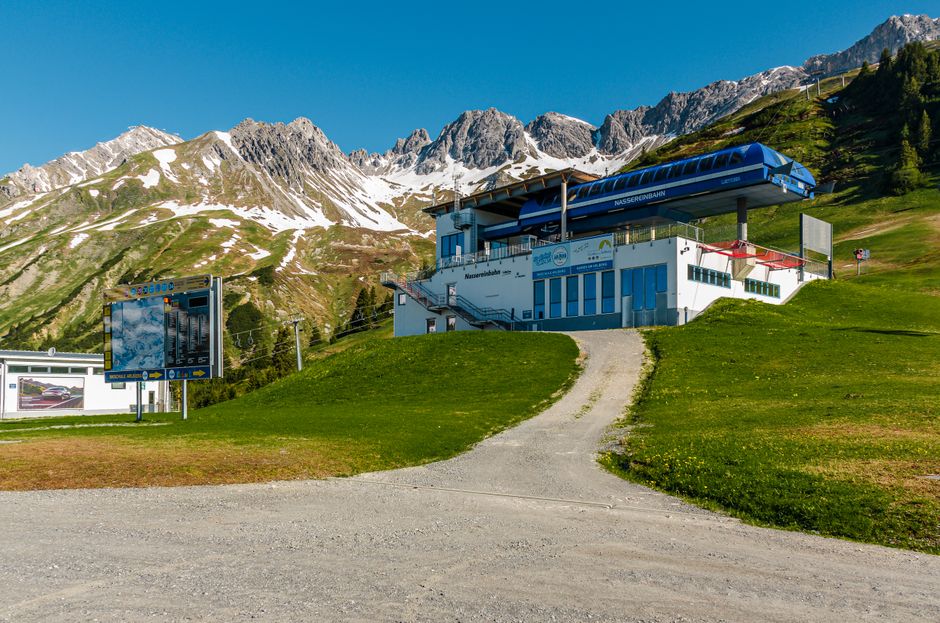
St Anton am Arlberg is where modern Alpine skiing was born and where serious skiers still come on pilgrimage. At the western end of Tyrol, below the Arlberg Pass, the village is the hub of Ski Arlberg, Austria’s largest connected ski area, linked by lifts with St Christoph, Stuben, Zürs, Lech, Warth and Schröcken: about 300 km of marked slopes and some of the best off-piste terrain in the Alps, with legendary après-ski at the end of the day. In summer the lifts reopen for hikers, the Verwall valley offers quiet lakes and huts, and the village is calmer and much cheaper. Give it a week for skiing, or a few days in summer for walking.
Right now in St. Anton am Arlberg
- Wed0–13°C33–56°F1 mm rain
- Thu-0–9°C32–48°F24 mm rain
- Fri-4–-0°C25–32°F1 mm rain
Top tours in St. Anton am Arlberg
See all tours for St. Anton am Arlberg →
From local operators, with prices and reviews; you check availability and book on Viator, our partner. We may earn a commission at no extra cost to you. How we earn money
St Anton at a glance
- Best for: advanced skiers and snowboarders, off-piste and ski touring with a guide, après-ski, snow-sure winters and quiet summer hiking.
- How long: a week for a ski holiday; 3–4 days in summer for hiking.
- Best time: January to March for the best snow; December and April for lower prices; July to mid-September for hiking.
- Getting in: Railjets stop in the village: about 1 hour 10 to 1 hour 20 minutes from Innsbruck and about 3 hours from Zürich. Innsbruck Airport is about an hour by road.
- Getting around: the village is car-free in the centre, and free ski buses link St Anton with St Christoph and the outlying lifts. As of October 2026, a Ski Arlberg adult day pass costs €85 in high season 2026/27.
- Before you go: entry rules, money, mountain safety and driving are in our Austria travel guide.
The village and the Arlberg
St Anton lies at about 1,300 m in the Stanzer valley, on the Tyrolean side of the Arlberg, the pass that divides Tyrol from Vorarlberg and the Danube’s watershed from the Rhine’s. Its pedestrianised main street has hotels, sports shops, bars and restaurants, with the Galzig and Gampen lifts at its end; Nasserein, at the eastern end, has its own gondola and is a little quieter. Up the pass are tiny St Christoph, with a famous hospice, and on the Vorarlberg side Stuben, Zürs and Lech, one of the most exclusive ski villages in the Alps.
In the winter of 1920/21, the local ski instructor Hannes Schneider founded one of the first ski schools in the world here and developed the “Arlberg technique” of crouched stem turns that was taught across Europe and America; his films made St Anton famous. Forced to leave after the Nazi annexation of Austria, he emigrated to the United States in 1939 and helped build skiing in New England. The Ski School Arlberg still runs today, and the village hosted the Alpine World Ski Championships in 2001.
Skiing in Ski Arlberg: the 2026/27 season
Since the Flexenbahn gondola linked Stuben and Zürs in the 2016/17 season, all the Arlberg resorts can be skied on one pass. As of October 2026, Ski Arlberg has about 301 km of marked slopes and 85 lifts, plus more than 200 km of off-piste runs, and its highest point is the Valluga (2,811 m) above St Anton.
- Season dates: St Anton–St Christoph–Stuben and Lech–Zürs are scheduled to open from 2 December 2026 to 18 April 2027; Warth-Schröcken from 4 December to 11 April, and the Sonnenkopf from 11 December to 11 April.
- Prices: as of October 2026, an adult day pass costs €85 in high season (19 December 2026 to 2 April 2027), and about €80.50 in the early and late weeks. Multi-day passes bring the daily cost down.
- What it is like: St Anton’s slopes are steep and challenging, with many red runs that would be black elsewhere and big mogul fields; the Galzig and Gampen areas have the main beginner and intermediate terrain, and the Rendl, across the valley, is quieter and sunny. The run down from the Valluga ridge and the long descents into St Christoph and Stuben are classics.
- Beginners and families: they are better based in Lech, or at Nasserein with its gentle runs and ski schools, than in the centre of St Anton.
Off-piste and avalanche safety
The Arlberg is famous for its freeride terrain, and avalanches kill people here almost every winter. Off-piste skiing is not controlled or patrolled. If you leave the marked slopes:
- Ski with a certified mountain or ski guide, who knows the conditions and the routes; the local ski schools offer daily freeride groups. The top of the Valluga, reached by a small cable car, is reserved for skiers with a guide.
- Read the avalanche bulletin every day at avalanche.report (lawinen.report), the official service for Tyrol, published in English. Most fatal accidents happen at danger level 3, “considerable”, not at the higher levels.
- Carry the kit and know how to use it: an avalanche transceiver, shovel and probe, ideally an airbag backpack, and a charged phone. Practise at the transceiver training parks.
- Respect closures: runs marked closed or “unpisted ski route” are signposted for a reason, and skiing into closed areas can be fined.
- In an emergency call 140 (mountain rescue) or 112. Rescue costs are billed to you, so check that your insurance covers off-piste skiing and helicopter rescue.
Peaks and mountains
- Galzig
- Patteriol
- Roggalspitze
- Roggspitze
- Saumspitze
Viewpoints
- Valluga
Museums
- Museum Huber-Haus in Lech (Vorarlberg)
Après-ski in St Anton
St Anton has some of the liveliest après-ski in the Alps. On the last run down from the Gampen, the MooserWirt and the Krazy Kanguruh are packed from mid-afternoon, with music, dancing on tables and a final ski back to the village in the dusk (go easy: you still have to ski down, and plenty of people get hurt). The MooserWirt’s après-ski runs from about 15:30 to 20:00. Later, the bars along the main street carry on. If that is not your scene, St Anton also has fine restaurants, the arlberg-well.com leisure centre with pools and saunas, and a museum on the history of skiing in a villa above the village.
Huts and mountain food
Lunch on the mountain is part of the day: sunny hut terraces on the Gampen, the Rendl and above St Christoph serve goulash soup, Kaspressknödel, Germknödel (a steamed yeast dumpling with poppy seeds and vanilla sauce) and Kaiserschmarrn. Book ahead for the popular huts in high season, and bring cash in case a card machine fails. In Lech and Zürs, many mountain restaurants are upmarket, with prices to match.
St Anton in summer
In summer St Anton becomes a quiet hiking village. The lifts usually run from mid-June to early October: in 2026 the Gampen and Kapall lifts ran from 13 June to 15 September and the Galzig and Valluga lifts from 3 July to 4 October, so the summer lift season is over as of October 2026 and resumes in June 2027. Highlights include:
- The Arlberg Trail: a 52 km multi-day route linking five villages on both sides of the pass, with about 6,000 m of ascent and descent in total, roughly 18 hours of walking; you can do it in sections with lift support.
- The Verwall valley: a lake, alpine pastures and huts in a quiet nature reserve south of the village, reached on foot, by bike or by a summer shuttle bus.
- The Valluga: on a clear day, the cable car takes you close to the summit for a view over the Alps of Austria, Switzerland, Germany and Italy.
- Biking: marked mountain-bike and e-bike routes, including trails over the pass to Stuben and Lech.
See our hiking guide and cycling guide.
Activities and best months
- HikingIn summer St. Anton's meadows bloom and a network of hiking and biking trails leads to turquoise mountain lakes, with cooler air than the valleys; the Arlberg also has panoramic high trails, via ferratas and trail-running routes, and cable cars make it easy for non-skiers.
Day trips from St Anton
Lech and Zürs, over the pass in Vorarlberg, are worth a visit even without skis, for their chalets and the walk to the Formarinsee lake in summer. Ischgl and the Paznaun valley are about 40 minutes east. The Silvretta High Alpine Road (summer only) climbs to the Silvretta reservoir. Innsbruck is about 1 hour 15 minutes by train, and Bregenz on Lake Constance about 1 hour 30 minutes.
Nearby destinations
- Vaduz56 km
- St. Moritz76 km
- Innsbruck87 km
- Lake Constance93 km
- Zillertal123 km
- Bavarian Alps127 km
- Zurich133 km
- Lake Como146 km
Getting to St Anton
By train. St Anton is one of the few big ski resorts with a mainline station: Railjets between Vienna, Innsbruck and Zürich stop in the village, a short walk or taxi ride from most hotels. Innsbruck takes about 1 hour 10 to 1 hour 20 minutes, and Zürich about 3 hours.
By air. Innsbruck Airport is about an hour away; Zürich and Munich, with more flights, are about 2 to 2 hours 30 minutes away by road or train, and Friedrichshafen is another option. Transfer buses run in winter.
By car. Take the S16 Arlberg expressway (vignette required). The 14 km Arlberg road tunnel to Vorarlberg charges a separate toll of €13 per car each way in 2026; in winter the Arlberg Pass road over St Christoph is open but needs winter tyres and often chains. Winter tyres are required in wintry conditions from 1 November to 15 April.
Getting around
The village centre is pedestrianised and compact, with the main lifts at its western end. In winter, free ski buses run between Nasserein, the centre, St Christoph and the Rendl, and the Arlberg buses connect with Stuben, Zürs and Lech for skiers who end the day on the wrong side of the pass. In summer, a guest card from your accommodation gives free or discounted local buses, lifts and the leisure centre.
When to go and how long to stay
The Arlberg catches storms from the west, so it gets heavy snowfall and is one of the most snow-sure regions in Austria. The village itself, at 1,304 m, has cold winters and cool summers. The table uses GeoSphere Austria’s 1991–2020 climate normals for the St Anton am Arlberg station (sunshine figures are not available for this station).
| Season | Average temperature | Rain and snow per month | What it’s like |
|---|---|---|---|
| Winter (Dec–Feb) | −3.0 to −1.7 °C | 63–82 mm | Cold, with frequent heavy snowfalls; peak season |
| Spring (Mar–May) | 2.1 °C rising to 10.2 °C | 47–82 mm | Long, sunny spring skiing to mid-April; then a closed season |
| Summer (Jun–Aug) | 13.8–15.6 °C | 114–155 mm | Cool and fresh, with afternoon storms; hiking season |
| Autumn (Sep–Nov) | 11.7 °C falling to 2.0 °C | 92 falling to 67 mm | Clear September days; most hotels close from October to late November |
St Anton gets about 1,060 mm of precipitation a year and has an average temperature of 6.5 °C; higher up, on the Valluga, it is much colder and snowier.
A ski week
Warm up on the Gampen and Galzig, spend a day on the quieter Rendl, ski the circuit over the Flexenbahn to Zürs and Lech, book a guided freeride day if conditions are safe, and end each afternoon at the MooserWirt or in the arlberg-well.com spa.
3 days in summer
Day 1: the Galzig and Valluga lifts for the views and a ridge walk. Day 2: a stage of the Arlberg Trail over to St Christoph or Stuben. Day 3: the Verwall valley and its lake by bike or on foot, and an afternoon in the arlberg-well.com pools.
Weather month by month
Where to stay
- St Anton centre: hotels and chalets near the Galzig and Gampen lifts, in the heart of the nightlife.
- Nasserein: quieter, with its own gondola and gentle slopes; good for families.
- St Christoph and Stuben: small and ski-in, ski-out, for keen skiers who want peace.
- Pettneu and Flirsch: villages down the valley with lower prices and ski buses.
Practical tips for St Anton
- Know your level: St Anton’s reds are tough; intermediates should warm up before tackling them.
- Never go off-piste alone: hire a guide and check avalanche.report daily.
- Take the train: the station is in the village, so you don’t need a car.
- Book early for peak weeks: Christmas, New Year, February school holidays and Easter fill up fast.
What to pack for St Anton
Warm, waterproof ski clothing, a helmet, goggles for flat light and snow, a neck warmer and hand warmers for cold January days. For off-piste: an avalanche transceiver, shovel, probe and airbag (all can be hired locally). In summer: hiking boots, a waterproof and warm layers for the high trails, and sun protection.
What to pack
- Day packs and anti-theft bagsA 20–30 litre pack carries layers, water, a head torch and snacks on full-day levada walks.
- Fleeces and warm layersSummits like Pico do Areeiro averaged about 11 °C over 2024, so a fleece is needed even in summer.
- HeadlampsLevada routes such as PR1 and PR9 pass through long, dark, wet tunnels.
- Hiking shoes and bootsMadeira's levadas and the Azores' crater rims are wet, rocky and slippery, so grippy shoes matter more than anywhere else in Portugal.
- Rain jacketsMountain and island weather changes fast; a real shell beats an umbrella in the wind.
- Trekking polesLong stone staircases and steep descents on Madeira's peaks and the Azores' crater rims are easier on the knees with poles.
- Water bottles and hydration packsAlgarve and Alentejo trails are hot and exposed with few refill points.
St Anton am Arlberg travel FAQ
When does the ski season start in St Anton?
The 2026/27 season is scheduled from 2 December 2026 to 18 April 2027 for St Anton, St Christoph, Stuben, Zürs and Lech.
How much is a Ski Arlberg day pass?
As of October 2026, €85 for adults in high season (19 December 2026 to 2 April 2027) and about €80.50 in the early and late weeks.
How big is the Ski Arlberg area?
About 301 km of marked slopes and 85 lifts linking St Anton, St Christoph, Stuben, Zürs, Lech, Warth and Schröcken, plus more than 200 km of off-piste terrain. It is Austria’s largest connected ski area.
Is St Anton good for beginners?
It is better for intermediate and advanced skiers. Beginners can learn at Nasserein and on the Gampen with the ski schools, or base themselves in Lech, which has gentler slopes.
Is it safe to ski off-piste in St Anton?
Only with a certified guide, the right equipment and after checking the daily avalanche bulletin at avalanche.report. Off-piste terrain is not controlled or patrolled.
Is St Anton worth visiting in summer?
Yes, for hiking on the Arlberg Trail, in the Verwall valley and from the Galzig and Valluga lifts, which normally run from June or July to early October.
How do I get to St Anton by train?
Railjets stop in the village: about 1 hour 10 to 1 hour 20 minutes from Innsbruck and about 3 hours from Zürich, with connections from Vienna and Munich.
Can you ski from St Anton to Lech?
Yes. Since the Flexenbahn opened in 2016, you can ski from St Anton via St Christoph and Stuben to Zürs and Lech and back on one Ski Arlberg pass. Leave enough time to return before the lifts close, or take the bus back.
Plan your trip
Partner links: TravelerCenter may earn a commission if you book, at no extra cost to you.
🇩🇪 Useful German phrases for St. Anton am Arlberg
All 38 German phrases: restaurant, hotel, emergencies, romance (printable) →
Sources · last reviewed 4 October 2026
Researched and last reviewed on 4 October 2026. Ski area size, season dates and summer lifts: Ski Arlberg (skiarlberg.at); the 2026/27 day-pass price: Ski Arlberg tariffs via a partner lift company; the avalanche bulletin: Avalanche Warning Service Tyrol (avalanche.report); the MooserWirt: mooserwirt.at; climate: GeoSphere Austria 1991–2020 normals. Hannes Schneider’s history, the Flexenbahn, off-piste figures, the Arlberg road tunnel toll and train times come from secondary sources and are flagged for checking. Prices, timetables and rules change, so check the official links before you go. For Austria-wide entry rules, money and mountain safety, see our Austria travel guide.
Also: austria.info · GeoSphere Austria normals 1991–2020, Innsbruck Airport (climate)
Data: Weather: MET Norway (CC BY 4.0) · Rates: ECB · Costs: World Bank ICP and price levels · © OpenStreetMap contributors (ODBL) · Wikidata (CC0)