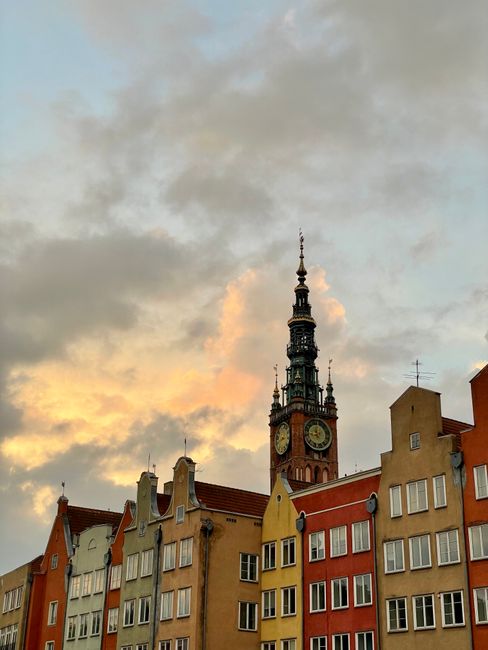
Gdańsk is Poland’s great port on the Baltic: a city of tall, gabled merchants’ houses, red-brick Gothic churches and a waterfront crane, built on the wealth of the Hanseatic grain trade when it was the free city of Danzig. It is also a city where modern European history turned twice. The first shots of the Second World War were fired at Westerplatte on 1 September 1939, and in August 1980 the strikes in the Gdańsk Shipyard gave birth to Solidarity, the movement that helped bring down communism. Both stories are told in two of the best museums in Poland. Add the beaches and pier of Sopot, the port of Gdynia and a day trip to Malbork, the largest brick castle in the world, and you have three or four very full days.
Right now in Gdańsk
- Wed 11–17°C 52–63°F Partly cloudy
- Thu 10–17°C 51–63°F 2 mm Rain
- Fri 10–13°C 49–56°F Partly cloudy
Weather: MET Norway (CC BY 4.0) · Sea temperature: NOAA CoastWatch · Rates: ECB
Top tours in Gdańsk
See all tours for Gdańsk →
From local operators, with prices and reviews; you check availability and book on Viator, our partner. We may earn a commission at no extra cost to you. How we earn money
Gdańsk at a glance
- Best for: Hanseatic architecture, 20th-century history, amber, the Baltic seaside and seafood.
- How long: 2 days for the Main Town and the museums; 3–4 days to add Sopot, Westerplatte and Malbork Castle.
- Best time: May to September; late July to mid-August for St Dominic’s Fair and the beaches.
- Getting in: Gdańsk Lech Wałęsa Airport is linked by bus and train; trains from Warsaw take about 2 hours 30 minutes to 2 hours 45 minutes.
- Key prices: as of October 2026, the Museum of the Second World War cost 33 zł (free on Tuesdays), and Malbork Castle’s Historical Route 80 zł.
- Before you go: entry rules, money and trains are in our Poland travel guide.
Gdańsk, area by area
The city forms the Tricity (Trójmiasto) with the seaside resort of Sopot and the modern port of Gdynia, linked by the SKM suburban railway.
The Main Town (Główne Miasto)
The historic heart, rebuilt after its destruction in 1945: the Royal Way along Long Lane and the Long Market, St Mary’s Church, the Town Hall, Artus Court and the riverside Long Embankment with its crane. Best for: sightseeing, cafés and evening walks.
The Old Town and the shipyard
North of the Main Town, the Old Town has the Great Mill and St Catherine’s Church; beyond it lie the shipyard gates where Solidarity began, the European Solidarity Centre and the post-industrial Young City (Młode Miasto) and Imperial Shipyard, now full of bars and events. Best for: modern history and nightlife.
Granary Island and the Motława
Across the Motława river from the crane, the old granaries of Granary Island (Wyspa Spichrzów) have become hotels, apartments and restaurants, with views back to the waterfront. Best for: stays with a view.
Oliwa and Wrzeszcz
Oliwa has a cathedral with a famous rococo organ and a lovely park; Wrzeszcz is a lively residential district with good-value restaurants, between the centre and Sopot. Best for: local life.
Top things to see in Gdańsk
Prices and hours below were checked on official sites in October 2026. They change, so check before you go.
The Royal Way: Long Lane and the Long Market
Polish kings entered the city through the Upland Gate and the Golden Gate, then processed along Long Lane (ulica Długa) and the Long Market (Długi Targ) to the Green Gate on the river. This is the city’s showpiece: tall, narrow merchants’ houses with painted and gilded façades, the soaring tower of the Main Town Hall, and, in front of Artus Court, the bronze Neptune’s Fountain of 1633, the symbol of Gdańsk. Artus Court, the grand meeting hall of the city’s merchants, has a huge tiled stove and painted interiors and is now part of the Museum of Gdańsk, as is the Town Hall.
St Mary’s Church
One of the largest brick churches in the world, St Mary’s (Bazylika Mariacka) can hold some 25,000 people under its white Gothic vaults. Inside are a 15th-century astronomical clock and a copy of Hans Memling’s “Last Judgement” (the original is in the National Museum). Entry to the church is by donation. Climb the 82 m tower, about 400 steps, for the best view over the Main Town: as of October 2026, 20 zł (10 zł reduced); it closes in storms and during services.
The Crane and the Long Embankment
The wooden medieval port crane (Żuraw) on the Motława, one of the largest in medieval Europe, was used to load cargo and raise ship masts, powered by men walking in giant treadwheels. It is now run by the Museum of Gdańsk. Walk the Long Embankment (Długie Pobrzeże) past the old water gates, or take a boat trip from here, including a pirate-style galleon to Westerplatte in summer.
The European Solidarity Centre
Beside the historic Gate No. 2 of the Gdańsk Shipyard and the Monument to the Fallen Shipyard Workers of 1970, this rust-coloured building tells the story of Solidarity: the strikes of August 1980 led by the electrician Lech Wałęsa, the 21 demands written on plywood boards, martial law in 1981 and the road to the free elections of 1989. The permanent exhibition, with an audio guide, is moving and well done; allow two hours. From October to April it opens Monday and Wednesday to Friday 10:00–17:00 and weekends 10:00–18:00, and is closed on Tuesdays; from May to September it opens daily, to 19:00 or 20:00. The roof garden and the library are free.
The Museum of the Second World War
This huge museum, partly underground beneath a leaning tower on the riverbank, is one of the most comprehensive and unflinching museums of the war anywhere, telling the story from the point of view of civilians as well as soldiers, with reconstructed streets, vehicles and thousands of personal objects. Allow at least three hours. As of October 2026, tickets cost 33 zł (23 zł reduced), with an audio guide for 12 zł in 14 languages. It opens Tuesday to Sunday 10:00–18:00 and is closed on Mondays. On Tuesdays, entry is free, from 10:00 to 16:00, for up to 2,500 visitors, with tickets only at the box office on the day.
Westerplatte
At dawn on 1 September 1939, the German battleship Schleswig-Holstein opened fire on the small Polish garrison at Westerplatte, at the mouth of the harbour; the defenders held out for seven days. Today the peninsula has ruined guardhouses, a cemetery and a giant monument to the defenders. As of October 2026, construction of a new Museum of Westerplatte and the War of 1939 is under way, and parts of the site are fenced off; only the Visitor Centre car park is open. Buses 106 and 138 run to the “Muzeum Westerplatte – Terminal Promowy” stop by the Visitor Centre, and in summer tourist boats and a seasonal water tram sail there from the city centre.
More to see
The Amber Museum in the Foregate tells the story of “Baltic gold”; ulica Mariacka, a lane of terraces and amber shops, is the prettiest street in town; and the National Museum shows Memling’s “Last Judgement”. On Granary Island, the Gdańsk Shakespeare Theatre has a roof that opens.
Historic centres
- Long Market (Długi Targ)
Museums
- European Solidarity Centre
- Gdańsk Main Town Hall
- Museum of World War II in Gdańsk
Monuments
- Malbork Castle
- St. Mary's Basilica in Gdańsk
Churches and cathedrals
- Oliwa Cathedral
Day trip to Malbork Castle
Malbork, about 60 km south-east of Gdańsk, is the largest castle in the world by area and the largest brick building in Europe: the headquarters of the Teutonic Knights from 1309, a vast complex of red-brick fortifications, courtyards and Gothic halls on the Nogat river, a UNESCO World Heritage Site. It was badly damaged in 1945 and has been carefully restored.
Tickets. As of October 2026, the Historical Route through the High, Middle and Lower Castles costs 80 zł (60 zł reduced), with an audio guide included; children under 7 go free. The route takes about three and a half hours and must be done with an audio guide or a guide. Entry is by time slot, every 30 minutes, so book online at the castle’s official ticket shop in summer. A cheaper Walking Route (35 zł) covers the grounds and outer areas.
Hours. From 1 October 2026 to 25 April 2027, the castle opens Tuesday to Sunday 9:00–16:00, with last entry for the Historical Route in the early afternoon; on Mondays only the Walking Route is open. In summer it opens until 20:00.
Getting there. Trains from Gdańsk Główny reach Malbork in about 30 minutes (PKP Intercity) to 50 minutes (regional trains), several times an hour; the castle is a 15-minute walk from the station. The view of the castle across the river from the opposite bank is the classic photo.
Sopot, Gdynia and the beaches
Sopot, 20 minutes away by SKM train, is Poland’s most fashionable seaside resort, with a wide sandy beach, a spa-town main street (Monte Cassino Street, the “Monciak”) and the longest wooden pier in Europe, more than 500 m long. In 2026, a fee of 10 zł (5 zł reduced) was charged to walk on the pier from 10 April to 30 September; it is free out of season. Gdynia, built from scratch in the 1920s, has modernist architecture, a seafront promenade, the museum ship Dar Pomorza and the excellent Emigration Museum. The Baltic is cool, about 17–20 °C in summer. See our beaches guide.
Things to do in Gdańsk
Amber
Gdańsk has been the centre of the Baltic amber trade for centuries. Shops along ulica Mariacka and the waterfront sell amber jewellery; buy from reputable shops that give a certificate, as fakes are common.
Boat trips
From the Long Embankment, boats sail to Westerplatte, around the port and in summer to Sopot, Gdynia and the Hel Peninsula. See our boat trips guide.
St Dominic’s Fair
Held since 1260, St Dominic’s Fair (Jarmark św. Dominika) fills the streets of the Main Town with stalls, crafts, antiques and concerts for about three weeks from late July to mid-August.
Eat and drink
Try Baltic fish such as herring, flounder and smoked eel, pierogi, and Goldwasser, a herbal liqueur with flakes of gold leaf first made in Danzig. The cafés of the Main Town and the bars of the Imperial Shipyard and Wrzeszcz are the places to be in the evening. See our city sightseeing guide.
Activities and best months
- Beaches and swimmingGdańsk lies on the Bay of Gdańsk and has several bathing beaches: Brzeźno, the most popular, with a 140-metre pier, changing rooms and free city wi-fi; Jelitkowo on the Sopot border, a few minutes from the tram terminal, with equipment rental; Stogi, wide and sandy, regularly awarded the Blue Flag and lifeguarded in summer; and the quieter, wilder beaches of Sobieszewo Island next to two bird reserves. · source
Day trips from Gdańsk
- Malbork Castle: 30–50 minutes by train; see above.
- Sopot and Gdynia: 20–40 minutes by SKM train.
- The Hel Peninsula: a long, thin spit of sand and pine forest with beaches on both sides, reached by train, bus or summer ferry.
- Słowiński National Park: shifting sand dunes near Łeba, about 2 hours west.
- Toruń: Copernicus’s Gothic hometown, about 2 hours south by train.
- Kashubia: lakes, forests and the Kashubian culture inland from the coast.
Nearby destinations
- Masuria180 km
- Curonian Spit181 km
- Kołobrzeg201 km
- Bornholm255 km
- Warsaw283 km
Getting to Gdańsk
By air. Gdańsk Lech Wałęsa Airport (GDN) is about 12 km west of the centre. Bus 210 runs directly to Gdańsk Główny station in about 35–50 minutes, and PKM trains run from the airport to Gdańsk Wrzeszcz, where you can change to SKM trains for the centre. Taxis and ride-hailing cars take 20–30 minutes.
By train. Gdańsk Główny, a handsome neo-Renaissance station, is a few minutes’ walk from the Main Town. PKP Intercity trains arrive from Warsaw (about 2 hours 30 minutes to 2 hours 45 minutes), Kraków, Wrocław and Poznań. Book on intercity.pl.
By car. The A1 motorway from Toruń is a privately run section with tolls for cars (about 30 zł for the full length as of October 2026).
Getting around Gdańsk
The Main Town is compact and walkable. Trams and buses run by ZTM Gdańsk cover the rest of the city, and the SKM suburban railway links Gdańsk, Sopot and Gdynia every few minutes at peak times; buy tickets at machines or in an app and validate them before travel. Bikes are a good way to reach Westerplatte and the beaches along the coastal path.
When to go and how long to stay
Gdańsk has a mild, breezy Baltic climate: cooler summers and milder winters than inland Poland, with long summer evenings. The table uses the IMGW 1991–2020 averages for Gdańsk.
| Season | Average high | Average low | Rain per month | What it’s like |
|---|---|---|---|---|
| Winter (Dec–Feb) | 2–3 °C | −3 to −2 °C | 24–36 mm | Cold, damp and windy; Christmas market by the town hall |
| Spring (Mar–May) | 7 °C rising to 17 °C | 0 °C rising to 8 °C | 28–53 mm | Fresh, sunny spells; cool by the sea |
| Summer (Jun–Aug) | 20–23 °C | 12–14 °C | 59–79 mm | Pleasant beach weather, long light evenings and St Dominic’s Fair |
| Autumn (Sep–Nov) | 19 °C falling to 7 °C | 10 °C falling to 2 °C | 43–65 mm | Mild September, stormier October and November |
Gdańsk gets about 570 mm of rain a year, and the wind off the sea makes it feel cooler than the thermometer says.
Gdańsk in 2 days
Day 1: the Royal Way, St Mary’s Church and its tower, the Long Embankment and the Crane, and dinner on Granary Island. Day 2: the Museum of the Second World War in the morning, the European Solidarity Centre and the shipyard in the afternoon.
Gdańsk in 4 days
Add a day trip to Malbork Castle, and a day for Westerplatte by boat and the beach and pier at Sopot.
Weather month by month
Averages from IMGW-PIB normals 1991–2020, Hel · Last reviewed 4 Oct 2026
Where to stay in Gdańsk
- The Main Town: historic houses turned into hotels and apartments, steps from everything.
- Granary Island: modern hotels in rebuilt granaries, with river views.
- The Old Town and near the station: good-value hotels, a short walk from the sights.
- Sopot: seaside hotels and spas for a beach holiday, 20 minutes by train.
Book early for July, August and St Dominic’s Fair.
Practical tips for Gdańsk
- Mondays: the Museum of the Second World War is closed; on Tuesdays it is free but busy.
- Tuesdays in winter: the European Solidarity Centre is closed from October to April.
- Malbork: book a time slot in summer and start early; the route is long.
- Westerplatte: building works mean limited access; check the museum’s website.
- Amber: buy from shops that give a certificate.
What to pack for Gdańsk
A windproof jacket even in summer, layers and a light waterproof, comfortable shoes for cobbles and long museum visits, and a swimsuit and sunscreen for Sopot. In winter, pack a warm coat, hat and gloves; the sea wind bites.
What to pack
- Day packs and anti-theft bagsCarries water, towel and sunscreen down the long stairways to Algarve coves.
- Dry bags and phone pouchesProtects phones and cameras from sand and spray on beaches reached by ferry or steep paths.
- Quick-dry beach towelsA sand-shedding quick-dry towel packs small for beach days and lido visits.
- Reef-friendly sunscreenSummer UV is strong on Portuguese beaches and there is little shade below the cliffs.
- Water shoesRocky coves, lava pools and weever fish in shallow sand make water shoes useful.
- WetsuitsOn the west and north coasts the sea stays around 16–18 °C even in summer, so a thin suit helps for long swims.
Gdańsk travel FAQ
How much is the Museum of the Second World War in Gdańsk?
As of October 2026, 33 zł for adults and 23 zł reduced, plus 12 zł for an audio guide. Entry is free on Tuesdays (10:00–16:00, tickets at the box office on the day), and the museum is closed on Mondays.
Is the European Solidarity Centre worth visiting?
Yes. It tells the story of the 1980 shipyard strikes, Solidarity and the fall of communism in a powerful exhibition with an audio guide. Allow two hours. From October to April it is closed on Tuesdays.
How do I get to Westerplatte?
Take bus 106 or 138 to the “Muzeum Westerplatte – Terminal Promowy” stop, cycle along the river (about 10 km), or take a tourist boat from the Long Embankment in summer. Construction of a new museum means parts of the site are fenced off.
How do I get from Gdańsk to Malbork Castle?
By train from Gdańsk Główny: about 30 minutes by Intercity or 50 minutes by regional train, then a 15-minute walk. As of October 2026, the Historical Route costs 80 zł, including an audio guide.
Do you have to pay to walk on Sopot pier?
In season, yes: in 2026 the fee was 10 zł (5 zł reduced) from 10 April to 30 September. Outside that period, the pier is free.
How do I get from Gdańsk Airport to the city centre?
Bus 210 runs to the main station in about 35–50 minutes; PKM trains run to Gdańsk Wrzeszcz, where you change to the SKM. A taxi takes 20–30 minutes.
When is St Dominic’s Fair?
Every summer for about three weeks from late July to mid-August, in the streets of the Main Town.
How many days do you need in Gdańsk?
Two days for the Main Town and the two big museums; three or four to add Malbork, Westerplatte and Sopot.
Can you swim in the Baltic at Gdańsk?
Yes, at the city’s beaches and in Sopot, in summer. The water is cool, about 17–20 °C, and lifeguards patrol the main beaches in July and August.
Sources
- © OpenStreetMap contributors · ODbL · fetched 4 Oct 2026
- Wikidata · CC0 · fetched 4 Oct 2026
Sources and last review
Researched and last reviewed on 4 October 2026. The Museum of the Second World War and Westerplatte access: muzeum1939.pl; the European Solidarity Centre’s hours: ecs.gda.pl; St Mary’s Church and its tower: the basilica’s website; Malbork Castle tickets, hours and time slots: zamek.malbork.pl; climate: IMGW 1991–2020 averages for Gdańsk via secondary sources. Sopot pier fees, train times to Malbork, airport transfers, the A1 toll and the Westerplatte museum timetable come partly from local press and secondary sources and are flagged for checking. Prices and timetables change, so check the official links before you go. For entry rules and money, see our Poland travel guide; for the capital, our Warsaw guide.
Plan your trip
Partner links: TravelerCenter may earn a commission if you book, at no extra cost to you.
🇵🇱 Useful Polish phrases for Gdańsk
All 38 Polish phrases: restaurant, hotel, emergencies, romance (printable) →