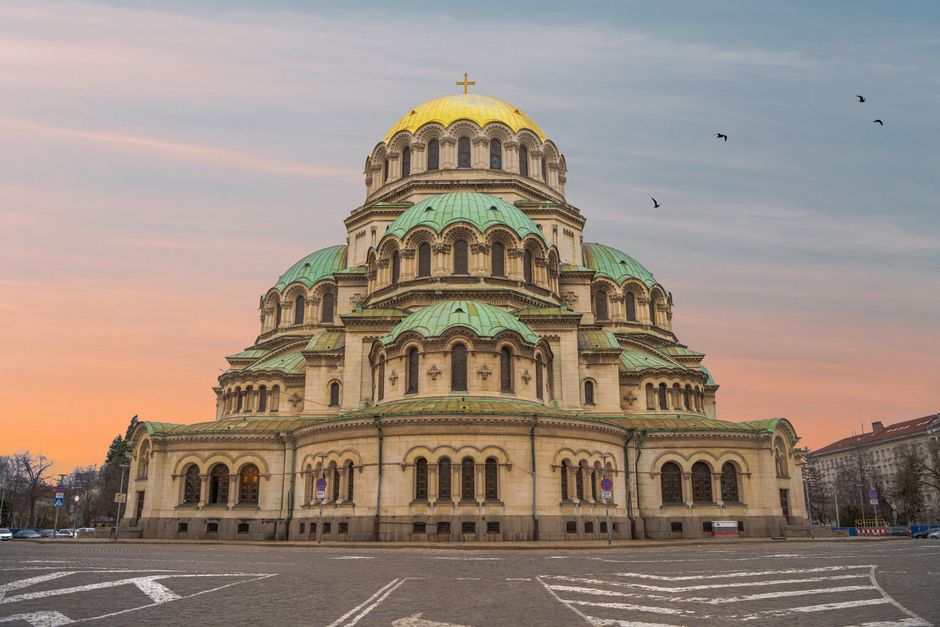
Bulgaria packs a lot into a small, affordable country: the onion-domed churches, Roman ruins and mountain views of Sofia; the painted monastery of Rila in its forested valley; Plovdiv, one of Europe’s oldest cities, with a Roman theatre still in use; long sandy beaches and old towns on the Black Sea coast around Varna, Nessebar and Sozopol; the ski slopes and high lakes of Rila and Pirin; the Rose Valley; and the green, quiet Rhodope Mountains. Food and wine are good and cheap, the people are hospitable, and since January 2026 Bulgaria has used the euro. Late spring and September are the best all-round months; July and August belong to the beach, and December to April to the ski resorts. Give it a week for Sofia, Plovdiv and the coast, two weeks to add the mountains.
Right now in Bulgaria
- Wed 7–17°C 44–63°F Partly cloudy
- Thu 7–17°C 44–63°F Partly cloudy
- Fri 8–20°C 47–68°F Clear
Weather: MET Norway (CC BY 4.0) · Air quality: OpenAQ · Rates: ECB
Key facts
| Currency | Euro (EUR, €) since 1 January 2026; the lev (1.95583 to the euro) is no longer legal tender, but the BNB still exchanges it freeSource: ecb.europa.eu · Last reviewed 4 Oct 2026 |
|---|---|
| Languages | Bulgarian (Cyrillic alphabet); English is common in tourismSource: parliament.bg · Last reviewed 4 Oct 2026 |
| Plugs and voltage | Type C and F · 230 V, 50 HzSource: visitbulgaria.com · Last reviewed 4 Oct 2026 |
| Emergency number | 112 (police, ambulance, fire, mountain rescue)Source: visitbulgaria.com · Last reviewed 4 Oct 2026 |
| Driving side | On the rightSource: europa.eu · Last reviewed 4 Oct 2026 |
| Tap water | Safe to drink in towns and cities (EU standards); ask locally in villages and mountain hutsSource: veolia.bg · Last reviewed 4 Oct 2026 |
| Tipping | Not required; about 10% in restaurants for good service, round up in cafés and taxisSource: visitbulgaria.com · Last reviewed 4 Oct 2026 |
| Calling code | +359 (dial 00 for international calls)Source: wikidata.org · Last reviewed 4 Oct 2026 |
| Time zones | All of Bulgaria: EET (UTC+2), summer EEST (UTC+3)Source: transport.ec.europa.eu · Last reviewed 4 Oct 2026 |
| Entry summary | Schengen area since 2025 · EU member. See the entry section for rules by passport.Source: consilium.europa.eu · Last reviewed 4 Oct 2026 |
Multi-day tours of Bulgaria
Multi-day tours from local operators. You check dates and book on Viator, our partner; we may earn a commission at no extra cost to you. How we earn money
Bulgaria at a glance: mountains, monasteries and the Black Sea
Bulgaria lies in the eastern Balkans, between the Danube, which forms most of its border with Romania to the north, and Greece and Turkey to the south, with Serbia and North Macedonia to the west and about 380 km of Black Sea coast to the east. It is a mountainous country: the Balkan range (Stara Planina) runs east to west across the middle, and in the south-west the Rila, Pirin and Rhodope ranges rise to Musala (2,925 m), the highest peak in the Balkans. Between them lie the broad Thracian Plain around Plovdiv and the Danubian Plain in the north.
According to the National Statistical Institute (NSI), Bulgaria had 6,423,207 inhabitants on 31 December 2025, a population that has been slowly shrinking for decades. About 1.3 million people live in Sofia, the capital; the next largest cities are Plovdiv, Varna and Burgas. Outside the cities, many villages are small and ageing, which is part of their charm for visitors: stone houses, vegetable gardens, a church and a tavern on the square.
Bulgarian is the official language, written in the Cyrillic alphabet, which was developed in the First Bulgarian Empire in the ninth and tenth centuries; Bulgarians celebrate it every year on 24 May. Most Bulgarians are Orthodox Christians, and there are Muslim Turkish and Pomak communities, especially in the Rhodopes and the north-east. Time zone: Eastern European Time (UTC+2), and UTC+3 from the last Sunday in March to the last Sunday in October, one hour ahead of Germany, Austria and Italy.
Bulgaria’s regions
- Sofia and the south-west: the capital at the foot of Vitosha mountain, the UNESCO-listed Boyana Church, Rila Monastery and the Seven Rila Lakes, Bansko and the Pirin mountains, the wine town of Melnik and the warm, sunny Struma valley around Sandanski.
- Plovdiv and the Thracian Plain: Plovdiv’s Roman theatre and Old Town, Bachkovo Monastery and Asen’s Fortress in the hills to the south, the vineyards of Thrace, Stara Zagora and the hot springs of Hisarya.
- The Rhodope Mountains: forested ridges, gorges and caves along the Greek border: Shiroka Laka, Trigrad Gorge, the Devil’s Throat cave, the Wonderful Bridges rock arches and the ski resort of Pamporovo.
- The Balkan range and central Bulgaria: the medieval capital of Veliko Tarnovo, the 19th-century villages of Koprivshtitsa, Tryavna and Etara, the Shipka Pass and the Rose Valley around Kazanlak, with its Thracian tombs.
- The Black Sea coast: the northern coast around Varna, Golden Sands, Balchik and Cape Kaliakra; and the southern coast around Burgas, with Sunny Beach, the UNESCO old town of Nessebar, Pomorie, Sozopol and the quieter beaches towards the Turkish border.
- The north-west and the Danube: lightly visited, with the red rock formations and fortress of Belogradchik, the Magura cave and the Danube river towns of Vidin and Ruse.
Regions
- Blagoevgrad Province
- Burgas Province
- Dobrich Province
- Gabrovo Province
- Haskovo Province
- Kardzhali Province
- Kyustendil Province
- Lovech Province
- Montana Province
- Pazardzhik Province
- Pernik Province
- Pleven Province
- Plovdiv Province
- Razgrad Province
- Ruse Province
- Shumen Province
- Silistra Province
- Sliven Province
- Smolyan Province
- Sofia City Province
- Sofia Province
- Stara Zagora Province
- Targovishte Province
- Varna Province
- Veliko Tarnovo Province
- Vidin Province
- Vratsa Province
- Yambol Province
Where to go: cities, mountains and the coast
Most first trips combine Sofia with Rila Monastery and Plovdiv, then either head to the Black Sea in summer or into the mountains. Bulgaria is compact but roads are slow in the hills and trains are slower still, so pick two or three bases rather than moving every night.
Sofia
Bulgaria’s capital is a relaxed, green city of about 1.3 million with 7,000 years of history under its streets. See the gold-domed Alexander Nevsky Cathedral, the fourth-century Rotunda of St George hidden in a courtyard, the Roman ruins of Serdica in the metro passages, the National Archaeological Museum and the Ivan Vazov National Theatre. Just outside the city, the 13th-century frescoes of Boyana Church are a UNESCO World Heritage Site, and Vitosha mountain gives hiking above the rooftops. Sofia is also the base for day trips to Rila Monastery and the Seven Rila Lakes. See our Sofia guide for prices and practical tips.
Plovdiv
Plovdiv, Bulgaria’s second city, has been inhabited for thousands of years and is one of the oldest continuously inhabited cities in Europe. Its Roman theatre, carved into a hillside and still used for summer concerts and opera, its Roman stadium under the main shopping street and the colourful merchants’ houses of the Old Town are the highlights; Kapana, the “trap” district of crooked lanes, is full of cafés, bars and street art. South of the city are Bachkovo Monastery and the cliff-top church of Asen’s Fortress. Plovdiv is an easy two- to three-hour train or bus ride from Sofia.
Rila Monastery and the Seven Rila Lakes
Hidden in a valley of the Rila mountains about 120 km south of Sofia, Rila Monastery is Bulgaria’s most famous sight and a UNESCO World Heritage Site: striped arcades around a courtyard, a church covered in vivid 19th-century frescoes and a medieval stone tower. Entry to the courtyard and church is free. Higher in the same mountains, the Seven Rila Lakes are a chain of glacial lakes between about 2,100 and 2,500 m, reached in summer by a chairlift from Panichishte above Sapareva Banya and a few hours of walking. Both can be day trips from Sofia; on public transport, choose one per day.
Bansko and the Pirin
Bansko is Bulgaria’s best-known ski resort, a stone-built town with traditional taverns (mehani) at the foot of the Pirin mountains. A gondola climbs from the edge of town to the ski area, which as of October 2026 opens for the 2026/27 season on 1 December 2026. In summer, Pirin National Park, a UNESCO World Heritage Site, offers marble peaks, more than a hundred glacial lakes and the climb to Vihren (2,914 m). The narrow-gauge train from Septemvri to Dobrinishte winds through Razlog and Bansko.
Veliko Tarnovo and the Balkan villages
Veliko Tarnovo, the capital of the Second Bulgarian Empire, climbs the steep sides of the Yantra gorge, with the walls and patriarchal church of Tsarevets fortress on a hill in a river bend, and a sound-and-light show on some evenings. Nearby, the village of Arbanasi has fortified merchants’ houses and painted churches, and the open-air museum at Etara and the village of Tryavna show 19th-century crafts and woodcarving. Further west, Koprivshtitsa is a museum village of colourful houses where the April Uprising of 1876 began.
Varna and the northern coast
Varna, Bulgaria’s third city and “sea capital”, has a long Sea Garden park, a beach right in town, Roman baths and the Archaeological Museum, whose gold from the Varna Necropolis is among the oldest worked gold in the world, about 6,000 years old. North of the city are the big resort of Golden Sands, the rock-cut Aladzha Monastery, the palace and botanical garden of Balchik and the red cliffs of Cape Kaliakra; inland, the stone columns of Pobiti Kamani rise from the sand. See our Varna guide.
Burgas, Nessebar, Sunny Beach and Sozopol
The southern coast is busier. Sunny Beach is Bulgaria’s largest resort, with miles of sand, hotels and nightlife; at its southern end, Nessebar sits on a rocky peninsula with medieval churches, wooden houses and a UNESCO listing. South of Burgas, the old town of Sozopol has a similar mix of history and beaches at a calmer pace, and further south are quiet coves, the dunes of Ropotamo and the villages of Sinemorets and Lozenets. Burgas itself has a long seafront park, salt lakes full of birds and the airport for the whole southern coast.
The Rhodopes and the Rose Valley
The Rhodope Mountains are greener, gentler and less visited than Rila and Pirin, with villages such as Shiroka Laka and Kovachevitsa, the Trigrad Gorge and the Devil’s Throat cave, the Yagodina cave and the natural rock arches of the Wonderful Bridges. North of Stara Zagora, the Rose Valley around Kazanlak grows the Damask roses for Bulgaria’s famous rose oil; the harvest is in late May and early June, and the valley is also full of Thracian royal tombs, including the UNESCO-listed tomb of Kazanlak.
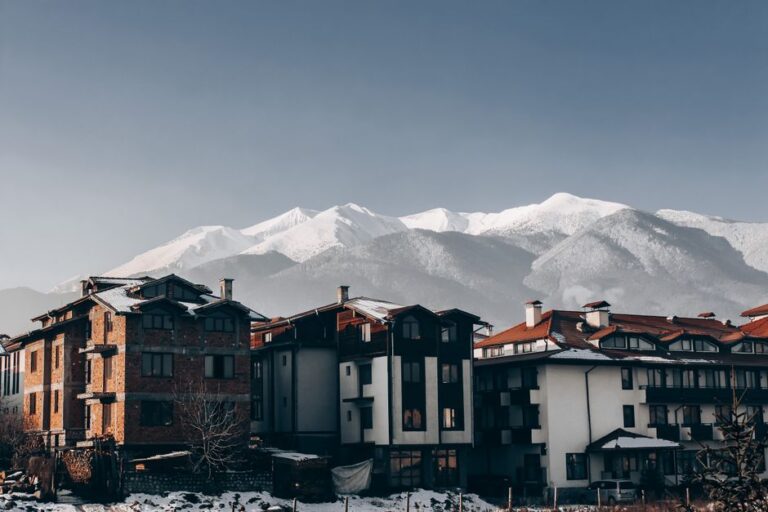
Bansko Travel Guide
Plan a trip to Bansko: the 2026/27 ski season dates and season-pass prices, day-pass prices for reference, the gondola fares and summer timetable, the…
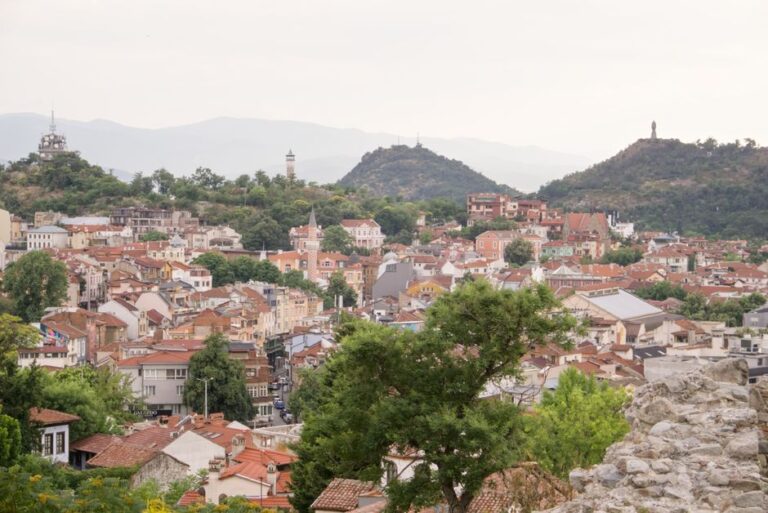
Plovdiv Travel Guide
Plan a trip to Plovdiv: the Ancient Theatre and Roman Stadium, Old Town houses and the combined ticket with 2026 prices, the Bishop's Basilica…
Sofia Travel Guide
Plan a trip to Sofia: the Alexander Nevsky Cathedral and its icon crypt, Boyana Church tickets and the 10-minute visiting rule, the Rotunda of…
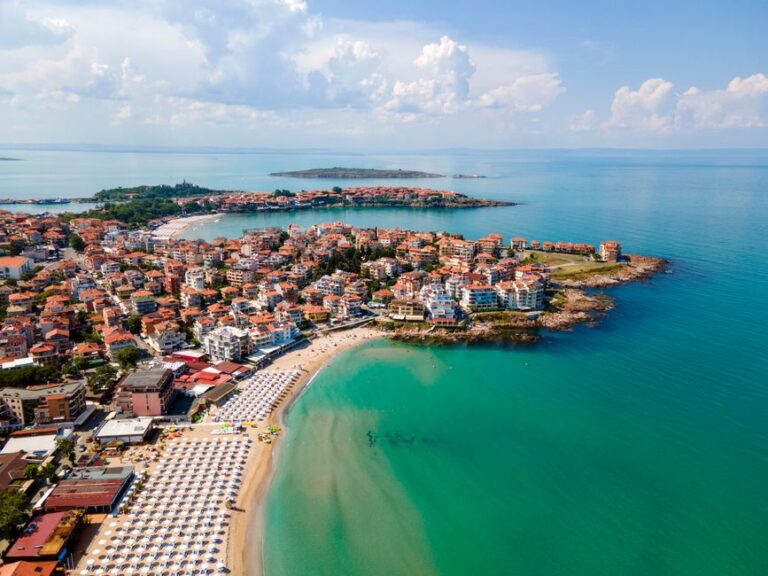
Sunny Beach Travel Guide
Plan a trip to Sunny Beach: where to stay between Sveti Vlas, the resort centre and Nessebar, the UNESCO old town of Nessebar and…
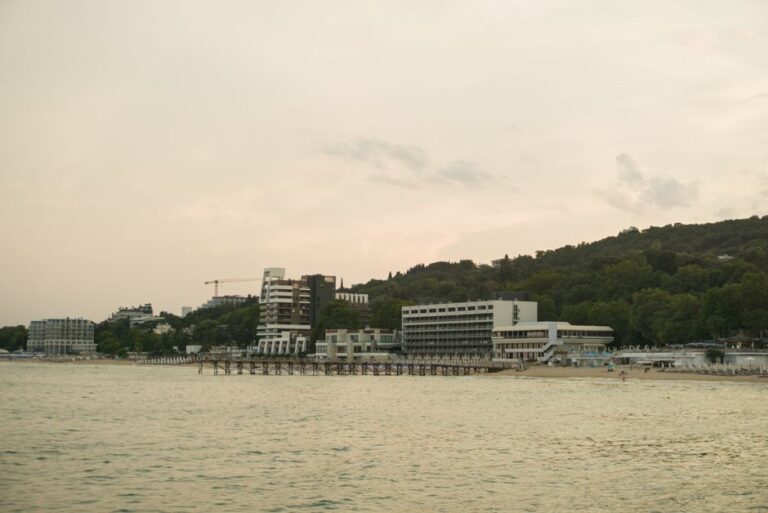
Varna Travel Guide
Plan a trip to Varna: the Sea Garden and city beaches, the Archaeological Museum and the 6,000-year-old Varna gold, the Roman Baths, the Cathedral…
Best time to visit Bulgaria, region by region
Bulgaria has hot summers and cold winters, with big differences between the lowlands, the coast and the mountains. The Black Sea coast is mild and dry, with the warmest sea from July to September; the Thracian Plain around Plovdiv is the hottest part of the interior in summer; Sofia, at about 550 m, is cooler, with frequent afternoon thunderstorms in early summer and snowy winters; and the high mountains are under snow from about December to April. The table shows average daily temperatures (day and night together) and yearly rainfall from the climate normals for 1991–2020 of Bulgaria’s National Institute of Meteorology and Hydrology (NIMH).
| Region (NIMH station) | Winter (Dec–Feb) | Spring (Mar–May) | Summer (Jun–Aug) | Autumn (Sep–Nov) | Rain a year |
|---|---|---|---|---|---|
| Sofia and the west (Sofia) | about −0.5 to 2 °C | 6 °C rising to 15 °C | 19–22 °C | 17 °C falling to 6 °C | about 625 mm |
| Thracian Plain (Plovdiv) | about 1–3 °C | 8 °C rising to 18 °C | 22–24 °C | 19 °C falling to 7 °C | about 550 mm |
| Northern coast (Varna) | about 3–4 °C | 6–7 °C rising to 16 °C | 21–23.5 °C | 19 °C falling to 9 °C | about 510–530 mm |
| Southern coast (Burgas) | about 3–5 °C | 7 °C rising to 17 °C | 21–24 °C | 20 °C falling to 9.5 °C | about 550 mm |
| Struma valley, south-west (Sandanski) | about 3–5.5 °C | 9 °C rising to 19 °C | 23–26 °C | 21 °C falling to 9 °C | about 500 mm |
| High mountains (Musala peak, 2,925 m) | about −10 °C | −8 °C rising to 0 °C | 4–6 °C | 3 °C falling to −4 °C | about 830 mm |
Daytime highs are much warmer than these averages: in July and August, afternoons reach about 28 °C in Sofia and on the coast, 29–30 °C in Varna and Burgas, and 31–34 °C in the south-west and the Thracian lowlands, with heatwaves above 35 °C. Winter highs are about 3–5 °C in Sofia and 6–8 °C on the coast. Sofia gets about 2,260 hours of sunshine a year and Varna about 2,360. The sea is warmest in August, at roughly 24–26 °C near the shore. Above about 1,800 m, snow can fall in any month, and summer afternoons bring thunderstorms; start mountain walks early.
Crowds and prices through the year
- April to early June: green, flowering and uncrowded; good for Sofia, Plovdiv, the monasteries and walking at lower levels. The Rose Valley harvest is in late May and early June. The sea is still cold and high trails keep snow into June.
- Late June to August: beach season. The coast is busy, especially Sunny Beach, Nessebar, Sozopol and Golden Sands, and prices peak in late July and August. It is also the season for the high mountains: the Seven Rila Lakes, Vihren and Musala are usually snow-free from July to September. Plovdiv and the lowlands can be very hot.
- September and early October: excellent everywhere: warm sea in September, grape harvest, golden forests and cheaper hotels. Many coastal resorts wind down from mid-September and big resort hotels close by October.
- November to March: cold, often grey in the cities, with cheap city breaks and Christmas lights. Ski resorts (Bansko, Borovets, Pamporovo) open in December, usually until late March or early April. The coast is very quiet.
Festivals and events: late 2026 and 2027
Bulgaria’s calendar mixes Orthodox feasts with folk traditions. Confirmed or fixed dates for the next ones:
| Event | Dates | Good to know |
|---|---|---|
| Christmas and the New Year | 24 December 2026 to 1 January 2027 | Christmas Eve dinner has an odd number of meatless dishes; Sofia and Plovdiv have Christmas markets and lights |
| Jordan’s Day (Yordanovden) | 6 January 2027 | Men dive into icy rivers and lakes to retrieve a cross, notably in Kalofer, where they dance in the river |
| Kukeri masquerade season | Late January to March 2027 | Men in huge fur costumes and bells chase away evil spirits; the biggest gathering is the Surva festival in Pernik, usually on the last weekend of January |
| Baba Marta | 1 March 2027 | People give each other red-and-white martenitsi, worn until you see a stork or a blossoming tree |
| Orthodox Easter | Sunday 2 May 2027 | Churches fill for midnight services; painted eggs and the sweet bread kozunak |
| Rose Festival, Kazanlak | Expected 4–6 June 2027 | Rose-picking rituals and a parade on the first weekend of June; check the municipality’s programme |
| Bansko Jazz Festival | Early August 2027 (2026 edition: 31 July to 9 August) | Free open-air concerts on the main square; 2027 dates not yet announced |
Public holidays
On public holidays, banks, offices and many shops close, buses and trains run reduced timetables and Bulgarians travel, so the coast and mountains fill up. When a holiday falls on a Saturday or Sunday, the next working day is normally a day off as well (except at Easter). The next ones, from October 2026:
| Holiday | Date |
|---|---|
| Christmas Eve, Christmas Day and the second day of Christmas | Thursday 24 to Saturday 26 December 2026 (plus Monday 28 December) |
| New Year’s Day | Friday 1 January 2027 |
| Liberation Day (national day) | Wednesday 3 March 2027 |
| Orthodox Easter: Good Friday to Easter Monday | 30 April to 3 May 2027 |
| Labour Day | Saturday 1 May 2027 (plus Tuesday 4 May) |
| St George’s Day (Day of the Army) | Thursday 6 May 2027 |
| Day of Bulgarian Education, Culture and Slavonic Literature | Monday 24 May 2027 |
| Unification Day | Monday 6 September 2027 |
| Independence Day | Wednesday 22 September 2027 |
| Christmas | Friday 24 to Sunday 26 December 2027 (plus Monday 27 December) |
Orthodox Easter usually falls on a different date from Western Easter (28 March in 2027). The government can add extra days off around holidays, so check before booking travel on those dates. The Day of the National Awakeners on 1 November is a holiday for schools and universities, not a public holiday.
Weather month by month
Averages from NIMH normals 1991–2020, Sofia · Last reviewed 4 Oct 2026
How long to stay: sample itineraries
Bulgaria’s main roads are good and the Trakia and Hemus motorways link Sofia with Plovdiv, Burgas and part of the way to Varna, but mountain roads are slow and trains are leisurely. Buses are often faster than trains between cities. A good pattern is Sofia and Plovdiv by public transport, then a hire car for the mountains or the coast.
5 days: Sofia, Rila and Plovdiv
Two days in Sofia (Alexander Nevsky Cathedral, the Rotunda and Serdica ruins, the Archaeological Museum, Boyana Church and a walk on Vitosha), a day trip to Rila Monastery, then two days in Plovdiv with the Roman theatre, the Old Town and Kapana, and a half-day to Bachkovo Monastery and Asen’s Fortress.
7 days: the classic loop
Sofia (two nights), Rila Monastery on the way south to Bansko or Plovdiv, Plovdiv (two nights), then east through the Rose Valley and Kazanlak to Veliko Tarnovo (two nights), and back to Sofia, or on to Varna for a beach day before flying home.
10 days: cities and the Black Sea
Add the coast to the seven-day loop: from Veliko Tarnovo drive or take the bus to Varna for two nights (Sea Garden, Archaeological Museum, Aladzha Monastery, Balchik), then south to Nessebar, Sozopol and Burgas for two nights, and fly home from Burgas or Varna.
14 days: mountains, monasteries and the sea
Sofia, the Seven Rila Lakes and Rila Monastery, Bansko and the Pirin, Melnik’s wine cellars, Plovdiv, the Rhodopes (Shiroka Laka, Trigrad and the Devil’s Throat), the Rose Valley, Veliko Tarnovo, then a few days on the coast. Bulgaria also combines well with its neighbours: Istanbul is about eight to ten hours by bus or overnight train from Sofia, and northern Greece and Thessaloniki are about four hours by road from Sofia or Bansko.
Entry, money and costs
Entry and visas (last reviewed October 2026)
Bulgaria has been a full member of the Schengen area since 1 January 2025: air and sea border checks with other Schengen countries were lifted on 31 March 2024, and land border checks with Romania and Greece followed on 1 January 2025. There are no routine passport checks on arrival from other Schengen countries. Bulgaria’s borders with Turkey, Serbia and North Macedonia, and flights from outside Schengen, such as the UK, are Schengen external borders with full checks. Citizens of EU and EEA countries and Switzerland can enter with a national ID card or passport. Visitors from many other countries, including the United States, Canada, the UK and Australia, can stay without a visa for up to 90 days in any 180-day period, counting time in all Schengen countries. Others need a Schengen visa.
- Entry/Exit System (EES): the EU’s digital border system has been fully running at all Schengen external borders since 10 April 2026. Non-EU visitors on short stays have their passport details, a photo and fingerprints recorded on their first entry instead of getting passport stamps; children under 12 are not fingerprinted. Registration is free, and the record lasts three years. Allow extra time at Sofia, Varna and Burgas airports for flights from outside Schengen, and at land crossings with Turkey (such as Kapitan Andreevo), Serbia and North Macedonia, where queues can be long in summer and at holidays.
- ETIAS: the EU’s planned online travel authorisation (fee €20) is not in operation as of October 2026, and the EU has not set a start date; press reports point to 2027, and the EU has said it will announce the date months in advance. Until then, you don’t need one. Ignore websites selling “ETIAS applications” before then.
- Passports: for non-EU visitors, your passport should have been issued less than 10 years before you arrive and be valid for at least 3 months after the day you plan to leave the Schengen area.
- Day trips outside the EU: Edirne and Istanbul in Turkey, and Skopje and Ohrid in North Macedonia, are outside Schengen: carry your passport, check your own visa rules and expect EES registration on the way back in.
Rules change, so check the official pages before you travel: the European Commission’s EES and ETIAS pages, Bulgaria’s Ministry of Foreign Affairs and your own government’s travel information.
Bulgarian basics: the alphabet, a few words and the head shake
Bulgarian uses the Cyrillic alphabet. Main road signs and stations usually repeat names in the Latin alphabet, but menus, bus timetables and shop signs often don’t, so it helps to learn the letters: София is Sofia, Пловдив is Plovdiv, Изход means exit. English is widely spoken by younger people and in hotels and resorts. Useful words: zdraveyte (hello), blagodarya or mersi (thank you), molya (please, and also “you’re welcome”), izvinete (excuse me), da (yes), ne (no) and nazdrave (cheers).
Watch out for one famous difference: many Bulgarians shake their head from side to side to mean yes and nod up and down to mean no, the opposite of most of the world. Younger people in cities often switch to the “Western” gestures when talking to visitors, which makes it even more confusing. When in doubt, say da or ne out loud and ask for the same.
Money: the euro since 1 January 2026
Bulgaria adopted the euro (€) on 1 January 2026, replacing the lev at the fixed rate of 1 euro = 1.95583 leva. Leva and euros circulated together in January 2026, and since 1 February 2026 the lev is no longer legal tender, so you can’t pay with it. Shops had to show prices in both currencies until 8 August 2026; since then, prices are in euros only, although some still show the old lev amount for information.
- Leftover leva: the Bulgarian National Bank (BNB) exchanges lev banknotes and coins into euros free of charge and with no time limit, at its cash desks in Sofia and its other offices. Banks and Bulgarian Posts offices exchanged leva free of charge during the first six months of 2026; after that, banks may charge a fee, so the BNB is the safest place. You can’t spend leva in shops any more.
- Rounding: prices were converted at the fixed rate and rounded to the nearest cent, and the law bans using the changeover to raise prices.
- Cards and cash: cards and phone payments are accepted in most hotels, restaurants, supermarkets and fuel stations, and on the Sofia metro, but carry some cash for small cafés, market stalls, mountain huts, village guesthouses, rural buses and beach sunbeds. Use bank ATMs rather than independent cash machines in resorts, and when a machine or card terminal offers to charge you in your home currency, choose euros.
Tipping
Tipping is customary but modest. In restaurants with table service, leave about 10% if service isn’t included; check the bill, as some places in resorts add a service charge. Round up taxi fares, and give guides and drivers on day tours a few euros if you enjoyed it. In bars, rounding up is enough.
VAT and tax-free shopping
Prices in shops and restaurants include VAT, at a standard rate of 20% (accommodation is taxed at a lower rate). Visitors who live outside the EU can claim back VAT on goods they take home from shops that offer tax-free shopping: ask for the tax-free form when you pay, have it stamped by customs when you leave the EU, and claim the refund through the shop or its refund agent. Check the minimum spend and the agent’s fee in the shop.
Typical travel costs
Bulgaria is one of the cheapest countries in the EU for travellers. Eating out, public transport, wine and entry tickets are inexpensive; Sofia and the big coastal resorts in August cost more, and ski passes in Bansko are priced in line with the rest of Europe. These estimates, per person per day, are a planning guide as of October 2026:
| Style | Estimated cost per day | What that looks like |
|---|---|---|
| Budget | about €40–60 | Hostel dorm or a simple guesthouse room, bakery breakfasts with banitsa, lunch menus, buses and trains, free churches and a museum or two |
| Mid-range | about €80–140 | Double room in a good 3- or 4-star hotel shared by two, sit-down meals with local wine, a few paid sights, a share of a hire car |
| High-end | about €250+ | Boutique or spa hotel, wine-estate dinners, private guides and drivers |
Add more for beach hotels in late July and August and for ski weeks in Bansko in high season. The figures are our estimates, not official statistics.
Getting there and getting around
Airports
- Sofia (SOF): the main international airport, about 10 km east of the centre. Most flights use Terminal 2, which has its own metro station: line M4 runs to the city centre in under half an hour, and as of October 2026 a single metro ride costs €0.80. Terminal 1 is linked to Terminal 2 by a free shuttle bus.
- Varna (VAR) and Burgas (BOJ): the two airports for the Black Sea coast, with many summer charter and low-cost flights from across Europe and fewer flights in winter. Local buses link both with their cities and the nearby resorts.
- Plovdiv (PDV): a small airport with a handful of low-cost flights.
Bulgaria has no high-speed rail link with its neighbours, but international buses connect Sofia with Istanbul, Thessaloniki, Athens, Belgrade, Skopje and Bucharest, and there are seasonal trains to Istanbul and Bucharest.
Trains: BDZ
BDZ (Bulgarian State Railways) runs a cheap but slow network. On the October 2026 timetable, the fastest trains from Sofia take about 2 hours 40 minutes to Plovdiv, about 6 hours to Burgas and about 7 hours 40 minutes to Varna, with overnight trains with sleeping cars to the coast. Many intercity trains require a seat reservation, and tickets can be bought online or at stations; because of repair works, timetables can change at short notice, so check the BDZ timetable for your date. The most scenic ride is the Rhodope narrow-gauge railway from Septemvri, between Sofia and Plovdiv, to Dobrinishte via Velingrad, Avramovo, Razlog and Bansko: four trains a day each way, taking about four and a half to five hours for the whole line.
Buses
Buses and minibuses go almost everywhere and are often faster than trains. In Sofia, most long-distance buses leave from the Central Bus Station next to the Central Railway Station; buses to Rila Monastery and some southern routes use the Ovcha Kupel (West) bus station. Coaches run often between Sofia, Plovdiv, Veliko Tarnovo, Varna and Burgas, and in summer along the coast. Buy tickets at the bus station or online; some regional buses take cash only.
Driving and the e-vignette
A car is the easiest way to explore the mountains, villages and quieter parts of the coast. Roads between cities are generally good; mountain and village roads can be narrow, potholed and slow.
- The e-vignette: cars need an electronic vignette to use motorways and most national roads outside towns. There is no sticker: the vignette is linked to your number plate, which cameras check. Buy it before you drive on the paid network, through the official BG TOLL website (bgtoll.bg), its app or at partner outlets and fuel stations. Prices rose by about 30% on 1 August 2026. As of October 2026, for cars up to 3.5 tonnes: one day €5.30, weekend €6.60, one week €10, one month €19.90, three months €35.90 and one year €64.50. Without a valid vignette you face a fine, or can pay a compensatory fee (reported at €46.50). Hire cars registered in Bulgaria normally have one; ask when you collect the car.
- Rules: drive on the right. Speed limits are 50 km/h in towns, 90 km/h outside towns, 120 km/h on expressways and 140 km/h on motorways, unless signs show otherwise. Dipped headlights are required in daytime all year. The drink-driving limit is 0.5 g per litre of blood; the safe choice is not to drink at all.
Taxis, city transport and domestic flights
Taxis are cheap and metered; use a registered company with prices displayed on the window, or a ride-hailing app, and avoid unmarked cars at airports and stations. Sofia has a metro, trams, trolleybuses and buses; Varna, Plovdiv and Burgas have bus networks.
Culture, food, wine and everyday etiquette
Bulgarian food is fresh, seasonal and generous. Start with shopska salad (tomatoes, cucumber, peppers and grated white cheese, sirene) and a glass of rakia, a fruit brandy that is sipped slowly with salad, not shot. In summer, cold tarator soup of yoghurt, cucumber, dill and walnuts is everywhere. Other favourites are banitsa (cheese pastry, a breakfast staple), kebapche and kyufte (grilled minced meat), slow-cooked kavarma and gyuveche in clay pots, stuffed peppers and vine leaves, and Black Sea fish such as fried sprats and mackerel on the coast. Bulgarian yoghurt is famous, and so is the rose jam and rose water from the Rose Valley.
Bulgaria has been making wine since Thracian times. Look for local red grapes such as Mavrud around Plovdiv, the broad-leaved Melnik vine in the south-west and Gamza in the north, and whites such as Dimyat and Misket; many estates in Thrace and around Melnik offer tastings. See our guide to wine tasting.
Etiquette is relaxed. Dress modestly in churches and monasteries (shoulders and knees covered; some monasteries lend wraps), keep quiet during services, and don’t photograph inside where signs forbid it. When toasting, look people in the eye and say nazdrave. If you are invited to a home, bring flowers (an odd number; even numbers are for funerals) or something sweet. Smoking is banned indoors in restaurants and bars, though people smoke on terraces. Remember the head shake: a shake means yes.
Safety, health, accessibility and connectivity
Safety
Bulgaria is generally safe for visitors. Watch for pickpockets on crowded trams and buses in Sofia and in busy resorts, check taxi prices, avoid street money changers, and keep an eye on your drinks and your bill in nightlife areas of the big resorts. The bigger risks are on the roads, where driving can be aggressive and overtaking risky, and in the mountains, where weather changes fast: carry layers and water, start early to avoid afternoon storms, and follow marked trails. On the coast, swim only at beaches with lifeguards, as currents can be strong when there are waves.
Emergency number: 112 for police, ambulance, fire and mountain rescue, all over Bulgaria.
Health
EU and EEA visitors should bring their European Health Insurance Card (EHIC), and UK residents their UK Global Health Insurance Card (GHIC) or EHIC, for necessary state healthcare. Everyone else needs travel insurance; private clinics in Sofia and the resorts are good but charge. Pharmacies (аптека) are easy to find. Tap water is generally safe in the cities; in the mountains, drink from marked springs or bottled water. Ticks live in long grass and forests in spring and summer. In winter, Sofia’s air quality can be poor on still, cold days.
Accessibility
Newer hotels, museums, the Sofia metro and airports are generally accessible. Old towns such as Plovdiv’s, Nessebar’s and Veliko Tarnovo’s have steep cobbles and steps, many monasteries and churches have stairs, and pavements in cities can be uneven.
Connectivity and power
EU mobile plans work in Bulgaria at home prices. Others can buy a prepaid SIM or eSIM from A1, Yettel or Vivacom; coverage is good in towns and along main roads, weaker in deep mountain valleys. Bulgaria uses 230 V and type F (Schuko) sockets, which also take the thinner two-pin type C plugs used across continental Europe. Visitors from the UK, Ireland, North America and Australia need an adapter. See our guide to travel adapters.
Things to do: hiking, beaches, sightseeing, wine and boat trips
- Hiking: Bulgaria is one of Europe’s great undiscovered hiking countries: the Seven Rila Lakes, Musala and the Rila Monastery trails in Rila; Vihren, Koncheto ridge and the glacial lakes in Pirin; the Kom–Emine ridge path along the Balkan range; Vitosha above Sofia; and gentle valley walks in the Rhodopes. Mountain huts (hizhi) offer simple beds and meals in summer.
- Beaches: wide, sandy beaches with gentle slopes along the whole Black Sea coast: the long strands of Sunny Beach, Golden Sands and Albena, the town beaches of Varna and Burgas, and quieter bays near Sozopol, Primorsko, Sinemorets and Kamen Bryag.
- City sightseeing: Sofia’s churches and Roman ruins, Plovdiv’s theatre and Old Town, Veliko Tarnovo’s fortress, Varna’s museums and the medieval churches of Nessebar.
- Wine tasting: estates in the Thracian valley around Plovdiv and Asenovgrad, in the Struma valley around Melnik and Sandanski, and in the north along the Danube.
- Boat trips: pleasure boats from Nessebar, Sozopol and Varna along the coast, river trips on the Ropotamo through its lianas and water lilies, and cruises on the Danube.
What to pack
For summer on the coast, pack light clothes, a sun hat, sunglasses and high-factor sunscreen; for the cities and monasteries, something to cover shoulders and knees. For the mountains, bring proper hiking shoes, warm layers and a waterproof jacket (see our guide to rain jackets) even in July, as storms and cold winds come quickly above 2,000 m. In winter, Sofia and the ski resorts are cold and snowy: bring a warm coat, hat, gloves and boots with good grip. Water shoes help on the rockier coves near Sozopol and Kaliakra. Add a type F or C plug adapter if you need one, a refillable water bottle and some cash for huts and village shops.
Bulgaria travel FAQ
When is the best time to visit Bulgaria?
May, June and September are the best all-round months: warm, green and less crowded. July and August are best for the Black Sea beaches and the high mountain trails, though the lowlands are hot. December to March is ski season in Bansko, Borovets and Pamporovo.
Does Bulgaria use the euro?
Yes. Bulgaria adopted the euro on 1 January 2026, at a fixed rate of 1.95583 leva to the euro. Since 1 February 2026 the lev can no longer be used for payments, and since 9 August 2026 prices are shown in euros only.
What can I do with leftover Bulgarian leva?
Take them to the Bulgarian National Bank, which exchanges lev banknotes and coins into euros free of charge and without a time limit. Banks and post offices exchanged them free only during the first half of 2026 and may now charge a fee.
Is Bulgaria in the Schengen area?
Yes. Bulgaria has been a full Schengen member since 1 January 2025, so there are no routine passport checks at its borders with Romania and Greece or on flights from other Schengen countries. Days in Bulgaria count towards the 90-in-180-day Schengen limit, and the EU’s Entry/Exit System (EES) applies at its external borders and airports.
Do I need ETIAS for Bulgaria?
Not as of October 2026. ETIAS is not yet in operation and the EU has not set a start date; press reports point to 2027. When it starts, it will apply to visa-exempt visitors to Bulgaria as to the rest of Schengen.
Do I need a vignette to drive in Bulgaria?
Yes, for motorways and most national roads outside towns. Buy an e-vignette online at bgtoll.bg, in the official app or at fuel stations before you drive. As of October 2026 it costs €5.30 for a day, €10 for a week and €19.90 for a month for a car, after a price rise on 1 August 2026.
Is it true that Bulgarians shake their heads for yes?
Yes, traditionally a side-to-side head shake means yes and a nod means no. Many younger Bulgarians use the opposite gestures with foreigners, so confirm with a spoken da (yes) or ne (no).
How do I get from Sofia Airport to the city centre?
From Terminal 2, take metro line M4 to the centre in under half an hour; a single ride costs €0.80 as of October 2026. From Terminal 1, take the free shuttle bus to Terminal 2 first, or a registered taxi.
Can I visit Rila Monastery as a day trip from Sofia?
Yes. It is about 120 km south, about two hours by car. A daily bus runs from Sofia’s Ovcha Kupel bus station in the morning and returns in the afternoon, and many tours combine it with Boyana Church. Entry to the monastery courtyard and church is free.
What plug type does Bulgaria use?
Type F (Schuko), with type C two-pin plugs also fitting, at 230 V. Visitors from the UK, Ireland, the US, Canada and Australia need an adapter.
What is the emergency number in Bulgaria?
112, for police, ambulance, fire and mountain rescue. Operators can usually speak English.
When is Orthodox Easter in 2027?
Sunday 2 May 2027, five weeks after Western Easter. Good Friday to Easter Monday (30 April to 3 May) are public holidays, and with Labour Day the long weekend runs to Tuesday 4 May, so book coast and mountain hotels early.
Sources
- Natural Earth · Public domain · fetched 4 Oct 2026
- © OpenStreetMap contributors · ODbL · fetched 4 Oct 2026
- Wikidata · CC0 · fetched 4 Oct 2026
Sources and last review
Researched and last reviewed on 4 October 2026. Population from the National Statistical Institute (NSI); climate from the 1991–2020 climate normals of the National Institute of Meteorology and Hydrology (NIMH), as published in its monthly bulletins, and from the WMO 1991–2020 normals for daytime highs and sunshine; Schengen, EES and ETIAS from the European Commission; the euro changeover and the exchange of leva from the Bulgarian National Bank and the Council of the EU; train times from BDZ’s online timetable; vignette prices from BG TOLL and the Bulgarian National Television report on the August 2026 increase; Sofia Airport metro fares from the Sofia Centre for Urban Mobility; Bansko’s season dates from the resort operator. Public holiday dates are calculated from the Labour Code rules; the Rose Festival and Kukeri dates, the compensatory fee for driving without a vignette, VAT details and speed limits are from secondary sources or general knowledge and are flagged for checking. Daily costs are estimates. Prices, timetables and entry rules change, so check the official links before you travel.
Plugs and power in Bulgaria
Bulgaria uses 230 V, 50 Hz and these plugs (left) and wall sockets (right):
All plug types and voltages by country → · Check what you need to pack →
Plan your trip
Partner links: TravelerCenter may earn a commission if you book, at no extra cost to you.
🇧🇬 Useful Bulgarian phrases for Bulgaria
All 38 Bulgarian phrases: restaurant, hotel, emergencies, romance (printable) →