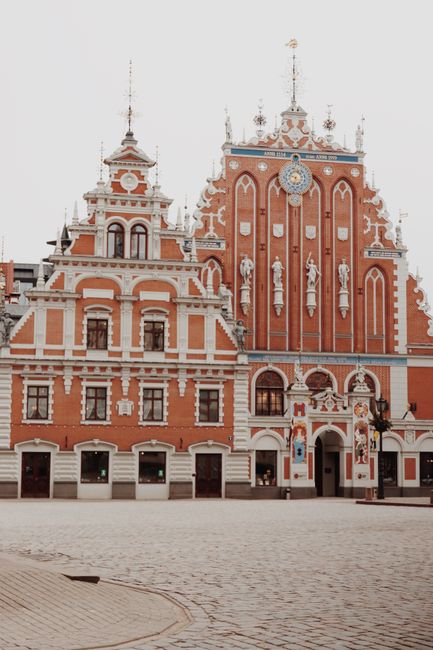
Latvia sits in the middle of the three Baltic states: a green, low-lying country of forests, rivers, lakes and some 500 km of sandy, almost empty Baltic coast. Its capital, Riga, is the biggest city in the Baltics, with a medieval Old Town and the finest collection of Art Nouveau buildings in Europe, both part of a UNESCO World Heritage Site. Beyond Riga you find the beach resort of Jūrmala with its wooden villas and bog boardwalks, castles and caves in the Gauja valley around Sigulda and Cēsis, the baroque Rundāle Palace, the old Courland towns of Kuldīga, Ventspils and Liepāja, and the lakes of Latgale in the east. Latvia is easy, good value and friendly, with a strong singing and Midsummer tradition. Come from late May to early September for long, light days, or in December for the Christmas markets. Give it four or five days for Riga and Jūrmala, and ten days to see the countryside and coast.
Right now in Latvia
- Wed 6–15°C 43–59°F Mostly clear
- Thu 7–17°C 44–62°F Partly cloudy
- Fri 9–13°C 48–56°F 7 mm Cloudy
Weather: MET Norway (CC BY 4.0) · Rates: ECB
Key facts
| Currency | Euro (EUR, €); cards in most places, some cash for markets and the countrysideSource: latvia.travel · Last reviewed 4 Oct 2026 |
|---|---|
| Languages | Latvian; Russian widely spoken in Riga and Latgale, English by most younger peopleSource: wikidata.org · Last reviewed 4 Oct 2026 |
| Plugs and voltage | Type C and F · 230 V, 50 HzSource: wikidata.org · Last reviewed 4 Oct 2026 |
| Emergency number | 112 (police, fire, ambulance); also 110 police, 113 ambulanceSource: liveriga.com · Last reviewed 4 Oct 2026 |
| Driving side | On the right; 50 in towns, 90 outside; headlights on all year; alcohol limit 0.5 per mille; winter tyres 1 Dec-1 MarSource: livelatvia.lv · Last reviewed 4 Oct 2026 |
| Tap water | Safe to drinkSource: latvia.travel · Last reviewed 4 Oct 2026 |
| Tipping | Not mandatory; round up or about 10% in restaurantsSource: liveriga.com · Last reviewed 4 Oct 2026 |
| Calling code | +371 (dial 00 for international calls)Source: wikidata.org · Last reviewed 4 Oct 2026 |
| Time zones | EET (UTC+2), summer time EEST (UTC+3) from the last Sunday in March to the last Sunday in OctoberSource: data.iana.org · Last reviewed 4 Oct 2026 |
| Entry summary | Schengen and EU. Most visitors from outside the EU stay visa-free for up to 90 days in 180 and register in the EU Entry/Exit System at the border; ETIAS is not yet in operation. No internal border checks; crossings to Russia and Belarus are few and can close at short notice.Source: home-affairs.ec.europa.eu · Last reviewed 4 Oct 2026 |
Multi-day tours of Latvia
Multi-day tours from local operators. You check dates and book on Viator, our partner; we may earn a commission at no extra cost to you. How we earn money
Latvia at a glance: Riga, forests and the Baltic coast
Latvia covers about 64,600 km², a little larger than Lithuania and about the size of Ireland, and roughly half of it is forest. It is flat, with gentle hills in Vidzeme and Latgale; the highest point, Gaiziņkalns, is only 312 m. It borders Estonia to the north, Lithuania to the south, and Russia and Belarus to the east. According to the Central Statistical Bureau, Latvia had 1,845,096 inhabitants at the beginning of 2026, and 588,911 of them lived in Riga, almost a third of the country. Latvia has been a member of the European Union, NATO and the Schengen area since 2004 and 2007, and has used the euro since 2014.
Latvian is the official language. Together with Lithuanian, it is one of the last two living Baltic languages, one of the oldest branches of the Indo-European family. Russian is widely spoken in Riga and in Latgale, and in Latgale many people also speak Latgalian. Most younger people speak good English, and signs, menus and transport information in Riga are usually in English too.
Time zone: Latvia runs on Eastern European Time (UTC+2) in winter and Eastern European Summer Time (UTC+3) from the last Sunday in March to the last Sunday in October, the same as Estonia, Lithuania and Finland, one hour ahead of Germany and Sweden and two hours ahead of the UK.
Latvia’s regions
- Riga and the coast: the capital on the Daugava River, the beach resort of Jūrmala and Ķemeri National Park to the west, and the long beaches of the Gulf of Riga to the north at Saulkrasti.
- Vidzeme (the north-east): Gauja National Park, with Sigulda, Turaida Castle, Cēsis and red sandstone cliffs along the river; the hills around Gaiziņkalns; and the wild coast towards the Estonian border.
- Kurzeme, or Courland (the west): the port cities of Liepāja and Ventspils on the open Baltic, the UNESCO-listed old town of Kuldīga with Europe’s widest waterfall, the wind-blown cape of Kolka and Slītere National Park, and small surf and fishing villages such as Pāvilosta.
- Zemgale (the south): flat farmland with Latvia’s grandest palaces, Rundāle and Jelgava, and the castle at Bauska.
- Latgale (the south-east): the “land of blue lakes”, with Daugavpils and its fortress and Mark Rothko Art Centre, the pilgrimage basilica of Aglona, Rēzekne, and Latvia’s most Catholic and Russian-speaking region.
Regions
- Aizkraukle Municipality
- Alūksne Municipality
- Augšdaugava Municipality
- Balvi Municipality
- Bauska Municipality
- Cēsis Municipality
- Daugavpils
- Dobele Municipality
- Gulbene Municipality
- Jelgava
- Jelgava Municipality
- Jēkabpils Municipality
- Krāslava Municipality
- Kuldīga Municipality
- Liepāja
- Limbaži Municipality
- Ludza Municipality
- Līvāni Municipality
- Madona Municipality
- Mārupe Municipality
- Ogre Municipality
- Olaine Municipality
- Preiļi Municipality
- Ropaži Municipality
- Rēzekne
- Rēzekne Municipality
- Salaspils Municipality
- Saldus Municipality
- Saulkrasti Municipality
- Sigulda Municipality
- Smiltene Municipality
- South Kurzeme Municipality
- Talsi Municipality
- Tukums Municipality
- Valka Municipality
- Valmiera Municipality
- Ventspils
- Ventspils Municipality
- Ādaži Municipality
- Ķekava Municipality
Where to go: Riga, the coast, castles and lakes
Nearly every visit starts in Riga, which has the region’s biggest airport. Most of Latvia’s highlights are within two or three hours of the capital, so you can see a lot on day trips or a short road trip. Latvia also links easily with Estonia (Tallinn is about four and a half hours by bus) and Lithuania (Vilnius about four hours).
Riga
Founded in 1201, Riga was a rich Hanseatic port, and its Old Town (Vecrīga) is a maze of church spires, guild halls and merchants’ houses, with the rebuilt House of the Blackheads on Town Hall Square, Riga Cathedral and the tower of St Peter’s Church. Around it, the city grew fast around 1900, and about a third of central Riga’s buildings are in the Art Nouveau style, with the most extravagant façades on Alberta and Elizabetes streets. The Central Market fills five former Zeppelin hangars. The historic centre, including the Old Town, the boulevards and the Art Nouveau district, is a UNESCO World Heritage Site.
Jūrmala and Ķemeri National Park
Jūrmala, 30 minutes by train west of Riga, is a 24 km strip of pine forest and fine sand between the Gulf of Riga and the Lielupe River. In the 19th century it became the Russian Empire’s favourite seaside resort, and thousands of carved wooden villas survive. Walk Jomas iela, the pedestrian street in Majori, swim off the long beach, take a spa treatment, and at the western end visit Ķemeri National Park, where the Great Ķemeri Bog Boardwalk crosses a raised bog to a viewing tower.
Sigulda, Cēsis and Gauja National Park
Gauja National Park, Latvia’s largest, follows the Gauja River through a wooded valley with sandstone cliffs and caves, about an hour north-east of Riga. Sigulda is the main base, with the medieval castle ruins and the red-brick Turaida Castle on the hills above the river, Gūtmaņa Cave, an Olympic bobsleigh track, adventure parks and hiking and canoeing. Further up the valley, Cēsis has one of the best-preserved medieval castles in Latvia and a charming old town. The valley turns red and gold in early October.
Rundāle Palace
Rundāle, about 80 km south of Riga, is the grandest palace in the Baltics, a baroque and rococo summer residence built in the 18th century for the Dukes of Courland by Bartolomeo Rastrelli, the architect of St Petersburg’s Winter Palace. Its gilded state rooms and French garden, with a large rose garden, are a classic day trip, often combined with Bauska Castle and Jelgava Palace. As of October 2026, the main exhibition costs €12 for adults and a combined ticket with the French garden €17.
Kuldīga
Kuldīga, in Courland, became a UNESCO World Heritage Site in 2023 for its well-preserved old town of wooden and stone houses. The Venta Rapid (Ventas rumba), a low waterfall about 240 m wide, is said to be the widest in Europe, and in spring you can watch fish leaping up it. A long red-brick bridge crosses the river, and the Alekšupīte stream runs between the houses. It is about two and a half hours from Riga.
Liepāja and Ventspils
Latvia’s two west-coast ports face the open Baltic. Liepāja, the “city where the wind is born”, has a long white beach, a seaside park, a lively music scene and Karosta, a former tsarist and Soviet naval base with a military prison you can visit. Ventspils is a tidy, prosperous town with a Blue Flag beach, a castle of the Livonian Order, an open-air seaside museum and a narrow-gauge railway.
Kolka and the Courland coast
Cape Kolka, where the Gulf of Riga meets the open Baltic, is a wild, wind-blown point with a lighthouse offshore and a sandy spit where you can see the two seas collide. The coast around it is home to the Livonians, a tiny Finno-Ugric people, and Slītere National Park protects old forests and ancient dunes. Further south, Pāvilosta is Latvia’s small surf and windsurf capital.
Latgale and Daugavpils
Latgale, in the south-east, feels different from the rest of Latvia: more Catholic, more Russian-speaking, with hundreds of lakes, wooden churches and pottery traditions. Daugavpils, the second city, has a huge 19th-century fortress where the Mark Rothko Art Centre honours the painter, who was born in the town. Aglona’s white basilica draws pilgrims every August, and the lakes around Rāzna are good for swimming and canoeing. It is about three and a half hours from Riga by train or car.
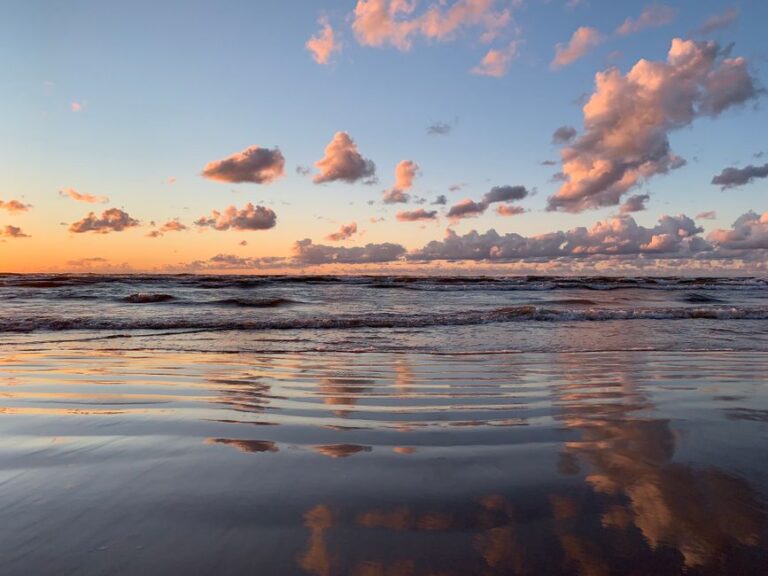
Jūrmala Travel Guide
Plan a trip to Jūrmala: the 24 km sandy beach and Majori promenade, Jomas iela, wooden villas and Art Nouveau summer houses, the Dzintari…
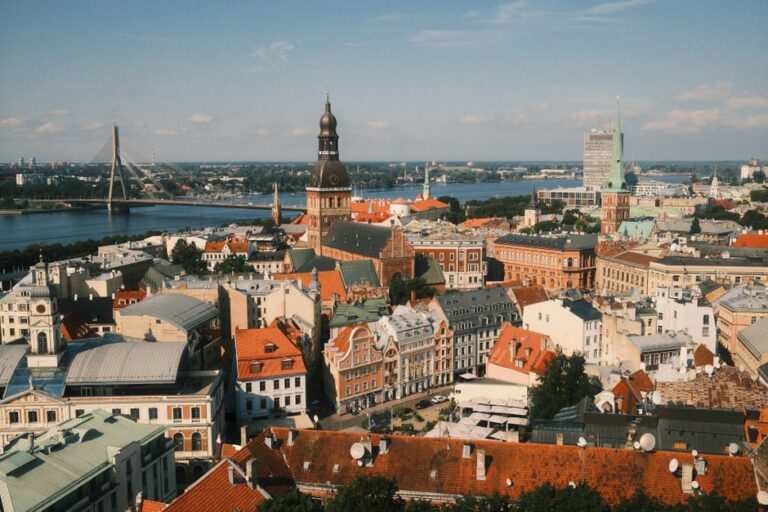
Riga Travel Guide
Plan a trip to Riga: the UNESCO Old Town and Art Nouveau district, House of the Blackheads prices and October 2026 closures, St Peter's…
Best time to visit Latvia, region by region
Latvia has a cool, damp climate with four distinct seasons. The west coast is milder and windier, with cooler summers and less frost in winter; the inland east has warmer summers and colder winters. The table shows rounded average daily highs at one weather station per region, from the official 1991–2020 climate normals that the Latvian Environment, Geology and Meteorology Centre (LVĢMC) submitted to the World Meteorological Organization, plus the average rainfall a year and the number of days with at least 1 mm of rain.
| Region (LVĢMC station) | Spring highs (Mar–May) | Summer highs (Jun–Aug) | Autumn highs (Sep–Nov) | Winter highs (Dec–Feb) | Rain a year (rainy days) |
|---|---|---|---|---|---|
| Riga (Rīga, University of Latvia) | 5–18 °C | 21–24 °C | 17 °C falling to 5 °C | 0–1 °C | about 670 mm (115) |
| Gauja valley and Vidzeme (Priekuļi, near Cēsis) | 3–17 °C | 20–23 °C | 16 °C falling to 3 °C | −2 to 0 °C | about 730 mm (125) |
| Liepāja and the south-west coast (Liepāja) | 4–15 °C | 19–22 °C | 17 °C falling to 6 °C | 1–3 °C | about 690 mm (115) |
| Ventspils and the west coast (Ventspils) | 4–14 °C | 18–21 °C | 17 °C falling to 6 °C | 1–3 °C | about 690 mm (118) |
| Cape Kolka (Kolka) | 3–14 °C | 18–21 °C | 16 °C falling to 6 °C | 1–3 °C | about 630 mm (111) |
| Latgale (Daugavpils) | 4–18 °C | 21–24 °C | 17 °C falling to 4 °C | −2 to 0 °C | about 640 mm (117) |
Winter nights are colder than the highs suggest: average February lows are about −5 °C in Riga, −7 °C at Cēsis and almost −8 °C in Daugavpils, while Liepāja and Ventspils stay around −3 to −4 °C. Spring is the driest season and late summer and autumn the wettest. The sea is warm enough for most swimmers from late June to August, when the shallow Gulf of Riga can reach about 20 °C in a warm spell. Check the forecast on meteo.lv, the Latvian weather service.
Light, darkness and the Northern Lights
- Long summer days: around Midsummer the sun rises in Riga at about 4:30 and sets around 22:20, and the sky stays light all night.
- Short winter days: in late December Riga has about seven hours of daylight, with sunset around 15:45.
- Northern Lights: the aurora is occasionally visible in Latvia during strong geomagnetic storms, best from a dark coast such as Kolka, but it cannot be planned for.
Crowds and prices through the year
- June to August: high season, with warm days, open-air festivals and busy beaches at Jūrmala and Liepāja. Riga’s Old Town is busiest on cruise-ship days. Book hotels in Jūrmala for summer weekends and for Midsummer.
- May and September: fresh green spring or warm early autumn, with fewer visitors and lower prices; good for cycling and hiking.
- October: autumn colours in Gauja National Park, usually at their best in early October.
- November to March: grey and cold, but Riga glows with the Staro Rīga light festival in November and the Christmas markets in December. City hotels are cheap from January to March.
Festivals and events through the year
- May: Restoration of Independence Day on 4 May, and the Riga Marathon, one of the biggest running events in the Baltics.
- June: Jāņi, Latvia’s Midsummer, is the most important holiday of the year. On Līgo Eve (23 June) and Jāņi Day (24 June), both public holidays, people go to the countryside to sing, weave oak-leaf and flower wreaths, eat caraway cheese, drink beer and keep a bonfire burning all night. Many city businesses close.
- July and August: summer concerts at the Dzintari Concert Hall and the Jūrmala Festival, music festivals in Liepāja and on the coast, the Riga City Festival in August and the pilgrimage to Aglona on 15 August.
- The Song and Dance Festival: Latvia’s great choir festival, held about every five years and on UNESCO’s intangible heritage list, gathers tens of thousands of singers and dancers in Riga. The next one will take place from 30 June to 9 July 2028, the government decided in April 2026.
- November: the Staro Rīga light festival, with light installations across the city in the evenings around Proclamation Day on 18 November (in 2025 it ran from 15 to 18 November), and Lāčplēsis Day on 11 November, when candles line the Riga Castle wall.
- December: Christmas markets, the best known on Dome Square in Riga’s Old Town, which usually runs from late November to early January (in 2025–26, from 28 November to 4 January). Riga claims the first decorated Christmas tree, in 1510.
Weather month by month
Averages from LVĢMC normals 1991–2020, Rīga LU · Last reviewed 4 Oct 2026
How long to stay: sample itineraries
Latvia is compact and most roads are quiet, so you can cover a lot in a week. Trains from Riga reach Jūrmala, Sigulda, Cēsis and Daugavpils; buses reach most other towns; and a hire car is best for Rundāle, Kuldīga and the coast.
3 days: Riga and Jūrmala
Two days in Riga: the Old Town, St Peter’s tower and the House of the Blackheads on day one; the Art Nouveau district, the Central Market and the National Museum of Art on day two. On day three, take the train to Jūrmala for the beach, Jomas iela and the wooden villas, or the Ķemeri bog boardwalk.
5 days: Riga, Gauja and Rundāle
Add a day in Gauja National Park (train to Sigulda for Turaida Castle and the caves, or Cēsis for its castle) and a day trip by car or tour to Rundāle Palace and Bauska. Spend the rest in Riga and Jūrmala.
7–10 days: a Latvian road trip
Three days in Riga and Jūrmala. Drive west to Kuldīga for a night, then the coast at Liepāja or Ventspils, and north to Cape Kolka through Slītere National Park. Return to Riga and head north-east to Sigulda and Cēsis. With ten days, add Rundāle on the way south, or Latgale’s lakes and Daugavpils.
2 weeks: the three Baltic capitals
Start in Tallinn (three days), continue via Pärnu to Riga (three or four days, with Jūrmala and Gauja), and on to Vilnius in Lithuania via the Hill of Crosses. Buses link all three capitals, and through trains now run between Vilnius, Riga and Tallinn. From Lithuania you can continue to Poland, for example to the Masurian lakes or Gdańsk.
Entry, money and costs
Entry: Schengen, EES and ETIAS (last reviewed October 2026)
Latvia is part of the EU and the Schengen area, so the usual Schengen rules apply. EU, EEA and Swiss citizens only need a valid passport or national ID card. Many other nationalities, including UK, US, Canadian and Australian citizens, can visit without a visa for up to 90 days in any 180-day period, counted across all Schengen countries together.
- Entry/Exit System (EES): the EU’s digital border system has been fully running at all Schengen external borders, including Riga Airport, since 10 April 2026. The first time you enter, non-EU visitors register fingerprints and a facial photo instead of getting a passport stamp; children under 12 are not fingerprinted. Registration is free. Allow extra time at passport control on flights from outside Schengen, such as from the UK. At the border you may also be asked for proof of accommodation, travel insurance, a return ticket and enough money for your stay.
- ETIAS: the EU’s planned online travel authorisation (fee €20) is not in operation as of October 2026, and no start date has been officially announced. You don’t need one yet. Ignore websites selling “ETIAS applications”.
- Passport validity: non-EU passports must have been issued within the last 10 years and be valid for at least three months after the day you plan to leave the Schengen area. The UK government advises carrying a copy of your passport’s photo page at all times in Latvia.
- The Russian and Belarusian borders: there is limited access along parts of Latvia’s border with Belarus, the Silene–Urbani road crossing is closed, and a permit from the State Border Guard is needed to enter the zone within 2 km of the border. Cars with Russian and Belarusian number plates are, with few exceptions, banned from entering Latvia. These are not routes for ordinary visitors.
Money: the euro, cards and cash
Latvia uses the euro (€). On 2 October 2026, €1 was worth about US$1.12 and £0.85 (European Central Bank reference rates). Cards and phone payments are accepted almost everywhere, including at the Central Market and on the airport bus, but carry some cash for small country cafés, markets and rural guesthouses. The UK government advises using cash machines inside banks where possible and keeping your card in sight when paying.
Tipping
Tipping is appreciated but not obligatory. In restaurants, about 10% for good table service is normal, unless a service charge is already on the bill. Rounding up is enough in cafés, bars and taxis.
Alcohol rules
Since 1 August 2025, shops in Latvia may sell alcohol only from 10:00 to 20:00 Monday to Saturday and 10:00 to 18:00 on Sunday, including online orders, which cannot be delivered until six hours after you order. Bars and restaurants are not affected. You must be 18 to buy alcohol, and drinking in public streets and parks is generally not allowed. Try Riga Black Balsam, a bitter herbal liqueur, and the many local craft beers.
VAT and tax-free shopping
Latvia’s standard VAT rate is 21%. Visitors who live outside the EU can claim back part of the VAT on goods bought in shops displaying a tax-free sign, if they spend the minimum amount in one shop and take the goods out of the EU within three months. Ask for a tax-free form and have it stamped by customs when you leave the EU, for example at Riga Airport.
Typical travel costs
Latvia is one of the better-value countries in northern Europe, especially outside Riga’s Old Town and Jūrmala in July. Lunch menus (dienas piedāvājums), canteen-style restaurants and the Central Market keep costs down. These estimates per person per day are a planning guide as of October 2026:
| Style | Estimated cost per day | What that looks like |
|---|---|---|
| Budget | about €45–65 | Hostel bed or simple guesthouse, a canteen lunch, market food, public transport and free sights such as the Old Town and Art Nouveau streets |
| Mid-range | about €95–160 | Double room in a 3- or 4-star hotel shared by two, restaurant meals, a few museums, a day trip by train to Jūrmala or Sigulda |
| High-end | about €220+ | Boutique hotel in the Old Town or a spa hotel in Jūrmala, fine dining, car hire or private tours to Rundāle and Gauja |
Sample prices as of October 2026: a 90-minute public transport ticket in Riga costs €1.50; the train from Riga to Majori in Jūrmala about €2.30; entry to the House of the Blackheads €10; and Turaida Museum Reserve €9 for adults.
Getting there and getting around
By air
Riga International Airport (RIX), about 10 km south-west of the centre, is the largest airport in the Baltic states and the hub of airBaltic, with direct flights to many European cities. As of October 2026, bus 22 links the airport with the city centre; you can buy a ticket from the driver by bank card for €1.81, or use a €1.50 ticket bought in advance. The night bus N22 runs hourly in the small hours. Taxis and ride apps such as Bolt are also available.
By train
Pasažieru vilciens, which trades as Vivi, runs Latvia’s domestic trains from Riga Central Station: west to Jūrmala and Tukums, north-east to Sigulda, Cēsis, Valmiera and Valga on the Estonian border, south-east to Daugavpils, and to Jelgava. Trains are cheap and modern on the electrified lines; buy tickets at the station, online or in the app, or for a little more from the conductor. International trains have improved: LTG Link runs from Vilnius to Riga, and Elron runs from Riga to Tallinn via Valga and Tartu, either direct or with a change at Valga. The new Rail Baltica line is under construction, including at Riga Central Station and Riga Airport, but the main line is not expected to open until the early 2030s; in September 2026 the three Baltic governments moved the target into the EU budget period ending in 2034.
By bus
Buses cover the whole country from Riga International Coach Terminal, next to the Central Market, and minibuses run to Jūrmala. International coaches by Lux Express, FlixBus, Ecolines and others connect Riga with Tallinn (about four and a half hours, via Pärnu), Vilnius (about four hours) and Warsaw. Search domestic timetables on 1188.lv or the bus station’s website.
By ferry
Car ferries link Latvia’s west-coast ports with Sweden and Germany, including Ventspils to Nynäshamn near Stockholm and Liepāja to Travemünde. Check the operators’ current timetables, as routes change between seasons.
Driving
Main roads are generally good, but many country roads are gravel and some are bumpy. Drive on the right, with dipped headlights on at all times. The general speed limit is 90 km/h outside towns and 50 km/h in towns, with higher limits on some main roads. Speed cameras are common, and drink-driving limits are strict. Winter tyres are compulsory from December to the end of February, and hire cars come fitted with them. Driving into Jūrmala’s paid zone costs €5 a day from 1 January 2026, all year round; electric vehicles are exempt. Watch for elk and deer at dusk.
Riga public transport
Rīgas satiksme runs trams, trolleybuses and buses. As of October 2026, a 90-minute ticket costs €1.50 and allows changes between vehicles; a 24-hour ticket costs €5, a 3-day ticket €8 and a 5-day ticket €10. Buy tickets at Narvesen kiosks, ticket machines or in the Mobilly or Timey apps, and validate them every time you board; travelling without a valid ticket costs a €15–30 penalty. Only on the airport bus 22 can you pay the driver directly, by bank card.
Outdoors: forests, bogs, rivers and beaches
Latvia has four national parks (Gauja, Ķemeri, Slītere and Rāzna) and hundreds of nature trails, many with boardwalks and wooden viewing towers. The Nature Conservation Agency maintains trails and information on daba.gov.lv. Everyone may walk in forests and along the shore, which is public land along the whole coast, and pick berries and mushrooms, but respect private land and nature reserves, and light fires only in marked places.
- Bog boardwalks: the Great Ķemeri Bog Boardwalk near Jūrmala, with a 1.4 km short loop and a 3.4 km long loop with a viewing tower, is the most popular. There are more at Cena, Dunika and in Gauja National Park.
- Long-distance walking: the Baltic Coastal Hiking Route (part of the E9 European path) follows Latvia’s whole coast from Lithuania to Estonia, and the Forest Trail crosses the country inland.
- Rivers and lakes: canoe the Gauja, Salaca or Abava rivers, and swim in Latgale’s lakes.
- Ticks: ticks are common in forests and grass from spring to autumn, and the UK government notes that some carry encephalitis and Lyme disease. Use repellent, cover up and check your skin after walks; ask your doctor about the encephalitis vaccine if you plan a lot of hiking or camping.
Culture, food and everyday etiquette
Latvians can seem reserved at first, but are warm and hospitable once you get to know them. Shoes come off at the door in homes, and when invited, bring flowers in an odd number (even numbers are for funerals). Nature and folk traditions run deep: the four-line folk songs called dainas number in the hundreds of thousands, and the solstices, especially Jāņi, are still celebrated with songs, wreaths and bonfires. The pirts, a Latvian sauna with birch whisks, is a ritual worth trying.
Food is hearty: dark rye bread, grey peas with bacon, smoked fish, potato pancakes, pork, sauerkraut, cottage cheese and sweet bread soup. Smoked sprats, Riga’s own, are a classic, and summer brings wild berries, mushrooms and caraway cheese (Jāņu siers) for Midsummer. Riga has a lively restaurant scene, from Lido’s traditional buffet canteens to modern Latvian cooking. Tap water in Riga is safe to drink.
Most shops open every day, and big supermarkets usually until 22:00, though alcohol sales stop earlier (see above). Smoking is banned indoors in public places. The main public holidays coming up are Proclamation Day (18 November), Christmas (24–26 December), New Year’s Eve and New Year’s Day, Good Friday and Easter (26–29 March 2027), 1 May, Restoration of Independence Day (4 May), and Līgo and Jāņi (23 and 24 June).
Safety, health and connectivity
Safety
Latvia is generally safe, but petty crime is more common than in Estonia or Scandinavia. The UK government warns of bag snatching and pickpocketing in Riga’s Old Town, the Central Market and the central train and bus stations, of drink spiking and overcharging in some bars, and of card fraud. Get bar recommendations from trusted sources, watch your drinks, and keep your card in sight. For taxis, use a major company or an app, or official taxis with yellow licence plates from a rank, and agree the approximate fare first.
Emergency number: 112 for police, ambulance and fire.
Health
Healthcare in Riga is good; pharmacies (aptieka) are everywhere. EU and EEA citizens should carry their European Health Insurance Card (EHIC); UK visitors can use a GHIC or UK EHIC for necessary state care. Everyone should have travel insurance, which border guards may ask to see.
Connectivity and power
Mobile coverage and internet speeds are excellent, and free Wi-Fi is common in cafés, hotels and on many buses. EU phone plans roam at home prices; others can buy a local SIM or eSIM. Sockets are type C and F at 230 V and 50 Hz, so bring a travel adapter from the UK, North America or Australia. Useful apps: Mobilly (Riga tickets and parking), Vivi (trains), Bolt and 1188.lv (timetables).
Things to do: sightseeing, beaches, hiking, cycling and boat trips
- City sightseeing: Riga’s Old Town and Art Nouveau district, Kuldīga’s UNESCO-listed old town, Cēsis Castle, Rundāle Palace and Liepāja’s Karosta.
- Beaches: Jūrmala’s 24 km of sand, the wide beaches of Liepāja and Ventspils, Saulkrasti north of Riga and the wild Courland coast. The water is usually warm enough to swim from late June to August.
- Hiking: bog boardwalks at Ķemeri, sandstone cliffs and caves in Gauja National Park, and the long Baltic Coastal Hiking Route.
- Cycling: the flat EuroVelo 10 and 13 routes along the coast, the path from Riga to Jūrmala, and quiet country roads in Courland and Latgale.
- Boat trips and canoeing: river boats on the Daugava and Riga’s canal, canoeing on the Gauja, and boat trips on the Lielupe in Jūrmala.
- Surfing: autumn storms bring surfable waves to Pāvilosta, Liepāja and Saulkrasti; you will need a thick wetsuit.
What to pack
Pack layers in every season: a light fleece for cool summer evenings, a waterproof rain jacket, swimwear and sun cream for the beaches, and insect repellent for forests and bogs. Comfortable walking shoes are essential for Riga’s cobbles, and hiking shoes for trails and boardwalks. From November to March, add a warm coat, hat, gloves, warm waterproof boots and ice grips for icy pavements. Bring a type C/F plug adapter, a contactless card and a little cash, plus a copy of your passport’s photo page.
Latvia travel FAQ
When is the best time to visit Latvia?
Late May to early September, with long, light days, highs of about 20–24 °C, beach weather from late June and the Jāņi Midsummer festival on 23–24 June. Early October brings autumn colours in Gauja National Park, and December the Christmas markets.
How many days do you need in Latvia?
Three days covers Riga and Jūrmala. Five days lets you add Sigulda and Gauja National Park and Rundāle Palace. A week to ten days gives time for Kuldīga, the Courland coast and Latgale.
Is Latvia expensive?
No, it is good value for northern Europe. As a rough guide for October 2026, budget travellers spend about €45–65 a day and mid-range travellers about €95–160. Riga’s public transport costs €1.50 for 90 minutes, and canteen lunches are cheap.
Do I need a visa or ETIAS to visit Latvia?
Latvia is in the Schengen area. Many nationalities, including UK, US, Canadian and Australian citizens, can stay up to 90 days in any 180 days without a visa. Since April 2026 non-EU visitors register fingerprints and a photo in the EES on first entry. ETIAS is not yet running as of October 2026.
What are the alcohol sale hours in Latvia?
Since 1 August 2025, shops may sell alcohol only from 10:00 to 20:00 Monday to Saturday and 10:00 to 18:00 on Sunday. Bars and restaurants serve as usual. You must be 18 to buy alcohol.
How do I get from Riga Airport to the city centre?
Take bus 22, paying the driver €1.81 by bank card or using a €1.50 ticket bought in advance (as of October 2026). The night bus N22 runs hourly in the early hours. Taxis and Bolt are also available.
Can I travel from Riga to Tallinn or Vilnius by train?
Yes. Elron runs trains from Riga to Tallinn via Valga and Tartu, direct or with a change at Valga, and LTG Link runs from Vilnius to Riga. Coaches are still more frequent, taking about four and a half hours to Tallinn and four to Vilnius. The Rail Baltica high-speed line is not expected before the early 2030s.
Do you have to pay to drive into Jūrmala?
Yes. From 1 January 2026, entering Jūrmala’s paid zone by car costs €5 a day, all year; pay at the machines at Priedaine or Vaivari, online or by app. Electric cars are exempt. The train from Riga is the easy alternative.
When is the next Latvian Song and Dance Festival?
From 30 June to 9 July 2028 in Riga, as decided by the Latvian government in April 2026. It is one of the world’s largest choral events.
Is Latvia safe to visit?
Yes. Latvia is an EU and NATO country, and serious crime against visitors is rare. Watch for pickpockets in Riga’s Old Town and Central Market, beware of overcharging and drink spiking in some bars, and use official taxis or apps. Stay away from the Belarusian border zone. The emergency number is 112.
Sources
- Natural Earth · Public domain · fetched 4 Oct 2026
- © OpenStreetMap contributors · ODbL · fetched 4 Oct 2026
- Wikidata · CC0 · fetched 4 Oct 2026
Sources and last review
Researched and last reviewed on 4 October 2026. Population from the Central Statistical Bureau of Latvia; climate from LVĢMC’s official 1991–2020 station normals (WMO collection); exchange rates from the European Central Bank; alcohol sale hours from the Saeima; airport bus and Riga public transport fares from Riga Airport and the Riga Investment and Tourism Agency; trains from Pasažieru vilciens (Vivi); Jūrmala entry fee and train fare from Visit Jūrmala; Rundāle, Turaida and the House of the Blackheads from their own websites; border and safety information from GOV.UK foreign travel information; the 2028 Song and Dance Festival from Latvian public broadcasting (LSM); Staro Rīga and the Christmas market from the City of Riga; EES from the EU. The Rail Baltica timetable, ferry routes, VAT and tax-free details, driving rules and coach times come partly from secondary sources and are flagged for checking. Daily costs are estimates. Check the official links before you travel.
Plugs and power in Latvia
Latvia uses 230 V, 50 Hz and these plugs (left) and wall sockets (right):
All plug types and voltages by country → · Check what you need to pack →
Plan your trip
Partner links: TravelerCenter may earn a commission if you book, at no extra cost to you.
🇱🇻 Useful Latvian phrases for Latvia
All 38 Latvian phrases: restaurant, hotel, emergencies, romance (printable) →