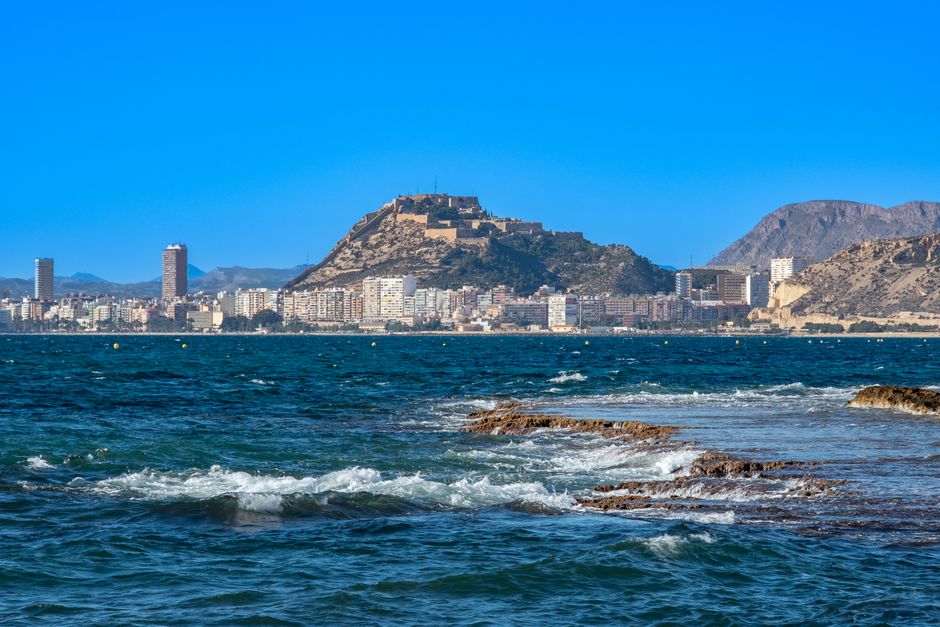
Alicante is the sunny, easy-going capital of the Costa Blanca: a real Spanish city of about 350,000 people with a beach in its centre, a palm-lined seafront promenade and a medieval castle on the rock above it all. Most travellers only pass through its busy airport on the way to the resorts, but the city itself deserves a few days. Ride the lift up to the Castillo de Santa Bárbara for the view, wander the colourful lanes of the old Santa Cruz quarter, eat rice dishes by the marina, see the excellent archaeology museum, and take a boat to the tiny walled island of Tabarca. With some 3,000 hours of sunshine a year, it is a city-and-beach break for any season, and a good base for Elche, Benidorm and the hill villages inland.
Right now in Alicante
- Wed18–29°C65–85°F2 mm rain
- Thu18–26°C65–78°FClear
- Fri16–25°C61–78°FClear
- Mon 12 Oct National Day of Spain (Fiesta Nacional de España)
Top tours in Alicante
See all tours for Alicante →
From local operators, with prices and reviews; you check availability and book on Viator, our partner. We may earn a commission at no extra cost to you. How we earn money
Alicante at a glance
- Best for: a city break with beaches, castle views, tapas and rice dishes, nightlife, and winter sun.
- How long: 2 days for the city, 3–4 to add Tabarca, a beach day at San Juan and a trip to Elche or Benidorm.
- Best time: April–June and September–October. July and August are hot and busy; winter is mild, around 17 °C by day.
- Getting there: Alicante-Elche airport is about 20–30 minutes away by the C-6 bus; high-speed trains run from Madrid.
- Getting around: the centre is walkable; city buses and the TRAM d’Alacant reach the beaches and the coast.
- Before you go: entry rules, money, trains and general safety are on our Spain travel guide.
Alicante’s neighbourhoods and who each one suits
The compact centre sits between Mount Benacantil, with the castle on top, and the harbour. The long beaches lie north of the city.
The old town and Santa Cruz
El Barrio, the old quarter around the Basilica of Santa María and the Co-cathedral of San Nicolás, is a maze of lanes full of tapas bars that fill up late. Above it, the Santa Cruz quarter climbs the castle hill in steps, whitewashed houses and pots of flowers. It suits couples and anyone who wants to be in the heart of things; it is lively and can be noisy at weekends.
The Explanada, the harbour and the centre
The Explanada de España, the seafront promenade paved with a wavy mosaic of millions of tiles and shaded by palms, links the harbour with the Postiguet beach. Behind it, the modern centre around the Rambla de Méndez Núñez, the Mercado Central and Avenida Maisonnave has the shops and the station. This is the most convenient base for first-timers and short stays.
Playa de San Juan and La Albufereta
North of the castle, the small bay of La Albufereta and then the long, wide Playa de San Juan offer a beach-holiday base with apartments and hotels, linked to the centre by tram. It suits families and anyone who puts the beach first; the centre is about 20–30 minutes away.
Top things to see in Alicante
Prices and hours below were checked on the official sites in October 2026, unless we say otherwise; check again before you go. Many of the city’s sights are free.
Castillo de Santa Bárbara
One of the largest medieval fortresses in Spain crowns Mount Benacantil, 166 m above the sea. Its walls, bastions, barracks and parade grounds date from many periods, from the Islamic era to the 18th century, and its terraces give the best view of the city, the harbour and the coast. Entry is free. The easiest way up is the lift cut into the rock, entered by a tunnel opposite the Postiguet beach; as of October 2026 a ride costs €2.70, and is free for over-65s and pensioners. A minibus shuttle also runs about every 20 minutes from Plaza del Doctor Gómez Ulloa, opposite the MARQ, for €1.45, or you can walk up through the Santa Cruz quarter and the Parque de la Ereta in about 30 minutes. Opening hours change with the season: 10:00–20:00 from 5 September to 14 November and from 28 February to 16 June; 10:00–18:00 from 15 November to 27 February; and 10:00–23:00 from 17 June to 4 September. The castle is closed on 1 and 6 January, 24 June and 24, 25 and 31 December. Free guided tours run several times a day in English and Spanish; book at the information desk at least 30 minutes ahead.
The Explanada de España and the marina
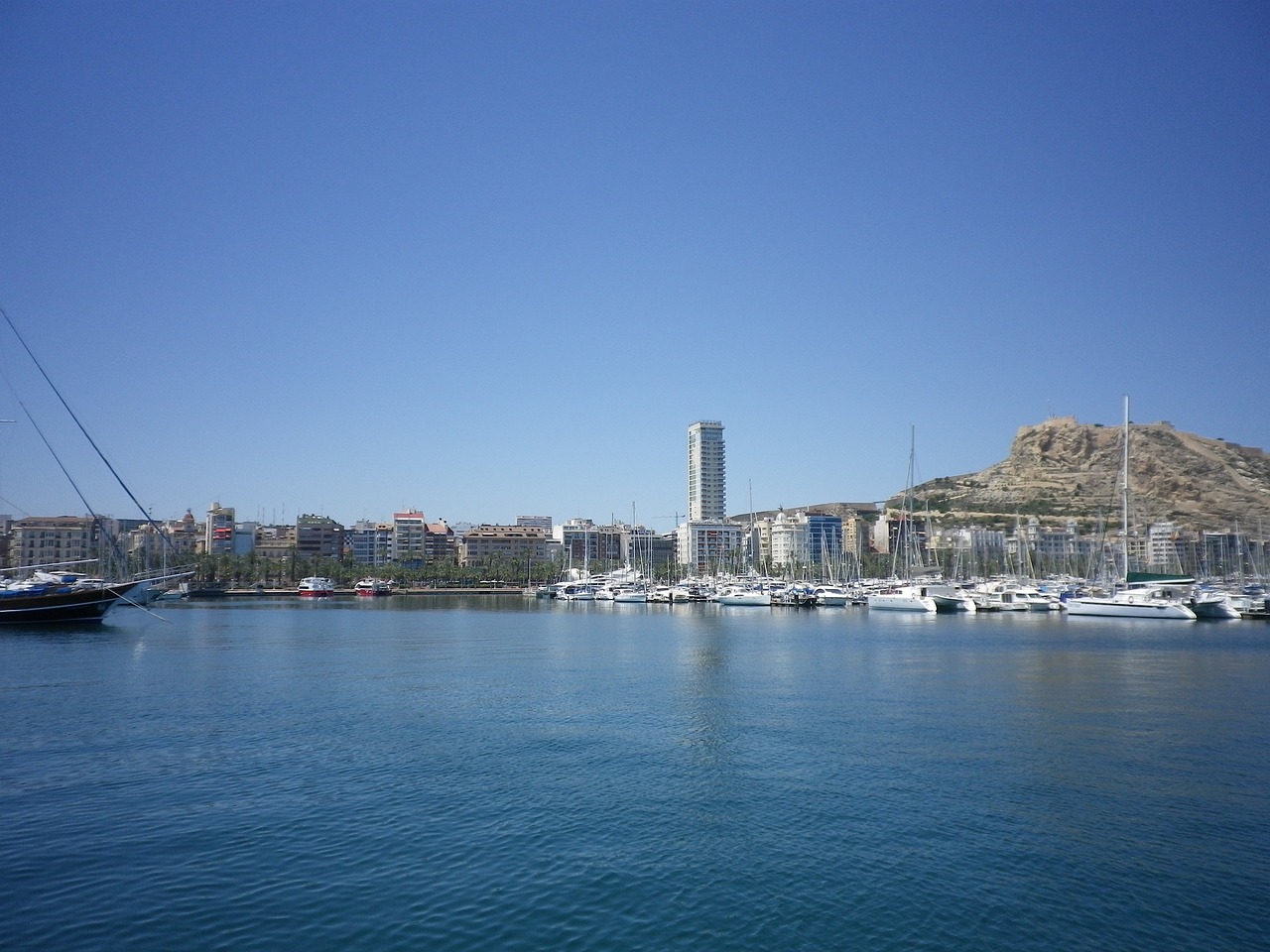
Alicante’s living room is a palm-lined promenade of red, black and cream tiles laid in waves, with café terraces, an evening stroll, and stalls and concerts in summer. Walk it from the Postiguet beach to the marina, where yachts, restaurants and the cruise terminal line the quays, and carry on to the Paseo del Puerto for sunset.
MARQ Archaeological Museum
The Provincial Archaeological Museum, run by the Alicante provincial council, won the European Museum of the Year award in 2004 and tells the story of the region from prehistory through the Iberians and Romans to the modern age, with imaginative displays. As of October 2026 entry costs €6 (€3 on Sundays and holidays). The museum also manages the Roman and Iberian site of Lucentum in La Albufereta (€3).
The old town, Santa Cruz and the churches
Santa María, the city’s oldest church, built on the site of the main mosque, has a Baroque façade and a Gothic interior. The Co-cathedral of San Nicolás has a serene cloister and a large blue dome. Next to Santa María, the Museum of Contemporary Art of Alicante (MACA) holds the collection of the artist Eusebio Sempere, with works by Miró, Picasso, Dalí and Chillida. Then climb the stepped lanes of Santa Cruz for the view and the hermitage at the top.
More to see
- Mercado Central: the 1920s market hall is the place for fruit, ham, cheese and seafood; come in the morning.
- Ayuntamiento: the Baroque town hall, where a mark on the stairs is the reference point for sea level across Spain.
- Hogueras museum: a museum of the June fire festival with the figures saved from the flames each year.
- Castillo de San Fernando: a smaller 19th-century fort on the Tossal hill in a city park, with good views.
- Lucentum: the remains of a Roman town near La Albufereta, run by the MARQ.
Other things to do in Alicante
The beaches
The Postiguet, right below the castle, is the city beach: golden sand, palm trees and busy in summer. For space, take the tram to Playa de San Juan, about 7 km of fine sand with a promenade, lifeguards in season and beach bars; the little bay of La Albufereta in between is calm and good for families. South of the city, the dune beaches of Urbanova and Los Arenales del Sol are close to the airport. See our beaches guide.
Tabarca island
Off the coast to the south lies Tabarca, the only inhabited island in the Valencian Community: a tiny walled village built in the 18th century, a few streets of houses and fish restaurants, rocky coves and a lighthouse. The waters around it are a marine reserve and very clear for snorkeling. Private boats sail from Alicante harbour, taking roughly an hour, and more often from Santa Pola, which is closer; services are frequent in summer and reduced in winter. Try the caldero, the island’s fish-and-rice stew. See our boat trips guide.
Food and nightlife
Alicante is a rice city: try arroz a banda cooked in fish stock, arroz con costra baked with an egg crust, and black rice with squid ink. Turrón, the almond nougat, comes from nearby Jijona. The old town’s bars get going after 23:00 and the marina’s clubs later still. A slow walk through the centre is the best way to see the city; see our city sightseeing guide.
Day trips and onward travel
Elche
Just inland, the city of Elche is surrounded by the Palmeral, a UNESCO-listed palm grove with tens of thousands of date palms planted since Islamic times. Visit the Huerto del Cura garden and the Basilica of Santa María, home of the medieval Misteri d’Elx play every August. Buses and local trains take about half an hour.
Benidorm, Altea and Guadalest
Line 1 of the TRAM d’Alacant runs north along the coast from Luceros station to Benidorm, a little over an hour, past El Campello and Villajoyosa; at Benidorm, line 9 continues to the white hill town of Altea, Calp and Dénia. Inland, the castle village of Guadalest is best reached by car or tour.
Valencia and Madrid
Trains reach Valencia, with its City of Arts and Sciences and its paella, in about two hours, and high-speed trains link Alicante with Madrid.
Nearby destinations
- Benidorm37 km
- Valencia125 km
- Formentera173 km
- Ibiza180 km
- Cabo de Gata211 km
- Peñíscola237 km
- Sierra Nevada287 km
Getting there and getting around
By air
Alicante-Elche Miguel Hernández Airport (ALC), about 10 km south-west of the city, is one of Spain’s busiest, with 19.9 million passengers a year and flights from all over Europe. The C-6 bus runs between the terminal and central Alicante every day of the year, stopping at the railway station and connecting with the tram at Alfonso X El Sabio and Luceros; it takes about 20–30 minutes. The single fare was reported as €4.60 from July 2026, paid on board by card or cash. Taxis wait outside arrivals, and Alsa runs coaches from the airport to Benidorm, the north Costa Blanca and Murcia.
By train and coach
Alicante station is in the centre, a short walk from the Explanada. High-speed trains from Madrid are run by Renfe (AVE and the low-cost Avlo), Ouigo and Iryo, taking a little over two hours, and regional and long-distance trains run to Valencia, Murcia and Barcelona. The bus station near the harbour has coaches across Spain. See our Spain travel guide for how the train operators compare.
Getting around and driving
The centre is easy on foot. City buses cover the suburbs, and the TRAM d’Alacant, run by the Valencian railway company FGV, has lines from Luceros and the Mercado station to La Albufereta, Playa de San Juan, El Campello and Benidorm. You will not need a car in the city. If you drive, Alicante has had a low-emission zone since 2025; as we understand it, the only real restrictions are in the old quarter, which is limited to residents and authorised vehicles, but check the city council’s site before driving into the centre.
When to go and how long to stay
Alicante is one of the driest and sunniest cities in Europe, with mild winters and hot summers. The table uses the 1991–2020 climate normals of the AEMET Alicante city station, as published by the WMO: average daily highs and lows, and days with at least 1 mm of rain. The rain that does fall often comes in short, heavy autumn storms, especially in September and October.
| Season | Average high / low | Rainy days per month | What it’s like | Good for |
|---|---|---|---|---|
| Winter (Dec–Feb) | 17–18 °C / 7–8 °C | 3–4 | Mild, sunny days and chilly nights | City sightseeing, walking, low prices |
| Spring (Mar–May) | 20–25 °C / 9–15 °C | 3–4 | Warm and bright; the sea is still cool | Sightseeing, Tabarca, day trips |
| Summer (Jun–Aug) | 28–31 °C / 19–22 °C | 0–1 | Hot and humid, very busy beaches; Hogueras in June | Beaches, festivals, nightlife |
| Autumn (Sep–Nov) | 29 °C falling to 21 °C / 19 °C falling to 11 °C | 3–4 | Warm sea, occasional heavy storms | Swimming, city breaks |
The station records about 3,170 hours of sunshine a year. The sea is warmest, around 26–27 °C, in August and September.
Events worth planning around
- 20–24 June: the Hogueras de San Juan, Alicante’s great fire festival, with giant satirical figures in the streets, daily firecracker displays at 14:00 in Plaza de los Luceros, and the burning of the figures on the night of 24 June after a firework display from the castle. Book rooms early; note that the castle itself is closed on 24 June.
- Easter: Holy Week processions through the old town.
- August: the Misteri d’Elx in nearby Elche, on 14 and 15 August.
How long to stay: 2, 3 and 4 days
2 days: day one, the castle by lift in the morning, then down through Santa Cruz to the old town, Santa María, the MACA and an evening on the Explanada; day two, the MARQ and the Mercado Central, then an afternoon at Playa de San Juan and dinner at the marina.
3 days: add a boat day on Tabarca with a swim and caldero for lunch. 4 days: add Elche’s palm groves, or the tram to Benidorm and Altea.
Where to stay in Alicante and the tourist tax
- Centre and Explanada: the most convenient for sightseeing, the station and the airport bus.
- Old town: atmospheric and lively, close to the bars; light sleepers should ask for a quiet room.
- Postiguet: on the city beach, with views of the castle and the bay.
- Playa de San Juan: a beach holiday with apartments and family hotels, linked by tram.
There is no tourist tax in Alicante: as of October 2026 there is none anywhere in the Valencian Community, after the regional tax passed in 2022 was repealed in November 2023, before it took effect. Book well ahead for the Hogueras in June and for August.
Practical tips for Alicante
- Castle timing: go up in the morning or late afternoon, when the light is softer and the queue for the lift shorter.
- Eat late: lunch is from about 14:00 and dinner from 21:00; many restaurants offer a set lunch menu on weekdays.
- Watch your bags: pickpockets work the Explanada, the beach and the old town on busy nights.
- Two languages: signs are in Spanish and Valencian; the city is Alicante in Spanish and Alacant in Valencian.
- Emergencies: call 112.
What to pack for Alicante
Bring comfortable walking shoes for the cobbled, stepped lanes of Santa Cruz and the castle ramparts, a swimsuit and a light beach towel, and a snorkel mask if you are going to Tabarca. In summer, pack a sun hat, sunglasses, high-factor sunscreen and a refillable water bottle, as the castle and the beaches have little shade. From November to March, add a light jacket or jumper for the evenings and a compact umbrella for the occasional storm. Smart-casual clothes fit in at dinner and in the bars.
Alicante travel FAQ
Is the Castillo de Santa Bárbara free?
Yes, entry is free. The lift up from the Postiguet beach cost €2.70 as of October 2026, free for over-65s, or you can walk up or take the €1.45 shuttle bus from near the MARQ.
How do I get from Alicante airport to the city?
Take the C-6 bus, which runs every day of the year to the centre and the railway station in about 20–30 minutes, or a taxi from outside arrivals.
Is Alicante worth visiting, or just the airport?
It is well worth two or three days: a castle with huge views, a lively old town, good museums, city beaches and excellent rice dishes, all at lower prices than Barcelona or Málaga.
What is the best beach in Alicante?
The Postiguet is the most convenient, right below the castle. For space and cleaner water, take the tram to Playa de San Juan; for a calm family bay, try La Albufereta.
How do I get to Tabarca?
By boat from Alicante harbour, about an hour, or from Santa Pola, which is closer. Boats run most often in summer; check the operators’ timetables.
When are the Hogueras de San Juan?
From 20 to 24 June each year, ending with the burning of the giant figures on the night of 24 June. It is Alicante’s biggest party.
Is there a tourist tax in Alicante?
No. As of October 2026 there is no tourist tax in Alicante or anywhere in the Valencian Community.
How do I get from Alicante to Benidorm?
Take TRAM line 1 from Luceros, a little over an hour along the coast, or an Alsa coach. From the airport, Alsa runs direct coaches to Benidorm.
Is Alicante good in winter?
Yes. Days are usually sunny and around 17 °C, ideal for sightseeing and walks along the sea, though too cool for most people to swim.
Plan your trip
Partner links: TravelerCenter may earn a commission if you book, at no extra cost to you.
🇪🇸 Useful Spanish phrases for Alicante
All 38 Spanish phrases: restaurant, hotel, emergencies, romance (printable) →
Sources · last reviewed 4 October 2026
Researched and last reviewed on 4 October 2026. Castillo de Santa Bárbara hours, lift and shuttle fares and closures: the castle’s official site; MARQ and Lucentum prices: the MARQ Foundation; airport bus routes: Aena; the tourist-tax position: the Generalitat Valenciana’s Decree-Law 12/2023; TRAM lines: FGV and the Generalitat’s press office; climate: AEMET 1991–2020 normals for the Alicante city station, as published by the WMO. The C-6 fare, the low-emission zone rules, train journey times and the Tabarca boats come from secondary sources and are flagged for checking. Prices, hours and timetables change, so check the official links before you go. For entry rules, money and general safety, see our Spain travel guide.
Data: Weather: MET Norway (CC BY 4.0) · Sea temperature: NOAA CoastWatch · Air quality: OpenAQ · Rates: ECB · Holidays: Nager.Date · Costs: World Bank ICP and price levels · Wikidata (CC0)