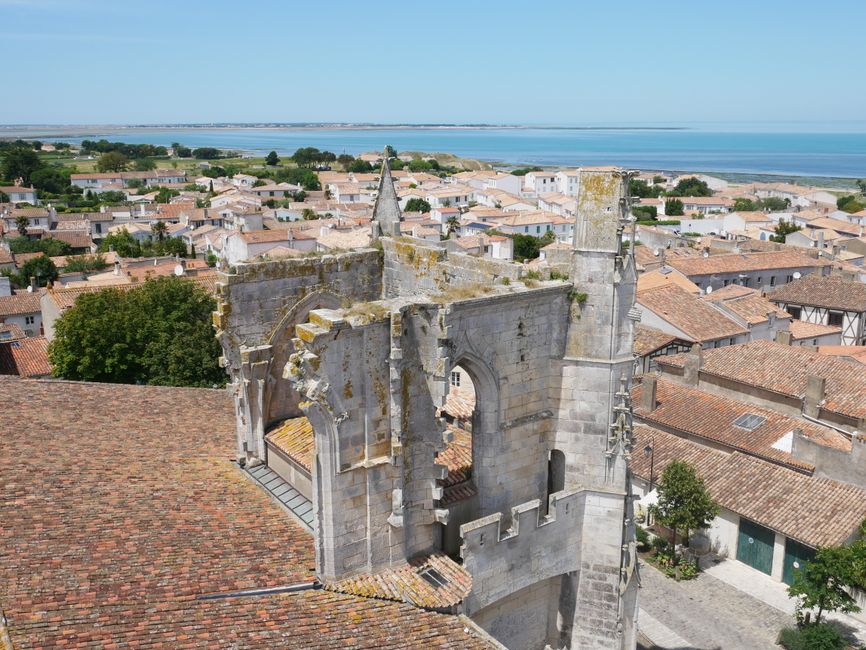
The Île de Ré is a long, flat island off La Rochelle, joined to the mainland by a toll bridge and made for slow days: white-walled villages with green shutters and hollyhocks, salt marshes and oyster beds, pine woods and long sandy beaches, all linked by more than 100 km of cycle paths. You come to cycle from village to village, eat oysters by the harbour in Saint-Martin, climb the Phare des Baleines and watch the birds over the marshes. It is busy and chic in July and August, peaceful in spring and autumn. Give it two or three days, or a week for a proper island holiday by bike.
Right now in Île de Ré (Saint-Martin-de-Ré)
- Wed17–21°C62–69°F8 mm rain
- Thu13–17°C56–63°FPartly cloudy
- Fri13–17°C55–63°FCloudy
Top tours in Île de Ré
See all tours for Île de Ré →
From local operators, with prices and reviews; you check availability and book on Viator, our partner. We may earn a commission at no extra cost to you. How we earn money
Île de Ré at a glance
- Best for: cycling, family beaches, harbour villages, oysters and salt, birdwatching and a car-free holiday.
- How long: a day trip from La Rochelle for Saint-Martin, 2–3 days to cycle the island, a week to unwind.
- Best time: May, June and September for warm days, quiet cycle paths and lower prices; July and August for the liveliest beaches and harbours.
- Getting in: trains and flights to La Rochelle, then the regional coach (€2.50 a trip), a bike or a car over the toll bridge (€8 return in mid-season as of October 2026).
- Getting around: by bike on the cycle paths, with free electric shuttles in several villages all year.
- Before you go: entry rules, money, trains and general safety are on our France travel guide.
The island’s villages and who each one suits
The island is about 30 km long and only a few kilometres wide, with ten villages. The eastern half, nearest the bridge, is greener, with vineyards, fields and woods; the western half, beyond the narrow Martray isthmus, is a world of salt pans, marshes and dunes.
Saint-Martin-de-Ré
The island’s main town and its prettiest harbour, ringed by star-shaped fortifications by Vauban. Café terraces, ice-cream shops, boutiques and fishing boats crowd the quays and the island in the middle of the port. Best for: a first stay without a car, restaurants and evening strolls, though it is the busiest place on the island in summer.
La Flotte and Rivedoux
La Flotte, listed among the “Most Beautiful Villages of France”, has a round harbour, a medieval-style covered market and the ruins of the Abbaye des Châteliers on the coast nearby. Rivedoux-Plage, at the foot of the bridge, has sheltered family beaches and the first cycle paths. Best for: families and short stays close to La Rochelle.
Ars-en-Ré, Loix and the north-west
Ars-en-Ré, another of the “Most Beautiful Villages”, is known for the black and white spire of its church, once a landmark for sailors, and its lanes of whitewashed houses. Loix sits on a peninsula in the salt marshes, and Saint-Clément-des-Baleines and Les Portes-en-Ré, at the far tip, have wild beaches and pine forest. Best for: quiet, nature and long beach days.
Le Bois-Plage, La Couarde and Sainte-Marie
On the south coast, facing the open Atlantic, these villages have the longest sandy beaches, campsites and holiday homes among the vines. Best for: beach holidays with children and self-catering stays.
Top things to see on the Île de Ré
Most of the island is free to enjoy: villages, harbours, beaches and cycle paths. Prices are as of October 2026; check the official sites before you go.
The Vauban fortifications of Saint-Martin
After an English siege in 1627, Louis XIV had Vauban fortify Saint-Martin at the end of the 17th century with ramparts, gates and a citadel large enough to shelter the whole island’s population. Since 2008 they have been on UNESCO’s World Heritage list as part of the Fortifications of Vauban. Walk the free path along the ramparts and the grassy moats, through the Porte Toiras and the Porte des Campani, for views over the sea towards La Rochelle. The citadel is still a prison and cannot be visited.
Phare des Baleines
At the island’s western tip, the Grand Phare, a lighthouse about 60 metres tall built in 1854, has 257 steps to a 360-degree view over the island, the ocean and, at low tide, the rocky reef that wrecked so many ships. Beside it, the old Vauban-era tower houses a museum on lighthouses and beacons. How to visit: open every day all year; from 1 October to 31 December 2026 from 10:30 to 17:00 (10:00–19:00 in spring and September, 9:45–20:00 in July and August). As of October 2026 the official site lists the lighthouse climb at €4.80 for adults and €3.20 for children aged 7–12, free under 7, and €12.95 and €7.65 for the lighthouse, museum and old tower together (family ticket €38.15); these are labelled as the 2025 rates, so check before you go.
The salt marshes and Ré salt
Around Ars, Loix and La Couarde, a patchwork of shallow pans is still worked by hand by salt farmers (sauniers) who rake fine fleur de sel and grey salt in summer. Cycle the marsh paths at sunset, buy salt from the stalls at the edge of the pans, and visit the Écomusée du Marais Salant at Loix to understand how it is made. The marshes also feed oysters: Ré’s oyster farms sit around the Fier d’Ars, and you can taste them at waterside huts.
Lilleau des Niges nature reserve
Between Les Portes and Ars, the Lilleau des Niges national nature reserve protects old salt pans and mudflats on the Fier d’Ars, one of the best birdwatching sites on the French Atlantic coast. In autumn and winter thousands of brent geese, waders and ducks feed here; in spring, avocets and black-winged stilts nest. The reserve itself is closed to the public, but the cycle path along its edge has viewing points, and the bird protection league (LPO) runs the Maison du Fier visitor centre and guided walks; check its dates before you go.
Beaches
The south coast has long sandy beaches facing the ocean, with waves and lifeguards in summer, such as those at Le Bois-Plage and La Couarde. The Conche des Baleines, near the lighthouse, is a wild curve of sand backed by dunes and pines, and Trousse-Chemise at Les Portes is a calmer, sheltered beach in the woods. On the north coast the water goes out a long way at low tide, revealing oyster beds and fishing locks (écluses à poissons), old stone traps still used today. Swim only between the flags where lifeguards are on duty, and watch for currents. See our beaches guide.
Cycling the Île de Ré
The island has more than 100 km of safe cycle paths, according to the tourist office, flat and well signposted, through vineyards, forests, marshes and every village. It is the best way to get around: from Saint-Martin, Ars is about 15 km and the lighthouse about 20 km, an easy ride with stops. Bike hire shops in every village rent town bikes, e-bikes, child seats and trailers by the day or week, and many deliver to your accommodation; book ahead for July and August. The west wind can make the return trip harder than the way out, so an e-bike helps for the far tip. Bring or hire a lock and keep to the cycle paths, which are busy in summer. See our cycling guide.
Food and island life
Eat oysters from the island’s farms with a glass of local white wine, mussels and fish in the harbours of Saint-Martin and La Flotte, and the island’s early new potatoes, which have their own protected designation of origin, in spring. Salted-butter caramels made with Ré salt are the favourite souvenir. Morning markets run in the main villages, every day in summer in Saint-Martin and La Flotte; check the tourist office for the days out of season. You may still see a donkey wearing striped trousers, a nod to the old days when salt-marsh donkeys were dressed against mosquitoes.
Day trips and boat trips from the island
La Rochelle
Just across the bridge, La Rochelle has an old port guarded by medieval towers, arcaded streets, a large aquarium and boat trips to Fort Boyard. It is about 30 minutes by car or a little under an hour by the regional coach from Saint-Martin.
Fort Boyard and the Île d’Aix by boat
In season, the Compagnie Interîles runs boat and sailing-catamaran trips from Saint-Martin-de-Ré towards Fort Boyard and the Île d’Aix, the little car-free island where Napoleon spent his last days in France. Departures depend on the season and the weather; see the company’s site and our boat trips guide.
Bordeaux and the Atlantic coast
Bordeaux, with its wine country, is about 2½ hours south by car, and makes a fine next stop on an Atlantic coast trip. The Île d’Oléron, France’s second-largest island after Corsica, is about an hour and a half south of the bridge, reached by a free bridge.
Nearby destinations
- La Rochelle21 km
- Nantes114 km
- Loire Valley160 km
- Bordeaux165 km
- Arcachon Bay168 km
- Dordogne201 km
- Brittany233 km
- Mont-Saint-Michel271 km
Getting there and getting around
The bridge and its toll
The 2.9 km bridge, opened in 1988, links the island with La Rochelle. Visitors pay once, on the way onto the island, for a return trip. As of October 2026, the Département de la Charente-Maritime’s rates for a car (with or without a trailer) are €16 in high season (15 June to 15 September and the long Ascension and Pentecost weekends), €8 in mid-season (2 March to 14 June and 16 September to 14 November) and €4 in low season (15 November to 1 March). Motorbikes over 50 cc pay €3, and smaller mopeds, bikes and pedestrians cross free on the dedicated path. The Département planned to automate all nine toll lanes by summer 2026, with cash accepted at three of them, so have a bank card ready.
By train, plane and coach
TGVs from Paris-Montparnasse reach La Rochelle in about 2½–3 hours. La Rochelle–Île de Ré airport, right by the bridge, has mainly seasonal flights from the UK, Ireland and a few French cities. From La Rochelle station, regional coach line 3 (the network once called Les Mouettes, now run by the Nouvelle-Aquitaine region) serves all ten villages all year. As of October 2026 a ticket costs €2.50, valid for two hours, or €4.50 for a return on the same day; a 7-day pass is €18. There is no regular car ferry; the bridge is the way in.
Free shuttles and parking
The Département runs free electric RespiRé shuttles. From spring to autumn (from 4 April in 2026), a bridge shuttle carries people and bikes from the La Repentie park-and-ride on the mainland, just before the toll, to Sablanceaux at Rivedoux, saving the toll and the traffic. Village shuttles in Saint-Martin, La Flotte, Sainte-Marie and Loix run free all year and connect with the regional coach, with more lines in summer. In high season, the village centres are crowded and parking is paid and limited, especially in Saint-Martin, so leave the car at your accommodation or in the car parks on the edge of the villages and cycle or walk in. There is no low-emission zone on the island.
When to go and how long to stay
The Île de Ré is one of the sunniest places on the French Atlantic coast, with mild winters, warm but breezy summers and little rain from May to September. The table uses Météo-France’s official 1991–2020 normals for the La Rochelle–Île de Ré station, at the airport beside the bridge: average daily highs and lows, and days with at least 1 mm of rain.
| Season | Average high / low | Rainy days per month | What it’s like | Good for |
|---|---|---|---|---|
| Winter (Dec–Feb) | 10–11 °C / 4–5 °C | 10–13 | Mild, grey and windy; quiet villages | Oysters, birdwatching, empty beaches |
| Spring (Mar–May) | 14–20 °C / 6–11 °C | 9–10 | Bright and fresh, flowers in the lanes | Cycling, early potatoes, nesting birds |
| Summer (Jun–Aug) | 23–25 °C / 14–16 °C | 6–7 | Sunny, warm and breezy; busy | Beaches, harbours, markets, boat trips |
| Autumn (Sep–Nov) | 22 °C falling to 13 °C / 14 °C falling to 7 °C | 7 in September, 11–13 in October–November | Warm September, wetter later | Cycling, salt marshes, migrating birds |
August is the warmest month, with an average high of about 25 °C, and the station records about 2,300 hours of sunshine and 750 mm of rain a year, most of it from October to January. The sea reaches its warmest in August and September.
How long to stay: 2-, 3- and 4-day plans
2 days: Day 1, Saint-Martin’s harbour and Vauban ramparts, then cycle to La Flotte for dinner. Day 2, cycle west through the salt marshes to Ars-en-Ré and the Phare des Baleines, with a swim at the Conche des Baleines. 3 days: add a beach day on the south coast and oysters at a farm hut. 4 days: add Loix and the salt museum, birdwatching at the Lilleau des Niges, and a boat trip towards Fort Boyard in season.
Where to stay on the Île de Ré
- Saint-Martin-de-Ré: boutique hotels and the best choice of restaurants; ideal without a car.
- La Flotte: a lovely harbour, close to the bridge and La Rochelle.
- Ars-en-Ré and Les Portes: quieter, near the marshes, the lighthouse and the wild beaches.
- Le Bois-Plage and La Couarde: campsites and holiday homes near the big ocean beaches.
- La Rochelle: cheaper and lively, with the island a short bus ride away.
The Communauté de communes de l’Île de Ré adds a nightly tourist tax (taxe de séjour) per adult, including the Charente-Maritime department’s 10% surcharge; under-18s are exempt. According to the French tax administration’s data, the rates in force are €1.65 per adult per night in a 3-star hotel, €2.53 in a 4-star, €3.30 in a 5-star and €4.51 in a palace. Unclassified rentals pay 5% of the nightly price per person, capped at €4.10 plus the surcharge. Rents peak sharply in July and August, so book early.
Practical tips for the Île de Ré
- Bike, don’t drive: cycle paths are faster than the roads in summer, and parking is scarce in the villages.
- Mind the wind: plan the return leg of a long ride into the wind, or hire an e-bike.
- Respect the marshes: salt pans and oyster beds are private working land; stay on the paths.
- Watch the tide: on the north coast the sea goes out far and comes back fast over mudflats.
- Avoid the Saturday rush: in summer, crossing the bridge on changeover Saturdays means long queues.
What to pack for the Île de Ré
Sunscreen, sunglasses and a hat: the island is bright and the breeze hides how strong the sun is. Add a light windproof jacket for the bike and the evenings, swimwear and a towel, and sandals or water shoes for the rocky north shore. Binoculars make the birdwatching far better, and a small backpack or bike pannier is handy for picnics and market shopping.
Île de Ré travel FAQ
How much is the Île de Ré bridge toll?
As of October 2026, a car pays €16 in high season (15 June–15 September and the Ascension and Pentecost weekends), €8 in mid-season (2 March–14 June and 16 September–14 November) and €4 in low season, for a return trip paid on the way in. Bikes and pedestrians cross free.
Can you visit the Île de Ré without a car?
Easily. Take the train to La Rochelle and regional coach line 3 to any village (€2.50 a trip as of October 2026), or the free RespiRé bridge shuttle from La Repentie in season, then hire a bike. Several villages have free electric shuttles all year.
How many days do you need on the Île de Ré?
A day trip covers Saint-Martin and one ride. Two or three days lets you cycle to Ars, the salt marshes and the lighthouse and enjoy the beaches; a week is a true island holiday.
How long are the cycle paths on the Île de Ré?
More than 100 km, according to the tourist office, flat and signposted between all ten villages. Bike hire is available everywhere; book ahead in July and August.
How much is the Phare des Baleines?
As of October 2026 the official site lists €4.80 for adults and €3.20 for children aged 7–12 to climb the 257 steps, or €12.95 and €7.65 with the museum and old tower (labelled as 2025 rates). It opens daily, 10:30–17:00 from October to December.
Why are Saint-Martin’s fortifications famous?
They were designed by Vauban, Louis XIV’s great military engineer, and since 2008 have been part of the UNESCO World Heritage site Fortifications of Vauban. The ramparts and moats are free to walk; the citadel is still a prison.
What are the best beaches on the Île de Ré?
The long ocean beaches of Le Bois-Plage and La Couarde for waves and lifeguards in summer, the Conche des Baleines for wild dunes, and Trousse-Chemise at Les Portes for calmer water in the pines.
Where can you see birds on the Île de Ré?
Around the Lilleau des Niges national nature reserve on the Fier d’Ars, best from autumn to spring. The reserve is closed to the public, but the cycle path has viewing points and the LPO’s Maison du Fier runs guided walks.
How much is the tourist tax on the Île de Ré?
According to the French tax administration’s data, €1.65 per adult per night in a 3-star hotel, €2.53 in a 4-star and €3.30 in a 5-star, including the department’s 10% surcharge; unclassified rentals pay 5% of the price, capped. Under-18s are exempt.
Is the Île de Ré worth visiting out of season?
Yes. From October to April the villages are quiet, the bridge toll is lower, the lighthouse opens every day and the marshes fill with migrating birds. Some restaurants and hire shops close in winter, so check ahead.
Plan your trip
Partner links: TravelerCenter may earn a commission if you book, at no extra cost to you.
🇫🇷 Useful French phrases for Île de Ré
All 38 French phrases: restaurant, hotel, emergencies, romance (printable) →
Sources · last reviewed 4 October 2026
Researched and last reviewed on 4 October 2026. Bridge toll, toll automation and RespiRé shuttles: the Département de la Charente-Maritime; coach fares: Nouvelle-Aquitaine regional transport; Phare des Baleines: the lighthouse’s official site; cycle paths: the Île de Ré tourist office; boat trips: Compagnie Interîles; tourist tax: the Communauté de communes de l’Île de Ré and French tax administration (DGFiP) data; climate: Météo-France 1991–2020 normals for La Rochelle–Île de Ré. Village parking, markets and the reserve’s visitor centre dates are flagged for checking. Prices, hours and timetables change, so check the official links before you go. For entry rules, money and general safety, see our France travel guide.
Data: Weather: MET Norway (CC BY 4.0) · Sea temperature: NOAA CoastWatch · Rates: ECB · Costs: World Bank ICP and price levels · Wikidata (CC0)