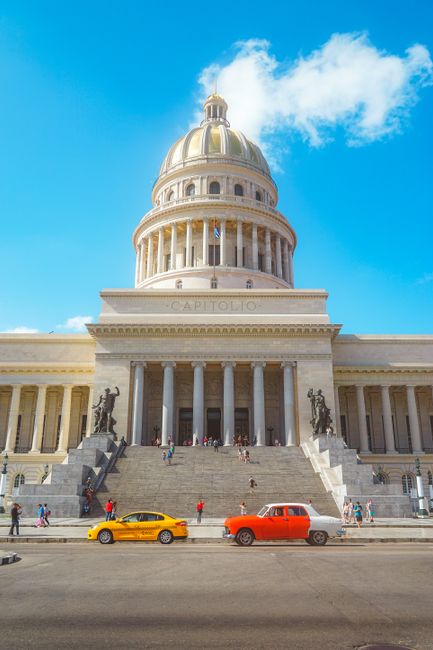
Cuba is the largest island in the Caribbean, a long, green country of colonial cities, tobacco valleys, sugar plains and white-sand beaches, about 150 km (90 miles) south of Key West. Visitors come for Havana’s crumbling, music-filled streets and 1950s cars, the cobbled squares of Trinidad, the limestone hills of Viñales and the long beach at Varadero, and for a culture shaped by Spain, Africa and six decades of revolution. Traveling here in 2026 also takes more planning than anywhere else in the region: power cuts are long and frequent, fuel is scarce, several airlines have cut flights, US-issued bank cards don’t work, and everyone needs an electronic visa and an online arrival form. Travelers from the United States face their own rules, because US law still bans tourism to Cuba. This guide sets out what you need to know, then what makes the trip worthwhile.
Right now in Cuba
- Wed 25–31°C 76–87°F 8 mm Heavy showers
- Thu 23–31°C 74–88°F 4 mm Partly cloudy
- Fri 25–32°C 76–90°F 3 mm Showers
- Sat 10 Oct Independence Day (Día de la Independencia)
Weather: MET Norway (CC BY 4.0) · Holidays: Nager.Date
Multi-day tours of Cuba
Multi-day tours from local operators. You check dates and book on Viator, our partner; we may earn a commission at no extra cost to you. How we earn money
Cuba at a glance: overview and geography
The main island stretches about 1,250 km (780 miles) from Cabo San Antonio in the west to Punta de Maisí in the east, with a total land area of about 110,000 km² (42,400 square miles), similar to Tennessee or Iceland. Most of it is flat or rolling farmland, with three mountain areas: the Cordillera de Guaniguanico in the west (including the Sierra de los Órganos around Viñales), the Escambray Mountains in the center behind Trinidad, and the Sierra Maestra in the southeast, where Pico Turquino reaches 1,974 m (6,476 feet). Thousands of cays and islets lie offshore, including the Jardines del Rey (Cayo Coco and Cayo Guillermo) on the north coast and the Isla de la Juventud to the south. Cuba has 15 provinces plus the special municipality of Isla de la Juventud, and about 10 million people.
The island’s first people were the Taíno and other Arawak-speaking groups. Columbus landed in 1492, Spain founded its first towns from 1511, and Havana grew into the port where the treasure fleets gathered. Sugar and slavery made Cuba rich in the 19th century; independence wars ended with US intervention in 1898 and a republic in 1902. Fidel Castro’s revolution took power in 1959, and the US embargo has shaped the economy ever since. Cuba is a one-party socialist state; most hotels, airlines and big businesses are state-owned, while private restaurants (paladares), guesthouses (casas particulares) and small businesses have grown since the 2010s.
Time zone: Cuba uses Cuba Standard Time (UTC−5) and observes daylight saving time (UTC−4) from March to November, so it is usually on the same time as US Eastern Time.
Cuba’s regions
- Havana: the capital and by far the biggest city, with Old Havana’s UNESCO-listed center, the Malecón seafront, Vedado’s 20th-century boulevards and beaches a short ride east.
- The west (Pinar del Río and Artemisa): tobacco country, the Viñales Valley, caves, the cays of Cayo Jutías and Cayo Levisa, and the Las Terrazas eco-village in the Sierra del Rosario.
- Matanzas and Varadero: the big all-inclusive beach resort on the Hicacos Peninsula, the city of Matanzas, and the Zapata Peninsula with the Bay of Pigs and its reefs.
- The center: the colonial cities of Trinidad, Cienfuegos, Santa Clara and Sancti Spíritus, the Escambray Mountains, and the northern cays of Cayo Santa María, Cayo Coco and Cayo Guillermo.
- Camagüey and the east: the maze-like city of Camagüey, Holguín and the beaches of Guardalavaca, Santiago de Cuba with its Afro-Caribbean music, the Sierra Maestra, and Baracoa at the far eastern tip.
Where to go: Havana, the beaches and the colonial towns
First-time visitors often combine Havana with Viñales in the west and Trinidad in the center, then end with a few days on the beach. In 2026, keep distances short: fuel shortages make long road journeys and domestic flights unreliable.
Havana
Cuba’s capital is one of the most atmospheric cities in the Americas. Old Havana (La Habana Vieja), listed by UNESCO with its fortifications in 1982, has four restored colonial squares, baroque churches and palaces, and streets where restoration sits beside decay. Walk the Malecón at sunset, visit the Capitolio and the fortresses of El Morro and La Cabaña across the harbor, ride in a classic car through Vedado, and hear live son, salsa and jazz. See our Havana travel guide.
Viñales
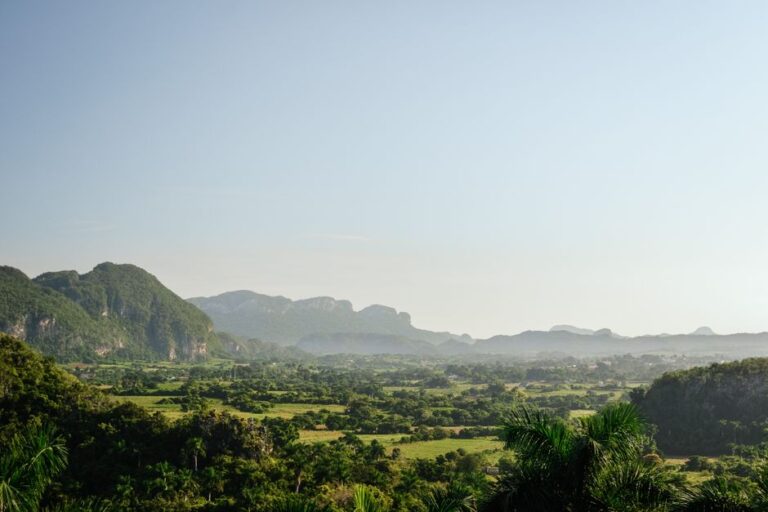
A green valley of tobacco fields and red earth, dotted with steep limestone hills called mogotes, about 180 km (110 miles) west of Havana. UNESCO listed the Viñales Valley as a cultural landscape in 1999. Visit tobacco farms and drying barns, ride horses or hike between the mogotes, and explore caves. See our Viñales travel guide.
Trinidad
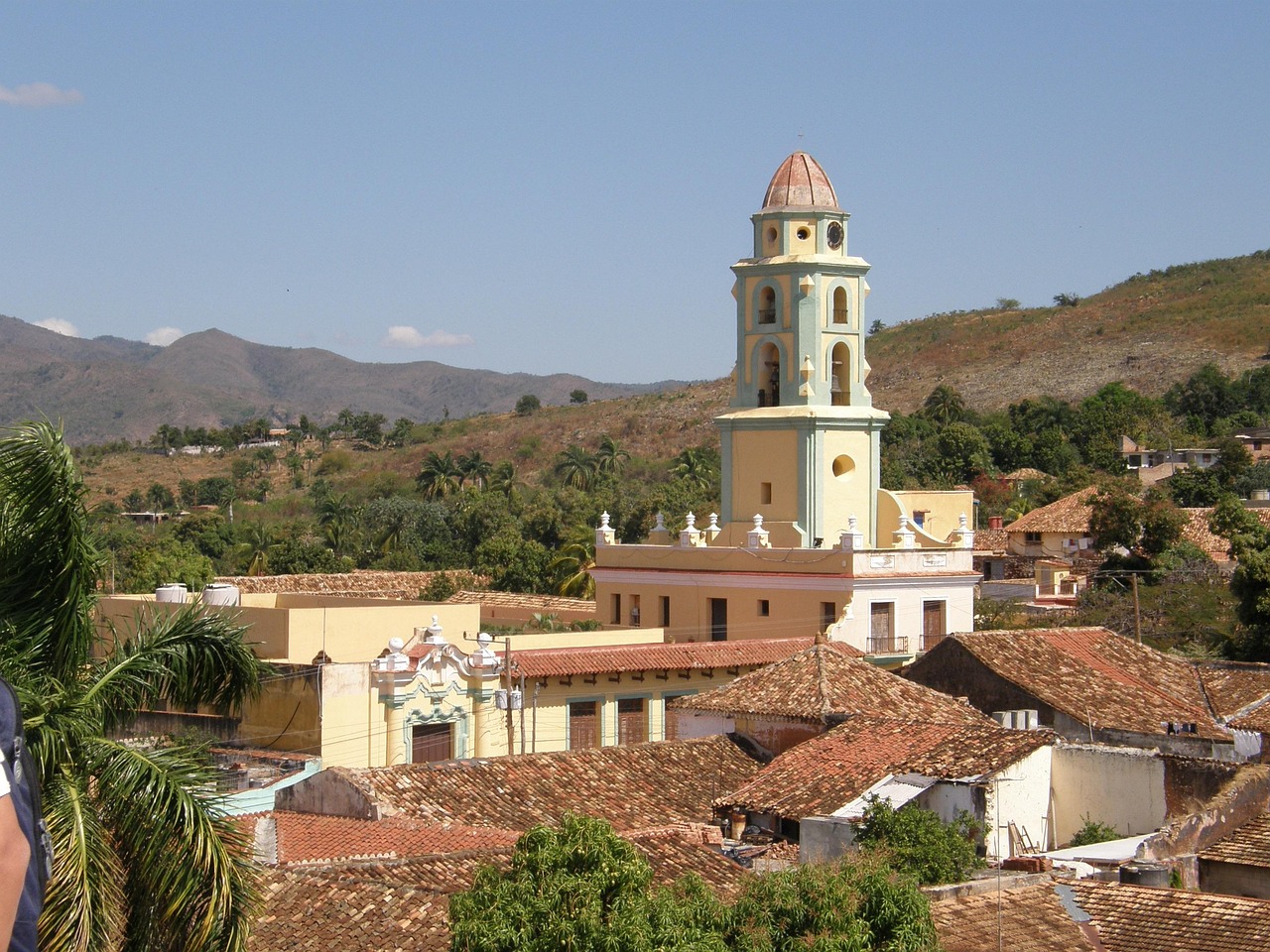
A small, beautifully preserved sugar town of cobbled streets and pastel houses near the south coast, listed by UNESCO together with the nearby Valley of the Sugar Mills (Valle de los Ingenios) in 1988. Live music spills out every evening on the steps by the Plaza Mayor, Playa Ancón is a short ride away, and the Escambray Mountains have waterfalls and trails. See our Trinidad travel guide.
Varadero
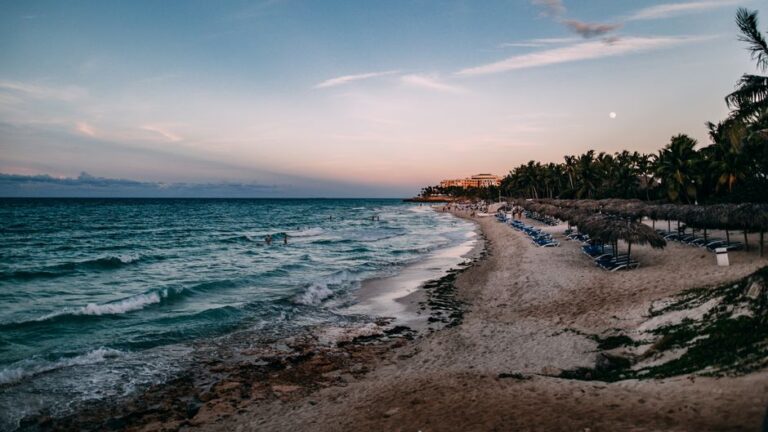
Cuba’s biggest beach resort, a strip of white sand and turquoise water about 20 km (12 miles) long on the Hicacos Peninsula, two to three hours east of Havana. Most visitors stay in all-inclusive hotels. Several resorts have closed temporarily in 2026 as tourism fell, so check that your hotel is open. See our Varadero travel guide.
Cienfuegos, Santa Clara and Camagüey
Cienfuegos, on a wide bay, has a French-founded neoclassical center listed by UNESCO; Santa Clara is the site of the Che Guevara memorial and mausoleum; and Camagüey, Cuba’s third city, has a winding colonial center of plazas and clay jars (tinajones), also UNESCO-listed.
The cays and the east
The Jardines del Rey (Cayo Coco and Cayo Guillermo) and Cayo Santa María are long causeway-linked resort islands with fine beaches. In the east, Santiago de Cuba is the home of son and of Carnival in July, Baracoa sits among rainforest and rivers, and the Sierra Maestra has the hike to Pico Turquino. Parts of the east were badly damaged by Hurricane Melissa in October 2025.
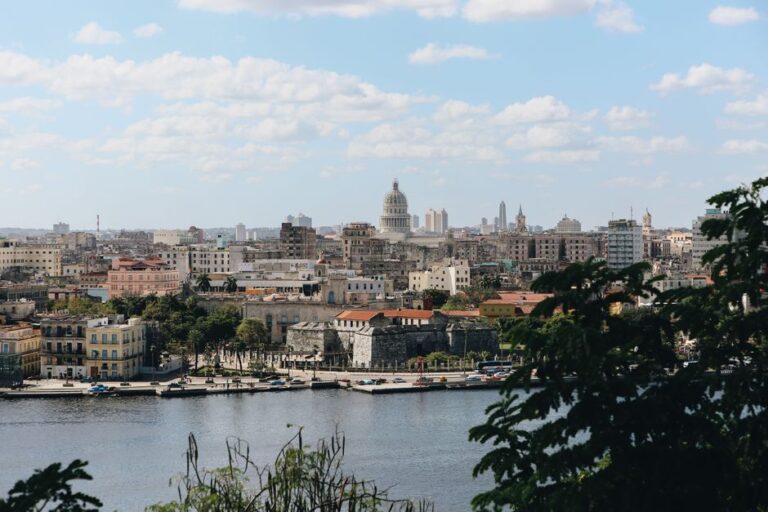
Havana Travel Guide
Plan a trip to Havana: Old Havana's four squares, the Malecón, El Morro and the cañonazo, the Capitolio, museums, Vedado and Fusterlandia, live music…
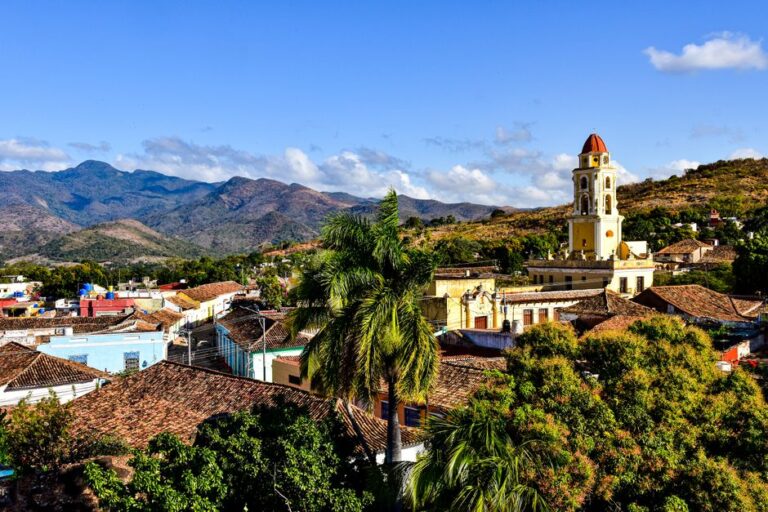
Trinidad Travel Guide
Plan a trip to Trinidad, Cuba: the Plaza Mayor and its museums, bell-tower views, live music on the steps, the Valle de los Ingenios…
Varadero Travel Guide
Plan a trip to Varadero: the 20 km beach on the Hicacos Peninsula, the town versus the all-inclusive hotel zone, the Xanadu Mansion, Varahicacos…
Viñales Travel Guide
Plan a trip to Viñales, Cuba: the UNESCO-listed valley of mogotes, tobacco farms and the harvest season, the Los Jazmines viewpoint, horseback rides and…
Best time to visit Cuba
Cuba has a tropical climate with two seasons: a drier, cooler season from November to April and a hot, humid, rainy season from May to October, which is also hurricane season. The table shows long-term averages for Havana published by the World Meteorological Organization’s World Weather Information Service, with data supplied by Cuba’s Institute of Meteorology (INSMET). The east is hotter, and the mountains are cooler and wetter.
| Season (Havana) | Average high | Average low | Rain per month | Days with rain | What it’s like |
|---|---|---|---|---|---|
| Nov–Feb | 26–28 °C (78–82 °F) | 19–21 °C (65–70 °F) | 58–88 mm (2.3–3.5 in) | 5–6 | Dry, sunny and pleasant; occasional cold fronts bring cool, windy days and rough seas on the north coast; peak season. |
| Mar–Apr | 28–29 °C (82–83 °F) | 20–21 °C (67–70 °F) | 46–54 mm (1.8–2.1 in) | 3 | The driest months, warming up; good for touring and beaches. |
| May–Jul | 30–31 °C (86–88 °F) | 22–24 °C (72–75 °F) | 98–182 mm (3.9–7.2 in) | 6–10 | Hot and humid with afternoon thunderstorms; June is the wettest month. |
| Aug–Oct | 29–32 °C (85–89 °F) | 23–24 °C (73–75 °F) | 100–181 mm (3.9–7.1 in) | 9–11 | Hottest and stickiest, with heavy showers; peak hurricane risk in September and October. |
Havana averages about 1,190 mm (47 in) of rain a year. Sea temperatures range from about 25 °C (77 °F) in winter to 29–30 °C (84–86 °F) in late summer.
Hurricanes, storms and sargassum
According to NOAA’s National Hurricane Center (NHC), the Atlantic hurricane season runs from 1 June to 30 November, with most activity from mid-August to mid-October; in Cuba, October and November storms are common. Recent hurricanes have hit Cuba hard. Hurricane Ian crossed Pinar del Río province in the west as a Category 3 in September 2022. Hurricane Rafael made landfall in Artemisa province, west of Havana, as a Category 3 on 6 November 2024, causing heavy damage and an island-wide power cut. On 29 October 2025, Hurricane Melissa came ashore near Chivirico in Santiago de Cuba province as a Category 3, causing flooding, landslides and severe housing damage across eastern Cuba, according to the NHC’s report. As of 4 October 2026, the 2026 season had produced eight tropical storms and no hurricanes, and none had brought watches or warnings to Cuba, according to the NHC. Brown sargassum seaweed affects Cuba less than the eastern Caribbean islands, but 2026 is one of the largest sargassum years on record across the region, according to the University of South Florida’s Sargassum Watch, so some beaches can see it, mostly from spring to late summer.
Crowds, prices and events
Mid-December to April is peak season, especially Christmas, New Year and Easter, when Canadian and European visitors fill the beach resorts. Summer brings Cuban families to the beaches and the July Carnival in Santiago de Cuba. Visitor numbers have fallen sharply since 2024, and especially in 2026, so most places are quiet. Big events include the Havana Jazz Festival (January), the Havana International Book Fair (February), the Habanos cigar festival (late February or March), Carnival in Santiago (July) and the New Latin American Film Festival in Havana (December). Public holidays include 1 January (Liberation Day), Good Friday, 1 May, 25–27 July (the anniversary of the 1953 attack on the Moncada Barracks), 10 October and 25 December.
How long to stay: sample itineraries
Plan for slower travel than the map suggests. In 2026, fuel shortages affect buses, taxis and rental cars, so leave spare time between stops.
5 days: Havana and Viñales
Three days in Havana for Old Havana, the Malecón, Vedado and the fortresses, then two days in Viñales for tobacco farms, a valley hike and a cave.
8–10 days: Havana, Viñales and Trinidad
Add Trinidad by road through Cienfuegos (about 5 hours from Havana), with a day for Playa Ancón or the Escambray waterfalls, and finish with two nights in Havana or Varadero before your flight.
Two weeks: the classic loop
Havana, Viñales, Cienfuegos, Trinidad, Santa Clara and Camagüey, with beach time at Varadero or the northern cays. Only add the east (Santiago de Cuba and Baracoa) if flights or transport are confirmed, as recovery from Hurricane Melissa continues there.
Entry, rules and money
Entry rules, the e-visa and D’Viajeros (last reviewed October 2026)
Every visitor needs a passport valid for the length of the stay (many airlines ask for six months’ validity) and a return or onward ticket. On top of that, Cuba has two online steps:
- Electronic tourist visa (the tourist card): since 30 June 2025, according to Cuba’s Ministry of Foreign Affairs, tourists must enter with an electronic visa issued on the official portal, evisacuba.cu, which replaced the old paper tourist card. Apply at least 72 hours before arrival; you receive a ten-character code. The visa is reported to cost about US$50, to be valid for one entry and a stay of up to 90 days, extendable once in Cuba; some airlines include or sell it with the ticket, so ask yours. Ignore look-alike sites that charge much more.
- D’Viajeros: every traveler, including children and Cubans, must complete the free D’Viajeros form on the Ministry of Transport’s site, dviajeros.mitrans.gob.cu, within seven days before travel. It combines immigration, customs and health questions and uses your e-visa code; it produces a QR code that you show on arrival.
- Medical insurance: visitors must have travel medical insurance valid in Cuba; policies from US insurers may not be accepted, and insurance can be bought from the state company Asistur on arrival.
- Customs: drones are not allowed without a permit, and large amounts of cash should be declared on the D’Viajeros form.
Rules change, so check evisacuba.cu, D’Viajeros, the Cuban embassy or consulate that serves you and your airline shortly before you travel.
For US citizens and residents: the legal travel categories
US law, not Cuban law, decides how US citizens and residents may travel to Cuba. According to the US Treasury’s Office of Foreign Assets Control (OFAC), tourism to Cuba is prohibited by statute, and travel-related transactions are allowed only for activities in 12 categories listed in the Cuban Assets Control Regulations (31 CFR 515.560): family visits; official business of the US government, foreign governments and certain intergovernmental organizations; journalistic activity; professional research and professional meetings; educational activities; religious activities; public performances, clinics, workshops, athletic and other competitions, and exhibitions; support for the Cuban people; humanitarian projects; activities of private foundations or research or educational institutes; exportation, importation or transmission of information or informational materials; and certain authorized export transactions.
- Changes from 30 September 2026: OFAC removed the general authorization for attending or organizing professional meetings and conferences in Cuba, removed group people-to-people educational travel, and again requires certain educational travel to take place under a US-based sponsoring organization with a representative traveling with the group.
- Most general licenses need no application to OFAC, but each traveler must meet all the conditions, generally keep a full-time schedule of qualifying activities, and keep records of their travel transactions for five years.
- Restricted entities and hotels: people subject to US jurisdiction may not make financial transactions with entities on the State Department’s Cuba Restricted List (from 30 September 2026, indirect transactions too), and may not stay at properties on the State Department’s Cuba Prohibited Accommodations List, which includes many state-run hotels. Many authorized visitors stay in private casas particulares instead.
Read OFAC’s Cuba sanctions page and FAQs before booking; airlines flying from the US ask travelers to state which category applies. For US rules on returning home, see our United States travel guide.
Money: bring cash, and know the rates
Cuba’s currency is the Cuban peso (CUP). Credit and debit cards issued by US banks don’t work in Cuba, and neither do US-based payment apps, so US travelers must bring all their money in cash. Cards issued outside the US (Visa and Mastercard) work in many hotels, state shops and some restaurants, but card machines and ATMs often fail during power cuts, and some state stores accept only cards. Bring enough cash for the whole trip, in US dollars or euros, in clean, undamaged notes, including small bills. The Central Bank of Cuba has published a floating official exchange rate since December 2025, used at the state exchange houses (CADECA) and banks; it changes daily and runs to several hundred pesos per US dollar. A higher informal rate is quoted on the street and by many private businesses, and many private restaurants and guesthouses price in dollars or euros. Prices in pesos change fast, so check the rate when you arrive.
Tipping and hotel taxes
Tipping is customary and important to people working in tourism: 10% in restaurants (check whether a service charge is already added), a dollar or two for bar staff, housekeeping and musicians, and more for guides and drivers. Room rates at hotels are normally quoted with taxes included, and there is no separate nightly tourist tax added at checkout as on many Caribbean islands; casas particulares pay their own taxes and quote a single nightly price. Airport departure tax is included in air tickets.
Typical travel costs
Cuba’s prices are uneven: state hotels and resorts are often expensive for the quality, while private rooms and paladares are fair value, and many basic goods are scarce. These estimates, per person per day, are a planning guide as of October 2026:
| Style | Estimated cost per day | What that looks like |
|---|---|---|
| Budget | about US$50–80 | A casa particular shared by two, cafeteria and street food, shared taxis or Viazul buses where running, free walking tours and beaches |
| Mid-range | about US$120–200 | A comfortable casa or boutique hotel, paladar dinners, private drivers between cities, guided tours and a classic-car ride |
| High-end | about US$300+ | Upmarket hotels or the best private villas, fine paladares, private driver and guide, and a beach resort at the end |
Add your e-visa and insurance, a cash reserve for emergencies and generous tips. The figures are our estimates, not official statistics.
Getting there and getting around
Flights, fuel and the 2026 disruptions
Cuba’s main gateways are José Martí International Airport (HAV) in Havana and Juan Gualberto Gómez Airport (VRA) at Varadero, with smaller international airports at Santa Clara, Cayo Coco, Holguín, Camagüey and Santiago de Cuba. Since February 2026, aviation notices have said that jet fuel is unavailable at Cuba’s international airports. Airlines have either carried enough fuel for the return trip, added a refueling stop elsewhere, or suspended flights; many Canadian and European flights were cancelled for much of 2026, and Air Canada has said it will not return until November 2026. US airlines have continued some flights from Florida, mainly Miami to Havana, because the distance is short. There are also flights from Cancún, Panama City and Madrid, though schedules change at short notice. Book flexible tickets, check flight status the day before, and allow for delays.
Getting around
- Viazul buses: the state long-distance coach company links Havana with Viñales, Varadero, Trinidad, Cienfuegos and other cities; book online in advance, as fuel shortages have reduced departures.
- Shared and private taxis: colectivos (shared taxis) and private drivers are often the most reliable way between cities in 2026; agree the price in advance.
- Rental cars: available but expensive, with limited cars; fuel is rationed and lines at gas stations can be very long, and some stations sell fuel only in US dollars by card. Roads are mostly empty but poorly lit, with potholes, horse carts and animals.
- Domestic flights and trains: unreliable in 2026; check first and don’t build an itinerary around them.
- In cities: walk, take bici-taxis, official taxis or classic-car taxis, and use apps such as La Nave where they work.
Culture, food and everyday etiquette
Cuban culture is warm, sociable and full of music: son, rumba, salsa, danzón, bolero and Afro-Cuban religious drumming, plus jazz and reggaeton. Baseball is the national sport, and dominoes are played on street corners. Most Cubans are friendly and keen to talk, but daily life is hard, with shortages of food, medicine and power; many visitors bring small gifts such as medicines, toiletries or school supplies to share through their hosts. Spanish is the language, with a fast Caribbean accent; English is spoken in tourist hotels and by many guides, less so elsewhere. Avoid photographing police, soldiers or government buildings, and ask before taking portraits.
Food is simple and based on pork, chicken, rice and beans (moros y cristianos or congrí), plantains, cassava with garlic sauce (yuca con mojo) and ropa vieja, shredded beef in tomato sauce, though beef and seafood are mostly reserved for tourism. Private paladares serve the best food. Drink mojitos, daiquiris (El Floridita in Havana claims the classic), Cuba libres, Cuban rum and strong, sweet coffee. Cigars are a national pride: buy only in official stores and keep the receipt.
Safety, health and connectivity
Safety
Violent crime against visitors is uncommon in Cuba, and the main problems are petty theft, pickpocketing on busy streets and buses, bag snatching, and scams by hustlers (jineteros) who steer visitors to restaurants, casas or cigar sellers for a commission. Count your change, use licensed taxis and agree prices first. The bigger practical risks in 2026 come from the economic crisis: power cuts that leave streets dark, water shortages, fuel lines, long waits for transport and limited medical supplies. Street demonstrations have occurred during long blackouts; stay away from gatherings. Swimming in the sea is safest at resorts with lifeguards; the north coast can have strong currents and big waves during winter cold fronts. Emergency numbers: 106 for police, 104 for ambulance and 105 for fire.
Power cuts and blackouts
Cuba’s power grid is old and short of fuel, and blackouts (apagones) lasting many hours a day are normal in most of the country, longer outside Havana. The whole national grid has collapsed several times since late 2024, most recently on 18 September 2026, when it took more than a day to restore power. Large hotels and resorts usually have generators, but many casas particulares and restaurants do not, so water pumps, air conditioning, Wi-Fi and card machines can stop. Pack a power bank, a flashlight or headlamp, a refillable water bottle and any medicines you need.
Health
Bring all the medicines you need for the trip, plus extras, as pharmacies are often empty. Drink bottled or treated water, not tap water. Mosquito-borne diseases, including dengue, chikungunya and Oropouche, have caused outbreaks in Cuba; use repellent day and night. Medical insurance is required for entry, and clinics for foreigners expect payment or proof of insurance.
Accessibility
Accessibility is limited: Old Havana and Trinidad have uneven cobbles and high curbs, few buildings have elevators that work during blackouts, and public transport is not adapted. Large resorts in Varadero are the easiest option.
Connectivity and power
The state telecom company ETECSA runs mobile and internet services; you can buy a tourist SIM or eSIM, and Wi-Fi is available in hotels and many casas, though slow, and it often stops during blackouts. Check whether your home provider offers roaming. Some websites and apps don’t work from Cuba. Electricity is 110 V or 220 V at 60 Hz, with US-style sockets and some European-style ones, so bring a travel adapter that covers both.
Things to do: beaches, diving, hiking and music
- Beaches: Varadero, the northern cays, Playa Ancón near Trinidad, Cayo Jutías and Cayo Levisa in the west, and Havana’s Playas del Este. See our beaches guide.
- Diving and snorkeling: the reefs of the Bay of Pigs and Playa Girón, María la Gorda in the far west, the Jardines de la Reina marine park, and Isla de la Juventud. See diving and snorkeling.
- Hiking: the Viñales Valley, Topes de Collantes in the Escambray, Las Terrazas, and Pico Turquino in the Sierra Maestra; national-park trails require a licensed guide. See our hiking guide.
- City sightseeing: walking tours of Old Havana, Trinidad, Cienfuegos and Camagüey. See city sightseeing.
- Cycling: quiet country roads in the west and center, with your own bike or a rental from a casa. See cycling.
- Music and dance: salsa lessons, rumba sessions, jazz clubs and the Casa de la Música in Havana and Trinidad.
What to pack
Bring light cotton clothes, a light sweater for winter evenings and air-conditioned buses, a sun hat, high-factor reef-friendly sunscreen, insect repellent, a light rain jacket from May to October, comfortable walking shoes for cobbles and trails, and water shoes for rocky beaches. In 2026, also pack a power bank, a headlamp, a basic first-aid kit with all your medicines, toilet paper, hand sanitizer and enough cash for the whole trip.
Cuba travel FAQ
Do I need a visa to visit Cuba?
Yes. Since 30 June 2025, tourists need an electronic visa from the official portal, evisacuba.cu, which replaced the paper tourist card. Apply at least 72 hours before arrival, and also complete the free D’Viajeros form within seven days before travel.
What is the D’Viajeros form?
A free, mandatory online form on dviajeros.mitrans.gob.cu that every traveler fills in within seven days before travel. It covers immigration, customs and health, and gives you a QR code to show on arrival.
Can US citizens travel to Cuba?
Yes, but not as tourists. US law allows travel only for activities in 12 categories, such as family visits, journalism, religious activities, humanitarian projects or support for the Cuban people, under OFAC’s rules. Since 30 September 2026, professional meetings and group people-to-people travel are no longer generally authorized.
Do American credit cards work in Cuba?
No. Cards issued by US banks don’t work in Cuba, so US travelers need to bring cash for the whole trip. Cards issued outside the US often work, but machines fail during power cuts.
What currency should I bring to Cuba?
US dollars or euros in cash, in good condition and including small notes. The local currency is the Cuban peso, and many private businesses price in dollars or euros.
Are there power cuts in Cuba?
Yes. In 2026, long daily blackouts are common across Cuba, and the whole grid failed several times, most recently on 18 September 2026. Big hotels have generators; smaller places often don’t.
Are flights to Cuba running in 2026?
Some are. Jet fuel has been unavailable at Cuban airports for much of 2026, so several airlines suspended flights, while others refuel elsewhere. US airlines kept flying from Florida. Check your flight’s status close to departure.
When is the best time to visit Cuba?
November to April is drier, sunnier and less humid. March and April are the driest months. May to October is hot and rainy, and hurricane season peaks in September and October.
Does Cuba get hurricanes?
Yes. Hurricanes Ian (2022), Rafael (2024) and Melissa (2025) all hit Cuba as major storms. The 2026 season had brought no hurricanes to Cuba as of early October.
Is Cuba safe for tourists?
Violent crime against visitors is uncommon; petty theft and scams are the main problems. Expect blackouts, dark streets, shortages and transport delays in 2026, and keep away from demonstrations.
Can you drink the tap water in Cuba?
No. Drink bottled or treated water, and bring a filter bottle in case bottled water is hard to find.
Do I need travel insurance for Cuba?
Yes. Medical insurance valid in Cuba is required for entry. If your policy isn’t accepted, you can buy cover from Asistur at the airport.
How many days do you need in Cuba?
Five days covers Havana and Viñales; 8 to 10 days adds Trinidad and a beach; two weeks lets you travel more widely, allowing for slower transport in 2026.
Sources and last review
Researched and last reviewed on 4 October 2026. The electronic visa and D’Viajeros come from Cuba’s Ministry of Foreign Affairs (embassy notices) and the official portals evisacuba.cu and dviajeros.mitrans.gob.cu; the US travel categories, the 30 September 2026 changes, the Cuba Restricted List and the Cuba Prohibited Accommodations List from the US Treasury’s Office of Foreign Assets Control (FAQs updated 29 September 2026) and the Cuban Assets Control Regulations; Hurricanes Rafael and Melissa and the 2026 season from NOAA’s National Hurricane Center; the Havana climate averages from the WMO World Weather Information Service (INSMET data); sargassum from the University of South Florida’s Sargassum Watch. The e-visa price and length of stay, the airport fuel notices and airline schedules, the blackouts, the exchange rate, card acceptance, the insurance requirement, health outbreaks and emergency numbers come from press reports and secondary sources and are flagged for checking. Daily costs are estimates. Rules change quickly, so check the official sites and your airline before you travel.
Plugs and power in Cuba
Cuba uses 110 V, 60 Hz and these plugs (left) and wall sockets (right):
220 V also found in many hotels.
All plug types and voltages by country → · Check what you need to pack →
Plan your trip
Partner links: TravelerCenter may earn a commission if you book, at no extra cost to you.
🇪🇸 Useful Spanish phrases for Cuba
All 38 Spanish phrases: restaurant, hotel, emergencies, romance (printable) →