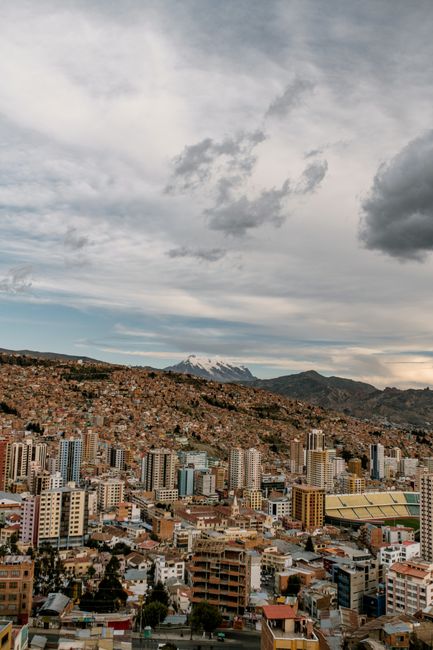
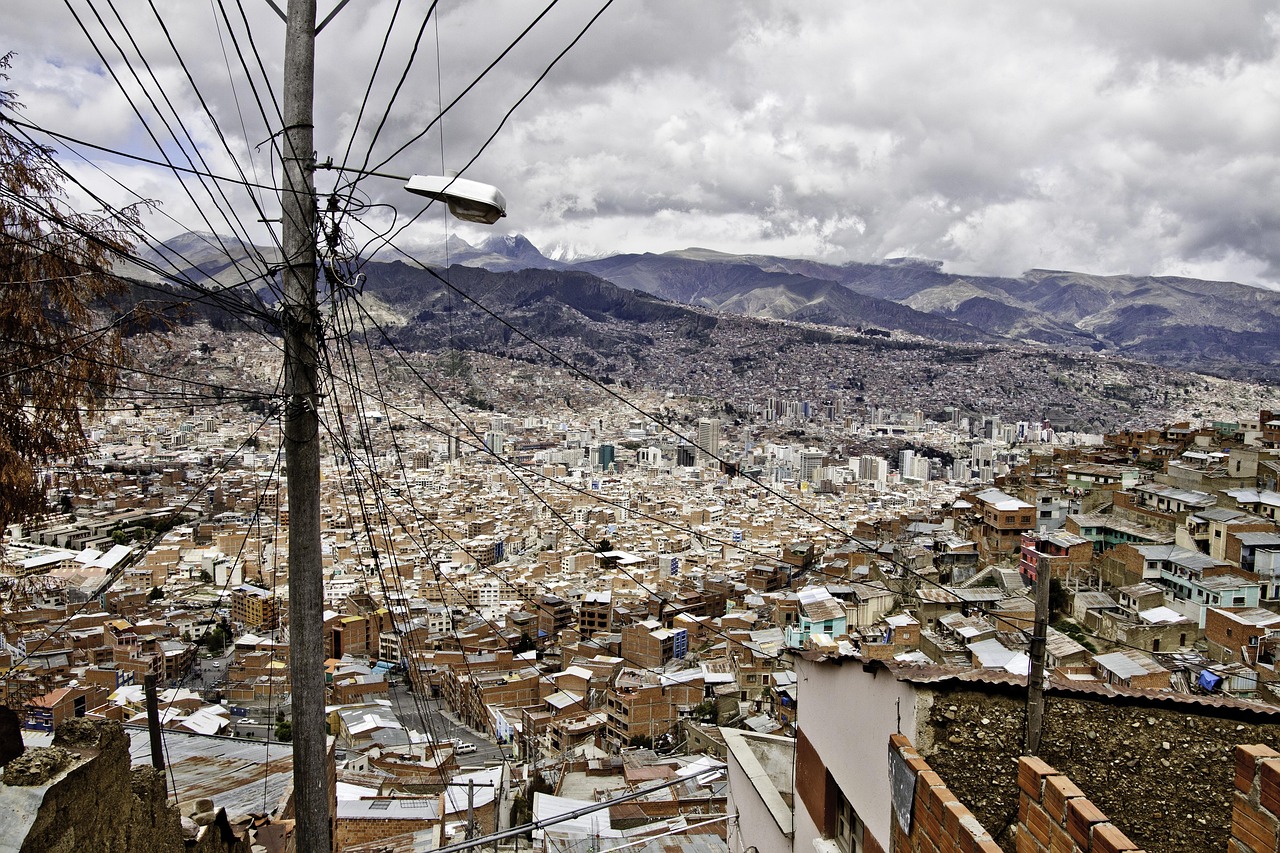
La Paz, Bolivia’s seat of government, is one of the most spectacular cities on Earth. It fills a deep canyon carved into the edge of the Altiplano, with brick houses climbing the slopes to the rim, where the sprawling city of El Alto looks out over snow-capped Illimani, at 6,438 m (21,122 ft). At about 3,640 m (11,940 ft) in the center, it is the highest seat of government in the world, and its markets, Aymara culture and colorful cable cars make it unlike any other capital. (It is not to be confused with La Paz in Mexico’s Baja California Sur; for that city, see our La Paz, Mexico travel guide.) Bolivia’s constitutional capital is Sucre, but La Paz is where the government sits and where most visitors arrive, and it is the base for trips to Lake Titicaca, the ruins of Tiwanaku, the Death Road and the peaks of the Cordillera Real. The altitude takes a few days to get used to, and protests and blockades can disrupt travel, so plan with some flexibility.
Right now in La Paz
- Wed4–21°C38–70°FClear
- Thu5–20°C40–69°FClear
- Fri2–21°C36–70°FClear
Top tours in La Paz
See all tours for La Paz →
From local operators, with prices and reviews; you check availability and book on Viator, our partner. We may earn a commission at no extra cost to you. How we earn money
La Paz at a glance
- Best for: markets and Aymara culture, cable-car views, museums, mountain biking, trekking and climbing, and day trips to Tiwanaku and Lake Titicaca.
- How long: three days, including time to acclimatize; five with Lake Titicaca or the Death Road.
- Best time: May to October, the dry season, with sunny days and cold nights.
- Altitude: about 3,640 m (11,940 ft) in the center and about 4,000 m (13,100 ft) in El Alto; altitude sickness is a risk, according to the UK government.
- Getting there: El Alto International Airport (LPB), about 30–45 minutes from the center.
- Before you go: entry rules, visas and money are in our Bolivia travel guide.
La Paz’s layout: where things are
La Paz runs downhill from north to south. At the top, on the Altiplano, is El Alto, now a city in its own right, with the airport and huge markets. The canyon’s upper part holds the center, with Plaza Murillo and the government buildings, the San Francisco church, and the market streets around Calle Sagárnaga and the Witches’ Market, where most travelers stay. The main avenue, the Prado (El Prado), runs down through the center to Sopocachi, a residential neighborhood of cafés and restaurants, and further down still, at lower and warmer altitudes, to the wealthy Zona Sur (Calacoto and San Miguel) and the Valley of the Moon.
Top things to see in La Paz
Mi Teleférico
La Paz’s cable car network, run by the state company Mi Teleférico, links El Alto with the center and the Zona Sur in a web of color-coded lines, the largest urban cable car system in the world. It is everyday public transport and the best way to see the city: ride the Red or Yellow line up to El Alto for views of the canyon and Illimani, and the Silver line along the rim. Fares are low, and most stations are step-free.
Plaza Murillo and the historic center
The main square is surrounded by the cathedral, the Presidential Palace and the Legislative Palace. Nearby, Calle Jaén is the best-preserved colonial street, lined with small museums, and the baroque San Francisco church, with stone carvings mixing Indigenous and Catholic symbols, is a short walk away; you can climb to its roof.
The Witches’ Market and the market streets
On Calle Linares and Calle Sagárnaga, stalls of the Witches’ Market (Mercado de las Brujas) sell herbs, potions, amulets and dried llama fetuses used as offerings to Pachamama. The streets around are full of textile and handicraft shops; ask before photographing vendors.
El Alto
Ride the cable car up to El Alto for its sprawling 16 de Julio market, held on Thursdays and Sundays, one of the largest open-air markets in South America, and for the colorful “cholets”, modern mansions in the Neo-Andean style. On Sundays, you can watch cholita wrestling, where Aymara women in traditional skirts take to the ring. Go with a guide or group and watch your belongings in crowds.
Other things to do in La Paz
- Museums: the National Museum of Ethnography and Folklore (MUSEF), the Coca Museum and the museums of Calle Jaén.
- Valley of the Moon: a maze of eroded clay pinnacles in the Zona Sur, about 30 minutes from the center.
- Food: salteñas for breakfast, street food at the Rodríguez and Lanza markets, and La Paz’s new wave of restaurants using Andean ingredients.
- Mirador Killi Killi: a viewpoint over the city and Illimani, best at sunset; take a taxi rather than walking.
- Walking tours: see our city sightseeing guide.
Food and drink in La Paz
La Paz eats on the go, in markets and at street stalls, and in recent years it has also become one of South America’s most interesting restaurant cities, with chefs using Andean ingredients such as quinoa, tubers, Lake Titicaca trout and Amazonian fruit.
- Salteñas: juicy baked empanadas filled with a sweet-spicy meat stew, eaten mid-morning; bite the top off and sip the juice first.
- Api with pastel: a thick, warm purple-corn drink with a fried cheese pastry, the classic market breakfast.
- Sandwich de chola: roast pork rolls with pickled vegetables, sold by street vendors.
- Plato paceño and fricasé: corn, beans, potatoes and cheese, and a spicy pork broth said to cure hangovers.
- Anticuchos: grilled beef-heart skewers with potatoes and peanut sauce, sold at night.
- Trout: fresh from Lake Titicaca, fried or grilled.
- Coca tea and singani: mate de coca for the altitude, and singani, Bolivia’s grape brandy, in cocktails such as chuflay.
The Mercado Lanza and Mercado Rodríguez are the best places for cheap meals and juices; Sopocachi and the Zona Sur have the most varied restaurants.
Day trips from La Paz
Tiwanaku
About an hour and a half west, Tiwanaku was the capital of a civilization that flourished long before the Inca, with the Gateway of the Sun, the semi-subterranean temple with its carved stone heads and the Akapana pyramid. It is a UNESCO World Heritage Site, and the scene of the Aymara New Year celebrations on June 21.
Lake Titicaca and Copacabana
Copacabana, a lakeside town with a white Moorish-style basilica, is about three to four hours away by road, including a short ferry crossing at the Strait of Tiquina; boats continue to the Isla del Sol, sacred to the Inca. On the route between Copacabana and La Paz, use a direct bus, according to the UK government, and check that tour boats carry life jackets, as boats on the lake are often very basic. See our boat trips guide.
The Death Road (Yungas Road)
The old road from La Paz to Coroico drops about 3,500 m (11,500 ft) from a mountain pass to the subtropical Yungas, and is now a famous downhill mountain-bike ride. Make sure the bikes are in good condition and that your guide carries safety equipment and a first-aid kit, according to the UK government. See our cycling guide.
Huayna Potosí and the Cordillera Real
The Cordillera Real’s glaciated peaks, including Huayna Potosí, at 6,088 m (19,974 ft), attract trekkers and climbers. Climbs should only be done with experienced, well-equipped guides after full acclimatization. See our hiking guide.
Nearby destinations
- Puno215 km
Getting there and getting around
By air
El Alto International Airport (LPB) is on the Altiplano at about 4,000 m (13,100 ft), 30–45 minutes from the center by taxi or minibus, depending on traffic. Use a radio taxi or a hotel transfer. Domestic flights connect La Paz with Uyuni (about an hour), Sucre, Santa Cruz and Rurrenabaque, and international connections include Lima, Bogotá and Panama City. See our Salar de Uyuni travel guide.
By road
Buses leave from the main bus terminal for Oruro, Uyuni, Sucre, Potosí and Cochabamba, and from the cemetery area for Copacabana and the Peruvian border. Choose tourist-oriented companies with better safety standards, according to the UK government. In 2026, fuel shortages and road blockades have disrupted bus services, sometimes for days; allow spare time.
Getting around La Paz
The Mi Teleférico cable cars are the quickest and easiest way to get around. For taxis, use radio taxis ordered by phone or by your hotel, with the company’s name and telephone number on the roof and a registration sticker on the windscreen, and don’t get into a taxi that already has other passengers, according to the UK government. Minibuses and micros are cheap but crowded. Walking uphill is tiring at this altitude, so take it slowly.
Neighborhoods at a glance
- The center (Rosario, Sagárnaga): the traveler district around the Witches’ Market and San Francisco church, with hostels, agencies and craft shops.
- Casco Viejo and Plaza Murillo: government buildings, museums and colonial streets such as Calle Jaén.
- Sopocachi: a residential district below the center, with Plaza Abaroa, cafés, bars and the Killi Killi and Montículo viewpoints nearby.
- Miraflores: east of the center, with the stadium and hospitals.
- Zona Sur (Calacoto, San Miguel, Achumani): the wealthier, lower and warmer southern districts, with restaurants and shopping.
- El Alto: the vast city on the Altiplano rim, with the airport and markets.
When to go and how long to stay
La Paz has a cool highland climate. In the dry season, from about May to October, days are sunny and about 13–18 °C (55–64 °F), but nights drop to around freezing, especially in June and July. The rainy season, from about November to March, brings afternoon storms, slightly warmer nights and the risk of floods and landslides on mountain roads, according to the UK government. In the dry season, smoke from forest fires in the east and south can affect air quality in La Paz. The Alasitas fair begins on January 24, and the Gran Poder festival, a huge procession of dancers in elaborate costumes, takes place around late May or June.
| Season | What it’s like | Good for |
|---|---|---|
| May–August | Dry, sunny, cold nights near freezing | Trekking, Tiwanaku, Lake Titicaca, clear views |
| September–October | Dry, warming | Mountain biking, Uyuni tours |
| November–March | Rainy afternoons, milder nights | Museums and markets; the Uyuni mirror effect |
| April | Drying out | Fewer visitors |
La Paz month by month
- January: rainy afternoons; the Alasitas fair starts on January 24.
- February: one of the wettest months; Carnival holidays (February 8–9, 2027) and Oruro’s carnival nearby on February 6.
- March: rain begins to ease; Holy Week.
- April: drier and sunny, with cool nights.
- May: the dry season starts; clear skies over Illimani; the Gran Poder festival often falls in late May or June.
- June: dry, cold nights near freezing; the Aymara New Year on June 21 at Tiwanaku.
- July: dry and the coldest month; peak season for trekking and climbing.
- August: dry and windy; Independence Day on August 6; offerings to Pachamama during the month.
- September: dry, warming; good for the Death Road and Lake Titicaca.
- October: dry and sunny, with the first showers late in the month.
- November: showers begin; All Saints’ and All Souls’ days (November 1–2) and the Día de las Ñatitas (November 8).
- December: the rainy season settles in; Christmas markets.
3 days in La Paz
Day one, rest and acclimatize: a gentle walk around Plaza Murillo, Calle Jaén and San Francisco. Day two, the Witches’ Market and a cable-car tour up to El Alto (on a Thursday or Sunday for the market), then sunset at Killi Killi. Day three, Tiwanaku or the Valley of the Moon.
5 days in La Paz
Add a day on the Death Road by bike and a two-day trip to Copacabana and the Isla del Sol.
Where to stay in La Paz and the taxes
- The center (around Sagárnaga and the Witches’ Market): hostels and mid-range hotels close to the sights and tour agencies; busy and noisy.
- Sopocachi: a calmer residential area with cafés, restaurants and boutique hotels.
- Zona Sur: modern hotels at a lower, slightly warmer altitude, far from the center but linked by cable car.
Prices include Bolivia’s 13% value-added tax; ask for an invoice (factura).
Costs in La Paz
These per-person estimates are a planning guide as of October 2026, at the Central Bank of Bolivia’s official rate of Bs 12.00 to US$1; prices in bolivianos have been changing, so check current prices.
| Item | Typical price |
|---|---|
| Hostel dorm bed in the center | about Bs 100–200 (US$8–17) |
| Mid-range hotel double room | about Bs 500–1,000 (US$42–83) |
| Boutique hotel in Sopocachi or the Zona Sur | about Bs 1,200–2,400 (US$100–200) |
| Salteña | about Bs 8–15 (US$0.70–1.25) |
| Set lunch (almuerzo) | about Bs 25–45 (US$2–4) |
| Mi Teleférico ride | a few bolivianos |
| Radio taxi within the center | about Bs 20–40 (US$1.70–3.30) |
| Death Road bike tour | about Bs 700–1,300 (US$58–108) |
| Day tour to Tiwanaku | about Bs 250–600 (US$21–50) |
The figures are our estimates, not official statistics.
Practical tips for La Paz
- Altitude: altitude sickness is a risk in La Paz, according to the UK government. Take it easy for your first two or three days, drink water, avoid alcohol and heavy meals at first, and try coca tea. See a doctor before you go if you have heart, lung or blood-pressure problems.
- Petty crime: common in central La Paz, on buses and in crowded areas, according to the UK government; keep your bag in front of you and watch for distraction teams at bus terminals.
- Fake police and express kidnappings: thieves impersonate police, with fake ID and uniforms; real police cannot search you in the street without a prosecutor’s written order, and you should never get into an unmarked police car. There have been express kidnapping incidents in the Cementerio General and Sopocachi areas, according to the UK government; use radio taxis, especially at night.
- Protests: marches and blockades happen often, sometimes with little notice, and in 2026 they were linked to fuel prices and shortages; move away from protests and follow local news. Bars must legally close at 3 a.m., and prison tours are illegal.
- Emergencies: police 110, ambulance 118, fire 119.
- Water: drink bottled, boiled or filtered water.
What to pack for La Paz
Pack warm layers for cold mornings and nights, including a down jacket, fleece, hat and gloves, plus a light rain jacket from November to March. The high-altitude sun is fierce, so bring sunglasses, high-factor sunscreen, lip balm and a sun hat. Comfortable shoes for steep streets, a secure daypack, a refillable water bottle, any prescription medicines and a plug adapter complete the list.
La Paz, Bolivia travel FAQ
How high is La Paz?
About 3,640 m (11,940 ft) in the center, and about 4,000 m (13,100 ft) in El Alto, where the airport is. Plan two or three easy days to adjust.
Is La Paz the capital of Bolivia?
La Paz is the seat of government, while Sucre is the constitutional capital.
How do I get from El Alto airport to La Paz?
By radio taxi or hotel transfer in about 30–45 minutes, depending on traffic, down from the Altiplano into the canyon.
What is Mi Teleférico?
La Paz’s network of public cable cars, linking El Alto, the center and the Zona Sur. It is cheap and offers some of the best views of the city.
Can I visit Lake Titicaca from La Paz?
Yes. Copacabana is about three to four hours by road; stay at least one night to visit the Isla del Sol. Use a direct bus.
Is the Death Road safe to ride?
It is a challenging ride with steep drops. Go with an established company, check the bikes, and make sure guides carry safety and first-aid equipment.
Is La Paz safe for tourists?
Most visits pass without serious problems, but petty crime is common and fake police target visitors. Use radio taxis, keep valuables close and avoid protests.
Is there a La Paz in Mexico too?
Yes. La Paz is also the capital of Baja California Sur in Mexico; see our La Paz, Mexico travel guide.
What food should I try in La Paz?
Salteñas in the morning, api with pastel at a market, sandwich de chola, anticuchos at night, Titicaca trout, and coca tea for the altitude.
How much does La Paz cost per day?
Roughly Bs 450–650 (US$38–55) on a budget and Bs 1,200–2,000 (US$100–165) for a mid-range trip, by our estimates.
Plan your trip
Partner links: TravelerCenter may earn a commission if you book, at no extra cost to you.
🇪🇸 Useful Spanish phrases for La Paz
All 38 Spanish phrases: restaurant, hotel, emergencies, romance (printable) →
Sources · last reviewed 4 October 2026
Researched and last reviewed on 4 October 2026. Altitude sickness in La Paz, petty crime, fake police, express kidnapping locations, radio taxis, the Copacabana bus, Titicaca boats, the Death Road, bus safety, protests, blockades and fuel shortages, forest-fire smoke, floods and landslides, bar hours, prison tours and emergency numbers: the UK government; the September 2026 protest calls: the US Embassy in La Paz; the city’s altitude: Wikidata. Mi Teleférico details, Illimani’s and Huayna Potosí’s heights, El Alto’s altitude, markets and festivals, the Witches’ Market, museums, Tiwanaku, the Valley of the Moon, travel times, temperatures and the 13% IVA come from secondary sources or general knowledge and are flagged for checking. The food, neighborhood, getting-around, month-by-month and cost sections draw on secondary sources, general knowledge and our own estimates, except where an official source is named, and are flagged for checking. Prices and rules change, so check before you go. For entry rules and money, see our Bolivia travel guide.
Data: Weather: MET Norway (CC BY 4.0) · Rates: ECB · Costs: World Bank ICP and price levels · Wikidata (CC0)