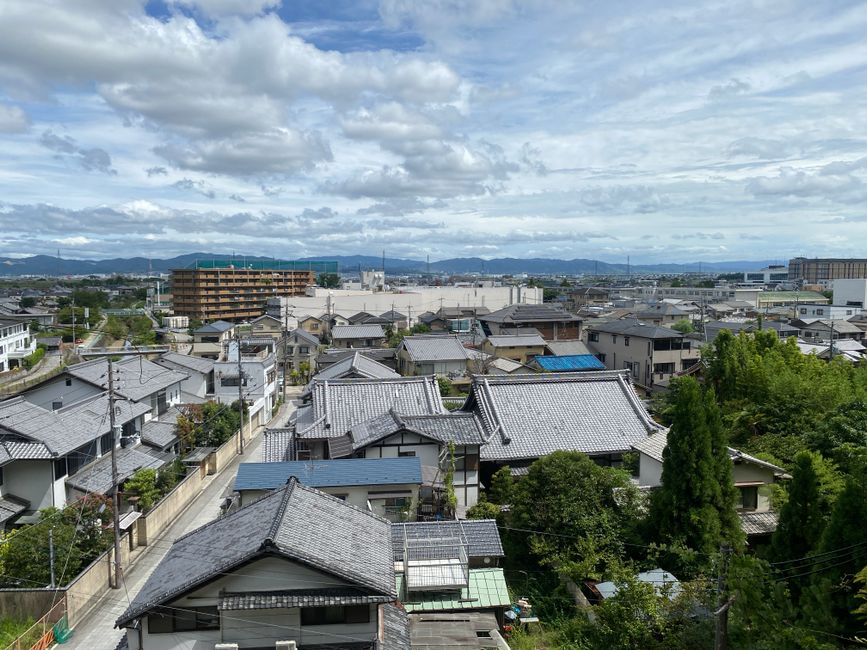
Nara was Japan’s first permanent capital, from 710 to 784, and the temples, shrines and gardens built then still fill its great green park: the giant bronze Buddha in Todai-ji, one of the largest wooden buildings in the world, the lantern-lined paths of Kasuga Taisha, Kofuku-ji’s pagoda, and more than a thousand semi-wild deer that bow for crackers. It is smaller, greener and calmer than Kyoto, and an easy trip from Kyoto or Osaka, but staying a night lets you see the park at dawn and dusk without the crowds. Add Horyu-ji, home of the world’s oldest surviving wooden buildings, and the old merchant streets of Naramachi. The best months are late March to May and October to early December; summers are very hot and humid.
Right now in Nara
- Wed14–22°C57–71°FClear
- Thu12–24°C54–75°FPartly cloudy
- Fri16–26°C60–78°FClear
- Mon 12 Oct Sports Day (スポーツの日)
Top tours in Nara
See all tours for Nara →
From local operators, with prices and reviews; you check availability and book on Viator, our partner. We may earn a commission at no extra cost to you. How we earn money
Nara at a glance
- Best for: Japan’s oldest temples and Buddhist art, the deer of Nara Park, gardens, walking and a quieter alternative to Kyoto.
- How long: one full day for Nara Park; two days to add Horyu-ji, the western temples and Naramachi.
- Best time: late March to early April for cherry blossoms, and November for fall colors; highs then are about 14–20 °C (57–68 °F).
- Getting there: about 35–45 minutes from Kyoto and 40 minutes from Osaka-Namba on Kintetsu trains, or by JR.
- Getting around: on foot in Nara Park and Naramachi; buses or trains to Horyu-ji and the western temples.
- Fees to know: Todai-ji’s Great Buddha Hall costs ¥800 as of October 2026; deer crackers are sold in the park.
- Before you go: entry rules, rail passes, money and general safety are in our Japan travel guide; see also our Kyoto and Osaka guides.
Nara in brief
In the 8th century, Nara, then called Heijo-kyo, was laid out on a grid modeled on the Chinese capital Chang’an and became the eastern end of the Silk Road: treasures from Persia, India and China still survive in the Shoso-in storehouse at Todai-ji. Buddhism flourished under imperial patronage, and the great temples grew so powerful that the court moved away, eventually to Kyoto in 794. Because Nara then became a quiet temple town, many of its buildings, statues and gardens escaped the wars and fires that destroyed so much elsewhere. Eight sites in and around the city, including Todai-ji, Kofuku-ji, Kasuga Taisha and its primeval forest, Gango-ji, Yakushi-ji, Toshodai-ji and the Heijo Palace site, form the UNESCO World Heritage site “Historic Monuments of Ancient Nara”.
Nara’s areas and where to stay
Nara is compact. The two stations, Kintetsu-Nara and JR Nara, are about 15 minutes’ walk apart on the west side of the center; Nara Park begins just east of Kintetsu-Nara and climbs to the wooded hills of Mount Wakakusa and Mount Kasuga.
Nara Park
The heart of the visit: a huge, open park of lawns and old trees with Todai-ji, Kofuku-ji, Kasuga Taisha, the Nara National Museum and the deer. A few historic ryokan and luxury hotels sit inside or on the edge of the park, and it is magical early in the morning.
Around Kintetsu-Nara Station
Covered shopping streets (Higashimuki and Mochiidono) with restaurants and souvenir shops, five minutes from the park. The most convenient base, with mid-range hotels and the fastest trains to Kyoto and Osaka.
Naramachi
The old merchant quarter south of Sarusawa Pond, with narrow lanes of latticed wooden townhouses, cafés, craft shops, small museums and guesthouses. The most atmospheric place to stay or eat.
Around JR Nara Station
Business hotels and newer hotels, about 20 minutes’ walk from the park, convenient for JR trains to Kyoto, Osaka and Horyu-ji.
The deer of Nara Park: etiquette and safety
Local Safety Info tool →Phrase cards tool →
The deer are considered messengers of the gods at Kasuga Taisha and are protected as a National Natural Monument. According to the Nara Deer Preservation Foundation, which looks after them, about 1,465 deer lived in Nara Park in July 2025, including 315 stags. They are used to people but they are wild animals, and every year visitors are bitten, butted or knocked over.
- Feed them only shika senbei, the plain rice crackers sold at stalls in the park; human food, snacks and plastic bags make them ill.
- Give the cracker promptly when a deer bows. The foundation warns that teasing deer by holding crackers back, or pretending to have some, stresses them and makes them aggressive. Show your empty hands when you have finished.
- Don’t chase, touch or corner them, and wash your hands if you do touch one, because wild animals can carry germs.
- Watch children closely: their faces are at the height of a deer’s head.
- Take care in the seasons: in fall, the rutting season, stags become aggressive, though their antlers are cut each October in a traditional ceremony; in late spring and early summer, mothers protect their fawns and may charge.
- Keep paper away: deer eat maps and tickets, so keep them in a bag.
Top things to see in Nara
Todai-ji and the Great Buddha
Todai-ji’s Great Buddha Hall (Daibutsu-den) is a vast wooden building rebuilt in 1709, housing a bronze Buddha about 15 m (49 ft) high, first cast in the 8th century. Children squeeze through a hole in a wooden pillar the size of the Buddha’s nostril for good luck. According to Todai-ji, as of October 2026 entry to the Great Buddha Hall costs ¥800 (about US$5.1) for adults, and a joint ticket with the Todai-ji Museum costs ¥1,200 (about US$7.6); on the day of our review the hall was open from 7:30 a.m. to 5:30 p.m. Don’t miss the huge Nandai-mon gate with its guardian statues, and the Nigatsu-do hall on the hillside, free, with one of the best views over Nara.
Kasuga Taisha
Nara’s great Shinto shrine, founded in 768 at the foot of Mount Kasuga, with vermilion buildings and about 3,000 stone and bronze lanterns. All are lit during the Mantoro lantern festivals in early February and mid-August. The approach through the forest is free; the inner area charges a small fee.
Kofuku-ji
Once one of Japan’s most powerful temples, Kofuku-ji is famous for its five-story pagoda, the second tallest in Japan, and its National Treasure Museum, home to the haunting three-faced Ashura statue. The pagoda is under a long restoration and covered in scaffolding, so check before you go if photos are your goal.
Isuien and Yoshiki-en gardens
Two neighboring gardens near Todai-ji: Isuien, a paid Meiji-era garden that “borrows” the temple’s roof and the hills as scenery, and Yoshiki-en, with moss and tea-ceremony gardens.
Naramachi
Wander the lanes of the old town, look into the Koshi-no-Ie, a restored merchant house, and stop at shops selling Nara sumi ink, sake and kakinoha-zushi. The red cloth monkeys hanging from eaves are charms that take bad luck on your behalf.
More classic sights
- Nara National Museum: Buddhist sculpture and painting, with the famous Shoso-in treasures shown for a few weeks each fall.
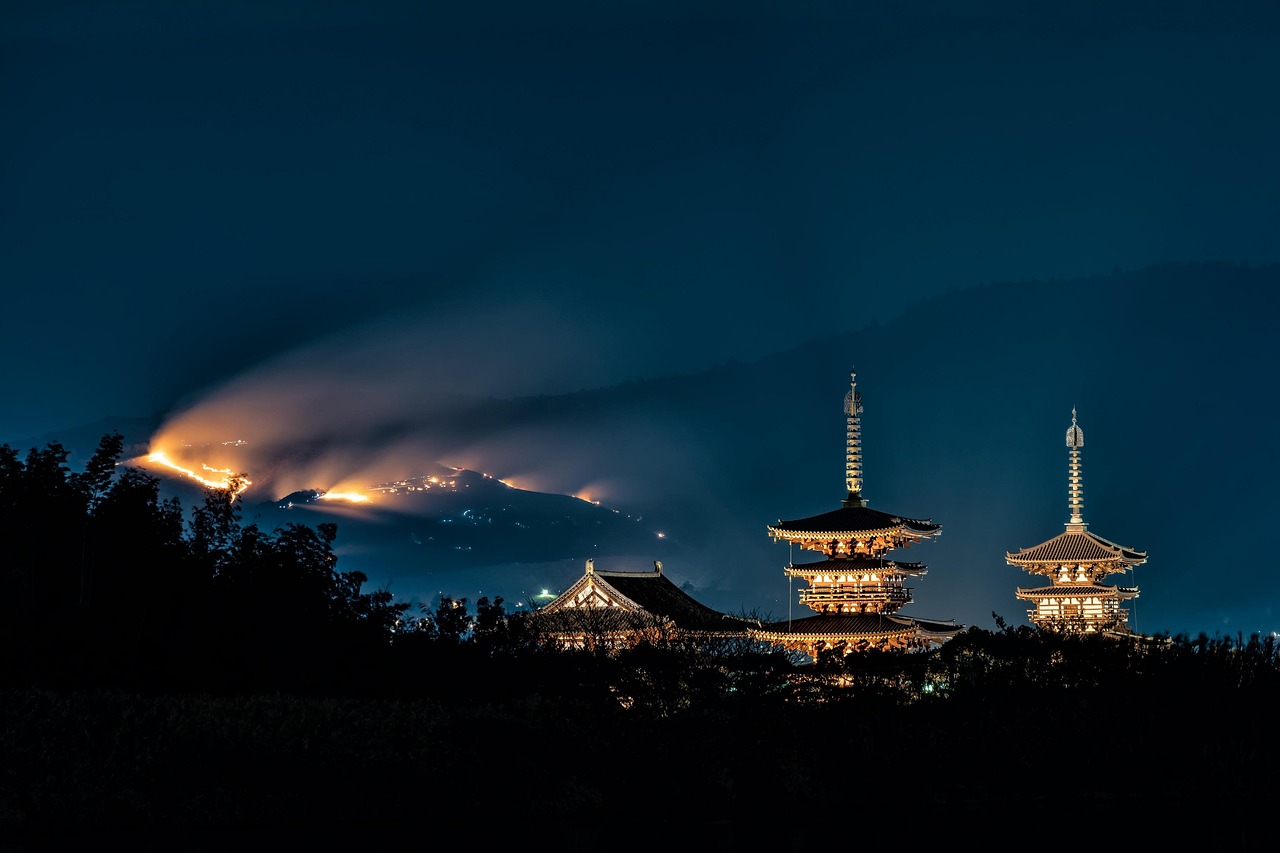
- Mount Wakakusa: a grassy hill with views across the city, set on fire in a festival on a Saturday in late January.
- Heijo Palace site: the reconstructed gate and audience hall of the 8th-century capital, free, on a huge open field west of the center.
- Yakushi-ji and Toshodai-ji: two great temples in Nishinokyo, south-west of the center, part of the UNESCO World Heritage listing.
- Gango-ji: a temple in Naramachi with roof tiles more than 1,300 years old.
Monuments
- Heijō Palace
- Kasuga-taisha
- Kōfuku-ji Temple
- Tōdai-ji Temple
- Yakushi-ji Temple
Parks and gardens
- Isui-en
- Nara Park
- Yoshiki-en
Museums
- Nara National Museum
Peaks and mountains
- Mount Wakakusa
Other things to do in Nara
Food and drink
Try kakinoha-zushi (mackerel or salmon sushi wrapped in persimmon leaves), chagayu (tea rice porridge), Nara-zuke pickles cured in sake lees, and kuzu-mochi sweets made with arrowroot from Yoshino. Nara is also one of the birthplaces of Japanese sake, and local breweries in Naramachi offer tastings. Many restaurants close by 8 or 9 p.m.
Walks
The quiet path behind Todai-ji to Nigatsu-do, the forest trails of the Kasugayama Primeval Forest, a UNESCO-listed protected forest, and the climb up Mount Wakakusa are the best walks. See our guide to hiking for gear and trail tips.
Activities and best months
- City sightseeingTodai-ji charges ¥800 for adults at the Great Buddha Hall (with the museum ¥1,200), open 7:30-17:30 in October; Nara Park's 1,465 wild deer (July 2025 count) should not be touched or teased, the Nara Deer Preservation Foundation warns.
Day trips from Nara
- Horyu-ji: the first place in Japan inscribed as a UNESCO World Heritage site, in 1993, with the world’s oldest surviving wooden buildings, about 30–40 minutes by JR or bus.
- Yoshino: a mountain covered in about 30,000 cherry trees that bloom in stages up the slopes in April, about 1.5 hours by Kintetsu.
- Asuka: the countryside of Japan’s 7th-century capital, with burial mounds and stone monuments, best explored by bicycle.
- Uji: green tea and the Byodo-in temple, about 30–45 minutes by JR towards Kyoto.
- Kyoto and Osaka: both 35–45 minutes away. See our Kyoto and Osaka guides.
Nearby destinations
Getting there and getting around
By train
Kintetsu trains are the most convenient, because Kintetsu-Nara Station is next to the park. From Kyoto, Kintetsu limited expresses take about 35 minutes and express trains about 45 minutes; from Osaka-Namba, about 40 minutes. JR trains run from Kyoto (Nara Line, about 45 minutes by rapid) and from Osaka and Tennoji (Yamatoji Line). The Japan Rail Pass and JR West’s Kansai passes cover JR trains to Nara but not Kintetsu; as of October 2026, the Kansai Mini Pass costs ¥3,000 (about US$19) for 3 days. Pay on Kintetsu with an IC card. Visitors flying into Kansai Airport can take a direct airport limousine bus to Nara in about 1 hour 30 minutes.
Getting around Nara
Nara Park and Naramachi are best on foot: Kintetsu-Nara Station to Todai-ji is about 15 minutes’ walk, and to Kasuga Taisha about 25. City loop buses run between both stations and the park, and buses or JR trains go to Horyu-ji. Rental bikes are useful for the flat western temples, but not inside the busy park.
When to go and how long to stay
The table uses the Japan Meteorological Agency’s (JMA) 1991–2020 normals for its Nara station: average daily highs and lows, total rain and days with at least 1 mm of rain.
| Month | Average high / low | Rain (days with 1 mm or more) | What to expect |
|---|---|---|---|
| January | 9 °C (48 °F) / 1 °C (33 °F) | 52 mm (2.1 in), 6 days | Cold, quiet and good value; Wakakusa Yamayaki at the end of the month |
| February | 10 °C (50 °F) / 1 °C (34 °F) | 63 mm (2.5 in), 7 days | Cold; Mantoro lanterns at Kasuga Taisha early in the month |
| March | 14 °C (57 °F) / 4 °C (38 °F) | 105 mm (4.1 in), 10 days | Cherry blossoms usually open around Mar 28 (JMA normal) |
| April | 20 °C (68 °F) / 9 °C (48 °F) | 99 mm (3.9 in), 10 days | Full bloom around early April; Yoshino’s cherries later in the month |
| May | 25 °C (77 °F) / 14 °C (57 °F) | 138 mm (5.5 in), 10 days | Fresh green park; Golden Week crowds early in the month |
| June | 28 °C (83 °F) / 18 °C (65 °F) | 184 mm (7.2 in), 12 days | Rainy season usually from about June 6; fawns are born, mothers protective |
| July | 32 °C (89 °F) / 23 °C (73 °F) | 174 mm (6.8 in), 11 days | Rainy season usually ends around July 19; hot and humid |
| August | 33 °C (92 °F) / 24 °C (75 °F) | 128 mm (5.0 in), 8 days | The hottest month; Nara Tokae lantern festival and Mantoro mid-month |
| September | 29 °C (84 °F) / 20 °C (68 °F) | 159 mm (6.3 in), 10 days | Hot early on; typhoons possible |
| October | 23 °C (73 °F) / 14 °C (56 °F) | 135 mm (5.3 in), 9 days | Comfortable; the stags’ antler-cutting ceremony; rutting season |
| November | 17 °C (63 °F) / 7 °C (45 °F) | 71 mm (2.8 in), 7 days | Shoso-in exhibition and peak fall colors late in the month |
| December | 12 °C (53 °F) / 3 °C (37 °F) | 57 mm (2.2 in), 7 days | Colors linger early in the month; cold and calm |
Nara gets about 1,370 mm (54 in) of rain a year, mostly from June to September. It is a little colder in winter and hotter in summer than Osaka; August highs average 33 °C (92 °F). The JMA’s normal rainy season for the Kinki region is from about June 6 to July 19 (in 2026, about June 2 to July 9).
Weather month by month
Cherry blossoms and fall colors: the JMA’s normal date for the first cherry blossoms in Nara is March 28, with full bloom around April 4; in 2026 they opened on March 24. The maples at the JMA’s Nara station normally turn around November 21, and the park’s maples and ginkgos usually look best in mid- to late November.
Crowds: Nara is busiest from late morning to mid-afternoon, when tour groups arrive from Kyoto and Osaka, and in Golden Week and the cherry blossom season. Come early, or stay overnight.
One day in Nara
Arrive by 8 a.m.: Todai-ji first, then Nigatsu-do and the path to Kasuga Taisha, lunch in Naramachi, Kofuku-ji and the National Museum in the afternoon, and Isuien garden before it closes.
Two days in Nara
Add Horyu-ji in the morning and Yakushi-ji and Toshodai-ji in the afternoon, or a half-day hike on Mount Wakakusa and an evening in Naramachi.
Where to stay in Nara and taxes
- Nara Park: historic hotels and ryokan inside or beside the park, for early mornings with the deer.
- Kintetsu-Nara: mid-range hotels close to everything and to fast trains.
- Naramachi: guesthouses and small boutique inns in old townhouses.
- JR Nara: business hotels and good value, a little further from the park.
As of October 2026, the City of Nara does not list an accommodation tax among its city taxes, unlike Kyoto and Osaka, but hotels with hot spring baths add a small bathing tax. Japan’s 10% consumption tax is included in most quoted prices.
What a trip to Nara costs
Prices are approximate, for October 2026, converted at about ¥158 to the US dollar.
| Item | Typical cost |
|---|---|
| Todai-ji Great Buddha Hall | ¥800 (about US$5.1) |
| Todai-ji hall and museum joint ticket | ¥1,200 (about US$7.6) |
| Shika senbei (deer crackers), one pack | ¥200 (about US$1.3) |
| Kintetsu train from Kyoto or Osaka-Namba, one way | ¥700–1,300 (about US$4.4–8.2) |
| Set lunch or kakinoha-zushi box | ¥1,200–2,500 (about US$7.6–16) |
| Business hotel double, per night | ¥10,000–18,000 (about US$63–115) |
| Ryokan with dinner and breakfast, per person | ¥25,000–50,000 (about US$160–315) |
Practical tips for Nara
- Start early: the park is calm and the deer relaxed before 9 a.m.
- Luggage: use the coin lockers at Kintetsu-Nara or JR Nara; the park is not stroller-friendly in crowds.
- Temple hours: most sights close between 4:30 and 5:30 p.m.
- Footwear: gravel paths and temple stairs; wear comfortable shoes.
- Visitor hotline: the JNTO’s Japan Visitor Hotline, 050-3816-2787, answers in English 24 hours a day.
Safety
Nara is very safe; the most common injuries come from the deer, so follow the etiquette above. Heat from July to early September is strong in the open park, so carry water and rest in the shade. Typhoons, most likely from August to October, can halt trains. Japan is earthquake country: if you feel strong shaking, take cover and follow staff instructions, and install the JNTO’s Safety Tips app. In an emergency, call 110 for the police or 119 for an ambulance or fire.
What to pack for Nara
Comfortable walking shoes that slip off easily for temple halls, a hat and water bottle in summer, a folding umbrella, warm layers in winter, and a small bag to keep maps and tickets away from the deer. Japan uses 100 V and two-pin type A plugs like the US.
What to pack
- City walking shoesLisbon and Porto are steep, with polished limestone cobbles that get slippery, so grippy soles matter.
- Day packs and anti-theft bagsA small zipped or anti-theft bag makes crowded trams and viewpoints less stressful.
- Rain jacketsFrom October to April Porto and Lisbon see rain on roughly a third of days.
- Travel adapters and convertersPortugal uses Type C and F sockets at 230 V, so most visitors from outside Europe need an adapter.
Nara travel FAQ
Is Nara worth a visit?
Yes. It has some of Japan’s oldest and grandest temples, the deer of Nara Park and a calmer atmosphere than Kyoto, all an easy trip from Kyoto or Osaka.
How many days do I need in Nara?
One full day covers Nara Park; two days let you add Horyu-ji and the western temples and enjoy the park at dawn and dusk.
How should I behave with the deer?
Feed them only shika senbei, give it promptly when they bow, don’t tease, chase or touch them, and watch children closely. The deer are wild and can bite or butt.
When are the Nara deer most aggressive?
Stags in the fall rutting season, and mothers protecting fawns in late spring and early summer. Keep your distance then.
How much is Todai-ji?
As of October 2026, the Great Buddha Hall costs ¥800 for adults, and a joint ticket with the museum ¥1,200.
How do I get from Kyoto to Nara?
Take the Kintetsu line from Kyoto Station to Kintetsu-Nara, about 35 to 45 minutes, or JR’s Nara Line to JR Nara.
Does the JR Pass cover trains to Nara?
It covers JR trains to JR Nara Station, but not Kintetsu, whose station is closer to the park.
Is there an accommodation tax in Nara?
As of October 2026, the City of Nara does not list one, unlike Kyoto and Osaka; hot spring hotels add a small bathing tax.
When are the cherry blossoms in Nara?
The JMA’s normal date for the first blossoms is March 28, with full bloom around April 4; Yoshino’s mountain cherries bloom later in April.
Can I visit Nara and Osaka in one day?
Yes, they are about 40 minutes apart by Kintetsu. Spend the morning in Nara Park and the evening in Osaka’s Dotonbori.
Plan your trip
Partner links: TravelerCenter may earn a commission if you book, at no extra cost to you.
🇯🇵 Useful Japanese phrases for Nara
All 38 Japanese phrases: restaurant, hotel, emergencies, romance (printable) →
Sources · last reviewed 4 October 2026
Researched and last reviewed on 4 October 2026. Deer numbers and etiquette: the Nara Deer Preservation Foundation; Todai-ji fees and hours: Todai-ji; city taxes: the City of Nara; climate normals, rainy season and cherry blossom and maple dates: the Japan Meteorological Agency (JMA); Kansai Mini Pass: JR West; visitor hotline: JNTO; exchange rate: the US Federal Reserve. Journey times, sight histories, festival dates, the deer cracker price and typical prices are general references or estimates, flagged for checking. Prices and hours change, so check the official sites before you go. For entry rules, money and general safety, see our Japan travel guide.
Also: todaiji.or.jp · JMA normals 1991–2020, Nara (climate)
Data: Weather: MET Norway (CC BY 4.0) · Air quality: OpenAQ · Rates: ECB · Holidays: Nager.Date · Costs: World Bank ICP and price levels · © OpenStreetMap contributors (ODBL) · Wikidata (CC0)