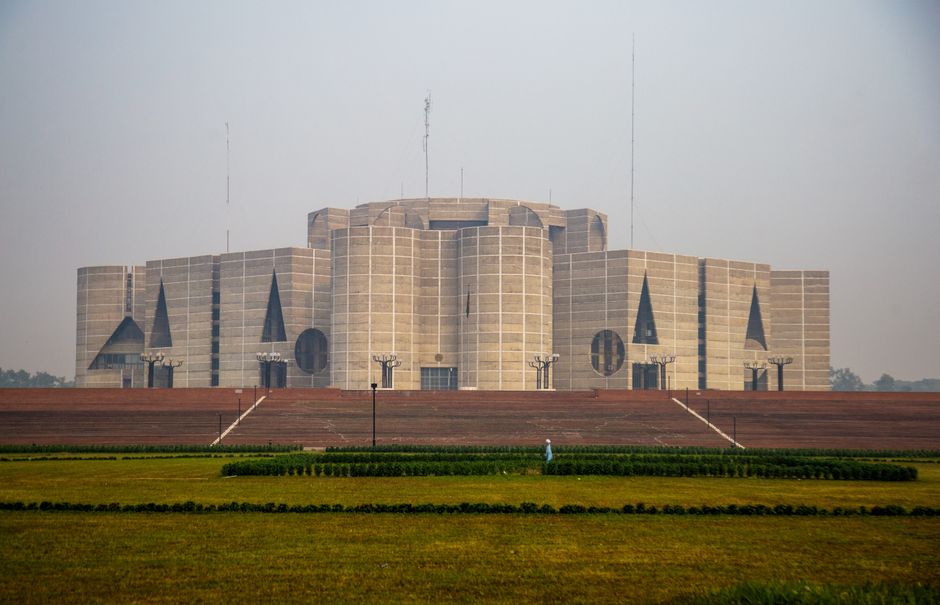
Bangladesh is a green, river-laced country on the Bay of Bengal, built on the world’s largest delta, where the Ganges, the Brahmaputra and the Meghna meet the sea. It is one of the most densely populated countries on Earth and one of the least visited in Asia, which is exactly its appeal for curious travelers: you will often be the only foreigner in sight, and the welcome is warm and inquisitive. Dhaka, the capital, is a vast, chaotic, fascinating city of cycle rickshaws, Mughal forts, river ports and street food. In the southeast, Cox’s Bazar has one of the longest natural sandy sea beaches in the world, running about 120 km (75 miles) toward Myanmar; in the southwest, the Sundarbans, the largest mangrove forest on Earth, are home to the Bengal tiger; and in the northeast, the tea gardens and forests of Sylhet and Srimangal roll over low hills. Ancient mosques and Buddhist monasteries, river journeys and a rich Bengali culture of music, poetry and festivals complete the picture. A few things need planning: most visitors need a visa, either from a Bangladeshi mission or, for listed nationalities, on arrival; the monsoon from June to September floods large areas; cyclones strike the coast in spring and autumn; and political demonstrations can disrupt travel. The best time to visit is November to February, when it is dry and mild.
Right now in Bangladesh
- Wed 25–33°C 78–91°F 1 mm Showers
- Thu 24–31°C 75–87°F 4 mm Showers
- Fri 23–28°C 73–83°F 14 mm Showers
Weather: MET Norway (CC BY 4.0)
Multi-day tours of Bangladesh
Multi-day tours from local operators. You check dates and book on Viator, our partner; we may earn a commission at no extra cost to you. How we earn money
Bangladesh at a glance
The People’s Republic of Bangladesh has a population of about 170 million in an area of about 148,000 km² (57,300 sq miles), a little smaller than Iowa, making it the most densely populated large country in the world. It is divided into eight divisions, named after their main cities: Dhaka, Chattogram (Chittagong), Khulna, Rajshahi, Barishal, Sylhet, Rangpur and Mymensingh. The capital and largest city is Dhaka. Bengali (Bangla) is the official language, and English is widely used in business and among educated people; about 91% of the population is Muslim, with Hindu, Buddhist and Christian minorities.
Bangladesh uses Bangladesh Standard Time (UTC+6), with no daylight saving time, half an hour ahead of India. Electricity is 220 V, and sockets take round two-pin (type C), round three-pin (type D) and British-style (type G) plugs. The currency is the taka (BDT).
A short history
Bengal was a rich and cultured region under Buddhist and Hindu dynasties, the sultans of Bengal and the Mughals, who made Dhaka a provincial capital in the 17th century, famous for its fine muslin. The British East India Company took control after the Battle of Plassey in 1757, and Bengal was the heart of British India. At Partition in 1947, the Muslim-majority east became East Pakistan. The Language Movement of 1952, defending Bengali, is commemorated every February 21, now International Mother Language Day. After the Liberation War of 1971, Bangladesh became independent on December 16, Victory Day. A popular uprising in July and August 2024 led to a change of government, and national elections were held on February 12, 2026.
Bangladesh’s regions
- Dhaka and the center: the capital, the old capital of Sonargaon, and river towns across the delta.
- Chattogram Division: the port city of Chittagong, Cox’s Bazar’s beaches, Saint Martin’s Island and the Chittagong Hill Tracts of Bandarban, Rangamati and Khagrachari.
- Sylhet Division: tea gardens around Srimangal, Lawachara National Park, the hills, wetlands and rivers on the Indian border.
- Khulna and the southwest: the Sundarbans mangroves and the Mosque City of Bagerhat.
- The north: Rajshahi, Bogura and Rangpur, with the Buddhist monastery of Paharpur and the ancient city of Mahasthangarh.
Regions
Where to go: rivers, beaches, mangroves and tea
Most first trips combine Dhaka with the coast or the tea country. See our guides to each place:
- Dhaka: Old Dhaka’s Lalbagh Fort, Ahsan Manzil and Sadarghat river port, the Star Mosque, the Liberation War Museum, Louis Kahn’s National Parliament House and the cycle rickshaws.
- Cox’s Bazar: the long sandy beach, the Marine Drive to Teknaf, Himchari and Inani, the Buddhist temples of Ramu and boats to Saint Martin’s Island.
The Sundarbans, a UNESCO World Heritage Site shared with India, are explored on boat tours of two to four days from Khulna or Mongla, cruising tidal channels to look for Bengal tigers, spotted deer, crocodiles, river dolphins and kingfishers; visits need a permit, arranged by licensed tour operators. On the way, the Mosque City of Bagerhat, another UNESCO site, has the 15th-century Sixty Dome Mosque. The Padma Bridge, opened in 2022, has cut the journey from Dhaka to the southwest to a few hours.
In the northeast, Srimangal is the tea capital, with estates, the rainforest of Lawachara National Park, home to hoolock gibbons, and the seven-layer tea of local tea stalls; Sylhet has the shrine of Hazrat Shah Jalal, river trips at Ratargul swamp forest and Bichanakandi, and seasonal wetlands. In the north, the ruins of the Somapura Mahavihara at Paharpur, one of the largest Buddhist monasteries south of the Himalaya, are a UNESCO site, and Mahasthangarh is the oldest known city in Bangladesh.
The Chittagong Hill Tracts, with the lake of Kaptai at Rangamati and the hills of Bandarban, home to Chakma, Marma and other Indigenous peoples, are beautiful but subject to security restrictions: foreigners must give the authorities advance notice, and some areas are closed. Saint Martin’s Island, the country’s only coral island, is reached by ship from Cox’s Bazar or Teknaf in season, with government limits on visitor numbers.
Chittagong (Chattogram), the second city and main port, is mostly a transit point for Cox’s Bazar and the Hill Tracts, but its old waterfront, the ship-breaking beaches of Sitakunda to the north, seen only from a distance, and the Ethnological Museum are worth a stop.
The Sundarbans in more detail
The Sundarbans cover about 10,000 km² (3,860 sq miles) across Bangladesh and India, about 60% of it in Bangladesh, a maze of tidal rivers, creeks and mangrove islands at the mouth of the Ganges delta. Tours usually sail from Khulna or Mongla on comfortable boats with cabins and meals, transferring to small country boats and walking short trails with armed forest guards at sites such as Kotka, Kochikhali and Karamjal. Tigers are present but rarely seen; you are much more likely to see spotted deer, rhesus macaques, wild boar, saltwater crocodiles, monitor lizards, Ganges and Irrawaddy dolphins and many birds, including several kingfisher species. The best season is November to February, when the weather is calm; the forest is closed to tourists for part of the monsoon, usually from June to August, to protect breeding wildlife.
Srimangal, Sylhet and the tea country
Bangladesh grows tea on more than 160 estates, most of them in the Sylhet Division. Srimangal, about 4–5 hours from Dhaka by train or road, is surrounded by tea gardens where you can walk among the bushes and see pluckers at work; Lawachara National Park has trails through rainforest, with hoolock gibbons, capped langurs and birds. North of Sylhet, the Ratargul swamp forest is explored by rowing boat, at its best from July to October, and the clear rivers at Jaflong and Bichanakandi flow down from the hills of Meghalaya in India.
Saint Martin’s Island
The small coral island of Saint Martin’s, about 9 km (6 miles) off the southern tip of the country, has coconut palms, rocky shores and clear water. To protect its fragile environment, the government has limited visits: in recent seasons, tourists have been allowed only from about November to January, with a cap on daily numbers and online registration, and overnight stays permitted only in part of that period. Ships leave from Cox’s Bazar or Teknaf in season; check the current rules with the Department of Environment or your tour operator.
The north and Bagerhat
In the northwest, the brick ruins of the Somapura Mahavihara at Paharpur, built in the 8th century under the Pala kings, once housed hundreds of monks around a towering cruciform shrine decorated with terracotta plaques; a small museum displays finds. Nearby, Mahasthangarh, near Bogura, has the earthworks of Pundranagara, a city dating back to at least the 3rd century BCE. Rajshahi, on the Padma River, is known for silk and mangoes, and the region has fine terracotta Hindu temples, such as the 18th-century Kantajew Temple near Dinajpur. In the southwest, Bagerhat‘s Sixty Dome Mosque, with its forest of stone pillars and 77 small domes, is usually combined with a Sundarbans trip.
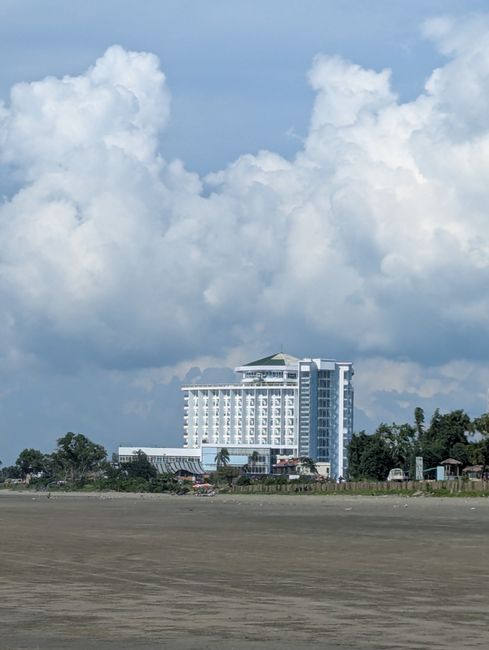
Cox’s Bazar Travel Guide
Plan a trip to Cox's Bazar: Laboni, Sugandha and Kolatoli and where to stay, the 120 km beach, the Marine Drive, Himchari and Inani,…
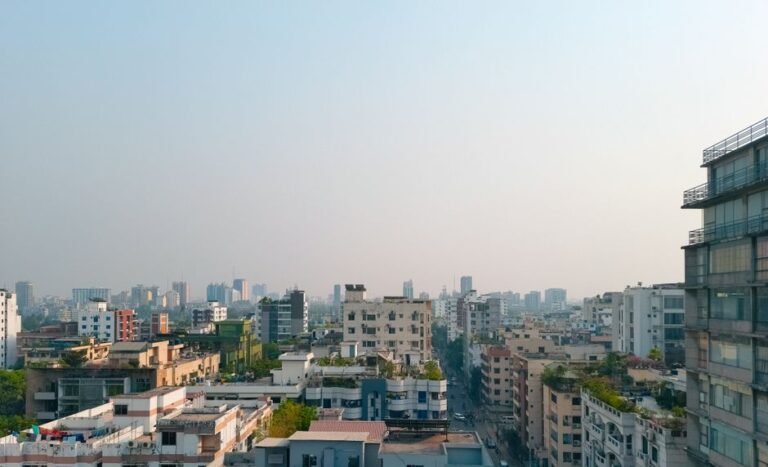
Dhaka Travel Guide
Plan a trip to Dhaka: Old Dhaka, Dhanmondi, Gulshan and Banani and where to stay, Lalbagh Fort, Ahsan Manzil, Sadarghat, the Star Mosque, the…
Best time to visit Bangladesh
Bangladesh has a tropical monsoon climate with three main seasons. The cool, dry season, from November to February, is the best time to visit, with sunny days of 25–30 °C (77–86 °F) and cool nights, though fog and smog are common in Dhaka in December and January. The hot season, from March to May, brings heat and humidity, with afternoon thunderstorms (kalbaishakhi) and the first cyclone season. The monsoon, from June to September, brings heavy rain, especially in the northeast and on the southeast coast, where Cox’s Bazar receives more than 800 mm (31 in) in each of June and July; rivers rise and large areas flood. October is a transition month, with the second cyclone season from October to November.
The table shows rounded averages from the 1991–2020 climate normals of the Bangladesh Meteorological Department, as submitted to the World Meteorological Organization (WMO), for one station in each main travel area.
| Area (station) | January high / low | July high / low | Rain a year | Wettest months |
|---|---|---|---|---|
| Dhaka | 25 °C (76 °F) / 13 °C (56 °F) | 32 °C (90 °F) / 26 °C (80 °F) | about 1,990 mm (78 in) | June to August |
| Chittagong | 26 °C (79 °F) / 14 °C (58 °F) | 31 °C (88 °F) / 26 °C (78 °F) | about 2,960 mm (117 in) | June to August |
| Cox’s Bazar | 27 °C (81 °F) / 16 °C (60 °F) | 31 °C (87 °F) / 25 °C (78 °F) | about 3,750 mm (148 in) | June to August |
| Sylhet | 26 °C (78 °F) / 10 °C (50 °F) | 32 °C (90 °F) / 25 °C (78 °F) | about 4,000 mm (158 in) | May to August |
Bangladesh month by month
| Month | Weather | Highlights | Crowds and prices |
|---|---|---|---|
| January | Cool and dry; fog in the mornings | Ideal for the Sundarbans and Cox’s Bazar | High at the beaches |
| February | Dry and warming | Ekushey (International Mother Language Day) on February 21; book fair in Dhaka | Moderate |
| March | Hot | Independence Day on March 26 | Moderate |
| April | Hot; storms | Pohela Boishakh, the Bengali New Year, on April 14 | Moderate |
| May | Hot; cyclone season | Thunderstorms; mangoes | Low |
| June | Monsoon begins | Lush landscapes; rough sea | Low |
| July | Heavy monsoon rain | Wetlands and swamp forests at their fullest | Low |
| August | Monsoon; floods possible | River trips on swollen rivers | Low |
| September | Monsoon easing | Durga Puja (September or October) | Low |
| October | Rains ending; cyclone risk | Durga Puja; green countryside | Rising |
| November | Dry and pleasant; cyclone risk early in the month | Start of the tourist season; Saint Martin’s Island opens | High |
| December | Cool and dry | Victory Day on December 16; peak season at Cox’s Bazar | Very high |
Festivals and holidays
- Pohela Boishakh: the Bengali New Year on April 14, with colorful processions, music, fairs and traditional food.
- Ekushey February: February 21, when people lay flowers at the Shaheed Minar in memory of the 1952 Language Movement, now International Mother Language Day.
- Eid al-Fitr and Eid al-Adha: the biggest holidays, when millions travel home, transport is packed and cities empty; dates move about 11 days earlier each year.
- Durga Puja: the main Hindu festival, in September or October, with elaborate images of the goddess in temples and pandals.
- Independence Day and Victory Day: March 26 and December 16, with parades and celebrations.
Monsoon, floods and cyclones
From June to September, heavy rain floods large parts of the country, and in some years much of the land is under water; roads, rail lines and ferry services can be disrupted, and landslides hit the hills around Chittagong and Cox’s Bazar. Tropical cyclones form in the Bay of Bengal mainly in April and May and October and November, bringing storm surges to the coast, as with Cyclone Sidr in 2007 and Cyclone Mocha in 2023. The Bangladesh Meteorological Department issues cyclone warnings with numbered port signals; if a cyclone approaches, follow local instructions, move inland or to a cyclone shelter, and keep off the sea. Earthquakes are also a risk, particularly around Sylhet.
Cyclone warnings
The Bangladesh Meteorological Department warns of approaching cyclones with a system of numbered signals for seaports, from 1 (distant cyclone) to 10 (great danger), broadcast on radio, television and mobile networks. At signal 4 and above, sea and river transport is usually suspended, including ships to Saint Martin’s Island, and coastal residents move to cyclone shelters at higher signals. If you are on the coast when a signal is raised, follow your hotel’s instructions and stay away from the beach.
How long to stay: sample itineraries
- 5 days: Dhaka (2 nights) and Cox’s Bazar (3 nights), flying between them.
- 7–8 days: Dhaka (2), a three-day Sundarbans cruise from Khulna or Mongla with Bagerhat, and Srimangal (2).
- 10–12 days: Dhaka, Srimangal and Sylhet, the Sundarbans and Cox’s Bazar.
- Two weeks or more: add Paharpur and Mahasthangarh in the north, or Saint Martin’s Island in season.
Entry, money and costs
Visas and visa on arrival (last reviewed October 2026)
Most visitors need a visa. You can apply in advance at a Bangladeshi embassy or high commission, filling in the form online through the Bangladesh Online MRV Portal (visa.gov.bd) and then submitting it with the fee and documents to the mission; the same portal handles extensions and pre-registration for visas on arrival. Bangladesh does not currently issue a full electronic visa.
A visa on arrival of up to 30 days, single entry, is available at the international airports and land ports for business, investment and tourism to citizens of listed countries, according to the Ministry of Home Affairs’ circular published by the Department of Immigration and Passports: the United States, Canada, Australia, New Zealand, Russia, China, Japan, Singapore, Malaysia, South Korea, the United Arab Emirates, Saudi Arabia, Qatar, Kuwait, Oman, Bahrain, Egypt, Turkey, Brunei and the countries of Europe, plus nationals of countries without a Bangladeshi mission. You must show a return ticket, pay the fee in US dollars, pounds or euros (about US$51 in recent years), and carry at least US$500 or the equivalent in cash or on a credit card. Visas on arrival are issued at the discretion of immigration officers, so many travelers prefer to arrange a visa in advance. Your passport must be valid for six months from the visa’s start date and have two blank pages, and you may need to complete an electronic arrival card before travel. Overstaying brings fines when you leave.
Customs and rules to know
Alcohol is strictly regulated: foreigners may drink in licensed bars and hotels, sometimes with a permit, and alcohol from unlicensed sources has caused methanol poisoning. Drug offenses carry severe penalties, including the death penalty. Same-sex sexual activity is illegal. Large amounts of foreign currency must be declared. Do not photograph military installations, and ask before photographing people.
Money and cards
The currency is the taka (BDT). On October 5, 2026, Bangladesh Bank’s weighted average interbank rate was 123.05 taka to the US dollar; prices on this site use about 123. ATMs are widespread in cities and accept international cards, but are scarce in rural areas; cards are accepted in upscale hotels, restaurants and shops in Dhaka and Chittagong. Mobile money (bKash and Nagad) is everywhere locally but hard for visitors to use.
Tipping
Tipping is appreciated: about 5–10% in restaurants that do not add a service charge, small tips for porters and hotel staff, and a tip for guides and drivers at the end of a tour.
What a trip costs
Prices are approximate, for October 2026, converted at about 123 taka to the US dollar.
| Item | Typical cost |
|---|---|
| Plate of biryani or rice and curry at a local restaurant | 150–400 BDT (about US$1.20–3.25) |
| Dinner in a mid-range restaurant | 1,000–2,500 BDT (about US$8–20) per person |
| Cup of tea at a street stall | 10–30 BDT (about US$0.10–0.25) |
| Lalbagh Fort entry for foreigners | about 500 BDT (about US$4) |
| Cycle rickshaw ride in Dhaka | 50–150 BDT (about US$0.40–1.20) |
| Domestic flight, Dhaka to Cox’s Bazar, one way | 5,000–9,000 BDT (about US$40–73) |
| Three-day Sundarbans boat tour | US$150–350 per person |
| Mid-range hotel double, per night | 5,000–12,000 BDT (about US$40–98) |
A comfortable mid-range trip costs roughly 8,000–14,000 BDT (about US$65–115) per person per day, sharing a double room; backpackers can manage on 3,000–5,000 BDT (about US$25–40).
Where to stay
Dhaka’s international and business hotels cluster in Gulshan, Banani and near the airport, with good security; Old Dhaka has only basic hotels. Cox’s Bazar has hundreds of hotels and resorts along the beach, from budget to international chains, and Srimangal has eco-resorts among the tea gardens. In smaller towns, choose hotels recommended by tour operators, and expect basic facilities. Book well ahead for Eid, Durga Puja and December at Cox’s Bazar.
Getting there and getting around
Airports
The main gateway is Hazrat Shahjalal International Airport (DAC) in Dhaka, with flights from the Gulf hubs, Istanbul, London, Kolkata, Delhi, Kathmandu, Bangkok, Singapore, Kuala Lumpur and Chinese cities; Chittagong (CGP) and Sylhet (ZYL) also have international flights, and Cox’s Bazar (CXB) has been upgraded for international services. See our India, Kolkata, Nepal, Thailand, Singapore and Malaysia guides.
Domestic flights, trains and buses
Biman Bangladesh, US-Bangla and NovoAir link Dhaka with Chittagong, Cox’s Bazar, Sylhet, Jessore, Rajshahi and Saidpur, usually in under an hour, the most comfortable way to cover long distances. Trains are slow but scenic and safer than buses; the line to Cox’s Bazar opened in 2023. Buses run everywhere, but road accidents are frequent, especially at night.
River travel
Rivers are Bangladesh’s highways. Overnight launches (passenger ferries) from Sadarghat in Dhaka to Barishal and the south are an unforgettable experience; book a private cabin. Ferries can be dangerously overcrowded, especially around holidays, so choose larger vessels with cabins and check the weather.
The classic river trip is the overnight launch from Dhaka’s Sadarghat to Barishal, leaving in the evening and arriving at dawn, passing fishing boats, river villages and brick kilns; first-class cabins have beds and fans, and the decks are crowded with families. The paddle-wheel steamers known as the Rocket, built in the early 20th century, ran on this route for decades, though services have been irregular in recent years. Shorter boat trips run on the Buriganga from Sadarghat and on the lakes at Rangamati.
Around towns
Cycle rickshaws and CNGs (green auto-rickshaws powered by compressed natural gas) are the main transport; agree on the fare first. In Dhaka, the Metro Rail and ride-hailing apps such as Uber and Pathao are useful; Uber drivers often want cash.
Land borders with India
The main crossings are Benapole–Petrapole on the Kolkata road and Akhaura–Agartala in the east, with international buses and trains (the Maitree and Bandhan Express) linking Dhaka and Khulna with Kolkata when services operate. You need the right Indian visa, and services have been suspended at times; check before you go.
National parks and World Heritage Sites
Bangladesh has three UNESCO World Heritage Sites:
- The Sundarbans: the largest mangrove forest in the world, home to the Bengal tiger, shared with India.
- Historic Mosque City of Bagerhat: 15th-century mosques built by the saint Khan Jahan Ali, including the Sixty Dome Mosque.
- Ruins of the Buddhist Vihara at Paharpur: a great 8th-century monastery.
Other protected areas include Lawachara National Park near Srimangal, with hoolock gibbons and rainforest, and the hill forests of the southeast. See our boat trips, beaches and city sightseeing guides.
Culture, food and everyday etiquette
Food
Bengali food centers on rice and fish, especially ilish (hilsa), the national fish, cooked with mustard. Try kacchi biryani, Dhaka’s famous mutton biryani; bhuna khichuri on rainy days; bhorta, mashed vegetables or fish with mustard oil and chili; dal; prawn malai curry; and fuchka and chotpoti from street stalls. Bangladesh has a sweet tooth: mishti doi (sweet yogurt), roshogolla, chomchom and winter pitha (rice cakes). Tea is everywhere, from tea-garden brews to the layered tea of Srimangal. Drink bottled water.
Rickshaw art and crafts
Dhaka’s cycle rickshaws are rolling art galleries, painted with film stars, landscapes, birds and flowers in a tradition recognized by UNESCO as intangible cultural heritage in 2023. Look also for nakshi kantha, embroidered quilts made from layers of old saris, jamdani muslin saris woven on handlooms around Dhaka, also recognized by UNESCO, terracotta and brass, and shital pati mats woven from cane.
A few words of Bengali
English is spoken in hotels and by many educated people, but a few words of Bengali are appreciated: assalamu alaikum (hello, used by Muslims) or nomoskar (used by Hindus), dhonnobad (thank you), kemon achen? (how are you?), bhalo (good), koto? (how much?) and aabar dekha hobe (see you again).
Responsible travel
Choose licensed Sundarbans operators that follow park rules and use waste-free practices, support community tourism and Indigenous craft cooperatives, and avoid products made from wildlife. Respect privacy and ask before photographing people, especially women. In the Rohingya refugee areas near Cox’s Bazar, visits need permission and are best arranged through recognized humanitarian organizations.
Etiquette
Dress modestly: both men and women should cover shoulders and legs, and women usually wear loose clothing and carry a scarf for mosques and conservative areas; swimwear is uncommon on public beaches. Remove shoes at mosques, temples and homes. Use your right hand for eating and passing things. Expect lots of curious questions and requests for selfies; politely declining is fine. During Ramadan, avoid eating, drinking and smoking in public in daytime.
Safety, health and connectivity
These are the main things to know:
- Demonstrations and strikes: political rallies and hartals (general strikes) can turn violent and close roads and businesses; stay away from them and follow local news.
- Terrorism: there is a threat of attacks, which have targeted public places, restaurants and religious minorities in the past; be alert in crowded places.
- Crime: robbery and violent crime have increased since 2024, often by thieves on motorbikes or in CNGs; avoid traveling alone at night, and use registered ride-hailing cars.
- Women travelers: harassment is common; dress conservatively, avoid isolated areas, and be especially careful at night.
- Roads, rail and ferries: road accidents are frequent, night driving is dangerous, and overcrowded ferries have capsized; choose reputable operators.
- Cyclones, floods and earthquakes: see the seasonal section above.
- Restricted areas: foreigners must give 10 days’ notice to visit the Chittagong Hill Tracts, and travel near the Myanmar border and in the Rohingya camps of Ukhia and Teknaf needs permission.
- Health: dengue is widespread in the monsoon and after it, and air pollution in Dhaka is severe from November to March; drink bottled water, and have insurance that covers evacuation.
- Emergencies: call 999 for police, ambulance and fire.
Mobile coverage is good across most of the country. Buy a SIM from Grameenphone, Robi or Banglalink with your passport, which is registered biometrically; internet access has been cut nationally during past unrest.
Things to do: rivers, beaches, mangroves and tea
Ride a rickshaw through Old Dhaka and a boat across the Buriganga at Sadarghat, cruise the Sundarbans looking for tigers, walk the beach at Cox’s Bazar at sunset and drive the Marine Drive to Teknaf, sip seven-layer tea in Srimangal’s tea gardens, float through the Ratargul swamp forest, and take an overnight launch down the rivers. See our boat trips, beaches, hiking and city sightseeing guides. Bangladesh pairs naturally with India, Nepal and Bhutan.
Bangladesh travel FAQ
Do I need a visa for Bangladesh?
Most visitors do. Apply at a Bangladeshi mission using the online MRV form, or, if your nationality is eligible, get a visa on arrival of up to 30 days.
Can I get a visa on arrival in Bangladesh?
Yes, if you are a citizen of a listed country, including the United States, Canada, Australia, New Zealand, Japan, China and European countries, for tourism or business, with a return ticket and at least US$500 in funds. It is issued at the officers’ discretion.
How much is the Bangladesh visa on arrival?
About US$51 in recent years, payable in US dollars, pounds or euros; check the current fee before you travel.
Does Bangladesh have an e-visa?
Not a full electronic visa. You fill in the visa form online at visa.gov.bd and submit it at a Bangladeshi mission, and the same portal offers pre-registration for visas on arrival.
What is the best time to visit Bangladesh?
November to February, when it is dry and mild. June to September is the monsoon, and cyclones can strike in April and May and in October and November.
What currency is used in Bangladesh?
The taka, about 123 to the US dollar in October 2026. ATMs are widespread in cities.
How do I visit the Sundarbans?
On a licensed boat tour of two to four days from Khulna or Mongla, which arranges the forest permit, between about October and March.
How do I get from Dhaka to Cox’s Bazar?
By domestic flight in about an hour, by train in about 8–10 hours, or by bus overnight.
Can foreigners visit the Chittagong Hill Tracts?
Yes, with restrictions: you must give the authorities advance notice, and some areas are closed. Go with a licensed operator.
Can foreigners drink alcohol in Bangladesh?
In licensed bars and hotels, sometimes with a permit. Alcohol is banned for Muslims, and unlicensed alcohol has caused methanol poisoning.
What should I wear in Bangladesh?
Modest clothes that cover shoulders and legs; women should carry a scarf for mosques and conservative areas.
Is Bangladesh safe for tourists?
Most visits are trouble-free, but demonstrations, rising street crime, road accidents and natural hazards such as cyclones and floods need care. Follow local news.
What is a CNG in Bangladesh?
A green, three-wheeled auto-rickshaw powered by compressed natural gas, the most common taxi in Bangladeshi towns; agree on the fare before you set off.
Sources and last review
Researched and last reviewed on 5 October 2026. Visa on arrival rules, eligible nationalities, the 30-day single-entry limit, the payment currencies and the US$500 funds requirement: the Ministry of Home Affairs circular published by the Department of Immigration and Passports (dip.gov.bd); the online MRV form, extensions and on-arrival pre-registration: the Bangladesh Online MRV Portal (visa.gov.bd); exchange rate: Bangladesh Bank; climate normals: the Bangladesh Meteorological Department via the World Meteorological Organization’s 1991–2020 normals. Passport rules, the electronic arrival card, the officers’ discretion over visas on arrival, alcohol and methanol, demonstrations, crime since 2024, women’s safety, transport risks, cyclones, monsoon, earthquakes, the Chittagong Hill Tracts notice period, the Myanmar border and the Rohingya camps are from the UK government’s factual entry and safety pages. The visa-on-arrival fee, population, area, history, UNESCO sites, Saint Martin’s Island rules, transport routes, emergency numbers and typical prices are general references or estimates, flagged for checking. Rules change, so check official sites before you go.
Plan your trip
Partner links: TravelerCenter may earn a commission if you book, at no extra cost to you.
🇧🇩 Useful Bengali phrases for Bangladesh
All 38 Bengali phrases: restaurant, hotel, emergencies, romance (printable) →