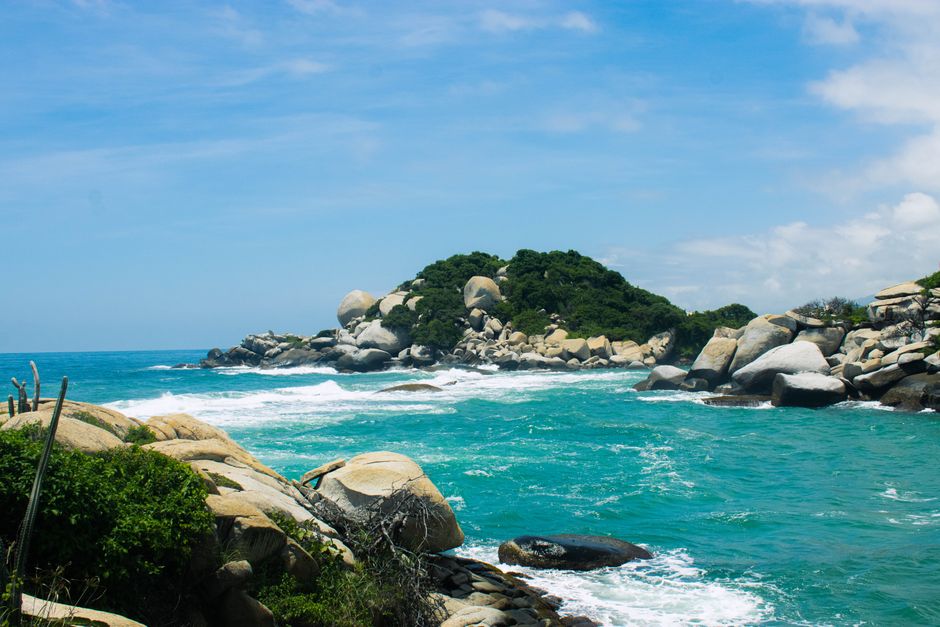
Tayrona National Natural Park protects a stretch of Colombia’s Caribbean coast where the foothills of the Sierra Nevada de Santa Marta meet the sea in a string of bays, coves and palm-fringed beaches scattered with giant granite boulders. Behind the beaches, trails climb through the best-preserved tropical dry forest in Colombia, with cloud forest on the higher hills, and the waters hold coral reefs with 53 species of coral and about 180 species of fish, according to Parques Nacionales Naturales de Colombia, the national parks service. The park covers 19,309.4 hectares (about 47,700 acres) of land and sea, and it is part of the Línea Negra, the ancestral territory of the Kogui, Wiwa, Arhuaco and Kankuamo peoples, with 54 sacred sites inside its boundaries. It is one of the most visited parks in the country, with 818,003 visitors in 2025, and it closes completely three times a year so that nature, and the Indigenous communities’ ceremonies, can take their course.
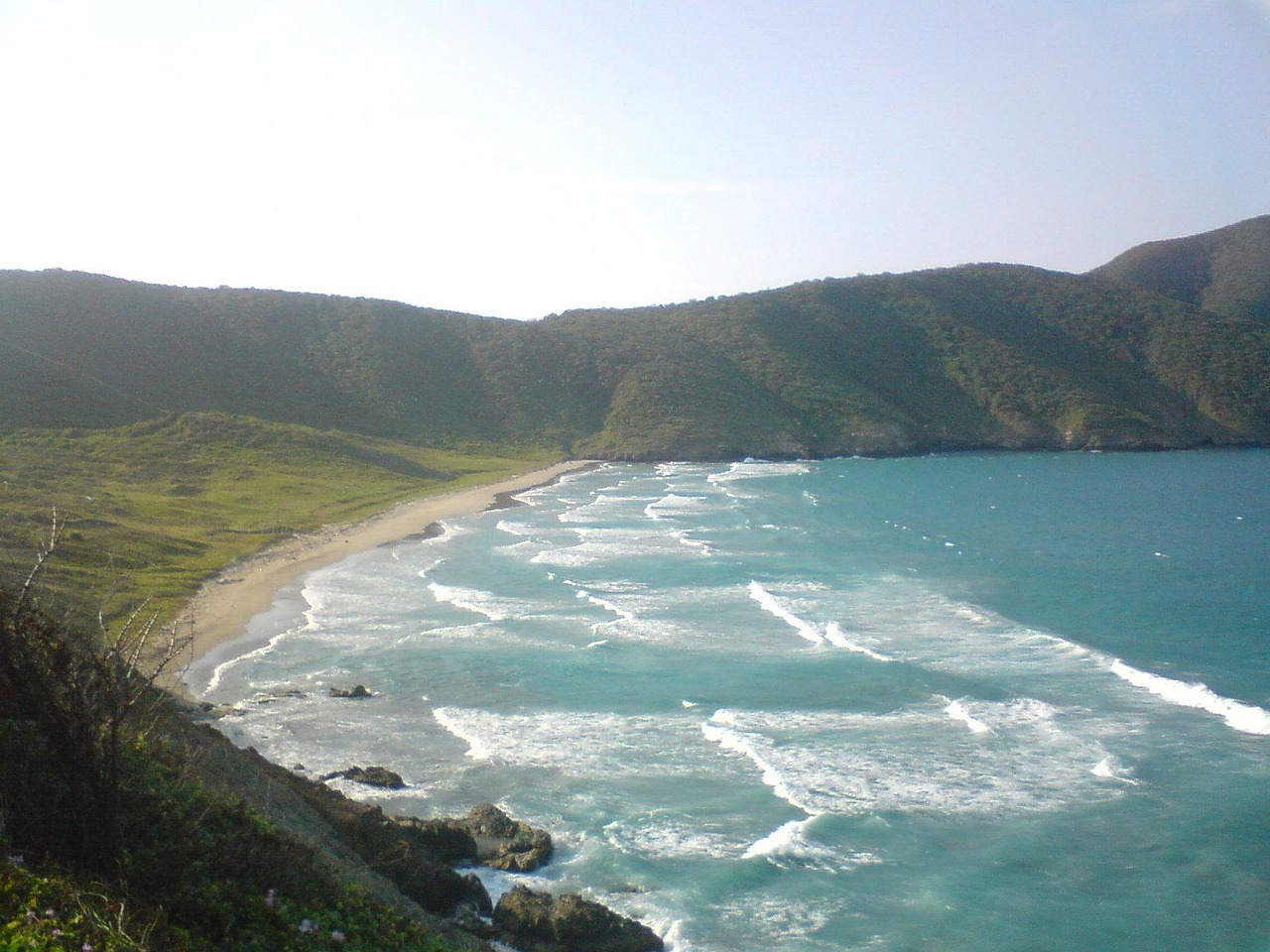
Right now in Tayrona National Natural Park (Tayrona)
- Wed23–28°C74–82°F1 mm rain
- Thu23–28°C73–82°F17 mm rain
- Fri23–27°C73–81°F7 mm rain
- Mon 12 Oct Columbus Day (Día de la Raza)
Top tours in Tayrona National Natural Park
See all tours for Tayrona National Natural Park →
From local operators, with prices and reviews; you check availability and book on Viator, our partner. We may earn a commission at no extra cost to you. How we earn money
Tayrona at a glance
- Best months: December to April, the dry season, for drier trails and calmer weather, though Christmas, January and Holy Week are crowded; the park is closed for about two weeks in February, June and between October and November.
- Time needed: one long day for Arrecifes and Cabo San Juan del Guía from El Zaino; two days, sleeping in the park, to enjoy the beaches at their quietest.
- Getting there: the main entrance, El Zaino, is 32 km (20 miles) from Santa Marta on the Troncal del Caribe, according to the national parks service.
- Fee (2026): COP 81,000 (about US$25) in low season and COP 96,500 (about US$29) in high season for non-resident foreigners, plus mandatory accident insurance.
- Before you go: entry rules, the Check-Mig form and money are in our Colombia travel guide.
Fees, hours, insurance and closures (as of October 2026)
The national parks service publishes these entrance fees for Tayrona. Tickets are sold daily at the park’s ticket offices; unlike other national parks, Tayrona has no advance reservation or prior quota check, and availability depends on the tickets sold each day, according to the parks service.
| Visitor | Low season | High season | Bahía Concha sector (all year) |
|---|---|---|---|
| Non-resident foreigners | COP 81,000 (about US$25) | COP 96,500 (about US$29) | COP 43,500 (about US$13) |
| Colombians, foreign residents and Andean Community nationals, over 25 | COP 36,500 (about US$11) | COP 43,000 (about US$13) | COP 26,000 (about US$8) |
| Colombians, foreign residents and Andean Community nationals, 5 to 25 | COP 27,500 (about US$8) | COP 30,500 (about US$9) | COP 15,000 (about US$5) |
High season is December 1 to January 31, June 1 to July 31, Holy Week (Palm Sunday to Easter Sunday), long weekends with a Monday holiday, and the school recess week before the October 12 holiday, according to the parks service. All other dates are low season.
Mandatory accident insurance
Every visitor must buy an accident insurance policy with visitor assistance (required by Resolution 273 of 2024) from one of the insurers approved by the parks service, such as Zurich Colombia Seguros or Allianz Seguros. It is sold at the entrances, and if you arrive by sea you must buy the insurance and pay the entrance fee before your visit. Guiding, transport, lodging, food and day packages are not included in the entrance fee and are paid separately to approved operators.
Opening hours by entrance
| Entrance | High season: entry (last exit) | Low season: entry (last exit) |
|---|---|---|
| El Zaino | 7 a.m.–3 p.m. (6 p.m.) | 8 a.m.–5 p.m. (5 p.m.) |
| Calabazo | 6 a.m.–1 p.m. (5 p.m.) | 6 a.m.–1 p.m. (5 p.m.) |
| Palangana (Neguanje) | 7 a.m.–2 p.m. (5 p.m.) | 8 a.m.–3 p.m. (5 p.m.) |
| Bahía Concha | 7 a.m.–2 p.m. (6 p.m.) | 7 a.m.–3 p.m. (5 p.m.) |
In July 2026, the parks service announced visitor service from Monday to Sunday, 8 a.m. to 4 p.m., with last entry at 2 p.m.; hours can change by season and sector, so arrive early and confirm at the entrance or by emailing the park (tayrona@parquesnacionales.gov.co).
Closures: “Respira Tayrona”
The park closes completely three times a year, for about 15 days each, under the “Respira Tayrona” (Tayrona Breathes) strategy agreed with the Indigenous peoples of the Sierra Nevada, according to the parks service. During the closures, Indigenous communities hold spiritual ceremonies, and rangers carry out restoration, monitoring and safety work. In 2026 the closures were:
- February 1–15, 2026 (“Kugkui Shikasa”), reopening February 16.
- June 1–15, 2026, reopening June 16.
- A third closure between October and November 2026, whose dates had not been announced when we checked; in 2025 it ran from October 19 to November 2.
The park can also close at short notice for safety reasons. It was closed from February 17 to March 5, 2026, after blockades and threats at its entrances, and reopened with a permanent police post inside the park. After the June 2026 closure, the Calabazo and Zaino–Cañaveral land entrances were temporarily restricted because of problems on the coast road, and all sectors had reopened by July 3, 2026, according to the parks service.
Top things to see in Tayrona
Most visitors enter at El Zaino, take a shuttle to Cañaveral, and walk the coastal trail west through forest and along the beaches. The national parks service describes the Cañaveral–Arrecifes trail, “La Ruta del Conocimiento”, and the Arrecifes–Cabo San Juan del Guía trail as the main walking routes.
Arrecifes
About an hour’s walk from Cañaveral, Arrecifes is a long, wild beach framed by huge boulders. Its strong currents and waves make it dangerous for swimming; stay out of the water where red flags are flying.
La Piscina and Cabo San Juan del Guía
Beyond Arrecifes, a natural “pool” (La Piscina) sheltered by a reef offers calmer swimming and snorkeling. At the end of the trail, about two hours from Cañaveral, Cabo San Juan del Guía is Tayrona’s postcard view: twin crescent bays separated by a rocky point topped by a thatched hut where visitors can sleep in hammocks. The national parks service notes that the main beach here allows swimming and snorkeling.
Pueblito (Chairama)
A steep trail climbs from Cabo San Juan to the archaeological site of Pueblito, with stone terraces, paths and stairways built by the Tayrona people. It is a sacred site; access may be restricted at times, so ask at the entrance.
The western bays: Neguanje, Playa Cristal and Gayraca
From the Palangana entrance, a road leads to Neguanje, where boats cross to Playa Cristal and Playa del Muerto, with clear water and coral close to shore; Gayraca is also reached from here. These beaches are day visits only. Bahía Concha, the closest bay to Santa Marta, has a broad beach, a restaurant and snorkeling, according to the parks service.
Wildlife and the reef
The forest is home to howler monkeys, agoutis, iguanas and many bird species. Underwater, coral formations cover about 9 km² (3.5 sq miles), including the threatened elkhorn coral, according to the parks service. Diving and snorkeling are offered at the Granate marine sector, Bahía Concha, Gayraca and Neguanje.
Other things to do in and around Tayrona
- Hiking: the coastal trails from Cañaveral to Cabo San Juan, and the climb to Pueblito. See our hiking guide.
- Snorkeling and diving: La Piscina, Playa Cristal, Granate and Bahía Concha. See our snorkeling guide.
- Boat trips: boats from Taganga and Santa Marta to Cabo San Juan, Playa Cristal and other bays. See our boat trips guide.
- Birdwatching: early mornings in the dry forest.
- Beaches: see our beaches guide.
Getting there
From Santa Marta
The main entrance, El Zaino, is 32 km (20 miles) from Santa Marta along the Troncal del Caribe toward Riohacha, according to the parks service; local buses from the market area take about an hour, and taxis and tours are faster. From El Zaino, a shuttle runs to Cañaveral, where the trails begin. Calabazo, at km 20 of the same road, is the start of a trail through the hills to Cabo San Juan; Palangana, at km 5 before the toll booth, gives access to Neguanje, Gayraca and Playa Cristal; and Bahía Concha is reached through the city’s northern neighborhoods, with a 20-minute walk to the beach. See our Santa Marta travel guide.
By sea
Boats from Taganga, Santa Marta’s Rodadero and other approved departure points serve Granate, Bahía Concha, Neguanje, Cinto and Cabo San Juan del Guía, according to the parks service. Buy the insurance and pay the entrance fee before boarding. The sea can be rough, especially from December to April: in August 2026 a boat carrying tourists capsized near Cabo San Juan del Guía, and one person died. The parks service stresses wearing a life jacket at all times and choosing boats that respect their authorized capacity.
From Cartagena or Palomino
Cartagena is about five to six hours away by road, so it is better to stay in Santa Marta or near the park. Palomino, about an hour east of the El Zaino entrance, is another base. See our Cartagena travel guide.
The 2026 security situation on the coast road
In September 2026, Santa Marta was under heightened security measures after an operation against armed groups, with disruption to transport on the Troncal del Caribe (Route 90), which connects the city with Tayrona, Palomino and Riohacha, according to the UK government. On September 25, 2026, the national parks service said Tayrona remained open and operating normally, with contingency plans in place, while field work in the neighboring Sierra Nevada de Santa Marta park had been suspended. Check the parks service’s announcements and ask your hotel or operator about the road before setting out.
Around Tayrona
- Santa Marta and Taganga: the colonial port city and the diving village to the west.
- Minca: coffee farms, waterfalls and birdwatching in the foothills.
- The Lost City: the four- to six-day trek to the Tayrona city of Teyuna in the Sierra Nevada.
- Palomino: a laid-back beach town east of the park, with river tubing.
Nearby destinations
- Santa Marta24 km
- Cartagena194 km
When to go and how long to stay
Tayrona is hot all year, about 27–33 °C (81–91 °F) by day. The dry season, from about December to April, is the most popular time, with sunny days but strong winds and rougher seas; May to November is more humid, and the heaviest rains fall from September to November, when trails turn muddy and streams rise. The parks service says the Respira Tayrona closures are timed using weather modeling from IDEAM, the indigenous ecological calendar and low-visitor periods. Avoid the closure weeks and the crowded high-season dates if you can.
| Period | What it’s like | Notes |
|---|---|---|
| December–January | Dry, sunny, windy; high season | Busiest; arrive at opening time |
| February | Dry; closed February 1–15 in 2026 | Low season after the closure |
| March–May | Dry to April, then more humid; Holy Week is high season | Good balance of weather and crowds |
| June–July | Showers, hot; high season (school vacations); closed June 1–15 in 2026 | Busy in July |
| August–November | Wettest from September; third closure between October and November | Quietest, greenest |
One day in Tayrona
Arrive at El Zaino at opening time, take the shuttle to Cañaveral, walk to Arrecifes, La Piscina and Cabo San Juan del Guía, swim where it is allowed, and walk back in time for the last exit. Alternatively, take a boat from Taganga to Cabo San Juan and walk out.
Two days in Tayrona
Sleep at Arrecifes or Cabo San Juan in a tent, hammock or cabin, climb to Pueblito in the cool of the morning, and leave via Calabazo, or spend a second day at Playa Cristal from the Palangana entrance.
Where to stay in and near Tayrona
- Inside the park: the authorized eco-lodges (ecohabs) at Cañaveral, and campsites, hammocks and cabins at Arrecifes and Cabo San Juan del Guía, run by authorized operators. Book ahead, especially in high season.
- Near the entrances: eco-lodges, glamping and cabins along the Troncal del Caribe, close to El Zaino and Calabazo.
- Santa Marta, Taganga and Palomino: the widest choice of hotels for day trips.
Hotel bills include Colombia’s 19% value-added tax, but foreign tourists are generally exempt from it on rooms when they show their entry record; ask your hotel. Prices rise in high season.
Food and supplies in the park
Restaurants run by authorized operators at Cañaveral, Arrecifes, La Piscina and Cabo San Juan del Guía serve fried fish, rice, patacones and simple set meals, and stalls along the trail sell fruit, juices and freshly baked bread rolls. Prices are higher than in Santa Marta because everything arrives by mule or boat. You can bring your own food and water, but remember the ban on single-use plastics: pack snacks and sandwiches in reusable containers and carry a refillable bottle. Take all your rubbish out with you.
Costs of a visit to Tayrona
These estimates are a planning guide as of October 2026, at about COP 3,273 to US$1; the entrance fees are official:
| Item | Typical price |
|---|---|
| Entrance fee, non-resident foreigner | COP 81,000 low season / COP 96,500 high season (US$25–29) |
| Mandatory accident insurance | a small daily premium from approved insurers (check at the entrance) |
| Bus from Santa Marta to El Zaino | about COP 10,000–15,000 (US$3–5) |
| Shuttle from El Zaino to Cañaveral | a few thousand pesos |
| Hammock at Cabo San Juan del Guía | about COP 60,000–100,000 (US$18–31) |
| Tent at a campsite | about COP 60,000–120,000 (US$18–37) |
| Eco-lodge cabin at Cañaveral | about COP 1,000,000+ (US$305+) for two |
| Fish lunch inside the park | about COP 40,000–70,000 (US$12–21) |
| Boat from Taganga to Cabo San Juan | about COP 70,000–120,000 (US$21–37) each way |
Only the entrance fees come from the national parks service; the rest are our estimates, not official statistics. Bring enough cash, as there are no ATMs inside the park.
Practical tips for Tayrona
- What’s not allowed: pets, speakers, single-use plastics (bags, foam, bottles, cups, cutlery, straws), drones without a permit, bottles of liquor and drugs, according to the parks service. Bags may be checked at the entrance.
- Swimming: swim only in authorized areas; beaches with red flags are closed for safety, and Arrecifes has strong currents.
- Respect the sacred sites: the park is the ancestral territory of four Indigenous peoples; respect Indigenous families and stay on marked trails.
- Wildlife: don’t feed animals or take plants, shells or sand.
- Bring cash: there are no ATMs in the park; restaurants and campsites inside are more expensive than in town.
- Health: drink plenty of water, use biodegradable sunscreen and repellent, and ask a travel clinic about yellow fever vaccination for the Sierra Nevada region. In an accident, go to the insurers’ assistance points for first aid. Emergencies: 123.
- Horses and mules: the parks service has tightened animal-welfare rules for the mules that carry luggage and visitors on the trails.
What to pack for Tayrona
Pack light: a backpack rather than a suitcase, sturdy walking sandals or trail shoes, swimwear, a quick-dry towel, a hat, biodegradable sunscreen and insect repellent, plenty of water, snacks without single-use plastic, a headlamp for overnight stays, a dry bag for boats, cash, your passport and your insurance receipt. Light, long sleeves help against mosquitoes in the evening.
Tayrona travel FAQ
How much is the entrance fee to Tayrona?
For non-resident foreign visitors, COP 81,000 (about US$25) in low season and COP 96,500 (about US$29) in high season, or COP 43,500 (about US$13) for the Bahía Concha sector, according to the national parks service. Accident insurance is extra and mandatory.
When is Tayrona closed in 2026?
From February 1 to 15 and from June 1 to 15, 2026, and for a third period between October and November whose dates are announced shortly before. In 2025 the last closure ran from October 19 to November 2.
Do I need to book Tayrona tickets in advance?
No. Tayrona has no advance reservation system; tickets are sold daily at the entrances, subject to the daily visitor capacity. Arrive early in high season.
Is insurance mandatory in Tayrona?
Yes. Every visitor must buy accident insurance with visitor assistance from an insurer approved by the national parks service.
How do I get from Santa Marta to Tayrona?
By bus, taxi or tour to the El Zaino entrance, 32 km (20 miles) east on the Troncal del Caribe, or by boat from Taganga or Santa Marta to the beaches.
Can you swim in Tayrona?
Yes, but only in authorized areas such as La Piscina, Cabo San Juan del Guía and Playa Cristal. Arrecifes and other beaches with red flags are too dangerous.
Can I stay overnight in Tayrona?
Yes, in the eco-lodges at Cañaveral, or in tents, hammocks and cabins at Arrecifes and Cabo San Juan del Guía. Book ahead in high season.
Is Tayrona open in October 2026?
On September 25, 2026, the national parks service said the park was open and operating normally despite the security situation in Santa Marta. A third yearly closure falls between October and November, so check the parks service’s announcements.
What should I bring to Tayrona?
Cash, your passport, water in a reusable bottle, swimwear, sun protection, insect repellent, sturdy footwear and reusable containers for food, as single-use plastics are not allowed.
How much does a day in Tayrona cost?
Besides transport, budget for the entrance fee of COP 81,000–96,500 (US$25–29), the insurance, and meals of about COP 40,000–70,000 (US$12–21) each inside the park, by our estimates.
Plan your trip
Partner links: TravelerCenter may earn a commission if you book, at no extra cost to you.
🇪🇸 Useful Spanish phrases for Tayrona National Natural Park
All 38 Spanish phrases: restaurant, hotel, emergencies, romance (printable) →
Sources · last reviewed 4 October 2026
Researched and last reviewed on 4 October 2026. The park’s size, ecosystems, corals, fish, sacred sites, entrances and distances, fees, high-season dates, ticket sales without reservations, mandatory insurance and approved insurers, hours, rules, trails, diving areas, the three Respira Tayrona closures and their 2025 and 2026 dates, the 2026 security closure and reopenings, the August 2026 boat accident and the park’s status on September 25, 2026: Parques Nacionales Naturales de Colombia; the security situation on the Troncal del Caribe: the UK government. Walking times, beach descriptions, Pueblito access, lodging options, the weather figures, bus times and the hotel tax exemption come from secondary sources or general knowledge and are flagged for checking. The food, neighborhood, getting-around, month-by-month and cost sections draw on secondary sources, general knowledge and our own estimates, except where an official source is named, and are flagged for checking. Prices and rules change, so check before you go. For entry rules and money, see our Colombia travel guide.
Data: Weather: MET Norway (CC BY 4.0) · Sea temperature: NOAA CoastWatch · Rates: ECB · Holidays: Nager.Date · Costs: World Bank ICP and price levels · Wikidata (CC0)