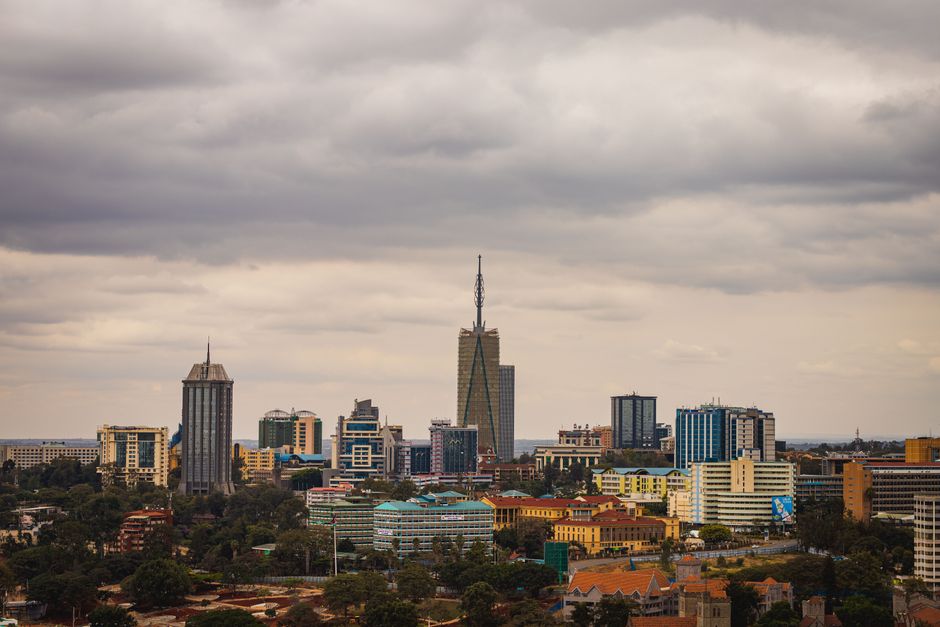
Nairobi, Kenya’s capital and East Africa’s biggest air hub, is where most safaris begin, but it deserves more than a night between flights. It is the only capital city in the world with a national park on its doorstep: lions, rhinos, giraffes and buffalo graze on open plains just south of the city, with skyscrapers on the horizon. The city also has the elephant orphanage where baby elephants are raised for release into the wild, a giraffe sanctuary where you can meet endangered Rothschild’s giraffes eye to eye, the farmhouse of Out of Africa author Karen Blixen in leafy Karen, and the National Museum’s galleries on early humans and Kenyan cultures. Nairobi sits at about 1,700 m (5,600 ft) above sea level, which keeps the climate pleasantly mild all year, with warm days, cool evenings and few mosquitoes compared with the coast. The modern city, founded in 1899 as a railway depot, is a lively mix of glass towers, markets, art galleries, coffee shops and nyama choma grills, with fast-growing neighborhoods such as Westlands and Kilimani. Plan for traffic, take the usual city precautions, and leave time for the Madaraka Express train to the coast or a light aircraft flight to the Maasai Mara.
Right now in Nairobi
- Wed 15–25°C 60–77°F 11 mm Heavy showers
- Thu 16–24°C 61–76°F 4 mm Partly cloudy
- Fri 16–22°C 61–71°F 24 mm Rain
- Sat 10 Oct Mazingira Day
Weather: MET Norway (CC BY 4.0) · Holidays: Nager.Date
Top tours in Nairobi
See all tours for Nairobi →
From local operators, with prices and reviews; you check availability and book on Viator, our partner. We may earn a commission at no extra cost to you. How we earn money
Nairobi at a glance
- Best for: Nairobi National Park, the elephant orphanage, giraffes, museums, food and the start of a safari.
- How long: 1–2 full days, or a morning before an afternoon flight to the parks.
- Best time: June to October and January to February are driest; it’s mild all year.
- Getting there: Jomo Kenyatta International Airport (NBO), or the Madaraka Express train from Mombasa.
- Getting around: ride-hailing apps and taxis; there is no metro, and traffic is heavy at rush hour.
- Good to know: book the elephant orphanage in advance, carry cards and M-Pesa for park fees, and don’t walk around after dark.
- Before you go: the eTA, money and general safety are in our Kenya travel guide.
Nairobi’s areas and where to stay
Nairobi spreads across ridges and valleys. The Central Business District (CBD) is compact, with government buildings, the Kenyatta International Convention Centre (KICC) and markets. Most visitors stay in the greener suburbs to the west and north, or in Karen near the national park and wildlife centers.
Westlands
North of the center, Westlands is Nairobi’s busiest hotel, office and nightlife district, with shopping malls, international restaurants, rooftop bars and the Sarit and Westgate centers. It’s convenient for business travelers and short stays.
Kilimani, Kileleshwa and Lavington
These leafy residential areas west of the center have boutique hotels, serviced apartments, cafés and the Yaya and Junction malls. They’re quieter than Westlands but still central.
Karen and Langata
In the southwest, along the edge of Nairobi National Park, Karen and Langata are green, spacious suburbs with garden cottages, guest houses and boutique lodges. They are close to the elephant orphanage, the Giraffe Centre, the Karen Blixen Museum and Wilson Airport, which makes them ideal for the night before or after a safari.
Upper Hill and the airport
Upper Hill, near the center, has business hotels; several hotels near Jomo Kenyatta International Airport and inside Nairobi National Park’s boundaries suit overnight stopovers.
Where to stay in Nairobi
- Westlands: for nightlife, restaurants and business.
- Kilimani and Lavington: for quieter boutique stays.
- Karen and Langata: for safari travelers and wildlife centers.
- Near the airport: for early flights and short connections.
Top things to see in Nairobi
Nairobi National Park
Kenya’s first national park, gazetted in 1946, covers 117 km² (45 square miles) of open grassland, acacia bush and riverine forest, only about 10 km (6 miles) from the city center along Lang’ata Road, according to Kenya Wildlife Service (KWS). It has lions, leopards, cheetahs, buffalo, giraffes, zebras, hippos, many antelope and more than 400 bird species, and its rhino sanctuary is one of the best places in Kenya to see black rhinos; only elephants are missing from the Big Five. Under KWS’s 2025 conservation fees, non-resident adults pay US$80 and children US$40 a day; a Nairobi package that also covers the Animal Orphanage and the Nairobi Safari Walk costs US$105. Gates open from 6 a.m. to 6 p.m., and fees are paid online through KWSPay on Kenya’s eCitizen platform. Go early in the morning with a guide and vehicle for the best sightings; most tours last 3–4 hours. The Ivory Burning Site Monument, where Kenya burned stockpiled ivory, is inside the main gate.
The elephant orphanage
The Sheldrick Wildlife Trust, inside the national park, rescues orphaned elephants and rhinos and raises them for release in Tsavo. During the one-hour public visit, usually in the late morning, keepers bring the young elephants for their milk feed and mud bath while explaining each orphan’s story. Visits must be booked in advance through the trust, and the entry fee goes to the orphans’ care. You can also foster an elephant.
The Giraffe Centre
At the Giraffe Centre in Langata, run by the African Fund for Endangered Wildlife, you can feed endangered Rothschild’s giraffes from a raised platform and learn about the breeding program. A nature trail runs through the sanctuary next door.
Karen Blixen Museum
The colonial farmhouse at the foot of the Ngong Hills, where the Danish writer Karen Blixen lived from 1917 to 1931 and set Out of Africa, is now a museum run by the National Museums of Kenya, with period furniture and gardens.
Nairobi National Museum
The Nairobi National Museum on Museum Hill has galleries on Kenya’s history, cultures, art and wildlife, and fossils of early humans from the Rift Valley and Lake Turkana. The Snake Park next door is fun for children.
Animal Orphanage and Safari Walk
At the park’s main gate, the Nairobi Animal Orphanage cares for injured and orphaned animals, and the Nairobi Safari Walk is a raised boardwalk past enclosures of Kenyan wildlife. Each costs US$25 for non-resident adults, or US$40 together, under KWS’s 2025 fees.
Other things to do in Nairobi
Markets and crafts
Weekly Maasai Markets move between malls and car parks, selling beadwork, kikoi cloth, soapstone, baskets and wood carvings; bargain politely. Kazuri Beads in Karen, a women’s workshop making ceramic beads, welcomes visitors.
Art and culture
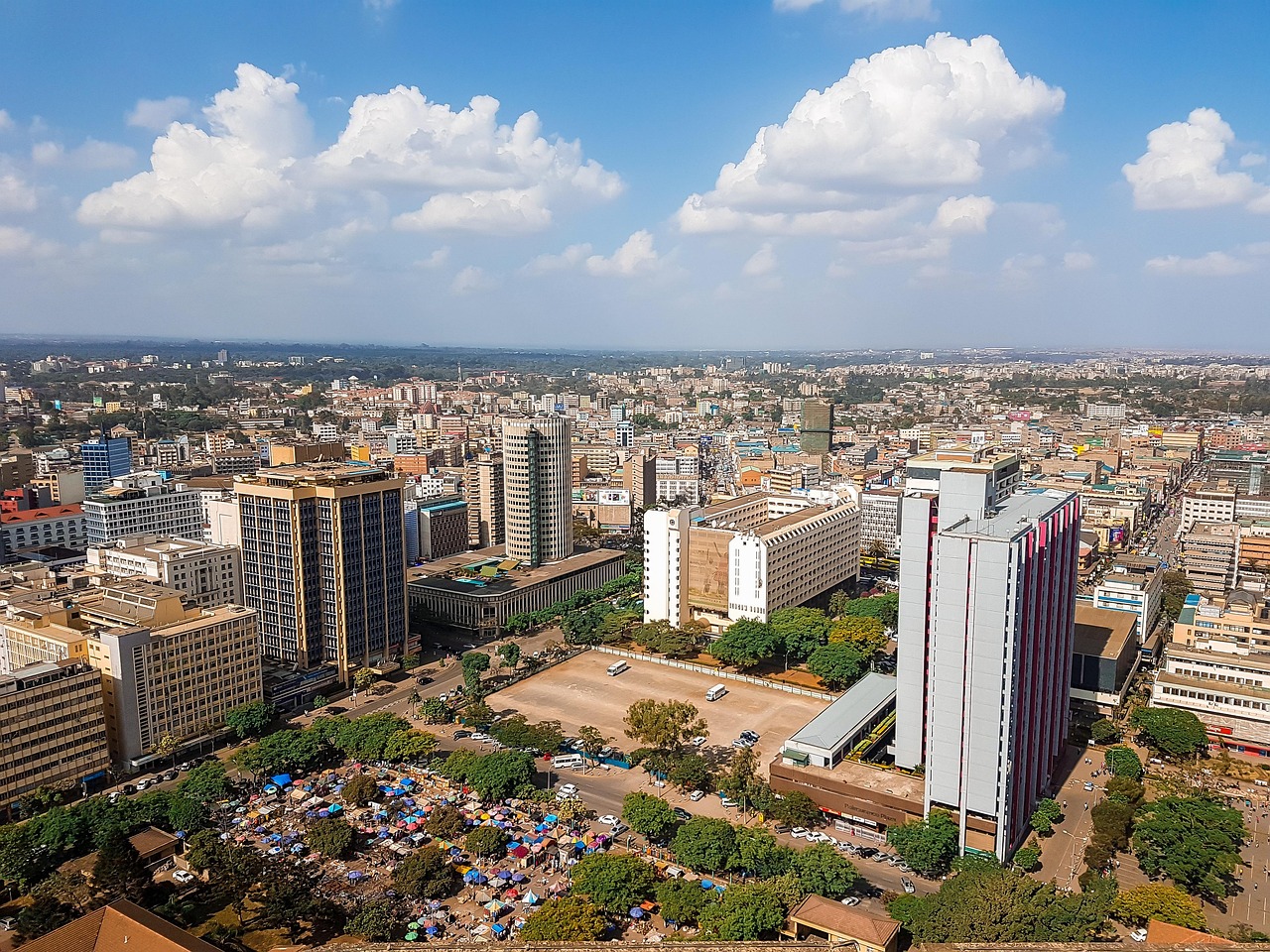
Nairobi has a lively contemporary art scene: visit the Nairobi Gallery near the city center, and look for exhibitions, live music and theater at cultural centers around the city. Downtown, the KICC viewing deck gives a panorama of the city, when open to visitors. See our city sightseeing guide.
Food and drink
Nairobi eats well. Try nyama choma (roast goat or beef) with kachumbari salad and ugali, Swahili dishes such as pilau and biryani, chapati, samosas and mandazi, and the Indian food that is part of Kenya’s history. Famous restaurants serve grilled game-style meats on skewers, and there are good Ethiopian, Italian and Asian restaurants. Kenyan coffee and tea are world-class; visit a coffee house in Westlands or a farm tour in the Kiambu hills. Local beers include Tusker, and craft breweries are growing.
Hiking and the Ngong Hills
On a clear day, the Ngong Hills southwest of Karen offer a ridge walk with views over the Rift Valley; go with a guide or a group. See our hiking guide.
Day trips from Nairobi
- Lake Naivasha and Hell’s Gate: about 2 hours northwest; boat trips among hippos and cycling past zebras and giraffes in Hell’s Gate National Park (US$50 for non-resident adults, KWS). See our cycling guide.
- Mount Longonot: a steep volcano hike above the Rift Valley floor, also US$50 with KWS.
- Lake Nakuru National Park: about 3 hours; rhinos, Rothschild’s giraffes and, at times, flamingos (US$90, KWS).
- Suswa leisure train: on Fridays to Sundays, the Madaraka Express runs from Nairobi Terminus to Maai Mahiu and Suswa in the Rift Valley, according to Kenya Railways.
- Amboseli: about 4–5 hours by road; better as an overnight trip. See our Amboseli National Park guide.
- Maasai Mara: about 45–60 minutes by light aircraft from Wilson Airport, or 5–6 hours by road. See our Maasai Mara guide.
Nearby destinations
- Amboseli National Park159 km
- Maasai Mara National Reserve188 km
- Kilimanjaro National Park207 km
- Arusha232 km
- Ngorongoro Conservation Area262 km
- Tsavo East National Park273 km
- Serengeti National Park276 km
Getting there and getting around
By air
Jomo Kenyatta International Airport (NBO), about 15 km (9 miles) southeast of the city center, is the hub of Kenya Airways, with direct flights from Europe, the Middle East, Asia and across Africa; many travelers also connect via Dubai or Doha. Use Mombasa Road or the toll Nairobi Expressway into the city; the journey takes 30 minutes to well over an hour depending on traffic. Allow plenty of time for departures, as there are vehicle security checks outside the airport. Safari and coastal flights use Wilson Airport, near Langata, as well as JKIA.
By train
The Madaraka Express (standard gauge railway) leaves from Nairobi Terminus at Syokimau, near JKIA, for Mombasa. According to Kenya Railways, trains leave both cities at 8 a.m. (the Inter-County train, stopping at seven stations, arriving at 2 p.m.), 3 p.m. (an express with a stop at Voi) and 10 p.m. (a night train). One-way fares from Nairobi to Mombasa are KES 1,500 in economy, KES 4,500 in first class and KES 12,000 in premium class. Book on the official site, metickets.krc.co.ke, or by M-Pesa; bring your passport, and arrive early for security checks. A link train connects Nairobi Central station with Nairobi Terminus before each departure.
By road
Long-distance buses run to Mombasa, Arusha (Tanzania), Kampala (Uganda) and other towns, but the train and flights are safer and more comfortable for most visitors.
Getting around
There is no metro. Ride-hailing apps such as Uber and Bolt are widely used and are the easiest way to get around; agree prices in advance with ordinary taxis. Matatus (minibuses) are cheap and colorful but crowded and fast. Traffic jams are severe at rush hour, so allow extra time, especially to the airport.
When to go and how long to stay
Thanks to its altitude, Nairobi has a mild climate all year, with daytime highs of about 21–26 °C (70–79 °F) and cool nights around 10–14 °C (50–57 °F). The long rains fall from about March to May and the short rains in November and early December; July and August are the coolest, often cloudy months. The table uses Kenya Meteorological Department (KMD) climate averages for Nairobi, as published by the World Meteorological Organization (WMO): average daily highs and lows, total rainfall and days with at least 1 mm of rain.
| Month | Average high / low | Rain (days with 1 mm or more) | What to expect |
|---|---|---|---|
| January | 24 °C (76 °F) / 12 °C (53 °F) | 64 mm (2.5 in), 4 days | Warm, sunny and dry; good for safaris |
| February | 26 °C (78 °F) / 12 °C (53 °F) | 56 mm (2.2 in), 5 days | Warmest and driest; excellent |
| March | 26 °C (78 °F) / 13 °C (56 °F) | 93 mm (3.7 in), 9 days | Warm; long rains may start late in the month |
| April | 24 °C (75 °F) / 14 °C (57 °F) | 219 mm (8.6 in), 16 days | Wettest month; heavy afternoon storms |
| May | 23 °C (73 °F) / 13 °C (56 °F) | 177 mm (7.0 in), 13 days | Rainy, cooler and green |
| June | 22 °C (71 °F) / 11 °C (52 °F) | 35 mm (1.4 in), 5 days | Dry and mild; safari season begins |
| July | 21 °C (69 °F) / 10 °C (50 °F) | 18 mm (0.7 in), 3 days | Coolest month; gray mornings, chilly nights |
| August | 21 °C (71 °F) / 10 °C (50 °F) | 24 mm (0.9 in), 4 days | Cool and dry; busy with migration safaris |
| September | 24 °C (75 °F) / 10 °C (51 °F) | 28 mm (1.1 in), 4 days | Dry, sunny and warming |
| October | 25 °C (76 °F) / 12 °C (54 °F) | 55 mm (2.2 in), 7 days | Pleasant; short rains may begin |
| November | 23 °C (74 °F) / 13 °C (56 °F) | 154 mm (6.1 in), 15 days | Short rains; afternoon showers |
| December | 23 °C (74 °F) / 13 °C (55 °F) | 101 mm (4.0 in), 8 days | Showers easing; festive season |
One or two days in Nairobi
With one day, start with an early drive in Nairobi National Park, visit the elephant orphanage at its late-morning feeding, then the Giraffe Centre and the Karen Blixen Museum in the afternoon, ending with dinner in Karen or Westlands. With a second day, see the National Museum, a Maasai Market or Kazuri Beads, the Nairobi Gallery, and a coffee or food tour.
What a trip to Nairobi costs
Prices are approximate, for October 2026, converted at about KES 129.8 to the US dollar (Central Bank of Kenya). Park fees are KWS’s non-resident rates.
| Item | Typical cost |
|---|---|
| Nairobi National Park, non-resident adult | US$80 (about KES 10,380) |
| Nairobi package (park, orphanage, safari walk) | US$105 (about KES 13,630) |
| Madaraka Express to Mombasa, economy / first class | KES 1,500 / 4,500 (about US$12 / 35) |
| Ride-hailing from JKIA to Westlands | KES 2,000–3,500 (about US$15–27) |
| Local lunch (nyama choma, ugali, soda) | KES 500–1,200 (about US$3.9–9.2) |
| Mid-range restaurant dinner | KES 2,000–4,500 (about US$15–35) |
| Mid-range hotel double, per night | about US$90–180 |
Practical tips for Nairobi
- Book ahead: the elephant orphanage and popular safari departures fill up; reserve early.
- Pay online: KWS park fees are paid through KWSPay on Kenya’s eCitizen platform, by card or mobile money; don’t count on paying cash at the gate.
- Use apps for rides: ride-hailing is safer and easier than hailing taxis on the street.
- Allow time for traffic: leave at least three hours before an international flight.
- Carry ID: carry a copy of your passport, and keep the original within reach; police may ask for it.
- No plastic bags: plastic carrier bags are banned in Kenya, and duty-free bags are collected on arrival.
Safety
Nairobi is a big city with a reputation for street crime, and most problems can be avoided with ordinary city precautions. Bag snatching and pickpocketing are common in crowded areas, bus and train stations and the airport; carry only what you need, keep phones out of sight on the street and in cars, and don’t wear expensive jewelry. Don’t walk around after dark, even short distances; use a ride-hailing app or a hotel taxi, and keep car doors locked and windows up in traffic. Be wary of people posing as police or security staff and ask for identification, and don’t accept drinks from strangers. Demonstrations happen in Nairobi from time to time and cause traffic disruption, so follow local news and keep away from crowds. Buy safaris only from established operators, never from street touts. Malaria is rare in central Nairobi, but you’ll need protection elsewhere in Kenya. Smoking in public places is illegal outside designated areas. Photographing official buildings, embassies and airports is illegal. In an emergency, call 999 or 112.
What to pack for Nairobi
Layers for warm days and cool evenings, a light jacket or fleece (especially from June to August), a rain jacket for the rainy seasons, comfortable walking shoes, smart-casual clothes for restaurants, sunscreen and sunglasses (the sun is strong at altitude), a crossbody bag that closes securely, and a power adapter: Kenya uses 240 V with three-pin type G sockets. See our travel adapters and rain jackets guides.
Nairobi travel FAQ
How much does Nairobi National Park cost?
US$80 for non-resident adults and US$40 for children, per day, under KWS’s 2025 fees; a package with the Animal Orphanage and the Nairobi Safari Walk costs US$105.
Can you see lions in Nairobi National Park?
Yes. The park has several lion prides, along with rhinos, buffalo, giraffes and leopards; elephants are the only member of the Big Five that it lacks.
Do I need to book the elephant orphanage?
Yes. Visits to the Sheldrick Wildlife Trust nursery are booked in advance through the trust and last about an hour.
How do I get from JKIA to the city?
By ride-hailing app, hotel transfer or taxi, via Mombasa Road or the Nairobi Expressway; allow 30 minutes to over an hour.
How long is the train from Nairobi to Mombasa?
About 5½–6 hours. According to Kenya Railways, trains leave at 8 a.m., 3 p.m. and 10 p.m. from both cities.
How much is the Madaraka Express?
One way from Nairobi to Mombasa: KES 1,500 in economy, KES 4,500 in first class and KES 12,000 in premium class, according to Kenya Railways.
Is Nairobi safe for tourists?
Most visits are trouble-free if you take city precautions: don’t walk after dark, use ride-hailing apps, keep valuables hidden and avoid crowds and demonstrations.
What is the best area to stay in Nairobi?
Westlands for restaurants and nightlife, Kilimani or Lavington for quieter boutique hotels, and Karen for a garden setting near the wildlife centers and Wilson Airport.
Is there malaria in Nairobi?
The risk is rare in central Nairobi, which is at high altitude, but malaria is present in most of Kenya below 2,500 m, including the game parks.
How many days should I spend in Nairobi?
One full day covers the national park, the elephant orphanage and the Giraffe Centre; two days let you add museums, markets and food.
Sources and last review
Researched and last reviewed on 5 October 2026. Nairobi National Park’s size, history, distance from the city, wildlife, gate hours and plastic rules: Kenya Wildlife Service; park, orphanage, safari walk, Hell’s Gate, Mount Longonot and Lake Nakuru fees: KWS conservation fees 2025; Madaraka Express times, link trains, stations, booking and fares: Kenya Railways; the plastic bag ban and duty-free bags: Kenya’s National Environment Management Authority; airport transfers, demonstrations, crime precautions, ID, smoking, photography and emergency numbers: the UK government’s factual entry and safety pages, used for practical facts only; malaria: the US CDC; climate averages: the Kenya Meteorological Department via the World Meteorological Organization; the exchange rate: the Central Bank of Kenya. The elephant orphanage, Giraffe Centre, Karen Blixen Museum and National Museum details, neighborhood descriptions, journey times and typical prices are general references or estimates, flagged for checking. Prices and rules change, so check locally before you go. For the eTA, money and general safety, see our Kenya travel guide.
Plan your trip
Partner links: TravelerCenter may earn a commission if you book, at no extra cost to you.
🇹🇿 Useful Swahili phrases for Nairobi
All 38 Swahili phrases: restaurant, hotel, emergencies, romance (printable) →