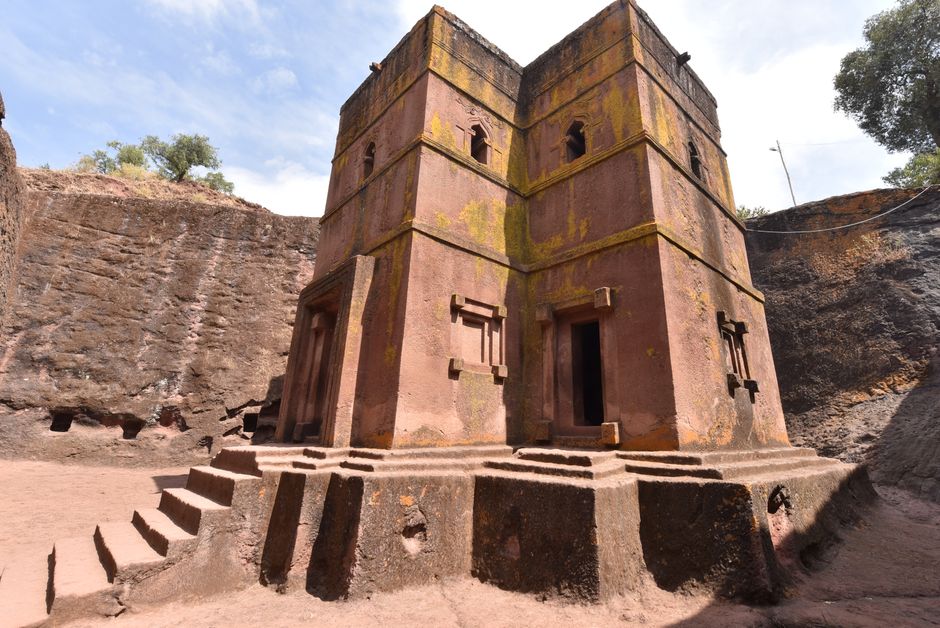
Ethiopia, in the Horn of Africa, is unlike anywhere else on the continent. It has its own ancient script, its own branch of Christianity, its own calendar, which runs about seven to eight years behind the rest of the world, and even its own way of telling the time. It’s the birthplace of coffee, the home of “Lucy”, one of the most famous early human fossils, and a land of mountains, with much of the country on a high plateau that keeps the climate surprisingly mild. Travelers come for the historic route of the north: the rock-hewn churches of Lalibela, the castles of Gondar, the island monasteries of Lake Tana and the obelisks of Aksum, all UNESCO World Heritage Sites, along with the dramatic peaks and gelada monkeys of the Simien Mountains. The south offers the lakes of the Great Rift Valley, the Bale Mountains with the rare Ethiopian wolf, and the walled Muslim city of Harar. Most journeys start in Addis Ababa, Africa’s diplomatic capital and the hub of Ethiopian Airlines, whose domestic network makes it easy to fly between sites. Plan ahead for the online e-visa, the altitude, the festivals that shape the calendar, and road and regional conditions, which you should check before you travel.

Right now in Ethiopia
- Wed 10–23°C 50–74°F Mostly clear
- Thu 10–23°C 50–74°F Clear
- Fri 12–23°C 53–73°F Clear
Weather: MET Norway (CC BY 4.0)
Multi-day tours of Ethiopia
Multi-day tours from local operators. You check dates and book on Viator, our partner; we may earn a commission at no extra cost to you. How we earn money
Ethiopia at a glance
Ethiopia covers about 1.1 million km² (426,000 square miles), nearly twice the size of Texas, and is landlocked, bordered by Eritrea, Djibouti, Somalia, Kenya, South Sudan and Sudan. The Ethiopian Highlands, cut in two by the Great Rift Valley, cover much of the country, with peaks above 4,000 m (13,100 ft) in the Simien and Bale mountains; the Afar lowlands in the northeast include the Danakil Depression, one of the hottest places on Earth. With more than 120 million people, Ethiopia is Africa’s second most populous country. Addis Ababa, at about 2,350 m (7,700 ft), is the capital and the seat of the African Union.
Amharic, written in the Ge’ez script, is the main working language of the federal government, alongside Afaan Oromo, Tigrinya, Somali and Afar, and more than 80 languages are spoken in all. English is widely used in tourism, hotels and higher education. Most Ethiopians are Orthodox Christian or Muslim. Ethiopia is on East Africa Time (UTC+3) all year. Electricity is 220 V, and most sockets take two-pin European plugs (types C and F), with some British-style sockets in hotels.
A short history
Ethiopia’s history is one of the longest of any nation. The fossil of Lucy (Dinkinesh), found in the Afar region in 1974, is more than three million years old. From about the first century AD, the kingdom of Aksum traded across the Red Sea and adopted Christianity in the fourth century, leaving behind giant carved stone stelae. In the 12th and 13th centuries, the Zagwe kings carved the churches of Lalibela out of solid rock, and in the 17th century the emperors built the castles of Gondar. Ethiopia’s 1896 victory at Adwa is celebrated every March 2. The country is a founding member of the United Nations and hosts the headquarters of the African Union in Addis Ababa.
The Ethiopian calendar and clock
Ethiopia uses its own calendar, which has 12 months of 30 days and a 13th month, Pagume, of five or six days. It runs about seven to eight years behind the Gregorian calendar: the Ethiopian New Year, Enkutatash, falls on September 11 (September 12 in the year before a Gregorian leap year), and on September 11, 2026, Ethiopia entered the year 2019. Official documents, bus tickets and some prices use Ethiopian dates. Ethiopians also count the hours differently: the Ethiopian clock starts the day at dawn rather than midnight, so 7 a.m. in international time is “1 o’clock” in Ethiopian time, and noon is “6 o’clock”. Hotels and airlines use international time, but if someone gives you a time, ask whether it’s “Ethiopian time” or “international time”.
Ethiopia’s regions for travelers
- Addis Ababa and around: the capital, Entoto, Debre Libanos and the crater lakes of Bishoftu.
- The historic north: Bahir Dar and Lake Tana, the Blue Nile Falls, Gondar, the Simien Mountains, Lalibela, Aksum and the rock churches of Tigray.
- The east: Harar and Dire Dawa, and the Afar lowlands with the Danakil Depression.
- The south: the Rift Valley lakes, the Bale Mountains, Arba Minch, Konso and the Omo Valley.
- The southwest: the coffee forests around Jimma and Kaffa, the cradle of coffee.
Where to go: churches, castles, mountains and lakes
The classic first trip is the historic route by air, combining Addis Ababa with Bahir Dar, Gondar, the Simien Mountains and Lalibela over 8–10 days, when conditions allow. Others head south to the Rift Valley and Bale, or east to Harar. See our guide to the capital:
- Addis Ababa: the National Museum and Lucy, Holy Trinity Cathedral, Unity Park, Entoto, Merkato and the coffee culture.
Lalibela
Lalibela, in the northern highlands, is Ethiopia’s most extraordinary sight: eleven medieval churches carved downward into the volcanic rock, linked by trenches, tunnels and passages, and still used for worship by priests and pilgrims. The cross-shaped Bete Giyorgis (St. George’s) is the most famous. Lalibela is especially memorable during Genna (Ethiopian Christmas, January 7), when pilgrims gather in white robes. Foreign visitors buy a multi-day ticket covering the churches.
Gondar, Lake Tana and the Simien Mountains
Gondar, the royal capital of the 17th and 18th centuries, has a walled compound of castles, the Fasilides’ Bath and the painted church of Debre Berhan Selassie, whose ceiling is covered with angels’ faces. Bahir Dar, on Lake Tana, the source of the Blue Nile, is the base for boat trips to island monasteries with colorful murals and for the Blue Nile Falls. North of Gondar, the Simien Mountains National Park has jagged escarpments, deep valleys and peaks including Ras Dashen, Ethiopia’s highest at about 4,550 m (14,930 ft), with herds of gelada monkeys, the endemic walia ibex and the Ethiopian wolf.
Aksum and Harar
Aksum, in the far north, preserves the giant stelae and tombs of the Aksumite kingdom and the church of St. Mary of Zion, said in Ethiopian tradition to hold the Ark of the Covenant. In the east, Harar, a walled Muslim city with dozens of mosques and shrines, narrow alleys and colorful houses, is a UNESCO World Heritage Site, famous for the evening ritual of feeding wild hyenas just outside the walls.
The Rift Valley, Bale and the south
South of Addis Ababa, the Great Rift Valley holds a chain of lakes, including Ziway, Langano, Abijatta-Shalla and Hawassa, with birdlife and lakeside resorts. The Bale Mountains National Park, a UNESCO site, protects the Sanetti Plateau, Africa’s largest area of high-altitude afro-alpine land and the best place to see the endangered Ethiopian wolf, and the Harenna forest. Farther south, Arba Minch sits between two lakes beside Nechisar National Park, the terraced landscapes of Konso are a UNESCO site, and the Omo Valley is home to many different communities with their own cultures and markets.
Ethiopia’s wildlife
Ethiopia’s isolated highlands have produced many species found nowhere else. The gelada, a grass-eating primate with a bright red chest patch, lives in large herds on the northern escarpments; the Ethiopian wolf, the world’s rarest canid, hunts rodents on the Bale and Simien plateaus; and the walia ibex clings to the Simien cliffs. Birders come for more than 800 species, including many endemics such as the thick-billed raven and the blue-winged goose.
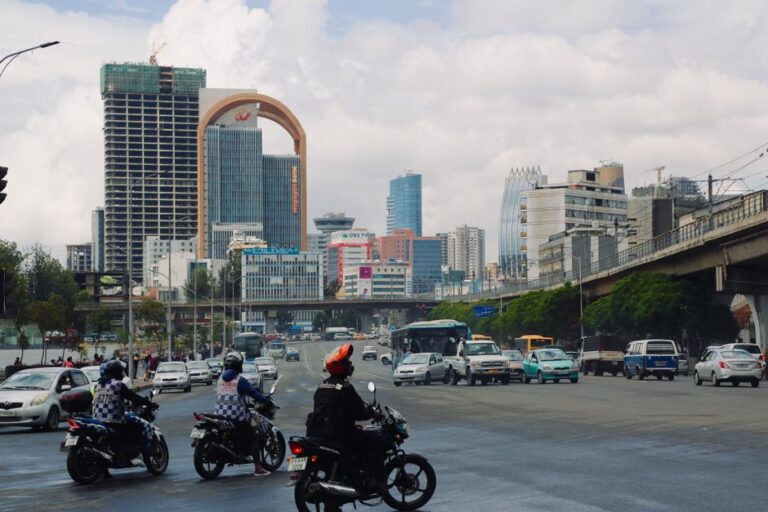
Addis Ababa Travel Guide
Plan a trip to Addis Ababa: Ethiopian Airlines' free 8–24-hour stopover and transit visa help, the e-visa, Lucy at the National Museum, Holy Trinity…
Best time to visit Ethiopia
The best time for most of Ethiopia is the dry season from about October to March, after the long rains, when the highlands are green at first and then golden, skies are clear and the big festivals of Meskel, Genna and Timkat take place. The main rainy season, kiremt, runs from about June to September, with heavy daily rain in the highlands, especially in July and August, though it’s a good time to see the Blue Nile Falls at full flow. Shorter rains, belg, can fall from about February to May. Thanks to the altitude, the highlands are mild all year, with warm days and cool to cold nights, while the lowlands of the Afar, the Rift Valley floor and the Omo Valley are hot. The table shows rounded average daily highs and lows in January and July and yearly rainfall for six stations of the Ethiopian Meteorological Institute (EMI), from 1981–2010 averages published by the World Meteorological Organization (WMO).
| Region (EMI station) | January high / low | July high / low | Rain a year |
|---|---|---|---|
| The capital (Addis Ababa) | 24 °C (75 °F) / 8 °C (46 °F) | 21 °C (70 °F) / 10 °C (50 °F) | about 1,160 mm (46 in) |
| Lake Tana (Bahir Dar) | 29 °C (84 °F) / 8 °C (46 °F) | 26 °C (79 °F) / 13 °C (55 °F) | about 1,420 mm (56 in) |
| Northern highlands (Lalibela) | 25 °C (77 °F) / 11 °C (52 °F) | 20 °C (68 °F) / 13 °C (55 °F) | about 890 mm (35 in) |
| The far north (Mekele) | 25 °C (77 °F) / 10 °C (50 °F) | 25 °C (77 °F) / 14 °C (57 °F) | about 600 mm (23 in) |
| The east and Harar (Dire Dawa) | 26 °C (79 °F) / 13 °C (55 °F) | 27 °C (81 °F) / 16 °C (61 °F) | about 790 mm (31 in) |
| Coffee country (Jimma) | 27 °C (81 °F) / 12 °C (54 °F) | 24 °C (75 °F) / 13 °C (55 °F) | about 1,770 mm (70 in) |
Ethiopia month by month
| Month | Weather | Highlights | Crowds and prices |
|---|---|---|---|
| January | Dry, sunny days, cold nights | Genna (Christmas, January 7) in Lalibela; Timkat (Epiphany, January 19) | Peak season; book festival hotels months ahead |
| February | Dry and warm | Trekking in the Simiens and Bale | Busy |
| March | Warm; occasional showers | Adwa Victory Day (March 2) | Moderate |
| April | Short rains in places | Fasika (Ethiopian Easter) after a long fast | Moderate |
| May | Warm; showers | Quieter travel; good birding in the south | Quieter |
| June | Long rains begin | Green highlands | Low season |
| July | Wettest months in the highlands | Blue Nile Falls at full flow | Low season |
| August | Very wet in the highlands | Ashenda festival in parts of the north | Low season |
| September | Rains ending; wildflowers | Enkutatash (New Year, September 11) and Meskel (September 27) | Rising |
| October | Dry, green and clear | Excellent trekking; Irreecha thanksgiving festival | Busy |
| November | Dry and sunny | Historic route at its best | Busy |
| December | Dry; cold nights | Lead-up to Genna | Very busy late in the month |
Festivals and public holidays
Ethiopia’s e-visa portal notes that its festivals are great and colorful events, mostly religious, often lasting several days, and lists Meskel, Christmas (Genna), Timkat, Kiddus Yohannes (New Year) and Easter (Fasika) among the main Christian holidays, plus Irreecha and Ashenda. Timkat, celebrating the baptism of Christ, is the most spectacular: priests carry replicas of the Ark of the Covenant (tabots) in processions to water, and crowds are blessed and sprayed with water, notably at Fasilides’ Bath in Gondar. At Meskel, huge bonfires are lit in Addis Ababa’s Meskel Square. Other public holidays include Adwa Victory Day (March 2), Labour Day (May 1), Patriots’ Day (May 5), Eid al-Fitr, Eid al-Adha and the Prophet’s Birthday. Religious holiday dates follow the Ethiopian and lunar calendars, so check them each year.
How long to stay: sample itineraries
- Stopover (1–2 days): Addis Ababa’s museums, Entoto and a coffee ceremony on a long connection with Ethiopian Airlines.
- 5 days: Addis Ababa (2 nights) and Lalibela (2 nights) by air, when access allows.
- 8–10 days: the historic route by air: Addis Ababa, Bahir Dar and Lake Tana, Gondar, the Simien Mountains and Lalibela.
- 10–14 days in the south: the Rift Valley lakes, the Bale Mountains, Arba Minch and Konso, or the Omo Valley.
- East: fly to Dire Dawa for two or three nights in Harar.
Entry, money and costs
The e-visa (last reviewed October 2026)
Most visitors need a visa, and the easiest option is the e-visa from Ethiopia’s Immigration and Citizenship Service, available only on the official portal, evisa.gov.et. The portal says citizens of all countries are eligible for a tourist visa if they meet the requirements: a recent passport-size photo and a passport valid for at least six months from the date of entry. A single-entry tourist e-visa costs US$62 for 30 days (about ETB 9,980) or US$152 for 90 days. Processing normally takes three days, so apply at least three days before arrival, but not more than three months ahead, as the portal says e-visas won’t be issued if the gap between application and arrival exceeds three months. The visa’s validity starts from the arrival date stated in your application, not the date of issue. Extensions can be requested before the visa expires; the portal lists extension fees of US$102 for 30 days and US$302 for 90 days, and overstaying brings fines and legal penalties.
The portal warns that fraudulent websites copy the look of the official e-visa site, and that applications or payments made through them aren’t accepted, so check the address carefully. It also says Ethiopia has launched a visa-on-arrival service for tourists from a list of countries shown on the portal, and that citizens of Kenya and Djibouti with a valid passport can enter without a visa.
Ethiopian Airlines, the Addis Ababa hub and transit
Addis Ababa’s Bole International Airport (ADD) is the hub of Ethiopian Airlines, Africa’s largest airline group, with connections across Africa and to Europe, Asia, the Middle East and the Americas, which is why many travelers to Africa pass through it. If you stay in the international transit area, no visa is needed, however long your layover, according to the airline. On qualifying connections of 8 to 24 hours, with both flights on Ethiopian on a single ticket, the airline’s Addis Ababa stopover program provides a free hotel stay, usually one night with meals and airport transfers, with the voucher issued at your origin station; the airline says these passengers are generally assisted with a transit visa as part of the package. Travelers leaving the airport outside the program need an e-visa or a visa on arrival, depending on nationality. Ethiopian Airlines also notes that a broader “stopover tourism” policy approved by Ethiopia’s Council of Ministers in April 2026, allowing Ethiopian Airlines passengers to leave the airport visa-free for 24 hours up to seven days, was still awaiting parliamentary ratification in August 2026, so check the current rules before you rely on it. The in-terminal Skylight Hotel has 97 rooms for short layovers.
Health requirements
According to the US CDC, Ethiopia requires a yellow fever vaccination certificate from travelers aged nine months and over arriving from a country with yellow fever risk, including after an airport transit of more than 12 hours there, and the CDC recommends the vaccine for most travelers to Ethiopia, except those visiting only the Afar or Somali regions. Ethiopian Airlines lists Ethiopia among destinations whose passengers must complete an online health declaration form from the Ethiopian Public Health Institute before departure, so check whether it applies to your trip.
Money and cards
The currency is the Ethiopian birr (ETB). On October 5, 2026, the National Bank of Ethiopia’s indicative mid rate was about ETB 160.9 to the US dollar. Ethiopia moved to a market-based exchange rate in 2024, so check the day’s rate before you change money. ATMs are found in Addis Ababa and larger towns, and many accept foreign Visa and Mastercard cards, but they can run out of cash; elsewhere, Ethiopia is largely a cash economy. International hotels, Ethiopian Airlines and some tour operators accept cards, and many hotels quote foreign visitors in US dollars. Change money only at banks or licensed bureaus, keep your receipts, and carry small birr notes for tips, church donations and taxis. Tipping is customary for guides, drivers, scouts and hotel staff.
What a trip costs
Prices are approximate, for October 2026, converted at about ETB 160.9 to the US dollar.
| Item | Typical cost |
|---|---|
| Tourist e-visa, 30 days | US$62 (about ETB 9,980) |
| Macchiato or traditional coffee | ETB 50–120 (about US$0.30–0.75) |
| Injera with wat at a local restaurant | ETB 300–700 (about US$1.90–4.40) |
| Mid-range restaurant dinner in Addis Ababa | ETB 1,500–4,000 (about US$9–25) |
| Ride-hailing trip across Addis Ababa | ETB 300–800 (about US$1.90–5) |
| Domestic flight on the historic route, one way | about US$100–250, often less with an international Ethiopian Airlines ticket |
| Licensed local guide, per day | about US$25–60 |
| Mid-range hotel double in Addis Ababa, per night | about US$70–160 |
| Mid-range hotel or lodge on the historic route, per night | about US$50–150 |
Many sites, such as the Lalibela churches, Gondar’s castles and the national parks, charge foreign visitors entry fees in US dollars or birr, and the Simien and Bale parks require a scout and guide for trekking. A comfortable mid-range tour of the historic route with flights, guides and hotels typically costs US$150–300 per person per day.
Getting there and getting around
By air
Nearly all visitors arrive at Bole International Airport, on the southeastern edge of Addis Ababa. Ethiopian Airlines flies nonstop from many cities in Europe, Asia, the Middle East and North America, and to dozens of African destinations, including Nairobi, Kigali, Entebbe, Lilongwe, Maputo, Dar es Salaam, Johannesburg and Cairo; other airlines connect via Dubai, Doha and Istanbul. Ethiopian’s domestic network links Addis Ababa with Bahir Dar, Gondar, Lalibela, Aksum, Mekele, Dire Dawa, Arba Minch, Jinka and other towns, and the airline offers discounted domestic fares to eligible passengers who arrive on an international Ethiopian Airlines ticket; bring proof of your international ticket when you buy and check in.
By road and rail
Ethiopia drives on the right. Main highways are mostly paved, but distances are long and mountain roads slow, with livestock, pedestrians and heavy trucks; most visitors travel with a driver from a licensed tour operator. Long-distance buses link the main towns, usually leaving at dawn. An electrified railway runs from Addis Ababa to Dire Dawa and Djibouti. Some road routes, especially in parts of the north, have been closed or restricted to visitors at times, so many travelers fly between the historic sites.
Culture, food and everyday etiquette
Food and drink
Ethiopian food is eaten with the right hand from a shared platter of injera, a large, spongy, slightly sour flatbread made from teff, a tiny native grain. On top come wat (stews), from spicy chicken doro wat, flavored with the red spice blend berbere, to lentils and chickpea shiro; tibs (sautéed meat) and kitfo (minced beef, often served raw) are favorites. Many Orthodox Christians fast on Wednesdays and Fridays and during Lent, avoiding animal products, so beyaynetu, a colorful vegan platter, is available almost everywhere, a treat for vegetarians. Ethiopia is the birthplace of coffee, and the coffee ceremony (buna), with beans roasted, ground and brewed in front of you, served in three rounds with incense and popcorn, is a sign of hospitality. Try tej (honey wine), local beers and fresh fruit juices layered in a glass.
Where to stay
Addis Ababa has international hotels, boutique guesthouses and budget lodgings. On the historic route, towns such as Bahir Dar, Gondar and Lalibela have mid-range hotels and eco-lodges, while the Simien and Bale mountains have a few lodges and campsites. Book well ahead for Timkat, Genna and Meskel, when prices rise.
Etiquette
- Greetings: “Selam” means hello and “ameseginalehu” thank you; handshakes are often accompanied by a shoulder bump between men.
- Eating: eat with your right hand; being fed a mouthful (gursha) by your host is a sign of friendship.
- Churches and mosques: remove your shoes, dress modestly, and women should cover their hair in Orthodox churches; some monasteries don’t admit women.
- Photos: ask before photographing people, priests or ceremonies; some churches charge a camera fee, and in the Omo Valley people often expect payment for photos.
- Time: confirm whether appointments are in Ethiopian or international time.
Safety, health and connectivity
Most visits to Addis Ababa and Ethiopia’s main tourist sites are rewarding and trouble-free, especially with a licensed operator. The main things to plan for are altitude, health, roads and regional conditions.
- Altitude: Addis Ababa lies at about 2,350 m (7,700 ft), Lalibela at about 2,500 m (8,200 ft), and treks in the Simien and Bale mountains go above 4,000 m (13,100 ft). Take it easy for the first day or two, drink plenty of water and go easy on alcohol; on high treks, ascend gradually and descend if symptoms of altitude sickness worsen.
- Malaria: the US CDC says malaria occurs in all areas below 2,500 m (8,200 ft) and recommends antimalarial medicine for those areas, including Addis Ababa; the risk is highest in the lowlands, the Rift Valley and the west.
- Yellow fever: the CDC recommends the vaccine for most travelers, and a certificate is required if you arrive from a risk country.
- Water and food: drink bottled or filtered water, and take care with raw meat dishes such as kitfo. The CDC also warns of schistosomiasis in freshwater lakes and rivers.
- Roads: road accidents are a leading risk; avoid driving at night, and travel with experienced drivers.
- Regional conditions: some regions, including parts of the north where Lalibela, Gondar, the Simien Mountains and Aksum are located, have been closed to visitors or reachable only by air at times in recent years, and some border areas are off the tourist routes. Remote areas such as the Danakil Depression are visited only with specialist operators. Check the current status of roads, flights and sites with Ethiopian Airlines and licensed tour operators before you travel.
- City precautions: in Addis Ababa, watch for pickpockets in crowded areas such as Merkato and around Meskel Square, use ride-hailing apps or hotel taxis at night, and be wary of friendly strangers offering tours or “coffee ceremonies” that end with a large bill.
Connectivity: buy a prepaid SIM from Ethio Telecom or Safaricom Ethiopia with your passport; mobile data works in cities and towns, but coverage is patchy in the mountains, and access can be restricted in some regions at times. Wi-Fi is available in most hotels.
Things to do: history, trekking, festivals and coffee
- Historic sites: the Lalibela churches, Gondar’s castles, Aksum’s stelae and Harar’s old town. See our city sightseeing guide.
- Trekking: multi-day treks in the Simien and Bale mountains with scouts and mules, and day hikes around Lalibela and Entoto. See our hiking guide.
- Boat trips: Lake Tana’s island monasteries and the Rift Valley lakes. See our boat trips guide.
- Wildlife: geladas in the Simiens, Ethiopian wolves in Bale, birding in the Rift Valley.
- Festivals: Timkat, Genna, Meskel and Irreecha.
- Coffee: coffee ceremonies everywhere and farm visits in the southwest.
- Culture: markets in the Omo Valley and Konso, and the hyena feeding in Harar.
What to pack for Ethiopia
Layers for warm days and cold highland nights (a warm jacket for the Simien and Bale mountains), a rain jacket from June to September, comfortable walking shoes and hiking boots, socks for church visits (you’ll take your shoes off), modest clothes that cover shoulders and knees, a scarf for women to cover their hair in churches, a sun hat, sunglasses and high-factor sunscreen (the sun is strong at altitude), insect repellent, a headlamp, any antimalarials and medicines, hand sanitizer, a copy of your e-visa approval, clean US dollar notes, and an adapter for European two-pin sockets. See our hiking shoes, rain jackets and travel adapters guides.
Ethiopia travel FAQ
Do I need a visa for Ethiopia?
Yes, unless you’re a citizen of Kenya or Djibouti. Apply for an e-visa at evisa.gov.et; some nationalities can also get a visa on arrival.
How much is the Ethiopia e-visa?
US$62 for a single-entry 30-day tourist visa and US$152 for 90 days, according to the official portal.
How long does the Ethiopia e-visa take?
About three days; apply at least three days before arrival but no more than three months ahead.
Do I need a transit visa in Addis Ababa?
Not if you stay in the transit area. Ethiopian Airlines says passengers on its 8–24-hour stopover program are generally assisted with a transit visa; others leaving the airport need an e-visa or visa on arrival.
Does Ethiopian Airlines give a free hotel on layovers?
Yes, on qualifying connections of 8 to 24 hours with both flights on Ethiopian on one ticket; it usually covers one night, meals and transfers.
What year is it in Ethiopia?
Ethiopia entered the year 2019 on September 11, 2026, under its own calendar of 13 months, which runs about seven to eight years behind the Gregorian calendar.
How does Ethiopian time work?
The day starts at dawn, so 7 a.m. international time is 1 o’clock Ethiopian time. Always ask which system someone is using.
What is the best time to visit Ethiopia?
October to March, the dry season, which also includes Meskel, Genna and Timkat; June to September is the main rainy season in the highlands.
Is altitude a problem in Ethiopia?
Addis Ababa is at about 2,350 m and treks reach above 4,000 m, so rest on arrival, drink water, and ascend gradually in the mountains.
Is there malaria in Ethiopia?
In areas below 2,500 m, including Addis Ababa, according to the US CDC, which recommends antimalarials for those areas.
Can I visit Lalibela?
Access to parts of the north has been restricted at times, and many visitors fly. Check the current status of flights and roads with Ethiopian Airlines and a licensed operator before you book.
Should I bring cash to Ethiopia?
Yes. Ethiopia is largely a cash economy outside big hotels; bring US dollars to change at banks or licensed bureaus, and use ATMs in cities as a backup.
How many days do I need in Ethiopia?
One or two days for an Addis Ababa stopover, 8–10 days for the historic route, and two weeks to add the south or Harar.
Sources and last review
Researched and last reviewed on 5 October 2026. E-visa eligibility, requirements, fees, extension fees, processing time, the three-month limit, validity, fraudulent websites, visa on arrival, visa exemptions and festivals: Ethiopia’s official e-visa portal for the Immigration and Citizenship Service; the stopover program, transit rules, the pending stopover-tourism policy, the Skylight Hotel, the health declaration requirement and domestic fare eligibility: Ethiopian Airlines; yellow fever, malaria and schistosomiasis: the US CDC; climate averages: the Ethiopian Meteorological Institute via the World Meteorological Organization; the exchange rate: the National Bank of Ethiopia. Area and population, languages, plugs, history, the calendar and clock, UNESCO sites, Lalibela and other site descriptions, altitudes, wildlife and birds, seasons, holidays, airline routes, the railway, roads, food, etiquette, regional conditions, city precautions, mobile networks and typical prices are general references or estimates, flagged for checking. Rules and prices change, so check the official sites before you go.
Plan your trip
Partner links: TravelerCenter may earn a commission if you book, at no extra cost to you.
🇪🇹 Useful Amharic phrases for Ethiopia
All 38 Amharic phrases: restaurant, hotel, emergencies, romance (printable) →