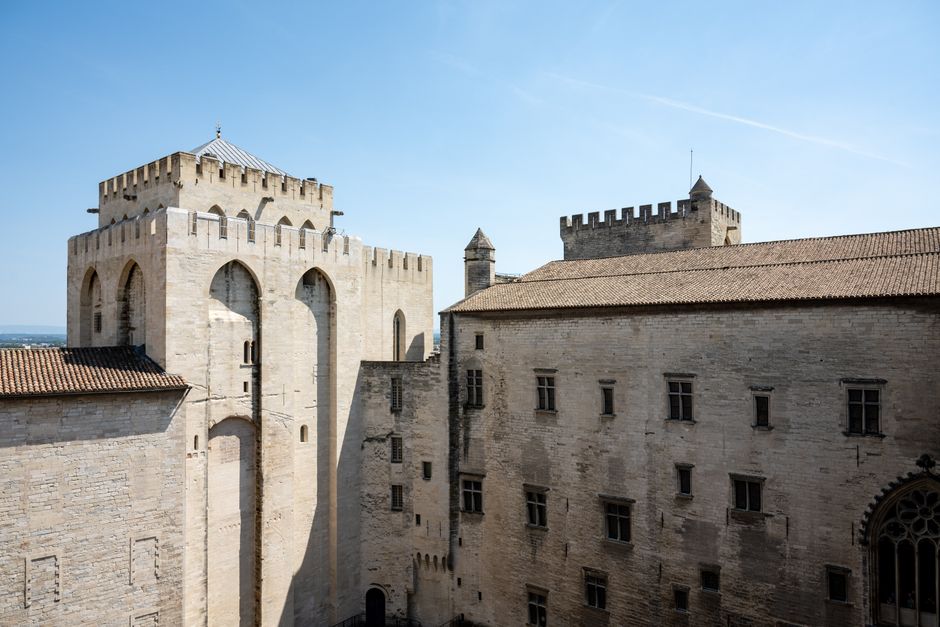
Avignon is the walled city of the popes: for most of the 14th century the papacy lived here, and left behind the vast Gothic Palais des Papes, the famous broken bridge of the children’s song and more than four kilometres of ramparts around a lively old town. It is compact, easy to reach by fast train and full of cafés on plane-shaded squares, and every July it becomes one of the world’s great theatre festivals. Avignon is also the most practical base for inland Provence without a car, with trains and buses to Arles, Nîmes, Orange and the Pont du Gard. Give the city two days, and three or four with day trips.
Right now in Avignon
- Wed 17–19°C 62–67°F 74 mm Heavy rain
- Thu 15–17°C 59–63°F 7 mm Partly cloudy
- Fri 11–16°C 52–60°F Partly cloudy
Weather: MET Norway (CC BY 4.0) · Rates: ECB
Top tours in Avignon
See all tours for Avignon →
From local operators, with prices and reviews; you check availability and book on Viator, our partner. We may earn a commission at no extra cost to you. How we earn money
Avignon at a glance
- Best for: history and architecture, the Palais des Papes and the bridge, theatre in July, food markets and day trips to Roman sites, vineyards and Luberon villages.
- How long: 2 days for the city, 3–4 with day trips to the Pont du Gard, Châteauneuf-du-Pape, Arles or the Luberon.
- Best time: May, June, September and early October; July for the Festival d’Avignon, if you book well ahead.
- Getting in: TGV trains from Paris reach Avignon TGV station in about 2 h 40–3 h; a shuttle train runs from there to Avignon Centre, by the city walls, in a few minutes.
- Getting around: the walled centre is small and best on foot; Orizo buses and a tram line serve the rest of Greater Avignon.
- Before you go: entry rules, money, trains and general safety are on our France travel guide, and the wider region is in our Provence travel guide.
Avignon’s neighbourhoods and who each one suits
Almost everything a visitor wants lies inside the ramparts, the intra-muros city, on the east bank of the Rhône. The main street, Rue de la République, runs from the station gate straight up to the Place de l’Horloge and the Palais des Papes. Across the river, Villeneuve-lès-Avignon looks back at the city from its own hill. The Palais des Papes, the episcopal ensemble, the Pont Saint-Bénézet and the ramparts together form the “Historic Centre of Avignon”, a UNESCO World Heritage Site.
Around the Palais des Papes and Place de l’Horloge
The monumental heart of Avignon: the palace square, the cathedral, the Petit Palais museum, the Rocher des Doms gardens and the café-lined Place de l’Horloge with the town hall and opera. Ideal for a short first visit.
Rue des Teinturiers and the east side
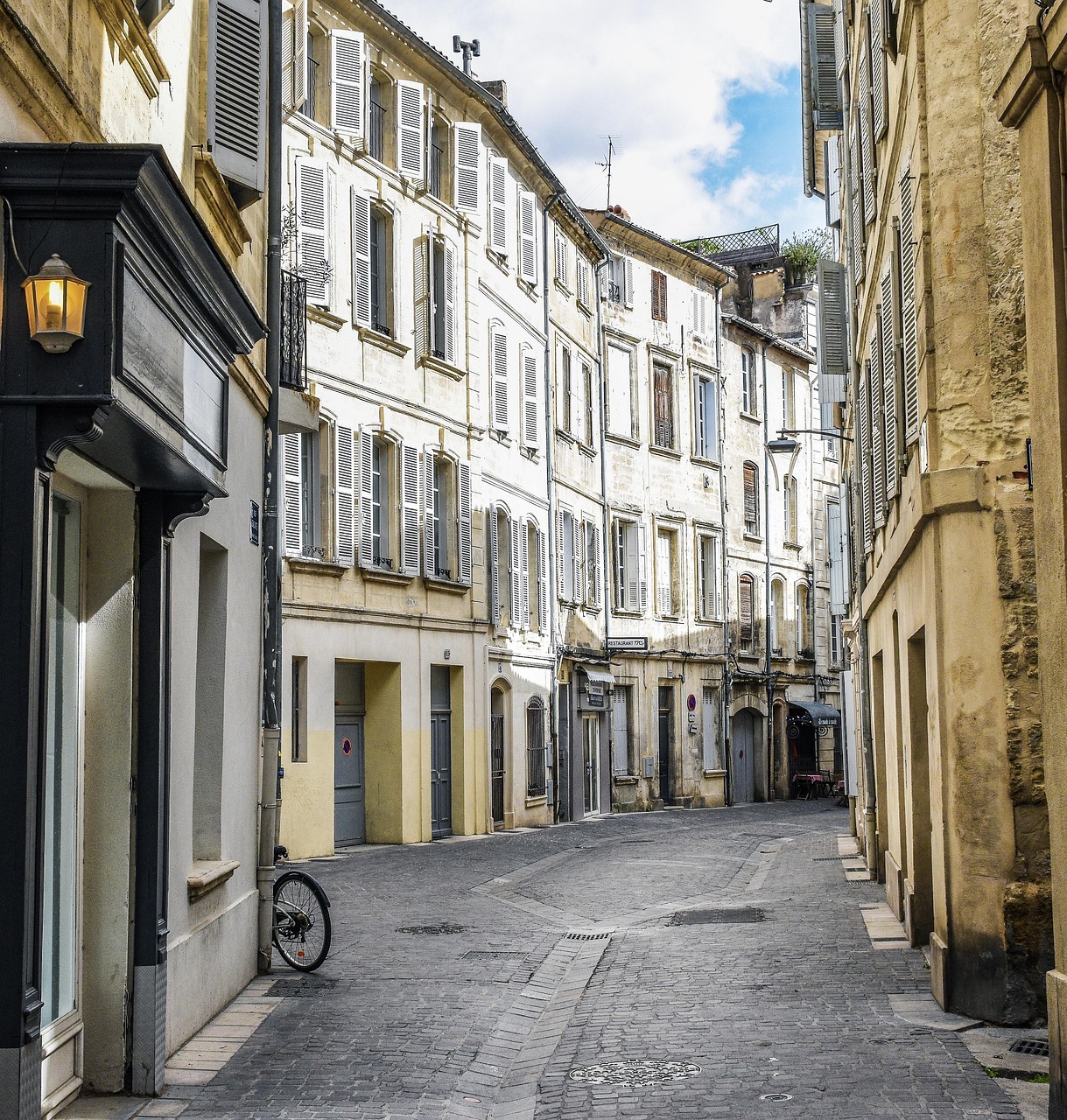
A cobbled lane along a little canal, the Sorgue, with old waterwheels, plane trees and the chapel of the Grey Penitents. With its small bars and theatres, this is the bohemian side of the old town, and one of the liveliest corners during the festival.
Les Halles and the shopping streets
Around Place Pie and the covered market, Les Halles, with its tall living plant wall, and the pedestrian streets towards Rue de la République. Good for food, shopping and a practical, central stay.
Villeneuve-lès-Avignon
A separate small town on the Gard side of the Rhône, with a hilltop fortress, a vast Carthusian monastery and gardens with the best view of the palace and bridge. Calmer than Avignon and a good July base, a short bus ride across the river.
Top things to see in Avignon
The palace and the bridge share a ticket office and a combined ticket. Prices and hours below come from the official websites, as of October 2026.
The Palais des Papes
When the popes moved from Rome to Avignon, they built the largest Gothic palace of its time in less than twenty years, from 1335 to 1352: a fortress-like Old Palace and a more decorative New Palace, with huge ceremonial halls, chapels painted by Matteo Giovannetti and the frescoed Chambre du Cerf, Clement VI’s study, covered with hunting and fishing scenes. A free HistoPad tablet shows the rooms as they looked in the 14th century. Allow two hours or more. How to visit: open every day, 9:00–19:00 from 1 March to 1 November and 10:00–17:00 from 2 November to 18 December, with last entry one hour before closing. A palace ticket costs €16, and a combined ticket with the papal gardens and the bridge €19.50; under-10s go free. Booking online is recommended in spring, summer and holidays. Read our Palais des Papes visitor guide for the route through the palace, accessibility and tips.
The Pont d’Avignon (Pont Saint-Bénézet)
Built in the 12th century to cross the Rhône, the bridge was once some 900 metres long, until floods carried most of it away; four arches and the little Saint-Nicolas chapel remain, ending in mid-river. It is the bridge of the song “Sur le pont d’Avignon”. The bridge keeps the same hours as the palace, and a bridge-only ticket costs €6 (as of October 2026); the €19.50 combined ticket is better value if you are visiting the palace too. For a free view, walk along the river path or look down from the Rocher des Doms.
The Rocher des Doms and the ramparts
Behind the palace, the Rocher des Doms is a rocky hilltop park with a pond, shady paths, a café and a free panorama over the Rhône, the bridge, Villeneuve-lès-Avignon and, on clear days, Mont Ventoux. Avignon’s 14th-century ramparts still encircle the old town for more than 4 km, with towers and gates; you can walk round the outside of them, and a short section can be walked on top from the bridge.
The Petit Palais museum
The former palace of the archbishops, at the end of the palace square, holds one of the finest collections of Italian paintings from the 13th to the 16th centuries outside Italy, including a Virgin and Child by Botticelli, plus Avignon School paintings and medieval sculpture. Entry to the permanent collections is free. As of October 2026 it opens Tuesday to Sunday, 10:00–18:00 until 31 October, with shorter weekday hours in winter; it is closed from 16 to 30 November 2026.
Collection Lambert
Avignon’s contemporary art museum fills two 18th-century mansions with works from the collection of the art dealer Yvon Lambert, from minimal and conceptual art to photography, plus changing exhibitions. As of October 2026 the Avignon tourist office lists a full price of €12, free for under-12s, and opening hours from Wednesday to Sunday (afternoons only on weekdays) outside July and August, when it opens Tuesday to Sunday. It is included in the Avignon City Pass.
Les Halles market
The covered market on Place Pie is where Avignon shops for food: cheese, olives, fruit and vegetables, fish, bread and Provençal specialities, plus counters serving coffee, oysters and lunch. It opens in the mornings from Tuesday to Sunday.
The Avignon City Pass and saving money
The official Avignon City Pass costs €24 for 24 hours or €32 for 48 hours (as of October 2026). It gives one entry to about ten museums and monuments in Avignon and Villeneuve-lès-Avignon, including the Palais des Papes, the Pont Saint-Bénézet, the Collection Lambert, the Fort Saint-André, the Abbey of Saint-André gardens and the Chartreuse, plus the official guided walks. Versions with unlimited bus and tram travel cost the same; you collect the transport ticket at a tourist office. The pass starts when you enter the first site.
For the palace and bridge alone, the €19.50 combined ticket is cheaper; add the Collection Lambert and Villeneuve-lès-Avignon and the 48-hour pass usually pays off.
The Festival d’Avignon
Every July since 1947, Avignon has hosted the Festival d’Avignon, one of the world’s biggest theatre festivals. The official festival (the “In”) stages new theatre, dance and performance in the Cour d’honneur of the Palais des Papes, in cloisters, gymnasiums and quarries around the region. Alongside it, the “Off” festival fills every hall, chapel and back room in town with well over a thousand shows, from comedy to children’s theatre, and actors hand out flyers in every street.
The 2026 edition, the 80th, ran from 4 to 25 July. As of October 2026 the official festival had not yet published its 2027 dates; the programme usually comes out in the spring, and tickets for the most popular shows sell fast. Book a room months ahead, or stay in Villeneuve-lès-Avignon or a nearby town on the railway.
Food and drink in Avignon
Avignon is a market town at heart. Look for tomatoes, melons from nearby Cavaillon, strawberries from Carpentras, olives and tapenade, goat’s cheese, and in winter black truffles. Try daube avignonnaise, a slow wine-braised stew, and papalines, chocolates filled with an oregano liqueur. Wine lists lean on the Côtes du Rhône. Place de l’Horloge is the most touristy place to eat; the streets around Les Halles, Place des Corps-Saints and Rue des Teinturiers are better for value and atmosphere. Lunch set menus are the best deal.
Other things to do in Avignon
Cross to Villeneuve-lès-Avignon
Climb to the Fort Saint-André for the classic view of the palace and the bridge, wander the terraced gardens of the Abbey of Saint-André and visit the Chartreuse, a huge Carthusian monastery with cloisters and monks’ cells that is now an arts centre. All three are in the City Pass. Bus lines cross the river, or walk over the Pont Édouard Daladier in about half an hour.
Walk or cycle the Île de la Barthelasse
Avignon’s big river island, just across the Daladier bridge, is farmland and orchards with quiet lanes and a riverside path; a free little boat (the navette fluviale) usually crosses from the foot of the ramparts in the warmer months. It is the best place in town for a walk or a bike ride with views back to the palace.
Day trips from Avignon
Avignon sits where Provence, the Gard and the Rhône valley meet, so many famous places are under an hour away. Times are approximate; check SNCF Connect for trains and the ZOU! and Lio regional bus networks for buses.
Pont du Gard
The three-tier Roman aqueduct bridge, nearly 50 m high and a UNESCO World Heritage Site, is about 30–40 minutes west by car. The site is free on foot and by bike; drivers pay €9 per vehicle for parking, and the museum costs €8 for adults (as of October 2026). In summer, swim in the Gardon river below the arches. Regional buses run from Avignon on some days; check the timetable before you go.
Châteauneuf-du-Pape
The popes’ summer castle, now a ruin on a hilltop, gave its name to one of France’s best-known red wines. The village is about 25 minutes north by car, surrounded by vineyards covered in large round stones. Many estates welcome visitors for a wine tasting; book a tour if you would rather not drive.
Orange
Fifteen minutes north by regional train, Orange has one of the best-preserved Roman theatres in the world, with its original stage wall, and a triumphal arch, both UNESCO-listed.
Arles and Nîmes
Arles, about 20 minutes south by train, has a Roman arena, Van Gogh’s sites and the Luma arts centre; Nîmes, about 30 minutes west, has a superbly preserved arena and a Roman temple, the Maison Carrée. Both make easy half-days. See our Provence guide for Arles and the Camargue.
The Luberon villages
Gordes, Roussillon, Lourmarin and the Abbaye de Sénanque are 45 minutes to an hour away by car, and L’Isle-sur-la-Sorgue holds its famous antiques market on Sundays. Without a car, a half-day or day tour from Avignon is the easiest way to see them. In late June and July the lavender is in flower.
Nearby destinations
- Aix-en-Provence69 km
- Montpellier84 km
- Marseille86 km
- Provence96 km
- Verdon Gorge124 km
- French Riviera165 km
- Saint-Tropez166 km
- Cannes183 km
Getting there and getting around
By train
Avignon has two stations. High-speed TGV and OUIGO trains from Paris Gare de Lyon (about 2 h 40–3 h), Lyon, Lille and Paris Charles de Gaulle airport stop at Avignon TGV, about 4 km south of the walls. A frequent shuttle train links Avignon TGV with Avignon Centre, just outside the main city gate, in about five minutes; regional trains also run from Avignon Centre to Arles, Marseille, Nîmes, Orange and Carpentras. Check which station is on your ticket.
By air
The nearest major airport is Marseille Provence, about an hour by car; there are also flights to Nîmes and Montpellier. Avignon’s own airport is small, with few scheduled flights. From Marseille airport, a bus runs to Vitrolles-Aéroport station for regional trains towards Avignon; see our Marseille guide for the airport.
Buses and the tram
Inside the walls you will walk everywhere. The Orizo network runs one tram line and buses across Greater Avignon, including Villeneuve-lès-Avignon and Avignon TGV station. Buy tickets in the Orizo app, from machines or from the driver, and validate every trip; check current fares on orizo.fr. The City Pass “+ transport” versions include unlimited travel.
Driving and parking
Park outside the walls and walk in. Large car parks sit just outside the ramparts, including the underground car park below the Palais des Papes by the river and free or cheap park-and-ride car parks with shuttle buses. Greater Avignon is one of the urban areas required by French law to set up a low-emission zone (ZFE); as of October 2026 we found no restriction on private cars in force, but check the Grand Avignon website before you drive, and carry a Crit’Air sticker in any case, as many French cities require one.
When to go and how long to stay
Avignon has hot, dry summers, mild autumns and cool, bright winters, and the mistral, a cold north-westerly wind, can blow hard down the Rhône valley for days, especially in winter and spring. The table uses Météo-France’s official 1991–2020 normals for Carpentras, about 25 km north-east and the reference station used in our Provence guide: average daily highs and lows, and days with at least 1 mm of rain.
| Season | Average high / low | Rainy days per month | What it’s like | Good for |
|---|---|---|---|---|
| Winter (Dec–Feb) | 11–13 °C / 1–2 °C | 5–6 | Cold nights, bright days, frequent mistral | Museums without queues, Christmas markets, truffles |
| Spring (Mar–May) | 17–25 °C / 4–11 °C | 5–7 | Fresh and green; windy days likely | Sightseeing, gardens, markets, cycling |
| Summer (Jun–Aug) | 29–32 °C / 14–17 °C | 3–5 | Hot and sunny; heatwaves can pass 35 °C | The festival, lavender trips, evening terraces |
| Autumn (Sep–Nov) | 26 °C falling to 15 °C / 13 °C falling to 5 °C | 5–7 in Sep–Oct, about 8 in November | Warm September; heavy storms possible in autumn | Grape harvest, wine tasting, walking |
Carpentras gets about 665 mm of rain a year, most of it in September to November, often in short, violent storms, and around 2,800 hours of sunshine. July is the hottest month, with an average high of about 32 °C.
How long to stay: 2-, 3- and 4-day plans
2 days: Day 1, the Palais des Papes when it opens, the Rocher des Doms and the Pont Saint-Bénézet, then Rue des Teinturiers in the evening. Day 2, Les Halles in the morning, the Petit Palais and the Collection Lambert, and sunset from Villeneuve-lès-Avignon’s Fort Saint-André.
3 days: add the Pont du Gard, with a swim in summer, or Châteauneuf-du-Pape and Orange. 4 days: add Arles or Nîmes by train, or a Luberon villages tour.
Where to stay in Avignon
- Around the Palais des Papes and Place de l’Horloge: the classic first-visit base, with the sights at your door; streets are busy in July.
- Near Les Halles and Rue des Teinturiers: local, lively and full of good restaurants.
- Near the station gate and Rue de la République: practical for trains and day trips, still inside the walls.
- Villeneuve-lès-Avignon: calm, green and good value outside July; a short bus ride away.
- Countryside mas or B&B: for a car-based stay, with a pool and quick access to the Pont du Gard and the Luberon.
Avignon charges a tourist tax (taxe de séjour) per person per night. According to the official government database of rates, as of 2026 it is €0.88 in 1-star hotels, B&Bs and hostels, €1.10 in 2-star, €1.76 in 3-star, €2.75 in 4-star and €3.63 in 5-star hotels; unclassified rentals pay 5.5% of the price per person per night, within a legal cap. These totals include the Vaucluse department’s 10% surcharge. Under-18s are exempt. Rates may change from 2027, so check your booking.
Practical tips for Avignon
- Go early: visit the palace at opening time, especially from April to October, and book tickets online.
- Watch the wind: on mistral days, the bridge and the Rocher des Doms feel cold even in sunshine; bring a layer.
- Summer heat: walk in the morning and evening, and carry water; Avignon is one of the hottest cities in France in July.
- Festival month: in July prices rise, streets fill with posters and performers, and restaurants need booking.
- Sunday and Monday: Les Halles closes on Mondays, and the Petit Palais and Collection Lambert close on Mondays too.
- Emergencies: call 112. Keep an eye on bags in busy streets and on trains.
What to pack for Avignon
Bring comfortable shoes for cobbles and the palace’s many stairs, light breathable clothes, a sun hat, sunscreen and a refillable water bottle for summer, and a windproof jacket for mistral days in any season. From November to March, pack a warm layer, as nights drop close to freezing. Add a swimsuit for the Gardon river at the Pont du Gard.
Avignon travel FAQ
How many days do you need in Avignon?
Two days covers the Palais des Papes, the bridge, the Rocher des Doms, Les Halles and the main museums. Three or four days lets you add the Pont du Gard, Châteauneuf-du-Pape, Arles, Nîmes or the Luberon villages.
How much does the Palais des Papes cost?
As of October 2026, a palace ticket costs €16, and a combined ticket with the papal gardens and the Pont d’Avignon €19.50. Children under 10 go free. The palace is open daily, 9:00–19:00 until 1 November and 10:00–17:00 from 2 November to 18 December.
Can you walk on the Pont d’Avignon?
Yes. The four surviving arches are open on the same hours as the Palais des Papes; a bridge-only ticket costs €6 as of October 2026, or it is included in the €19.50 combined ticket with the palace and gardens.
Is the Avignon City Pass worth it?
It costs €24 for 24 hours or €32 for 48 hours (as of October 2026) and covers about ten sites, including the palace, the bridge, the Collection Lambert and the monuments of Villeneuve-lès-Avignon. For the palace and bridge alone, the €19.50 combined ticket is cheaper.
When is the Avignon Festival in 2027?
The 2027 dates had not been published as of October 2026. The festival takes place every July; the 2026 edition ran from 4 to 25 July. Check festival-avignon.com in the spring and book accommodation as early as you can.
How do I get from Avignon TGV station to the city centre?
Take the shuttle train from Avignon TGV to Avignon Centre, a few minutes’ ride; Avignon Centre station is just outside the main gate of the walled city. Buses and taxis also link the two.
How long is the train from Paris to Avignon?
About 2 h 40–3 h by TGV from Paris Gare de Lyon to Avignon TGV, as of October 2026. Some direct trains also run from Paris Charles de Gaulle airport and Lille.
Is the Petit Palais museum free?
Yes, entry to the permanent collections of Italian and Provençal medieval and Renaissance art is free as of October 2026. It is closed on Mondays and from 16 to 30 November 2026.
How much is the tourist tax in Avignon?
As of 2026 it ranges from €0.88 per person per night in 1-star hotels, B&Bs and hostels to €2.75 in 4-star and €3.63 in 5-star hotels, including the department’s surcharge. Unclassified rentals pay 5.5% of the price. Under-18s pay nothing.
Do I need a car in Avignon?
Not for the city, which is small and walkable, nor for Arles, Nîmes and Orange, which are on the railway. A car helps for the Luberon villages, Châteauneuf-du-Pape and the Pont du Gard; park outside the walls.
What is the best day trip from Avignon?
The Pont du Gard, about 30–40 minutes away by car, is the classic; parking costs €9 per car as of October 2026. Châteauneuf-du-Pape for wine, Arles for Roman and Van Gogh sites, and the Luberon villages are close runners-up.
Sources and last review
Researched and last reviewed on 4 October 2026. Prices and hours come from the official websites of the Palais des Papes and the Pont Saint-Bénézet, the Avignon City Pass, the Grand Avignon tourist office (Petit Palais and Collection Lambert), the Festival d’Avignon and the Pont du Gard. Tourist-tax rates come from the French tax authority’s open data on local rates; climate figures are Météo-France’s 1991–2020 normals for Carpentras. Train times are approximate. Prices, timetables and opening hours change, so check the official sites before you travel. For entry rules, money and general safety, see our France travel guide.
Plan your trip
Partner links: TravelerCenter may earn a commission if you book, at no extra cost to you.
🇫🇷 Useful French phrases for Avignon
All 38 French phrases: restaurant, hotel, emergencies, romance (printable) →