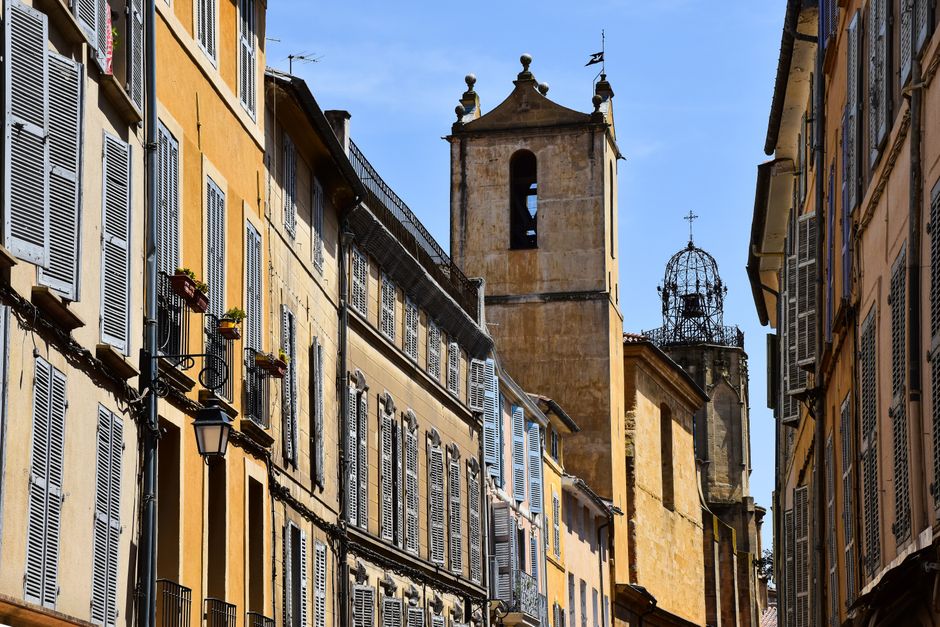
Aix-en-Provence is Provence at its most elegant: a university town of honey-coloured 17th- and 18th-century mansions, mossy fountains, plane-shaded squares and busy morning markets, with the white mountain of Sainte-Victoire on the horizon. It was the home of Paul Cézanne, and you can still visit his studio and the family house where he painted for forty years. Aix is lively all year thanks to its students, smart without being stiff, and only half an hour from Marseille. Give it two days for the town and Cézanne’s sites, and three or four with Sainte-Victoire, the Luberon or the Calanques.
Right now in Aix-en-Provence
- Wed16–20°C61–67°F46 mm rain
- Thu12–19°C54–66°F1 mm rain
- Fri9–17°C49–63°FMostly clear
Top tours in Aix-en-Provence
See all tours for Aix-en-Provence →
From local operators, with prices and reviews; you check availability and book on Viator, our partner. We may earn a commission at no extra cost to you. How we earn money
Aix-en-Provence at a glance
- Best for: strolling and café life, markets, art and Cézanne, music in July, and easy trips to Marseille, the Luberon and Sainte-Victoire.
- How long: 2 days for the town and the Cézanne sites, 3–4 with day trips.
- Best time: May, June, September and October; July for the Festival d’Aix opera festival (1–20 July 2027).
- Getting in: TGV trains from Paris reach Aix-en-Provence TGV station in about 3 hours; the A2 shuttle bus links it with the town centre. Marseille Provence airport is about 30 km away.
- Getting around: the old town is compact and largely pedestrian; city buses and minibuses cover the rest.
- Before you go: entry rules, money, trains and general safety are on our France travel guide, and the wider region is in our Provence travel guide.
Aix-en-Provence’s neighbourhoods and who each one suits
The Cours Mirabeau, a broad avenue lined with double rows of plane trees, divides the old town in two. North of it lies the medieval and lively Vieil Aix; south of it, the calm, grid-planned Quartier Mazarin. The modern town, the bus station and the Allées Provençales shopping district spread west from the Rotonde fountain.
Vieil Aix (the old town)
A maze of lanes and squares north of the Cours Mirabeau: the town hall square with its clock tower and flower market, the Place Richelme food market, the cathedral of Saint-Sauveur and dozens of small shops, bakeries and bars. The most atmospheric place to stay, and the busiest at night.
Quartier Mazarin
Laid out in the 17th century for the nobility, this quiet grid of streets south of the Cours holds grand private mansions, the Musée Granet, the Hôtel de Caumont art centre and the lovely Fontaine des Quatre-Dauphins. Elegant and peaceful, ideal for couples and culture lovers.
Around the Rotonde and the Allées Provençales
The big fountain at the bottom of the Cours Mirabeau marks the modern centre, with the bus station, the Grand Théâtre de Provence, a pedestrian shopping district and several chain hotels. Practical for buses to Marseille, the airport and Aix TGV station.
Cézanne’s hill (Les Lauves)
North of the old town, a residential hill where Cézanne built his last studio. Leafy and quiet, with the Terrain des Peintres viewpoint over Sainte-Victoire; a good base for drivers, about 15 minutes’ walk uphill from the centre.
Top things to see in Aix-en-Provence
Aix’s greatest pleasure is free: walking its streets, squares and fountains. Prices and hours below come from the official websites, as of October 2026.
The Cours Mirabeau and the fountains
Aix is called the city of a thousand fountains. The Cours Mirabeau has three, including the warm, moss-covered Fontaine d’Eau Chaude, fed by a spring that the Romans used for their baths, and ends at the great Rotonde fountain of 1860. The café terraces on its sunny north side, including the Deux Garçons, have been meeting places for centuries. Walk the Cours early in the morning, then look for the Fontaine des Quatre-Dauphins in the Quartier Mazarin and the fountain on the Place d’Albertas, a perfect little 18th-century square.
Cézanne’s studio and the Jas de Bouffan
Paul Cézanne (1839–1906) was born, worked and died in Aix. His last studio, the Atelier des Lauves, has been kept with his coat, hat, easel and the objects from his still lifes; the Bastide du Jas de Bouffan, the family house on the edge of town, was where he painted for some forty years. Both reopened from 4 July to 31 October 2026 after long restoration work, open every day; in October from 10:00 to 17:00. As of October 2026, a guided visit costs €12 (reduced €10) and an audio-guided visit €9.50 at either site, and booking online on the city’s cezanne-en-provence.com site is required at the studio and strongly advised at the bastide. The 2026 season ends on 31 October; check the 2027 dates in spring. Two Cézanne places stay open all year: the Terrain des Peintres, a free garden viewpoint above the studio where he painted Sainte-Victoire, and the Carrières de Bibémus, the ochre quarries east of town, visited on guided tours by reservation.
Musée Granet
Aix’s fine-arts museum, in a former priory of the Knights of Malta, has paintings from the 14th to the 19th centuries, a room of works by Cézanne and, in its 20th-century wing in the Chapelle des Pénitents Blancs, the Planque collection with Picasso, Monet, Van Gogh and Giacometti. As of October 2026 it opens Tuesday to Sunday, 10:00–18:00 (ticket office until 17:30), closed on Mondays. Entry is €14 (reduced €12) during the big summer and autumn exhibition, until 1 November 2026, and €7 at other times; under-18s and students under 26 enter free. The permanent collections are free on the first Sunday of each month. The photography exhibition “Paul McCartney photographe, 1963–64: Eyes of the Storm” runs until 3 January 2027.
Hôtel de Caumont
An 18th-century mansion in the Quartier Mazarin, restored as an art centre with period rooms, French gardens, a film about Cézanne and big temporary exhibitions. Its café, in the salons and courtyard, is one of the prettiest in town. It opens every day, 10:00–18:00 from 6 October; the next major exhibition, on the photographer Henri Cartier-Bresson, opens on 5 November 2026. Tickets cost around €18 for adults; check the current price on caumont-centredart.com.
Saint-Sauveur Cathedral and the old town
The cathedral mixes every period from a 5th-century baptistery, built on the Roman forum, to a Gothic nave and a Romanesque cloister, and holds Nicolas Froment’s Burning Bush triptych. From there, wander past the town hall, its clock tower with an astronomical clock, and the old grain market to the Place Richelme.
Pavillon de Vendôme
A 17th-century country house built for the Duke of Vendôme, with Baroque giant figures holding up its balcony, period furniture and formal gardens. As of October 2026 entry is €5, free for under-26s and for everyone on the first Sunday of the month; it is closed on Tuesdays.
Markets, calissons and cafés
Markets are the heartbeat of Aix. The Place Richelme fruit and vegetable market runs every morning, and on Tuesdays, Thursdays and Saturdays a much bigger market spreads over Place des Prêcheurs and Place de la Madeleine, with produce, cheese, olives and lavender. On the same days, flowers fill the town hall square, and Place de Verdun has antiques and second-hand stalls. Go before 11:00 for the best choice and fewer people.
The local sweet is the calisson, a diamond-shaped paste of almonds and candied melon under a white icing, sold in confectioners all over town. Aix also has excellent bakeries, Provençal bistros and lively student bars around Place des Cardeurs and Rue de la Verrerie. Have an apéritif with a glass of Coteaux d’Aix-en-Provence rosé on the Cours Mirabeau, but eat a street or two away for better value.
Sainte-Victoire and other things to do
Hike on the Montagne Sainte-Victoire
The limestone ridge that Cézanne painted more than eighty times rises about 15 km east of Aix. The classic hike climbs from the Bimont dam or from Les Cabassols to the Croix de Provence, a big iron cross at almost 1,000 m, with views from the Alps to the sea; allow 4–5 hours there and back. From 1 June to 30 September, access to the Sainte-Victoire depends on the Bouches-du-Rhône fire-risk map, published each evening around 18:00 for the next day on risque-prevention-incendie.fr: red means the hills are closed. Carry plenty of water and start early.
Follow the Cézanne trail
Bronze studs marked with a “C” in the pavement lead you to the places linked with the painter: his birthplace, the school he attended with Émile Zola, his family’s homes and the cafés he knew. The tourist office sells a map.
Music, festivals and wine
The Festival d’Aix-en-Provence is one of Europe’s leading opera festivals, with performances in the open-air courtyard of the former archbishop’s palace, the Grand Théâtre de Provence and other venues. The 2026 festival ran from 2 to 21 July, and the 2027 edition is announced for 1 to 20 July 2027; tickets go on sale months ahead. In the countryside around Aix, wine estates of the Coteaux d’Aix-en-Provence welcome visitors for a wine tasting, mainly rosé.
Day trips from Aix-en-Provence
Aix is well placed for the coast and the hills. Times are approximate; check SNCF Connect for trains and the lecar website for regional buses.
Marseille
France’s oldest city, with the Vieux-Port, the MuCEM and Notre-Dame de la Garde, is 30–40 minutes away by the frequent express bus. Read our Marseille guide.
Cassis and the Calanques
The white limestone coves of the Calanques National Park and the fishing port of Cassis are about 45 minutes to an hour away by car. In summer, access to the Calanques depends on the daily fire-risk map, and the most popular coves on the Marseille side need a free booking on busy days: see our Calanques National Park guide and our Marseille guide for the current rules.
The Luberon
The perched villages of Lourmarin, Bonnieux, Gordes and Roussillon are 40 minutes to an hour north by car, with lavender in late June and July. A car or a day tour is the easiest way to see them.
Arles, Avignon and the Camargue
Avignon and its Palais des Papes are about an hour away by car or by train via Marseille; Arles and the Camargue are about an hour and a quarter by car. See our Provence guide.
Nearby destinations
- Marseille26 km
- Provence69 km
- Avignon69 km
- Verdon Gorge75 km
- Saint-Tropez101 km
- French Riviera101 km
- Montpellier127 km
- Cannes127 km
Getting there and getting around
By train
High-speed TGV and OUIGO trains from Paris Gare de Lyon, Lyon and other cities stop at Aix-en-Provence TGV, about 15 km south-west of the town in the countryside. Regional trains on the Marseille–Pertuis line use the small Aix-en-Provence centre station, a short walk from the Rotonde, with trains to Marseille Saint-Charles in about 40 minutes. Check which station is on your ticket.
From Aix TGV station and Marseille airport
Bus line A2 (formerly line 40), run by the regional lecar network, links Aix bus station, Aix TGV station and Marseille Provence airport. As of October 2026, a single from Aix to Aix TGV costs €9 and from Aix to the airport €15, with lower fares for under-26s; the ride to Aix TGV takes about 20 minutes. Taxis wait at both the station and the airport.
Buses to Marseille
Express bus line 50 runs between Aix bus station and Marseille Saint-Charles in about 30–40 minutes, very frequently on weekdays; a single costs €7 as of October 2026. Buy tickets in the lecar app or at the bus station.
In town, and driving
The old town is best on foot. Electric minibuses and city buses serve the centre and the suburbs. If you arrive by car, use the underground car parks around the centre or the park-and-ride car parks with buses into town; the historic centre has restricted access for cars. Aix is not inside the Aix-Marseille-Provence low-emission zone (ZFE), which, as of October 2026, covers only central Marseille, where Crit’Air 4, 5 and unclassified vehicles are banned. During pollution alerts, temporary traffic restrictions can apply across the area, so carry a Crit’Air sticker.
When to go and how long to stay
Aix has hot, dry summers and mild, sunny winters with cold nights, a little more extreme than the coast because it sits inland at about 170 m. The mistral blows on some days, especially in winter and spring. The table uses Météo-France’s official 1991–2020 normals for the Aix-en-Provence station: average daily highs and lows, and days with at least 1 mm of rain.
| Season | Average high / low | Rainy days per month | What it’s like | Good for |
|---|---|---|---|---|
| Winter (Dec–Feb) | 12–13 °C / 2 °C | 5 | Sunny days, frosty nights, some mistral | Museums, markets, Christmas santons fair |
| Spring (Mar–May) | 16–23 °C / 4–11 °C | 5–7 | Fresh and bright, flowers and longer evenings | Walking, café terraces, Sainte-Victoire hikes |
| Summer (Jun–Aug) | 28–31 °C / 15–17 °C | 2–3 | Hot and dry; heatwaves possible | Festival d’Aix, markets early, evenings outdoors |
| Autumn (Sep–Nov) | 26 °C falling to 15 °C / 13 °C falling to 6 °C | 5–8 | Warm September; heavy storms possible | Cézanne sites, harvest, hiking again |
The Aix station records about 610 mm of rain a year, most of it from September to November, and almost 2,900 hours of sunshine. July is the hottest month, with an average high of 31 °C, and January the coldest, at about 12 °C by day and under 2 °C at night.
How long to stay: 2-, 3- and 4-day plans
2 days: Day 1, the Place Richelme market, the old town, Saint-Sauveur and the Cours Mirabeau, then the Musée Granet. Day 2, Cézanne’s studio and the Terrain des Peintres in the morning, the Hôtel de Caumont and the Quartier Mazarin in the afternoon.
3 days: add a Sainte-Victoire hike or the Jas de Bouffan and the Bibémus quarries. 4 days: add Marseille, Cassis or a day in the Luberon villages.
Where to stay in Aix-en-Provence
- Vieil Aix: the heart of the action, with markets and restaurants at the door; noisier at night.
- Quartier Mazarin: quiet, elegant and close to the museums.
- Around the Rotonde: practical for buses and the A2 shuttle, with larger modern hotels.
- Countryside bastides and B&Bs: for a car-based stay with a pool, facing Sainte-Victoire or among the vineyards.
Aix-en-Provence adds a tourist tax (taxe de séjour) per person per night. According to the official government database of rates, as of 2026 it is €1.11 in 1-star hotels, B&Bs and hostels, €1.24 in 2-star, €2.16 in 3-star, €3.27 in 4-star and €4.32 in 5-star hotels, and €5.76 in palaces; unclassified rentals pay 7.2% of the price per person per night, within a legal cap. These totals include the Bouches-du-Rhône department’s 10% surcharge and the 34% regional surcharge that funds the new Provence–Côte d’Azur railway line. Under-18s are exempt.
Practical tips for Aix-en-Provence
- Book Cézanne early: the studio has limited places and requires an online booking; the 2026 season ends on 31 October.
- Market mornings: Tuesday, Thursday and Saturday are the big market days; go early.
- Mondays and Tuesdays: the Musée Granet closes on Mondays and the Pavillon de Vendôme on Tuesdays.
- Fire-risk map: from June to September, check the next day’s access map after 18:00 before hiking on Sainte-Victoire.
- Festival season: in July, book rooms and restaurants well ahead.
- Emergencies: call 112.
What to pack for Aix-en-Provence
Pack comfortable shoes for cobbles and the climb to Cézanne’s studio, light clothes, a sun hat, sunglasses and a refillable bottle for summer, and a windproof layer for mistral days. For Sainte-Victoire, bring hiking shoes with grip, at least two litres of water each and sun protection; there is little shade. In winter, add a warm jacket for frosty mornings, and something smart if you have opera tickets in July.
Aix-en-Provence travel FAQ
How many days do you need in Aix-en-Provence?
Two days covers the old town, the Cours Mirabeau, the Musée Granet and Cézanne’s studio. Three or four days lets you add Sainte-Victoire, Marseille, Cassis or the Luberon villages.
Can I visit Cézanne’s studio in Aix?
Yes, until 31 October 2026. The Atelier des Lauves and the Jas de Bouffan are open every day, 10:00–17:00 in October, and a guided visit costs €12 as of October 2026. Booking on cezanne-en-provence.com is required for the studio; check the 2027 season in spring.
What is there to see for free in Aix?
The Cours Mirabeau and its fountains, the old town and markets, Saint-Sauveur Cathedral, the Terrain des Peintres viewpoint and, on the first Sunday of each month, the permanent collections of the Musée Granet and the Pavillon de Vendôme.
How much is the Musée Granet?
As of October 2026, €14 (reduced €12) during the major exhibition until 1 November 2026 and €7 at other times. Under-18s and students under 26 go free, and the permanent collections are free on the first Sunday of the month. It closes on Mondays.
When are the market days in Aix?
The Place Richelme food market runs every morning. The big markets, with produce, flowers and antiques, are on Tuesday, Thursday and Saturday mornings around Place des Prêcheurs, the town hall square and Place de Verdun.
When is the Festival d’Aix in 2027?
The opera festival is announced for 1 to 20 July 2027; the 2026 edition ran from 2 to 21 July. The programme and ticket sales open months ahead on festival-aix.com.
How do I get from Aix TGV station to the town centre?
Take bus A2 (formerly line 40) to Aix bus station, about 20 minutes. A single costs €9 as of October 2026; taxis wait outside the station.
How do I get from Aix to Marseille?
Express bus 50 runs from Aix bus station to Marseille Saint-Charles in about 30–40 minutes for €7 a single, as of October 2026. Regional trains from Aix centre station take about 40 minutes.
Can I hike Sainte-Victoire in summer?
Only on days when the hills are open. From 1 June to 30 September, check the Bouches-du-Rhône fire-risk map, published around 18:00 for the next day on risque-prevention-incendie.fr; red means no access. Start early and carry plenty of water.
Is there a low-emission zone in Aix-en-Provence?
No. As of October 2026, the Aix-Marseille-Provence low-emission zone covers only central Marseille, where Crit’Air 4, 5 and unclassified vehicles are banned. Temporary restrictions can apply during pollution alerts.
How much is the tourist tax in Aix-en-Provence?
As of 2026, from €1.11 per person per night in 1-star hotels, B&Bs and hostels to €2.16 in 3-star, €3.27 in 4-star and €4.32 in 5-star hotels. Unclassified rentals pay 7.2% of the price. Under-18s pay nothing.
Plan your trip
Partner links: TravelerCenter may earn a commission if you book, at no extra cost to you.
🇫🇷 Useful French phrases for Aix-en-Provence
All 38 French phrases: restaurant, hotel, emergencies, romance (printable) →
Sources · last reviewed 4 October 2026
Researched and last reviewed on 4 October 2026. Cézanne sites: the City of Aix-en-Provence’s cezanne-en-provence.com; museum hours and prices: the Musée Granet, Caumont Centre d’Art and the Aix-en-Provence tourist office; festival dates: the Festival d’Aix-en-Provence; bus fares: the lecar regional network; low-emission zone: the Aix-Marseille-Provence Metropolis; fire-risk rules: the Bouches-du-Rhône prefecture map; tourist tax: the French tax authority’s open data on local rates; climate: Météo-France 1991–2020 normals for Aix-en-Provence. Prices, timetables and opening hours change, so check the official sites before you travel. For entry rules, money and general safety, see our France travel guide.
Data: Weather: MET Norway (CC BY 4.0) · Rates: ECB · Costs: World Bank ICP and price levels · Wikidata (CC0)