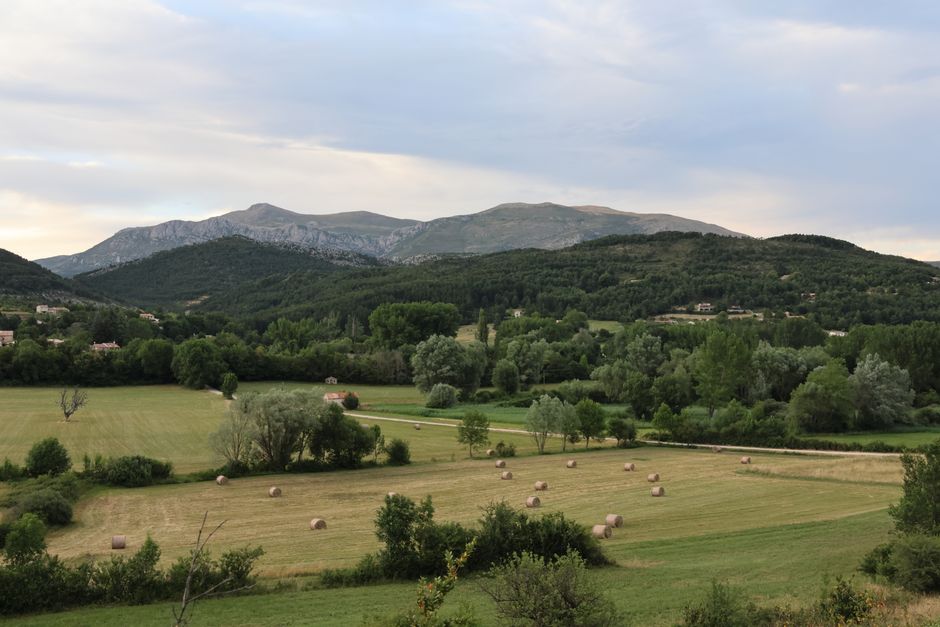
Provence is the sunny south-east corner of France between the Rhône and the Alps: a land of hilltop villages, lavender fields, vineyards, Roman monuments and big skies, with the Popes’ palace in Avignon, the fountains of Aix and the wild Camargue delta at its edges. Here we cover the inland heart of the region, from Avignon and Arles to the Luberon and the Gorges du Verdon; the coast has its own guides to Marseille and Nice. The best months are May, June and September, with late June and early July for the lavender. Give it at least five days, ideally a week with a car.
Right now in Provence (Avignon)
- Wed 17–19°C 62–67°F 74 mm Heavy rain
- Thu 15–17°C 59–63°F 7 mm Partly cloudy
- Fri 11–16°C 52–60°F Partly cloudy
Weather: MET Norway (CC BY 4.0) · Rates: ECB
Top tours in Provence
See all tours for Provence →
From local operators, with prices and reviews; you check availability and book on Viator, our partner. We may earn a commission at no extra cost to you. How we earn money
Provence at a glance
- Best months: May–June and September–early October. Inland, average highs run from about 25 °C in May to 32 °C in July, and nights stay cool (Météo-France normals 1991–2020, Carpentras, Vaucluse). Lavender blooms from mid-June to late July, depending on altitude.
- Days needed: 5–7 for Avignon, Arles, Aix and the Luberon villages; 8–10 with the Gorges du Verdon and the Camargue.
- Getting there: TGV trains from Paris reach Avignon TGV and Aix-en-Provence TGV in about 2 h 40–3 h; the nearest big airport is Marseille Provence (MRS).
- Getting around: a car is by far the easiest way to see the villages, lavender and gorges. Trains and buses link the cities: Avignon, Arles, Aix and Marseille.
- Budget level: mid-range to expensive in the Luberon and in July, when the Avignon Festival fills every room; cheaper in Arles and the less famous villages. A tourist tax is added per person per night. See our France guide for money, entry rules and daily costs.
Provence’s areas and who each one suits
- Avignon: a walled city on the Rhône with the Palais des Papes, the famous broken bridge and a busy cultural life. A good base without a car, with trains to Arles, Marseille and Nîmes and the Pont du Gard nearby.
- Aix-en-Provence: an elegant university town of fountains, plane trees and 17th-century mansions, Cézanne’s birthplace. Lively, chic and well placed for the Sainte-Victoire mountain and the Verdon.
- The Luberon: rolling hills of vines, cherry orchards and lavender dotted with perched villages such as Gordes, Roussillon, Bonnieux, Ménerbes and Lourmarin. The postcard Provence: best for couples and slow travel, and you will need a car.
- Arles and the Camargue: Roman Arles, where Van Gogh painted some of his best-known works, and the flat, watery delta south of it, with pink flamingos, white horses and black bulls. Great for culture and nature together.
- The Alpilles: a small limestone range between Avignon and Arles, with Saint-Rémy-de-Provence and the dramatic hilltop village of Les Baux-de-Provence. Upmarket hotels, olive mills and markets.
- Haute-Provence and the Verdon: the Valensole plateau’s lavender, the faience village of Moustiers-Sainte-Marie and one of Europe’s great canyons. Wilder, higher and cooler in summer; for hikers, kayakers and road-trippers.
Top things to see in Provence
Prices and hours below come from the official websites, as of October 2026.
Palais des Papes and the Pont d’Avignon
In the 14th century the popes left Rome for Avignon, and built the largest Gothic palace in the world, with vast halls, painted chapels and roof terraces over the Rhône. A few minutes away, four arches of the 12th-century Pont Saint-Bénézet, the bridge of the children’s song, end in the middle of the river. How to visit: the palace is open every day, 9:00–19:00 from 1 March to 1 November and 10:00–17:00 from 2 November to 18 December, with last entry one hour before closing. A palace ticket is €16 and a combined ticket with the papal gardens and the bridge is €19.50; under-10s go free. Both are part of a UNESCO World Heritage Site with the old town’s ramparts.
Aix-en-Provence and Cézanne’s studio
Stroll the Cours Mirabeau under its plane trees, past mossy fountains and café terraces, then explore the old town’s markets (fruit and vegetables every morning on Place Richelme). Paul Cézanne was born and worked in Aix. After a long restoration, his family home, the Bastide du Jas de Bouffan, and his last studio, the Atelier des Lauves, reopened from 4 July to 31 October 2026, open daily; in October from 10:00 to 17:00, with last visit at 16:00. Book ahead on the city’s Cézanne website and check the 2027 season in spring. The Sainte-Victoire mountain he painted again and again rises just east of town.
The Luberon villages
Gordes piles its stone houses and castle on a cliff, and the Cistercian Abbaye de Sénanque, with lavender in front, is a few kilometres north. Roussillon is built on red and orange ochre cliffs, with a short trail through the old quarries. Lourmarin has a Renaissance château and café-lined streets; Bonnieux and Ménerbes look across the valley at each other. Each village has its weekly market, and L’Isle-sur-la-Sorgue holds a big antiques market on Sundays. Arrive early: parking fills up by late morning in summer, and the most famous villages charge for it.
Arles
Arles packs a Roman amphitheatre still used for events, an ancient theatre, the Romanesque cloister of Saint-Trophime and the Alyscamps necropolis into a small, walkable centre. Van Gogh lived here in 1888–89, and you can follow the spots he painted. The Luma Arles arts centre, with its twisted silver tower by Frank Gehry, shows contemporary art, and the Rencontres d’Arles photography festival runs every summer. The Pass Liberté (€15, as of October 2026) covers four monuments and two museums of your choice and is valid for a month.
Pont du Gard
This three-tier Roman aqueduct bridge, nearly 50 m high and 2,000 years old, carried water across the Gardon river to Nîmes; it is a UNESCO World Heritage Site, just over the border in the Gard. How to visit: the site is free on foot and by bike; drivers pay €9 per vehicle for parking, whatever the number of passengers or length of stay. The museum and discovery spaces cost €8 for adults, free for under-18s and students. In summer, swim in the river below the bridge or paddle down the Gardon by canoe from Collias. See our beaches guide.
Les Baux and Saint-Rémy
Les Baux-de-Provence is a village and ruined castle on a rocky spur in the Alpilles, and the Carrières des Lumières next to it projects huge art shows on the walls of an old limestone quarry. Saint-Rémy-de-Provence has a Wednesday market, Roman ruins at Glanum and the monastery where Van Gogh stayed in 1889–90 and painted The Starry Night.
Peaks and mountains
- Mont Ventoux
Monuments
- Palais des Papes
- Avignon Cathedral
- Pont Saint-Bénézet (Pont d'Avignon)
- Roman Theatre of Orange
- Triumphal Arch of Orange
Lavender season: when and where
Lavender is the symbol of Provence, but it only flowers for a few weeks, and farmers harvest it as soon as it peaks. In most years:
- Valensole plateau (about 500 m up, in the Alpes-de-Haute-Provence): the biggest fields, in flower from mid-June, at their best from late June to the first week of July, and largely cut from mid-July.
- Sénanque Abbey and the Luberon: late June to mid-July.
- Sault and the Plateau d’Albion (higher, around 750 m): later, peaking in mid-July and often lasting into early August. Sault holds its lavender festival on 15 August.
A hot, dry spring brings everything forward, so check recent photos or the local tourist offices before you go. Visit at sunrise or late afternoon for the light and the fewest people. The fields are farms: stay on the edges and paths, do not pick the flowers, and do not fly drones without permission. Many distilleries and farms open their doors and shops in summer.
The Gorges du Verdon
The Verdon river has cut a canyon about 25 km long, with limestone cliffs up to 700 m high and jade-green water, between the Valensole plateau and the Var. It is one of the great road trips and outdoor playgrounds of France.
- Route des Crêtes: a 23 km loop from La Palud-sur-Verdon along the north rim, with about 15 viewpoints straight down into the canyon. Part of it is one way, and the central section is closed in winter, from late November to late March, because of ice and rockfalls.
- Lac de Sainte-Croix and the Pont du Galetas: where the gorge opens into a large turquoise lake. Rent a pedal boat, kayak or electric boat at the bridge and paddle a couple of kilometres up into the canyon. Go early in summer, as the boats run out.
- Moustiers-Sainte-Marie: a village famous for faience pottery, set in a cleft in the cliffs with a gold star hanging on a chain above it.
- Sentier Blanc-Martel: the classic hike along the bottom of the gorge, about 15 km from the Chalet de la Maline towards the Point Sublime, with tunnels (bring a torch) and ladders. In 2026 a rockfall closed the final section near the Point Sublime, with a signposted detour via the road and the GR 49; check with the Verdon regional park before you go. A seasonal shuttle links the two ends.
Safety: the river below the dams can rise suddenly when water is released; never camp or linger on the riverbed. In summer the hills of the Var and Alpes-de-Haute-Provence may also close for fire risk. See our hiking guide.
Other things to do in Provence
Markets and food
Every village has a weekly market, the best way to taste Provence: olives and tapenade, goat’s cheese, honey, melons from Cavaillon, strawberries from Carpentras and, in winter, black truffles. Try aïoli, ratatouille, daube (a slow-cooked beef stew) and a pastis on a café terrace.
Wine tasting
Provence makes more rosé than any other French region, and the southern Rhône valley around Avignon makes famous reds: Châteauneuf-du-Pape, Gigondas and Vacqueyras. Many estates welcome visitors for tastings, and a few charge a small fee. If you are driving, share the spitting bucket or book a guided tour. See our wine tasting guide.
Cycling
The Luberon has well-signed cycle routes on quiet roads, from easy loops between villages to the “Autour du Luberon” circuit, and e-bikes are easy to rent. Experienced riders climb Mont Ventoux, the “giant of Provence” of the Tour de France. See our cycling guide.
The Camargue
Drive or cycle the delta’s lagoons to see flamingos, egrets and herds of white horses, and visit the Pont de Gau ornithological park, the beaches and the fortified church of Saintes-Maries-de-la-Mer. Mosquitoes are fierce on summer evenings.
The Avignon Festival
Every July, Avignon becomes one of the world’s biggest theatre festivals: the official programme in the Palais des Papes’ courtyard and other venues, and over a thousand shows in the “Off” festival in every hall in town. The 2026 edition, the 80th, ran from 4 to 25 July. The 2027 dates had not been published as of October 2026; the programme usually comes out in spring. Book rooms months ahead.
Activities and best months
- CyclingThe 236 km 'Around the Luberon by bike' loop crosses the Luberon Regional Natural Park; there are also family greenways, the 51 km 'Ochres by bike' route and 1,060 km of marked mountain-bike trails (Vaucluse tourism agency). · source
- HikingAprMayJunSepOctThe Blanc-Martel trail in the Verdon Gorges runs 16 km one way (about 6 hours) with metal stairways and two tunnels; the Verdon tourist office rates it moderate to difficult, not for children under 8, and names spring and September-October as the best time (season April to October). · source
- Wine tastingThe regional tourism board points to Châteauneuf-du-Pape and the Rhône villages of Gigondas and Vacqueyras for tastings in cooperative cellars and châteaux, and to the Maison des Vins Côtes de Provence (Les Arcs), with almost 800 wines to taste, open all year. · source
Nearby destinations
- Verdon Gorge38 km
- Aix-en-Provence69 km
- French Riviera93 km
- Marseille93 km
- Avignon96 km
- Cannes96 km
- Saint-Tropez96 km
- Nice107 km
Getting there and getting around
Arriving
TGV high-speed trains run from Paris Gare de Lyon to Avignon TGV and Aix-en-Provence TGV stations, both just outside town, in about 2 h 40–3 h, and from Paris Charles de Gaulle airport and Lyon. Marseille Provence airport has the most flights; Avignon and Nîmes airports are small. Regional trains also reach Avignon Centre and Arles directly. Read our Marseille guide for airport transfers.
Car or public transport?
For the Luberon villages, the lavender, the Alpilles and the Verdon, rent a car: buses are rare and slow, and many sights are miles from a station. Roads are good but narrow in the villages; park outside and walk in. Without a car, base yourself in Avignon, Arles or Aix:
- Regional trains (ZOU! TER): link Marseille, Arles, Avignon and Nîmes many times a day, and Marseille with Aix. Buy tickets on the SNCF Connect app or at the station.
- Buses: frequent express buses link Aix and Marseille, and ZOU! regional buses reach some villages; check timetables on the ZOU! website, as many lines run less often on Sundays and outside summer.
- Tours: half-day and day tours from Avignon and Aix cover the Luberon villages, the lavender and the Camargue, and solve the parking problem in summer.
When to go and how long to stay
Inland Provence is hot and dry in summer and cool, bright and sometimes windy in winter. Average highs inland reach 32 °C in July, but nights fall to about 16 °C, and winter nights are near freezing. Most rain falls in autumn, in short, violent storms. The famous mistral is a cold, dry north-westerly wind that funnels down the Rhône valley, especially in winter and spring: it clears the sky, but can blow for three days or more and feels bitter. In summer it raises the fire risk.
| Season | Average high / low | Rainy days a month | What it’s like |
|---|---|---|---|
| Spring (Mar–May) | 17–25 °C / 4–11 °C | 5–7 | Green, fresh and flowery; cherries and markets; mistral days likely. |
| Summer (Jun–Aug) | 29–32 °C / 14–17 °C | 3–5 | Hot, sunny and busy: lavender in late June and July, the Avignon Festival, fire-risk closures in the hills. |
| Autumn (Sep–Nov) | 15–26 °C / 5–13 °C | 6–8 | September and October bring the grape harvest and golden light; heavy storms possible. |
| Winter (Dec–Feb) | 11–13 °C / 1–2 °C | 5–6 | Cold nights, bright days and truffle markets; many village hotels and restaurants close. |
Figures are Météo-France’s 1991–2020 normals for Carpentras (Vaucluse), close to Avignon and the Luberon (rainy day = at least 1 mm of rain). Carpentras averages about 2,800 hours of sunshine a year.
5 days in Provence
Two nights in Avignon (the Palais des Papes and the bridge, plus the Pont du Gard) and three in the Luberon, with Gordes, Sénanque, Roussillon and Lourmarin, and an afternoon in L’Isle-sur-la-Sorgue.
7 days in Provence
Add Arles and the Alpilles (Les Baux and Saint-Rémy), or Aix-en-Provence, with a lavender sunrise at Valensole if it is late June or early July.
10 days or more
Add two nights at the Gorges du Verdon or Moustiers and a day in the Camargue, then finish on the coast in Marseille or Nice.
Where to stay in Provence
- Without a car: Avignon or Aix, for trains, buses and tours.
- Village Provence: the Luberon (Gordes, Bonnieux, Lourmarin) or Saint-Rémy, in a guesthouse or a farmhouse (mas) with a pool.
- Value and culture: Arles, with the Camargue and the Alpilles on the doorstep.
- Lavender and canyon: Valensole or Moustiers-Sainte-Marie for late June and July, close to the fields and the Verdon.
- July in Avignon: book months ahead for the festival, or stay in a nearby town such as Villeneuve-lès-Avignon.
A tourist tax (taxe de séjour) is added per person per night, set by each town and star rating; under-18s are exempt.
Practical tips for Provence
- Check the fire-risk maps in summer: from 1 June to 30 September, access to the hills of the Bouches-du-Rhône (the Alpilles and the Sainte-Victoire) is decided each evening for the next day on risque-prevention-incendie.fr; the Var and Vaucluse publish similar maps. Red means stay out.
- Start early: in July and August, visit villages and lavender fields before 10:00, for parking, the light and the heat.
- Market days: plan your route around them; each village has its own day, and markets end around lunchtime.
- Lunch hours: village restaurants serve lunch from about 12:00 to 14:00 and dinner from 19:00 to 21:30; outside those times, food is hard to find.
- Driving: watch for speed cameras, park in marked car parks outside villages, and never leave valuables visible in the car at popular sights.
- Emergencies: call 112.
Weather month by month
Averages from Météo-France normals 1991–2020, Avignon · Last reviewed 4 Oct 2026
What to pack for Provence
Bring a sun hat, sunscreen and sunglasses, light breathable clothes and a refillable water bottle: inland Provence gets hotter than the coast in July and August, and village streets are cobbled and steep, so wear comfortable shoes. Add a swimsuit for the lakes, rivers and hotel pools, and water shoes for the pebbly Gardon and Verdon. A windproof jacket is useful on mistral days in any season, and a warm layer for evenings in spring and autumn, when nights inland drop below 10 °C. For the Sentier Blanc-Martel, bring hiking shoes, a torch for the tunnels and plenty of water.
What to pack
- City walking shoesQuinta visits and harvest days mean steep terraces, gravel and cellar floors.
- Day packs and anti-theft bagsA 20–30 litre pack carries layers, water, a head torch and snacks on full-day levada walks.
- Fleeces and warm layersSummits like Pico do Areeiro averaged about 11 °C over 2024, so a fleece is needed even in summer.
- HeadlampsLevada routes such as PR1 and PR9 pass through long, dark, wet tunnels.
- Hiking shoes and bootsMadeira's levadas and the Azores' crater rims are wet, rocky and slippery, so grippy shoes matter more than anywhere else in Portugal.
- Rain jacketsA packable shell covers showers and wind on coastal routes outside summer.
- Trekking polesLong stone staircases and steep descents on Madeira's peaks and the Azores' crater rims are easier on the knees with poles.
- Water bottles and hydration packsRiding in the Algarve and Alentejo heat needs more water than you expect.
- Wine bottle travel protectorsPort and Douro wines bought at the quintas travel home safely in checked luggage with padded bottle protectors.
Provence travel FAQ
When is lavender season in Provence?
From mid-June to late July in most years. The Valensole plateau peaks from late June to early July and is mostly harvested from mid-July; Sault, higher up, peaks in mid-July and can last into early August.
Where are the best lavender fields?
The Valensole plateau for the biggest fields, the Abbaye de Sénanque near Gordes for the classic photo, and the Sault area for later flowering and fewer crowds.
How many days do you need in Provence?
At least five days for Avignon and the Luberon, and seven to ten to add Arles, Aix, the Camargue and the Gorges du Verdon.
Do I need a car in Provence?
For the villages, lavender and the Verdon, yes. Without a car, base yourself in Avignon, Arles or Aix and use trains, buses and day tours.
When is the Avignon Festival?
Every July. The 2026 edition ran from 4 to 25 July; the 2027 dates had not been announced as of October 2026. Book accommodation months ahead.
How much does the Palais des Papes cost?
€16 for the palace, or €19.50 with the papal gardens and the Pont d’Avignon (as of October 2026). Children under 10 go free.
Is the Pont du Gard free?
Yes, on foot and by bike. Drivers pay €9 per car for parking, and the museum costs €8 for adults (as of October 2026).
What is the mistral?
A cold, dry north-westerly wind that blows down the Rhône valley, mostly in winter and spring, often for three days or more. It brings clear skies but feels much colder, and raises fire risk in summer.
Can I hike in Provence in summer?
Yes, but start early, carry plenty of water and check the daily fire-risk map: from 1 June to 30 September, hills can close on high-risk days.
Can you swim in the Gorges du Verdon?
Yes, in the Lac de Sainte-Croix, where you can also paddle up into the canyon mouth by kayak or pedal boat. Swimming in the river itself is banned between the Point Sublime and the Pont du Galetas, and water below the dams can rise suddenly.
Can I visit Cézanne’s studio in Aix?
Yes. The Atelier des Lauves and the Jas de Bouffan reopened after restoration, open daily until 31 October 2026; book on the city’s Cézanne website and check the 2027 season in spring.
Sources
- © OpenStreetMap contributors · ODbL · fetched 3 Oct 2026
- Wikidata · CC0 · fetched 3 Oct 2026
Sources and last review
Researched and last reviewed on 3 October 2026. Prices and hours come from the official websites of the Palais des Papes, the Pont du Gard, the City of Aix-en-Provence, the Verdon regional nature park, the Moustiers tourist office and the Festival d’Avignon. Fire-risk rules come from the prefecture’s official map, and the climate figures are Météo-France’s 1991–2020 normals for Carpentras. Lavender dates are typical ranges and vary each year. Prices, timetables and opening hours change, so check the official sites before you travel.
Plan your trip
Partner links: TravelerCenter may earn a commission if you book, at no extra cost to you.
🇫🇷 Useful French phrases for Provence
All 38 French phrases: restaurant, hotel, emergencies, romance (printable) →