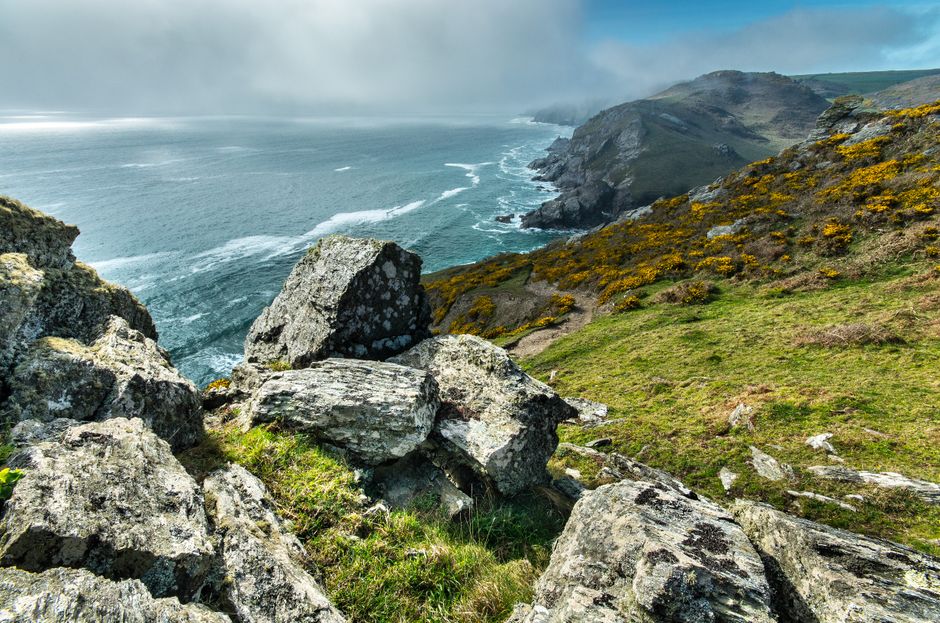
Cornwall is Britain’s favourite seaside: the long, rocky south-western tip of England, wrapped in hundreds of miles of coastline, with Atlantic surf beaches and granite cliffs on the north coast, sheltered coves and wooded estuaries on the south, and fishing harbours, castles and Celtic legends in between. You come to surf at Fistral, swim in turquoise coves, walk the cliffs of the South West Coast Path, cross the causeway to St Michael’s Mount at low tide, see a play at the cliff-top Minack Theatre, explore the rainforest domes of the Eden Project and eat pasties, cream teas and fish by the harbour. It is a long way from London, about five hours by train, so give it at least four days, and ideally a week or two.
Right now in Cornwall (Truro)
- Wed 12–15°C 53–58°F 2 mm Partly cloudy
- Thu 11–14°C 51–56°F 1 mm Cloudy
- Fri 14–17°C 56–62°F 7 mm Rain
Weather: MET Norway (CC BY 4.0) · Sea temperature: NOAA CoastWatch · Rates: ECB
Top tours in Cornwall
See all tours for Cornwall →
From local operators, with prices and reviews; you check availability and book on Viator, our partner. We may earn a commission at no extra cost to you. How we earn money
Cornwall at a glance
- Best for: beaches and surfing, coastal walking, family holidays, seafood, gardens, art in St Ives, castles and legends, and road trips.
- How long: 4–5 days for one area (the far west or the north coast); 1–2 weeks to see the whole county without rushing.
- Best time: May, June and September for warm days, quieter roads and open attractions; July and August are hottest and most crowded; winter is mild, wild and quiet.
- Getting in: Great Western Railway trains from London Paddington reach Penzance in about five hours, and the Night Riviera sleeper runs overnight; Cornwall Airport Newquay (NQY) has flights from London and other UK airports.
- Getting around: a car is easiest but summer traffic is heavy; branch-line trains and buses reach St Ives, Falmouth, Looe and Newquay. As of October 2026, an advance adult ticket for the castle on St Michael’s Mount cost £18.
- Before you go: entry rules, money and general safety are in our United Kingdom travel guide.
Cornwall, area by area
Cornwall is about 130 km long and rarely more than 70 km wide, but its roads are slow and winding, so it is best to choose one or two bases. The north coast faces the Atlantic, with the best surf and the biggest beaches; the south coast is gentler, with estuaries, sailing and calm coves.
St Ives and the far west (West Penwith)
St Ives is a pretty fishing town of white cottages and golden beaches on a bay of startling blue, famous for its artists’ colony, Tate St Ives and the Barbara Hepworth Museum and Sculpture Garden. Further west lie Penzance, Mousehole, the Minack Theatre at Porthcurno, Land’s End and wild moors scattered with ancient stones. Best for: art, beaches, coastal walks and the classic Cornish postcard.
Penzance and Mount’s Bay
Penzance is the end of the railway line, a working town with a Georgian heart, the Art Deco Jubilee Pool, and boats to the Isles of Scilly. Across the bay, Marazion faces St Michael’s Mount. Best for: travellers arriving by train and good-value stays.
Newquay and the north coast
Newquay is Britain’s surf capital, with Fistral Beach, Watergate Bay and a lively, young nightlife. Up the coast, Padstow has its harbour and seafood restaurants, Rock and Polzeath face each other across the Camel estuary, Port Isaac and Tintagel cling to the cliffs, and Bude has a sea pool. Best for: surfers, families, foodies and road trips.
The Lizard and Falmouth
The Lizard peninsula is the southernmost point of mainland Britain, with Kynance Cove’s white sand and serpentine rocks. Falmouth is a lively harbour town with Pendennis Castle, the National Maritime Museum Cornwall and boats up the Fal estuary. Best for: sailing, swimming in calm coves and couples.
St Austell, Fowey and the south-east
Around St Austell are the Eden Project and the Lost Gardens of Heligan; the harbour town of Fowey and the fishing villages of Polperro and Looe are further east. Best for: gardens, families and quieter stays.
Top things to see in Cornwall
Prices and hours below were checked on the official sites in October 2026. They change, so check before you go.
St Michael’s Mount
A rocky tidal island in Mount’s Bay, crowned by a medieval priory and a castle that has been the home of the St Aubyn family for centuries, St Michael’s Mount is owned by the National Trust and run with the family. At low tide you walk across a cobbled causeway from Marazion; when the tide is in, small boats ferry you over. Check the tide times for your date on the Mount’s website before you go, and do not try to cross when the water is over the causeway.
Tickets. As of October 2026, castle tickets cost £21 for adults and £10.50 for children aged 5–15 on the day, or £18 and £9 if booked online before midnight the day before; a family of two adults and up to three children paid £52.50 on the day or £45 in advance. Children under 5 go free. The boats cost £3.20 for an adult and £1.60 for a child each way and run only when the tide covers the causeway; the boat season ended on 31 October 2026. From 13 September 2026, access to the island itself was free, with tickets needed only for the castle, up to and including 30 October. National Trust members can book free admission in that period. The castle is reached by a steep, rough cobbled path, unsuitable for wheelchairs and pushchairs, and the island closes in strong winds and rough seas. Combine it with the gardens, open on selected days in season.
The Eden Project
Near St Austell, in a former clay pit, the Eden Project’s giant geodesic domes hold a humid rainforest, with a waterfall and a canopy walkway, and a Mediterranean biome of olive groves and vines, surrounded by gardens. As of October 2026, a general ticket cost £35.50 for adults online (£39.50 at the door), £32 for students and £12.50 for children aged 5–15 (£15 at the door); under-5s are free. Every general ticket converts into an annual pass, so you can return for a year. Allow at least half a day; book online and arrive early in the holidays. Buses run from St Austell railway station.
Tintagel Castle
On a wild headland on the north coast, Tintagel’s ruined 13th-century castle and the remains of an older settlement are tied forever to the legend of King Arthur. A footbridge, opened in 2019, crosses the chasm to the island, where you can explore the ruins, see the bronze Gallos sculpture and, at low tide, walk into Merlin’s Cave on the beach below. English Heritage runs the site. Tickets are valid all day; book online by midnight the day before to save up to 15%. Prices change by date; for the 2026/27 season, adult tickets are roughly £15–£19. From 25 October to 1 November 2026 it opens daily 10:00–16:00; then from 2 to 30 November Wednesday to Sunday, and from 1 to 23 December Friday to Sunday only; it closes from 24 to 26 December. There are many steep steps and uneven paths. The car parks are in the village (not run by English Heritage), a steep walk of about 10 minutes from the site.
The Minack Theatre
Carved into the granite cliff above the turquoise sea at Porthcurno, the Minack is an open-air theatre built by hand from 1932 by Rowena Cade and her gardener. Seeing a play here at sunset, between May and September, is unforgettable; bring a cushion, a blanket and a waterproof. By day you can visit the theatre, the sub-tropical gardens and an exhibition about its creator: as of October 2026, visit tickets cost £12 booked in advance and £14 on the door, with half price for children aged 15 and under. The site closes to day visitors during performances and rehearsals, and from November to February it is closed on Mondays and Tuesdays. Booking ahead is essential in school holidays.
St Ives
Walk the harbour and the narrow lanes of the Downalong quarter, visit Tate St Ives above Porthmeor Beach and the garden of sculptor Barbara Hepworth, then swim at Porthminster or surf at Porthmeor. St Ives is very busy in summer and parking is scarce: arrive on the scenic St Ives Bay Line train from St Erth, where there is a park and ride.
Land’s End, the Lizard and Kynance Cove
Land’s End, the westernmost point of mainland England, has dramatic cliffs and a visitor attraction; the coast path south to Porthcurno and Porthgwarra is more beautiful. Lizard Point is the southernmost tip of mainland Britain, and nearby Kynance Cove, with white sand between dark serpentine rocks, is one of the most photographed beaches in the country. See our sightseeing ideas for more.
Monuments
- Truro Cathedral
Parks and gardens
- Eden Project
Protected areas
- The Lizard
Archaeological sites
- Tintagel Castle
Castles and forts
- St Michael's Mount
Other sights
- Land's End
- Minack Theatre
Beaches, surfing and staying safe
Cornwall has around 300 beaches, from vast surf beaches to tiny coves reached by steep paths. The sea is cold, the Atlantic swell is strong, and rip currents are common, so choose a lifeguarded beach whenever you can.
Where to surf
Fistral Beach in Newquay is the most famous surf beach in Britain, with consistent waves, surf schools, board hire and international contests. Watergate Bay, Perranporth, Polzeath, Sennen Cove, Porthmeor in St Ives and Widemouth Bay near Bude are also great, and most have surf schools for beginners. Summer waves are smaller and better for learning; autumn and spring bring the best swells, and a wetsuit is needed all year. See our surfing guide.
The best beaches for swimming and families
Porthminster (St Ives), Porthcurno, Kynance Cove, Gyllyngvase (Falmouth), Holywell Bay, Crantock, Polzeath and Harlyn Bay are favourites. On the south coast, sheltered coves are calmer; on the north coast, swim only between the flags. See our beaches guide.
RNLI lifeguards and flags
RNLI lifeguards patrol dozens of beaches in Cornwall, but the season and hours depend on the beach: a few busy beaches, such as Fistral, Perranporth, Porthmeor and Sennen, start at Easter, most begin in May, and many stop at the end of September, with some patrolled into October. In 2026, Fistral was patrolled daily from 3 April to 1 November, from 10:00 to 18:00. Check the RNLI’s beach finder before you go, and remember the RNLI’s rule: no flags, no lifeguards.
- Red and yellow flags: the area patrolled by lifeguards; swim and bodyboard between them.
- Black and white chequered flags: the zone for surfboards, kayaks and other craft; do not swim there.
- Red flag: danger; never go in the water.
- Caught in a rip current: do not swim against it; float on your back to keep your head above water, then swim parallel to the beach and wave and shout for help.
- In an emergency: call 999 and ask for the Coastguard.
The tides
Tides along the Cornish coast rise and fall by several metres. Small coves can be cut off quickly as the water rises, and causeways such as St Michael’s Mount flood. Check the tide times, keep an eye on your way back, and do not explore caves on a rising tide.
Walking the South West Coast Path
The South West Coast Path, England’s longest National Trail at 630 miles, follows the whole Cornish coast for some 300 miles, from Marsland Mouth on the Devon border round Land’s End to the Tamar estuary. The path is hard work, with constant steep climbs and descents, but the scenery is superb. Classic sections include St Ives to Zennor (wild and rugged), Porthcurno to Land’s End, Kynance Cove to Lizard Point, Port Isaac to Tintagel and Padstow to Trevose Head. Buses along the coast make one-way walks easy. Stay on the path and away from cliff edges, which can crumble, especially after rain; wear walking boots and carry water. See our hiking guide.
Things to do in Cornwall
Cycle the Camel Trail
The Camel Trail is a flat, traffic-free path along an old railway beside the Camel estuary, from Padstow to Wadebridge and on towards Bodmin and Wenford Bridge, about 18 miles in all. Hire bikes in Padstow or Wadebridge. See our cycling guide.
Get out on the water
Take a boat trip from Falmouth, Padstow, St Ives or Penzance to see seals, dolphins and, in summer, basking sharks; paddle a kayak up the Helford River; or sail across to the Isles of Scilly from Penzance. See our boat trips guide.
Gardens
The mild climate grows palms, tree ferns and camellias: visit the Lost Gardens of Heligan, Trebah and Glendurgan on the Helford River, and Trelissick near Falmouth. Spring is the season for camellias, magnolias and rhododendrons.
Eat and drink like a local
Try a proper Cornish pasty, a cream tea (in Cornwall, jam goes on the scone first, then the clotted cream), fresh crab, mackerel and fish and chips, Cornish Yarg cheese, saffron buns, local cider and gin, and Cornish ice cream. Padstow, St Ives, Falmouth and Port Isaac have excellent seafood restaurants.
Activities and best months
- Beaches and swimmingVisit Cornwall rates its beaches among the best in the world: St Ives alone has five, with Blue Flag status at Porthminster and Porthmeor, and it also names Porthtowan, Portreath and Sennen Cove. · source
- Boat tripsVisit Cornwall lists AK Wildlife Cruises from Falmouth (dolphins, seals and basking sharks), Padstow Sealife Safaris to Cornwall's only puffin colony, St Ives Boats to Seal Island and Godrevy lighthouse, and 2-hour Newquay Sea Safaris to Seal Cove. · source
- HikingThe South West Coast Path National Trail runs 630 miles (1,014 km) from Minehead to Poole Harbour and follows the whole Cornish coastline; it has over 115,000 ft of ascent and takes about 52 days end to end, so most people walk it in sections. · source
- SurfingFistral Beach in Newquay hosts many of Britain's biggest surf events, and surf schools there and at nearby beaches such as Watergate Bay make it easy for beginners to learn. · source
- Wine tastingAprMayJunJulAugSepCamel Valley at Nanstallon near Bodmin, Cornwall's largest vineyard, runs guided tours with a glass of wine at 10.30am on weekdays from April to September, and serves its sparkling, white and red wines by the glass on the terrace. · source
Getting to Cornwall
By train. Great Western Railway trains from London Paddington run through Exeter and Plymouth to Truro and Penzance, taking about five hours to Penzance; branch lines run to St Ives, Falmouth, Looe and Newquay. The Night Riviera sleeper leaves London Paddington around midnight on Sunday to Friday nights and arrives in Penzance around 8:00, with cabins and reclining seats; book cabins early for summer.
By air. Cornwall Airport Newquay (NQY), about 8 km from Newquay, has flights from London airports and other UK and Irish cities, with more routes in summer; check the airport’s current schedule, as London routes have changed in recent years. Bristol and Exeter airports are alternatives, two to three hours away by road.
By car. The main roads are the A30, from the end of the M5 at Exeter through the middle of the county to Penzance, and the A38 via Plymouth. Allow at least five to six hours from London.
Getting around and summer traffic
By car. A car is the easiest way to reach the coves and villages, but Cornwall’s lanes are narrow, high-hedged and often single-track with passing places; be ready to reverse. On summer Saturdays, when holiday lets change over, the A30 and the roads into Newquay, St Ives and Padstow can back up for hours; travel early or late, and avoid driving into the small harbour towns, where parking is scarce. Car parks at popular beaches fill by mid-morning in July and August.
By train and bus. The St Ives Bay Line, the Maritime Line to Falmouth and the Atlantic Coast Line to Newquay are scenic and avoid the traffic; use the park and ride at St Erth for St Ives. Buses run by Transport for Cornwall link the main towns and much of the coast, with open-top coastal buses in summer.
When to go and how long to stay
Cornwall has the mildest climate in mainland Britain: warm rather than hot summers, very mild, wet and windy winters with frost and snow rare near the coast, and more sunshine than most of the country. The table uses the WMO 1991–2020 normals for Camborne (87 m), in west Cornwall between St Ives and Falmouth.
| Season | Average high / low | Rainy days per month | What it’s like |
|---|---|---|---|
| Spring (Mar–May) | 10–15 °C / 5–9 °C | 10–12 | Gardens in flower, sunny May, quieter beaches; sea still cold |
| Summer (Jun–Aug) | 17–19 °C / 11–13 °C | 10–11 | Warmest sea, busiest beaches and roads, all lifeguards on duty, Minack performances |
| Autumn (Sep–Nov) | 17 °C falling to 12 °C / 12 °C falling to 7 °C | 11–18 | Warm September sea, best surf swells, fewer crowds; stormier from late October |
| Winter (Dec–Feb) | 9–10 °C / about 5 °C | 14–17 | Mild but wet and windy, big storm waves, quiet towns, some attractions closed or on shorter hours |
Camborne records about 1,075 mm of rain a year and about 1,670 hours of sunshine, with May and June the sunniest months and October to January the wettest. The sea is warmest in August and September, at around 16–17 °C. May, June and September are the sweet spot; in July and August, book everything early.
Cornwall in 5 days
Day 1: St Ives, its beaches and Tate St Ives. Day 2: the coast path from St Ives to Zennor, or Land’s End and Porthcurno with a visit to the Minack. Day 3: St Michael’s Mount (check the tides) and Penzance. Day 4: Kynance Cove and Lizard Point, then Falmouth. Day 5: the Eden Project and Fowey.
Cornwall in 10 days
Add a surf lesson at Fistral or Watergate Bay, Padstow and the Camel Trail, Port Isaac and Tintagel Castle, the Lost Gardens of Heligan, a boat trip on the Fal, and a day on the Isles of Scilly.
Weather month by month
Averages from Met Office normals 1991–2020, Camborne · Last reviewed 4 Oct 2026
Where to stay in Cornwall
- St Ives: beautiful and walkable, with beaches in town; expensive and busy in summer.
- Penzance and Marazion: good value, at the end of the railway, close to St Michael’s Mount and the Minack.
- Newquay: surf schools, beaches and nightlife, popular with young travellers and families.
- Padstow, Rock and Port Isaac: food, harbours and the north coast, with smart cottages and hotels.
- Falmouth and the Roseland: a lively town base for the south coast, sailing and gardens.
- Fowey and the south-east: quieter, close to the Eden Project.
Most holiday cottages let by the week from Saturday to Saturday in summer; book months ahead for July and August.
Practical tips for Cornwall
- Pick lifeguarded beaches: swim between the red and yellow flags and check the RNLI’s beach finder for the season.
- Check the tides: for St Michael’s Mount, coves and caves.
- Avoid Saturday driving: changeover-day traffic is the worst of the week in summer.
- Book ahead: Minack performances, the Eden Project, Tintagel and popular restaurants fill up in the holidays.
- Carry layers: even on a sunny day, the wind on the cliffs is cool.
- Respect the coast: stay back from cliff edges and follow local signs about nesting birds and seals.
What to pack for Cornwall
Swimwear and a wetsuit (or hire one), a quick-dry towel, beach shoes for rocky coves, sunscreen and sunglasses, a windproof waterproof jacket, warm layers, walking boots for the coast path, a cushion and blanket for the Minack, a reusable water bottle, and coins or a parking app for car parks.
What to pack
- City walking shoesQuinta visits and harvest days mean steep terraces, gravel and cellar floors.
- Day packs and anti-theft bagsCarries water, towel and sunscreen down the long stairways to Algarve coves.
- Dry bags and phone pouchesProtects phones and cameras from sand and spray on beaches reached by ferry or steep paths.
- Fleeces and warm layersIt is cooler at sea than on land, especially on morning whale-watching trips.
- HeadlampsLevada routes such as PR1 and PR9 pass through long, dark, wet tunnels.
- Hiking shoes and bootsMadeira's levadas and the Azores' crater rims are wet, rocky and slippery, so grippy shoes matter more than anywhere else in Portugal.
- Quick-dry beach towelsA sand-shedding quick-dry towel packs small for beach days and lido visits.
- Rain jacketsA windproof, waterproof shell keeps you warm on open boats, where wind and spray cool you quickly.
- Reef-friendly sunscreenSummer UV is strong on Portuguese beaches and there is little shade below the cliffs.
- Surf accessories (boots, leashes, wax)Neoprene boots keep feet warm in winter and protect them on rock and reef breaks.
- Trekking polesLong stone staircases and steep descents on Madeira's peaks and the Azores' crater rims are easier on the knees with poles.
- Water bottles and hydration packsAlgarve and Alentejo trails are hot and exposed with few refill points.
- Water shoesRocky coves, lava pools and weever fish in shallow sand make water shoes useful.
- WetsuitsOn the west and north coasts the sea stays around 16–18 °C even in summer, so a thin suit helps for long swims.
- Wine bottle travel protectorsPort and Douro wines bought at the quintas travel home safely in checked luggage with padded bottle protectors.
Cornwall travel FAQ
When can you walk to St Michael’s Mount?
At low tide, across the cobbled causeway from Marazion, usually for a few hours either side of low water. Check the tide times for your date on the Mount’s website; when the causeway is covered, boats ferry visitors across in season.
How much does it cost to visit St Michael’s Mount?
As of October 2026, castle tickets cost £18 for adults booked online in advance or £21 on the day, and £9 or £10.50 for children. Boats cost £3.20 for adults each way when the tide is in.
How much are Eden Project tickets?
As of October 2026, £35.50 for adults online and £39.50 at the door, and £12.50 for children aged 5–15 online. Tickets convert into an annual pass.
Do I need to book Tintagel Castle?
It is best to book online by midnight the day before, which saves up to 15%. Tickets are valid all day. In winter the castle opens only on certain days of the week, so check the dates.
Which beaches in Cornwall have lifeguards?
RNLI lifeguards patrol dozens of Cornish beaches, including Fistral, Perranporth, Porthmeor and Sennen. Most patrols run from May to September, a few from Easter into the autumn; check the RNLI website for each beach’s dates.
Where is the best surfing in Cornwall?
Fistral Beach in Newquay is the best known, with Watergate Bay, Perranporth, Polzeath, Sennen and Porthmeor also excellent. Beginners should book a lesson with a surf school on a lifeguarded beach.
How do I get to Cornwall without a car?
By Great Western Railway train from London Paddington to Penzance (about five hours) or on the Night Riviera sleeper, then branch-line trains and buses to St Ives, Falmouth, Newquay and along the coast.
What is the Night Riviera?
The overnight sleeper train between London Paddington and Penzance, running on Sunday to Friday nights, with private cabins and reclining seats. It leaves London around midnight and arrives in Penzance around 8:00.
Is traffic bad in Cornwall in summer?
Yes, especially on Saturdays in July and August, when holiday lets change over, and on the roads into popular towns. Travel early or late, use park and ride for St Ives and leave the car for the coast path and branch-line trains.
How many days do you need in Cornwall?
Four or five days for one area, such as the far west or the north coast; a week or two to see the whole county at a relaxed pace.
Can you see a show at the Minack Theatre?
Yes, between about May and September. Book early, and bring a cushion, a blanket and waterproofs, as performances go ahead in most weather. Daytime visits cost £12 in advance as of October 2026.
When is the best time to visit Cornwall?
May, June and September, for sunshine, warmer seas in September, and quieter roads and beaches than in the school summer holidays.
Nearby destinations
- Jurassic Coast142 km
- Cardiff178 km
- Bath215 km
- Cotswolds261 km
- Saint-Malo277 km
- Brittany291 km
Sources
- © OpenStreetMap contributors · ODbL · fetched 4 Oct 2026
- Wikidata · CC0 · fetched 4 Oct 2026
Sources and last review
Researched and last reviewed on 4 October 2026. St Michael’s Mount prices, boats and season: St Michael’s Mount; Eden Project prices: the Eden Project; Tintagel Castle: English Heritage; Minack Theatre visits: the Minack Theatre; lifeguards and beach safety: the RNLI and Cornwall Council; South West Coast Path: the South West Coast Path Association; flights: Cornwall Airport Newquay; climate: Met Office normals for Camborne from the WMO 1991–2020 climate normals collection. Prices, timetables and rules change, so check the official links before you go. For entry rules, money and general safety, see our United Kingdom travel guide; for more of the south-west, our Bath guide; and for London, our London guide.
Plan your trip
Partner links: TravelerCenter may earn a commission if you book, at no extra cost to you.