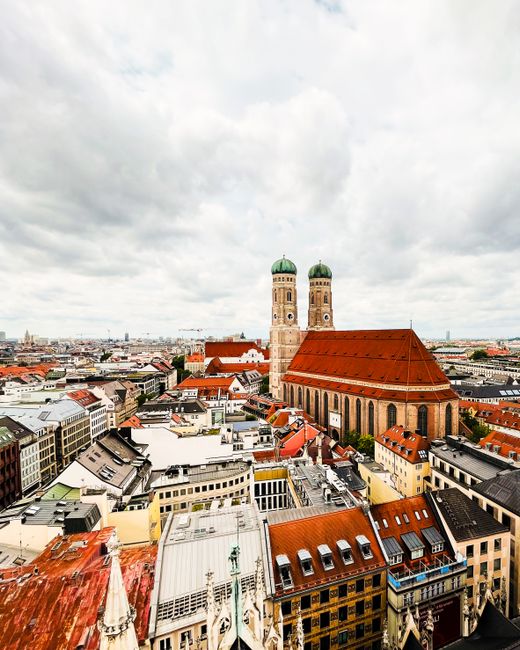
Munich is Germany at its most cheerful: a prosperous, walkable city of Baroque churches, royal palaces and world-class art, where people cycle to work, surf a river wave in the English Garden and gather under chestnut trees in beer gardens on the first warm day of spring. It is also the gateway to the Bavarian Alps, the lakes and Neuschwanstein Castle, all within two hours. Each autumn, Oktoberfest takes over the city for two weeks; the rest of the year is calmer, and often more enjoyable. Give it three days for the city, four or five to add Neuschwanstein and a lake or mountain day, and a week to explore Bavaria from here.
Right now in Munich
- Wed 10–23°C 49–73°F Partly cloudy
- Thu 11–19°C 53–65°F 6 mm Rain
- Fri 6–12°C 43–53°F Partly cloudy
Weather: MET Norway (CC BY 4.0) · Air quality: OpenAQ · Rates: ECB
Top tours in Munich
See all tours for Munich →
From local operators, with prices and reviews; you check availability and book on Viator, our partner. We may earn a commission at no extra cost to you. How we earn money
Munich at a glance
- Best for: beer halls and beer gardens, Bavarian food, palaces and art museums, Oktoberfest, and day trips to the Alps and castles.
- How long: 3 days for the city, 4–5 with Neuschwanstein and a lake or the Alps, 7 to explore more of Bavaria.
- Best time: May, June and September; beer-garden season runs from about April to October. Oktoberfest 2026 ran from 19 September to 4 October; in 2027 it runs from 18 September to 3 October.
- Getting in: S-Bahn S1 or S8 from the airport in about 40 minutes; a single to the city costs €15.10, or €17.50 for the Airport-City-Day-Ticket (as of October 2026).
- Book ahead: timed tickets for Neuschwanstein, especially from May to October.
- Before you go: the Deutschlandticket, money, Sunday closing and entry rules are on our Germany travel guide.
Munich’s neighbourhoods and who each one suits
Munich has about 1.5 million people but feels like a much smaller city. The compact old town (Altstadt), ringed by the line of its old walls, holds most sights, and almost everything else is a short U-Bahn or tram ride away. The Isar river runs along the east side, lined with gravel beaches where locals sunbathe in summer.
Altstadt (the old town)
The heart of Munich: Marienplatz with the neo-Gothic New Town Hall and its Glockenspiel, the twin onion domes of the Frauenkirche, the Viktualienmarkt food market, the Hofbräuhaus beer hall, the Residenz palace and the shopping streets between Karlsplatz and Odeonsplatz. Ideal for a short first visit; hotels are pricey.
Maxvorstadt and Schwabing
The university and museum quarter: the three Pinakothek galleries, the Lenbachhaus and the Königsplatz with its Greek-style temples, then student cafés and bars. North of here, Schwabing, once Munich’s bohemian district, borders the English Garden. Good for culture lovers who want a local feel.
Glockenbachviertel and Haidhausen
Munich’s liveliest areas for eating out. Glockenbach, south of the old town along the Isar, is trendy and the centre of gay Munich; Haidhausen, across the river, has French-style squares, wine bars and the Gasteig cultural centre. Both are great for evenings and well connected.
Ludwigsvorstadt and the main station
The area around the Hauptbahnhof has many chain and budget hotels and is a few minutes’ walk from the Theresienwiese, the Oktoberfest grounds. Convenient for trains and day trips, but less attractive and busier at night.
Nymphenburg, Olympic Park and beyond
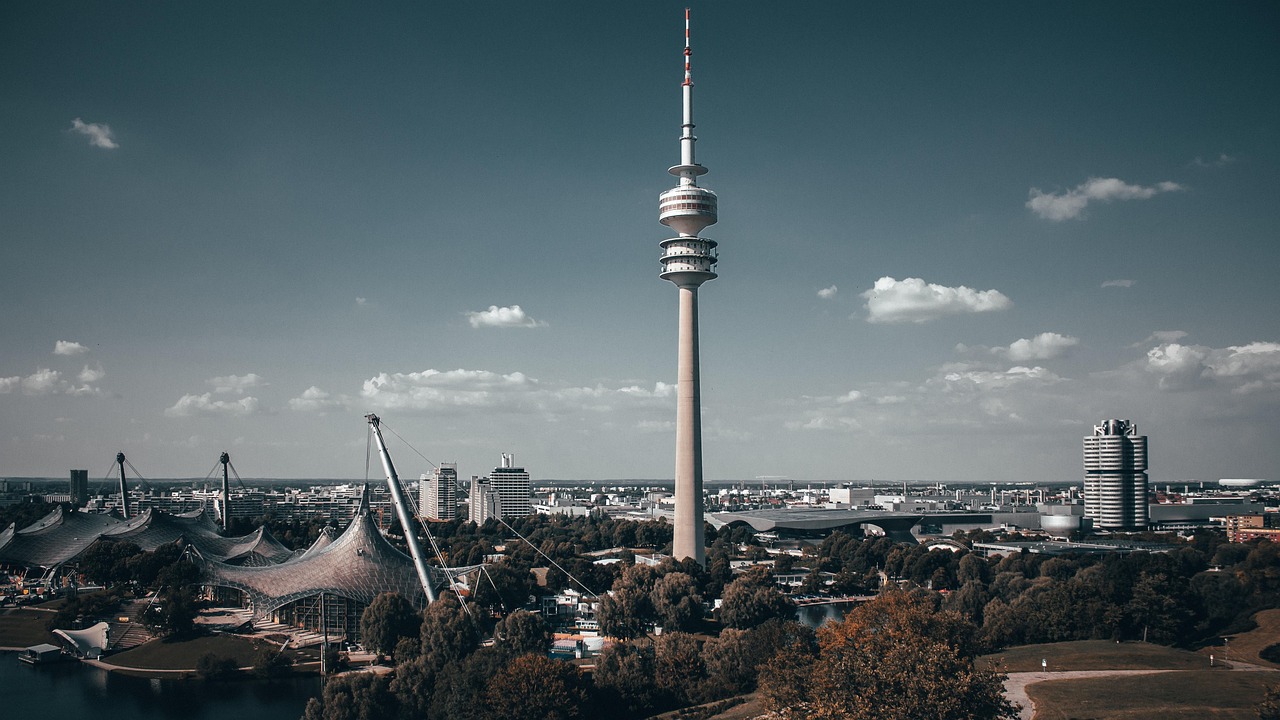
West of the centre, Nymphenburg Palace and its park were the royal summer residence; to the north, the Olympic Park from the 1972 Games and the BMW Welt and Museum. Quiet and green, better for day visits than for a base.
Top things to see in Munich
Prices and hours were checked on the official sites in October 2026; check again before you go. Children and teenagers under 18 get in free at the Bavarian state palaces and many state museums.
Marienplatz, the Frauenkirche and the Viktualienmarkt
Start at Marienplatz, the main square since the Middle Ages. The Glockenspiel in the tower of the New Town Hall re-enacts a royal wedding and a coopers’ dance with 32 life-size figures at 11:00 and 12:00 daily (and at 17:00 from March to October). The Frauenkirche, the cathedral whose onion-domed towers are Munich’s symbol, is a few steps away, and St Peter’s Church tower (“Alter Peter”) has the best view over the rooftops to the Alps on a clear day. Just south, the Viktualienmarkt is a daily food market (closed Sundays) with a beer garden in the middle.
The Residenz
For four centuries the Wittelsbach dukes, electors and kings of Bavaria lived in the Residenz, Germany’s largest city palace. The Residenz Museum has about 130 rooms, from the Renaissance Antiquarium, a vast vaulted hall of busts, to rococo state rooms; the Treasury (Schatzkammer) holds crowns, jewels and goldsmiths’ work; and the jewel-box Cuvilliés Theatre is one of the finest rococo theatres in Europe. As of October 2026, tickets cost €10 each for the museum or the treasury, €15 for both and €20 for all three including the theatre; under-18s are free. Allow at least three hours. The Hofgarten, the palace’s formal garden, is free.
The Pinakotheks and the museum quarter
The Alte Pinakothek is one of the world’s great old-master galleries, with Dürer, Rubens, Rembrandt and Leonardo; the Pinakothek der Moderne covers 20th-century art and design; and the Museum Brandhorst shows contemporary art. On Sundays, many of the Bavarian state galleries charge just €1 for admission. Nearby, the Lenbachhaus has the vivid paintings of Kandinsky and the Blue Rider group. Across town on an island in the Isar, the Deutsches Museum is one of the largest science and technology museums in the world.
Nymphenburg Palace and the English Garden
Nymphenburg Palace, the Baroque summer palace of the Bavarian rulers, has the Gallery of Beauties commissioned by King Ludwig I, the carriage museum and a huge park with smaller pavilions (open from spring to mid-October). The English Garden, larger than New York’s Central Park, runs north from the old town: watch the river surfers on the Eisbach standing wave by the Haus der Kunst when the wave is running, climb to the Chinese Tower beer garden, and in summer join the locals floating down the Eisbach’s cold, fast current (only if you are a strong swimmer).
Beer halls and beer gardens
Munich’s six traditional breweries, Augustiner, Hacker-Pschorr, Hofbräu, Löwenbräu, Paulaner and Spaten, run beer halls and gardens all over the city. The Hofbräuhaus on Platzl is the famous one, loud and full of visitors and oompah music; the Augustiner-Keller near the main station and the Hirschgarten, one of the largest beer gardens in the world, feel more local. Beer is served by the litre (Mass); try it with a roast pork knuckle, a pretzel and Obatzda cheese spread. In a traditional beer garden, you can bring your own picnic to the bare tables.
More classic sights
- Asamkirche: a tiny, overwhelming late-Baroque church on Sendlinger Straße, built by two brothers as their private chapel.
- Olympic Park and BMW Welt: climb the Olympic Tower or the tent roof of the stadium, and see the cars at BMW Welt (free) and the BMW Museum next door.
- Munich Documentation Centre for the History of National Socialism: on the site of the Nazi Party headquarters, explaining how the movement began in Munich; free.
- Allianz Arena: FC Bayern’s stadium, with tours and a club museum on non-match days.
Historic centres
- Marienplatz
Churches and cathedrals
- Frauenkirche (Munich Cathedral)
Palaces
- Munich Residence
- Nymphenburg Palace
Museums
- Alte Pinakothek
- Deutsches Museum
Parks and gardens
- Englischer Garten
Activities and best months
- City sightseeingThe City of Munich's top sights start at Marienplatz, where the New Town Hall carillon plays at 11 am and noon (and 5 pm from March to October), and the Frauenkirche, whose twin towers rise nearly 100 m with a tower room at 80 m. The list also includes Alter Peter, the city's oldest parish church (about 300 steps up), the 1972 Olympic Park and the 375-hectare English Garden. · source
- CyclingThe city portal suggests six bike routes, including the Isar 'highway' from the English Garden past the Angel of Peace and the Deutsches Museum to the Flaucher, an easy flat ride of about 14 km from the Residenz to Schleissheim palace, and a family route of 12-20 km along the Isar to Grunwald with S-Bahn returns. There is also a 13 km loop round four lakes in the north-west. · source
- SurfingAt the southern end of the English Garden, the Eisbach has a standing wave that people surf all year round. Watching the surfers is free, and the City of Munich lists it among the city's top sights. · source
Oktoberfest: 2026 is over, here’s 2027
The world’s biggest folk festival, the Oktoberfest or Wiesn, is held on the Theresienwiese, a large open space a ten-minute walk from the main station. The 191st Oktoberfest ran from 19 September to 4 October 2026. Oktoberfest 2027 runs from Saturday 18 September to Sunday 3 October 2027: it always starts on a Saturday in mid to late September and ends on the first Sunday in October, or on 3 October if that falls later. The festival opens at noon on the first Saturday, when the mayor taps the first keg in the Schottenhamel tent with the words “O’zapft is!“.
- Entry is free: you pay only for food, drinks and rides. In 2026 the big tents opened at 10:00 on weekdays and 09:00 at weekends, with last orders at 22:30 in the big tents.
- Beer prices: in 2026 a litre (Mass) cost between €14.80 and €15.90 in most tents, with €15.80 the usual price in the big tents. Expect a small rise in 2027.
- Tables: reservations are made directly with each tent, months ahead, usually for groups and with a minimum spend in food and drink vouchers. Without one, arrive at a tent before about 11:00 on a weekday, or early on a weekend morning, when unreserved tables fill fast; tents close their doors when full.
- Plan early: hotel prices in Munich can double or triple during the festival; book many months ahead, or stay in Augsburg or another town on an S-Bahn or regional line. The first weekend, the middle Saturday and the 3 October holiday are the busiest days; weekday afternoons are calmer and better for families.
- Practicalities: large bags and backpacks are not allowed on the grounds (left-luggage areas are at the entrances); carry cash; drink water; and don’t climb on the tables. Wearing Tracht (lederhosen or a dirndl) is optional but very popular.
If you miss Oktoberfest, the spring festival (Frühlingsfest) on the same grounds in April and May is a smaller, more local version, and the Auer Dult markets in spring, summer and autumn are pure Munich.
Day trips from Munich
Munich is the best base in southern Germany: regional trains reach the Alps, the lakes and the castles in one to two hours, and all are covered by the Deutschlandticket or the Bayern-Ticket (€34 for one person plus €10 per extra person, up to five, as of October 2026, valid from 09:00 on weekdays).
Neuschwanstein Castle with timed tickets
King Ludwig II’s fairy-tale castle above the village of Hohenschwangau, near Füssen, is Germany’s most famous sight and the model for Disney’s Sleeping Beauty castle. You can only see the interior on a guided tour with a fixed entry time. As of October 2026:
- Tickets: €21 for adults (€20 reduced); under-18s are free, but everyone needs a ticket. Book online at the official Ticket Center Hohenschwangau (hohenschwangau.de), where each ticket, including free children’s tickets, carries a €2.50 service fee. Tickets can’t be exchanged or cancelled. A limited number of tickets for the same day are sold at the Ticket Center in the village, but from May to October they often sell out early; don’t rely on them.
- Hours: the castle opens daily from 09:00 to 18:00 from late March to 15 October and from 10:00 to 16:00 from 16 October to late March; it is closed on 1 January and 24, 25 and 31 December.
- Getting up to the castle: from the village it is a steep walk of 30–40 minutes, or take the shuttle bus or a horse-drawn carriage (separate fares, queues in summer). Plan to arrive in Hohenschwangau at least 90 minutes before your tour time; latecomers lose their slot. Rucksacks, prams and child carriers are not allowed inside, and photography inside is banned.
- The view: the classic photo is from the Marienbrücke, a bridge over the Pöllat gorge about 15 minutes’ walk above the castle; it can close in winter for snow and ice. Nearby Hohenschwangau Castle, the king’s childhood home (€23.50), and the Museum of the Bavarian Kings (€14.50) can be combined.
- By train: regional trains run from Munich Hauptbahnhof to Füssen in about two hours (often with a change in Buchloe), then buses 73 or 78 take about 10 minutes to Hohenschwangau. The Deutschlandticket or a Bayern-Ticket covers the train and bus. Take an early train: the castle is busiest from late morning.
- By car: about 1 hour 45 minutes; parking is paid. The through road in Schwangau has been closed since 15 September 2026, with signed detours, so allow extra time.
The Bavarian Alps and lakes
Garmisch-Partenkirchen, about 1 hour 20 minutes by regional train, is the base for the Zugspitze, Germany’s highest mountain (2,962 m), reached by cog railway and cable car, and for the Partnach Gorge. Further east, Berchtesgaden has the emerald Königssee, crossed by electric boats, and the Kehlstein (Eagle’s Nest). Closer to the city, Lake Starnberg and the Ammersee are reached by S-Bahn, and Lake Tegernsee and Lake Chiemsee, with King Ludwig’s Herrenchiemsee Palace on an island, by regional train. See our Bavarian Alps guide for hiking, lifts and the best bases.
Dachau, Nuremberg, Salzburg and the Romantic Road
The Dachau Concentration Camp Memorial Site, the first Nazi camp, is a moving and free visit, about 40 minutes away by S2 S-Bahn and bus. Nuremberg is about an hour by ICE, with its imperial castle and the Nazi Party Rally Grounds. Salzburg in Austria, Mozart’s city, is under two hours by train (carry your passport, as border checks are in place). And Rothenburg ob der Tauber, the walled medieval town on the Romantic Road, is about three hours by train, better as an overnight stop.
Nearby destinations
- Bavarian Alps57 km
- Zillertal92 km
- Innsbruck98 km
- Kitzbühel98 km
- Salzburg116 km
- Zell am See-Kaprun129 km
- St. Anton am Arlberg150 km
- Nuremberg151 km
Getting there and getting around
From Munich airport (MUC)
Munich Airport is about 30 km north-east of the city, in the outer fare zone of the MVV transport network. S-Bahn lines S8 (via the east of the city) and S1 (via the west) run to Hauptbahnhof and Marienplatz in about 40–45 minutes, each roughly every 20 minutes. As of October 2026:
- Single ticket to the city: about €15.10 for one adult (zones M to 5).
- Airport-City-Day-Ticket: the better deal for most visitors, €17.50 for one person or €32.60 for a group of up to five adults; it covers the airport trip and unlimited travel in the whole city until 06:00 the next morning.
- Deutschlandticket: valid on the S-Bahn and all MVV transport, including the airport.
- Lufthansa Express Bus and taxis: the bus runs to the main station in about 45 minutes; a taxi costs around €70–90 and takes 35–50 minutes.
By train
München Hauptbahnhof, west of the old town, is the hub for ICE trains to Nuremberg (about an hour), Frankfurt (about 3 hours 15 minutes), Berlin (about 4 hours) and Cologne, for regional trains to Füssen, Garmisch and the lakes, and for international trains to Salzburg, Vienna, Zurich, Verona and Venice. Night trains run to Rome, Venice, Budapest and Zagreb. Some ICEs to the north also stop at München-Pasing.
U-Bahn, S-Bahn, trams and buses
Munich’s MVV network is easy to use. The city is covered by fare zone M, which includes all the sights, Nymphenburg and the Olympic Park; outer zones 1 to 6 reach Dachau, the lakes and the airport. Buy tickets at machines or in the MVV or MVG app, and validate paper tickets in the blue stamping machines before you board. As of October 2026, a single trip in zone M costs €4.20 and a day ticket for zone M €10.10 (€19.70 for a group of up to five). For a longer stay with day trips, the €63 Deutschlandticket covers all of it.
Driving and cycling
Inside the Mittlerer Ring road, Munich is an environmental zone where cars need a green Umweltplakette sticker. Parking in the centre is expensive, so use the park-and-ride car parks at outer U-Bahn stations. Munich is a great cycling city, flat and full of bike lanes, especially along the Isar and through the English Garden; hire bikes are everywhere.
When to go and how long to stay
Munich is sunnier than northern Germany but also wetter in summer, when afternoon thunderstorms roll in from the Alps, and colder in winter. A warm, dry wind from the south, the Föhn, sometimes brings sudden mild days and crystal-clear views of the mountains. The table uses averages calculated from the German Weather Service’s (DWD) monthly records for 1991–2020 at the München-Stadt station.
| Season | Average high / low | Rain per month | What it’s like | Good for |
|---|---|---|---|---|
| Winter (Dec–Feb) | 4–6 °C / -2 to -1 °C | 46–59 mm | Cold, often grey, with frost and some snow | Christmas markets, museums, skiing in the Alps |
| Spring (Mar–May) | 10–19 °C / 2–9 °C | 56–107 mm | Changeable March, warm and green May | Beer gardens opening, the spring festival, lakes |
| Summer (Jun–Aug) | 23–25 °C / 13–15 °C | 117–121 mm | Warm and sunny, with frequent afternoon thunderstorms | Beer gardens, Isar beaches, hiking in the Alps |
| Autumn (Sep–Nov) | 20 °C falling to 8 °C / 10 °C falling to 2 °C | 58–78 mm | Golden September and October, foggy November | Oktoberfest, hiking, autumn colour |
Munich gets about 940 mm of rain a year, much of it in June, July and August, so carry a compact umbrella in summer even on sunny mornings. Mountain weather is colder and changes faster: the Zugspitze summit can be below freezing in July.
Events worth planning around
- February and March: carnival (Fasching) parties and the market women’s dance at the Viktualienmarkt; Starkbierzeit, the strong-beer season during Lent.
- April and May: the Frühlingsfest spring festival on the Theresienwiese; the Auer Dult market; maypoles on 1 May.
- June to August: beer-garden season at its peak, the Tollwood summer festival in the Olympic Park, open-air opera, and Christopher Street Day.
- September and October: Oktoberfest (18 September – 3 October 2027).
- November and December: the Christkindlmarkt around Marienplatz from 20 November to 24 December 2026, plus the medieval market at Wittelsbacherplatz, the Tollwood winter festival on the Theresienwiese and the Krampus run on Marienplatz in December.
How long to stay: 3-, 5- and 7-day plans
3 days: Day 1, Marienplatz and the Glockenspiel, the Frauenkirche, St Peter’s tower, the Viktualienmarkt and the Residenz, with dinner at a beer hall. Day 2, the Alte Pinakothek, the English Garden and the Chinese Tower beer garden, then Glockenbach in the evening. Day 3, Nymphenburg Palace and the Olympic Park or the Deutsches Museum.
5 days: add a day trip to Neuschwanstein and one to the Zugspitze, Lake Königssee or Dachau. 7 days: add Salzburg or Nuremberg, a lake day at Tegernsee or Chiemsee, and a slow afternoon in a beer garden.
Weather month by month
Averages from DWD normals 1991–2020, München-Stadt · Last reviewed 4 Oct 2026
Where to stay in Munich
- Altstadt: walk to everything; the most expensive area.
- Maxvorstadt and Schwabing: near the museums and the English Garden, with a student buzz.
- Glockenbachviertel and Haidhausen: the best restaurants and bars, a local feel.
- Around the Hauptbahnhof: good value and handy for trains, day trips and Oktoberfest, but less charming.
Munich is one of Germany’s most expensive cities for hotels: a central 3- or 4-star double often costs €140–250 a night, and far more during Oktoberfest and big trade fairs. Unlike Berlin or Cologne, Munich has no tourist tax on hotel stays as of October 2026: Bavaria has banned local accommodation taxes, and the state constitutional court upheld the ban in November 2025.
Practical tips for Munich
- Greet like a local: “Grüß Gott” (hello) and “Servus” (hi and bye, informal) are the Bavarian greetings.
- Carry cash: many beer gardens, market stalls and traditional inns are cash-only.
- Book Neuschwanstein first: secure your tour time, then plan the rest of the trip around it.
- Plan around Sundays and holidays: shops close, and Bavaria has more public holidays than most states, including Epiphany (6 January), Corpus Christi and All Saints’ Day.
- Respect the river: the Isar and the Eisbach are cold and fast; swim only where locals do and never after drinking.
What to pack for Munich
Comfortable walking shoes for the old town’s cobbles and palace corridors, layers for changeable spring and autumn days, and a compact umbrella or light rain jacket for summer thunderstorms. For the Alps, pack hiking boots, a warm fleece and a waterproof even in summer; for winter, a warm coat, hat, gloves and boots with good grip. Swimwear for the lakes and the Isar, a small bag (backpacks are banned at Oktoberfest and inside Neuschwanstein), cash in euros, and, if you want to blend in at Oktoberfest, a dirndl or lederhosen, which you can also buy or rent in Munich.
What to pack
- City walking shoesLisbon and Porto are steep, with polished limestone cobbles that get slippery, so grippy soles matter.
- Day packs and anti-theft bagsA small zipped or anti-theft bag makes crowded trams and viewpoints less stressful.
- Dry bags and phone pouchesKeeps keys, phone and dry clothes safe on the beach while you are in the water.
- Quick-dry beach towelsA quick-dry towel or changing poncho makes the car-park wetsuit change easier on windy beaches.
- Rain jacketsFrom October to April Porto and Lisbon see rain on roughly a third of days.
- Reef-friendly sunscreenLong sessions on reflective water burn faces and the backs of hands even when the air feels cool.
- Surf accessories (boots, leashes, wax)Neoprene boots keep feet warm in winter and protect them on rock and reef breaks.
- Travel adapters and convertersPortugal uses Type C and F sockets at 230 V, so most visitors from outside Europe need an adapter.
- Water bottles and hydration packsRiding in the Algarve and Alentejo heat needs more water than you expect.
- WetsuitsThe Atlantic off Portugal stays cool enough that surfers wear a full wetsuit most of the year.
Munich travel FAQ
How many days do you need in Munich?
Three days covers the old town, the Residenz, the museums, the English Garden and Nymphenburg. Add a day for Neuschwanstein and another for the Alps or a lake; a week lets you explore Salzburg and Nuremberg too.
When is Oktoberfest 2027?
From Saturday 18 September to Sunday 3 October 2027 on the Theresienwiese. Oktoberfest 2026 ran from 19 September to 4 October. Entry is free; book hotels and any tent reservations months ahead.
How much is a beer at Oktoberfest?
In 2026 a litre (Mass) cost €14.80 to €15.90 in most tents, and €15.80 in the big tents. Prices usually rise slightly each year.
What is the best time to visit Munich?
May, June and September, with highs of about 19–23 °C and beer gardens open. Summer is warm (about 24–25 °C) but stormy in the afternoons; Oktoberfest makes late September crowded and expensive; December has the Christmas markets.
How do I get from Munich airport to the city?
Take the S1 or S8 S-Bahn to Marienplatz or Hauptbahnhof in about 40–45 minutes. As of October 2026, the Airport-City-Day-Ticket (€17.50, or €32.60 for up to five) is better value than a single (about €15.10), and the Deutschlandticket is valid too.
Do I need to book Neuschwanstein tickets in advance?
Yes, especially from May to October. Visits are by guided tour with a fixed time; book on hohenschwangau.de (€21 for adults, under-18s free, plus €2.50 per ticket online, as of October 2026). A few same-day tickets are sold in Hohenschwangau but often sell out.
Can I visit Neuschwanstein by train from Munich?
Yes. Regional trains reach Füssen in about two hours, then buses 73 or 78 run to Hohenschwangau in about 10 minutes. The Deutschlandticket or a Bayern-Ticket covers both. Allow at least 90 minutes between arriving and your tour time.
How much does the Munich Residenz cost?
As of October 2026, €10 for the Residenz Museum or the Treasury, €15 for both, and €20 including the Cuvilliés Theatre. Under-18s are free.
Which ticket do I need for public transport in Munich?
Zone M covers the whole city: €4.20 for a single and €10.10 for a day ticket, as of October 2026. The airport is outside zone M, so use the Airport-City-Day-Ticket or the Deutschlandticket.
Is there a tourist tax in Munich?
No. As of October 2026, Bavarian law bans local accommodation taxes, so Munich hotels charge no city tax, unlike Berlin or Cologne.
Can I bring my own food to a Munich beer garden?
Yes, in a traditional beer garden you may bring a picnic to the tables without tablecloths, as long as you buy your drinks there. Tables with cloths are for restaurant service.
What are the best day trips from Munich?
Neuschwanstein Castle, the Zugspitze and Garmisch, Lake Königssee and Berchtesgaden, the Dachau Memorial, Salzburg and Nuremberg. See our Bavarian Alps guide for the mountains.
Sources
- © OpenStreetMap contributors · ODbL · fetched 4 Oct 2026
- Wikidata · CC0 · fetched 4 Oct 2026
Sources and last review
Researched and last reviewed on 4 October 2026. Climate: averages calculated from the German Weather Service’s (DWD) 1991–2020 monthly records for München-Stadt; Oktoberfest dates, hours and beer prices: oktoberfest.de and the City of Munich; the Residenz: the Bavarian Palace Administration (residenz-muenchen.de); Neuschwanstein tickets: the Ticket Center Hohenschwangau and neuschwanstein.de; fares: MVV; the Bayern-Ticket and Deutschlandticket: Deutsche Bahn. The airport single fare, the Oktoberfest 2027 dates, Neuschwanstein’s opening hours, the Christmas market dates, the accommodation-tax ruling, taxi fares and journey times come partly from search summaries, press reports or general knowledge and are flagged for checking. Prices, hours and timetables change, so check the official links before you go. For entry rules, money and general safety, see our Germany travel guide.
Plan your trip
Partner links: TravelerCenter may earn a commission if you book, at no extra cost to you.
🇩🇪 Useful German phrases for Munich
All 38 German phrases: restaurant, hotel, emergencies, romance (printable) →