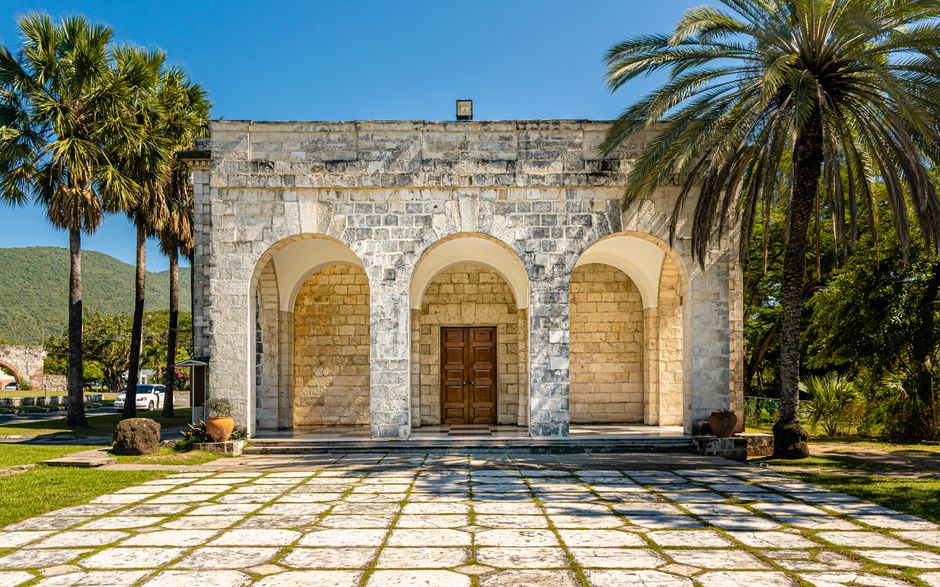
Jamaica is the Caribbean’s big personality: an island of misty Blue Mountains, waterfalls and rivers, long white beaches, reggae, jerk smoke and rum, about 90 miles (145 km) south of Cuba and an hour and a half’s flight from Miami. Most visitors stay on the north and west coasts, in the resort towns of Montego Bay, Negril and Ocho Rios, often in all-inclusive hotels, but the island rewards anyone who ventures further: Bob Marley’s Kingston, the coffee farms of the Blue Mountains, the quiet south coast and Port Antonio’s rainforest rivers. In late October 2025, Hurricane Melissa, the strongest hurricane on record to hit Jamaica, devastated the west of the island; by spring 2026 the government reported that most hotel rooms and attractions had reopened, and rebuilding continues. Before you go, complete the free online C5 immigration and customs form, budget for 10% tax on tourism services, and plan around the June-to-November hurricane season. Come from December to April for the driest weather.
Right now in Jamaica
- Tue 23–29°C 73–84°F 8 mm Light showers
- Wed 24–30°C 75–85°F 1 mm Light showers
- Thu 23–29°C 74–84°F 10 mm Heavy showers
Weather: MET Norway (CC BY 4.0)
Multi-day tours of Jamaica
Multi-day tours from local operators. You check dates and book on Viator, our partner; we may earn a commission at no extra cost to you. How we earn money
Jamaica at a glance: 14 parishes, one big island
Jamaica is the third-largest island in the Caribbean, about 146 miles (235 km) long and up to 51 miles (82 km) wide, with about 2.8 million people. It has been independent from Britain since 6 August 1962 and is a member of the Commonwealth. Kingston, on the south coast, is the capital and biggest city; Montego Bay is the tourism capital, on the north-west coast. English is the official language, and almost everyone also speaks Jamaican Patois, a rich creole you’ll hear in songs, on the street and on the radio.
The island is divided into 14 parishes. You drive on the left. Jamaica keeps Eastern Standard Time (UTC−5) all year and does not use daylight saving time, so from early November to mid-March it has the same time as New York and Miami, and in summer it is one hour behind them. Electricity is 110 volts and 50 Hz, with US-style plugs.
Jamaica’s regions
- Montego Bay and the north-west: the main airport, the Hip Strip, Doctor’s Cave Beach, great houses such as Rose Hall, rafting on the Martha Brae and the Luminous Lagoon near Falmouth. Hit hard by Hurricane Melissa in October 2025.
- Negril and the west: the Seven Mile Beach and the cliffs of the West End, Jamaica’s sunset capital, at the island’s western tip.
- Ocho Rios and the north coast: Dunn’s River Falls, rivers and gardens, the cruise port, and James Bond and Noël Coward history along the coast toward Oracabessa.
- Port Antonio and the north-east: rainforest, the Blue Lagoon, Reach Falls, Frenchman’s Cove and bamboo rafting on the Rio Grande; quiet and green.
- Kingston and the Blue Mountains: the Bob Marley Museum, the National Gallery, Devon House, Port Royal’s pirate history, and hiking and coffee in the mountains above the city.
- The south coast: Treasure Beach, Black River’s crocodiles and YS Falls; the area most damaged by Melissa, where recovery has been slowest.
Where to go: Montego Bay, Negril, Ocho Rios and beyond
Most visitors pick one coastal base and take day trips, since roads are slow and winding. Montego Bay is the easiest arrival point; Negril is for beach and sunset lovers; Ocho Rios for waterfalls, rivers and the cruise port; Kingston for music and culture. A week lets you combine two bases.
Montego Bay
Jamaica’s second city and tourism hub sits around a wide bay on the north-west coast, with the main international airport, a cruise port, big resorts along the coast to the east, and the Hip Strip of bars, shops and beach clubs on Gloucester Avenue. Visit Doctor’s Cave Beach, the great houses of Rose Hall and Greenwood, and the marine park. Montego Bay and its parish, St James, were among the areas hardest hit by Hurricane Melissa. See our Montego Bay travel guide.
Negril
Seven Mile Beach, a long ribbon of pale sand with calm water, runs north from the town, while the West End is a coast of low limestone cliffs, cave bars, cliff-jumping spots and small cottages, famous for its sunsets. Negril reopened quickly after Melissa, with most of its hotels back by January 2026. See our Negril travel guide.
Ocho Rios
The north coast’s busy resort and cruise town, about halfway between Montego Bay and Port Antonio, is the base for climbing Dunn’s River Falls, swimming in the Blue Hole, riding the Mystic Mountain bobsled, and visiting Firefly, Noël Coward’s hilltop home. See our Ocho Rios travel guide.
Kingston and the Blue Mountains
The capital is the heart of Jamaican music and culture: the Bob Marley Museum in his former home, the Trench Town Culture Yard, the National Gallery of Jamaica, Devon House’s mansion and ice cream, and Port Royal, the “wickedest city on earth” before an earthquake sank much of it in 1692. Above Kingston, the Blue Mountains rise to 7,402 ft (2,256 m) at Blue Mountain Peak, with coffee farms, cool air and sunrise hikes.
Port Antonio, Treasure Beach and the south coast
Port Antonio, in the lush north-east, is for rainforest rivers, the Blue Lagoon and Frenchman’s Cove, far from the crowds. Treasure Beach, on the dry south coast, is a string of fishing villages and small guesthouses. The south coast took heavy damage from Melissa, so check that the places you want have reopened.
All-inclusive or independent?
Jamaica pioneered the all-inclusive resort, and many visitors never leave theirs: one price covers the room, food, drinks, water sports and often tips and airport transfers. It’s easy, good value at the top end and simple with children. The downside is that you’ll miss the island’s real food, music and people. A good compromise is an all-inclusive for part of the stay and a guesthouse, villa or small hotel for the rest, in Negril’s West End, Treasure Beach, Port Antonio or the Blue Mountains, with day trips by licensed tour operators or a driver. Independent travelers will find Jamaica friendly but intense at first: transport takes planning, prices are often negotiated, and you’ll be approached by people offering services. Book the first night and your airport transfer before you arrive.
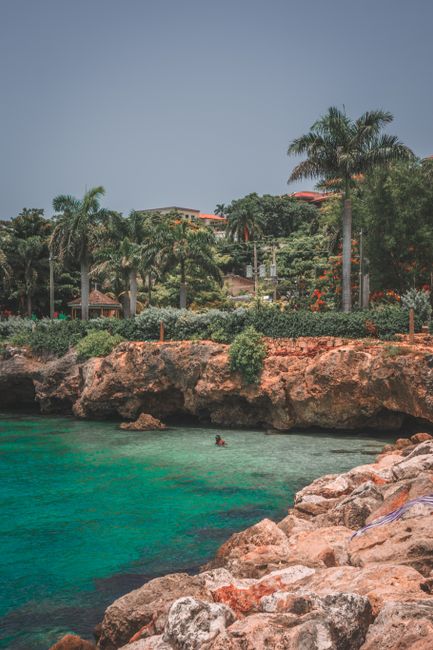
Montego Bay Travel Guide
Plan a trip to Montego Bay: the Hip Strip and Doctor's Cave Beach, Rose Hall Great House, the marine park, Martha Brae rafting and…
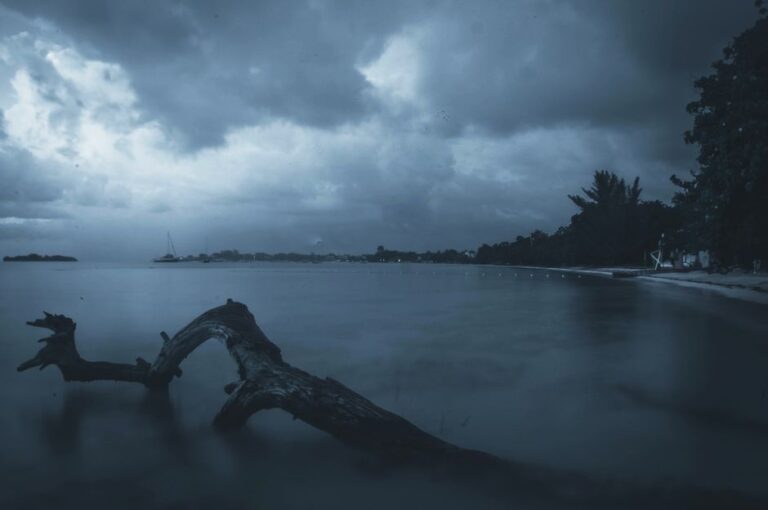
Negril Travel Guide
Plan a trip to Negril: Seven Mile Beach and Bloody Bay, the West End cliffs and sunsets, cliff jumping, the lighthouse, Booby Cay, snorkeling…
Ocho Rios Travel Guide
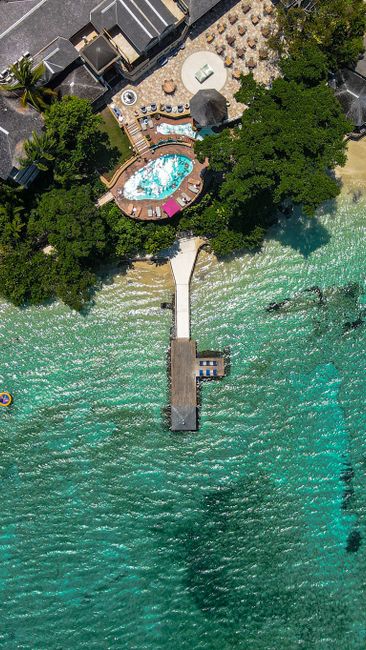
Plan a trip to Ocho Rios: climbing Dunn's River Falls, the Blue Hole, Mystic Mountain, Fern Gully, Firefly and Goldeneye, Nine Mile, beaches, snorkeling…
Best time to visit Jamaica
Jamaica is hot all year at sea level, with a drier, slightly cooler and breezier winter and a wetter, more humid summer and autumn. The mountains are much cooler and wetter. The north and west coasts get more rain than Kingston and the south. The table uses the official 1991–2020 climate normals for Sangster International Airport, Montego Bay, submitted by the Meteorological Service of Jamaica to the World Meteorological Organization: average daily highs and lows and average monthly rainfall.
| Season | Average high / low | Rainfall per month | What it’s like | Good for |
|---|---|---|---|---|
| Winter (Dec–Feb) | 86 °F (30 °C) / 72–73 °F (22–23 °C) | 1.6–3.2 in (42–81 mm) | Sunny, breezy and the driest time on the north coast; cooler nights in the mountains | Beaches, sightseeing, peak season |
| Spring (Mar–May) | 87–90 °F (30–32 °C) / 72–75 °F (22–24 °C) | 2.3–2.5 in (59–64 mm), then 5.9 in (150 mm) in May | Hot and mostly dry until May showers | Diving, hiking, quieter after Easter |
| Summer (Jun–Aug) | 91–92 °F (33 °C) / 76–77 °F (24–25 °C) | 2.6–3.7 in (66–94 mm) | Hot and humid, afternoon showers | Reggae Sumfest, family holidays, lower rates |
| Autumn (Sep–Nov) | 91 °F falling to 88 °F (33 to 31 °C) / 76 °F falling to 75 °F (24–25 °C) | 4.2–6.2 in (107–159 mm) | Wettest season, with October the wettest month; peak hurricane risk | Deals, with flexible bookings |
Montego Bay averages about 45 in (1,136 mm) of rain a year. Kingston, in the rain shadow of the Blue Mountains, gets much less, about 35 in (885 mm), with highs of 88–92 °F (31–33 °C) all year, according to the same WMO normals for Norman Manley International Airport.
Hurricane season and Hurricane Melissa: according to NOAA’s National Hurricane Center (NHC), the Atlantic hurricane season runs from 1 June to 30 November, with most activity between mid-August and mid-October. On 28 October 2025, Hurricane Melissa made landfall near New Hope in Westmoreland as a Category 5 hurricane with sustained winds of about 185 mph (295 km/h), the strongest hurricane on record to hit Jamaica, according to the NHC. Its report describes extreme damage across the western parishes of St Elizabeth, Westmoreland, Hanover, St James, Trelawny and Manchester, with widespread flooding, landslides and power and communication outages; Jamaican officials reported 45 deaths, and the World Bank estimated physical damage at US$12.2 billion, about 41% of the country’s 2024 GDP. Jamaica reopened to visitors in December 2025. In May 2026, the Jamaica Information Service reported that 75% of hotel rooms and 89% of attractions had reopened, and that airports and cruise ports were fully back in operation; recovery has been slowest on the south coast. More hotels have reopened since, including large resorts in Negril in August 2026. As of early October 2026, the 2026 hurricane season had produced eight tropical storms and no hurricanes, according to the NHC. If you travel between June and November, buy insurance that covers hurricanes, book flexible rates and follow the Meteorological Service of Jamaica and the Office of Disaster Preparedness and Emergency Management (ODPEM).
Sargassum: brown sargassum seaweed drifts into the Caribbean mostly from spring to late summer. Jamaica’s east- and south-facing coasts catch the most, and the sheltered north-coast resorts and Negril’s Seven Mile Beach usually less. According to the University of South Florida’s Sargassum Watch, 2026 is at least the second-largest sargassum year on record, with record amounts in the Caribbean in June; by September the amounts were falling and expected to keep falling until about November. Resorts rake their beaches.
Crowds, prices and events
High season runs from mid-December to mid-April, with the highest prices at Christmas, New Year, US spring break and Easter. Summer brings families and the diaspora and slightly lower prices; September to mid-December is the quietest and cheapest time.
- Reggae Sumfest (July): the biggest reggae and dancehall festival, in Montego Bay.
- Carnival in Jamaica (around Easter): soca road marches in Kingston.
- Emancipation Day (1 August) and Independence Day (6 August): national celebrations and the Grand Gala in Kingston.
- Rebel Salute (January) and Bob Marley’s birthday (6 February): reggae events.
- Other public holidays: New Year’s Day, Ash Wednesday, Good Friday, Easter Monday, Labour Day (23 May), National Heroes’ Day (third Monday in October), Christmas and Boxing Day.
How long to stay: sample itineraries
5 days: Montego Bay and Negril
Two nights in Montego Bay for Doctor’s Cave Beach, Rose Hall and a river-rafting trip on the Martha Brae, then three in Negril for Seven Mile Beach, a snorkel trip and sunset on the West End cliffs.
7 days: the north coast
Three nights in Montego Bay or Negril and four in Ocho Rios, with Dunn’s River Falls, the Blue Hole, Firefly, and a day trip to Bob Marley’s birthplace at Nine Mile.
10–14 days: around the island
Add Kingston for the Bob Marley Museum, Devon House and Port Royal, a night in the Blue Mountains for a sunrise hike and a coffee farm, and Port Antonio’s rivers and Blue Lagoon. Check the south coast’s recovery status before adding Treasure Beach and YS Falls.
Entry, money and costs
Entry rules and the C5 form (last reviewed October 2026)
According to the Passport, Immigration and Citizenship Agency (PICA), every traveler entering Jamaica needs:
- a valid passport or other approved travel document;
- a Jamaican visa, if your nationality needs one;
- a completed Immigration/Customs C5 form.
According to the Jamaica Tourist Board, all passengers arriving by air or cruise ship must complete the C5 Passenger Declaration Form online at enterjamaica.gov.jm, run by PICA and Jamaica Customs. It has been mandatory since 1 September 2023, replaces the paper form airlines used to hand out, and can be filled in up to 30 days before travel, according to the Jamaica Information Service. It is free; ignore websites that charge for it. You’ll get a confirmation email; keep it handy. The airports have Wi-Fi if you need to fill it in on arrival, but it’s faster to do it before you fly.
All visitors must also have a return or onward ticket, according to the Tourist Board. Citizens of the United States, Canada, the United Kingdom, the European Union and many other countries don’t need a visa for a tourist stay; the immigration officer sets your permitted stay on arrival, commonly up to 90 days. US citizens need a valid passport to fly home to the United States. Canadians can enter Jamaica with a passport, or with government photo ID and an official birth certificate, but should carry a passport to fly home.
Departure taxes, fees and the airport
Jamaica’s departure tax and the US$20 Tourism Enhancement Fee for air travelers (US$2 for cruise passengers) are built into your airline or cruise ticket, so there is nothing to pay at the airport. If you fly to the US, you clear US immigration and customs on arrival in the US. See our United States travel guide for US entry rules.
Money and cards
The currency is the Jamaican dollar (J$, JMD). On 2 October 2026, the Bank of Jamaica’s rate was about J$159 to US$1, so J$1,000 is roughly US$6.30. US dollars are widely accepted in tourist areas, often at a poor rate, and many hotels and tours quote prices in US dollars. Pay in Jamaican dollars for local food, taxis and shops to avoid bad conversions, and ask which currency a price is in. Credit cards work in hotels, larger restaurants and supermarkets; use ATMs inside banks and malls, and carry cash for small vendors and rural areas.
Tipping
Many all-inclusive resorts include tips, and some ask guests not to tip; check your resort’s policy. Elsewhere, restaurants often add a 10–15% service charge; if not, leave 10–15%. Tip tour guides, drivers and rafting captains about 10–20%, and bellhops US$1–2 a bag.
Taxes on hotels and tourism services
According to Tax Administration Jamaica, General Consumption Tax (GCT) is 16.5% on most goods and services, but tourism services, including hotel rooms, are taxed at 10%. On top of that, every occupied guest room carries the Guest Accommodation Room Tax (GART), charged per night: US$1 at properties with up to 51 rooms, US$2 with 51 to 100 rooms, and US$4 with 101 rooms or more, as of October 2026. Room prices are often quoted before GCT, GART and service charges, so check the total.
Typical travel costs
Jamaica can be done on very different budgets. As a rough guide in 2026, a guesthouse or small hotel costs about US$80–150 a night, a mid-range resort US$200–350 and an all-inclusive US$300–700 for two in high season. A plate of jerk chicken with festival or a patty from a roadside cookshop costs J$800–2,000 (about US$5–13); a restaurant dinner, US$25–50. Guided tours to Dunn’s River Falls or river rafting cost about US$70–150 per person with transfers.
Getting there and getting around
Airports
- Sangster International Airport (MBJ), Montego Bay: the main tourist gateway, with direct flights from many US and Canadian cities and London; about 1.5 hours from Negril and 1.5–2 hours from Ocho Rios.
- Norman Manley International Airport (KIN), Kingston: for Kingston, the Blue Mountains and Port Antonio.
- Ian Fleming International Airport (OCJ), Boscobel: a small airport near Ocho Rios for private and some regional flights.
According to the Jamaica Information Service, the airports were fully back in operation by May 2026 after Hurricane Melissa.
Cruise ports
Jamaica is a busy cruise destination, with ports at Montego Bay, Ocho Rios, Falmouth and Kingston’s Port Royal. Ocho Rios is the most convenient for Dunn’s River Falls; Falmouth is a historic Georgian town between Montego Bay and Ocho Rios. Cruise passengers also complete the C5 form, according to the Tourist Board.
Roads, taxis and buses
The North Coast Highway links Negril, Montego Bay, Falmouth and Ocho Rios, and toll highways (the T1 and T3 of the Highway 2000 network) link Kingston with Ocho Rios and May Pen. Other roads are narrow, winding and potholed, with fast, assertive driving. Drive on the left. Many visitors use hotel transfers, licensed tour operators or JUTA and other licensed tourist taxis, which carry public passenger vehicle (PPV) plates. Agree the fare before you set off. Knutsford Express runs comfortable intercity coaches between the main towns, and route taxis and minibuses are cheap but crowded. After Melissa, some roads in the west and south had long repairs; ask locally.
Domestic flights
Small charter airlines fly between Montego Bay, Kingston, Ocho Rios and Negril’s aerodrome, useful if you want to avoid long drives.
Culture, food and everyday etiquette
Jamaica gave the world ska, rocksteady, reggae and dancehall, and music is everywhere, from sound systems at street parties to Sunday church choirs. Rastafari, the faith of Bob Marley, shapes much of the culture, from ital (natural, mostly vegan) food to the red, gold and green colors. Jamaicans are warm, direct and proud; a friendly “good morning” goes a long way.
Food is a highlight: jerk pork and chicken smoked over pimento wood, ackee and saltfish (the national dish), curry goat, escovitch fish, oxtail, patties, festival, bammy, callaloo and fresh fruit and juices. Wash it down with Red Stripe beer, Blue Mountain coffee, sorrel at Christmas, and some of the world’s great rums. Go to Boston Bay near Port Antonio for jerk at its birthplace, or a busy roadside jerk center anywhere.
- Dress: beachwear is for the beach; cover up in towns, churches and shops.
- Vendors and hustlers: in tourist areas, people may offer tours, crafts or “help”; a firm, friendly “no, thank you” is enough.
- Photography: ask before photographing people.
- Cannabis: Jamaica decriminalized possession of small amounts (up to 2 ounces) in 2015, but smoking in public is still an offense, and taking cannabis out of the country is illegal.
- LGBTQ+ travelers: laws criminalizing sex between men remain on the books, and attitudes outside resorts can be conservative; discretion is common.
Music, nightlife and culture to seek out
For live music, look for weekly reggae nights at bars on Negril’s beach and West End, sound-system “sessions” and street dances in Kingston, the Bob Marley Museum and Tuff Gong studio, and Reggae Sumfest in July. Kingston’s Devon House, the National Gallery and Emancipation Park show another side of the island, far from the resorts. Many resorts also run cultural nights, but a guided evening in a town shows more. Ask locally, go with a group or a guide at night, and take a licensed taxi back.
Safety, health, accessibility and connectivity
Safety
Most visits to Jamaica are trouble-free, and resort areas, guided tours and the main attractions are well organized. Jamaica does have high levels of violent crime, but it is concentrated in specific neighborhoods of Kingston, Spanish Town and Montego Bay that visitors have little reason to enter. Take normal precautions: use licensed taxis and established tour operators, don’t walk alone in quiet areas after dark, keep valuables out of sight, use ATMs inside banks or malls, and don’t buy drugs. Be firm but polite with persistent vendors.
Natural hazards matter too: hurricanes from June to November, flash floods and landslides on mountain roads after heavy rain, strong currents on some beaches, and the sun. After Melissa, some damaged buildings and roads in the west and south were still being repaired in 2026. In an emergency, call 119 for police and 110 for fire and ambulance.
Health
There are no compulsory vaccinations except yellow fever for travelers from risk countries. Mosquitoes can spread dengue, especially in the rainy season, so use repellent. After Melissa’s floods, the government reported an outbreak of leptospirosis, a bacterial infection spread through contaminated water and soil, according to the NHC; avoid wading through floodwater. Tap water in Kingston, Montego Bay and resort areas is treated and generally safe, but many visitors drink bottled water, especially after storms. Public hospitals are crowded; private hospitals in Kingston and Montego Bay are better, and serious cases may be flown to the US, so buy travel insurance with medical evacuation.
Accessibility
Large resorts have accessible rooms and ramps, but sidewalks, beaches, waterfalls and older buildings are often difficult. Ask hotels and tour operators in advance.
Connectivity and power
Flow and Digicel are the main mobile networks, with good 4G and 5G in towns and resort areas but gaps in the mountains. Buy a local SIM or eSIM at the airport, or check your home plan’s roaming. Most hotels have Wi-Fi. Electricity is 110 V and 50 Hz, with US-style type A and B plugs; most chargers handle 50 Hz fine, and visitors from Europe and the UK need a plug adapter.
Things to do: beaches, snorkeling, diving, hiking and boat trips
- Beaches: Seven Mile Beach in Negril, Doctor’s Cave Beach in Montego Bay, Frenchman’s Cove near Port Antonio, Treasure Beach and many resort beaches along the north coast.
- Snorkeling: the Montego Bay Marine Park, Negril’s reefs, and coves near Ocho Rios.
- Diving: walls, wrecks and reefs off Negril, Montego Bay and Ocho Rios, with dive centers at most resorts.
- Hiking: the sunrise climb up Blue Mountain Peak, coffee-farm walks, the Cockpit Country’s limestone hills and waterfall trails around Ocho Rios and Port Antonio.
- Boat trips: catamaran cruises, glass-bottom boats, bamboo rafting on the Martha Brae and Rio Grande, Black River safaris and night trips to the Luminous Lagoon.
- City sightseeing: Kingston’s museums and music history, Falmouth’s Georgian buildings and Montego Bay’s great houses.
What to pack
Pack light, breathable clothes, swimwear and a cover-up, a hat, sunglasses and reef-friendly sunscreen. Water shoes with grip are essential for climbing Dunn’s River Falls and other waterfalls. Add a light rain jacket from May to November, a warm layer for the Blue Mountains, where nights can fall to about 50 °F (10 °C), insect repellent, and a dry bag for boat and rafting trips. Bring your C5 confirmation, passport, any regular medicines and a copy of your travel insurance.
Jamaica travel FAQ
What is the C5 form for Jamaica?
It’s Jamaica’s immigration and customs declaration, completed online at enterjamaica.gov.jm. It is mandatory for all air and cruise arrivals, free, and can be filled in up to 30 days before you travel.
Do US citizens need a passport for Jamaica?
Yes. US citizens need a valid passport to fly to Jamaica and back to the US. They don’t need a visa for a tourist stay.
Is there a departure tax in Jamaica?
Yes, but it’s included in your airline ticket, along with the US$20 Tourism Enhancement Fee. You don’t pay anything at the airport.
What is the hotel tax in Jamaica?
Hotel rooms carry 10% General Consumption Tax plus the Guest Accommodation Room Tax of US$1–4 per room per night, depending on the hotel’s size, as of October 2026.
Has Jamaica recovered from Hurricane Melissa?
Largely, in tourist areas. In May 2026 the government reported 75% of hotel rooms and 89% of attractions reopened and airports and cruise ports fully operating; more hotels reopened over the summer. The south coast has been slowest to recover, so check your hotel’s status.
When is the best time to visit Jamaica?
December to April, the driest and breeziest months. May and June are warm and cheaper. September to November is the wettest time and the peak of hurricane season.
When is hurricane season in Jamaica?
From 1 June to 30 November, with most storms between mid-August and mid-October. Buy insurance that covers hurricanes and book flexible rates.
Can I use US dollars in Jamaica?
In tourist areas, yes, but often at a poor rate. Use Jamaican dollars for local food, taxis and shops; in October 2026, US$1 was worth about J$159.
Do you drive on the left in Jamaica?
Yes. Roads are often narrow and winding, so many visitors prefer transfers, licensed tourist taxis or Knutsford Express coaches.
Is Jamaica safe for tourists?
Most visits are trouble-free. Crime is concentrated in neighborhoods visitors rarely enter. Use licensed taxis and tour operators, avoid quiet areas after dark and keep valuables out of sight. Call 119 for police.
Is there sargassum in Jamaica?
Sometimes, mainly from spring to late summer and most on east- and south-facing coasts. 2026 has been a heavy sargassum year, but amounts were falling by autumn, and resorts clean their beaches.
Which airport should I fly into in Jamaica?
Sangster International (MBJ) in Montego Bay for Montego Bay, Negril and Ocho Rios; Norman Manley International (KIN) for Kingston, the Blue Mountains and Port Antonio.
Can you drink the tap water in Jamaica?
In Kingston, Montego Bay and resort areas, treated tap water is generally safe, but many visitors prefer bottled water, especially after storms.
Do I need a visa for Jamaica?
Not if you are a citizen of the US, Canada, the UK, the EU or many other countries visiting as a tourist. Check PICA’s visa list if you hold another passport, and remember the free online C5 form.
Sources and last review
Researched and last reviewed on 4 October 2026. Entry documents from the Passport, Immigration and Citizenship Agency (PICA); the C5 form from enterjamaica.gov.jm (PICA and Jamaica Customs), the Jamaica Tourist Board and the Jamaica Information Service; GCT and the Guest Accommodation Room Tax from Tax Administration Jamaica; the exchange rate from the Bank of Jamaica; tourism recovery figures from the Jamaica Information Service; Hurricane Melissa, its damage and the 2026 season from NOAA’s National Hurricane Center; sargassum from the University of South Florida’s Sargassum Watch; climate from the WMO 1991–2020 normals for Sangster and Norman Manley international airports. The Tourism Enhancement Fee, length of stay, population, holidays, transport details, emergency numbers, cannabis rules, costs and tipping come partly from secondary sources or general knowledge and are flagged for checking. Rules and prices change, so check the official sites before you travel. For US entry rules on the way home, see our United States travel guide.
Plan your trip
Partner links: TravelerCenter may earn a commission if you book, at no extra cost to you.